The early bird registration deadline for the 5th edition of Tekedia Mini-MBA is soon. Click to register for Tekedia Mini-MBA (June 7 – Sept 1, 2021). Our program is online, self-paced, and costs $140 (or N50,000 naira) per person.
We have many goodies if you beat the deadline including attending our Innovation Week and Career Week free besides access to my books, and certificate courses at Facyber.com.Click and register
Click and register. Beat the deadline and join the best school.
Thank you FarmKonnect Nigeria and congratulations as His Excellency, the Executive Governor of Oyo state, Oluseyi Makinde, commissions the FarmKonnect multi-million dollar farm project. I want to thank you for finding space for this village boy on those walls – thank you.
Good People, join me to congratulate a Tekedia Institute Fintech Faculty, Olugbenga GB Agboola, for taking Flutterwave to the mountaintop. This week, the African category-king fintech company was honoured as one of Time Magazine’s 100 Most Influential Companies in the world.
We celebrate the brilliance of Flutterwave as it builds the operating system of Africa’s commerce, unlocking opportunities in markets and territories. Nations rise when pioneering entrepreneurs emerge.
We congratulate GB and his Team. Well done Flutterwave.
The co-founder and CEO of Nigeria’s Flutterwave, Olugbenga Agboola, compares the infrastructure of digital transactions across nations and platforms (think credit cards, debit payments and digital wallets) to plumbing: you don’t want to think about it, you just want it to work. When pandemic lockdowns hit brick-and-mortar businesses in Africa, the digital-payment service was able to rapidly set up digital storefronts for 20,000 customers, throwing them a lifeline. Agboola called the free campaign “keeping the lights on.” Flutterwave hit tech-unicorn status in March when it secured $170 million in Series C funding from global investors, valuing the company at more than $1 billion.
A few months after Uber sold its driverless unit to startup Aurora, its ride-hailing rival Lyft, is towing the same path. Lyft will sell its self-driving technology unit to Toyota in a $550 million deal, the companies said on Monday.
The decision will allow Lyft to reach its profitability target one quarter earlier, focusing on other businesses it deems more profitable.
The sale of Level 5 to Toyota’s Woven Planet division will allow Lyft to focus on partnerships with self-driving companies that want to deploy their technology on its platform, rather than develop costly technology that has yet to enter the mainstream.
In addition to the acquisition of Level 5, Woven Planet and Lyft have signed commercial agreements for utilization of the Lyft system and fleet data to accelerate the safety and commercialization of the automated-driving technology that Woven Planet will develop.
“This acquisition advances our mission to develop the safest mobility in the world at scale. The Woven Planet team, alongside the team of researchers at TRI, have already established a centre of excellence for software development and technology in the Toyota Group,” said James Kuffner, CEO of Woven Planet.
“Bringing Level 5’s world-class engineers and experts into the fold—as well as additional technology resources—will allow us to have even greater speed and impact. This deal will be key in weaving together the people, resources, and infrastructure that will help us to transform the world we live in through mobility technologies that can bring about a happier, safer future for us all,” he added.
According to the deal, Lyft will receive $200 million cash upfront, with the remaining $350 million paid over five years, the companies said. The deal is expected to close in the third quarter.
The company said the sale will allow Lyft to report third-quarter profit on an adjusted basis of earnings before interest, taxes, depreciation and amortization as long as the company continues to recover from the coronavirus pandemic.
Reuters’ further report on the deal said the sale will also remove $100 million in annual net operating costs, Lyft said.
Woven Planet, which Toyota set up in January to develop connected vehicle, autonomous and semi-autonomous driving technology, will take over all of the more than 300 employees of Level 5.
The deal marks Toyota’s latest foray into ride-hailing at a time of growing consolidation in the capital-intensive self-driving industry. The Japanese automaker already owns a stake in China’s top ride-hailing firm Didi Chuxing and Southeast Asia’s Grab.
It also owned a stake in the self-driving unit of Lyft’s larger rival Uber, but transferred the stake when Uber sold the unit in December to Aurora at a steep drop in valuation.
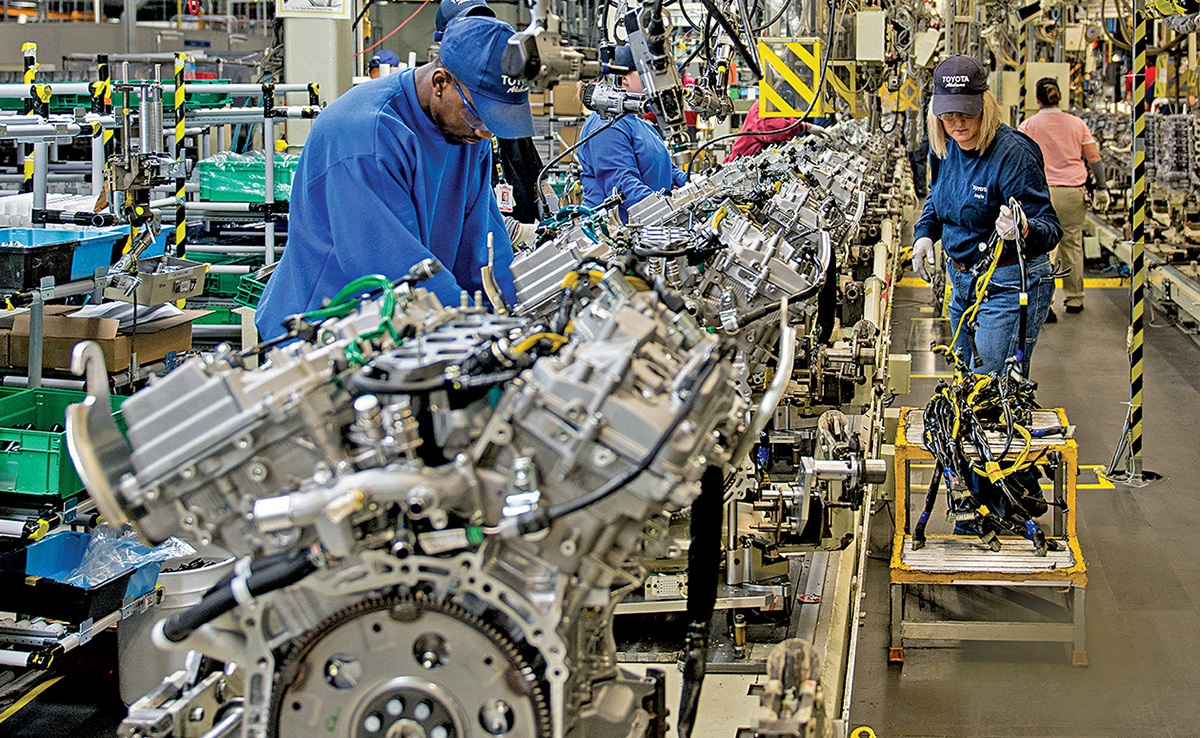
Toyota factory
Toyota said in February it would develop and build autonomous minivans for ride-hailing networks with Aurora and longtime supplier partner Denso Corp.
Lyft’s sale allows it to offload cash-burning side businesses and focus on reviving their core divisions following a bruising pandemic year.
Lyft will now focus on what it can do best with autonomous vehicles by offering services such as routing, consumer interface and managing, and maintaining and cleaning partners’ autonomous vehicle fleets, which could mean added revenue, it said.
Lyft already allows consumers to book rides in self-driving vehicles in select cities in partnerships with Alphabet’s Waymo and Motional, the joint venture between Hyundai Motors and Aptiv.
It will continue to collect real-world driving data through some 10,000 vehicles it rents out to consumers and ride-hail drivers. The data is valuable for the development of self-driving vehicles that Woven Planet will have access to under the deal.
But Lyft also believes human ride-hail drivers will remain important for the foreseeable future to serve customers during peak demand periods, bad weather, or in areas that self-driving cars are unable to navigate.
“Lyft has spent nine years building a transportation network that is uniquely capable of scaling autonomous vehicles. This deal brings together the vision, talent, resources and commitment to advance clean, autonomous mobility on a global scale,” Logan Green, CEO of Lyft said.
MultiChoice’s Showmax is making a big move to secure more market share in Africa as competition intensifies between the online streaming platform and its rival Netflix. As a strategy, Showmax is investing in producing its own local content for African audience, Reuters reported.
The move is in line with the broadcast rules announced by Nigeria’s Ministry of Information last year, that reinforces the requirement of 70% local contents in the broadcast industry. The Ministry mandated the broadcast regulator, Nigerian Broadcasting Commission (NBC), to use their capacity to ensure that contents being broadcast are localized to meet the 70% requirement.
MultiChoice launched Showmax in 2015, and it has risen to become one of the largest streaming platforms in the world, available in 46 African countries and beyond. Showmax’s streaming services extends beyond African shores to Western countries, including Britain and France, which have sizeable African diaspora populations.
As competition with Netflix intensifies, Showmax’s senior executive Yolisa Phahle said in an interview that the company is focusing on developing movies and shows set in its biggest markets of Nigeria, Kenya and South Africa.
“For us, it really is about getting the local entertainment which we know African audiences enjoy, programming in their languages, stories reflecting their realities, their hopes and their dreams,” said Phahle.
She did not say how much Multichoice was investing in the production of local content.
The countries of focus are all pushing to have at least 30% local content in broadcasts, and the streaming companies are working to make it happen.
Showmax released six new original productions last year to add to its catalogue of content from the U.S-based cable channel HBO. It also offers global football, including the English Premier League, on its Showmax Pro platform.
Some of the shows released so far this year include a reality TV series from Nigeria and a police procedural drama set in Kenya.
As the COVID-19 pandemic forced people to spend more time at home, there was an initial increase in viewership for Showmax, Phahle said.
Netflix has in its stream, many popular Nigerian movies including Lion Heart, The Wedding Party, Road to Yesterday and October 1. The company is also introducing new African movies, some of which, it produced.
However, while local contents seem to be paving the way for players in the African streaming market, cost of streaming remains key in winning more audience.
Last week, MultiChoice said it would charge Showmax mobile subscribers across Africa on average 20% less for access on a single mobile device, in recognition that some users may not be able to afford such luxuries during the pandemic-induced economic slowdown affecting most countries.
Phahle said Broadcasters of all kinds on the continent are under huge pressure to keep viewers engaged, and they simply have hundreds and hundreds of other places where they can take their eyeballs or their wallets.
The company is co-producing programmes with HBO and Cinemax on productions set in Africa to global audiences, she said.
“They know that the stories that we are telling from our own backyard will find global audiences,” she said of HBO and Cinemax.