
DD
MM
YYYY

PAGES

DD
MM
YYYY

spot_img

PAGES

Home Blog Page 58

Meta’s Smart Glasses Face a Privacy Reckoning as the Company Goes on a PR Blitz

0

Meta’s smart glasses have become one of the most visible examples of how artificial intelligence is moving from the smartphone into everyday life. But as adoption grows, so does the backlash. Venues are increasingly restricting or banning smart glasses.

While Meta has responded with a renewed public-relations campaign and updates to privacy settings designed to reassure users and the wider public.

The controversy highlights a difficult problem for Meta: convincing people that wearable cameras can become socially acceptable without making everyone around the wearer feel as though they are being recorded.

Meta’s smart glasses, developed with Ray-Ban, combine conventional eyewear with cameras, microphones, speakers and AI-powered features. Users can take photographs, record video, make calls, listen to music and interact with artificial intelligence without reaching for a phone.

That convenience is precisely what makes the technology attractive—and potentially uncomfortable. Unlike a smartphone, smart glasses can operate almost invisibly. A person wearing them does not necessarily have to raise a device, point it directly at someone or make an obvious gesture before capturing information.

For bystanders, that creates uncertainty. They may not know whether they are being photographed, recorded or analyzed. That uncertainty is increasingly influencing venue policies. Businesses and entertainment locations have legitimate concerns about privacy, intellectual property, security and customer comfort.

Some venues have begun restricting smart glasses in the same way they restrict cameras or other recording equipment. For Meta, such restrictions represent more than an inconvenience. They could become a barrier to mainstream adoption.

Meta’s response has therefore extended beyond product development into public relations. The company has been emphasizing privacy controls, user awareness and responsible use while updating settings intended to give wearers more control over how their devices and AI features operate.

The strategy reflects an important reality: technological capability alone does not determine whether a product succeeds. Social acceptance matters just as much. Meta needs users to understand what their glasses can collect, when information is processed and what controls are available.

At the same time, it needs bystanders to feel that they retain reasonable expectations of privacy. That is a much harder challenge because privacy is not experienced only by the person who owns the device. There is also a broader debate about AI.

Smart glasses increasingly allow AI assistants to interpret what users see, answer questions and provide contextual information. This transforms the glasses from recording devices into mobile sensing platforms.

The more capable these systems become, the more important questions arise around consent, data retention and the boundaries between personal assistance and surveillance.

Meta’s PR blitz is therefore partly an effort to get ahead of a cultural backlash before it becomes entrenched. The company has seen what happens when privacy concerns become synonymous with a product category.

Its earlier Google Glass era offers an obvious lesson: consumers may embrace futuristic technology in theory while rejecting it when the social implications become uncomfortable. The outcome could shape the entire wearable-AI market.

If Meta can establish clear norms around recording indicators, privacy controls and responsible behavior, smart glasses may gradually become as ordinary as smartphones. If venues continue to see them as unacceptable, their usefulness could be fragmented by a patchwork of restrictions.

Meta is not simply selling glasses. It is asking society to accept cameras and artificial intelligence at eye level. That requires more than clever hardware. It requires trust—and trust is something that cannot be manufactured through marketing alone.

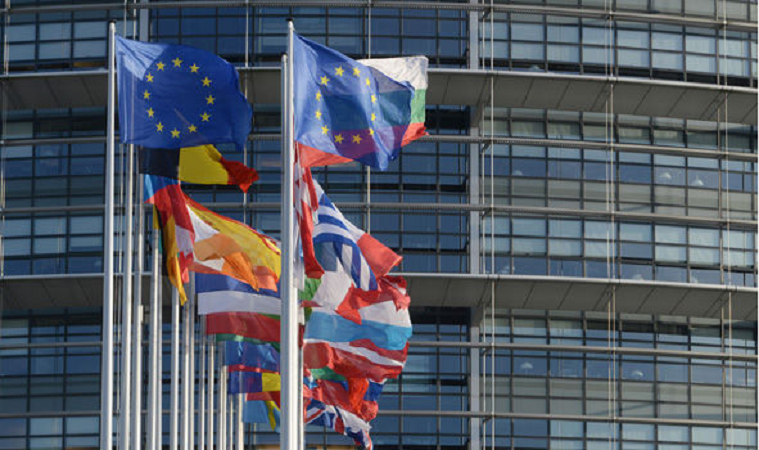
21 Global Banks and Asset Managers Commit to Launching USD Stablecoin in 2027

0

A consortium of 21 leading international financial institutions has announced plans to launch a new stablecoin company.

The consortium includes Bank of America, Citi, Goldman Sachs, Deutsche Bank, UBS, Wells Fargo, Fidelity Investments, and WisdomTree.

The company is expected to be established in the second half of 2026. It plans to issue a U.S. dollar-pegged stablecoin. The stablecoin is targeted for market launch in the first half of 2027.

The group, which has more than doubled in size since its initial announcement of ten banks in October 2025, said the new company will focus first on a USD-denominated stablecoin before expanding into other G7 currencies, prioritizing the euro.

The initiative is designed to serve wholesale, institutional and retail markets, with primary use cases centered on cross-border payments and digital asset settlements.

Participating institutions span North America, Europe, Asia, the Middle East and Africa. North American members include Bank of America, Capital One, Citi, Fidelity Investments, Goldman Sachs, PNC Financial Services, Scotiabank, TD Bank Group, Wells Fargo and WisdomTree.

European participants comprise Banco Santander, BBVA, Commerzbank, Crédit Agricole, Deutsche Bank, Lloyds Banking Group, Rabobank and UBS. MUFG Bank, Sirius International Holding and Standard Bank complete the roster.

The consortium said the stablecoin solution is intended to be GENIUS Act- and MiCA-compliant, as applicable, combining bank-grade compliance, strong governance, distribution capabilities and institutional risk management.

Advisers Boston Consulting Group and Brunswick Group are supporting the effort. The name of the new company will be announced in due course, subject to closing conditions.

The move comes amid growing institutional interest in regulated digital money following the rebound in crypto markets and evolving regulatory frameworks in the United States and Europe.

The stablecoin market is moving beyond its origins in cryptocurrency trading and increasingly becoming part of the broader financial infrastructure.

Stablecoins are digital assets designed to maintain a relatively stable value, typically by being pegged to fiat currencies such as the U.S. dollar and backed by reserves such as cash, bank deposits, or short-term government securities.

By the end of May 2026, global stablecoin market capitalisation had reached roughly $320 billion, according to the Bank for International Settlements. Other estimates put the market even higher, reflecting its rapid expansion and the growing number of financial applications being developed around stablecoins.

One of the clearest signs that stablecoins are entering mainstream finance is the growing involvement of banks and traditional financial institutions.

For banks, the attraction goes beyond cryptocurrency. Stablecoins can potentially make money programmable. A payment could be embedded directly into a digital transaction and executed automatically once predefined conditions are met.

This could have implications for trade finance, corporate treasury, securities settlement and machine-to-machine payments. They can also provide a common digital settlement layer connecting banks, fintech companies, exchanges and other financial institutions operating on different systems.

That could make cross-border transactions faster and potentially reduce some of the friction created by multiple correspondent banks, operating hours and settlement processes.

The rise of stablecoins is also pushing banks to develop tokenized deposits—digital representations of commercial bank money recorded on blockchain-based infrastructure.

The emergence of bank-backed stablecoins could ultimately lead to a financial system where traditional money and blockchain-based money operate side by side, making stablecoins less of a cryptocurrency product and more of a new digital rail for moving money globally.

While independent stablecoin issuers currently dominate the market, this bank-led consortium represents one of the most significant traditional finance efforts to date to create a trusted, widely distributed form of digital cash on public blockchains.

Europe’s Migration Policy Takes a New Turn With Uganda Return Hub Plan

0

Europe’s migration policy is entering a new and controversial phase as Germany, Austria, Denmark, Greece and the Netherlands move closer to establishing a migrant return hub in Uganda.

The five countries are working together on a system that could transfer people who have no legal right to remain in Europe to a facility outside the European Union while arrangements are made for their eventual return to their countries of origin.

The initiative reflects a broader European shift toward making irregular migration more difficult and returns more effective.

The five countries are expected to discuss the initiative at a ministerial meeting in Copenhagen this week. Uganda has emerged as the leading candidate, with reports suggesting that the facility could become operational in 2027.

Rwanda is also reportedly being considered as an alternative. The concept of return hubs gained a stronger legal foundation in 2026. In June, EU institutions reached agreement on a new return framework that allows member states to establish facilities in third countries for people who have received return decisions.

Such hubs could function either as temporary transfer centres or as locations from which migrants are eventually returned to their countries of origin.

For European governments, the attraction is straightforward. Returning people whose asylum claims have been rejected has historically been difficult.

The European Commission said the EU’s effective return rate reached only 28% in 2025, illustrating the gap between issuing removal decisions and actually carrying them out. The new framework is intended to close that gap through faster procedures, stronger cooperation between member states and more effective arrangements with third world countries.

The policy is part of a wider transformation in European migration management. The EU’s Pact on Migration and Asylum began applying in June, introducing faster screening and asylum procedures, stronger border-management mechanisms and new arrangements for handling migration pressure.

European governments are increasingly combining border controls, agreements with countries outside the bloc and accelerated returns in an effort to discourage irregular arrivals. Supporters argue that this approach could strengthen the credibility of Europe’s asylum system.

If migrants who have exhausted legal avenues know that a final rejection is likely to lead to removal, governments believe fewer people may attempt irregular journeys in the first place. The European Commission explicitly describes effective returns as important both for migration management and for discouraging illegal arrivals.

Critics worry that transferring migrants thousands of kilometres away could make access to legal assistance and judicial remedies more difficult. There are also concerns about whether third world-country facilities can guarantee adequate living conditions and protection from human-rights violations.

Research from the European Parliament has warned that return hubs could face significant legal and practical complications and potentially involve high costs while affecting relatively small numbers of migrants.

European law attempts to address some of these concerns. Agreements with third world countries must respect international human-rights standards and the principle of non-refoulement, which prohibits sending people to places where they face serious risks of persecution or other grave harm.

Unaccompanied minors are excluded from such arrangements. The Uganda proposal represents more than a new deportation mechanism. It signals Europe’s determination to shift migration policy from crisis response toward deterrence and enforcement.

Whether return hubs become an effective instrument or an expensive source of legal and political controversy will depend on implementation. Europe may be reducing irregular migration, but the next challenge is proving that stricter control can coexist with the continent’s obligations to human rights and asylum protection.

X Recorded Massive Downloads in August, Its Highest Monthly Total Ever

0

Elon Musk-owned social media platform X, is experiencing a surge in global user interest, with millions of downloads.

Reports reveal that X recorded 103 million App Store downloads in August, its highest monthly total ever, marking a new peak for the platform.

In a brief post on X, Musk wrote,

“X reaches highest monthly downloads ever,” amplifying earlier claims that August delivered the strongest monthly total since the app’s launch.

The milestone highlights growing momentum for the platform as it continues to expand its reach and strengthen its position in the global social media market.

Notably, the news arrives amid ongoing efforts to expand the platform beyond its origins as a microblogging service. Under Musk’s ownership, the company has pushed features aimed at turning X into a broader “everything app,” including longer-form video, payments, AI tools, and expanded creator tools.

Key Features Driving X Toward an Everything app

1. Grok AI

X integrated xAI’s Grok directly into the platform, giving users an AI assistant capable of answering questions, analyzing information, and interacting with the real-time data generated by conversations on X.

2. Creator monetization

X has built several ways for creators to earn money, including Creator subscriptions and its advertising revenue-sharing program. The company said it had paid more than 80,000 creators through its ad-revenue-sharing program.

3. Long-form publishing and messaging

X has expanded beyond short posts with long-form content, enhanced direct messaging, voice messages, and encrypted messaging for eligible users. This gives writers, journalists and creators more room to publish directly on the platform.

4. Payments and financial services

Perhaps the most important part of Musk’s everything-app vision is payments. X has been working toward enabling peer-to-peer payments and broader financial transactions on the platform. The platform previously stated that it had secured money-transmitter licenses in several U.S. states and was moving toward a global payment system.

Last month, Nikita Bier, the former head of product at X who now serves in an advisory role, confirmed that trade buttons will soon be added to the platform’s Cashtags feature.

Cashtags first launched on X in April 2026 for iPhone users in the United States and Canada. The feature lets users embed live price charts for Solana and Ethereum directly into posts.

Tapping a cashtag or a contract address displays the chart alongside related discussions on the platform, so users no longer need to switch apps to check prices or context. Support for pasting new token contract addresses has already made it easier to verify and discuss freshly launched assets.

Once available, users would be able to initiate buys or sells from within a post or chart view. X has previously clarified that it does not plan to act as a brokerage or execute trades itself.

Instead, the buttons are expected to connect users to external partners or existing financial tools while keeping the experience inside the X app.

The latest download record adds a positive data point to the platform’s recent trajectory and was quickly amplified by accounts that track technology and finance news.

Whether the surge translates into sustained daily active usage will likely become clearer in the coming months as additional metrics emerge. For now, the record download figure offers the clearest recent signal that interest in installing or reinstalling X remains elevated.

Nigeria’s Return to FTSE Russell’s Frontier Market Index Marks a New Chapter for Foreign Investment

0

Nigeria is set to regain an important place in the global investment landscape after FTSE Russell confirmed that the country will return to its Frontier Market classification effective September 21, 2026.

The decision represents a significant reversal from Nigeria’s 2023 downgrade to “Unclassified” status and signals growing international confidence in the reforms undertaken to address some of the structural weaknesses that previously discouraged foreign investors.

Nigeria’s removal from the FTSE Russell classification system in 2023 was largely driven by problems in the foreign exchange market. Severe FX liquidity shortages made it difficult for international investors to access foreign currency.

While delays and complications surrounding the repatriation of investment proceeds created additional uncertainty.  For global portfolio managers, these obstacles increased the operational and financial risks associated with holding Nigerian assets.

The return to the Frontier Market category suggests that conditions have improved sufficiently for Nigeria to become more accessible to international capital. Improved foreign-exchange liquidity, greater exchange-rate stability and reforms designed to make capital repatriation easier have helped rebuild confidence.

These developments are particularly important because international investors require not only attractive asset valuations but also predictable mechanisms for entering and exiting markets.

FTSE Russell’s assessment also considered Nigeria’s transition to a T+1 settlement cycle, which was introduced in June 2026.

The move means that securities transactions are settled one business day after the trade date, bringing Nigeria closer to settlement standards increasingly adopted across major international markets.

FTSE Russell confirmed that the transition did not create material operational problems for global investors, removing another potential obstacle to Nigeria’s reintegration into international investment benchmarks.

The most immediate consequence of the reclassification is likely to be renewed foreign portfolio investment. Once Nigerian equities return to major frontier-market index series, passive exchange-traded funds and other index-tracking investment vehicles may need to increase their exposure to Nigerian securities to reflect the benchmark changes.

Such flows can be particularly powerful because they are driven by index methodology rather than discretionary decisions by individual fund managers. Nigeria’s largest and most liquid companies are therefore positioned to benefit first.

Tier-1 banks could attract significant attention because of their market size and importance to the domestic economy. Major telecommunications companies, including MTN Nigeria and Airtel Africa, are likely candidates for increased international exposure, alongside large-cap consumer goods companies with strong trading liquidity.

The Nigerian stock market has already provided an indication of investor expectations. The market reportedly gained about ?305 billion in a single trading session following the FTSE Russell announcement, as investors anticipated renewed foreign capital inflows.

The rally demonstrates how strongly market sentiment can respond to changes in Nigeria’s international financial-market status. However, the reclassification should not be viewed as an automatic guarantee of sustained capital inflows.

Nigeria will still need to maintain FX liquidity, preserve investor access to foreign currency and ensure that repatriation processes remain efficient. Consistent economic policy will be essential to converting renewed international recognition into lasting investment.

Nigeria’s return to the FTSE Russell Frontier Market classification is more than an index adjustment. It is a vote of confidence in reforms that have begun addressing barriers that previously isolated Nigerian assets from global investors.

If policymakers maintain the momentum, the September 21 return could become an important milestone in Nigeria’s effort to reconnect its capital markets with the international financial system.