


Killing The Stereotype: Ahmed Musa Joins Kano Pillars

Ahmed Musa has joined his State club Kano Pillars following his inability to secure a contract with clubs outside Nigeria. This marks a shift in the professional career of Nigerian football players, who seldom play for home-based clubs after their spell abroad, preferring even clubs in other African countries.
Musa, who is currently Nigeria’s national team skipper, joins as a Nigeria Professional Football League (NPFL) elite player with the aim of boosting their image as well as helping himself maintain fitness as he continues his search for a European club.
The 28 year-old who left the Riyad-based Saudi Arabian club, Al Nassr in October, has struggled to find a team outside Nigeria even though he has reportedly received offers from England, Russia and Turkey.
Musa said the idea behind his decision is to paint the neglected Nigerian league in good light.
“Anything that improves the image of Nigerian football is something that I strive to embark on and Kano Pillars holds a special place in my heart,” the former Leicester City player told BBC Sport Africa as he considered the deal.
“It’s the team that helped me become the professional footballer I am today, so this is more than just football but a very strong bond.”
The lackluster situation in Nigerian league has made it unattractive to players who have experienced professional life with clubs outside Nigeria, especially Europe. Although they have been cases where some Nigerian footballers have returned to the local league after a spell in Europe, it has been in low numbers compared to their counterparts in other parts of the world.
In Brazil, a South American country with one of the highest numbers of football exports to Europe, there is an overwhelming record of players’ willingness to return to their domestic league after leaving their European clubs.
Robinho, after shining with top European clubs such as Real Madrid, AC Milan and Man City, returned to Santos, his home club. His fellow Brazilian, Ronaldinho, who played for PSG, Barcelona and AC Milan and won the Ballon D’or twice, also had the pleasure to return to Brazil when he left Europe, playing for his home clubs including Clube Atletico Mineiro, Fluminense FC and Clube de Regatas do Flamengo.
Argentine astro and current world best player, Lionel Messi has in his contract with Barcelona, a clause that will allow him to return to his childhood club, Newell Old Boys in his home town. Carlos Tevez, Messi’s former national team mate turned down offers from European to return to Boca Juniors, a local Argentine club.
Musa, who played for CSK Moscow of Russia and Leicester City of England before moving to Saudi Arabia, wishes to use his time with Kano Pillars to keep fit for the upcoming Super Eagles’ games and change the stereotype of Nigerian overseas-based players and their home clubs.
For the NPFL, Musa presence offers a chance to promote the despised domestic league. Nigerian football fans are European football-pro, and hardly give attention to the local clubs and their players due to their “lowkey” status.
It is not clear how long Musa will play for Kano Pillars before finding another club abroad, but it is hoped his stay at the club will woo the passion for the domestic league out of Nigerians.
Nigeria Approves Activation of Newly Registered SIMs As Telcos Count Losses

The Minister of Communications and Digital Economy, Dr Isa Pantami has coordinated and led the development of a Revised National Digital Identity Policy for SIM Card Registration in collaboration with all other stakeholders.
SIM card registration was suspended in Nigeria following the government’s decision to affix National Identification Number (NIN) to every SIM. The decision however came with unpalatable results ranging from crowded gathering in the face COVID-19 to huge economic losses in the telecom industry.
The NIN registration exercise has stagnated the growth of telecom industry, with operators losing millions of subscribers as new SIM purchase, registration and activation were halted and many without NIN were disconnected.
As of March, the number of telecom subscribers in the country dropped by more than 11.84 million in four months, according to industry statistics from the Nigerian Communications Commission.
The situation has drawn severe criticism from experts who believe the government is threading a dangerous path by prolonging the prohibition of new SIM registration and activation. The information and communication industry has served as the economy’s cash cow in the wake of pandemic-induced economic strains, yielding 14.70% of the 94.13% non-oil sector contributed to exit Nigeria from recession in Q4 2020.
The decision to pause the play of telecom growth has been widely seen as an anti-investment display in a time Nigeria needs Foreign Direct Investment most.
So in a press release on Thursday, 15th April, 2021 signed by Technical Assistant (Information Technology) to the Minister of Communications and Digital Economy, Dr Femi Adeluyi, he said the decision to lift the restriction on new sim purchase/registration is in line with the Nigerian Communications Act (NCA) 2003, Section 23(a), specifies the role of the Minister to include the formulation, determination and monitoring of the general policy for the communications sector.

The statement reads below.
An earlier Policy was approved on the 4th of February 2020, while the Revised Policy was developed in early March 2021. The final amendments to the revised Policy based on the directives of Mr President to make the use of NIN mandatory for all SIM registration were completed yesterday, 14th of April, 2021.
Prior to that, the key aspects of the draft Policy were presented to the stakeholders at the 4th Review Meeting of the Ministerial Task Force (MTF) on the NIN-SIM registration which held on Friday, 26th of February, 2021. Key stakeholders and members of the MTF who joined the Honourable Minister at the meeting included the EVC/CEO of the Nigerian Communications Commission (NCC), DG/CEO of the National Identity Management Commission (NIMC), DG/CEO of the National Information Technology Development Agency (NITDA), Comptroller-General of the Nigeria Immigration Service (NIS) and the Chairman of the Association of Licensed Telecommunications Operators of Nigeria (ALTON). Others included the NCC Executive Commissioners for Technical Services and Stakeholder Management, MD/CEOs of MTN, Airtel, EMTS (9Mobile), NTEL, Spectranet and SMILE, as well as the COO of Glo.
Dr Pantami also presented the Revised Policy to His Excellency, President Muhammadu Buhari, GCFR on Friday, 26th of March, 2021. Mr President made further improvements and endorsed it for implementation. Mr President also commended the Honourable Minister for his commitment in carrying out the responsibility of developing the digital economy sector, including championing the NIN-SIM registration process.
The Policy includes Guidelines on New SIM Acquisition and Activation, SIM Replacement, New SIM Activation for Corporates and Internet-of-Things/Machine-to-Machine (IoT/M2M), amongst others. The possession of a National Identity number will be a prerequisite for each of these categories. For the Corporate registration, institutions will be required to appoint a Telecoms Master (at the minimum of an Executive Management level) to provide the operational Primary NIN representation. The Telecoms Master will also be responsible for ensuring that the users provide their NINs to serve as a Secondary NIN.
For IoT/M2M activations, SIM security protocols would be implemented on the SIM profile to ensure that SIMs can only be used for point to point data services specific to the URL they are working with. All other services will be barred. In the event that a data only service is particular to individual use (eg home car tracking, WiFi, MiFi services, etc), the standard NIN registration process will be followed. A Telecoms Master will also be required for Corporates requiring IoT/M2M activations. The full details of the requirements for each class of service will be made available in due course.
Significant progress has been made in the NIN registration process across the country. Nonetheless, the Federal Government is committed to supporting all Nigerians and legal residents to obtain a NIN. The biometric verification process has been slower than anticipated, owing largely to the non-adherence of many previous SIM biometric capture processes to the NIMC standards. The Revised Policy will ensure that operators conform to the required standards for biometric capture.
The Guidelines in the Policy have been painstakingly developed and while they are thorough, it should be noted that they have been developed that way in National interest since the SIM is essentially a national resource. Citizens and legal residents are encouraged to bear with the government as the process has been developed in the best interest of the country.
The implementation of the Policy will commence on Monday, 19th of April 2021. The issuance of New SIMs and other suspended activities will resume on the same date, as long as verification is done and the guidelines are fully adhered to. The Honourable Minister has also directed NCC and NIMC to ensure that the provisions of the Policy are strictly followed by all operators and subscribers.
Dr Pantami wishes to thank Nigerians for their patience and compliance with the Federal Government’s directive on the NIN-SIM registration exercise. He reiterated the government’s commitment to continually taking decisions aimed at easing the pains of the citizens with regard to issues related to NIN and SIM registration.
However, while Nigerians rejoice that they can once again, purchase and register SIMs freely, the question many have been asking in view of the directive that a new SIM must be registered with NIN is: what will a foreign investor, who just touched down at the Nigerian airport, and needs a new phone line to make a call, do?
Till DEBT Do Nigeria Apart from Its Future!
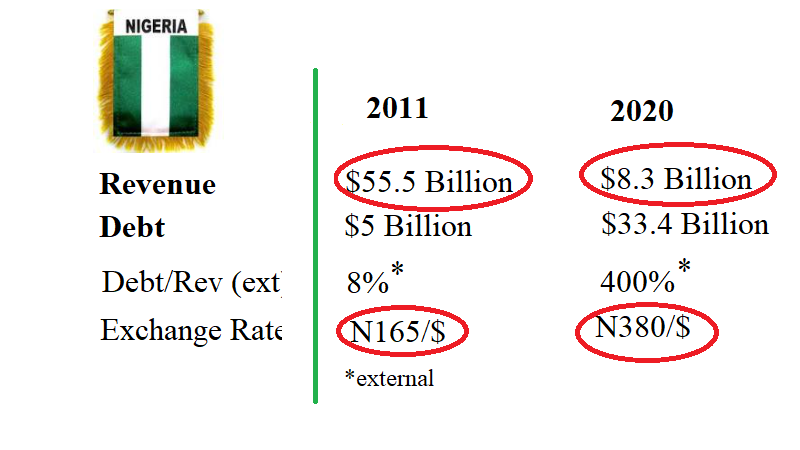
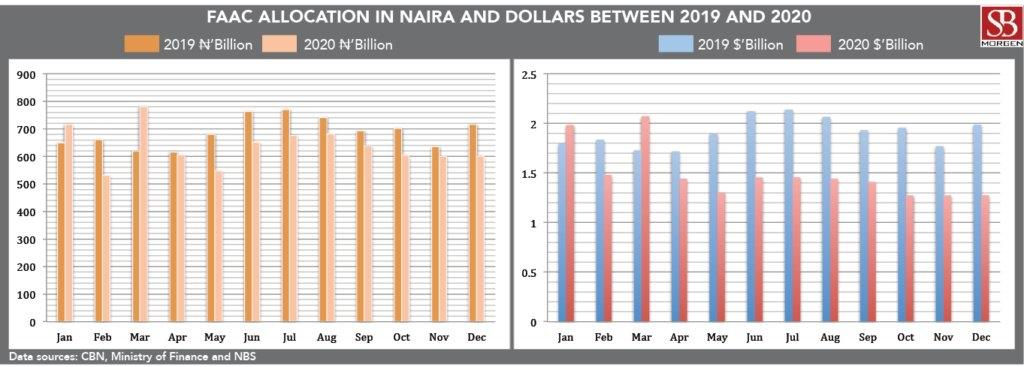
This is the state of Nigeria today and one that calls for the fierce urgency of now. Across core metrics, we are becoming poorer. It is very important to note that the declining revenue is not because the Nigerian population is shrinking. Rather, what is happening is that most productive sectors are leaving the tarmac even as we are scaling bureaucracy. The fact is this: population is rising but economic opportunities are massively shrinking.
People make the case that we cannot compare today with the past since the exchange rate with US dollars is a moving target. Yet, even if you are to use today’s exchange rate for 2011, Nigeria would have still made close to double the revenue.
The trillions of Naira which gave $55.5 billion at N165/$ , if you use N380/$, would deliver at least twice of 2020 revenue. You may blame Covid-19 for 2020 paralysis, but check 2019, the difference is very marginal.
So, there is a problem – and I want the government to understand that point. We are using debt to cover the revenue shortfall without addressing the root cause which is evident: productivity has dropped. Mr. President, look at data; what we are doing today is not working! We need a new strategy, urgently!
All data on my table is from a speech given by a former governor of the Central Bank of Nigeria (CBN) , Sanusi Lamido
“If you go through the CBN statistical bulletin, in 2011, the total federally collected revenue from all sectors was 18.9 trillion Naira at 165 Naira to the dollar. This will have placed federally collected revenue in 2011 at $55.5 billion. Meanwhile, debt at that time was 5 billion so we had an external debt to external revenue of about 8 per cent in 2011.
“By 2020 we have an external debt of about $33.4 billion but all revenues in 2020 were about $8.3 billion. So it has moved from 8 per cent to 400 per cent between 2011 and 2020.”
Facebook Facing Fines As EU Launches Investigation over 533 Million Users Data Leak
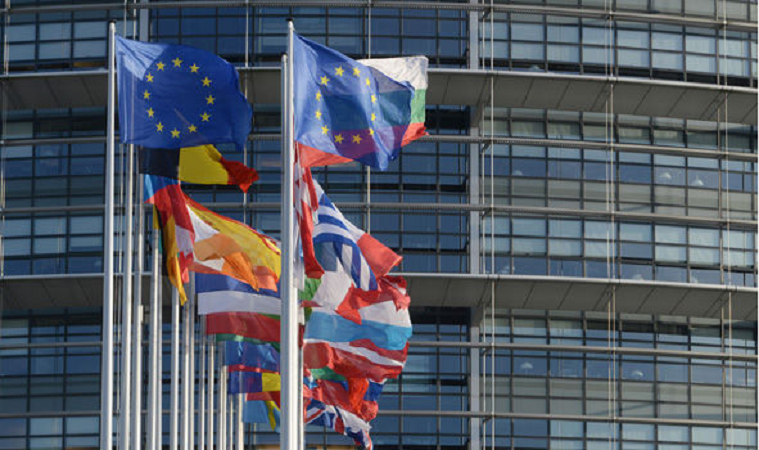
Ireland’s Data Protection Commission, the body charged with overseeing Facebook’s privacy compliance in the European Union, said it had opened an investigation into the social media giant on Wednesday. If Facebook is found to have violated the EU’s data rules, it could face a monetary fine of up to 4% of its $86 billion global revenue, Business Insider reported.
Facebook was caught in yet another data scandal earlier this month, when the personal data of over 533 million Facebook users were dumped online for free in a hacking forum. The data included phone numbers that users didn’t make public on their Facebook profiles, which were scraped by cybercriminals in violation of Facebook’s terms of service.
In a statement, the DPC said it believes EU data rules “may have been, and/or are being, infringed in relation to Facebook Users’ personal data.”
“The DPC, having considered the information provided by Facebook Ireland regarding this matter to date, is of the opinion that one or more provisions of the GDPR and/or the Data Protection Act 2018 may have been, and/or are being, infringed in relation to Facebook Users’ personal data,” the regulator said.
Facebook’s earlier attitude toward the data leak was insouciant. The social media platform had downplayed it, saying the data was scrapped due to a vulnerability that the company patched in 2019, and refused to address the matter publicly.

Facebook spokesman said last week the social media company does not plan to notify the hundreds of millions affected by the data breach because it was not confident it had full visibility on which users would need to be notified. Facebook has said it plugged the hole after identifying the problem at the time.
But in response to DPC’s investigation, Facebook spokesman told Insider that it is cooperating with the inquiry, which it said is about how a vulnerability in a Facebook tool made it possible to gather information about a Facebook user by entering their phone number.
“We are cooperating fully with the IDPC in its enquiry, which relates to features that make it easier for people to find and connect with friends on our services. These features are common to many apps and we look forward to explaining them and the protections we have put in place,” the spokesperson said.
Facebook has been enmeshed in a series of private data breach controversies since the notorious Cambridge Analytica, and has been subject of scrutiny in the United States and Europe, with antitrust and the use of private data being the primary concerns.
Following increasing cases of misuse of private information, the EU Commission and other watchdogs have upped their oversight function on how social media platforms manage people’s data.
Late last year, European Union started a new set of laws that will guide the use of data in Europe.
The DPC investigation will probe whether there is legal obligation for Facebook to notify users and European regulators when it found and fixed the vulnerability.
“The Commission considers it appropriate to determine whether Facebook Ireland has complied with its obligations, as data controller, in connection with the processing of personal data of its users by means of the Facebook Search, Facebook Messenger Contact Importer and Instagram Contact Importer features of its service, or whether any provision(s) of the GDPR and/or the Data Protection Act 2018 have been, and/or are being, infringed by Facebook in this respect,”it said in a statement.
The EU’s data privacy rules, which are regulated by General Data Protection Regulation known as GDPR, require such disclosures — but the GDPR only applies to data processed after 2018, and it’s not yet clear if the leaked Facebook data was scraped before the GDPR went into effect, Insider noted in the report.
The European Commission. Justice commissioner Didier Reynders said on Monday that he had discussed with the DPC head Helen Dixon regarding the Facebook leak and will follow the case closely and is committed to supporting authorities, urging Facebook to cooperate with the investigation.