DD
MM
YYYY

PAGES

DD
MM
YYYY

spot_img

PAGES

Home Blog Page 5819

Japan’s Central Bank Begins Digital Currency Issuance Experiment

0

More countries are rolling out plans to establish digital currencies as the wave of crypto currencies spreads across borders, disrupting mainstream financial systems and riling up central banks.

On Monday, the Bank of Japan (BOJ) began experiments to study the feasibility of issuing its own digital currency, joining efforts by other central banks that are aiming to match the innovation in the field achieved by the private sector, Reuters reported.

In January, China embarked on the third trial of e-yuan in the city of Shenzhen, as part of a larger scheme to introduce the digital currency in mainland China. The first test was held in Luohu District, in October 2020, while a second round was conducted in Futian District at the beginning of this year.

In February, Beijing joined Hong Kong, Thailand and the United Arab Emirates (UAE), along with the Bank of International Settlements (BIS), to explore cross-border payments for digital currencies.

These big moves by China seems to have ignited other nations to speed up action toward developing their own digital currencies. Last month, European Central Bank announced a plan to issue digital euros, and America is contemplating digitizing the dollar. Global central banks are looking at developing digital currencies to modernize their financial systems, ward off the threat from cryptocurrencies and speed up domestic and international payments.

The Asians are faster with their plans as they believe it will help their currencies to upset the US dollar.

For Japan, the first phase of experiments, to be carried out until March 2022, will focus on testing the technical feasibility of issuing, distributing and redeeming a central bank digital currency (CBDC).

“Since the release of “The Bank of Japan’s Approach to Central Bank Digital Currency” in October 2020, the Bank of Japan has been preparing to conduct experiments, such as specifying basic requirements of the test environment and selecting partners to collaborate with, in accordance with this approach.

“We will begin to test the technical feasibility of the core functions and features required for CBDC through a Proof of Concept (PoC) from April 2021. If the Bank judges it necessary to go a step further, it will also consider a pilot program that involves payment service providers (PSPs; e.g., banks and non-bank PSPs) and end users,” the BOJ said in a statement.

The BOJ will thereafter move to the second phase of experiments that will scrutinize more detailed functions, such as whether to set limits on the amount of CBDC each entity can hold.

If necessary, the central bank will launch a pilot programme that involves payment service providers and end users, BOJ Executive Director Shinichi Uchida said last month.

“While there is no change in the BOJ’s stance it currently has no plan to issue CBDC, we believe initiating experiments at this stage is a necessary step,” Uchida told a committee of policymakers and bank lobbies looking into CBDC.

While China leads the pack, the BOJ has been speeding up efforts to catch up with a plan announced in October to begin experimenting on how to operate its own digital currency.

In February, the European Central Bank and the Bank of Japan released the outcome of the phase 4 of their joint research on distributed ledger technology in a report titled, “Balancing confidentiality and auditability in a distributed ledger environment,” under the Stella project.

However, while the experiment has recorded significant success, the BOJ acknowledges that developing a sustainable digital currency will not come easy, as there are still many technical and non-technical questions to answer.

LG is Shutting Down its Smartphone Division

0

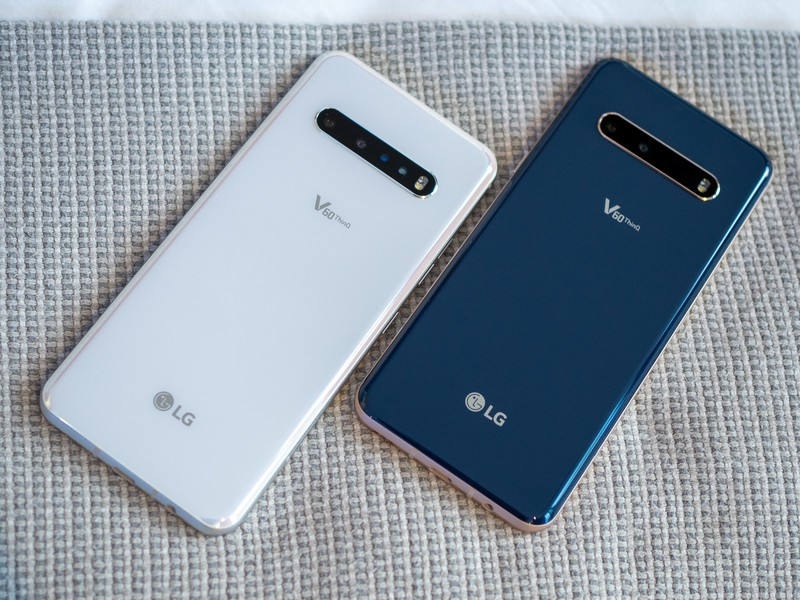
LG Electronics Inc has confirmed it will wind down its loss-making mobile division after failing to find a buyer following the approval of its board of directors on April 5.

Having struggled for years to make its smartphone outfit profitable, the move will make it the first major smartphone brand to completely withdraw from the market.

A statement by the company said the move will enable it to focus on other areas of growth.

“LG’s strategic decision to exit the incredibly competitive mobile phone sector will enable the company to focus resources in growth areas such as electric vehicle components, connected devices, smart homes, robotics, artificial intelligence and business-to-business solutions, as well as platforms and services,” it said.

Reuters reported that its decision to pull out will leave its 10% share in North America, where it is the No. 3 brand, to be gobbled up by Samsung Electronics and Apple Inc with its domestic rival expected to have the edge.

“In the United States, LG has targeted mid-priced – if not ultra-low – models and that means Samsung, which has more mid-priced product lines than Apple, will be better able to attract LG users,” said Ko Eui-young, an analyst at Hi Investment & Securities.

LG’s smartphone division has logged nearly six years of losses totaling some $4.5 billion. Dropping out of the fiercely competitive sector, the company said it will continue to leverage its mobile expertise and develop mobility-related technologies such as 6G to help further strengthen competitiveness in other business areas.

Before its troubles started, LG was early to market with a number of cell phone innovations including ultra-wide angle cameras and at its peak in 2013, it was the world’s third-largest smartphone manufacturer behind Samsung and Apple.

But later, its flagship models suffered from both software and hardware mishaps which combined with slower software updates saw the brand steadily slip in favor. Analysts have also criticized the company for lack of expertise in marketing compared to Chinese rivals.

In early 2020, LG’s CEO Kwon Bong-seok pledged to revive the company’s fading flames by 2021. His plan was to expand LG’s mobile lineup and steadily release new ones attached with some wow factors to woo customers.

The company introduced LG’s Velvet and Wing, but they failed to entice consumers. The market has been increasingly growing in favor of its rivals. LG’s stake in the global phone market was down to just 1.7 percent. Efforts by the company, including outsourcing the designs of more of its low-and-mid-range handsets to third-parties, failed to revamp its dwindling sales.

LG acting on its narrowed options, hoped to sell the smartphone outfit. It was reported that the once South Korean mobile giant was in talks with Germany’s Volkswagen AG and Vietnam’s Vingroup JSC, but the discussions failed.

Reading the handwriting on the wall, the company could not keep the loss-incurring smartphone division open any longer.

While other well-known mobile brands such as Nokia, HTC and Blackberry have also fallen from lofty heights, they have yet to disappear completely.

LG’s current global share is only about 2%. It shipped 23 million phones last year which compares with 256 million for Samsung, according to research provider Counterpoint.

In addition to North America, it does have a sizable presence in Latin America, where it ranks as the No. 5 brand.

While rival Chinese brands such as Oppo, Vivo and Xiaomi do not have much of a presence in the United States, in part due to frosty bilateral relations, their and Samsung’s low to mid-range product offerings are set to benefit from LG’s absence in Latin America, analysts said.

LG’s smartphone division, the smallest of its five divisions accounting for about 7% of revenue, is expected to be wound down by July 31.

The company said details related to employment will be determined at the local level. Reuters reported that in South Korea, the division’s employees will be moved to other LG Electronics businesses and affiliates, while elsewhere decisions on employment will be made at the local level.

Talks to sell part of the business to Vietnam’s Vingroup fell through due to differences about terms, sources with knowledge of the matter have said.

LG Elec shares have risen about 7% since a January announcement that it was considering all options for the business.

LG is yet to decide whether to license out such intellectual property in the future. For now, the company said current LG phone inventory will continue to be available for sale, and core technologies developed during the two decades of its mobile business operations will also be retained and applied to existing and future products.

It will also continue to provide service support and software updates for customers of existing mobile products for a period of time which will vary by region.

Nigerian Banks, Telcos, Cement Firms – Consider Umunneoma Economics Over Adam Smith Economics

1

Many of my former colleagues in banking have surprisingly responded positively to the debate which I started, when I posted that some sectors must play deeper catalytic roles in the Nigerian economy. I used the banks, and suggested that even though they could sell airtime, and make university portals, they should leave such opportunities for others. In the about 37 private messages I have glanced through, even the bankers like the debate. This is a sample:

“… It’s basically to share ideas. No strings attached. We need more of those debates to enlighten us on topical issues. There is this perception that banks are ripping people off and our people need to know that this is wrong. 

Banks are increasingly innovating as margins are thinning down. Obviously, banks capture 360 degree value from customers riding on technology. Airtime vending is one of them. They are only conveniently providing this service to their customers. Telcos are also delving into financial services though regulated by CBN. Imagine what mobile money would have been in Nigeria if it was not a bank led model. 

So the debate shines light on some of these issues.”

Certainly, I want banks, telcos and everyone to do well. And that will mean adopting the spirit of Umunneoma Economics, not full-play Adam Smith Economics. Simply, Umunneoma Economics is an economic philosophy that is central to African culture where you share so that no one is left behind. Why? If we do not address this, soon  Nigeria will have a super class of three sectors with extremely profitable companies, and others largely nothing. The sectors for super-profits would be telcos, fintechs/banks and cement companies. 

In my 2019 convocation lecture in FUTO (Federal University of Technology, Owerri Nigeria), I spoke on economic opportunities in Nigeria – and The Umunneoma Economics. (Umunneoma means “good brethren” in Igbo). In my postulation, I explained how that economic philosophy is the pillar that drives the Igbo Apprenticeship System. The new global capitalist manifesto which is working to go beyond fixated focus on shareholders, to consider ALL stakeholders, is something the Umunneoma Economics is doing already.

The core  tenet of the Igbo Apprenticeship System could be likened to the U.S. Federal Reserve which largely works to keep the U.S. dollars stable (by reducing inflation) and maximize employment through interest rates. So, the Reserve has defined main focus areas even though it can use its systems to do other things. Consequently, the U.S. Congress uses those two main factors to ascertain the effectiveness of the Reserve policy.

So, the challenge would be how we can get them to ensure we build for the future. That is where the Umunneoma Economics comes into play. Yes, Adam Smith economics, while good, is lagging behind as we see the evolution of the stakeholder capitalism over shareholder capitalism.

The future of Nigeria is now largely in the hands of corporate Nigeria since our political system continues to see fractures. Those changes we hope to see in Nigeria will likely come via markets because political leadership seems unperturbed. And if markets do not address those challenges, opportunities of the future will not emerge. So, building economic pipelines would be critical, and I call on the banks, telcos and cement companies to see higher purposes beyond the pure fiduciary ones. If we do not have that mentality, we will fail to create the future and that means we cannot predict it!

The Umunneoma Economics

Kenya Joins South Africa in 5G Roll Out, As Nigeria Watches From A Distance

0

As the world races to upgrade to the five generation internet spectrum, African countries have been dragging feet. The situation is set to widen the gap of poor internet speed in the continent, even though a couple of African countries have moved from observing to participating.

Mid-last year, MTN announced it’s 5G roll out in South Africa. The South African operator said the launch will kick off with the deployment of 100 5G sites.

The network currently covers areas of Johannesburg and Cape Town, as well as Bloemfontein and Port Elizabeth.

Quartz reported that Mobile network operator Safaricom has launched a 5G network in Kenya. This makes it the second country in Africa to roll out the technology to customers, according to GSMA, an organization representing mobile network operators worldwide. The company is trialing the technology in four towns, and expects to expand it to nine over the next year.

Safaricom’s introduction of the technology in Kenya is “an important step in Africa’s 5G journey,” says Kenechi Okeleke, the lead author of a 2019 report on 5G in sub-Saharan Africa by GSMA . “This move will draw a lot of attention to the potential of 5G in the region and the benefits it can bring to society,” he told Quartz.

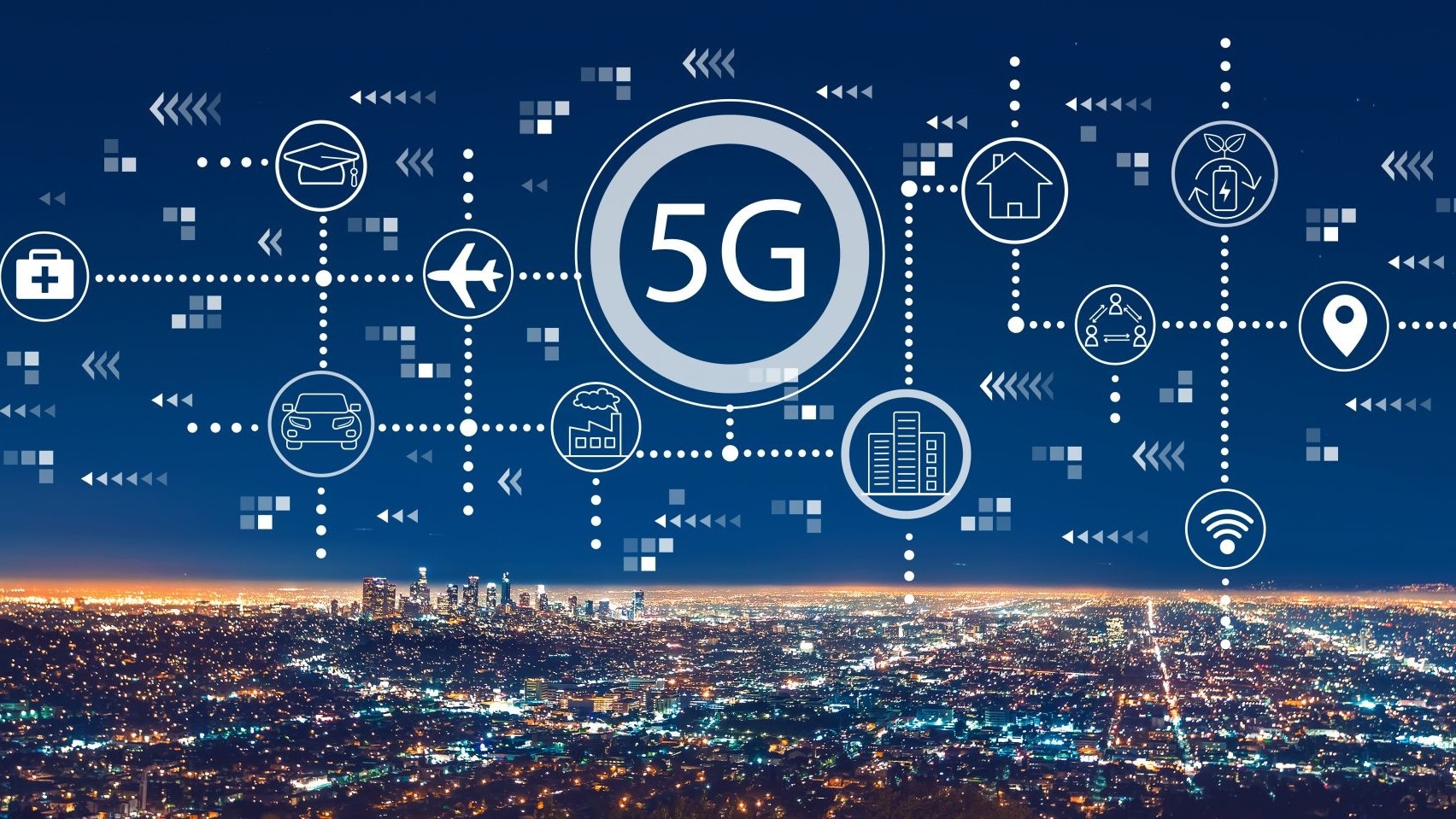
5G is the fifth generation technology standard for broadband cellular networks which offers data speeds up to 100 times faster than 4G and lower latency (the delay an instruction for a data transfer and its actual transfer). It can also support up to 1 million connected devices per square kilometer, compared to up to 100,000 for 4G.

While more African countries have trialed the 5G spectrum, there has been little or no move from most of them to develop the infrastructure.

Nigeria, the largest economy in the continent was early to the 5G trial. The West African country was the first in the region to trial 5G on Nov. 25, 2019. Ever since then, the 5G spectrum has faced and overcame many objections. However, as the concerns of safety trailing the 5G roll out got laid to rest,  Nigeria has been watching from a distance and there has been uncomfortable silence by telecom operators.

The silence bears economic consequences for Nigeria as 5G is projected by GSMA to yield $1.1 trillion economy by 2025. This means that Nigeria’s lukewarm attitude toward the roll out is sidelining her from grabbing a huge share of the emerging market using her booming population.

The COVID-19 pandemic has exposed the world to unprecedented digital life, highlighting the need for faster internet.

Consumers are expected to embrace IoT and use it in new areas of everyday living such as; energy efficiency, home security and fitness and well-being monitoring. With the number of new activities expected to be powered by IoT, the connections are projected to double to 11.4 billion in the same time frame, GSMA said in 2020 report.

Apart from the pandemic-induced necessities, Africa is experiencing a tech boom that cuts across many sectors, particularly fintech. With startups popping up here and there, the continent will need more reliable internet to sustain the economic growth.

5G thus becomes not just a choice for African countries, but a necessity for future economic sustainability.

5G-based internet will hit 1.8 billion connections by 2025, covering a staggering number of the world’s population that could be evenly shared, if every region plays its card well.

Over the next five years, operators are expected to invest around $1.1 trillion in mobile capex globally, and about 80% of it will be in 5G networks, GSMA remarked.

Out of the 1.8 billion 5G connections expected by 2025, developed Asia is projected to have 50%, North America, 48%, Europe 34%, developing Asia, 22%, GCC Arab States 21%, Russia & CIS 12%, Latin America 7%, rest of Middle East and North Africa (MENA) 4% and Sub-Saharan Africa 3%.

“Sub-Saharan Africa will remain the fastest growing region, with a CAGR of 4.6% and an additional 167 million subscribers over the period to 2025. This will take the total subscribers over the period to over 600 million, representing around half the population,” GSMA report said

Read: Sub-Saharan Africa Missing Out on $2.2 Trillion 5G Economy

Safaricom CEO Peter Ndegwa described Kenya’s 5G launch last week as “a major milestone for the country.” The telco is implementing the project using technology from the Finnish company Nokia and the Chinese company Huawei.

The initial focus will be on how 5G will enhance broadband connectivity for Safaricom, says Okeleke, director at GSMA’s research arm, GSMA Intelligence. However, he adds, given the company’s track record in tech innovation, many observers will be on the lookout for potential new use cases that Safaricom could develop for Africa’s unique challenges and customer needs.

With existing 3G and 4G infrastructure download speed of 1.56 megabytes per second (Mbps), Africa’s economic future undoubtedly needs the 5G speed.

5G’s faster speeds bring fiber optic-like connectivity to homes—a broadband connection that can reach speeds of up to 940 megabits per second. This would be a game changer for African businesses and schools that do not have access to fiber-optic internet, especially in a post-Covid-19 world where activities including work, learning, and entertainment are increasingly happening online, Okeleke said.

He added that the technology could enable new and existing technologies such as artificial intelligence and the internet of things—the interconnection via the internet of computing devices embedded in everyday objects—to have a transformative impact on business processes, helping drive productivity and efficiency.  “This has the potential to spark innovative solutions, particularly in extractive sectors such as mining and oil and gas, and help financial services and logistics sectors in the continent,” he said.

There have been concerns over Africa’s ability to keep up with the needed infrastructure to keep 5G network running, including its devices that are currently limited.

“The investment outlay for 5G is very high for mobile phone networks,” Okeleke said. “Phones that can connect to 5G are also very expensive for consumers—the average selling price for 5G phones in the US last year was $730.”

Currently, Africa’s mobile phone market is dominated by 3G and 4G networks. GSMA Intelligence believes that it will remain dominant, with 5G connections making up only 3% of total mobile connections in Africa by 2025. South Africa’s 5G connections account for less than 1% currently. Uptake of 5G may also be slow, since 4G is enough to meet people’s data needs for day-to-day use.

Despite the concerns about investor and market readiness for the 5G technology in Africa, Okeleke expects that the need for 5G will grow quickly as events unfold to create more rooms for internet activities.

“As these things become more commonplace in the region, then we are likely to see that stronger demand for 5G services in a way that saw that strong demand for 2G services in the early 2000s. And it is that demand for 5G services that will improve the economics of investments into 5G networks,” he said.

However, Nigeria’s lax attitude means that South Africa and Kenya will lead Africa’s 5G market.

Tekedia Makes Week 10 of Mhagic Velocity $60,000 Competition; Full Scholarships to 430 Students

0

Tekedia Institute has made it up to  the 10th week of Mhagic Velocity, a talent competition with a reward of N25 million naira ($60,000). Hundreds of people and groups began this competition, and today only few are remaining. Mhagic Velocity is a 13-week in-app show. It features videos or pictorial upload of talents & skills, tasks, and weekly the most promising progress. Our talent: we make learning uncommon so that everyone understands!

Why Tekedia Institute Is Competing

Tekedia Institute wants to win the N25 million to offer full scholarships to Tekedia Mini-MBA for 430 African students. Tekedia Institute offers an innovation management 12-week program, optimized for business execution and growth, with digital operational overlay. It runs 100% online. The theme is Innovation, Growth & Digital Execution – Techniques for Building Category-King Companies. All contents are self-paced, recorded and archived which means participants do not have to be at any scheduled time to consume contents.

How To Support Tekedia To Win

  • Go here and register a free account, and then login – https://mhagic.com/login
  • Go here – https://mhagic.com/profile/tekedia . Do the following:
    • (1) Vote; 10 Naira for one vote or $1 for 30 votes
    • (2) Watch the 3 videos (only those count for the week)
    • (3) follow Tekedia
  • If you prefer mobile app; download Mhagic app, and find Tekedia by searching on the app Home with @tekedia 

NB: If for any reason you find paying with the options hard, make a payment via any of the options here –https://tekedia.com/pay  and put in description and your Mhagic registered username. Once we receive, we will ask the Mhagic team to credit  that username to enable you to vote.

Contact: 

Our contact: tekedia@fasmicro.com

Website: school.tekedia.com