DD
MM
YYYY

PAGES

DD
MM
YYYY

spot_img

PAGES

Home Blog Page 582

Key Strengths and Weaknesses of Nigeria-ASUU Agreement in 2019

0

The 2019 Memorandum of Action (MoA) between the Federal Government of Nigeria (FGN) and the Academic Staff Union of Universities (ASUU) was a pivotal document aimed at resolving a long-standing impasse in Nigeria’s higher education sector. Signed in February 2019 after a three-month strike, the agreement attempted to address the union’s grievances through financial commitments, administrative reforms, and renewed dialogue. While it succeeded in temporarily restoring industrial harmony, our analysis reveals both commendable strengths and critical weaknesses that continue to shape the trajectory of university education in Nigeria.

A Structured Response to Immediate Grievances

One of the most notable strengths of the 2019 MoA lies in its structured approach to resolving ASUU’s core demands. The agreement identifies nine key areas of concern, ranging from revitalization funding and earned academic allowances to issues of university governance and renegotiation of the 2009 agreement. This clarity of focus demonstrates a deliberate effort to engage with the union’s longstanding complaints in a comprehensive manner.

The financial commitments outlined in the agreement are particularly significant. The government pledged N25 billion for the revitalization of public universities and another N25 billion for earned allowances. Although these figures fell short of ASUU’s expectations, they signaled a willingness to invest in the sector and acknowledge the legitimacy of the union’s demands. Additionally, the MoA recognized ASUU’s autonomy in selecting its representatives and emphasized principles of equality in collective bargaining, reinforcing the union’s role as a credible stakeholder in education policy.

The inclusion of timelines for implementation added a layer of accountability. Specific dates were provided for disbursements, committee reports, and renegotiation processes. This time-bound structure was intended to prevent the delays and ambiguities that had plagued previous agreements. In theory, it offered a roadmap for restoring trust and ensuring that commitments would be honored.

Underlying Assumptions and Structural Gaps

Despite its strengths, the 2019 MoA was fundamentally limited by the way it framed the problem. The agreement treated the crisis in Nigeria’s university system as a matter of unmet financial and administrative obligations. This narrow representation overlooked deeper structural issues such as poor research output, outdated curricula, and the lack of a sustainable funding model for higher education.

The assumption that financial disbursements alone could resolve systemic challenges was overly simplistic. While money is essential, it cannot substitute for visionary policy reform. The MoA also assumed that setting timelines would automatically lead to compliance, yet it failed to include enforcement mechanisms or penalties for non-implementation. This omission weakened the document’s credibility and left room for future breaches.

Another significant gap was the treatment of state universities. The agreement proposed a consultative committee to engage with state governments, but it did not outline how its recommendations would be enforced. Given the autonomy of state institutions and the uneven commitment of state governments to education funding, this aspect of the MoA lacked the necessary teeth to drive meaningful change.

Additionally, the agreement repeated many promises from earlier agreements, particularly those related to visitation panels and renegotiation timelines. This repetition raised concerns about the government’s sincerity and the likelihood of follow-through. Without a mechanism to monitor progress or hold parties accountable, the MoA risked becoming yet another symbolic gesture rather than a transformative tool.

Implications for Policy and Practice

The 2019 MoA reflects a pattern of reactive policymaking in Nigeria’s education sector. Rather than addressing the root causes of industrial unrest, the government has often resorted to short-term fixes aimed at ending strikes. This approach has created a cycle of disruption, negotiation, and temporary resolution, with little attention paid to long-term reform.

The absence of student-centered considerations in the agreement is particularly troubling. Repeated strikes have devastating effects on students’ academic progression, mental health, and future prospects. Yet the MoA is silent on how to mitigate these impacts or involve students in shaping the future of university education.

The agreement also fails to engage with broader questions of global competitiveness, innovation, and research excellence. In an era where universities are expected to drive economic growth and social development, Nigeria’s higher education policy must evolve beyond transactional agreements and embrace a strategic vision.

Toward a More Sustainable Future

To move forward, future agreements between FGN and ASUU must be anchored in a holistic understanding of the challenges facing Nigerian universities. This includes not only financial commitments but also structural reforms, accountability mechanisms, and inclusive policymaking. Stakeholders must prioritize long-term planning over crisis management and ensure that agreements are backed by legal and institutional frameworks that guarantee implementation.

The 2019 MoA was a necessary step in restoring industrial harmony, but it was not sufficient to transform the higher education landscape. Its strengths lay in its responsiveness and structure, while its weaknesses stemmed from limited scope and lack of enforcement. Our analyst notes that as Nigeria continues to grapple with the complexities of university governance, the lessons from this agreement must inform a more ambitious and sustainable path forward.

Bitcoin Slips Below $110K—Is Reinvesting in Ozak AI’s Presale the Key to Unlock 1000x Gains This Cycle?

0

Bitcoin is below $110,000 and people are asking if it can still deliver 1000x. CoinMarketCap shows BTC at $108,865 with a market cap of $2.16 trillion. While Bitcoin is still the top asset, its maturity is shifting investor attention to earlier-stage opportunities. At the top of the list is Ozak AI ($OZ) in presale, so can you reallocate your BTC for 1000x this cycle?

From Bitcoin’s Slip to Ozak AI’s Presale Momentum

Bitcoin’s price cycles are getting narrower as adoption increases. 19.91 million BTC out of 21 million is already in circulation, so the room for growth is limited compared to its early days. Analysts say this is why investors are looking for projects at earlier stages.

Ozak AI’s presale is a perfect example. The token is $0.01, the next phase is $0.012 and the long-term target is $1. Over 840 million tokens were sold for over $2.6 million. Minimum contribution is $100 so retail investors can participate and have liquidity. Compared to Bitcoin’s high entry point, Ozak AI’s early stage is attractive to those looking for asymmetric returns.

Why Ozak AI Offers a 1000x Narrative Against Bitcoin

Ozak AI combines machine learning and blockchain for real-time market analytics. The system includes the Ozak Stream Network (OSN) for low-latency data processing, DePIN for secure decentralized handling and Ozak Data Vaults for storage. Prediction Agents (PAs) let users create AI driven models without coding skills, opening up advanced analytics to everyone.

A recent partnership with Hive Intel (HIVE) takes this to the next level. Hive Intel provides multi-chain APIs for NFTs, DeFi, token metrics and wallet behaviors so Ozak AI bots can process and act on various on-chain data. Industry reports say this increases speed and accuracy, both critical in fast-moving digital markets.

The OZ token powers everything in this ecosystem. It’s used for Prediction Agent customization, platform transactions, governance and user rewards. Tokenomics are 30% presale, 30% ecosystem and community, 20% reserves and 10% each to liquidity and team. Unlike Bitcoin, where utility is largely tied to store-of-value, Ozak AI’s token is designed for constant use across the platform.

Bitcoin’s Stability Versus Ozak AI’s Growth Potential

Bitcoin’s dip below $110K shows its volatility but also its limited room for growth. Analysts say while BTC will always be a core asset, it may not give the same life-changing returns it used to. Ozak AI’s presale offers exposure to an expanding market where adoption drives token demand.

Decentralization means Ozak AI scales securely, reducing the risk of attacks or downtime. AI analytics addresses real-world use cases from day trading to institutional forecasting. This has put the project in talks of whether it can 1000x, a scale Bitcoin will never revisit.

Conclusion

Bitcoin slipping under $110K has sharpened investor focus on alternative strategies for the current market cycle. Ozak AI’s presale, priced at $0.01 with a $1 target, combines AI technology, decentralized networks, and a Hive Intel partnership to create a data-driven ecosystem. For investors deciding whether to hold BTC through its dip or reallocate toward higher-growth assets, the question stands: is Ozak AI the path to 1000x gains this cycle?


For more information about Ozak AI, visit the links below:

Website: https://ozak.ai/

Twitter/X: https://x.com/OzakAGI

Telegram: https://t.me/OzakAGI

A Look At Nasdaq’s Increased Scrutiny of Companies with Crypto Treasuries, as Kraken Acquires Breakout

0

Nasdaq has intensified oversight of publicly listed companies holding significant cryptocurrency assets, aiming to protect investors and maintain market integrity.

The new rules require these companies to obtain shareholder approval before issuing new shares to fund crypto purchases. This move targets firms following the model pioneered by MicroStrategy (now Strategy), which holds over 636,505 BTC. The scrutiny comes amid a surge in corporate crypto treasuries, with 154 U.S.-listed companies planning to raise $98.4 billion for digital asset acquisitions in 2025, per Architect Partners.

Non-compliant firms risk trading suspension or delisting. The increased regulation has impacted stock prices, with Strategy dropping 3.5%, BitMine Immersion 8.7%, and SharpLink Gaming 9% on the announcement day, alongside a broader crypto market dip (Bitcoin down 2.5%).

Companies listed on Nasdaq will now need to obtain shareholder approval before issuing new shares to fund crypto purchases. This move aims to ensure investors are fully aware of the company’s strategy and risks involved.

Nasdaq will require enhanced disclosure demands and may suspend trading or delist companies that fail to comply with the new rules. This move has already led to a decline in stocks of companies focused on crypto treasuries, such as Strategy, BitMine, American Bitcoin, SharpLink Gaming, and DeFi Development Corp.

Many companies are pivoting towards crypto-focused treasuries, with 184 public companies announcing plans to raise over $132 billion for crypto purchases. Nasdaq’s move may slow down this trend. The increased scrutiny from Nasdaq reflects a broader push for transparency and regulatory clarity in the crypto industry.

Companies are diversifying beyond Bitcoin and Ethereum into assets like Solana, XRP, BNB, and Toncoin, with AlphaTON Capital (formerly Portage Biotech) announcing a $100 million TON treasury. The rules align with U.S. laws like the 2025 GENIUS and CLARITY Acts, emphasizing transparency. This could slow crypto adoption but enhance long-term credibility.

Requiring shareholder approval for share issuances to fund crypto purchases ensures investors are informed, reducing risks of speculative or mismanaged crypto investments. Stricter oversight may curb aggressive crypto accumulation, potentially stabilizing stock prices of affected companies and the broader market.

The approval process and compliance costs could deter smaller firms from building crypto treasuries, limiting corporate participation in digital assets. Companies may diversify into less volatile assets or delay crypto purchases, as seen with firms exploring Solana, XRP, or Toncoin alongside Bitcoin.

Compliance with Nasdaq’s rules and U.S. laws (e.g., GENIUS and CLARITY Acts) will raise legal and administrative expenses, impacting profitability. Stocks of crypto-heavy firms like Strategy (-3.5%), BitMine Immersion (-8.7%), and SharpLink Gaming (-9%) already saw drops, reflecting investor concerns over regulatory hurdles.

Transparent practices could attract institutional investors, boosting confidence in companies with compliant crypto strategies. Slower treasury accumulation may temper demand for Bitcoin and altcoins, potentially pressuring prices in the short term.

Regulatory alignment could enhance crypto’s credibility, encouraging cautious institutional adoption over time. Companies like Strategy, with established crypto holdings, may face less disruption than smaller players struggling with compliance.

Stricter U.S. rules contrast with looser regulations elsewhere (e.g., Hong Kong or Singapore), potentially pushing crypto-focused firms to list on foreign exchanges. Firms may explore alternative funding mechanisms (e.g., debt or partnerships) to bypass share issuance restrictions.

Companies might invest in blockchain analytics to meet transparency requirements, fostering innovation in compliance tech. While Nasdaq’s scrutiny may slow corporate crypto adoption and pressure stock and crypto prices short-term, it could foster a more sustainable, transparent integration of digital assets into corporate finance, aligning with broader regulatory trends.

Kraken Acquires Breakout— A Tampa-Based Proprietary Trading Firm

Kraken, a major U.S.-based cryptocurrency exchange, acquired Breakout, a Tampa-based proprietary trading firm founded in 2023 by crypto industry veterans TraderMayne, CryptoCred, Alex Miningham, and Abetrade.

The acquisition integrates Breakout’s evaluation-based trading model into Kraken Pro, allowing skilled traders to access up to $200,000 in notional capital—$100,000 per account, with the ability to hold multiple accounts—without personal deposits, except for non-refundable evaluation fees.

Traders must pass a rigorous, performance-based assessment focusing on risk management, strategy consistency, and drawdown limits, with successful traders retaining up to 90% of profits, paid on-demand, including in USDC stablecoin. The platform supports over 50 crypto pairs, with up to 5x leverage on Bitcoin and Ethereum contracts.

This move, following Kraken’s $1.5 billion acquisition of NinjaTrader in May 2025 and Capitalise.ai in August 2025, expands Kraken’s advanced trading offerings and aligns with its merit-based capital allocation philosophy, as stated by co-CEO Arjun Sethi: “Breakout gives us a way to allocate capital based on proof of skill rather than access to capital itself.”

Breakout’s CEO Alex Miningham emphasized the synergy, noting the deal creates a “unified ecosystem” for traders, from education to capital deployment. The acquisition also positions Kraken as the first crypto exchange to enter proprietary trading, leveraging its infrastructure for scalability and liquidity.

While financial terms were undisclosed, Breakout had raised $4.5 million in a 2024 seed round. The move has sparked speculation about Kraken preparing for a potential 2026 IPO, though some in Kraken’s community question the synergy with its existing offerings. Critics note the unregulated nature of prop trading poses risks, urging caution due to potential scams.

By integrating Breakout’s prop trading model into Kraken Pro, Kraken diversifies its platform beyond traditional retail and institutional trading. This move attracts skilled traders who lack capital, offering them access to significant notional funds (up to $200,000) through a performance-based evaluation.

The acquisition builds on Kraken’s recent purchases of NinjaTrader and Capitalise.ai, signaling a strategic push into advanced trading tools, automation, and capital allocation models, potentially strengthening its competitive edge against rivals like Coinbase and Binance.

Democratization of Trading Access

Breakout’s model, which allocates capital based on skill rather than wealth, lowers barriers for talented traders who lack personal funds. This merit-based approach could attract a new demographic of traders, fostering inclusivity and potentially uncovering high-performing traders who might otherwise be excluded from crypto markets.

The ability to earn up to 90% of profits, paid on-demand in USDC, provides financial flexibility and aligns with the crypto ethos of decentralization and self-sovereignty. Kraken becomes the first major crypto exchange to enter the proprietary trading space, a novel move in the industry.

This could set a precedent, prompting competitors to explore similar models, potentially reshaping how crypto exchanges engage with traders. The integration of Breakout’s 50+ crypto pairs and up to 5x leverage on major assets like Bitcoin and Ethereum enhances Kraken’s appeal to high-risk, high-reward traders, potentially increasing trading volume and revenue.

The acquisition fuels speculation about Kraken’s potential 2026 IPO. By expanding its portfolio with innovative trading solutions, Kraken strengthens its value proposition to investors, showcasing growth potential and diversified revenue streams beyond spot trading and custody services.

However, the unregulated nature of prop trading introduces risks, as noted by critics. Regulatory scrutiny could complicate Kraken’s IPO plans, especially if authorities view prop trading as a gray area in crypto markets. The prop trading model, while innovative, carries inherent risks. The non-refunded evaluation fees and strict performance criteria may deter some traders or lead to perceptions of exclusivity.

Additionally, the unregulated prop trading space is prone to scams, which could tarnish Kraken’s reputation if not managed carefully. Community skepticism about the synergy between Breakout’s model and Kraken’s core offerings suggests potential challenges in user adoption. Kraken will need to invest in education and marketing to bridge this gap.

Kraken’s move could pressure competitors to innovate or acquire similar firms, intensifying competition in the crypto exchange space. It may also spur the growth of prop trading in crypto, creating a new niche market. By offering a “unified ecosystem” (as noted by Breakout’s CEO), Kraken could capture market share from traditional prop trading firms and unregulated crypto platforms.

The acquisition highlights the growing convergence of traditional finance (prop trading) and crypto, potentially attracting institutional interest in crypto-based prop trading models. This could drive further mainstream adoption of crypto as a legitimate asset class.

Kraken’s acquisition of Breakout positions it as a pioneer in crypto prop trading, with potential to reshape trader access and market dynamics. However, it must navigate regulatory risks, user skepticism, and operational challenges to fully capitalize on this strategic move.


Shiba Inu Burns vs Avalon X Demand: Which Narrative Moves Price More?

0

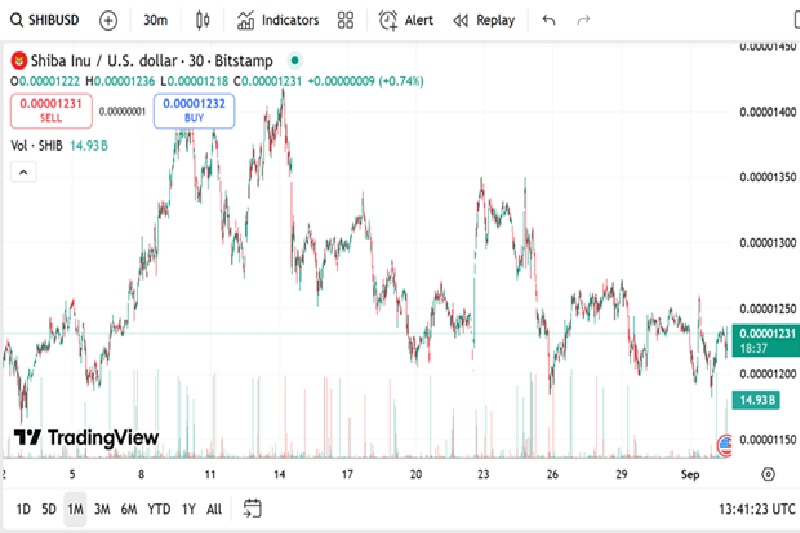
Shiba Inu (SHIB) has been one of the top meme coins for years due to its huge popularity and ongoing SHIB Burn effort. As of now, Shiba Inu coin price is  $0.00001224, down 0.4% in the last 24 hours with a market cap of $7.21 billion. The last 24 hours’ trading volume stands at $215.8 million, a small gain of 0.33%.

However, what investors are left to ponder is if hype burns can compare to project-supported, real-world asset demand from projects like Avalon X (AVLX).

Shiba Inu Coin Price Prediction: A Community-Focused Strategy

The SHIB burn saga has been the most reliably persistent grassroots push in crypto. Burning tokens systematically, Shiba Inu token holders are trying to limit supply and, eventually, drive the coin price up. The paradigm has created passion and dedication but is very speculative in character.

Source: Tradingview

While certainly fueling community sentiment, however, SHIB Burn doesn’t necessarily alter Shiba Inu’s lack of utility outside of the digital realm. To support price action on a sustainable basis, there are many investors who feel more tangible use cases are needed along with mere supply destruction.

Avalon X Demand: Utility Meets Real Estate

In contrast, Avalon X (AVLX) presale demand is rising. Backed by Grupo Avalon’s close to $1 billion Dominican Republic real estate project pipeline, Avalon X connects blockchain to tangible, income-producing property. Unlike meme coins, its token price mirrors property developments with established demand.

By tokenizing high-end property, Avalon X demand provides solo investors with a window into the $379 trillion real estate market — a field previously reserved for institutions. This connection to physical value differentiates Avalon X from strictly speculative proposals such as the SHIB Burn.

Massive One Million AVLX Giveaway

Avalon X is beginning with a history-making $1 million giveaway and townhouse in the gated Eco Avalon development, not as hype but to give something back to the community. This act puts AVLX in the spotlight as a project that is interested in inclusivity and transparency.

Eco Valley Townhouse Giveaway

The giveaway helps engage investors in and make them emotionally invested in the project cause. By paying back early supporters, Avalon X gains attention while at the same time creating a sense of shared ownership.

Security Backed by CertiK

Avalon X presale has also gone one step further than the majority by getting their smart contracts audited by the most prominent name in blockchain security, CertiK. The extra security feature suggests that the team is not just jumping the bandwagon—it’s developing for the long run.

In a time when most presales go up in flames, Avalon X is different by virtue of the CertiK seal. Investors do not have to worry that AVLX is built on shaky ground.

SHIB Burn or Avalon X Demand: Investor Takeaway

SHIB Burn remains a mainstream crypto cultural movement, but its influence is limited to supply-side forces. Avalon X demand is motivated by real-world utility and incentive-driven investment — creating a twin engine for sustained growth.

While SHIB will continue to expand as a meme token community, investors are moving to projects rooted in demand for real assets. Comparing the two puts things into perspective: Avalon X demand has a stronger sustainable, utility-driven narrative than the SHIB Burn model.

The Bottom Line: Which Story Wins in 2025

Both SHIB and Avalon X expose two aspects of crypto investing — the community-imposed scarcity and the real-world demand. Whereas the SHIB Burn may keep the anticipation going, Avalon X demand is keeping pace with the fate of crypto markets, whereby engagement with the real economy is at the core.

Investors who prioritize utility over hype will see Avalon X not merely as a presale opportunity but as an entry point into a crypto backed by real world assets. In 2025, that vision may outshine the short-lived buzz of meme coins.

Join the Community

Website: https://avalonx.io

$1M Giveaway: https://avalonx.io/giveaway

Telegram: https://t.me/avlxofficial

X: https://x.com/AvalonXOfficial

Building Brand Buzz Like Casino Drops Do

0

Online casinos have learned how to hype. Each and every launch, each and every promotion, each and every limited-time drop is created to capture attention, generate a buzz, to bring players back. To creators and community managers, these campaigns provide a playbook on how to transform a casual interest into buzz that is here to stay. The lessons can be learned in the gambling world, but the strategies used are applicable far beyond it.

How Online Casino Launches Capture Attention

Casinos know that excitement doesn’t happen by accident. From quick promotions to flashy visuals, they build entire campaigns around urgency, reward, and participation. Fast-withdrawal platforms highlighted By PokerScout show how speed and satisfaction reinforce trust, which is why players stick around. Creators and community managers can tap into these same ideas by building moments that feel rewarding and shareable; they can create movements that grow naturally.

Buzz Techniques from Online Casino Launch Campaigns

Time-Sensitive Offers

Casinos thrive on deadlines. A banner that reads 24 hours left to claim is not an ad it is a call to action. That clock creates a sense of urgency and FOMO, and players would not want to wait. With creators, the same strategy applies to flash sales, special live events, or early access material, which vanishes after a limited time period. Telling people they have limited seats in a webinar or that there are only a few days left to enroll in a course makes them value your offer because when you say limited days, they know you are telling the truth.

Game-Specific Incentives

Casinos also know how to target interests. A promotion tied to a $100K poker tournament doesn’t speak to everyone, but it hooks poker fans instantly. This focus draws in the exact crowd most likely to engage deeply. Community managers can do the same by tailoring campaigns to specific audience groups. If you run a creative community, release rewards tied to a niche challenge. If your brand has multiple products, spotlight one with a unique bonus. The narrower the focus, the stronger the connection with the people who care about it most.

Interactive Elements

A spin of the wheel or a mystery box is irresistible because it asks players to take part. The interaction builds anticipation and keeps attention longer than static offers. For brands, this translates into polls, quizzes, or reward unlocks where the audience is actively involved. A creator running a newsletter might add a “choose your bonus” option for subscribers. A community manager might gamify engagement with a leaderboard or raffle. The more people feel like participants, the more invested they become in the outcome.

Dynamic Visuals

Bright colors, spinning coins, and glowing roulette wheels aren’t there by accident. They signal excitement and luxury, catching the eye before the mind even processes the message. Creators can borrow this by using strong design cues that reflect their brand’s energy. Community managers can also theme their visuals around events, making them feel distinct from everyday content.

Motivating Texts

Casino campaigns speak directly to rewards: “Spin and win” or “Grab your bonus now.” The message is clear, short, and benefit-driven. Creators and managers should cut through fluff in the same way. Instead of vague copy like “explore new features,” say “save two hours a day with this update.” Replace “join us” with “claim your spot.” Simple, direct text that highlights the benefit makes people act faster because they understand exactly what’s in it for them.

Social Proof

Seeing other players win makes new players want to join. That’s why casinos highlight testimonials, screenshots of wins, and active leaderboards. People trust what others validate. Creators can use the same principle with customer stories, user-generated content, or public shoutouts. Community managers can spotlight active members, celebrate milestones, or share feedback in real time. When people see that others are already enjoying the experience, the buzz feels authentic rather than manufactured.

Influencer Collaboration

Influencers and streamers give casino ads a human touch and transform an otherwise non-personalized offer into a personalized one. Their fans are there not only to watch the game but also because they trust them. Similar partnerships can be used by creators and brands that are not involved in gambling. Partner with voices that your audience already admires, be it experts in a niche, micro-influencers, or celebrities. The borrowed credibility will carry your campaign even further, and the influencer will gain something to deliver to his or her community that is exciting.

Drops Campaigns

Few tactics match the thrill of random drops. Surprise in-game rewards or pop-up bonuses at unexpected times keep players engaged long after launch. They feel valued because something extra shows up when they least expect it. Creators and managers can use drops by sending surprise gifts to subscribers, unlocking hidden content, or rewarding loyal members at random. Add a leaderboard or friendly competition, and you give people both a reason to stay and a reason to talk about it.

Building Sustainable Brand Excitement

The reason casino campaigns work so well is simple: they make people feel like they’re part of something bigger. Every spin, every deadline, every reward is designed to build anticipation and keep conversations going. When creators and community managers apply the same principles, they can build communities that buzz with energy, not just for one event, but over the long term.