DD
MM
YYYY

PAGES

DD
MM
YYYY

spot_img

PAGES

Home Blog Page 5821

New University of Ibadan Governing Council, Vice Chancellor Appointment and the Burden of Ethnicity in Nigeria

0
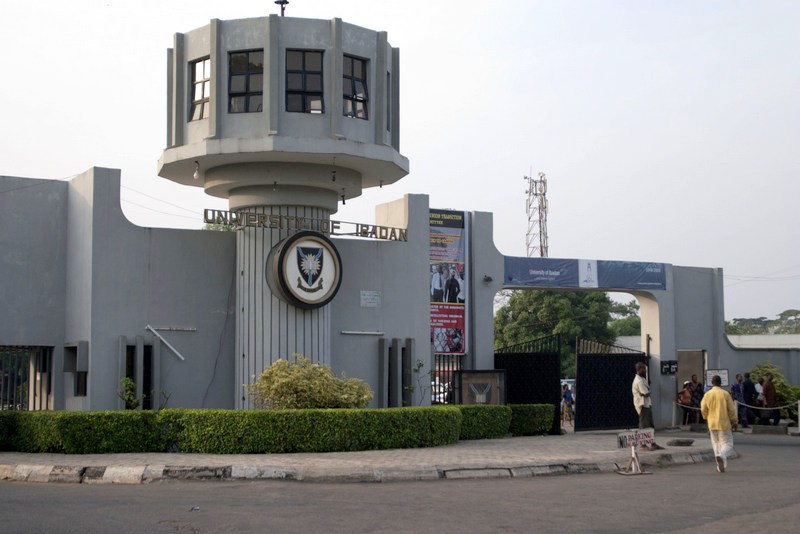
University of Ibadan, a federal university

The year 2020 will always be remembered by the students and other stakeholders of the Nigerian oldest University, University of Ibadan. It is the year that brought unexpected happenings to the University Community. The happenings affected academic and administrative progress. The stakeholders could not believe it that a virus would emerge and disrupt academic activities on the campus. They were surprised that the first and the best would find it difficult to lead other institutions in terms of virtual teaching during the challenging time. 

In our experience, the disruptive element which the COVID-19 constituted to the University’s ability and capability to manage people and processes towards value creation and delivery for every stakeholder seems not to be a significant one to the pride of the University. The institution’s failure to maintain its tradition of appointing a new Vice-Chancellor before the end of the incumbent tenure and emergence of an acting Vice-Chancellor remain stains that need to be removed as soon as possible and prevent their future occurrence. 

During the year, counter and alternative narratives trailed the appointment of a new VC, who is expected to take over the leadership of the University from former VC, Professor Idowu Abel Olayinka. From the internal to the external issues, University of Ibadan Selection Community failed to present at least three best candidates to the Visitor [President Federal Republic of Nigeria]. 

One of the strategies to douse tension during the selection process was a directive given by the Federal Ministry of Education that the Governing Council should re-start the appointment process afresh. This happened a few days to the end of former VC tenure. Thus, it was difficult to present an expected number of candidates to the Visitor within the period. Hence, the acting Vice Chancellor was appointed for a 6-month period. 

On April 8, 2021, former Chairman of the All Progressive Congress, Chief Odigie Oyegun was appointed as a new Chairman of the Governing Council while Masud Kazaure, Abba Yaro, Abubakar Maikafi and Emeka Nwagbo are members. The new governing council will be inaugurated on April 19. Our analyst notes that the burden of appointing a new VC now rests with the Chairman and members, including stakeholders directly responsible for working with the Council. 

Our analyst had earlier reported that getting an appointment of VC right at the University means the Institution is ready to set a good example for others, which it birthed some years ago. According to our analyst, UI also needs a strong strategic leadership as the Institution continues fulfilling its vision and mission in a challenging world.  

Like ethnicity and race, which were brought into the selection earlier, some members of the public have expressed concerns over the structure of the new council, which according to them favour northerners than southerners. It would be recalled that a prominent Nigerian Professor, who resides in the United States of America, had warned against favouritism and nepotism.
The Nigeria’s SEC Clear Warning!

1

It was the toughest statement out of the financial system regulators in Nigeria this week. Yes, Nigeria’s Securities and Exchange Commission (SEC) nearly made the startups which are helping Nigerians to buy foreign stocks illegal. When I read the notice, I did not want to write about it because, by nature, I do not like to break news; I like to analyse broken news. For this one specifically, the risk was huge: doing it without a nuanced analysis could make some people do the unthinkable in a nation under stress.

Nigeria’s Securities and Exchange Commission (SEC) has warned capital market operators to stop giving support to online investment trading platforms providing access to foreign securities in Nigeria.

In a statement Thursday, the regulator said those securities were not registered in Nigeria, and platforms providing access to them were acting against the law. It warned capital market operators in partnership with the platforms to desist from providing brokerage services for foreign securities.

The apparent move by the SEC to bar fintechs from selling, issuing or offering for sale foreign securities not listed on any exchange registered in Nigeria, if seen through, will negatively impact thousands of Nigerians who have lately been drawn by technology to investing in foreign securities.

I recall that Nigeria is bombing Akwa Ibom and making many of the citizens aliens, when the evils the bad boys have committed are done in the Southeast and the northern part all the time. Sure, no one is giving excuses for fighting bad boys but the asymmetric force used when it comes to Nigerian minority tribes should be re-evaluated. You want to flush our miscreants and within days you have created refugees in a largely peaceful region of the nation. Can we do this in Kano? Kaduna? Ekiti and Enugu? Not possible! From Odi to its cousins, since 1970, all the hard hits have typical geographies.

The military operation in Essien Udim Local Government Area of Akwa Ibom State to “flush out miscreants” has created a new challenge – a refugee crisis – in the state.

The operation was launched in Ntak Ikot Akpan community after some hoodlums attacked and killed three police officers in the local government area a few days ago.

Four officers are still missing after the attack, the police in Akwa Ibom said.

Several people were killed during ground operation and an aerial bombardment by troops.

Back to the apps. The SEC notice should concern those investment apps which focus on foreign stock markets, helping Nigerian investors to buy Apple, Facebook and other foreign stocks. Sure, many of them would move to comply but this is a concern after what happened to cryptocurrency when the apex bank banned its connection to the Nigerian banking. Chaka, Trove, Bamboo, Risevest and others have works to do, because as they become more successful, regulations will evolve.

The SEC statement….

Proliferation of Unregistered Online Investment and Trading Platforms Facilitating Access to Trading in Securities Listed in Foreign Markets

The attention of the Securities and Exchange Commission (the Commission) has been drawn to the existence of several providers of online investment and trading platforms which purportedly facilitate direct access of the investing public in the Federal Republic of Nigeria to securities of foreign Companies listed on Securities Exchanges registered in other jurisdictions. These platforms also claim to be operating in partnership with Capital Market operators (CMOs) registered with the Commission.

The Commission categorically states that by the provisions of Sections 67-70 of the Investments and Securities Act (ISA), 2007 and Rules 414 & 415 of the SEC Rules and Regulations, only foreign securities listed on any Exchange registered in Nigeria may be issued, sold or offered for sale or subscription to the Nigerian public. Accordingly, CMOs who work in concert with the referenced online platforms are hereby notified of the Commission’s position and advised to desist henceforth.

The Commission enjoins the investing public to seek clarification as may be required via its established channels of communication on investment products advertised through conventional or online mediums.

Signed
Management

Central Bank of Nigeria (CBN) Punches Fintechs on BVN Validation

7

The Central Bank of Nigeria has frozen fintechs from using BVN (bank verification number) to validate and authenticate their users. That should not be a problem if the National Identity Management Commission (NIMC)’s NIN (national identity number) has gone mainstream. Yet, what the apex bank did is a good call because if indeed NIN is working, even BVN has to be discontinued. Companies must try to add the NIN field as quickly as possible. 

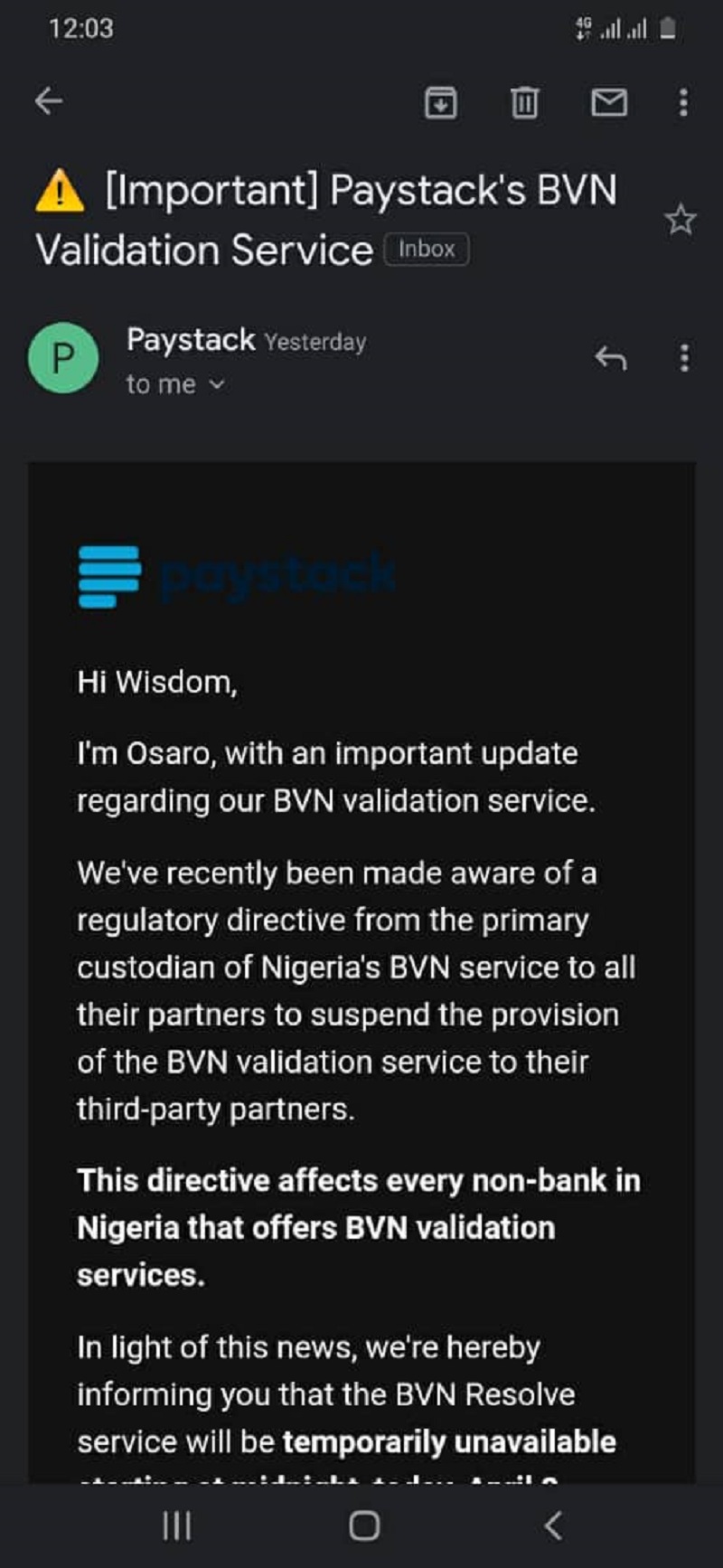
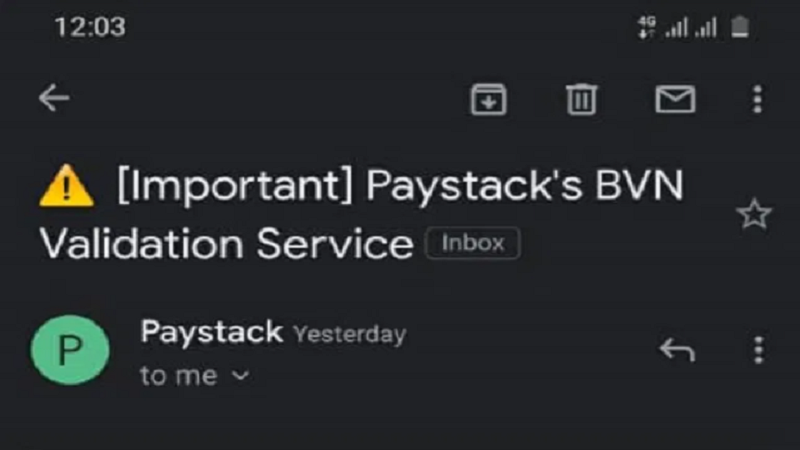
“We’ve recently been made aware of a regulatory directive from the primary custodian of Nigeria’s BVN service to all their partners to suspend the provision of the BVN validation service to their third-party partners. This directive affects every non-bank in Nigeria that offers BVN Validation services. In light of this news, we’re hereby informing you that the BVN Resolve service will be temporarily unavailable starting at midnight, April 8, 2021.”

Of course, the concern remains: if fintechs cannot use the most trusted tool in Nigeria to validate users, the implication is that no fintech can live without a bank-cousin, thereby making sure the “challenger” can only be challenging and never will be in a position of dominance! I do hope that the apex bank is not making such calls here.


All images from Nairemetrics

Prince Philip and DMX: A Weekend of Great Loss for the US and the UK

0

Death took on great names in the United States and Great Britain on Friday. The super powers mourn both on corridors of royalty and entertainment.

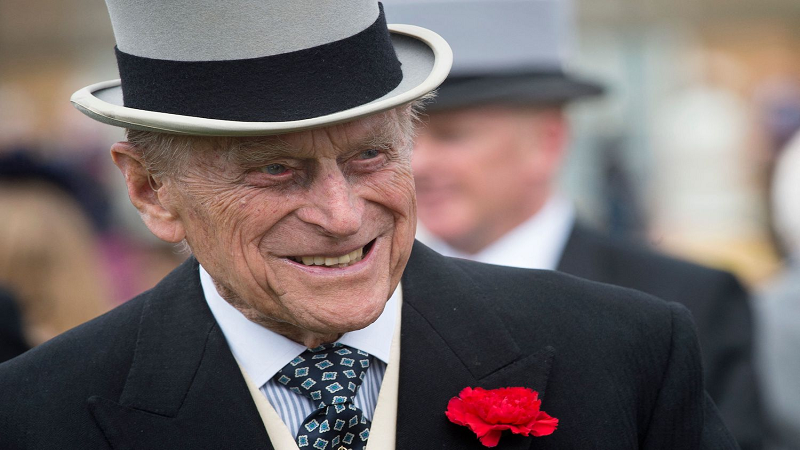
Prince Philip, the Duke of Edinburgh, Queen Elizabeth II’s husband and the longest-serving consort of any British monarch, has died at age 99.

In the US, rapper Earl Simmons, aka DMX, who had been on life support since April 2 following cocaine overdose, lost his fight. He died at 50.

A statement posted on the royal family’s website Friday morning said: “It is with deep sorrow that Her Majesty The Queen announces the death of her beloved husband, His Royal Highness The Prince Philip, Duke of Edinburgh.

“His Royal Highness passed away peacefully this morning at Windsor Castle. Further announcements will be made in due course. The Royal Family joins with people around the world in mourning his loss.”

Both DMX and Prince Philip are figures with a huge global influence, and the news of their death has stirred emotions.

“Earl was a warrior who fought till the very end,” the Simmons family said. “He loved his family with all of his heart, and we cherish the times we spent with him.”

Prince Philip spent 65 years supporting the queen, retiring from his public role in 2017 and staying largely out of the view since. In his active years, he helped set a new course for the monarchy, championing Britain itself, as well as environmental causes, science and technology.

AS for DMX, his music was often menacing and dark, with the occasional nod to Christian spirituality, New York Times noted. He committed crimes, served time in different correctional institutions and battled addiction long before he released an album, and his troubled past informed the gritty content and inimitable delivery of his rhymes.

Born in Mount Vernon, N.Y., on Dec. 18, 1970, Earl Simmons was the first and only child of Arnett Simmons and Joe Barker. He grew up in Yonkers, a city just north of the Bronx that became a hotbed of racial tension in the 1980s.

His father was an itinerant artist whom he rarely saw, and his mother struggled to raise him and his half sister Bonita in a violent neighborhood. In his memoir, “E.A.R.L.: The Autobiography of DMX” (2002, with Smokey D. Fontaine), he wrote that there was often little food at home while he was growing up and that as a precocious, hot-tempered and disobedient child, he was often beaten by his mother and her lovers.

He commandeered the stage with electrifying performances that ignited passion, selling millions of records. DMX was the first musician whose first five albums reached No. 1 on the Billboard chart. He was the standout artist on the Ruff Ryders label, often rapping over tracks by the star D.J. and producer Swizz Beatz. Rappers like Eve, Drag-On and the Lox, a group made up of Jadakiss, Styles P and Sheek Louch, also recorded on the label.

In the late 1980s he started performing as a beatboxer, creating beats using only his mouth, with a local rapper named Ready Ron. (He took the name DMX from the Oberheim DMX drum machine, a model popular in the 1980s.)

He said he was 14 when Ready Ron introduced him to crack cocaine by passing him what Mr. Simmons thought was marijuana. It’s an unfortunate taste that eventually ended his life.

On the other hand, Prince Philip won a reputation for his early efforts to help modernize the royal family’s image during a time of great change for Britain and the world, especially at the outset of Elizabeth’s reign in 1952. NBC noted that he also developed a reputation for the occasional brusque comment and crass, if not racist, jokes.

Philip helped bring the royals to life on television rather than through radio reports. He was the first member of the royal family to do a televised interview and he presented a show on a royal tour of the Commonwealth. He is also said to have had a hand in televising the queen’s coronation in 1953 and in organizing a groundbreaking 1969 television documentary about the family.

He championed causes that caught his imagination, and helped found the Royal Academy of Engineering, which promotes engineering excellence and education, and served as the first president of the World Wildlife Fund.

He created the Duke of Edinburgh Awards, a series of challenges to encourage young people to take up adventures in the outdoors, and had a hand in restoring both Windsor Castle after a devastating fire, and Westminster Abbey. He also promoted the use of the English language outside Britain in the years after the breakup of the British empire.

What’s more, he made the operations of the royal estates more efficient, according to royal biographer Ingrid Seward, who wrote “Prince Philip Revealed.”

NBC’s tales of his early life denotes adventure, crisis and military service. Born June 10, 1921, on the Greek island of Corfu, he was the only son of Prince Andrew of Greece and Denmark, and Princess Alice of Battenberg. Greece’s king, Philip’s uncle, was forced to abdicate when Philip was a baby, and the family fled to Paris, with Philip famously carried to safety in a crib made from an orange box.

At age 7, he moved to England, where he lived at Kensington Palace, now home to Prince William. Philip lived there with his paternal grandmother, Victoria Mountbatten, and later attended Gordonstoun, a boarding school in Scotland.

At 18, Philip joined the Royal Navy and graduated from the Britannia Royal Naval College as a top cadet. He saw active duty from the Indian Ocean to the Mediterranean, and in 1945 at the end of World War II, he was in Tokyo Bay when the Japanese surrendered.

Prince Philip renounced his Greek royal title and became a British citizen. Elizabeth’s father, King George VI, also gave him a new title: the Duke of Edinburgh.

However, as tributes pour in for the two, the distinction between them is seen beyond royalty and entertainment. Prince Philip was a life fully lived, while DMX was a life cut short. But they’ll both be missed.

Resurgent Partitioning of Africa by the Global North for Scholars Hunt

1

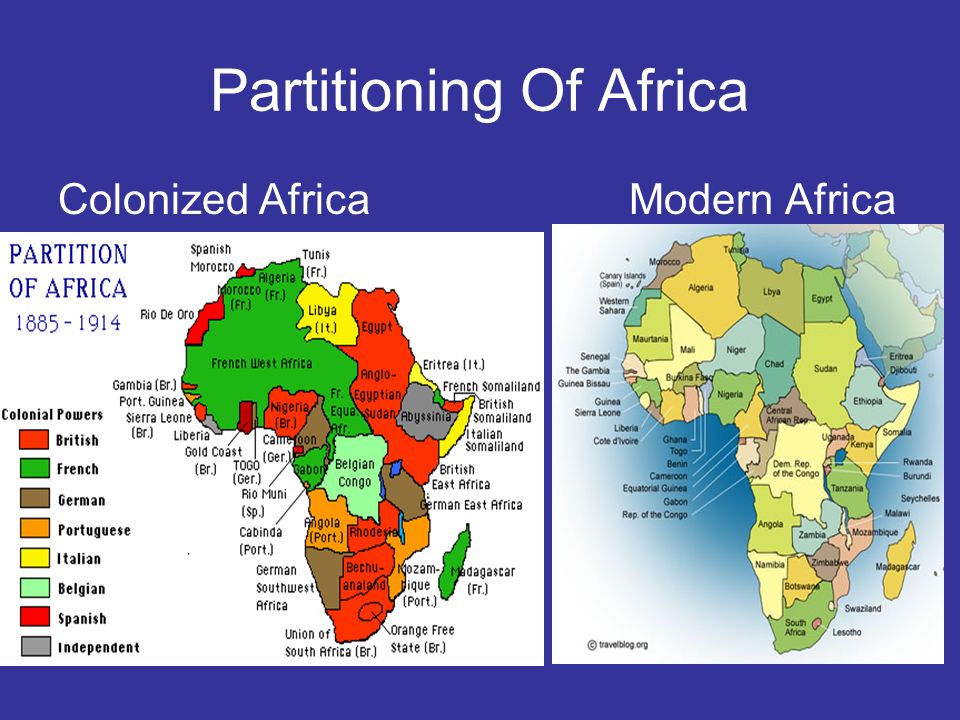
Western Sahara was the last colonised African country. Like Spain, which colonised it, Britain, France, Portugal, Belgium and a number of other countries in the global north scrambled for the partitioning of Africa during the colonial period. The partitioning was largely driven by natural resources that abound on the continent, which colonial masters believe would help them in their industrial growth and development agenda. 

The exit of the colonialists meant that Africans are free to lead and govern themselves. But, they are not totally free when one looks at varying foreign policies being implemented in the last 61 years. The policies cut across socioeconomic and political spheres of every African country. During the colonial era, the scrambling, as argued earlier, was on exploration of natural resources and possible importation of the finished products into the continent. 

Then, foreign direct investment as an international trade instrument known today was not in existence. Export of raw materials and import of finished products by the colonial traders and few African business people dominated. In our check, there is no evidence that China colonised any African country. Yet, the country leads the United States of America, France, United Arab Emirates and the United Kingdom in the area of foreign direct investment flow into Africa. Between 2014 and 2018, 16% of FDI into Africa came from China

As countries in the global north pull their resources together and singlehanded towards capturing emerging markets in Africa, they are not relenting about getting intellectuals to their side. A number of the countries have centres, institutes and courses that are related to African culture, norms, traditions and knowledge in their higher institutions. 

Since 2000, the United States of America, the United Kingdom, France, Canada and other countries in the global north have increased their graduate and postgraduate scholarships including grants to African scholars and professionals. In its bid of having significant influence on Africa, apart from its ‘loan-giving dominance’ China [ despite being in the global south] has recently pursued China-Africa education policy agenda that promotes its sociocultural interest in relation to economy agenda. 

Africans are moving to the global north in throes, according to our analyst, because of the various challenges facing the higher education sector. A number of countries on the continent are still struggling in the area of adequate infrastructure provision and funding, the loopholes the countries in the global north are using to attract intellectuals from the continent. 

From Erasmus Mundus to Fulbright Visiting Scholarship and DAAD – Deutscher Akademischer Austauschdienst, a significant number of African scholars have been scouted by the countries that established these organisations in the last 10 years. “Each year roughly 850 faculty and professionals from around the world receive Fulbright Scholar awards for advanced research and university lecturing in the United States. Individual awards are available to scholars from over 100 countries. Since its inception in 1946, over 400,000 Fulbrighters have participated from over 160 countries.”

Apart from scholarships, African scholars are being attracted with visiting scholar programmes and postgraduate research fellowships to boost their career by providing full funding, stipend for personal maintenance during research, extra knowledge from senior researchers and others. 

According to a 2015 data,  926 scholars have benefited from the Fulbright Visiting Scholars Programme. Over 3% of the scholars are from Africa. More than 23% from East Asia and the Pacific, 41.9% are from the Europe and Eurasia. North Africa and the Middle East had 7.1%, while South and Central Asia and  Western Hemisphere had 13.7% and 9.9% respectively. Though Africa had a small share of the figure, analysis indicates that organisation usually targets Africa in its research agenda. 

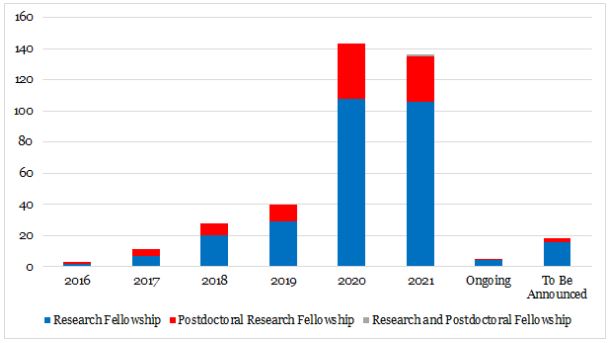
In their continued socioeconomic war, the United States and China are not relenting in dishing out scholarship and research funding opportunities to Africa. For example, as of April 7, 2021 [starting from 2016], academic institutions and private organisations have 383 opportunities for scholars and professionals across the world. Again, analysis reveals that Africa is in the hearts of the funders. Already, for Q1 and Q2 of 2021, the United States has released 106 research fellowships including visiting scholar grants, small grants for doctoral research students. Out of these opportunities, 29 are postdoctoral research fellowships. 

Indeed, the global north wants African scholars. But, hardly, scholars of the global north visit for residential research purposes despite the need for collaboration on global issues. African scholars, who were attracted to the global north, also hardly return to Africa due to issues previously identified. 

Exhibit 1: Number of Opportunities by Fellowship Category

Source: John Hopkins University, 2021; Infoprations Analysis, 2021