DD
MM
YYYY

PAGES

DD
MM
YYYY

spot_img

PAGES

Home Blog Page 5845

The Challenge Ahead for Banks As Fiat Currencies Digitize

1

The European Central Bank plans to launch digital euro, “an electronic form of central bank money accessible to all citizens and firms.” The plan is to offer to the European citizens a free, safe and trusted way to make payments in an increasingly digital world, and possibly protect the supranational bank from disintermediation from cryptocurrencies like Bitcoin, and fintechs like PayPal. 

China is in the final phases of taking the e-yuan mainstream. As that happens, I do expect some of the payment-focused technology companies in China to struggle as the small fees they charge go. Chinese paytech firms like Alipay have done very well when benchmarked with their Western’s counterparts. Alipay does $18 trillion while Visa and Mastercard combine for $16 trillion. And most importantly,  Visa and Mastercard merchants will lose about 2-5% on fees when Alipay charges 0.6%.

The biggest threat from digital national currencies is sucking deposits from commercial banks. In other words, most customers will have to open bank accounts with a central bank, and that means moving some of their deposits from banks to the apex bank where the digital currency is domiciled.

“A digital euro could … attract payments activity from banks and reduce their payments-related income and customer information. It could also attract deposits, especially if it were offered without limits on individual holdings and at such attractive conditions that the public moved large amounts of deposits from commercial banks to central banks. The concern is that this could lead to less stable and more costly funding, lower bank profitability and, ultimately, lower lending, constraining the financing of the real economy,” Panetta said in the same speech.

A digital euro could pose an even greater risk to banks during crises. “If not properly designed, in times of crisis a digital euro could accelerate ‘digital runs’ away from commercial banks towards the central bank. This risk could even be self-fulfilling, leading savers to reduce their bank deposits and amplifying volatility in normal times too,” Panetta said.

And US is joining the party: ‘Fed Chair Jerome Powell told Congress last month that the Fed was looking “very carefully at the question of whether we should issue a digital dollar,” calling it a “very high priority project for us,” though he said it raised significant technical and policy questions.’

Federal Reserve Chairman Jerome Powell told Congress on Tuesday that the Fed is “looking carefully” at whether it should issue a digital US dollar.

A digital currency developed by the fed is a “high priority project for us,” Powell told Congress, but he added that there are “significant technical and policy questions” related to a digital US dollar.

“We are committed to solving the technology problems, and consulting very broadly with the public and very transparently with all interested constituencies as to whether we should do this,” Powell said.

As the world’s reserve currency, Powell stressed that the US doesn’t have to be first in issuing a digital dollar, but it needs “to get it right.”

A payment system which offers a free way to make transactions sounds interesting – and will thrive. The opportunities could be for those companies which will play well at the edges of the smiling since the central bank will be the de facto operator at the center. The future of banking could possibly go to tech firms which offer banking services!

America’s Football League $100 billion Deal, MultiChoice’ DStv Moat and SportsTech in Nigeria

1

It is a big one – the United States’ National Football League has closed a $100 billion-plus media deal. Yes, media empires will pay the league more than $100 billion for the rights to broadcast the football games which are actually thrown and caught with hands, except on a few occasions where they are kicked or punted! Of course, the style or format does not matter. What matters is that the staging is so amazing that people are paying $100 billion plus, knowing that fans will pay for them to recover their investments.

The National Football League unfurled its latest $100 billion-plus media deal. The package, which begins in 2023, covers deals with NBC, Fox, CBS, ESPN/ABC and demonstrates the league’s commercial potency. It’s also the first to offer a digital broadcast exclusive — to Amazon — who will take over Thursday night coverage. CBS and Fox retain flagship Sunday afternoon football games, and NBC its Sunday Night Football franchise. ESPN’s Monday Night Football is augmented by two Super Bowls, in 2026 and 2030, and a handful of primetime games through the season for its corporate network sibling, ABC.

That brings me to ask: is it time for Nigeria’s sportstech? I mean, with amalgam of sporting games across Nigeria, can someone use digital technologies to aggregate and unlock value in the nation. From handball to football (the real one) to basketball, there are many exciting things in Nigeria which could be leveraged to build a modern digital-native media empire, based purely on sports.

Forget DStv’s SuperSports – the opportunities are in the homeland.

But you know the challenge  – who will do the real work? I hope someone has interest. Technology cannot just be for fintech, logistics tech and others, sports can benefit from this wave in Nigeria. The Nigeria Football League plays football, but fans do not come for football, they come for entertainment. That is why the programming around the game is even more important than kicking the round leather.

Beyond MultiChoice (DStv, Gotv), Look At Football TV Rights Before Accusation of Monopoly

Call for the Attention of the Government on the Ugwu Onyeama Axis of the Enugu-Onitsha Expressway

0

While growing up, we shared stories about roads that were once the dwelling places for deities and other supernatural beings. The stories then were that the portions of the roads, where these beings reside or once had their altars/shrines, are always bad. Some of these stories abound to date and seem to hold true because there seem to be parts of our roads that can never be fixed, irrespective of what construction companies do there.

There was this story about a part of the Enugu-Onitsha expressway that can never be fixed because it once housed a river goddess, aka mammy water. Stories then had it that the place had a big river, where indigenes came to drop their sacrifices for the river goddess. From the descriptions we had, this portion of the road is close to Enugu city and is situated near a valley. In the said area, a bridge was constructed to run across the river because the goddess sends her river to wash out roads constructed close to the river. So, the construction company, realising the goddess didn’t want disturbance, decided to build a bridge, which was more expensive.

However, because of the activities of man, which included constant defilement of the sacred river and the disturbance of the plying vehicles, the river goddess relocated her river. But before doing that, she cursed that portion of the road and vowed that it will never be in a good state. Legend has it that the goddess believed that she was tricked by the representative of the construction company, who promised that the bridge will not disturb her peace. This story used to make our day then even though it sounded stupid. But right now, each time I pass Ugwu Onyeama, located at the Enugu axis of the expressway, I couldn’t help but wonder if our childhood stories were true. If you ask me, I will say that Ugwu Onyeama is the legendary portion of the road that was cursed by the river goddess because it disturbed and desecrated her divine abode.

There is no road user that looks forward to passing through Ugwu Onyeama. Smaller vehicles, such as omnibuses and cars, have options of taking the Milky Hill route to avoid Ugwu Onyeama but heavy-duty trucks and long vehicles are cursed with meeting Ugwu Onyeama whenever they need to take that expressway. Many traders have lost their wares on that particular portion because their trucks fell. Some spend hours if not days on that same portion because a broken or fallen vehicle blocked the road and caused everyone to wait for it to be fixed. As if the sufferings people encounter weren’t enough, a part of it has been turned into an official site for the state’s waste disposal.

The use of an area close to that road as a dumping site is one thing that remains confusing. Since the Enugu State Government already knows how bad that road is and the several losses that happen there, it is quite wrong for it to choose that area for a dumpsite. Today, as drivers struggle with going in and out of gullies as well as swerving to avoid head-on collisions with oncoming vehicles, they have to add avoiding heaps of refuse on the road to their problems. Not only that, the burning of the refuse releases thick smoke into the road and causes drivers to have poor visions of their surroundings. I don’t know why Ugwu Onyeama has been chosen to be this way except that the river goddess legend might be true after all.

It is not today that attention has been drawn to that death trap of a road. I remember putting up a post two years ago concerning this same road. The only thing we see here is the government sending construction companies to grade and patch-up some portions of the road, only for it to get spoilt soon. That part of the road has been in a bad state for decades now and nothing shows it is about to be fixed anytime soon. Even the construction of the Enugu-Onitsha Expressway stopped a few kilometres away from Ugwu Onyeama, giving the impression that it is not included in the original plan. No one knows what is stopping that place from being put in order.

So here is notifying the Federal Government of Nigeria and the Enugu State Government to do something about the Ugwu Onyeama axis of the expressway unless they too are afraid of the legendary Mammy Water.

Amazon Unveils Another Double Play With Amazon Care

1

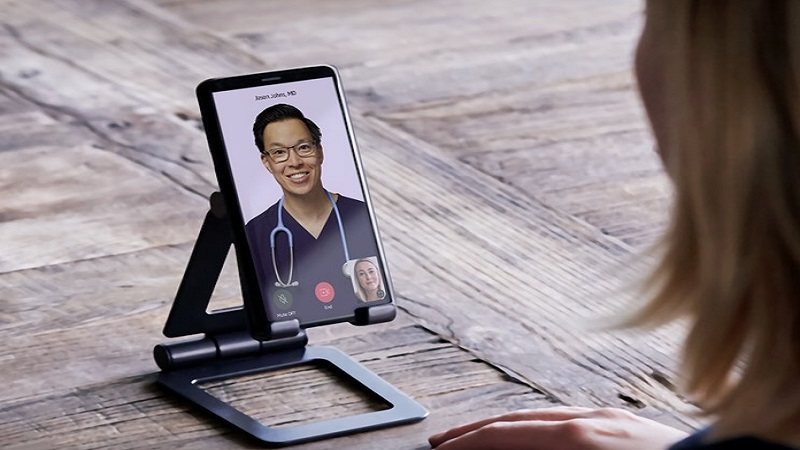
Amazon unveils another double play from its one oasis of ecommerce operation. As America’s second largest employer, Amazon has the numbers to run any playbook it wants. This week, we are learning that Amazon is expanding its telehealth services to all employees in the United States, after a successful pilot in Seattle.

Amazon Care, the e-commerce giant’s telehealth service, will be expanded to all Amazon employees in the U.S. this summer, with plans to roll out service to other employers later this year. Amazon Care started as an app-based pilot program for Seattle-area employees last year. The expansion signals Amazon wants a bigger share of the employer market as virtual health care booms during the pandemic. CNBC notes that Amazon Care, its pharmacy and its employee clinics are all run independently, but the company “won’t speculate about how this will evolve.”

What Amazon is doing makes sense. Yes, why send that money to other practitioners when you can hire few doctors in one location, equip their offices with telehealth solutions, and ask employees to install the app. If you build, staff may not need to take a day off to see a doctor since there is a doctor at work! You get the idea? So, each warehouse or office within the Jeff Bezos empire will have a Telehealth room where staff can book an appointment to meet a doctor. No traffic, no distraction – go in and come out, and get back to work. The empire continues to expand.

Winning the 21st century market will require discovering how to capture value because unlike in the past, core competency, while necessary, is diminished once you have the foundational technology stacks in-house. If that core stack is running, you can add other stacks on top. 

Today, Amazon has added telehealth services along with its clinics and pharmacy, and within years, it will open it to all Americans. Then, you will see Amazon Care local partners where local clinics enroll to become physical feeders for Amazon. In other words, when it becomes necessary to see a physical doctor, Amazon Care refers you to the local clinics. But most things will possibly begin at Amazon.

No matter how you see it, American cities may not need many clinics as Amazon Care will process most works online. People, I will discuss this deeper during Tekedia Live tomorrow.

Egypt’s Bitcoin Market, Thriving Through Government’s Adverse Laws

0

In August 2017, when the plan to launch the first bitcoin exchange in Egypt was announced, it had more than 300 pre-registrations from interested Egyptians.

The enthusiasm was unprecedented, considering the government’s stand on the idea of cryptocurrency.

A year earlier, the Central Bank of Egypt (CBE) had issued a warning statement to Egyptians about cryptocurrency trading.

“In light of its monitoring of the recently circulated news about cryptocurrencies, such as Bitcoin and others, the Central Bank reiterates its stern warning against trading in all kinds of cryptocurrencies, mainly Bitcoin, due to the extremely high risk associated with them,” the CBE said in the warning statement.

Just like many other central banks, the CBE expressed concern about “fluctuations and significant price volatility” of cryptocurrencies, and the fact that they are “not issued by central banks” and therefore, “not regulated.”

“Cryptocurrencies are not backed any tangible assets and are not supervised by any regulators worldwide, and consequently they lack the official governmental guarantee and support enjoyed by the other official currencies issued by central banks.

“In this regard, the Central Bank of Egypt calls on traders within the Egyptian market to use extreme caution and care not to engage in any trading in these high-risk currencies,” the CBE warning concluded.

Years after this warning, Egypt’s bitcoin market has witnessed tremendous growth spurred by the defiance of Egyptians who embraced cryptocurrency as a way out for millions of its unbanked population, and thousands of others who had no jobs. A 2018 World Bank report on financial inclusion revealed that about 67% of the population above the age of 15 has no bank accounts.

“Cryptoassets are happening whether (the Egyptian government) joins in or not. And by not joining they’re missing out on a very big market,” Bitcoin Egypt founder Rami Khalil said then in 2017.

In 2018, a year after the first bitcoin exchange was launched in Egypt; there were more drastic steps to limit the use of cryptocurrency in the Middle-East country. An Islamic degree was made in the form of a Fatwa, prohibiting the use of cryptocurrency in Egypt.

Shawki Allam, the Grand Mufti (the highest religious rank) of Egypt, declared the use of cryptocurrencies forbidden under Islamic Law, on the same excuse cited by the CBE but in addition said that its anonymity could facilitate tax evasion, money laundering, terrorist financing and other illegal activities.

Although the Islamic Law is not legally binding, the central bank augmented it with new amendment to Egypt’s banking laws. In September 2020, the government announced the amendment which declared dealing, issuing or promoting of cryptocurrencies without an applicable license from the CBE illegal.

The new law became a setback to the momentum that has been garnered through the bitcoin awareness campaign spearheaded by crypto enthusiasts like Khalil.

“There are no easy ways of purchasing crypto in Egypt. So any volumes that we see of people actively buying bitcoin is even more memorable given how difficult it is to acquire it … they are buying it in this really painful way,” Hany Rashwan, Egyptian entrepreneur and founder of crypto technology platforms Amun and 21Shares, told CoinDesk.

However, while the new laws limit cryptocurrency transactions in Egypt, as many who wish to trade and use it cannot do so freely, and people are not allowed to promote it, the volume of transactions recorded recently in the country shows unprecedented growth.

Trading volumes on peer-to-peer exchange platforms like LocalBitcoins recorded steady growth in 2020. Chief marketing officer of Local Bitcoin, Jukka Blomberg said new user registrations and trading volumes were up 100% between 2019 and 2020 in Egypt. He said that January 2021 was the best month within the last three years in terms of new registrations and trading volumes.

P2P crypto exchange service is a decentralized platform whereby two individuals interact directly with each other, without the need of a middleman to broker the deal. Instead, the two individuals negotiate their bitcoin selling and buying rate, and deal directly with each other.

For other exchange platforms, registrations and trading volumes have been up too between December 2020 and January 2021, with some recording up to 250% new users and trading volumes rising up to 400%. Egypt’s cryptocurrency activities moved in par with global trends in the reference period.

The push behind the surge

The defiance of Egypt’s crypto miners, traders and exchanges is baffling. According to 2020 Geography of Cryptocurrency report compiled by blockchain analytics firm Chainalysis, Egypt ranked 64th out of 154 countries on the firm’s global cryptocurrency adoption index.

The growth has been attributed to the high unemployment rate and recession that have been aggravated by COVID-19 pandemic.

“Unemployment and recession resulting from the spread of the coronavirus and the precautionary measures taken are the main reasons behind the youth’s inclination toward bitcoin trading and mining,” Wael al-Nhhas, Egyptian economist and financial adviser, who is also a bitcoin miner said.

More than half a million of Egyptians lost their jobs as the country’s economy came under the weight of COVID-19, shooting its unemployment rate up to 9.6% in the second quarter (Q2) of 2020.

Egypt’s unemployment rate recorded a positive shift from 7.3% in the third quarter of 2020 to 7.2% in the fourth quarter of the same year, according to data from the Central Agency for Public Mobilization and Statistics (CAPMAS). The state’s statistics agency also reported an annual inflation decline that puts Q4, 2020’s rate at 5.2%.

The shift indicates that more people got a job toward the end of 2020, a large number of them, by investing in cryptocurrency.

“Many young Egyptians started investing in small amounts despite the increase in the value of the bitcoin. They started mining satoshi, which is 100 millionth of a bitcoin, and on a daily basis they are making profits of 4% to 5% from the difference between buying rates during the timing of demand decline and selling rates at the time of peak demand,” Wael al-Nhhas said.

The Central Bank of Egypt is yet to start issuing licenses for bitcoin operations, and its unemployed population clearly cannot wait on the financial regulator.

While Egypt’s bitcoin market anticipates regulatory framework from the CBE soon, the traders have been growing the market’s trade volume using exchange platforms, particularly the likes of Local Bitcoin who provide P2P services.

The price showcase of Egypt’s bitcoin traders on Local Bitcoin indicates that bitcoin has been selling at premium in Egypt, their prices are more than $2,000 compared with other countries.