DD
MM
YYYY

PAGES

DD
MM
YYYY

spot_img

PAGES

Home Blog Page 5854

How FIDAS Will Help Africa and Africa Should Help FIDAS

0
African map

If you are an African or a friend of Africa, you must have heard several information about opportunities in Africa’s agriculture industry or access them personally. From rural to urban agriculture practices, you are also likely to come across various issues or challenges being faced by the practitioners of these forms of agriculture on the continent. 

No doubt, you have heard, read and seen how some Africans and non-Africans have developed innovative solutions and products, addressing some of the challenges. Despite that, many issues and challenges are still preventing the continent from capturing inherent values in the industry, indicating that more initiatives and solutions need to be developed and nurtured sustainably.

Farmkonnect, an agricultural real estate company, emerged and joined other Agritech companies in Nigeria some years ago with the strategic intent of contributing to food security, elevation of livelihood of smallholder farmers and investors through alternative source of income [multiple source of income has been argued by some social and public analysts in the industry]. 

Farmkonnect’s value creation to farmers and other stakeholders within the supply side of the agricultural value chain in Africa is better understood from the perspective of enhancing  farming conditions and outputs of farmers by providing innovative services with a view to facilitating better operational conditions, equipment as well as an effective distribution of farm produce.

Its approach to planning and executing agricultural projects and products has been linked with Sankofa Innovation, a concept developed by Professor Ndubuisi Ekekwe.

Enabling Value Co-Creation and Capturing in Africa’s Data-Driven Agriculture 

As noted earlier, the challenges in the industry still need further exploration from an entrepreneurial perspective. This can be pursued from different angles. Creating new initiatives, solutions or products towards solving challenges in farming practice and marketing could be done through intra-entrepreneurship or  independent-window approaches. 

Our analyst notes that using intra-entrepreneurship approach indicates establishment of a strategic business unit by an established business for the purpose of creating value for the categories of stakeholders and clients identified as potential users of the initiatives, solutions or products. Independent-window entails outside creation of a new business that solves identified problems or needs.

With the creation of Farmkonnect Institute for Data and Agribusiness Studies, which would be launched on April 8, 2021 by the Management of Farmkonnect, the company has followed an intra-entrepreneurship approach. In the earlier analysis,  our analyst had noted how the company intends to enlive computational agriculture in Africa. 

Examination of the FIDAS’ website by our analyst reveals that there are two categories of solutions. These include school and enterprise. In-depth analysis shows that FIDAS is coming to the education and knowledge development spaces of Africa’s agriculture with courses developed using theoretical and practical principles. These courses strategically address issues and needs of smallholder and corporate farmers without neglecting what upcoming professionals in the industry need to acquire to be competitive and relevant in the future farming practice. 

For instance, some courses are developed to cater for issues and needs within agricultural production, management and harvesting in Africa. Our analyst also found that some courses are developed to help beneficiaries from the private and public sectors understand the underlying principles in people, process and product management using emerging technologies and tools without jeopardising  the chance of using local knowledge and initiatives. 

When a unit in a company has these and others for the growth of the industry, our analyst notes that the unit and the company [Farmkonnect] need everyone’s support in terms of being a co-learner or a recommender of what they represent and intend to do. This support has strategic implications on attainment of Sustainable Development Goal 1, 2, 3, 4, 8, 9, 12 and 15. 

Fixing Nigeria’s National Ladder

2

It takes a man who has risen to the highest of mountains to appreciate the lowest of valleys. Extend the hands, while on that ladder, and get more to climb. Nigeria built ladders, moved many to climb up, on merit, but we are losing that process daily. 

Those days in the village, whenever the ikoro (the big wooden always beaten when there is an emergency) sings, the villagers assemble, and elders would always begin thus,  “to keep this village clean, everyone must join the sweeping”. Nigeria must find a better mechanism to get everyone sweeping. 

When only the children of the well-connected get the best public jobs (and federal scholarships to China), it simply means that we have dropped the ladder, and in the process disconnected most young people from joining the sweeping. Change That!

Marginal Cost – Industrial Age Firm vs Digital Platform [Video]

0

Just made a follow-up video after some questions on LinkedIn. This explains the difference between the marginal cost of industrial age firms (Bigi Cola) vs digital platforms (Facebook), and while the latter scales unbounded. 

https://youtu.be/P75hzh3e190


The original video


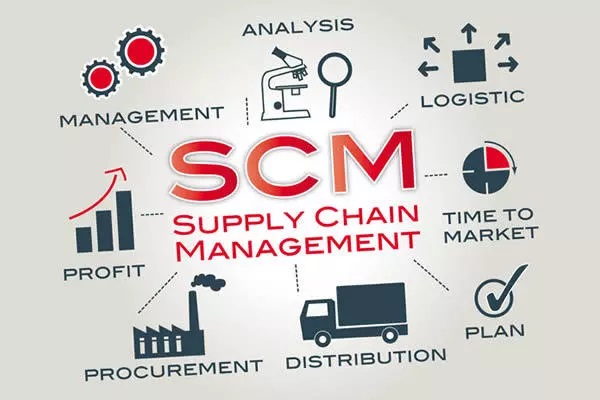
Mhagic Velocity Entry – Supply Chain Management and Marginal Cost [Videos]

0

Tekedia Institute put this video as it moves to the 8 week of Mhagic Velocity competition. The path to winning $60,000 to award scholarships in our program. http://mhagic.com/

https://youtu.be/lia7d1ukXaU


Our another entry for Week 8 of Mhagic Velocity. This was on Marginal Cost. We are the business education people in the competition, helping organizations to understand the mechanics of business systems. The goal: win $60,000 to power scholarships in Tekedia Mini-MBA. http://mhagic.com/


Just made a follow-up video after some questions on LinkedIn. This explains the difference between the marginal cost of industrial age firms (Bigi Cola) vs digital platforms (Facebook), and while the latter scales unbounded. 

https://youtu.be/P75hzh3e190

4 Critical Questions From a University Don on Nigerian Media Coverage of Bad News Versus Good News

0

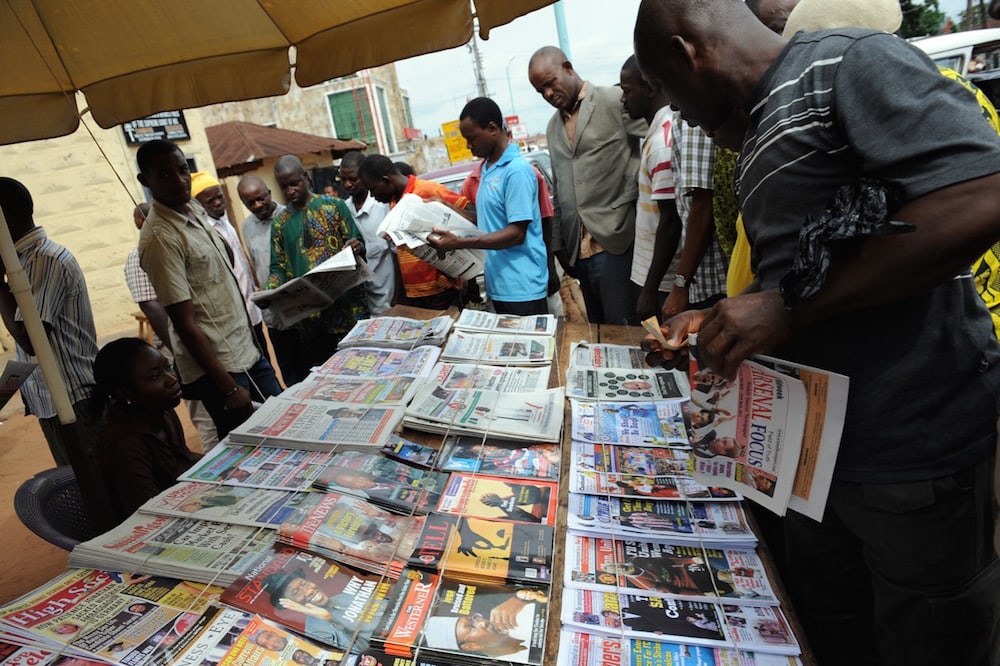
In the last few days, our analyst has been reporting a number of insights relating to the Nigerian media industry. The focus has been on how to have improved processes and better products as information pollution rages across the digital and physical spaces. 

While engaging his followers on social media platforms, our analyst notes that “In seconds. In minutes. In hours. In days. In months. In years. Nigerians wake up and confronted with bad news than good news from the media. On digital and offline spaces, bad news reports are debated more than good news. No matter what, there are a lot of opportunities in the bad news, which individuals and businesses can explore.”

The post was aimed at informing people that business opportunities abound in the bad news being reported by the media. This intent is not quite different from his position in an article published three years ago titled “How to turn Nigeria’s biggest problems to biggest businesses.”

From one of his social media accounts, a University Don queried his views on bad news versus good news publications. While commenting on the post, the University Don asked four critical questions.  “So, journalists deliberately create bad news or bad news happen? When bad things happen, they should not be reported? How can you successfully separate news reporting in Nigeria from existential challenges? How do you want the media to report happenings in the country? They should lie?”

Our analyst has promised to get back to the lecturer in due course with data and analyses that support his [our analyst] position that Nigerian journalists and media owners, especially the mainstream media entrepreneurs, should focus more on development news publication more than conflict and crisis driven news. According to our analyst, constant coverage of conflicts, crises and other bad happenings without regard for ethical journalism, social responsibility and developmental principles have created disunity and unnecessary self-independence agitation by various ethnic groups. 

A Crisis Scene

“Of course, bad events need to be reported since it sells more than good events. And that many people want to read negativities more than positivities. But, there are ways of constructing headlines and framing content towards sustainable peace and unity not enduring conflicts and crises,” our analyst points out. 

Before data driven answers to the lecturer’s question, our analyst’s check indicates that a few hours after his post, one of the national newspapers reported “…policymakers and media managers accused the Nigerian media of of allowing its obsession for bad news and screaming headlines to obstruct the principal mandate of setting the right agenda toward building a united and virile nation.”