


As UK Regulators Go After Apple, African Union Needs To Wake Up
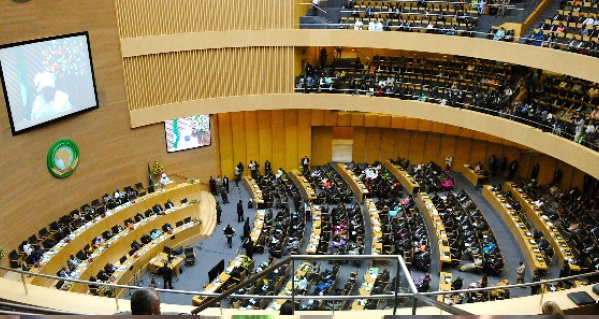
It is always a mystery – why are European courts penalizing oil companies which are operating in Africa, and making tons of money in the process, when the REAL victims in Africa get nothing? Yes, EU and UK courts have made $billions on fines, penalties, etc, in the last two decades, on cases associated with how major oil majors have operated in Africa. In all these fines, none of the fines made their ways back to Africa. So, it works like this: do wrong in African oil fields, and prosecutors will go after you, and you settle with the state via a penalty; case closed. The citizens of the oil fields get nothing!
Why am I referring to this? The UK and European regulators have opened their high voltage searchlights on the activities of big technology companies like Facebook, Apple, Amazon, and Google, and are taking tons of money as fines and penalties. India has joined the fray. China would not even allow you in. The latest is that UK regulators are after Apple for its iOS policies; Apple is really mean, I must say, when you see how it guards its in-app payment gateway to ensure it collects those taxes.
The UK’s Competition and Markets Authority (CMA) has launched an antitrust inquiry into Apple, due to many complaints coming from developers about the iPhone maker’s App Store.
Apple released the iOS 14 late last year, the newest version of its operating system which came with new policies that have become the center of controversy between the tech giant and developers.
Apple only allows developers to release iPhone and iPad apps through its iOS smartphone platform. Apart from the rigorous process it takes for apps to be approved on iOS, Apple charges 30% on in-app transactions. The CMA said it may amount to unfair practice by the Cupertino firm.
“Millions of us use apps every day to check the weather, play a game or order a takeaway,” Andrea Coscelli, chief executive of the CMA said.
“Complaints that Apple is using its market position to set terms which are unfair or may restrict competition and choice – potentially causing customers to lose out when buying and using apps – warrant careful scrutiny,” he added.
But as these jurisdictions push these entities, from India to the UK, EU to China, and beyond, Africa Union has been frozen. I mean, someone needs to tell AU that Africa has software developers affected by Apple’s policies, and they deserve to be supported and protected. The UK and EU are constantly fighting for their people and companies, African Union needs to do the same.
The digital economy is here and we cannot just give up our rights so that Europe and North America will become the judges, defendants and prosecutors. Someone in Ethiopia needs to push for changes and I am confident that these technology companies will listen because we have the numbers.
The most important thing here is how someone can tell Apple to allow alternative payment systems. If that happens, most of our fintechs will have opportunities. If the UK is fighting for that, AU needs to join that movement.
UK Regulator Launches Investigation into Apple Store Policies
Ren Jianxin – The Chinese ‘Mallam’ – From ‘Indomie’ street cook to a Dominant Global Conglomerate
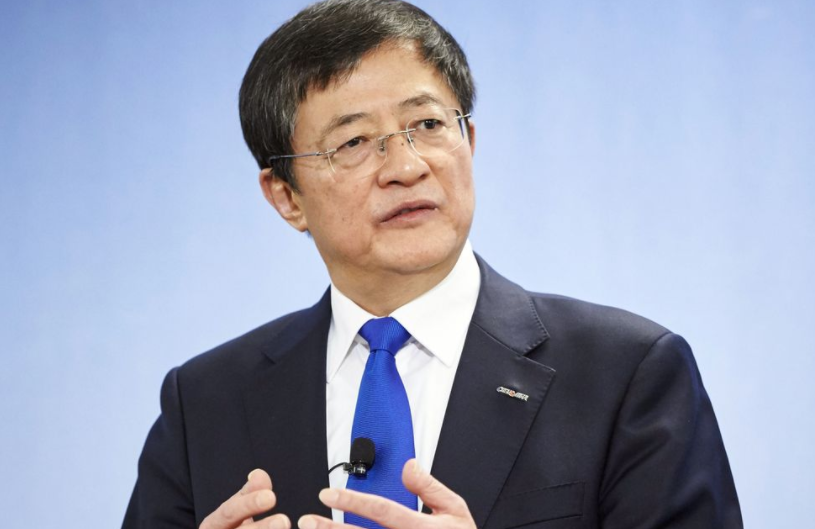
Whenever anybody wants to talk about a Chinese entrepreneur, the first ‘go to’, for those who want to appear informed is always Jack Ma. Others might possibly mention Ren Zhengfei of Huawei, or perhaps Ken Xie who moved to the U.S. as a child and later built the first first ASIC based firewall/VPN appliance in 1996; sold his company ‘Netscreen’ to Juniper Networks for $4 billion in 2004, and also founded ‘Fortinet’.
I would like to mention a less visible Chinese business magnate, whose name has not gained such populist notoriety, at least, not so much outside China, but has profound accomplishments all the same, and this is Ren Jianxin.
Ren Jianxin was born in 1958 and had an interest in mechanical things from early childhood. He excelled in school and did work at a research institute which worked hand in glove with China Central Radio and TV University (now called The Open University of China). The problem was he had social commitments which the paltry allowance from the institute would not cover.
Noodles were popular across East Asia generally and most of the Asia Pacific. Indeed it was Saleem Group of Indonesia and Toloram Group of Singapore, which in a JV called ‘Dufil Prima’ created the legendary Nigerian Street Food – ‘Indomie’
China was no exception, so Ren started his own roadside street business selling affordable hot noodles to passersby on a busy street. He had his own foldable flat panel structure that opened out to form what Nigerians will be familiar with as a ‘kiosk’
Similar structures are also called a ‘parlour’ in Trinidad. Though should a Trini tell you – ‘Ah goin by dat parlour dong d road’ when asked ‘Wey you goin dey?’, it is an indirect answer that says ‘Mind your own business’ without being rude.
Ren concentrated totally on hot noodles to keep stock and equipment volume down, and when he was not around he stored them in a lockbox and chained the collapsed ‘kiosk’ to it. He kept specific hours so his customers would know which times they could depend on him being around. He had to operate around his University time.
‘Ren Jianxin was effectively an ‘Indomie Mallam’ in China long before Indomie even existed.
Naspire (In Nigeria) says this of Mallams – ‘Every now and then new shops are opened, but for every new shop that opens, many are closing down. In my street alone I have seen four shops close their business due to poor sales. However, one thing you will notice is that the “mallam operated kiosks” rarely go out of business. What then is their secret? This is nothing but HARD WORK. Mallams work harder than the average shop owner.
He is the first to open for business and the last to close business (most times they don’t close for the day). When you wake up hungry very late in the night and need to quickly buy some Indomie, you can rest assured that the mallam will be available. These extended working hours have helped drive increased revenue for the mallam operated kiosks.’
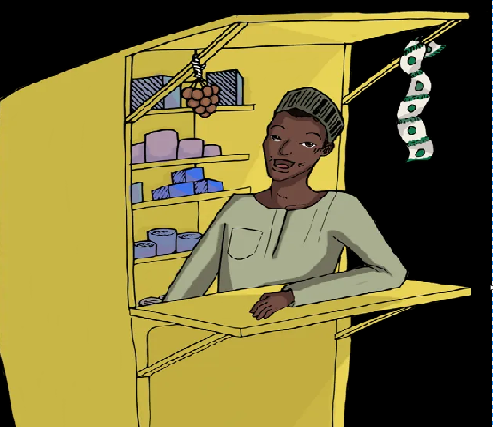
An artist illustration of a (general goods) Mallam Kiosk by Naspire.
Certainly if Ren Jianxin had been born in Africa, he would have been made in this mould. News of his noodle stand spread. Then, one day an errand boy carried him a message. The owners of a ‘noodle house’ up the street wanted a meeting with him. An elderly couple, with grown up children living in other cities were finding it difficult to keep going. They had heard of the diligence of Ren and they wanted to take him in as a partner.
Ren was very fashion and trend conscious. He reorganised the way the business presented itself to customers. It worked. Business started booming and he was able to open noodle houses at other locations. He continually evolved the feel and ambiance of the businesses with changing times.
One of the business dynamics of a regime like China is that everyone knows where to go if they want to make it big – and that’s the state.
While in many ways it is seen as stifling opportunity and promoting nepotism, on the other hand, it does make the route to success for those that are diligent, applied and relentless… extremely simplified.
In a completely free market economy, there are so many potential routes to progress the choice can be bewildering. Which enabling actors and mechanisms for progress give the best chance of success?
The entrepreneur is swimming, and starting to drown in a ‘sea’ of wooden ladders. Nobody knows which ones have rotten rungs, vision to the upper parts of the ladder are obscured so it is not clear where they lead. It is so easy to slide back into the quagmire, more tired and broke than before.
A lifetime of indecision can be spent on research, so that there is insufficient proportion of that lifetime remaining, to get adequate return from execution.
Before climbing a mountain, what is most needed is a time efficient and robust process that determines which mountain to climb!
The ‘Chinese Entrepreneur Express’ is a notional rail track that just leads direct to the gates of Chinese Government. Decision Made! Next Decision Please? – It is that simple… or is it?
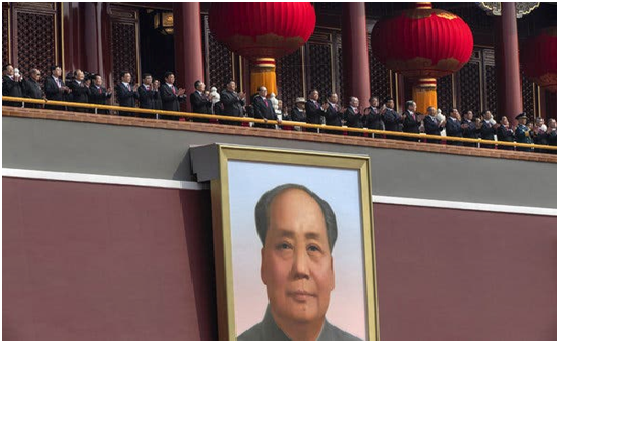
Politburo celebrating 70 Years in power in 2019
Global impression of The Chinese Communist Party is of an aggressive autocratic nation. The New York Times towards the end of 2019 quote:
‘In an era when China plays a dominant role on the global stage, foreign officials, whether in Washington or Moscow or Hanoi… (democratic countries have) criticized the party’s positions on Hong Kong, Xinjiang and Tibet. (and seek to) determine whether the economic juggernaut of China is a political and military threat…
‘Freedom House’ this year (on China) made reference to military force to resolve political disputes,” citing conflicts in Libya, Yemen, Ethiopia, and the Nagorno-Karabakh region. In each case, Freedom House pointed out that a powerful authoritarian government with little fear of pushback from the free nations of the world was involved in starting or escalating the conflicts.
‘… China’s leaders, to a degree, see the contours of the fraught historical moment in which they find themselves. Around the world, their top diplomats are trying to defuse tensions and persuade counterparts that China is not an aggressor.’ – NY times.
Under an authoritarian regime where rule is perceived to happen primarily by force, as human beings, deep down, what many of the Politburo yearn for the most, is ‘unforced’ acceptance.
In an open democracy, whether a public representative carries the title of ‘House of Representative Member’ or ‘Member of Parliament’ or some similar title, it is very easy to gauge public opinion – pollsters and pundits abound, content creators wander around city streets happy to pounce on any unsuspecting member of the public and stick a microphone in front of them, and most of the time, the public are content to comply.
If the public are not happy with a specific political office holder, the politician will definitely know about it.
In China however, a Politburo member has very little means of determining their ‘relative value’ to the public in comparison to any random one of their peers.
Ren Jianxin fully understood this dynamic.
In 1984, after he graduated, Ren started the Bluestar Company and started to manufacture industrial solvents. By the 1990’s his noodle business became known as the ‘Malan Noodle restaurant chain.
He approached the Chinese Government in respect of over one hundred government owned chemical factories with massive endemic problems that were losing the state huge amounts of money and on the brink of collapse.

The Leopard 2 A7+ Main Battle Tank, by the divested Military Division of Krauss-Maffei, merged with Wegmann ( called KMW), is the most formidable battle tank in the world. This is not owned by ChemChina, nevertheless, it illustrates the diverse capabilities of KM which ChemChina have acquired.
He promised the government that not only could he find ways of streamlining and merging the companies to create a smaller number of leaner more efficient and profitable companies, but that he would also guarantee an offer of a comparable position by level of seniority and income to any displaced employees of the companies. This he would do by migrating them to his ever expanding noodle chain.
From there, Ren wen’t on to change the company name to China National Chemical Corporation (ChemChina). Since then, the group has gone on to acquire the Italian Pirelli Tyres, and the German Machinery and Engineering Conglomerate Krauss Maffei. Last year, it did a deal to take the Agriculture related assets of Syngenta Group.
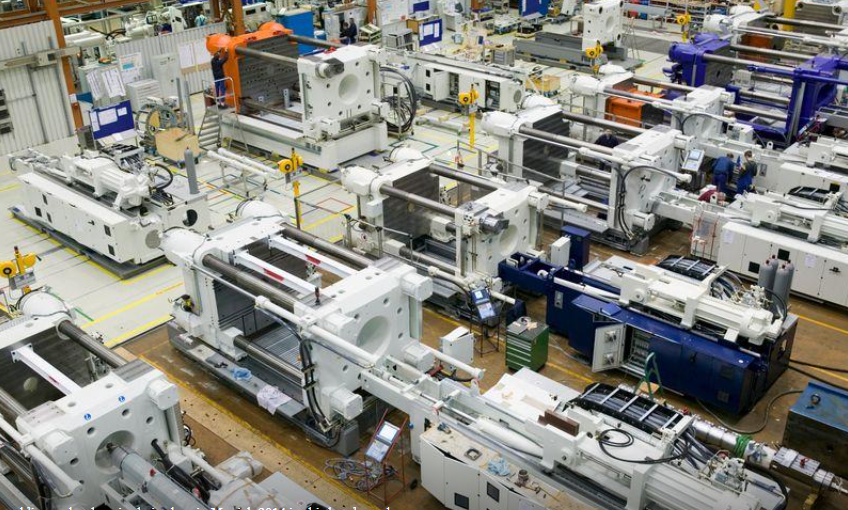
A Krauss Maffei machinery manufacturing floor with plastics machinery at various stages of preparation.
In 2016 Bloomberg said: ‘He doesn’t have the name recognition of billionaires Wang Jianlin of Dalian Wanda Group or Jack Ma of Alibaba Group, yet the China National Chemical Corporation chairman may be the most important dealmaker you’ve never heard of’
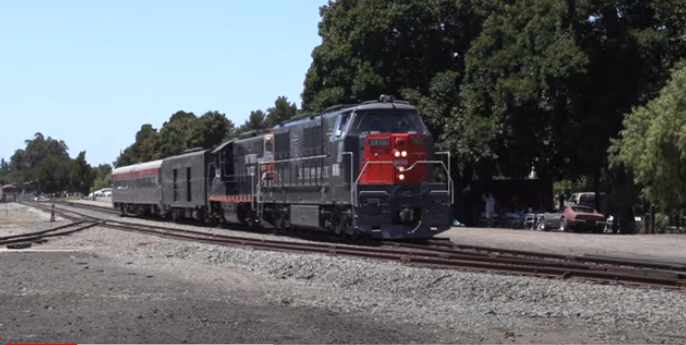
Legacy Krauss Maffei 9010 Locomotive in Australia in the 1970’s
Today ChemChina sits at 164 on the Fortune Global 500.
What are the lessons that the Tekedia Community can take from the life of Ren Jianxin thus far?
Firstly, be willing to sustain hard work consistently being of single focus, as the ‘Mallam’.
Secondly, always be aware of the human aspect of the environment you need to operate in. You cannot allow your desperation to cloud your vision to the extent you become immune and detached from the other desperation all around you..
Desperation in others points the way to frictions that need fixing.
Finally, be willing to look for that ‘extra’ thing to bring to the table, that sits outside the direct transactional value proposition.
Ren saw the opportunity to gift the government a huge promotional campaign of ‘Governance Seen To Be Working’. This is politically intoxicating and seductive to the extent of addicting any government, communist or not.
Further strongly recommended reading: ‘The Dangote System’ – Techniques for Building Conglomerates – Ndubuisi Ekekwe.
Insights for the backdrop to Ren Jianxin’s early life was gleaned from discussions with a Chinese national operating an ingredients and chemicals sourcing and reselling business based in UAE. He is a trusted source but wishes to remain unnamed.
Other references/sources:
naspire.com/every-start-can-learn-mallam-operated-kiosks-nigeria
www.nytimes.com/2019/10/02/world/asia/china-world-parade-military.html
www.breitbart.com/national-security/2021/03/04/freedom-watch-china-behind-global-decline-in-freedom/
en.wikipedia.org/wiki/Ren_Jianxin_(businessman)
www.scmp.com/news/china/economy/article/1909668/who-ren-jianxin-mystery-man-behind-chemchinas-us43-billion-bid
fortune.com/company/chemchina/global500/
UK Regulator Launches Investigation into Apple Store Policies
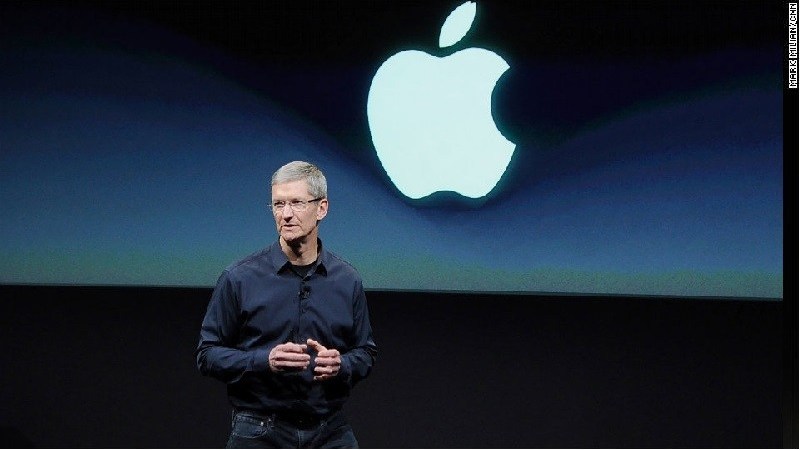
The UK’s Competition and Markets Authority (CMA) has launched an antitrust inquiry into Apple, due to many complaints coming from developers about the iPhone maker’s App Store.
Apple released the iOS 14 late last year, the newest version of its operating system which came with new policies that have become the center of controversy between the tech giant and developers.
Apple only allows developers to release iPhone and iPad apps through its iOS smartphone platform. Apart from the rigorous process it takes for apps to be approved on iOS, Apple charges 30% on in-app transactions. The CMA said it may amount to unfair practice by the Cupertino firm.
“Millions of us use apps every day to check the weather, play a game or order a takeaway,” Andrea Coscelli, chief executive of the CMA said.
“Complaints that Apple is using its market position to set terms which are unfair or may restrict competition and choice – potentially causing customers to lose out when buying and using apps – warrant careful scrutiny,” he added.
Recently, American and European watchdogs have increased regulatory investigations into the activities of American tech giants. Last year, the EU Commission launched antitrust investigations into Apple’s App Store rules and its Apple Pay mobile wallet. The Commission said it’s investigating whether Apple’s rules for app developers on the distribution of apps via the App Store breach EU competition rules.
Apple said it would cooperate with the CMA to address the concerns, admitting that the App Store process is rigorous.
“We believe in thriving and competitive markets where any great idea can flourish,” Apple spokesperson said.
“The App Store has been an engine of success for app developers, in part because of the rigorous standards we have in place – applied fairly and equally to all developers – to protect customers from malware and to prevent rampant data collection without their consent.”
Facebook is among the firms leading the complaints against Apple Store policies that have limited its ability to harvest private data for targeted ads. The policy forbids Facebook from accessing users’ private data without their permission. The social media company has described Apple’s new policy as anticompetitive, after several attempts to get the smartphone maker to reverse the new rules failed.
Epic Games, creator of the popular video game Fortnite is another vocal critic of Apple. Epic had filed a suit against Apple when its game was removed from the App Store for releasing and updated version that let players bypass Apple’s payment system. The game maker said Apple Store rules are anti-competitive and has particularly taken issue with the 30% cut that Apple takes from developers for in-app purchases.
Apple announced late last year it will cut the 30% commission it charges for in-app purchases to 15%, starting January, but the price reduction will only apply to developers that made up to $1 million in revenue over the past year.
Last month, Epic filed an antitrust complaint against Apple with the EU, having filed similar suits with US and Australia regulators.
A growing number of apps including Spotify and Match Group are joining the complaint against Apple. A Spotify spokesperson said the CMA’s inquiry is welcomed.
“The U.K Competition and Markets Authority joins an ever-growing list of regulators to open an investigation into Apple’s App Store practices.
“We welcome this and hope to see swift action because Apple’s anticompetitive behavior is harmful to not just Spotify but to app developers and consumers everywhere around the world,” the spokesperson said.
Apple’s App Store new policy has exposed it to escalating apathy that is now involving more apps and regulators around the world.
Last month, Facebook founder and CEO Mark Zuckerberg reportedly told staff that Facebook needs to “inflict pain” on Apple. Zuckerberg said during an earnings call last month that Apple is increasingly becoming bigger threat to Facebook by using its platform to interfere with how the social media app operates.
Oil Climbs $67 on OPEC’s Decision not to Increase Output
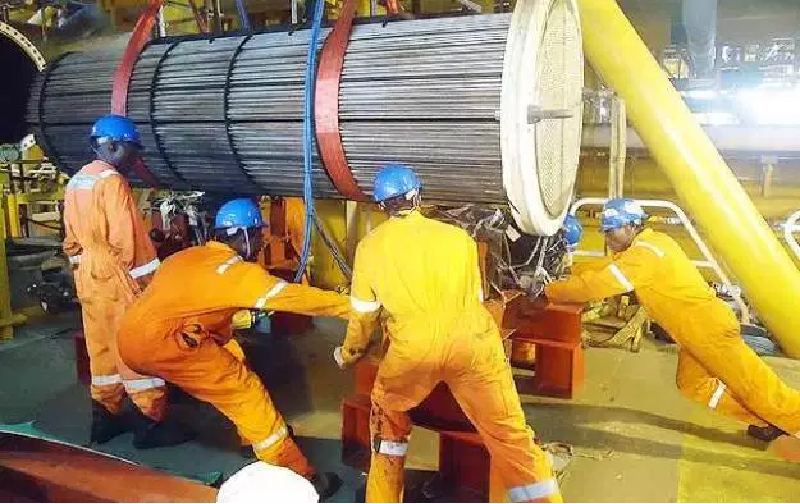
After the OPEC+ alliance virtual meeting on Thursday where members reached a decision to keep current oil output unchanged, oil price has surged to its highest in nearly two years.
It is a relieving development for the oil industry that has been ravaged by the pandemic, plummeting the economy of oil-exporting countries.
The US futures leaped 5%, and Brent global benchmark also jumped following the decision on Thursday. The agreement between the OPEC+ producer alliance means that output will be held steady in April. Bloomberg reported Saudi Arabia saying it’s not in a hurry to bring back supply and will maintain its 1 million barrel per day voluntary production cut.
Experts believe the decision is a smart move that will move the oil market to the bull.
“The decision to maintain the current OPEC+ supply cuts for the month of April has given the oil bulls exactly what they needed as far as the tight-supply narrative goes. The Saudis shrewdly recognized that in order to maintain the recent upward price momentum and speculative buying interest in oil futures, they needed to feed the bull,” Ryan Fitzmaurice, commodities strategist at Rabobank said.
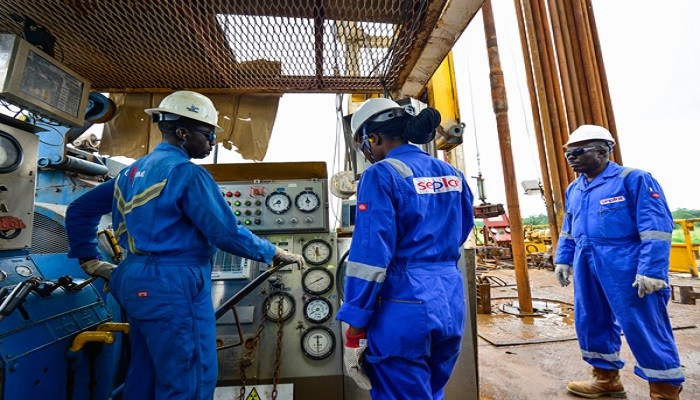
Adjustments in oil prices and cutting output have been the key strategies advocated by Saudi Arabia, to lift oil price.
OPEC+ has helped drain a global glut that accumulated during the pandemic through its supply management, pushing crude futures up more than 30% so far this year, Bloomberg said in its report.
The result is seen across many areas of the oil market moving from the pandemic plunge to pre-pandemic market status. Brent options volume rose to the highest since March 2020, according to preliminary trade data compiled by Bloomberg.
Although the surge underscores victory for the Saudi-led approach that encourages OPEC members to hold back output, it also has the potential to instigate further drilling activity.
Higher prices could spur additional drilling activity by US shale explorers, with domestic oil rigs already at the highest since May 2020, Bloomberg noted.
“It’s going to get tight. The longer prices stay up, the greater the likelihood we will eventually see a supply response from the US. But, it’s not going to be as immediate as it would have been in the past,” said Bill O’Grady, executive vice president at Confluence Investment Management in St. Louis.
However, Saudi Arabia seems unbothered by the likelihood. Saudi Energy Minister Prince Abdulaziz bin Salman told reporters after the OPEC+ alliance meeting that the US mantra of “drill, baby, drill is gone forever.”
Bloomberg reported that the rally in crude prices that’s helped send fuel prices up is being compounded by refined product supply declines in the US after a deep freeze paralyzed much of the Gulf Coast refining sector late last month.
The debate before OPEC+ is whether output should be raised up to 1.5 million per day. Russia and Kazakhstan were exempt from the agreement. The body will meet again in April 1 to discuss production for the month of May.
Meanwhile, the surge in oil price is particularly good news for Nigeria that has been wobbling in a debt-filled economy as low oil prices plunged following the pandemic. Nigeria’s oil benchmark is pegged at $40 per barrel with a daily production estimate of 1.8 million barrels. With Brent crude at $67, the revenue generation of Africa’s biggest oil producer is expected to increase, boosting its crashing currency, the naira.