DD
MM
YYYY

PAGES

DD
MM
YYYY

spot_img

PAGES

Home Blog Page 5874

The Umunneoma Economics

2

In my 2019 convocation lecture in FUTO (Federal University of Technology, Owerri Nigeria), I spoke on economic opportunities in Nigeria – and The Umunneoma Economics. (Umunneoma means “good brethren” in Igbo). In my postulation, I explained how that economic philosophy is the pillar that drives the Igbo Apprenticeship System. The new global capitalist manifesto which is working to go beyond fixated focus on shareholders, to consider ALL stakeholders, is something the Umunneoma Economics is doing already.

The core  tenet of the Igbo Apprenticeship System could be likened to the U.S. Federal Reserve which largely works to keep the U.S. dollars stable (by reducing inflation) and maximize employment through interest rates. So, the Reserve has defined main focus areas even though it can use its systems to do other things. Consequently, the U.S. Congress uses those two main factors to ascertain the effectiveness of the Reserve policy.  The Umunneoma Economics solves unemployment in communities even as it strengths communities.

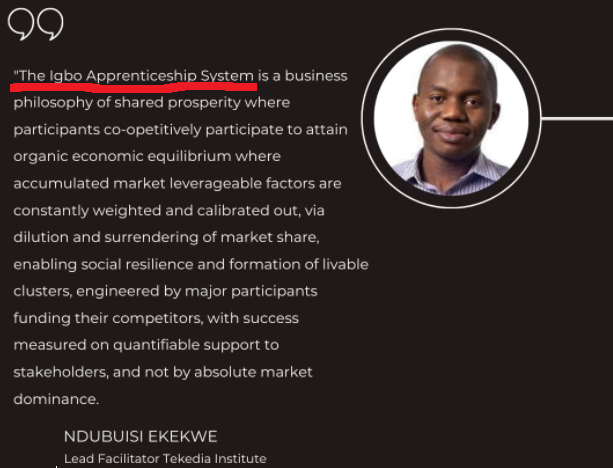
The Igbo Apprenticeship System is a business philosophy of shared prosperity where participants co-opetitively participate to attain organic economic equilibrium where accumulated market leverageable factors are constantly weighted and calibrated out, via dilution and surrendering of market share, enabling social resilience and formation of livable clusters, engineered by major participants funding their competitors, with success measured on quantifiable support to stakeholders, and not by absolute market dominance.

For the Igbo Apprenticeship System, the main focus is to prevent poverty by mass-scaling opportunities for everyone, and not for building conglomerates! It makes no sense in Adam Smith Economics that a man will build a business, accumulate a market share, and one day decides to relinquish some – and even go further by funding his competitors. But he is accomplished by doing so: those competitors are his brethren (umunneoma) and they will RISE with him. In a world of inequality, despite the obvious inefficiency in this system – lack of scale reduces the capacity to solve big problems – it is all about ubuntu.
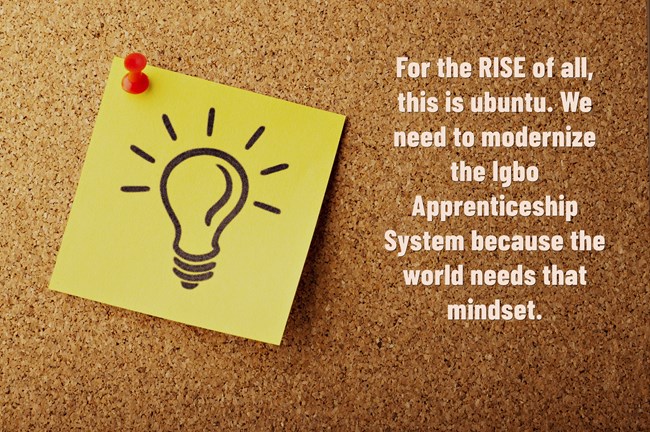
There are great lessons from African tradition:  “Onye aghana nwanne ya”- do not leave your brethren behind. Like I tell people, it would be nearly impossible to have extremely rich Igbo traders because they win by funding competitors and dividing their market shares through the Igbo apprenticeship system. How can a man give his customers to his brethren just to ensure he does not close his shop and move to the village? 

In this time of winner-takes-all, the world needs the spirit of Umunneoma Economics and the framework of an institutionalized and modernized Igbo Apprenticeship System (IAS). A vision to have that conglomerate is possible if all the members of the IAS can feed into an entity which all of them will co-own as a cooperative.
You can all make shoes but a major shoe brand with an international focus will buy shoes from the members, making sure that each member becomes a “supplier”  to the brand. That brand entity will have scale and capacity to compete and win at the global arena. Yes, at the downstream, members can continue to do business on their ubuntu mindsets, but this unified brand can scale and move upstream, and attain a global status.

Outstanding Qualities of Very Successful People

1

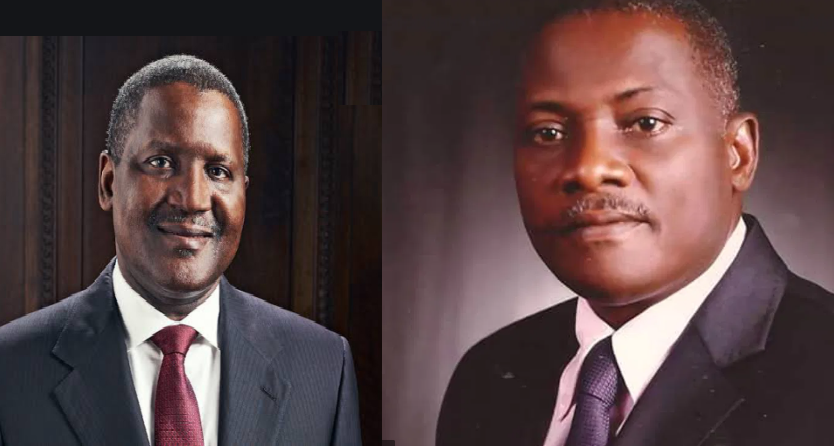
Being successful in Nigeria is not an easy feat to achieve. So many factors are involved. Most people believe formal education is the only way one can attain success but that is not always the case. If you decide to measure success through educational achievements alone, you might want to know that industrialists like Innocent Chukwuma (Innoson) stopped at secondary school. Maybe, when you want to refer to academic success you can then use people’s educational attainment as the yardstick for measuring success. But remember, many Ph.D. holders do not know what to do with their certificates.

Furthermore, it will be out of place to determine success based on financial achievement. Success, in the context of this essay, refers to one’s ability to reach the peak of his endeavour. Endeavour here could be anything. For instance, some people wish to be their possible best in medicine. Some want to become exceptionally good at playing football, scrabble, chess, or any other games. Some may wish their businesses to thrive. And there are those that wish to reach the top position in their offices. All these are examples of success. Hence, people become successful if they achieve their aims.

As mentioned earlier, for a person to become successful, he must have some characteristics that set him apart from others. They do ordinary things in extraordinary ways. One interesting thing about these people is that they all exhibit the same behaviour. All of them, irrespective of age, gender, race, or religion, have the right qualities that pushed them up.

Founders of Facebook and Amazon

Characteristics of Successful People

Based on observation, the following are the characteristics of successful people:

a. Ambitious: The desire to reach higher peaks is one factor that drives these people. A person that is not ambitious cannot push through hurdles that might stand in the way to success. Apart from that, non-ambitious people easily get contented and so find no reasons to “stress” themselves with climbing the next rung. However, the ambitious never settle; their success is their motivation for the next move.

b. Constant Learning: These people never stop learning. They are aware that they don’t know it all and so are willing to learn more. They don’t undermine people’s ideas because they believe knowledge and information can come from anywhere. These people are the reason knowledge is said to hold power.

c. Risk Taking: The people that fear taking risks might find it hard to grow. Like people say, if something becomes easy to accomplish, it will become children’s plaything. This means that if a task is easy to accomplish, it will become flooded. Hence, only those that can take risks can push into unfamiliar grounds and conquer. This quality has been exhibited by all the successful people I know. In fact, those risks they took gave them their biggest breaks. Nevertheless, their risks were well-planned out; they went for things they could control if they achieve them.

d. Building Great Network: This is one major tool for anyone that wishes to reach the peak. Based on my observation, nobody has been able to get to that peak alone; someone must have pulled them up. Note the word “pull”, which is not “push”. This means that people below you can push you up but their help is limited. However, only those up there can help you to the peak. Hence, make the right connections as you move and never feel guilty or ashamed to use them.

e. Grabbing Opportunities: Abilities to identify an opportunity when it walks-by is a skill possessed by these people. Sometimes their opportunities come accidentally; other times they come fully prepared. Like many people, they have also grabbed wrong opportunities at one time or the other but, unlike many others, they do not settle with them. This is to say that if what you hold doesn’t give you what you desired, drop it and seek for another. But keep vigilant because opportunity hardly looks the way it is expected.

f. Moving from Known to the Unknown: Most successful people started their pursuit from the areas they are familiar with. It is after they have settled that they began to plunge into new territories to test the waters. If their adventure does not favour them, they move back to their known territory and continue operating from there until they gain enough grounds to take another leap. Also, these men and women begin their journeys from the simple to the complex. They may not start small, but they don’t always start big and multifaceted. They take their baby steps and gradually grow until their feet are deeply planted. It is only then they begin to take those leaps that land them their big breaks.

In summary, for you to get to that peak, remember to imbibe the following: never settle for less; keep improving on yourself; study what you are plunging into; take chances; make friends wherever you go; and begin with what you know.

Tekedia Unveils Tekedia Capital And Tekedia Career Center

0
Tekedia Career Center in the Hub

It is launched – visit this page for Tekedia Capital


An Austria team which is attending our program wants to put money in Tekedia Mini-MBA members; the quality of our program has brought this confidence. The instruction is “Tekedia Mini-MBA Edition 4 cohorts. The offer is up to the total sum of US$25,000…” A German Fintech investment group is also onboard.

If you are attending our program, share with @admin in the Hub your mission. Many innovators like Symplifix accessed capital via our program last year, and some have gone to raise further funds.

Our focus remains education and school.tekedia.com remains exclusively for academic learning. So, everything about mentoring, career, investing, etc will happen in the hub.tekedia.com.

The vision we have for the Hub is to make it easier for our members to find mentors, connect with builders and investors, find business partners, link with the world, etc. So, expect career support, mentoring support, resume review support, etc in coming weeks as we continue to execute the playbook. We see a modern “school” within the Institute.

Tekedia Career Center in the Hub

For Tekedia Capital, we use Tekedia Mini-MBA Lab #1 to source the potential big ideas for investment. We then reach out to the members for approval before we share with potential investors. When we share with potential investors, we provide a summary first. If they show interest, we will then connect the member directly with the member. You are the one that will share your IP and full idea to the investor.

Let’s co-share, co-learn and advance our communities at Tekedia Institute.

Tekedia Career Center At The Hub

China Teams Up With Hong Kong, Thailand, UAE And BIS To Internationalize E-yuan

1

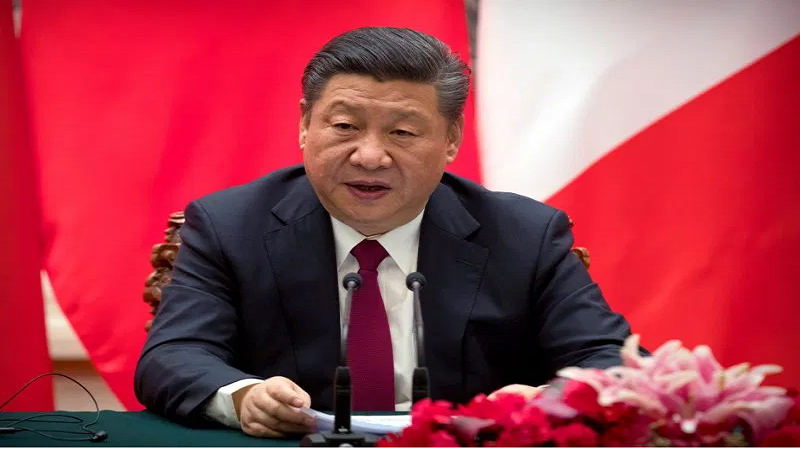
China has taken a step further in its quest to boost yuan through its sovereign digital currency. SCMP reported that Beijing has joined Hong Kong, Thailand and the United Arab Emirates (UAE), along with the Bank of International Settlements (BIS), to explore cross-border payments for digital currencies.

According the report, the People’s Bank of China (PBOC)’s Digital Currency Institute, the arm of the central bank in charge of minting the country’s sovereign digital currency, made the announcement on Tuesday. The announcement said it’s joining the Multiple Central Bank Digital Currency Bridge, a cross-border payments project initiated by the Hong Kong Monetary Authority and Bank of Thailand in 2019.

The move is believed to have the potential of helping China to create a new path to promote the use of yuan in global payments and weaken the US dollar’s position as the world’s dominant reserve currency.

The project is part of China’s long-nurtured aim to internationalize yuan through its sovereign digital currency use. The report said the project has received support from the Bank for International settlement Innovation Hub center in Hong Kong, a unit created by the Basel, Switzerland-based organization to study key financial technologies for central banks. The project was originally named Inthanon-LionRock, but was renamed bank for “international” settlement, suggesting more inclusivity and that it’s open for others to join.

Earlier in the month, the PBOC had set up joint venture with SWIFT, the dominant network facilitating international payments between banks.

In January, China embarked on the third trial of e-yuan in the city of Shenzhen, as part of larger scheme to introduce the digital currency in mainland China. The first test was held in Luohu District, in October 2020, while a second round was conducted in Futian District at the beginning of this year.

But the Digital Currency Electronic Payment (DCEP) project was about the use of the e-yuan within China, and it was executed through a few individuals selected through a lottery to spend the digital currency.

The press release from BIS said the new project is intended to use capabilities of “distributed ledger technologies” to support real-time cross-border foreign exchange transactions in multiple jurisdictions around the clock.

“The project aims to foster a conducive environment for more central banks in Asia as well as other regions to study the distributed ledger technology, solve pain points and aid in cross-border fund transfers, international trade settlement and capital market transactions,” the statement said.

The PBOC is in the forefront of digital currencies as other central banks are yet to make a move, although many are likely going to launch retail digital currencies in the next three years, according to a BIS survey published in January.

SCMP quoted former China’s central bank governor, Zhou Xiaochuan, who played a key role in the digital currency project, saying at the end of 2020 that one of the major benefits of using a digital system is that both payments and currency conversion happen in real time.

He explained that the DCEP could help the yuan go international, but it is not a goal that Beijing will deliberately push.

“Some countries are worried about the internationalization of yuan. We can’t push them on sensitive issues and we can’t impose our will. We must avoid the perception of great power chauvinism,” he said.

China is expected to launch the digital currency before the 2022 Winter Olympics in Beijing, although no official time-table has been set yet.

The proof-of-concept project is currently an alliance between just Beijing, Hong Kong, Bangkok and Abu Dhabi, with backing from the BIS, which indicates support by an organization, owned by 63 central banks; but doesn’t determine where the project might lead.

It is also not clear if China is going to use blockchain technology as a ledger in distributing its digital currency, even though the South Asian giant has invested so much blockchain.

RESEARCH: Key Findings PASGAR, IDS Want Nigerian Public to Learn, Discuss from Fuel Protests and their Effects

0

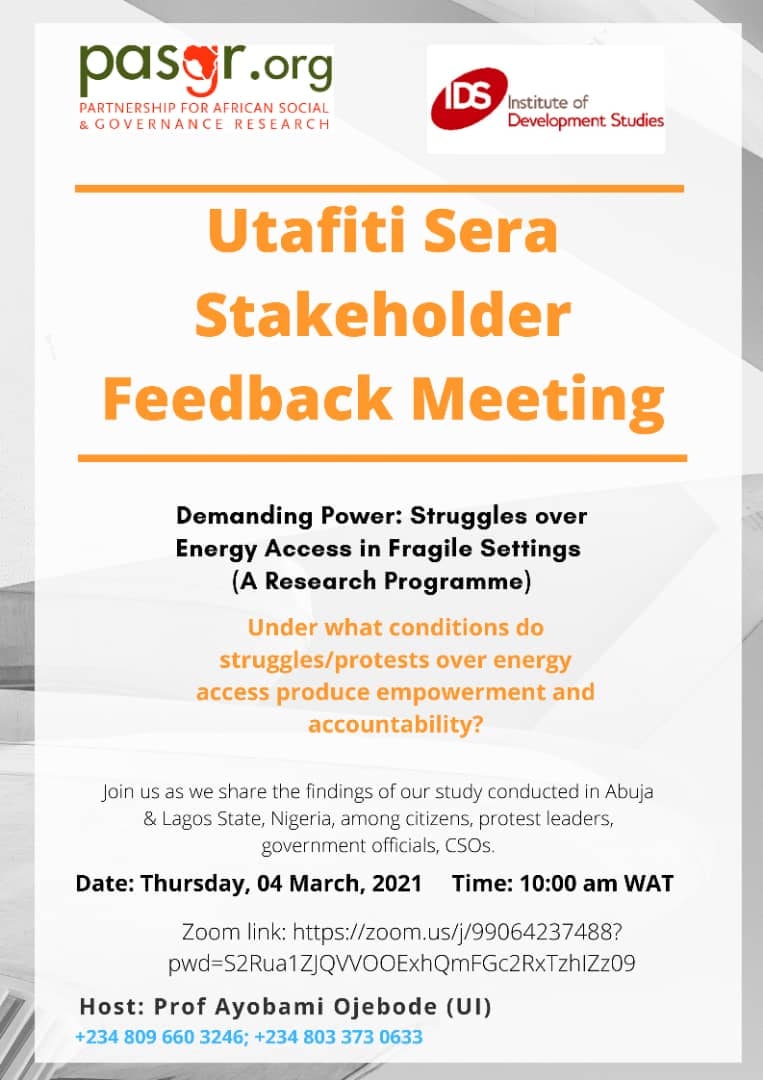
In their efforts of conducting social and policy researches with the consideration of the participants and policymakers before and after, the Partnership for African Social and Governance Research and the Institute for Development Studies will have a research dialogue meeting with the Nigerian public on Thursday March 4, 2021. These organisations are regional and global think tanks located in Kenya and the United Kingdom.

PASGAR also known as Utafiti Sera (Kiswahili for research-policy) is a combination of many things that ensure and enhance policy outcomes. PASGAR believes in evidence uptake and use to transform Africa. In this regard, IDS has been one of its key partners over the years.

In a statement released by one of the researchers, who carried the study in Nigeria, Professor Ayobami Ojebode of the Department of Communication and Language Arts, University of Ibadan, our analyst learnt that researchers from the two organisations studied fuel protests in Nigeria for the last two years.

“As part of rounding off the research and learning from all stakeholders, we are organising a stakeholders forum to share the findings of the research and receive feedback and advice. The study of particular interest to union leaders, transporters, civil society organisations, academics, players in the downstream oil sector, government officials, and citizens.”

The statement wants the public to join the dialogue, which would be held on Zoom by 10.00 am WAT, through https://zoom.us/j/99064237488. The researchers from the two organisations specifically studied attempts to remove or reduce subsidy by different administrations in Nigeria from 1973 to 2021.

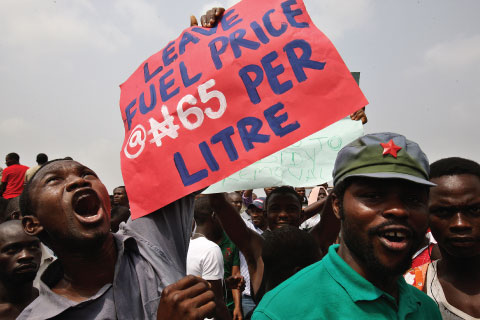
“Protests take place and lead to a downward review of the prices of petroleum products; in a few cases the protests barely take place. In 2012, the protests were widespread and led to significant policy initiatives (especially SURE-P). Since 2015 fuel prices have continuously gone up (once, down) but labour and the activists have not succeeded in getting people out onto the streets.

In effect, they seem to have lost the ability and legitimacy to lead the people’s side of the tussle. This has negative implications for the subsidy-related contentions that sometimes bring reprieve for citizens, even temporarily. In the study reported here, we examined how labour and others lost that role, and we draw out lessons on how to lead the people’s side of a volatile tussle such as the fuel subsidy issue,” the partial report of the study says.

In line with the focus of the research, our analyst notes that the meeting would afford the stakeholders opportunity of gaining insights on reasons for participation or not in fuel-related protests, leadership tactics of the protest leaders, and government’s responses to the protests.