DD
MM
YYYY

PAGES

DD
MM
YYYY

spot_img

PAGES

Home Blog Page 5875

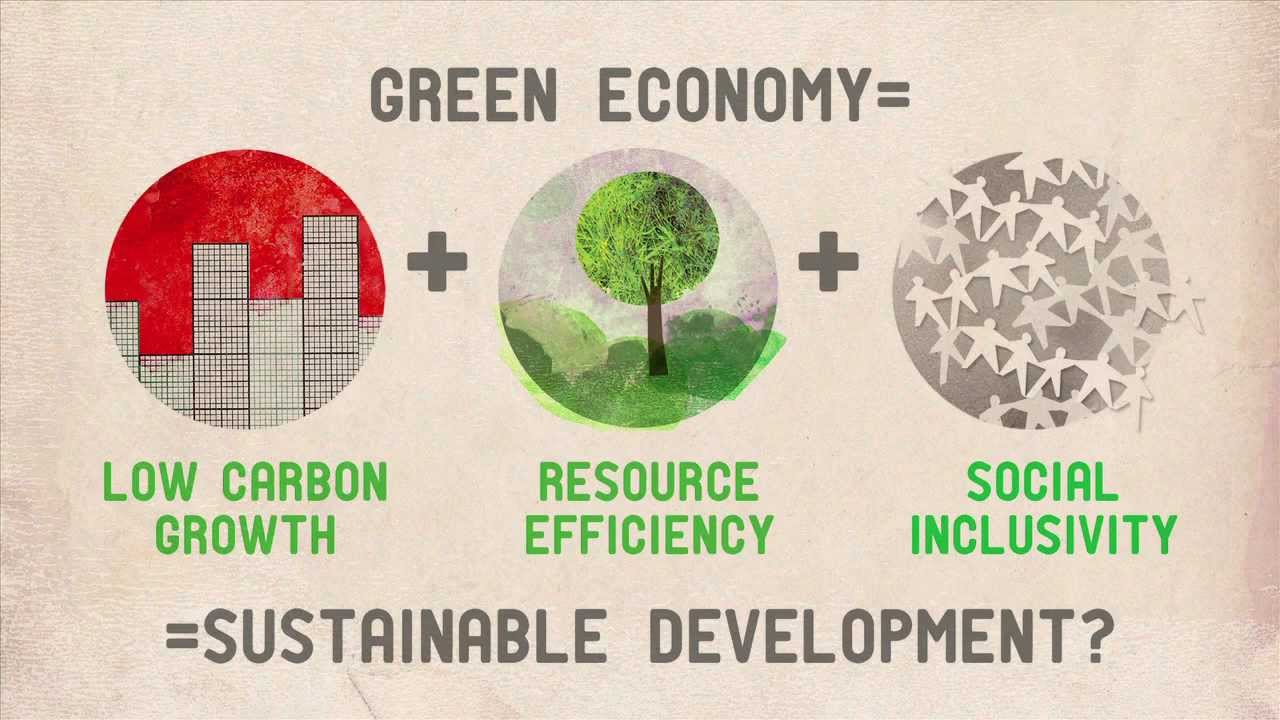
Green Economy Overview and its Effect on Sustainable Development

0

The concept of a green economy became popular as a response to the inability of neoclassical economics to effectively incorporate the value of natural resources and environmental degradation in market mechanisms. Global economic growth for the past half-century has been followed by quick environmental decline. Essentially, the economies of the world have, to date, over-depleted natural resources and severely devalued the ecological goods and services that comprise the basis of all economic activity.

Economic development has put great pressure on the natural resource base of the earth and the world is already resource drained. The consequences of climate change such as unpredictable weather patterns increased severity of natural disasters, and rearranged ecosystems, are already endangering food security and economic activities. Again, the prevalence of social and socio-political dissent and unrest, various social issues, and conflicts across the world are indirectly inspired by the inequitable sharing of limited resources that are unevenly distributed. A new development path is very necessary.

Green Economy and Sustainable Development: The Economic Impact of Innovation on Employment

There are numerous researches on the link between innovations for increasing productivity, where this connection is found to be very weak. This is linked to technological developments because of new machines. Truly, the importance of automation in terms of impact on employment has become vital. The employment impacts of innovation are a complicated mix of job displacement and compensation forces. The inquiry into the impact of innovation on employment is complex, as it involves a diverse conglomeration of effects. Strategically, product innovations and the introduction of new products leading to the creation of new markets can influence positive job-creation effects; while on the other hand, process or method innovations could lead to technological unemployment because of enhanced labor productivity.

Notwithstanding how threatening product innovations are, there is also a positive impact on employment, referred to as the ‘welfare effect’, though it can be enervated by a ‘substitution effect’ due to the displacement of mature products. Firstly, reduced production costs from a process innovation could cause a reduction in prices and this could trigger market demand by leading to more employment. However, this effect relies on the concept of perfect competition and demand elasticity, which can alienate the initial positive effect. Due to the more potential effects, as explained, the net impact of innovation on employment is complicated. Studies analyzing the impact of green innovations on employment are burgeoning due to the target of actualization of more sustainable development in most countries. However, the interest in green economy investments is peculiar given the need for government intervention to realize that new market opportunities could produce a lower return compared to other innovations.
Green Economy and Preservation of Biodiversity

There are many questions that economists ask relating to biodiversity including; is economic growth detrimental to biological diversity? Why will it likely turn out to be detrimental? How can the dangers be avoided? Etc. At a more individual level, the questions focus mostly on project analysis and specific environmental policy decisions. A distinctive characteristic of natural resources is that they are not immediately renewable; they can be selectively replenished only with time and subject to the limits of biological processes. Consequently, tapping these resources involves a compromise between instant benefits and future costs that relies on how the latter are considered relative to the former.

Economists have several interesting ideas of how the interest rate level, the result of the net benefit function and its outcome over time, and the variability of the resource’s inherent advance process contribute to the appropriate transitional path to exploitation. In effect, the process of sacrificing present consumption opportunities in favor of future generations should be a collective bargain. Both schools of thought suggest that the intertemporal allocations consequent of a decentralized market system may in essence be unfavorable to the present generation. Not only can the idea of conserving natural resources be a collective good, but the resources themselves are collective goods.

This is another major reason why overexploitation may occur. A third characteristic feature of several natural systems is the usually considerable degree of unpredictability of the future consequences of today’s preservation/depletion actions. This is partially a result of the intertemporal aspects of resource management but it is also the consequence of the enormous variability that is innate in natural systems.

There is are replete economic theories on how uncertainty can be incorporated into decisions made by private individuals or public policy framers. These theories target the implications of various forms of risk-averting actions for the optimal intention of resource preservation over time. Implementing these theories, however, needs empirical estimations of the type of risk preferences preferred by the decision-makers, in the terms of positive analysis, or value determinations about the type of approach to decisions on the risk that can be adopted, in the case of normative analysis.

Environmental economists are interested in markets because they are interested in estimating the choices of individuals and verifying their compromises connecting environmental resources and money or standard market products. Both direct and indirect methods for measuring the preferences of individuals have been greatly honed in recent years.

Emerging Opportunities

The Sustainable Development Goals (SDGs) represent the most ambitious development agenda ever, determining the vision, blueprint, and goals for the evolution to a sustainable society. With just over a decade left to realize the SDGs, a major effort is needed to produce results.

Challenges remain to bring these trends to fruition. First, most of today’s green market expansion is focused on a limited number of developed and emerging economies, with a necessity to diversify the geography of green solutions, with the least struggling countries.

The Middle East with the North African region are good illustrations, so far the earth’s most water-deficient and food import reliant region, also having temperatures increasing faster than the global average. Without partnerships and finance expansions in the years ahead, trends of poverty, displacement, and fragility will increase.

The UNDP, UN Environment, UNISDR, UN Habitat and WFP are launching a new SDG Climate Facility regional plan to take action on these issues; a regional initiative in conjunction with the League of Arab States, the Arab Water Council, and other partner countries.

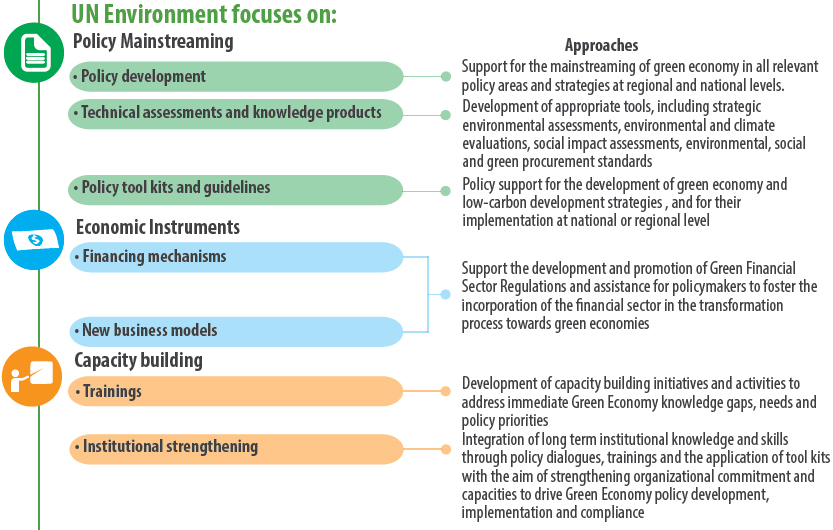
With the SDG Climate Facility, the UN will assist country partners to identify opportunities to mainstream green solutions into national financial structures, the rules and framework governing the banking sector, investment, insurance, capital markets, and other segments of national financial systems necessary to green market development, and actualize a directional estimate of the investment gap enroute 2030.

A focus will also be on innovation, to establish new green investment options among public and private partners in order for scaled-up climate finance to be applied in a way that profits the poorest and most vulnerable in society, including crisis-ridden communities.

Shifting to a Green Economy

Actualizing the full potential of green jobs is predicated on countries assuming their roles in developing the green economy and formulating policies that will foster investment. The current model has proven to be ineffective and inoperable, not only for the environment but for economies as a whole. There is an urgent need to move to a sustainable development path with an implementable set of policies, with people and the planet at the focus.

Claims that the greening industry would lead to job losses, because of the changes to some traditional industries such as fossil fuel extraction have been countered by the argument that environmental sustainability is not a job killer, as always assumed. In contrast, if properly supervised, the result can be more and improved jobs, poverty alleviation, and social incorporation.

Though some areas like fishing fleets are more vulnerable to losses lasting durable conduct could prevent job losses. For illustration, an evaluation suggests that one million workers in Asia could have lost their livelihoods in forestry because of poor resource management, which could have been largely prevented with better policies and implementation. Jobs easily identified as “green” are not the only ones to be affected by the transition to a more environmentally sustainable economy.

Some of the sectors identified as being most impacted by the changes include agriculture, energy, resource-intensive manufacturing, fishing, building, and transport. Women could benefit if the transition is properly implemented as it could provide them with increased access to jobs and sizeable incomes.
Green Economy Offer for Developing Countries

To be beneficial to develop countries, green growth should be reconciled with the two strategic features of natural resource harvesting and poverty in these countries. First, primary products form most of their export income, also they are incapable of diversifying from basic production. Again, numerous economies experience a considerable portion of their rural population resident on less non-arable agricultural land and in inaccessible areas, thus supporting subsistence. If green growth is capable of speeding up an economy-wide transformation and poverty alleviation in struggling economies, then it must be followed by policies targeted at overcoming the two strategic features of natural resource harvesting and poverty. Policies and reforms must foster synergistic linkages of primary production, improve its incorporation with the other dimensions of the economy, and elicit opportunities for creativity. Rural poverty, notably the constant concentration of the rural underprivileged on agricultural lands that are difficult to cultivate and in inaccessible areas, needs to be looked into by more targeted policies and investments, and where possible, policies to encourage rural-urban migration.

Action Indicators of a Green Economy

Admittedly, in recent years there have been many attempts to create indicators and assessment frameworks that address the environmental and social aspects of progress. Additionally, there has been an increasing realization of the limitations of GDP, notwithstanding the fact that it is still widely deployed today as an indicator of social welfare. Agreeing on the best alternative sustainability indicators is highly complex, notably as a result of the intricacies of how to balance our environmental, social, and economic goals still being a matter in contention. However, notwithstanding the fact that they are still unable to achieve the same level of impact as GDP, other indicators and alternative measurement theories are slowly being infused into the policy-making process. Still, there has been palpable scientific progress in assessing various dimensions of sustainability that have not yet been explored by policymakers.

CONCLUSION

Sustainable development has assumed a multi-dimensional and complex approach with many different characterizations and measurement approaches. A plethora of researches has been targeted towards the development of indicators in this area, consequent to a jungle and often complicated, available indicators. There are numerous indicator sets currently present in the field of sustainability, though in practice only a limited number of them find their path into the policy-making process. In years ahead the incorporation of green economy and sustainable development in the policy process will burgeon as a result of the growing recognition of the limitations of GDP as a measure of welfare. Rather than focusing only on developing the perfect indicator or set of indicators, it is more useful to educate the public in the use of indices, due to the fact that virtually any standard can furnish useful indicators for some political inquiry and misleading messages for others.

4 Easy Ways You can Attract Sales on Twitter

0

Thanks to social media, people can reach more clients from different parts of the world. A person doesn’t have to move from house to house in search of sales. Today, you can connect with many clients from the comfort of your home and make lots of profits with less stress.

One of the best social media platforms for marketing and/or finding good clients is Twitter. This bird app, as it is fondly called, has over 300 million active users from different parts of the world. The good thing about this platform is that majority of its subscribers manage their accounts by themselves. This means that if you engage with anybody there, you are most likely chatting with the owner of the handle. In other words, Twitter brings people together and gives them the chance to interact easily without a filter.

Many people felt Twitter is the hardest place to find clients. A lot believe the platform is only there for information dissemination. Well, when people come together to share information, they can also learn about the goods and services provided around them. Remember that newspapers and magazines are also very good avenues for advertising even though their primary purpose is to spread information.

Nevertheless, finding clients on Twitter is a tricky deal. The simple reason for this is that the platform is rowdy and most of the good clients are silent observers; they are not among those that made Twitter loud. To locate these people, attract their attention, and make them reach out to you, you have to consider applying the strategies mentioned below. More so, you can do a lot of cheap Twitter tweets.

Twitter CEO
  1. Optimise your profile: This is necessary because your prospects will sneak into your profile to see what you have to offer. As a result, consider bearing a name and adding a clear picture that represents what you sell. If you have a website that showcases your handiwork, please include it there too. Your short bio should summarise your work and personality. Be careful there because your prospects will scrutinise that too. Finally, make sure you have enough activities (tweets, likes, replies, etc.) that will give an insight into your ideology.
  2. Unlock your inbox: Usually, prospects slip into people’s inbox to strike up conversations. Twitter prospects are so tricky that they may not directly tell you they have an interest in your services. This is why you have to continue checking your messages in case there is a request to start a conversation and entertain all of them. Remember to be polite to anyone to send you a direct message, irrespective of how unimportant you think he is. Believe it, most opportunities come in greasy overall; so don’t undermine anyone. But first, go to setting and unlock your inbox so anyone can send you a direct message.
  3. Connect wisely: Most Twitter users think they need plenty of followers before they can meet their prospects. Well, they might be right, especially if they intend to advertise and circulate information. Activists and political propagandists also need plenty of followers because they need the crowd before they could carry out their agenda. However, if you are not into any of the mentioned professions or any other one that needs a crowd, what you need more are not “followers” but “followings”. So, don’t concentrate on accumulating followers but focus on following the right persons. This is why you should study the type of persons that need the services you provide or the goods you sell and then search for them. Hence, go to them; don’t wait till they come to you.
  4. Be visible: This is the tricky part. Being visible and maintaining the status quo requires tact. Different persons have different ways of staying visible and attracting a lot of prospects. Some make funny tweets, whereby they market their products and services when the crowd troops in. Some attract with catchy pictures while others use trending topics. Then some people make threads on personal experiences that will attract the crowd’s sympathy or admiration. The use of trending hashtags can also provide wide visibility. You can equally consider dragging the government, political and religious leaders, tribes, and unaccepted ideologies to attract heated debates from your followers and non-followers. All these tricks are used by advertisers and propagandists. However, the method you choose depends on what you do. If you need few high-brow clients that can afford your services, you may not need to be dramatic like any of the above-mentioned strategies. In this case, intellectually engaging in conversations, especially in your area of expertise, can attract your prospects and keep them lurking behind until they are satisfied and decide to reach out. However, as stated earlier, what you sell determines the method you choose.

Twitter may seem scary to new subscribers because of its rowdiness and harshness. However, it is a great platform for one-on-one communication with people of different classes and statuses. As a result, it is one of the best places you can meet and retain good clients.

The Apple’s $110 billion in Three Months – And The Tesla’s Miss

3

Apple made more than $110 billion in the 1st quarter of its fiscal year 2021. The CEO Tim Cook also noted that the tech giant bought about 100 acquisitions since 2015. But like the whole world, Apple would wish it bought Tesla when Elon Musk asked it to do so in 2013: “For example, Tesla founder Elon Musk recently revealed that he approached Mr Cook to buy the electric car business when it was struggling in 2013”. Apple did not show interest in the proposed deal.

Apple has acquired about 100 companies over the last six years, the company’s chief executive Tim Cook has revealed.

That works out at a company every three to four weeks, he told Apple’s annual meeting of shareholders on Tuesday.

Apple recently delivered its largest quarter by revenue of all time, bringing in $111.4bn (£78.7bn) in the first-quarter of its fiscal year 2021.

Mr Cook told the shareholders meeting that the acquisitions are mostly aimed at acquiring technology and talent.

Tesla was in the neighborhood of a $20 billion valuation; just around Nigeria’s effective annual budget. Today, Tesla is worth close to $700 billion and Apple is worth 2.09 trillion. Of course, a Vice President of Motor Division, Elon Musk, under an Apple umbrella, might not have delivered what we are seeing in the current Tesla. Yet, it is evident that if Apple had bought Tesla in 2013, it would have been the biggest deal of all ages! Of course, not just Apple, but anyone in the game of investing.

On Friday Tesla Motors (TSLA) closed at yet another all-time high of $183 per share leaving it with a market capitalization of greater than $22 billion…..a cult-like valuation given a company that will produce but 20,000 cars in all of 2013. So every car Tesla produces is worth $1.1 million even though the world famous model S prices around $80-$110,000 depending on battery ranges and charger sizes and myriads of extras. Even doubling the number of cars sold to Tesla’s 2014 target of 40,000, then you are still left buying stock at $550,000 per car.

As the world moves to make fossil fuel the next tobacco which must be avoided by all costs, companies like Tesla have great moments ahead of them.

Shecluded – Building Impactful Gender-Anchored Companies

0

She runs an extremely unique company: “a finance company providing women with access to financial growth services to help then achieve their goals”. This firm has deepened partnerships with some leading financial institutions to execute the mission. Interestingly, we recently noted that the fintech startup has been funding young women to attend Tekedia Mini-MBA through scholarships via a non-profit.

Tekedia Institute is happy to announce that the Founder & CEO of Shecluded, Ifeoma Uddoh, will be our guest at Tekedia Live on March 23 at 11am WAT. Her company is bringing a new playbook on how to build inclusive economic structures: “Magic happens when you combine a smart woman, access to credit and the power of a collaborative community.”

Through a partnership with Stanbic IBTC Bank, Shecluded is making pension accessible to women. The firm is also investing in female founders. I must tell you that the math is working; Ifeoma studied industrial mathematics in my alma mater, FUTO, and understands numbers: empower women, empower the world!

A core pillar of our Institute is to make scholars “noble”. We do think Shecluded will inform and inspire us on that mission. Zoom and more details in the Board.

We welcome Ifeoma and Shecluded to Tekedia Institute.

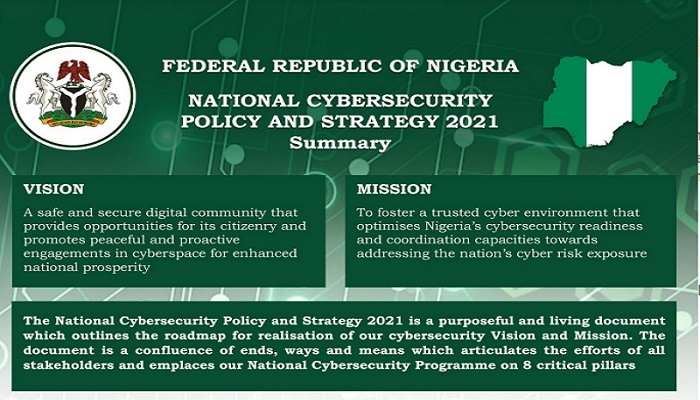
The Updated Nigeria’s National Cybersecurity Policy and Strategy

0

Here is a summary of the National Cybersecurity Policy and Strategy for Nigeria. The following is the lead statement from the President announcing it.  Download the full report here.

PRESIDENT MUHAMMADU BUHARI UNVEILS NIGERIA’S  NATIONAL CYBERSECURITY POLICY AND STRATEGY 2021

ON 23 FEBRUARY 2021


On 23 February 2021, President Muhammadu Buhari unveiled the National Cybersecurity Policy and Strategy 2021 as the overarching policy and strategy framework for driving Nigeria’s cybersecurity efforts towards the attainment of our national objectives.


Nigeria is currently at a turning point in its history. The country is blessed with a young and vibrant population which has the potential to exploit the benefits of the Internet to enhance economic progression and improve national security. Nigeria is also witnessing a rapid surge in the adoption of the Internet and social media for almost all aspects of daily life. Therefore, there is no argument that the Internet or cyberspace is now central and indispensable to the country’s national development.  

  1. However, like several other countries across the globe, the growth and development of the Internet is accompanied by significant problems. We are witnessing a rise in threats posed by cybercriminals, online financial fraudsters and cyber terrorists who use the Internet to cause apprehension. We are also observing a surge in the use of the Internet and social media for propagation of hate speech, fake news and seditious messages, as well as the risks of breaches to personal information and government sensitive data. Some global events such as the rapid emergence of new technologies, the outbreak of the COVID-19 pandemic and the advent of 5G technology, have further widened the scope and diversification of these cyber threats.
  2. Therefore, in a bid to ensure that we effectively embrace and harness the benefits of the digital revolution while effectively combating the heightening risks of cyber threats, it became expedient to review Nigeria’s National Cybersecurity Policy and Strategy 2014 and develop a comprehensive National Cybersecurity Policy and Strategy 2021 for the common good of the country. The document was formulated by a multi-stakeholder committee comprising representatives from various sectors of the Nigerian economy including Government agencies, private sector, academia, professional organisations and the international community. The National Cybersecurity Policy and Strategy 2021 will provide Nigeria with the necessary platform to effectively confront the dynamic nature of threats in our cyberspace. The document will also provide the framework that would enable us harness the efforts of our private sector, academia and industry towards progressive economic and national development. To this end, the document will provide the roadmap for technical education, digital skills acquisition and indigenous technology production, thereby creating job opportunities for our youths and supporting our resolve to alleviate poverty and boost our economy.


  1. The National Cybersecurity Policy and Strategy 2021 signifies the rejuvenation and renewal of President Muhammadu Buhari’s promise and commitment to Nigeria’s national security and economic prosperity and it ensures that our National Cybersecurity Programme is prioritized among other national exigencies.


  1. Mr President ended his speech by commending the efforts of the National Security Adviser (NSA) and his staff as well as other stakeholders for the remarkable work in developing the document and contributions towards strengthening the development of cybersecurity in Nigeria. The President urged the National Security Adviser (NSA) to continue to coordinate the efforts of all stakeholders to ensure that Nigeria’s Internet and cyberspace are used for the enhancement of national security and economic progression. He finalised his speech by saying that he is confident that, together we can pave the path for the creation of new opportunities to usher Nigeria into a bright future driven by a prosperous cyberspace and digital economy.