DD
MM
YYYY

PAGES

DD
MM
YYYY

spot_img

PAGES

Home Blog Page 5878

The Need for Grass-Root Political Leadership Enlightenment in Nigeria

0
Nigerian children attend independence day celebrations in Lagos in October 1, 2013. Nigeria's president Goodluck Jonathan said he had formed a panel tasked with laying the ground for a national dialogue to tackle contentious issues such as religious tensions and the sharing of oil wealth during an address marking the 53rd anniversary of Nigeria's independence. AFP PHOTO/ PIUS UTOMI EKPEI (Photo credit should read PIUS UTOMI EKPEI/AFP/Getty Images)

You might be surprised to hear that many Nigerians, including this writer, don’t know who their leaders are and the various duties they, the leaders, owe their communities. If you ask some people who they know as their elected leaders, they will mention the president, the governor, and maybe one or two ministers that feature often in the press. Ask them who is representing them at the National Assembly or the State House of Assembly, and you will find out they have no idea. Bring the query down to the local government chairmen, councillors, and even ward leaders and they will have nothing to tell you. This is how uninformed Nigerians are when it comes to matters about political leaders and their duties.

The way Nigerians have little knowledge of the political leaders they elected is still the way they have little or no knowledge of the duties these officers owe them. It is difficult to decide which political officer has which job to do. Because of this, the majority of them ignore their responsibilities since no one will hold them accountable. Of course, it’s when you know what someone is supposed to do that you can hold him responsible for failing to do it.

But here you are, you don’t know what your governor is supposed to do. You are unsure of the boundary that separates the obligations of your local government chairman and those of your councillors, that is, if you know who they are or even remember they exist. You hear about constituency allowance but you don’t even know what it stands for and what it is meant to do. They tell you there is a security vote that is shared, monthly, to all the states of the federation, depending on their level of security challenges, but the federal government is expected to send troops to protect states. What about the members of State House of Assembly? Are they not meant to handle projects in communities? What bills have they passed that will make life easier for your community? Do you even follow their activities? All these make one ask, “What exactly are the responsibilities of each of these political office holders?”

Speaking on the issue of security, just recently, the former Chief of Army Staff, Tukur Buratai, said that the military alone cannot handle insurgency and banditry without the collaboration of the state governments. According to him, forest reserves are under the control of state governments and that it was the duties of these governments to keep the forests safe. Until Buratai said this, many of us do not know state governments have roles to play in the battle against insecurity. But come to think of it, what are the governors doing with security votes if the military has to secure their states?
Election cycle

Coming to cases of infrastructure and poverty alleviation, whose responsibility is it to provide the basic needs of the people? Which responsibilities are allotted to local government chairmen, state governors, senators, and the federal government? What projects are senators funding with constituency allowances given to them? Does anyone even know the projects they presented before they were allocated the money? How will people know which of their leaders to call on when their roads go bad, winds remove the roofs of their schools, they lack drinking water, or need electricity? Who exactly is in-charge of what?

Nigerians, in the hands of political leaders, are like the proverbial public goat that died of hunger. Since the populace do not know who to hold responsible for any particular work, they, the politicians, ignore their basic duties. Nigerians have been searching in faraway places near them. It is high time they found out who is responsible for which duty so they can ask them to do their jobs. It is time for grass-root governance to begin. But it can only become successful if there is proper enlightenment on political leadership.

Tekedia Advanced Diploma – Immediate Access Upon Payment

0

You asked for it, and we have made it available – the ability to begin learning at Tekedia Institute more regularly instead of waiting for the Tekedia Mini-MBA editions. The Advanced Diploma programs in Tekedia are here to deepen your knowledge and accelerate your business missions.

Each track of Tekedia Advanced Diploma programs runs for 8 weeks (2 months). A track has no Live Zoom component, and it is completely self-paced and online. Upon payment, you have immediate access to start learning. The program includes class notes, flash cases and videos, but no webinar. Cost: Each track costs $100 or N36,000 naira per participant. 

DLSM Advanced Diploma in Logistics & Supply Chain Management
DBIS Advanced Diploma in Business Innovation, Growth & Sustainability
DBPM Advanced Diploma in Project Management
DIRM Advanced Diploma in Risk Management
DIBA Advanced Diploma in Business Administration
DIDT Advanced Diploma in Innovation and Design Thinking
DIAT Advanced Diploma in Accounting, Auditing, Forensics & Taxation

Session runs on our NEW portal and boards.

The following are payment options for Tekedia and Fasmicro services:

A sample certificate

How To Select Between Mini-MBA & Diploma: Tekedia Mini-MBA is comprehensive but each of these tracks are more deepened in their specific areas. For example, while we have a course on Risk Management in Mini-MBA, the Advanced Diploma in Risk Management has more courses which are not in Tekedia Mini-MBA. I will recommend Tekedia Mini-MBA if you do not have specific interests in each of the tracks. But where you want to deepen the capabilities in a specific tract, then Tekedia Mini-MBA and the diploma would be a good idea, or just the diploma.

Part A – General for All Tracks

In the first 4 weeks, all the tracks take the same courses.

 Week Part A – Common to All Tracks
1 Innovation & Growth:

Growth and Innovation of Firms

Digital Transformation, Innovation & Strategy

2 Business Systems & Processes:

Grand Playbook of Business & Entrepreneurial Pursuit

Process Improvement and Operations Management

3 Business Model & Transformation:

Modern Business Models and Growth Execution

Effective Organizational Change Management

4 Design and Innovation Lessons:

Innovation Lessons (5in5, Global, Africa)

Product Design and Packaging

The electives for the tracks are presented on this slider-table.


Tekedia Academic Programs

Welcome Convexity To Tekedia Mini-MBA

0

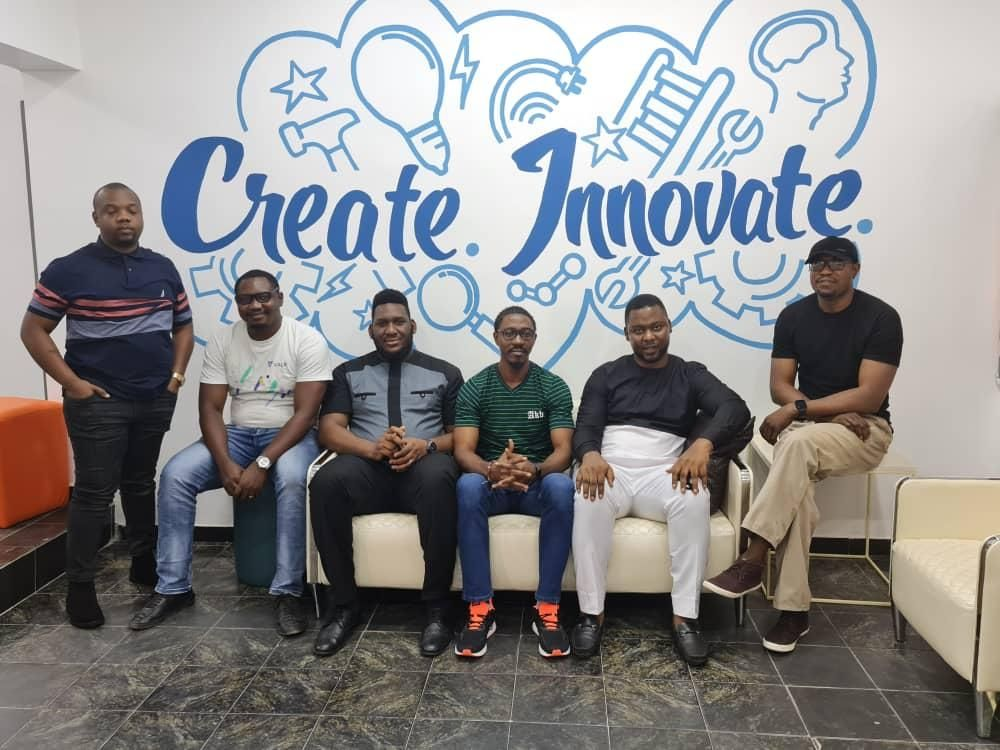
As we close registration for the 4th edition of Tekedia Mini-MBA on March 3rd,  we are excited to welcome Convexity, and the amazing team led by Adedeji Owonibi, to Tekedia Institute. Convexity is a modern company; it works in the domain of blockchain. They help firms study and build next generation suited blockchain solutions, making it possible for companies to launch more powerful solutions, with embedded security and compliance infrastructure.

The most exciting thing about Convexity? It has just set up a Blockchain Hub in Nigeria for innovators. Welcome to Tekedia Institute. Welcome to the best school. We will co-learn and co-learn, and advance the wealth of nations.

Photo: from Convexity Hub

Four Characteristics of Enduring Category-King Companies

0

There was a deep conversation during Tekedia Live today on Category-King – a company which has built or acquired leverageable factors to dominate a business category within its sector. For example, Facebook is a category-king in human social connection within the broad social media sector. Google is a category-king in web search. 

Dangote Cement is a category-king in Nigeria’s cement sector. Indomie Noodles is a category-king in the noodles sector. I have also used sector-king when a company becomes dominant within its sector when the category equates to a sector.

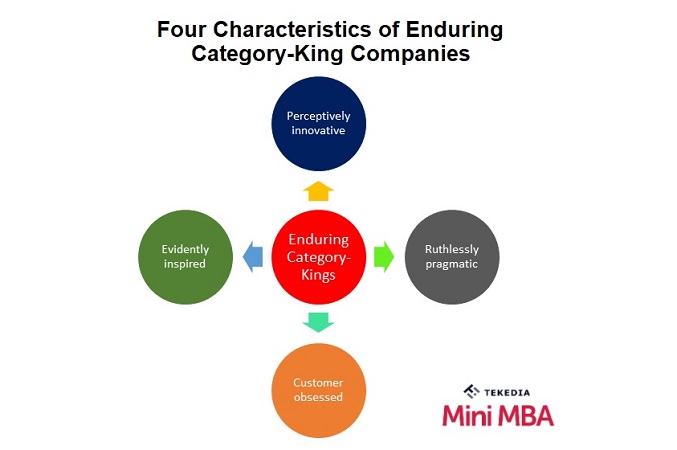
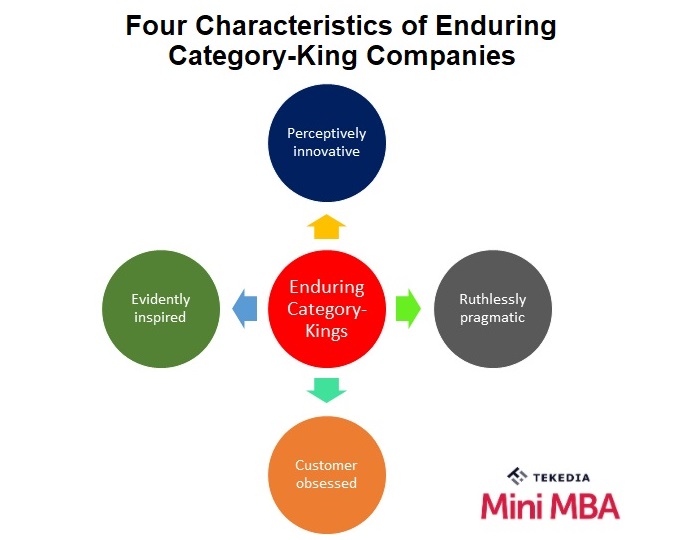
To become an enduring category-king in your business sector, you must possess these four characteristics. With these four features, the firms build moats to protect their castles.

  • Perceptively innovative: you are always innovating. You never rest, always pushing for better products, services and experiences. You outperform competitors with new solutions for unmet needs.
  • Evidently inspired: you inspire your users. You are modern, trustworthy and inspirational, you have a larger purpose, helping people live out their own values and beliefs.
  • Ruthlessly pragmatic: your customers depend on you and you have their backs, making life easier by delivering consistent experiences. You make good on your promises.
  • Customer obsessed: customers cannot imagine living without you. You know what matters to customers, finding new ways to meet their most important needs.


*inspired by Brand Prophet Index

A Nation Waits for Aliko Dangote – As Naira Fades!

52

The Nigerian Naira falls to N410 per US dollar, officially. The Central Bank of Nigeria (CBN) governor noted:  “In order to adjust for the decrease in supply of foreign exchange, the naira depreciated at the official window from N305/$ to N360/$ and now hovers around N410/$.” 

If you look at that statement, you will agree that Nigeria is in a vicious circle. Yes,  our inability to reform our economic structures has muted the comparative advantages within the nation. So, just like that, a nation of extremely brilliant people, is lost, with no national vision to galvanize economic vibrancy and growth towards a hopeful future.

With political stasis evident everywhere, Nigeria is at a crossroads, and nothing can fix this paralysis until Nigeria decides to produce things it could sell internationally or substitute some it currently imports. But with the banks not lending at scale (not entirely their fault), and economic restructuring that will bring intra-state competition, to boost productivity and efficiency, not happening anytime, Nigeria’s only core hope is that Aliko Dangote’s refinery business will rise.

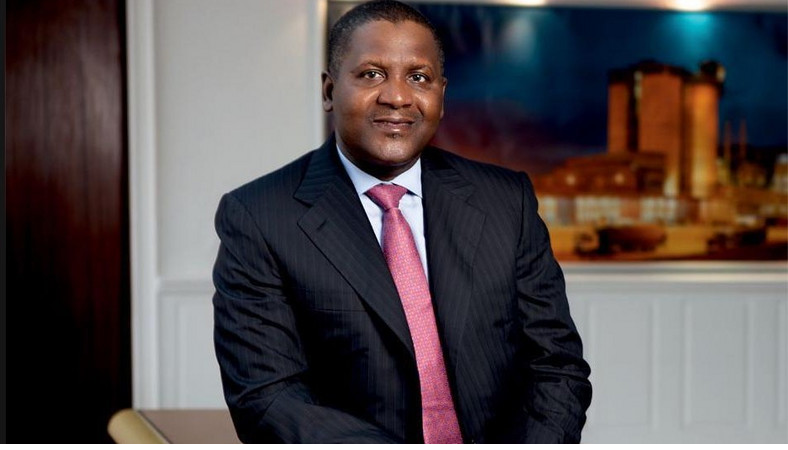
Yes, Nigeria waits for Dangote because only him has a credible roadmap to change the economic trajectory of his nation. His position today is very vital and critical because he could be the only cousin to make Naira stronger. Naira looks like an orphan with no one helping it to compete globally. Dangote will come to assist it to find its space in the league of global currencies. Across human history, nations rise when pioneering entrepreneurs emerge. The moment of truth is here – and Naira needs pioneers in markets to save it from the ruins of the scale of Mexico, Venezuela, Argentina and even Zimbabwe, at different times of their histories.

Dangote refinery

I have written extensively on Dangote’s positioning in my book – The Dangote System. I have also accepted an invitation to meet the business legend in Nigeria anytime I make it home. Certainly, it may be a while since I have no plan to fly until they have solved the last case of Covid-19! 

Saving the Nigeria

According to the News Agency of Nigeria, the Governor of the Central Bank of Nigeria (CBN), Godwin Emefiele, has noted that Dangote Refinery will possibly sell refined crude to Nigeria in naira when it begins operations. When that happens, Nigeria will save about 41% of its foreign exchange, currently expended on the importation of crude oil products. That 41% will give a breathing space for Naira and that could be a turning point for the nation.

Emefiele said, ”Based on agreement and discussions with the Nigerian National Petroleum Corporation and the oil companies, the Dangote Refinery can buy its crude in naira, refine it, and produce it for Nigerians’ use in naira.

“That is the element where foreign exchange is saved for the country becomes very clear. We are also very optimistic that by refining this product here in Nigeria, all those costs associated with either demurrage from import, costs associated with the freight will be totally eliminated.

“This will make the price of our petroleum products cheaper in naira. If we are lucky that what the refinery produces is more than we need locally you will see Nigerian businessmen buying small vessels to take them to our West African neighbours to sell to them in naira.

“This will increase our volume in naira and help to push it into the Economic Community of West African States as a currency.”

Emefiele was confident that the refinery would be completed by the first quarter of 2022, adding that this would put an end to the issue of petrol subsidy in the country.

He said, “I am saying that by this time next year, our cost of import of petroleum products for petrochemicals or fertiliser will be able to save that which will save Nigeria’s reserve. It will help us so that we can begin to focus on more important items that we cannot produce in Nigeria today.’’

For years, Nigeria has approached strengthening the naira through financial engineering at CBN headquarters; Dangote Refinery will help to strengthen Naira through technical innovation, at international markets through products and services, shifting equilibrium points to improve the balance of payment for Nigeria.  The latter has always worked! Nigeria waits for that day because that refinery could be the most important national asset for a long time. Then, we will note that the N100 billion intervention to the projects, from the apex bank, is a good deal for the nation.