DD
MM
YYYY

PAGES

DD
MM
YYYY

spot_img

PAGES

Home Blog Page 5884

Tekedia Unveils Tekedia Capital And Tekedia Career Center

0
Tekedia Career Center in the Hub

It is launched – visit this page for Tekedia Capital


An Austria team which is attending our program wants to put money in Tekedia Mini-MBA members; the quality of our program has brought this confidence. The instruction is “Tekedia Mini-MBA Edition 4 cohorts. The offer is up to the total sum of US$25,000…” A German Fintech investment group is also onboard.

If you are attending our program, share with @admin in the Hub your mission. Many innovators like Symplifix accessed capital via our program last year, and some have gone to raise further funds.

Our focus remains education and school.tekedia.com remains exclusively for academic learning. So, everything about mentoring, career, investing, etc will happen in the hub.tekedia.com.

The vision we have for the Hub is to make it easier for our members to find mentors, connect with builders and investors, find business partners, link with the world, etc. So, expect career support, mentoring support, resume review support, etc in coming weeks as we continue to execute the playbook. We see a modern “school” within the Institute.

Tekedia Career Center in the Hub

For Tekedia Capital, we use Tekedia Mini-MBA Lab #1 to source the potential big ideas for investment. We then reach out to the members for approval before we share with potential investors. When we share with potential investors, we provide a summary first. If they show interest, we will then connect the member directly with the member. You are the one that will share your IP and full idea to the investor.

Let’s co-share, co-learn and advance our communities at Tekedia Institute.

Tekedia Career Center At The Hub

China Teams Up With Hong Kong, Thailand, UAE And BIS To Internationalize E-yuan

1

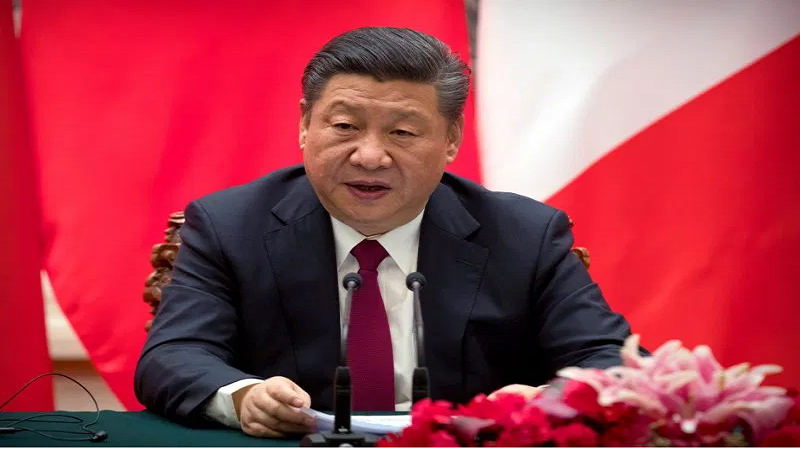
China has taken a step further in its quest to boost yuan through its sovereign digital currency. SCMP reported that Beijing has joined Hong Kong, Thailand and the United Arab Emirates (UAE), along with the Bank of International Settlements (BIS), to explore cross-border payments for digital currencies.

According the report, the People’s Bank of China (PBOC)’s Digital Currency Institute, the arm of the central bank in charge of minting the country’s sovereign digital currency, made the announcement on Tuesday. The announcement said it’s joining the Multiple Central Bank Digital Currency Bridge, a cross-border payments project initiated by the Hong Kong Monetary Authority and Bank of Thailand in 2019.

The move is believed to have the potential of helping China to create a new path to promote the use of yuan in global payments and weaken the US dollar’s position as the world’s dominant reserve currency.

The project is part of China’s long-nurtured aim to internationalize yuan through its sovereign digital currency use. The report said the project has received support from the Bank for International settlement Innovation Hub center in Hong Kong, a unit created by the Basel, Switzerland-based organization to study key financial technologies for central banks. The project was originally named Inthanon-LionRock, but was renamed bank for “international” settlement, suggesting more inclusivity and that it’s open for others to join.

Earlier in the month, the PBOC had set up joint venture with SWIFT, the dominant network facilitating international payments between banks.

In January, China embarked on the third trial of e-yuan in the city of Shenzhen, as part of larger scheme to introduce the digital currency in mainland China. The first test was held in Luohu District, in October 2020, while a second round was conducted in Futian District at the beginning of this year.

But the Digital Currency Electronic Payment (DCEP) project was about the use of the e-yuan within China, and it was executed through a few individuals selected through a lottery to spend the digital currency.

The press release from BIS said the new project is intended to use capabilities of “distributed ledger technologies” to support real-time cross-border foreign exchange transactions in multiple jurisdictions around the clock.

“The project aims to foster a conducive environment for more central banks in Asia as well as other regions to study the distributed ledger technology, solve pain points and aid in cross-border fund transfers, international trade settlement and capital market transactions,” the statement said.

The PBOC is in the forefront of digital currencies as other central banks are yet to make a move, although many are likely going to launch retail digital currencies in the next three years, according to a BIS survey published in January.

SCMP quoted former China’s central bank governor, Zhou Xiaochuan, who played a key role in the digital currency project, saying at the end of 2020 that one of the major benefits of using a digital system is that both payments and currency conversion happen in real time.

He explained that the DCEP could help the yuan go international, but it is not a goal that Beijing will deliberately push.

“Some countries are worried about the internationalization of yuan. We can’t push them on sensitive issues and we can’t impose our will. We must avoid the perception of great power chauvinism,” he said.

China is expected to launch the digital currency before the 2022 Winter Olympics in Beijing, although no official time-table has been set yet.

The proof-of-concept project is currently an alliance between just Beijing, Hong Kong, Bangkok and Abu Dhabi, with backing from the BIS, which indicates support by an organization, owned by 63 central banks; but doesn’t determine where the project might lead.

It is also not clear if China is going to use blockchain technology as a ledger in distributing its digital currency, even though the South Asian giant has invested so much blockchain.

RESEARCH: Key Findings PASGAR, IDS Want Nigerian Public to Learn, Discuss from Fuel Protests and their Effects

0

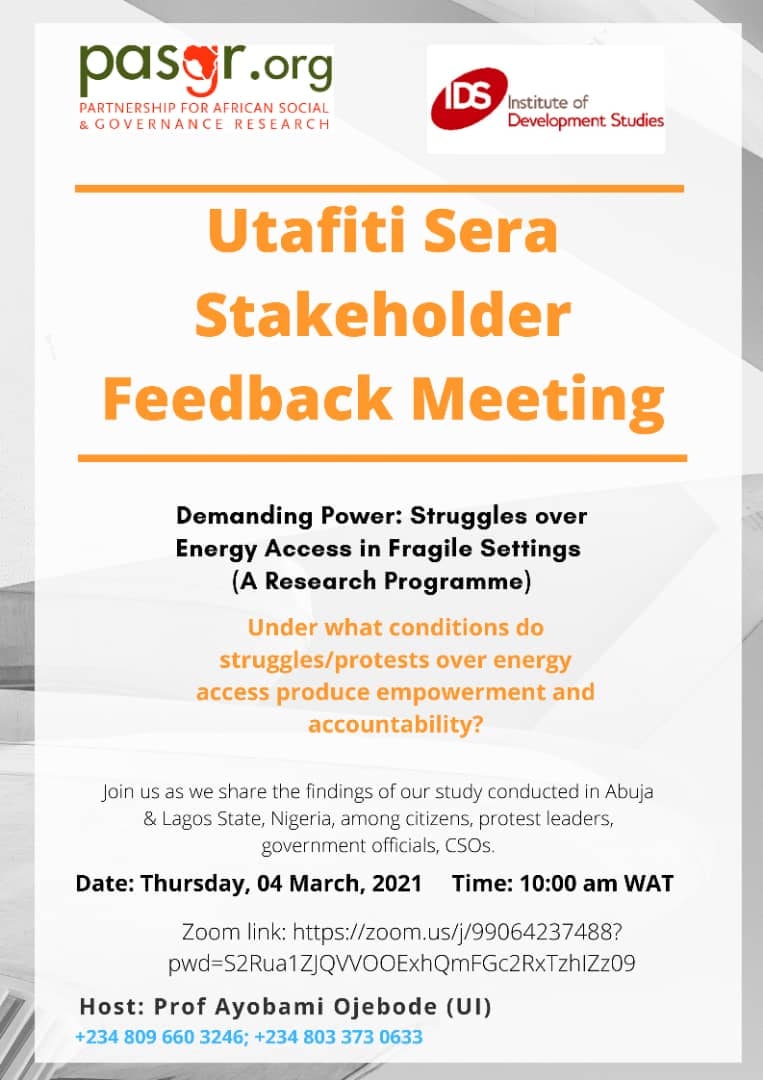
In their efforts of conducting social and policy researches with the consideration of the participants and policymakers before and after, the Partnership for African Social and Governance Research and the Institute for Development Studies will have a research dialogue meeting with the Nigerian public on Thursday March 4, 2021. These organisations are regional and global think tanks located in Kenya and the United Kingdom.

PASGAR also known as Utafiti Sera (Kiswahili for research-policy) is a combination of many things that ensure and enhance policy outcomes. PASGAR believes in evidence uptake and use to transform Africa. In this regard, IDS has been one of its key partners over the years.

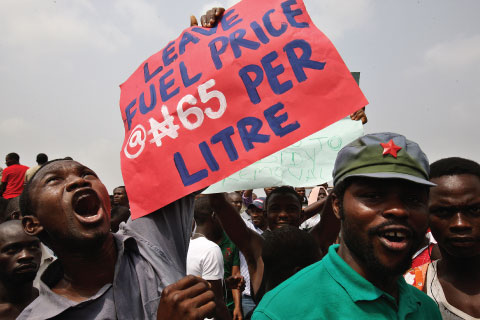
In a statement released by one of the researchers, who carried the study in Nigeria, Professor Ayobami Ojebode of the Department of Communication and Language Arts, University of Ibadan, our analyst learnt that researchers from the two organisations studied fuel protests in Nigeria for the last two years.

“As part of rounding off the research and learning from all stakeholders, we are organising a stakeholders forum to share the findings of the research and receive feedback and advice. The study of particular interest to union leaders, transporters, civil society organisations, academics, players in the downstream oil sector, government officials, and citizens.”

The statement wants the public to join the dialogue, which would be held on Zoom by 10.00 am WAT, through https://zoom.us/j/99064237488. The researchers from the two organisations specifically studied attempts to remove or reduce subsidy by different administrations in Nigeria from 1973 to 2021.

“Protests take place and lead to a downward review of the prices of petroleum products; in a few cases the protests barely take place. In 2012, the protests were widespread and led to significant policy initiatives (especially SURE-P). Since 2015 fuel prices have continuously gone up (once, down) but labour and the activists have not succeeded in getting people out onto the streets.

In effect, they seem to have lost the ability and legitimacy to lead the people’s side of the tussle. This has negative implications for the subsidy-related contentions that sometimes bring reprieve for citizens, even temporarily. In the study reported here, we examined how labour and others lost that role, and we draw out lessons on how to lead the people’s side of a volatile tussle such as the fuel subsidy issue,” the partial report of the study says.

In line with the focus of the research, our analyst notes that the meeting would afford the stakeholders opportunity of gaining insights on reasons for participation or not in fuel-related protests, leadership tactics of the protest leaders, and government’s responses to the protests.

Green Economy Overview and its Effect on Sustainable Development

0

The concept of a green economy became popular as a response to the inability of neoclassical economics to effectively incorporate the value of natural resources and environmental degradation in market mechanisms. Global economic growth for the past half-century has been followed by quick environmental decline. Essentially, the economies of the world have, to date, over-depleted natural resources and severely devalued the ecological goods and services that comprise the basis of all economic activity.

Economic development has put great pressure on the natural resource base of the earth and the world is already resource drained. The consequences of climate change such as unpredictable weather patterns increased severity of natural disasters, and rearranged ecosystems, are already endangering food security and economic activities. Again, the prevalence of social and socio-political dissent and unrest, various social issues, and conflicts across the world are indirectly inspired by the inequitable sharing of limited resources that are unevenly distributed. A new development path is very necessary.

Green Economy and Sustainable Development: The Economic Impact of Innovation on Employment

There are numerous researches on the link between innovations for increasing productivity, where this connection is found to be very weak. This is linked to technological developments because of new machines. Truly, the importance of automation in terms of impact on employment has become vital. The employment impacts of innovation are a complicated mix of job displacement and compensation forces. The inquiry into the impact of innovation on employment is complex, as it involves a diverse conglomeration of effects. Strategically, product innovations and the introduction of new products leading to the creation of new markets can influence positive job-creation effects; while on the other hand, process or method innovations could lead to technological unemployment because of enhanced labor productivity.

Notwithstanding how threatening product innovations are, there is also a positive impact on employment, referred to as the ‘welfare effect’, though it can be enervated by a ‘substitution effect’ due to the displacement of mature products. Firstly, reduced production costs from a process innovation could cause a reduction in prices and this could trigger market demand by leading to more employment. However, this effect relies on the concept of perfect competition and demand elasticity, which can alienate the initial positive effect. Due to the more potential effects, as explained, the net impact of innovation on employment is complicated. Studies analyzing the impact of green innovations on employment are burgeoning due to the target of actualization of more sustainable development in most countries. However, the interest in green economy investments is peculiar given the need for government intervention to realize that new market opportunities could produce a lower return compared to other innovations.
Green Economy and Preservation of Biodiversity

There are many questions that economists ask relating to biodiversity including; is economic growth detrimental to biological diversity? Why will it likely turn out to be detrimental? How can the dangers be avoided? Etc. At a more individual level, the questions focus mostly on project analysis and specific environmental policy decisions. A distinctive characteristic of natural resources is that they are not immediately renewable; they can be selectively replenished only with time and subject to the limits of biological processes. Consequently, tapping these resources involves a compromise between instant benefits and future costs that relies on how the latter are considered relative to the former.

Economists have several interesting ideas of how the interest rate level, the result of the net benefit function and its outcome over time, and the variability of the resource’s inherent advance process contribute to the appropriate transitional path to exploitation. In effect, the process of sacrificing present consumption opportunities in favor of future generations should be a collective bargain. Both schools of thought suggest that the intertemporal allocations consequent of a decentralized market system may in essence be unfavorable to the present generation. Not only can the idea of conserving natural resources be a collective good, but the resources themselves are collective goods.

This is another major reason why overexploitation may occur. A third characteristic feature of several natural systems is the usually considerable degree of unpredictability of the future consequences of today’s preservation/depletion actions. This is partially a result of the intertemporal aspects of resource management but it is also the consequence of the enormous variability that is innate in natural systems.

There is are replete economic theories on how uncertainty can be incorporated into decisions made by private individuals or public policy framers. These theories target the implications of various forms of risk-averting actions for the optimal intention of resource preservation over time. Implementing these theories, however, needs empirical estimations of the type of risk preferences preferred by the decision-makers, in the terms of positive analysis, or value determinations about the type of approach to decisions on the risk that can be adopted, in the case of normative analysis.

Environmental economists are interested in markets because they are interested in estimating the choices of individuals and verifying their compromises connecting environmental resources and money or standard market products. Both direct and indirect methods for measuring the preferences of individuals have been greatly honed in recent years.

Emerging Opportunities

The Sustainable Development Goals (SDGs) represent the most ambitious development agenda ever, determining the vision, blueprint, and goals for the evolution to a sustainable society. With just over a decade left to realize the SDGs, a major effort is needed to produce results.

Challenges remain to bring these trends to fruition. First, most of today’s green market expansion is focused on a limited number of developed and emerging economies, with a necessity to diversify the geography of green solutions, with the least struggling countries.

The Middle East with the North African region are good illustrations, so far the earth’s most water-deficient and food import reliant region, also having temperatures increasing faster than the global average. Without partnerships and finance expansions in the years ahead, trends of poverty, displacement, and fragility will increase.

The UNDP, UN Environment, UNISDR, UN Habitat and WFP are launching a new SDG Climate Facility regional plan to take action on these issues; a regional initiative in conjunction with the League of Arab States, the Arab Water Council, and other partner countries.

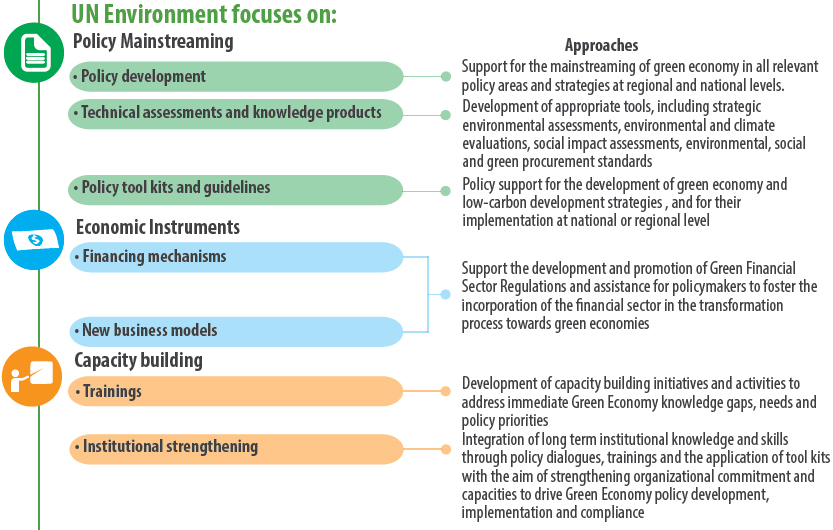
With the SDG Climate Facility, the UN will assist country partners to identify opportunities to mainstream green solutions into national financial structures, the rules and framework governing the banking sector, investment, insurance, capital markets, and other segments of national financial systems necessary to green market development, and actualize a directional estimate of the investment gap enroute 2030.

A focus will also be on innovation, to establish new green investment options among public and private partners in order for scaled-up climate finance to be applied in a way that profits the poorest and most vulnerable in society, including crisis-ridden communities.

Shifting to a Green Economy

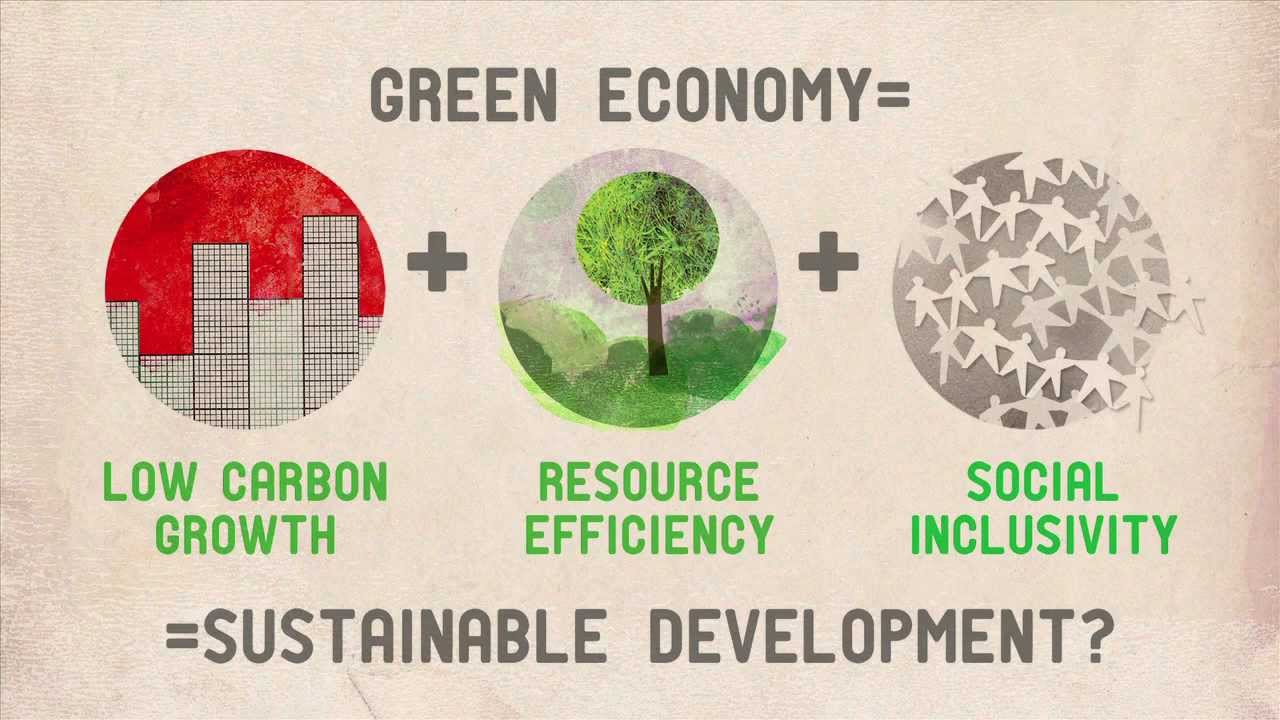
Actualizing the full potential of green jobs is predicated on countries assuming their roles in developing the green economy and formulating policies that will foster investment. The current model has proven to be ineffective and inoperable, not only for the environment but for economies as a whole. There is an urgent need to move to a sustainable development path with an implementable set of policies, with people and the planet at the focus.

Claims that the greening industry would lead to job losses, because of the changes to some traditional industries such as fossil fuel extraction have been countered by the argument that environmental sustainability is not a job killer, as always assumed. In contrast, if properly supervised, the result can be more and improved jobs, poverty alleviation, and social incorporation.

Though some areas like fishing fleets are more vulnerable to losses lasting durable conduct could prevent job losses. For illustration, an evaluation suggests that one million workers in Asia could have lost their livelihoods in forestry because of poor resource management, which could have been largely prevented with better policies and implementation. Jobs easily identified as “green” are not the only ones to be affected by the transition to a more environmentally sustainable economy.

Some of the sectors identified as being most impacted by the changes include agriculture, energy, resource-intensive manufacturing, fishing, building, and transport. Women could benefit if the transition is properly implemented as it could provide them with increased access to jobs and sizeable incomes.
Green Economy Offer for Developing Countries

To be beneficial to develop countries, green growth should be reconciled with the two strategic features of natural resource harvesting and poverty in these countries. First, primary products form most of their export income, also they are incapable of diversifying from basic production. Again, numerous economies experience a considerable portion of their rural population resident on less non-arable agricultural land and in inaccessible areas, thus supporting subsistence. If green growth is capable of speeding up an economy-wide transformation and poverty alleviation in struggling economies, then it must be followed by policies targeted at overcoming the two strategic features of natural resource harvesting and poverty. Policies and reforms must foster synergistic linkages of primary production, improve its incorporation with the other dimensions of the economy, and elicit opportunities for creativity. Rural poverty, notably the constant concentration of the rural underprivileged on agricultural lands that are difficult to cultivate and in inaccessible areas, needs to be looked into by more targeted policies and investments, and where possible, policies to encourage rural-urban migration.

Action Indicators of a Green Economy

Admittedly, in recent years there have been many attempts to create indicators and assessment frameworks that address the environmental and social aspects of progress. Additionally, there has been an increasing realization of the limitations of GDP, notwithstanding the fact that it is still widely deployed today as an indicator of social welfare. Agreeing on the best alternative sustainability indicators is highly complex, notably as a result of the intricacies of how to balance our environmental, social, and economic goals still being a matter in contention. However, notwithstanding the fact that they are still unable to achieve the same level of impact as GDP, other indicators and alternative measurement theories are slowly being infused into the policy-making process. Still, there has been palpable scientific progress in assessing various dimensions of sustainability that have not yet been explored by policymakers.

CONCLUSION

Sustainable development has assumed a multi-dimensional and complex approach with many different characterizations and measurement approaches. A plethora of researches has been targeted towards the development of indicators in this area, consequent to a jungle and often complicated, available indicators. There are numerous indicator sets currently present in the field of sustainability, though in practice only a limited number of them find their path into the policy-making process. In years ahead the incorporation of green economy and sustainable development in the policy process will burgeon as a result of the growing recognition of the limitations of GDP as a measure of welfare. Rather than focusing only on developing the perfect indicator or set of indicators, it is more useful to educate the public in the use of indices, due to the fact that virtually any standard can furnish useful indicators for some political inquiry and misleading messages for others.

4 Easy Ways You can Attract Sales on Twitter

0

Thanks to social media, people can reach more clients from different parts of the world. A person doesn’t have to move from house to house in search of sales. Today, you can connect with many clients from the comfort of your home and make lots of profits with less stress.

One of the best social media platforms for marketing and/or finding good clients is Twitter. This bird app, as it is fondly called, has over 300 million active users from different parts of the world. The good thing about this platform is that majority of its subscribers manage their accounts by themselves. This means that if you engage with anybody there, you are most likely chatting with the owner of the handle. In other words, Twitter brings people together and gives them the chance to interact easily without a filter.

Many people felt Twitter is the hardest place to find clients. A lot believe the platform is only there for information dissemination. Well, when people come together to share information, they can also learn about the goods and services provided around them. Remember that newspapers and magazines are also very good avenues for advertising even though their primary purpose is to spread information.

Nevertheless, finding clients on Twitter is a tricky deal. The simple reason for this is that the platform is rowdy and most of the good clients are silent observers; they are not among those that made Twitter loud. To locate these people, attract their attention, and make them reach out to you, you have to consider applying the strategies mentioned below. More so, you can do a lot of cheap Twitter tweets.

Twitter CEO
  1. Optimise your profile: This is necessary because your prospects will sneak into your profile to see what you have to offer. As a result, consider bearing a name and adding a clear picture that represents what you sell. If you have a website that showcases your handiwork, please include it there too. Your short bio should summarise your work and personality. Be careful there because your prospects will scrutinise that too. Finally, make sure you have enough activities (tweets, likes, replies, etc.) that will give an insight into your ideology.
  2. Unlock your inbox: Usually, prospects slip into people’s inbox to strike up conversations. Twitter prospects are so tricky that they may not directly tell you they have an interest in your services. This is why you have to continue checking your messages in case there is a request to start a conversation and entertain all of them. Remember to be polite to anyone to send you a direct message, irrespective of how unimportant you think he is. Believe it, most opportunities come in greasy overall; so don’t undermine anyone. But first, go to setting and unlock your inbox so anyone can send you a direct message.
  3. Connect wisely: Most Twitter users think they need plenty of followers before they can meet their prospects. Well, they might be right, especially if they intend to advertise and circulate information. Activists and political propagandists also need plenty of followers because they need the crowd before they could carry out their agenda. However, if you are not into any of the mentioned professions or any other one that needs a crowd, what you need more are not “followers” but “followings”. So, don’t concentrate on accumulating followers but focus on following the right persons. This is why you should study the type of persons that need the services you provide or the goods you sell and then search for them. Hence, go to them; don’t wait till they come to you.
  4. Be visible: This is the tricky part. Being visible and maintaining the status quo requires tact. Different persons have different ways of staying visible and attracting a lot of prospects. Some make funny tweets, whereby they market their products and services when the crowd troops in. Some attract with catchy pictures while others use trending topics. Then some people make threads on personal experiences that will attract the crowd’s sympathy or admiration. The use of trending hashtags can also provide wide visibility. You can equally consider dragging the government, political and religious leaders, tribes, and unaccepted ideologies to attract heated debates from your followers and non-followers. All these tricks are used by advertisers and propagandists. However, the method you choose depends on what you do. If you need few high-brow clients that can afford your services, you may not need to be dramatic like any of the above-mentioned strategies. In this case, intellectually engaging in conversations, especially in your area of expertise, can attract your prospects and keep them lurking behind until they are satisfied and decide to reach out. However, as stated earlier, what you sell determines the method you choose.

Twitter may seem scary to new subscribers because of its rowdiness and harshness. However, it is a great platform for one-on-one communication with people of different classes and statuses. As a result, it is one of the best places you can meet and retain good clients.