DD
MM
YYYY

PAGES

DD
MM
YYYY

spot_img

PAGES

Home Blog Page 5884

The Power of A Business Model for Business Strategy

0

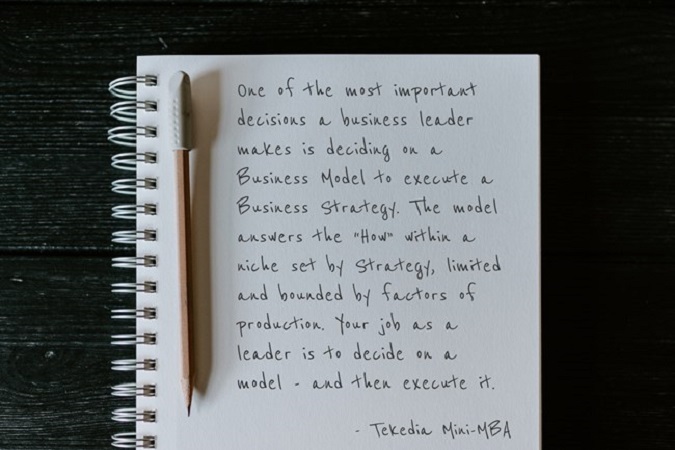
One of the most important decisions a business leader makes is deciding on a Business Model to execute a Business Strategy. The model answers the “How” within a niche set by Strategy, limited and bounded by factors of production. Your job as a leader is to decide on a model – and then execute it.

Our Tekedia Mini-MBA Week 3 focuses on Business Model & Transformation. I sent this to our team to use for the weekly email blast. It is to remind us that deciding on a business model to execute a business strategy is indeed the most important decision a company can make. Yes, within many paths on that HOW question, you have to commit!

In the classnote, I listed dozens of different business models. You have to commit to one or more of them, but not all. But with experience, you know what works. Yes, of the top 20 technology companies in the world, at least 15 are united by one business model. That should tell you what is working in the web era.

Enjoy the near 50-page course note – and the videos, from me, and our Faculty members. Tekedia Institute wishes you a great profitable week.


Greetings. We have posted course materials for Tekedia Mini-MBA Edition 4. Please log into the portal to access Week 3 under LESSON – https://school.tekedia.com/. Week 3 focuses on Business Model & Transformation with the following modules:

  • Business Models and Strategies – Prof Ndubuisi Ekekwe
  • Organizational Change Management – Omowunmi Adenuga-Taiwo (ex-Strategy Consulting Manager Deloitte)
  • Building Your Business Financial Models (templates included) – Michael Olafusi, Financial Analyst Fellow Brightmore Capital
  • Execution – Business Objectives and Technologies, Nnamdi Onyebuchi, CEO, Weco Systems Group

Please check the Program News, under LESSON (click MY PROFILE, click the Course) for the Zoom links and other important class updates. Our Zoom sessions are scheduled as follows and exclusively for members:

  • Tue, Feb 23 | 12noon – 1pm WAT | Agile Methodology – Bola Adesope, Sonnet Insurance
  • Thur, Feb 25 | 12noon – 1pm WAT | Design Thinking – Aderinola Oloruntoye, Workforce Group
  • Sat, Feb 27 | 7pm – 8.30pm WAT | General Topic, Fintechnolization Playbook (MTN, Mastercard, MPESA, Paystack)  – Ndubuisi Ekekwe

Meanwhile, if for any reason you are still having login issues, please go to this page and watch the videos we have put together.  Within the week, we are always updating members at hub.tekedia.com to minimize many emails; please go there and sign-up.
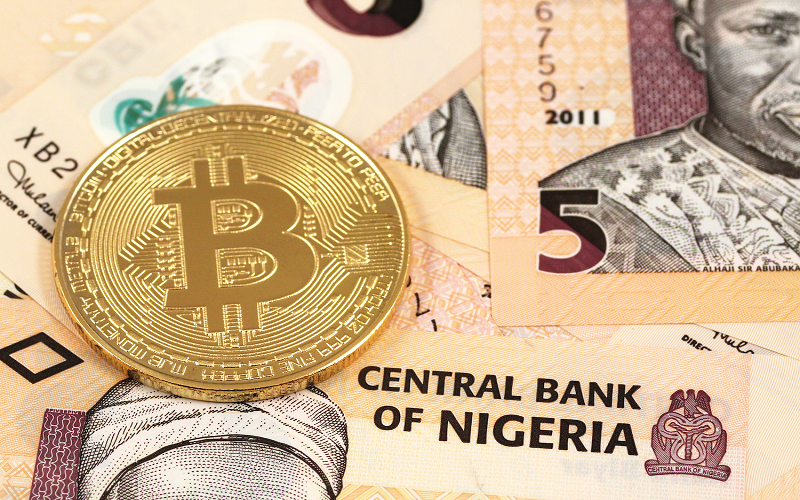
Nigeria’s Central Bank Will Likely Reverse Cryptocurrency Ban Soon

1

This makes sense – “More than two weeks after the ban on cryptocurrency in Nigeria, the Central Bank of Nigeria (CBN) and the Securities and Exchange Commission (SEC) have agreed to collaborate and conduct research with a view to finding ways of regulating the Cryptocurrency market.”

Yes, do intellectual analysis before policy making. By doing that, we will avoid these own-goals. We scored own-goals on border closure and nothing changed before we reversed the call. My prediction is that the bitcoin and broad cryptocurrency ban will be reversed soon as it was done on irrational impulse. Now that the Central Bank of Nigeria (CBN) wants to do what apex banks do – collect data, consult, analyze and make decisions –  it will get to the root cause, and deal with issues instead of freezing a sector which it has absolutely no control over, globally. I predict that within 6 months from now, this ban will be reversed. What do you think?

Great perspective from Samuel Nwite.

More than two weeks after the ban on cryptocurrency in Nigeria, the Central Bank of Nigeria (CBN) and the Securities and Exchange Commission (SEC) have agreed to collaborate and conduct research with a view to finding ways of regulating the Cryptocurrency market.

They said this at a virtual lecture organized by the Association of Capital Market Academics of Nigeria (ACMAN) in Abuja on Sunday, the News Agency of Nigeria (NAN) reported.

ACMAN is a network of researchers in capital markets, especially lecturers in the country’s universities.

Nigeria’s Central Bank and SEC to Embark on Research, Consultation for Cryptocurrency Regulation

Nigeria’s Central Bank and SEC to Embark on Research, Consultation for Cryptocurrency Regulation

0
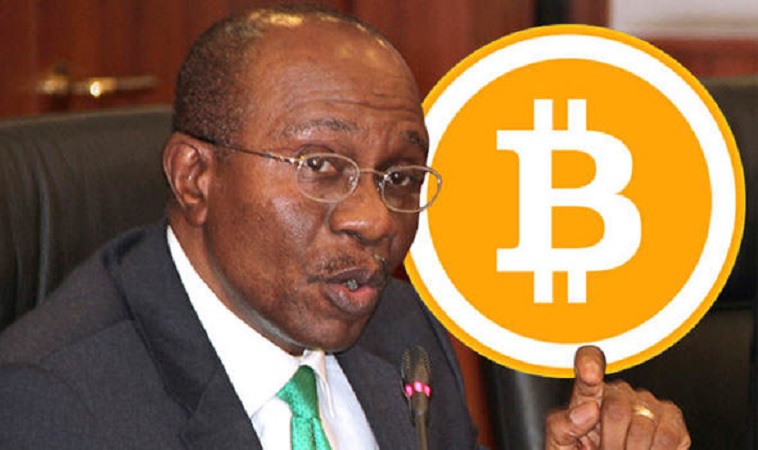
Nigeria's Central Bank boss

More than two weeks after the ban on cryptocurrency in Nigeria, the Central Bank of Nigeria (CBN) and the Securities and Exchange Commission (SEC) have agreed to collaborate and conduct research with a view to finding ways of regulating the Cryptocurrency market.

They said this at a virtual lecture organized by the Association of Capital Market Academics of Nigeria (ACMAN) in Abuja on Sunday, the News Agency of Nigeria (NAN) reported.

ACMAN is a network of researchers in capital markets, especially lecturers in the country’s universities.

Timi Agama, Head of Department, Registration, Exchanges, Market Infrastructure and Innovation Department of SEC described the cryptocurrency market as an air that could currently not be caged or regulated.

He noted that cryptocurrency was a market of about two trillion dollars which could not be ignored. According to him, the world cannot be moving forward and we will be static.

Agama said that although the SEC or the capital market would not accommodate or encourage any fraudulent practices that allowed for money laundering, cryptocurrency was a market to look into.

“There is a lot of investment moving into the cryptocurrency market and the tendency is that it will reduce the amount of investments in the stock market.

“Part of the desire of the SEC even in the future is to provide a regulatory framework that will take care of all these challenges that we have seen internationally and the entire world is grappling with in terms of cryptocurrency and digital assets.

“For us at the SEC and capital market, it is something to look at, the world cannot be moving forward and we will be static, no.

“It is important for us to review, understand, appreciate and introduce regulations that will guide the movement of the market in this direction.

“A market that has opportunity for ICOs, derivatives, is not a market we can ignore.

“ It is our desire that we do more work, collaborate as regulators and analyze to make sure that we provide a level playing field where Nigerians, international investors and whoever is interested in this space will be comfortable and happy.

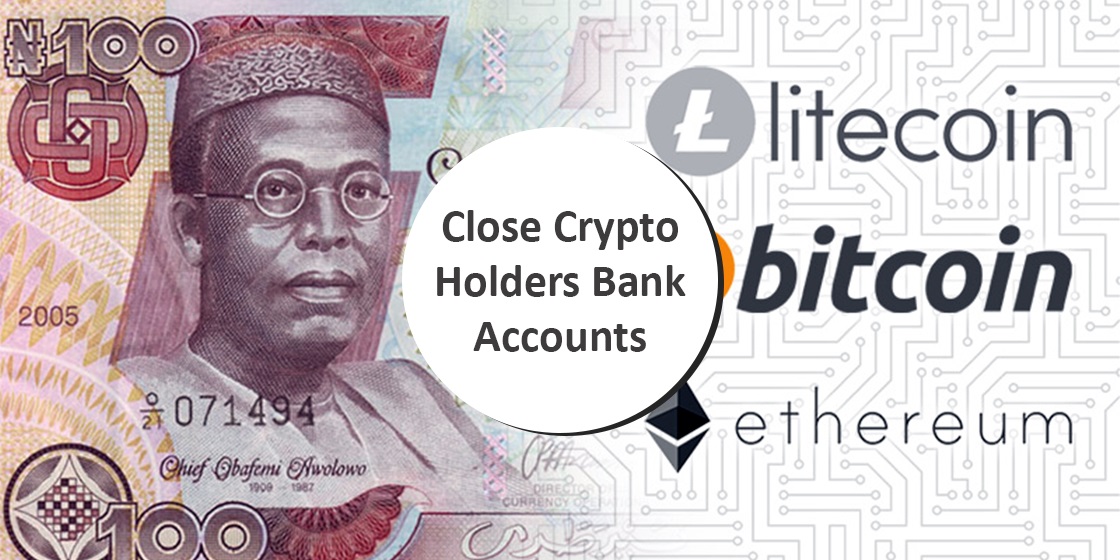
Nigeria has banned crypto from its banking systems

“I hope that in doing that, we are going to be able to drive foreign portfolio investment, Foreign Direct Investment (FDI) into this country and build our capital market,’’ he said.

Kevin Amugo, Director, Financial Policy and Regulation Department of the CBN, said the ban was to enable it to work together with stakeholders in addressing the anonymity of the technology.

Mr. Amugo said the CBN would continue to develop policies that would optimize the opportunities of the financial technology industry and promote the economic landscape of the country.

He said that consumer protection was a huge challenge in the cryptocurrency market as it was speculative and no economic fundamentals drove its price.

“The committee on cryptocurrency headed by the National Security Adviser and members are EFCC, NFIU, SEC, NAICOM and all regulators to strategize and come up with a national position not a monetary policy position.

“We have issued our initial draft but COVID-19 impeded our efforts to conclude our actions.

“Because of interests crypto has regenerated, I think it is high time we reconvened and ensure that we take a national position, so that what is issued is a national position not a CBN’s or SEC’s position.

“We are not stifling fin-tech operations, CBN has been proactive in granting licenses to fin-tech operators.

“The way forward for us will be continuous engagement, ongoing consultations and academic research.

“We are engaging internationally and locally to ensure that we come out with a harmonized and implementable position,’’ he said.

Gbite Oduneye, Chief Executive Officer of the Eagle Global Market (EGM) Lagos, appealed to the CBN and SEC to look at ways to safeguard against money laundering in the market.

Mr. Oduneye appealed to regulators to find ways to regulate the cryptocurrency market as there were prospects in it.

“We understand the difficulties in the market but the regulators must organize and look for ways, organize and make people operate the way they want in the market.

“Every new innovation will come with a number of difficulties but we have the innovative minds, great regulators that can enable us to take advantage in this,’’ he explained.

This development reveals that the CBN did neither research nor consultation with stakeholders before it made the decision to ban the operation of crypto exchanges.

In reaction, analysts have described the decision as “irrational,” saying that it tells terribly about the regulator.

The Buhari’s Record

2

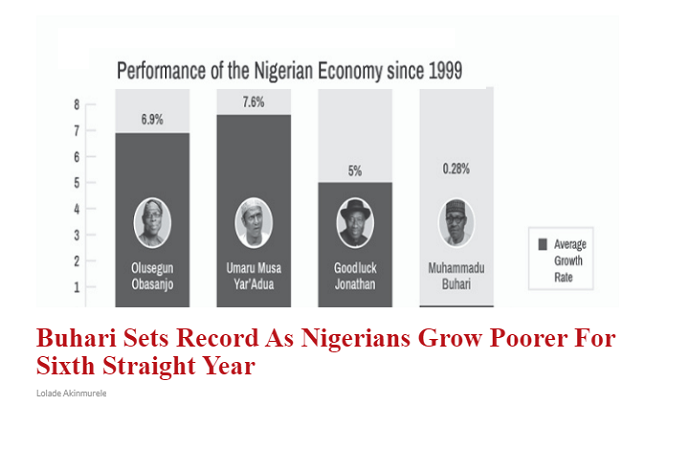
Everyone knows that I am a fan of ex-President Yar’Adua. In 2017, I delivered a major speech in the Yar’Adua Center on the invitation of the trustee. He was a compassionate national  leader in Nigeria . He was the President who voted for more money, per year, to develop Niger Delta than any government in history. It was so big that after his death, the government reduced it. His ascension was brief and Nigeria lost a good man.

BusinessDay has the full data on how our presidents have performed since 1999 – Yar’Adua ran the table; President Buhari has not even started!: “At no point in its 60-year history has Nigeria’s economy expanded slower than its population for a longer period than between 2015 and 2020, an indictment on President Muhammadu Buhari who has led the country in that time. With data from the National Bureau of Statistics (NBS) showing a 1.9-percent contraction in 2020, ……”

Before you throw political attacks, the newspaper used government data, mainly the National Bureau of Statistics for this piece. This is data talking.

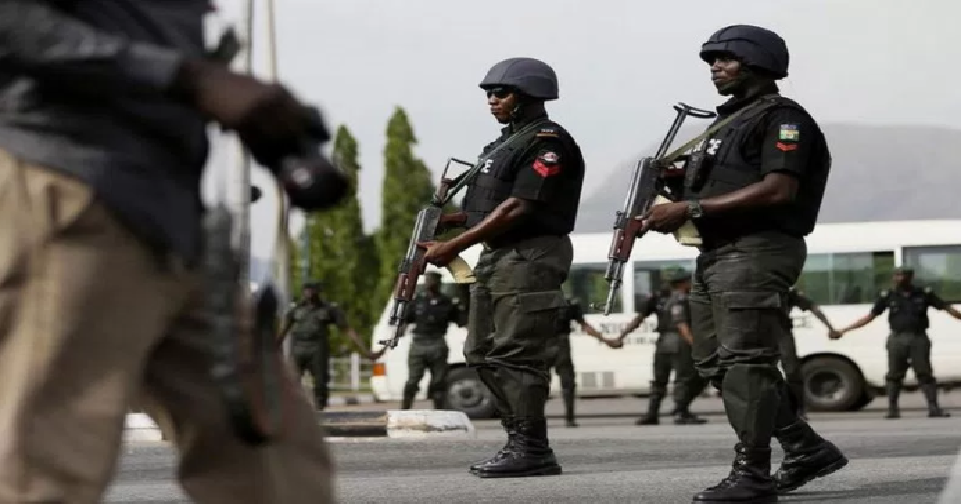
ANALYSIS: Four Actors of Nigeria’s Insecurity in 6 Years and How to Tame Them in Next 6 Years

0

A search on  search engines using Nigeria as a keyword within the news category returns security and insecurity related content to the Internet users more than business opportunities, life and style, and culture content of the Africa’s most populous country.

This has been the trend since 2015, according to our analysis. Interests in security and insecurity are largely connected with the incessant crimes being perpetrated by certain individuals and groups of people across the country. Some of these crimes, according to social commentators and public affairs analysts, have political undertones and perceived social and economic injustices.

The Good and the Dark Side of Searching for Insecurity in Nigeria in 6 Years

As the political leaders and community leaders continue finding solutions to the issue, our analyst examines positive and negative consequences of what Nigerians and other nationals searched between 2015 and 2020. In all, analysis indicates that terrorists and bandits facilitated in their interest in understanding insecurity.

Our analyst notes that thousands of searches that related to security and insecurity were conducted by digital natives and immigrants during the period. Analysis shows that the more the news media picked certain issues and framed them towards policy agenda, the more people also searched the issues.

For instance, sources of danger and insecurity, definition of insecurity, factors contributing to insecurity in the country and sources of insecurity occupied people’s mind during the period within the insecurity issue. Fulani herdsmen in Nigeria, Fulani herdsmen attack, herdsmen killing, Fulani herdsmen attack Enugu and Fulani herdsmen killings in Nigeria were the bones of searching when they wanted to understand herdsmen.

Bandits were largely understood within bandits meaning and meaning of bandits. The killing of a number of terrorists in Borno State by the Military was the dominant issue explored by the people while hoodlums meaning and the meaning of hoodlums were the top issues within the hoodlums.

With these insights, it emerged that people wanted to know the key actors behind the insecurity, what the actors represent and sources of the insecurity. Analysis indicates that between 2015 and 2020, the higher people developed interest in insecurity the less they had interest in herdsmen [-56.4%]. On the other hand, the more they had interest in insecurity, the more they had interest in bandits, terrorists and hoodlums. These establish terrorists, bandits and hoodlums as the key actors, increasing the insecurity in the country.

Analysis further shows that the more they had interest in herdsmen, the less they developed interest in bandits [-19.9%]. This is also applicable to herdsmen and terrorists [-74.5%], herdsmen and hoodlums [-16.6%]. However, analysis reveals that the more they had interest in bandits, the more they had interest in hoodlums [71.1%]. This is not different from what was found when analysis of bandits was done along with terrorists [0.3%], hoodlums and bandits [71.1%], and hoodlums and terrorists [12.4%].

Our analyst notes that consideration of bandits and hoodlums by the people could be linked with the surge in the activities of the actors between 2019 and 2020, while the terrorists holding of ‘peace space’ between 2015 and 2019 contributed to the interest. In all, terrorists, bandits and herdsmen influenced insecurity in the last 6 years, analysis reveals.

Exhibit 1: Interest Over Time in Insecurity and the Key Actors [Percent]

Source: Google Trends, 2015-2020; Infoprations Analysis, 2021

For the next 6 years, analysis reveals key actors the security agencies need to focus on based on the expected interest of the people in them [key actors]. In 2021, people are most likely to consider terrorists and hoodlums as the key actors of insecurity. This would remain till 2024. In 2025 and 2026, herdsmen and bandits would be considered. In 2026, bandits and terrorists would be seen as the key actors. These suggest that political leaders, community leaders, individuals and government stakeholders need to devise better strategies and execution for ending the issue.

Between 2021 and 2026, the insecurity would be largely understood by the people within the activities of terrorists, hoodlums, herdsmen and bandits. Out of these actors, according to our analyst, hoodlums, herdsmen and bandits should not be difficult to contain by the security forces because they seem not be deadlier like terrorists. Concerned authorities need to explore social reengineering which must not exclude implementation of sustainable social net programmes and addressing of social injustice.

When it is obvious that internal security forces cannot contain the terrorists, external assistance should be sought. Behavioural change communication campaigns should be initiated and implemented by the government agencies saddled with the responsibilities of engaging with the public on socioeconomic and political issues. The National Orientation Agency should lead in this regard.

Exhibit 2: Predicted Interest Over the Next 6 Years and the Key Actors [Percent]

Source: Google Trends, 2015-2020; Infoprations Analysis, 2021