DD
MM
YYYY

PAGES

DD
MM
YYYY

spot_img

PAGES

Home Blog Page 5886

The Nigeria’s Electric Vehicles Vision

0

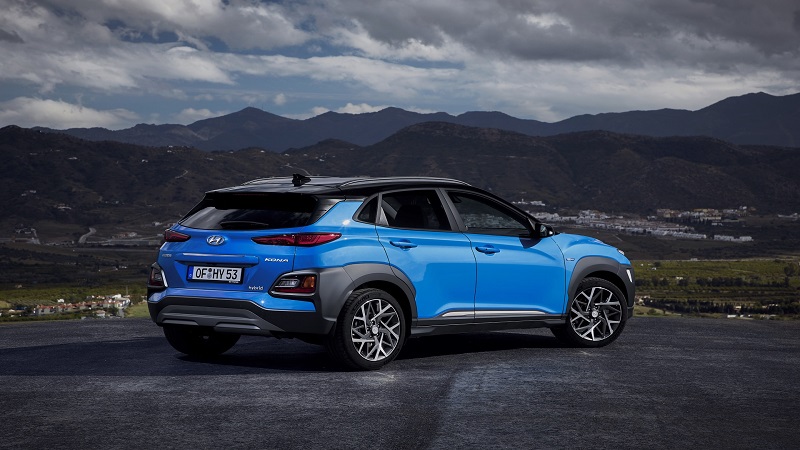
Our nation wants to join the electric vehicles (EV) crusade. Yes, Nigeria, working with Hyundai Kona, will assemble EV  in Lagos. The big news is this line: “The federal government says there is an ongoing plan to make 30% of vehicles being used in Nigeria electric by 2025”. Of course that will not work since Nigeria has to assemble electricity first. But as that debate rages, I want to share this video from a former military leader: Gowon wanted to make cars in Nigeria. 

I support President Buhari’s vision on EVs but I will support him more if he has a better plan on electricity! Nigeria’s problem now is not switching hydrocarbons for electrons to move vehicles. Our #1 issue is that we do not have electrons to power our industry. The national grid is my second backup in the East and with that, there is no excitement on EV yet.

But who knows: electricity can be commanded but now only for EVs! After all, it is Nigeria where flyovers are homes for many while some order London pizzas via British Airways.

Nigeria’s 2025’s 30% Electric Vehicle Target and the Challenge of the Ban Culture

Nigeria’s 2025’s 30% Electric Vehicle Target and the Challenge of the Ban Culture

0

On Feb. 5, Nigeria unveiled Hyundai Kona electric vehicle assembled in Lagos, south west of the country. It came at a time when the oil-rich country is struggling to find its footing in the global push to eliminate combustible vehicles.

The federal government says there is an ongoing plan to make 30% of vehicles being used in Nigeria electric by 2025.

According to the director-general of the National Automotive Design and Development Council (NADDC), Jelani Aliyu, Nigeria will henceforth join the course to embrace cleaner energy vehicles and the Hyundai Kona is just the beginning.

Aliyu said that Stallion Group, which spearheaded the innovation back in 2020, invested as much $300 million in Nigeria. He urged Nigerians to embrace technology as it is helping other countries to create wealth through innovations.

While the Kona EV was welcomed in Nigeria as it is the first of its kind, many questions have been cropping up regarding the sustainability of an EV industry amidst oil concentrated economy, poor infrastructure and business-hostile government policies.

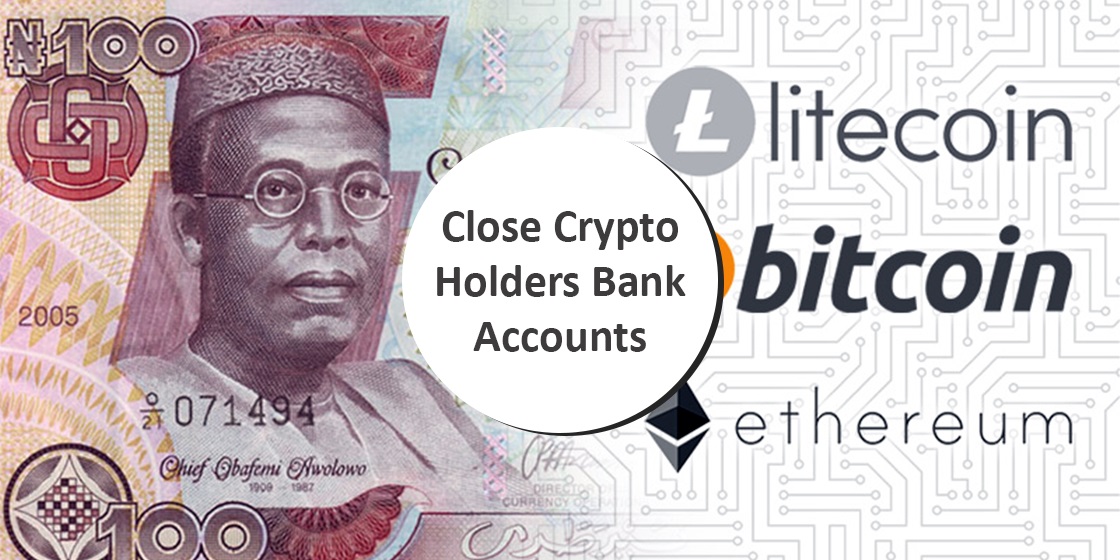
Nigeria has banned crypto from its banking systems

The concern, which rightly emanated from perceived anti-innovation recent events and Nigerian government’s default attitude of ban toward innovative developments in the country that comes with a challenge, reveals how Nigerians and investors see government’s promises on tech and innovative unconventional businesses.

In 2019, Nigeria’s Eight Assembly had a rowdy session debating the Electric Car Bill introduced by Senator Ben-Murray Bruce. The aim of the Bill had been to phase out combustible vehicles in Nigeria by 2035, replacing them with electric vehicles in tandem with global clean energy goals.

The Bill didn’t make it to the second reading, it was considered irrelevant because Nigeria is an oil producing nation. Among the senators who opposed the Bill was the then deputy senate president Ike Ekweremadu, who argued that increase of electric vehicles will be detrimental to our oil-based economy.

“Besides, in economic sense, we are an oil producing country. So, we should do everything possible to frustrate the sale of electric cars in Nigeria to enable us sell our oil,” he said.

In 2018, Lagos State started to witness an inflow of motorbike ride-hailing startups. Lagos has a crazy traffic situation, and the startup idea was developed to help commuters beat it using more flexible means of transport – motorcycles.

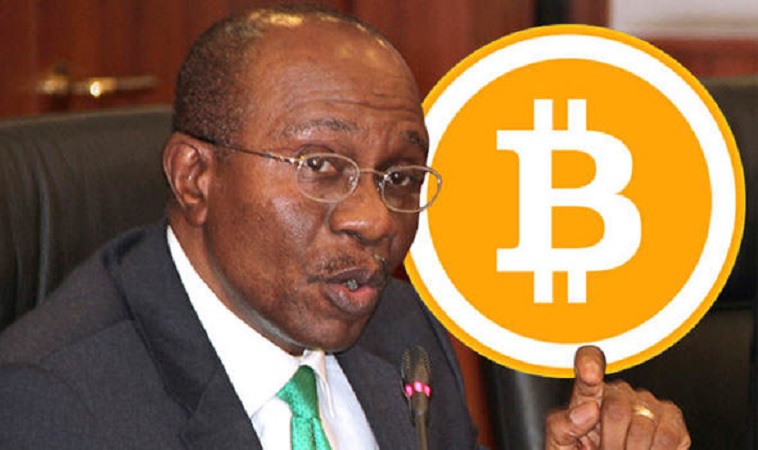
Nigeria’s Central Bank boss

By 2019, Lagos-based motorbike ridesharing services were witnessing a boom with a series of mouth-watering fundraising rounds. Gokada, one of the leading companies in the space, raised $5.3 million in May, marking a breakthrough in the bike-hailing ecosystem and setting a trajectory that others would soon step into across Africa.

A month later, Gokada’s competitor, MAX.ng raised $7 million, OPay’s ORide, another leading player in the field raised $120 million, all to expand the motorbike ridesharing innovation across Africa. TechSci study projected a collective $9 billion revenue pool in the industry by 2021 then.

But in January 2020, the companies met their untimely death following the decision of Lagos State government to ban the operation of motorbike services. It was a shocking development that did not only kill the innovative dreams, but also set a dangerous precedent that investors have become wary of because there is no end in sight as it keeps touching every tech-based field.

Therefore, when the Central Bank of Nigeria (CBN), on Friday released a circular directing all regulated financial institutions in Nigeria to close all crypto operating accounts with immediate effect, it did not surprise many.

“When I saw this news, I was a bit concerned but I am not surprised … the CBN directive is legal but is it the wisest decision? I am not sure about this,” Kingsley Moghalu, former CBN Deputy Governor said on Channels TV Sunday politics.

Although there have always been reasons by the governments justifying the decisions to ban, it tells terribly on Nigeria’s readiness to move along with global tech and innovative trends. Lagos State said commercial motorbike services fuel insecurity in the State, and CBN’s decision to ban the operation of crypto exchanges hinges on the claim that they enable money laundering, fraud and terrorism. But these are seen as peculiar issues.

In the last 10 years, the FBI has made series arrests connected to cryptocurrency fraud. Last week, there was a report of Antonije Stojilkovic, a Serbian man extradited to the US for defrauding investors around the globe to the tone of $70 million. According to DOJ’s charges, the suspect and his co-conspirators created a scheme where they solicited investment in binary options and cryptocurrency mining, using it to defraud people.

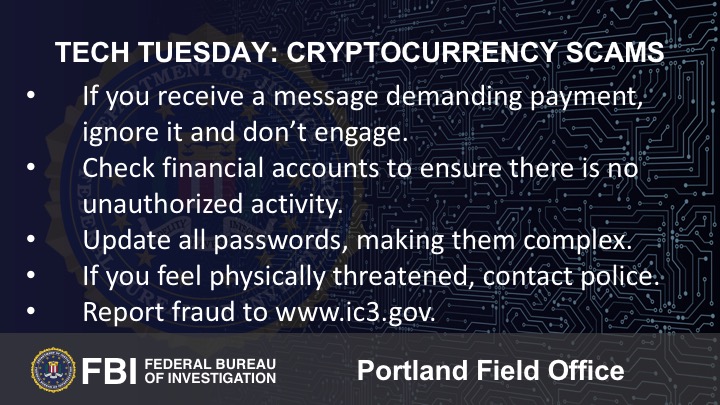
There have been more reported high profile cases of cryptocurrency fraud in the US than in Nigeria, yet the United States regulators have not moved, on the excuse of fraud, to ban cryptocurrency exchangers. Rather, the FBI keeps educating crypto users and investors on how to conduct safe cryptocurrency transactions and where to report if they notice anything fraudulent, while the regulators work to develop a sustainable framework that will guide the emerging market.

With these chronicles of ban, Nigeria is building a reputation of a country whose solution to every challenge posed by tech and economic development is to ban the entire idea.

Thus, the dream of having 30% electric vehicles in Nigeria by 2025 is attainable, what potential investors who would make it possible is wary of is; apart from infrastructural deficiencies like poor electricity supply that will stymie the development of charging stations, the threat of ban when the government thinks the evolution is posing a threat to its oil-based economy.

Bitcoin Climbs More Than $43,000 as Tesla Announced Plans to Invest $1.5b, Use as Form of Payment

0
Bitcoin is soaring

Elon Musk’s Tesla has invested $1.5 billion in bitcoin, and announced it’s accepting the cryptocurrency as a form of payment for its car brands in the near future.

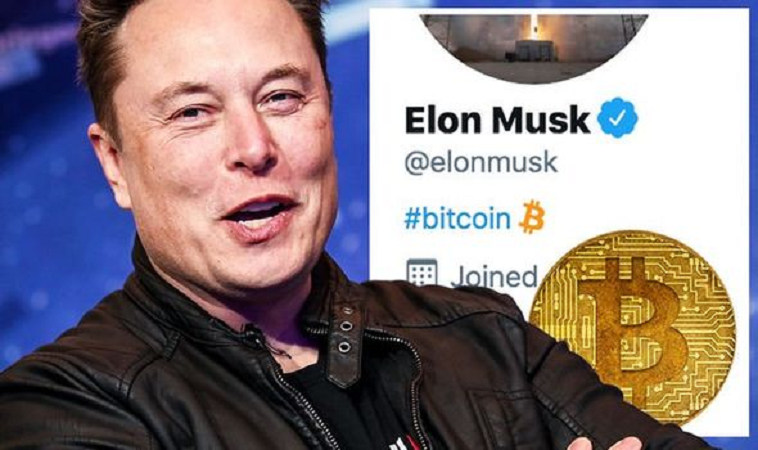
The move has come amidst calls by customers of the electric carmaker on Musk to accept bitcoin as means of payment. Musk, who has been expressing his enthusiasm about cryptocurrency recently, promoting Dogecoin and using bitcoin as his Twitter header, described cryptocurrency as the future but admitted he is late to the party.

Tesla announced Monday in its 2020 annual report it’s investing in bitcoin to maximize returns on cash that is not required to maintain adequate operating liquidity.

“In January 2021, we updated our investment policy to provide us with more flexibility to further diversify and maximize returns on our cash that is not required to maintain adequate liquidity. As part of the policy, we may invest a portion of such cash in certain specified alternative reserve assets.

“Thereafter, we invested an aggregate $1.50 billion in bitcoin under this policy. Moreover, we expect to begin accepting bitcoin as a form of payment for our products in the near future, subject to applicable laws and initially on a limited basis, which we may or not liquidate upon receipt,” Tesla said.

The filing said Tesla ended 2020 with $19.38 billion in cash and cash equivalents.

Bitcoin price went up 10% to more than $43,000 upon the news of Tesla’s investment, breaking it’s all-time high. And Ether, the second most expensive cryptocoin jumped to a record high.

Experts believe Tesla’s move as well as that of other companies will help curb the volatility of bitcoin, and help move the coin toward the mainstream.

“I think we will see an acceleration of companies looking to allocate to Bitcoin now that Tesla has made the first move,” Eric Turner, vice president of market intelligence at cryptocurrency research and data firm Messari said.

“One of the largest companies in the world now owns Bitcoin and by extension, every investor that owns Tesla (or even just an S&P 500 fund) has exposure to it as well.”

Recently, more companies have been betting on bitcoin, pushing its acceptability beyond individuals.

Paypal, a payment platform which was also co-founded by Musk is one of the many companies who have embraced bitcoin, creating digital payment options for its users.

Tesla offering bitcoin as a form of payment gives it an edge over its competitors who don’t have that choice. Other automakers sell directly to dealerships, which independently sell to consumers directly. Tesla sells to consumers directly and does not have any dealership, apart from Tesla-owned sales stores.

The electric vehicle maker’s move into bitcoin will thus make it easier for consumers in countries where moving the amount equivalent for the price of its cheapest model is prohibited by money laundering laws.

The base version of Tesla’s Model 3 costs around $37,690, including destination and documentation charges. The more expensive Model X SUV, might be sold around $100,000. Bitcoin climbed nearly $43,700 Monday; meaning with one or two bitcoins, a consumer can order a model of Tesla from any part of the world regardless of the country’s money laundering laws.

However, Tesla acknowledged in its filing that holding bitcoin may involve some risks, given its fluctuations that have made central banks skeptical of its sustainability.


“Their long-term adoption by investors, consumers and businesses is unpredictable,” Tesla said in its filing, pointing out there are risks of malicious attacks and technological obsolescence for its bitcoin holdings. But the carmaker said it would have to take a charge against earnings if the value falls below the price at which it buys bitcoin, even if it has to sell those holdings.

A list of companies including BlackRock, the world’s largest asset manager, Square and MicroStrategy, have invested in bitcoin, widening the cryptocurrency’s stride of acceptance.

Tesla has a valuation of over $800 billion, and given its CEO’s status as the world richest man, Musk’s interest in cryptocurrency is expected to inspire more companies to invest and use bitcoin as a form of payment.

Analysts say the more reputable companies and individuals use bitcoin, the more attractive it will appear as a long-term store of value, eliminating skepticisms, especially from central banks.

“The argument for bitcoin is evolving. It used to be negative (reasons to buy) but suddenly there are positive reasons, and that’s why you see bitcoin at new highs,” Mohammed El-Erian, chief economic advisor of Allianz, told CNBC.

Join Tekedia Team And Manage Tekedia Hub

0

Good People, we are looking to hire two people to manage and curate Tekedia Hub hub.tekedia.com [the Facebook for Innovators]. We do not really care about academic qualifications. However, we need to see how the person has organized and curated digital communities.

Our goal in the Hub is to provide an ecosystem where innovators and growth makers can co-share and co-learn at scale. Also, it offers a support platform to members in our learning community.

If you know anyone, please ask him or her to send a LinkedIn link to @admin  , in the Hub, with a page summary on what he/she can do.

The Job Market Should be the focus of Nigerian Tertiary Education Curriculum- Olalekan Shamsideen Oshodi

0

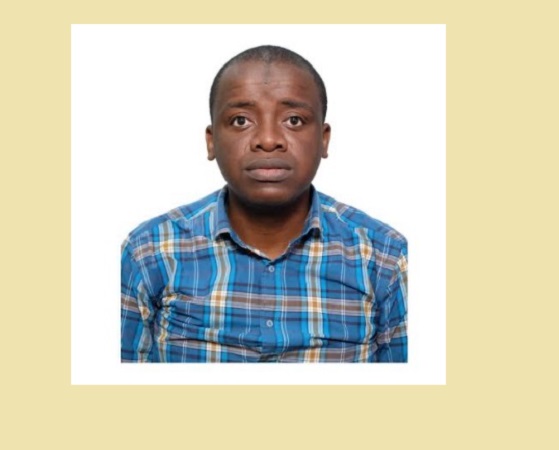
He has  vast experience both in Nigeria and Hong Kong as student and lecturer. He holds a PhD in Construction Project Management. He is deeply concerned about the state of the Nigerian education system. Olalekan Oshodi proposed a new model for the Nigerian tertiary education in a chat with Rasheed Adebiyi. Here are the excerpts…

Tekedia: Could you tell us about yourself?

Olalekan Oshodi: I am Olalekan Shamsideen Oshodi by name. I am a Nigerian and I am currently a Lecturer in the field of Construction Project Management within UK. I had my undergraduate and postgraduate training at the University of Lagos. In 2007, I completed a BSc. in Building programme at the University of Lagos. I did my National Youth Service in Auchi where I was a teacher in a secondary school. Between 2010 and 2011, I was studying for a postgraduate degree (Master of Science in Building – Construction Management) at UNILAG. Upon completion of my MSc, I worked in the Nigerian construction sector in several roles. Initially, I worked as a self-employed professional and I provided construction services to firms, such as Bi-Courtney Highway Services.

Also, I worked with a property developer, Hometel Lifestyle Properties. In this role, I was responsible for the management of several projects in the housing and hospitality sector. At the end of 2011, I decided to register for a PhD degree in Construction Management and this programme influenced my decision to join the academia. As a PhD student in UNILAG, I got my first academic position with Lagos State Polytechnic (LASPOTECH). I was a part-time lecturer at LASPOTECH between 2012 and 2014. In March 2013, I joined Bells University of Technology as an Assistant Lecturer in the Department of Building Technology. In 2013, I was part of the team that got the Building Technology programme at Bells accredited by NUC (National Universities Commission) and CORBON (Council of Registered Builders of Nigeria). I worked at Bells until August 2014.

Subsequently, I joined the City University of Hong Kong (CityU) as a PhD student and Teaching Assistant. I got the UGC (University Grant Council) PhD studentship as funding for my PhD studies. Upon completion of my PhD studies at CityU, I joined the University of Johannesburg (UJ) as a Postdoctoral Research Fellow. I worked at the University of Johannesburg for close to 2 years. In May 2019, I joined Anglia Ruskin University as a Lecturer in Construction Project Management. In this role, I am responsible for teaching several modules at undergraduate and postgraduate level of study. Also, I am an active researcher in the field of construction management and I supervise research students.

Tekedia: What is Nigeria not doing right about educating her youths?

Olalekan Oshodi: There is a need for all stakeholders to contribute towards the revitalization of the education sector of the country. First, we need to address the stigmatization associated with other forms of tertiary education. We need to be honest about this. God has given us different skills, talents and abilities to acquire knowledge. So, we should have a system that encourages people to acquire technical or vocational skills. In the United Kingdom, most of the technicians train at colleges. After working for several years, the employers sponsor these technicians to university to train as Engineers. A lot of Professors in the UK passed through this route, some were plumbers in the early years of their career before proceeding to the university for additional training. Second, there is a lot of in-fighting among administrators/managers of our universities. This unhealthy competition is not benefiting the universities and our youths. For instance, some universities do not recognize postgraduate degrees acquired from other universities. Third, most of programs are not accredited by international bodies, such as Sydney Accord and other similar professional bodies. Fourth, there is a need to constantly revise and update our curriculum and teaching practices to meet global standards. For instance, there is so much focus on examination in our universities. This approach encourages rote learning and our students are not able to apply their knowledge to real world scenarios. Also, students are not able to develop soft skills needed for the workplace. Finally, we need to re-orientate our youths, i.e. national rebirth. We need to encourage our people to imbibe the culture of honesty, integrity, fairness, courage, prudence, gratitude and excellence. These virtues are required for the success of our nation.

Tekedia: How could this situation be turned around?

Olalekan Oshodi: There are several issues that need to be addressed. However, I would mention a few here. First, all stakeholders in the education sector must respect and value each other. We need to stop the unhealthy competition among ourselves. Most of the STEM (Science, Technology, Engineering and Mathematics) programmes need to have laboratory facilities, the universities can create a hub for sharing laboratory and library resources. This approach will stop duplication and we can buy more tools for other experiments. For instance, University of Ibadan (UI) could be a laboratory hub for South West Nigeria. All the expensive laboratory tools are kept at UI and all universities in the South West can share the resources via a booking system. Second, education is a service to the community and our students are the consumers of the products offered by the university.

We need to prioritize our students. Universities need to reduce the size of each class. This can be achieved by hiring more academic staff and dividing large classes into smaller groups. It is easy to monitor level of engagement when the size of the class is smaller. Also, we could upgrade our polytechnics to universities. Initially, these new universities could be given the mandate of issuing Associate Degrees after 2 years of studies. Subsequently, the Associate Degrees can be used for direct entry into universities. This would provide more university spaces for our growing population. Third, the universities need to actively engage with employers of labour. For instance, universities can create a unique scale for experienced professionals who may be retiring soon. Those experienced professionals are engaged by the university to teach students. This is one of the strategies for improving employability.

The students get to see how things are done in the industry. Also, the universities need to develop tools for collecting feedback about their products from their employers. This information is essential for revising/updating the curriculum. Fourth, we need to get our programmes accredited by international bodies and align our courses with global best practices. It is obvious that our economy is not generating enough jobs to employ the increasing numbers of our university graduates. Across the world today, the population in developed countries is ageing. Hence, there is a shortage of skilled workers. Can we fill this labour gap? The answer is “yes”. How? We need to ensure that our programmes are recognized. This approach would ensure that our graduates can compete with their peers from other countries. Fifth, there is a need to make efficient and effective use of resources allocated to our universities. For me, we need to reduce the need to create more and more departments. More departments mean that we need more money to run our universities. A department could run five or more programmes. Finally, our universities need to engage with foreign universities. For instance, we could create exchange programmes for our research students.

Tekedia: What should be the focus of the Nigerian curriculum that could stem the tide of rising unemployment in the country?

Olalekan Oshodi: The job market should be the focus of our curriculum. Our graduates need to be job-ready and employable. Some of our programmes need to be revised and renamed. Also, we need to give our students the opportunity to gain additional skills during their studies. For instance, an undergraduate studying for a BSc in English Language could be given an opportunity to take courses in data analytics OR psychology. Upon completion of their studies, the student would be awarded a BSC in English Language with a minor in Data Analytics/Psychology. These approach would improve the employability of our graduates. Also, international certification of our programmes is very important.

Tekedia: What do you think should be the roles of Nigerians in the Diaspora in solving the problems in our tertiary education system in Nigeria?

Olalekan Oshodi: Based on my perspective and experience, it is very difficult for anyone (Nigerians in the Diaspora) to change anything. First, the administrators/managers of the tertiary education sector in Nigeria need to identify and acknowledge the problems. If we can identify the problems, then, we can begin to look for people, possibly Nigerians in the diaspora, who can help us solve the problems. For instance, I am in constant touch with former colleagues and I have observed that our postgraduate students are not treated fairly. A colleague of mine has been an MSc programme for almost 5 years now. Her supervisor has not read her work for about 3 years. How can anyone help resolve this kind of problem? I believe the solutions would emerge when those in-charge acknowledge that a problem exists. Nigerians in diaspora can advise and provide the much-needed support. For example, I know of a few Nigerian colleagues out here who mentor early career academics and research students.

Tekedia: Do you miss Nigeria at all? What are those things you miss most about the country?

Olalekan Oshodi: Nigeria remains home to many of us in the diaspora. Definitely, I miss the feel of staying in Nigeria and, getting to see family and friends. For me, family and friends are my prized possession. I was able to achieve so much because of my family and friends. I miss those cherished moments of spending time with family and friend.

Tekedia: Thank you for your time.

Olalekan Oshodi: It is my pleasure.