
DD
MM
YYYY

PAGES

DD
MM
YYYY

spot_img

PAGES

Home Blog Page 5891

Amazon Launches First Manufacturing Line in India to Produce Fire TV Devices

0

India is increasingly becoming a choice destination for American big tech companies. Last year, Google, Facebook, and Qualcomm notably invested in the Asian country as its booming population makes it an attractive market. This year, Amazon is joining the party.

Amazon is opening its first manufacturing line in India in a partnership with Foxconn-owned Cloud Network Technology, an India-based subsidiary of the Taiwanese electronics giant, Amazon announced on Tuesday.

“Tamil Nadu has been an essential partner for Amazon India & we are excited to launch our 1st manufacturing line in Chennai. This contributes directly to the local economy & showcases India’s ability to produce world-class products,” Amazon tweeted on Tuesday.

The partnership is part of an effort to work with the Indian government, which has embarked on a campaign to encourage companies to invest in the Indian economy to avoid roadblocks, like high import taxes to enter and competing in the country’s competitive and fast-growing economy.

The Indian government calls its campaign to encourage local investment and growth in India-based enterprises “Aatmanirbhar Bharat,” which translates to “self-reliant India” and has become a cornerstone of Prime Minister Narendra Modi’s economic policy since its official introduction last year.

Amazon has been investing in India

Ravi Shankar Prasad, the country’s minister for communications, electronics, and information said in a statement: “We welcome Amazon’s decision to set up a manufacturing line in Chennai, as it will enhance domestic production capacities, and create jobs as well.”

According to Amazon, the Chennai line will be capable of producing hundreds of thousands of devices every year, starting with the Fire TV line of streaming devices. The company says it will “continuously evaluate scaling capacity to additional marketplaces/cities depending on the domestic demand.” The announcement comes a year after Amazon said it would begin investing as much as $1 billion in local Indian businesses.

“Amazon is committed to partner with the Indian government to advance the vision of an Aatmanirbhar Bharat,” said Amit Agarwal, Amazon’s global senior vice president of Amazon India, in a statement. “We have pledged to invest US $1 billion to digitize 10 million small and medium businesses, help Indian businesses sell worldwide thereby enabling US $10B in cumulative exports, and create an additional 1MM jobs by 2025.”

Amazon’s heavy investment in India is more evidence of the country’s growing significance as both a prime market for Western consumer electronics and as a manufacturing center that can compete with China and other fast-growing production hubs. It’s also a sign that Modi’s aggressive foreign and economic policymaking is translating to successful infusions of outside investment, as Amazon, it seems, would rather create local jobs and work with established production partners than face potential restrictions on reaching Indian customers.

Since last year, Modi has been pushing an aggressive digital campaign that is aimed at economic development that will help India stand up to China. Mukesh Ambani, India’s richest man has been working on many fronts to keep the digital market’s lion share. In partnership with Silicon Valley’s big names, the Reliance behemoth has set off with a development plan for the digital economy in line with Modi’s vision.

However, India has kept attracting more interest and increasing competition.

In 2020, Amazon announced the ‘Local Shops on Amazon’, a program that helps retailers and local shops be Atmanirbhar, and benefit from selling online.

“We have over 22,000 neighborhood stores registered across the country gathering additional footfalls through their online presence and furthering their earning potential by acting as pickup points, logistics partners, and experience centers for e-commerce,” Amazon said.
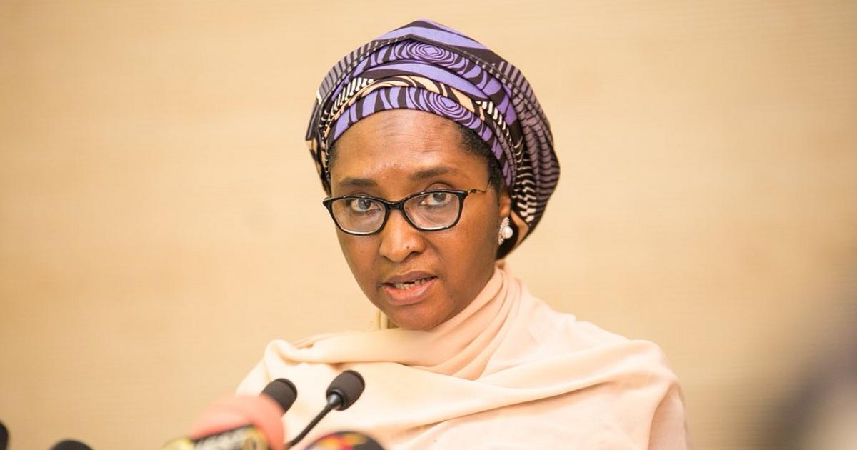

Nigeria to Convert $25bn of CBN Financing to 30-Year Debt – Bloomberg

0
Finance Minister, Nigeria

Nigeria’s federal government has set the terms for the conversion of its stock of central bank overdrafts into long-term notes in a bid to create transparency around its dependence on that source of funding, Bloomberg reports.

The 10 trillion naira ($25.6 billion) debt will be exchanged for 30-year notes issued to the central bank, Patience Oniha, head of the Debt Management Office said by email. The agreement on timing for the conversion needs to be finalized to get the required approval from the cabinet, at the earliest in the second quarter, Oniha said.

The Nigerian government became dependent on central bank borrowing after oil prices collapsed in 2015. Earnings from crude sales account for about half of government income in Africa’s largest economy. The financing helped plug spending shortfalls as non-oil revenues failed to cover the gap created by lower earnings from crude exports.

The increasing reliance on CBN overdrafts has come with negative consequences, the International Monetary Fund said in a report published last week.

“The financing is costly for the federal government at interest rates of the monetary policy rate plus 300 basis points, and for the CBN, with sterilization done through issuance of open market operation bills,” the IMF said.

The converted debt will be amortized over 30 years starting with a two-year moratorium when the government will not pay anything, Oniha said. The central bank will decide whether the securities will be sold to the public.

Rising Debt

The conversion will add to Nigeria’s debt stock, which stood at 49 trillion naira at the end of last year, according to estimates by the IMF. Public debt, including the central bank overdrafts, as a proportion of gross domestic product rose to 34.4% in 2020 from 29.1% in 2019, IMF data shows. The fund forecasts the debt to GDP ratio will remain largely unchanged until 2023 when it will rise to 35.5% of GDP.

Finance Minister Zainab Ahmed and central bank Governor Godwin Emefiele last year agreed to end CBN overdrafts to the government by 2025 in a letter of intent to the IMF before the release of emergency financing. However, Emefiele rebuffed criticism on the danger of the practice by Fitch Ratings, saying it would be irresponsible not to finance the government when revenues drop.

Money printing in Africa’s most populous nation has increased the excess liquidity in the system, and pressured the naira to be devalued twice, with inflation jumping to a four-year high in January.

There will be strict adherence to the statutory limit of the central bank overdraft to the government going forward, which is 5% of the preceding year’s revenue, Oniha said.

“There is a statutory limit, but it is then a question of if it is being implemented. Let’s clean the books and going forward the intention is to comply,” she said at a meeting with market players last week.

Raised Limit

In a strategy paper released last week, Africa’s biggest crude producer raised the amount it could borrow as a proportion of GDP to 40% from 25% to accommodate its growing debt portfolio and stimulate an economy that is recovering from its second recession in four years.

The government will borrow mainly from domestic markets, while external debt will be raised mainly from multilateral and bilateral lenders, according to the debt office head. The government is seeking to raise the dollar equivalent of 2.3 trillion naira in offshore markets and will consider issuing a Eurobond depending on market conditions.

The government also plans to issue Sukuk and green bonds to finance some projects, Oniha said.

Effects of Corruption on Nigerians

0
Nigeria police continues to struggle to maintain peace

Corruption has, unfortunately, become a household name in Nigeria. Almost everybody, including children, use the term, especially while describing Nigerian leaders. Corruption is taught in school as a social vice that should be desisted from. Religious leaders preach against it, promising everlasting sufferings for those engaging in it. The law also stands against it because it punishes those caught in the act. Despite all these, corruption is still present and has been causing havoc wherever it goes.

No matter how it is described, corruption still entails dishonest and fraudulent behaviours committed for selfish interests. It is usually attributed to people in position of authority, who abuse the privilege of their offices. Corruption manifests in different forms, such as bribery, extortion, tribalism, nepotism, money laundering, embezzlement, kickbacks, manipulation of figures or cases, fraudulent procurement of properties, exam malpractices, and any other form of fraudulent acts. Corruption can take place in both private and public sectors. Hence, corruption, as many Nigerians assume, does not only exist amongst government officials. However, its impact is felt the most in the country because it is practiced indiscriminately by public office holders.

The effects of corruption in Nigeria are felt at all corners of the country. Both the high and low, rich and poor, educated and uneducated feel the impact of corruption. It has been accused of increasing poverty and insecurity in the country. Dilapidation of social amenities and facilities, lack of infrastructure, unemployment, and poor education standard are all of its consequences. But apart from these, corruption has caused more damages than people know. For instance, it is the cause of the following:

  1. Unequal Distribution of Wealth: The high level income inequality in Nigeria has been attributed to the high rate of corruption in the country. Since corruption favours people in power the most, it ensures that resources barely reach the grass root. Further, the embezzling of funds meant for provision of infrastructure that will improve lives and businesses of the masses has led to the low economic growth of the poor. This causes the poor to become poorer, thereby creating a wider gap between the rich and the poor.
  2. Distrust for and amongst Nigerians: Many people would have noticed how some foreigners treat Nigerians with scepticism. These foreigners shouldn’t be blamed because Nigerians equally don’t trust one another. In fact, trust is a very expensive thing to give in Nigeria because many have trusted and were defrauded. One of the reasons online businesses are not yet thriving in the country is that people have been disappointed by some vendors and have, therefore, preferred to “see” what they are buying physically.
  3. Normalising Corruption: This is the scariest part of it. The rate Nigerians are accepting corruption and its practices is becoming worrisome. For instance, today, many people no longer see anything wrong with giving and accepting bribes. Some have become bold while demanding for it to begin to look like the norm. People even expect to be asked for bribes and when they are “disappointed”, they become suspicious. If this continues, corruption will become accepted into our culture. Then, Nigeria will be described as a corrupt country.

Remember that corruption should not be seen as the problem of the political office holders alone. It exists in every nook and cranny of the country. Anybody in a position of power, no matter how little it is, is capable of being corrupt. It also exists amongst people from all walks of life. Hence, for it to be expunged, all hands must be on deck.

Welcome Zoracom to Tekedia Mini-MBA

0

Tekedia Institute is excited to welcome Zoracom to Tekedia Mini-MBA. Zoracom is a cloud, network & services management company, offering Miro and zCloud.  Miro is a unified network & services management solution for Telco, MSP, DC, SaaS, Cloud & IoT offering real-time visibility & insight for performance, fault, change and configuration management with automated root-cause analysis to identify network and services issues and fix them before it impact operations. zCloud is a unified on-premise, hybrid & cloud solutions offering elastic, scalable and cost-effective cloud computing services.

A really amazing company Engr John Nwachukwu MIT,MNSE,PMDAN,PRINCE2 and team have built there.

We look forward to months-long co-sharing and co-learning on the mechanics of business systems and operations.

Welcome to the best school!

7 Lessons Which Can Help Business Owners And Entrepreneurs Thrive

0

Great perspective from Tekedia Mini-MBA alum, Anwuli Emmanuella Awogu. In this linked article, she shares 7 lessons which can help business owners and entrepreneurs thrive, as they pursue their missions, drawing perspectives from a movie. Here are the 7 lessons with my commentary after each.

  1. Be Unashamed of Promoting your Business: in a world where controlling demand is strategic, if you do not promote it, you have no mission.
  2. The Importance of Brand Positioning: supply is unbounded which means finding your spot in that ocean is important.
  3.  Not Every Risk is Worth Taking: blessed is he/she who knows the right battle to fight.
  4.  Documentation is Key: you can only improve what you measure – and documentation is part of that process.
  5. Innovate or Die: If you allow others to set the new basis of competition, you have one option available – extinction. 
  6.  Know When to Quit: If all fails, pivot because tomorrow has promises. Fighting the good fight means leaving some fights and entering some new ones.
  7. Brand Promise is Key: digital systems have built new nexus of trust, making it possible to break the old rules “do not enter a stranger’s car” [Uber] and do not sleep in a stranger’s house [Airbnb]. If you check, Uber and Airbnb have broken the fears of your grandparents on safety. Yes, a brand is more than a logo!

Here is the piece.