DD
MM
YYYY

PAGES

DD
MM
YYYY

spot_img

PAGES

Home Blog Page 5892

Regulation or Strangulation: A Review on Cryptocurrencies in Nigeria

5
Nigeria's Central Bank boss

Innovations usually come with some form of excessive hype, fads, and hyperbole.

For Nigeria’s regulatory authorities, separating the “wheat from the chaff” in digital innovations remains a challenge. This challenge has shaped the regulatory approach on cryptocurrencies in Nigeria in pursuit of financial and monetary stability. The focus of this article is to review the state of play on cryptocurrencies in Nigeria’s regulatory landscape and make recommendations on best approaches.

Nigeria’s Central Bank of Nigeria (CBN) Position on Cryptocurrencies

On 5 February 2021, a circular purportedly released by the CBN directed banks and other financial institutions that dealing in or facilitating payments for cryptocurrency payments is prohibited. In the circular, the CBN requires regulated financial institutions to identify persons and/or entities transacting in cryptocurrency or operating cryptocurrency exchanges within their systems and close such accounts immediately.

The circular effectively extends and expands the CBN’s previous directive of 12 January 2017 where the CBN similarly cautioned Deposit Money Banks (DMBs), Non Bank Financial Institutions (NBFIs), Other Financial Institutions (OFIs), and members of the public on the risks associated with cryptocurrencies transactions.

Conflicting Policies: the CBN’s  and the Securities & Exchange Commission’s (SEC) Regulatory Dissonance

Regarding the treatment of cryptocurrencies in Nigeria, it appears that there is a lack of coordination between the CBN and the SEC. While the CBN views cryptocurrencies as a threat due to the susceptibility of cryptocurrencies to fraud, the SEC recently considered cryptocurrencies such as bitcoin for example as digital assets, specifically commodities or securities. In its statement  released 14 September 2020, the SEC defined crypto assets “as digital representation of value that can be digitally traded and functions as: (1) a medium of exchange; and/or (2) a unit of account; and/or (3) a store of value — but does not have legal tender status in any jurisdiction.“
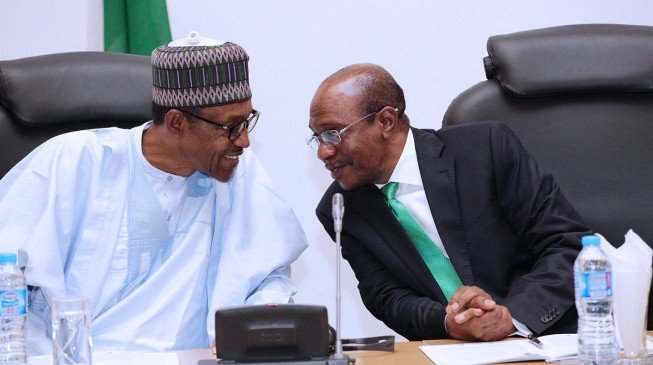
President and CBN boss

The SEC also stated its intention to regulate “any person, (individual or corporate) whose activities involve any aspect of Blockchain-related and virtual digital asset services”. According to the SEC statement, such persons would be mandated to be “registered by the Commission and as such, will be subject to the regulatory guidelines.” Though it is understandable that CBN’s regulatory jurisdiction is different from that of SEC, one would have expected that the CBN would at least acknowledge the SEC statement and then state its own approach to the monetary and currency dimensions of cryptocurrencies.  CBN’s outright ban of banking services to an entire crypto industry—only second to the United States—does not demonstrate that the CBN is on the same page with the SEC. Interestingly, both the CBN and the SEC are key stakeholders—at least according to the draft National Blockchain Adoption Strategy—a policy document introduced by the National Information Technology Development Agency (NITDA) in November 2020. 

Can the CBN really ban persons transacting in or operating cryptocurrency exchanges from access to banking services? What stakeholders are saying.

Whether  the CBN, by virtue of its statutory powers, has the power to order  DMBs, NBFIs, and OFIs to deny banking services to a set of persons, entities, or an entire industry where such persons or entities have not been declared illegal or criminal under any law or by any court of competent jurisdiction in Nigeria. Senator Ihenyen does not think so. According to him, “[CBN] can only regulate how banking services could be offered to these persons or entities, applying KYC/AML regulations. Total ban, unlike its January 2017 letter, appears to be rather arbitrary and lazy—an approach that I consider inconsistent with the CBN’s typically well-considered approach to issues.”

Regulation vs Strangulation: The way Forward

There is no doubt that regulation is vital. But as the SiBAN President, Senator Ihenyen, puts it, “…. the question is why should there be regulation? What kind of regulation? When should regulation come? How should regulation be? Where should it apply? [and] Who should it apply to?”

When it comes to disruptive innovations such as crypto technology for example a number of these questions remain largely unanswered by regulators. And when innovators—ever inspired to innovate and disrupt—ask questions or question why what is what and that is that, some of these “regulators remind you that they hold the knife and the yam.” This is a self-defeating approach to regulation. Consequently, opportunities are lost.

Recommendations on best approaches to adopt

In making recommendations, I recall the enriching engagement I had with some members of SiBAN on its virtual platform about the importance of what was described as “developmental regulation”, in contrast to restrictive regulation.

First, regulators must invest in blockchain & cryptocurrency education. This has become very necessary in an increasingly decentralized age. Chris Ani, founder of Digital Abundance Academy (DABA), observes that “the biggest tool of regulation is education not some sort of hammer.” When there is consumer and investment education, enforcements increasingly become lean and less tedious. “A new approach, informed by the desire to learn, unlearn, and relearn should be adopted by policymakers and regulators”, says Senator Ihenyen.

Second, there must be regulatory clarity. How the SEC, for instance, intends  to regulate “any person … whose activities involve any aspect of Blockchain-related and virtual digital asset services”, as contained in its recent statement on digital assets remains a puzzle to be solved. I submit that the statement is vague and believe that when the eventual regulation eventually drops, this would be clearer.

Third, regulators must shun restrictive policies that may end up  inhibiting the growth of an emerging or nascent industry. It must approach the industry like a farmer, not a rat killer. Pest control (such as consumer protection and investment safety) should not and cannot be enough reason to kill the crops (innovation). It is a failure of regulation. Regulation has moved past that.

Lastly, self-regulation should be encouraged  in nascent industries, such as the blockchain & crypto industry. Referring to  his remarks on self-regulation at the Off Charts Global Conference organized by Binance recently, Senator Ihenyen noted that self-regulation is an important first step to regulation that regulators, especially in developing countries with relatively lean public purses, must learn to integrate into their regulatory frameworks. Through self-regulation, industry players may adopt industry code of conduct, standards, and practices that ensure consumer protection and investor safety in the industry. It is not also out of place for regulators to support these self-regulatory bodies, ensuring that they are helping to grow and sanitize the nascent industry pending full regulation. This also avoids outright bans or zero regulation, what I consider two of the most risky  and uncertain state a regulator should put any industry in.
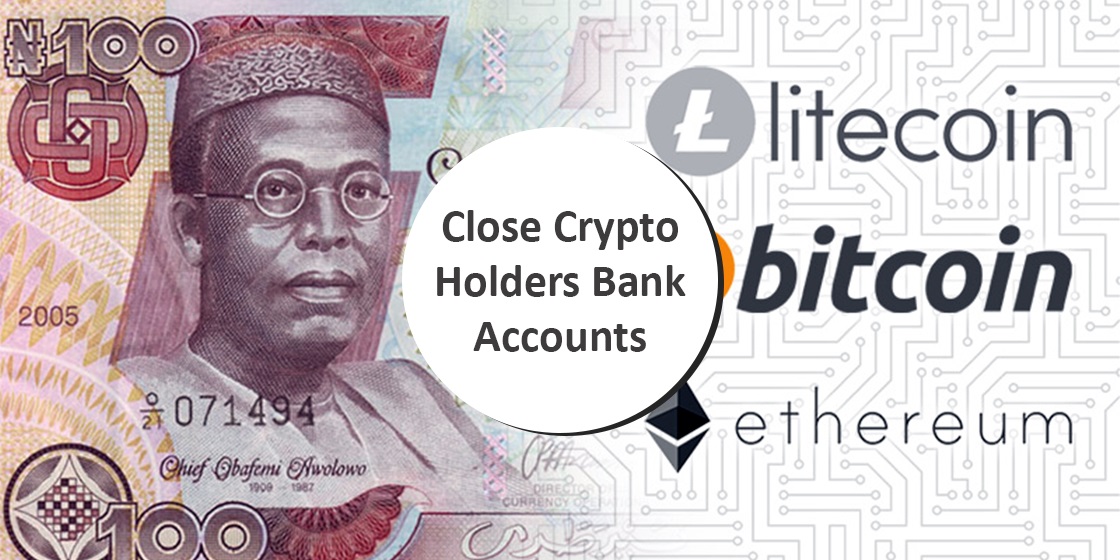
Nigeria has banned crypto from its banking systems

Conclusion

Essentially, technology cannot be regulated, but the rights and liabilities of the users can. Blockchain or cryptocurrency cannot be stopped. Regulators must avoid fighting and resisting innovation. Also, they must avoid  discriminating against such innovations or innovators. Rather, regulators should focus on the actors and their acts in the application of these innovative technologies. Regulators should consult widely with industry stakeholders and imbibe and adopt developmental regulation. NITDA does this very well, focusing on stimulating, supporting, and guiding the adoption of a thing rather than introducing premature restrictions that often result in stunted growth early on. If regulators do these, they would engender innovations and open more windows of opportunity for the people.
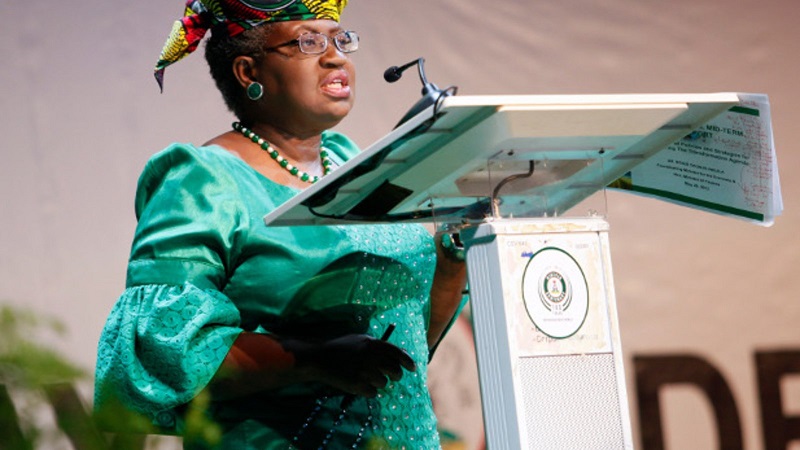
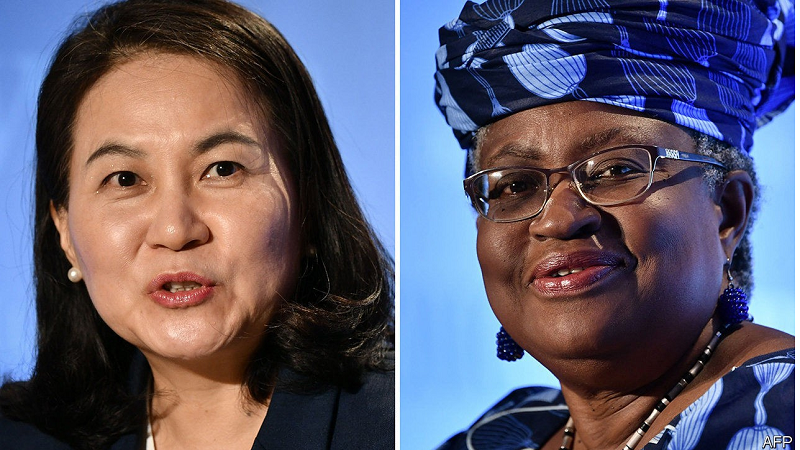
Ngozi Okonjo-Iweala: WTO’s Strategic Wait Paid Off

0

The race to World Trade Organization (WTO)’s director has come to an end after South Korea’s Yoo Myung-hee stepped down, and the United States finally endorsed Nigeria’s Ngozi Okonjo-Iweala, clearing the way for her in the much contested job.

It is one of the first multilateral actions taken by the new US president Joe Biden’s administration.

“Dr. Okonjo-Iweala brings a wealth of knowledge in economics and international diplomacy,” the office of the US Trade Representative said in a statement on Friday. “She is widely respected for her effective leadership and has proven experience managing a large international organization with a diverse membership.”

The statement from the USTR added that it “looks forward to working with a new WTO director-general to find paths forward to achieve necessary substantive and procedural reform of the WTO.”

With the US joining the consensus, the WTO general council is expected to announce a meeting in Geneva soon, where the organization’s members will formally approve Okonjo-Iweala’s appointment to a four-year term as director-general.

“Grateful for the expression of support from the US today for DG @WTO,” Okonjo-Iweala tweeted in appreciation. “Congratulations to Madam Yoo of Rep. Korea for a hard fought campaign. Thank you President Buhari and all Nigerians for your unflinching support. Thank you friends. Love to my family. Glory to God.”

Before now, the US was the only country standing in the way of Okonjo-Iweala, as other members of WTO had unanimously endorsed her. The US had vetoed her appointment on the ground that she lacks expertise in trade, preferring South Korea’s Yoo.

The contenders before the Korean withdrew

Former president Trump had been critical of the organization, accusing it of bias toward China and cheating on the United States in many of its policies. Trump claimed he’s supporting Yoo to protect US trade interests.

Thus, the US’ decision to veto the consensus created a standoff between her and the 164 members of the organization who voted for Okonjo-Iweala.

Although Trump’s administration was not ready to back down, WTO general council chairman David Walker took a bold step to affirm the decision of the organization. On October 28, he told the organization members at a Heads-of-Delegation meeting that based on their consultations with all delegations, the candidate best poised to attain consensus and become the new Director-General was Ngozi Okonjo-Iweala of Nigeria.

But in view of the US’ objection, the organization had scheduled a Nov. 9 meeting to set matters right in accordance with its constitution which requires that its 164 members appoint a Director-General by reaching a consensus. But on a second thought, the council called off the meeting.

The US presidential election was billed for Nov. 3, and there was high anti-Trump emotionalism suggesting that Biden may win. The strategy was to wait for a new administration that would likely take the path of other WTO members.

Biden had promised to take the US back to its multilateral leadership position, trumping Trump’s “America first” mantra.

The strategic wait paid off. After Biden’s win, the US’ approach to multilateralism started to retrace its steps to the forefront. Yoo saw the handwriting on the wall, the only reason she was staying in the race was Trump. So she stepped down.

In a televised briefing on Friday, Yoo said that she made her decision after consultation with the United States, adding that the WTO had been without a leader for too long.

Against US opposition, Okonjo-Iweala has maintained that she is qualified to head the WTO, citing her credentials working with multi-nationals and in government.

“Those who say I don’t have trade, they are mistaken. I think the qualities I have are even better, because I combine development economics with trade knowledge, along with finance, and you need those combination of skills to lead the WTO. I think I have the skills that are needed. I am a trade person,” she said last year.

The US approval will thus make her the first African and the first woman to head the world trade organization, a development that has received global applause.

Project Planning Course At Tekedia Mini-MBA

0

He makes amazing videos for our community project, Tekedia Mini-MBA.  A few weeks ago, I asked him to expand his course on Process Improvement and Operations Management with Project Planning. Our data has shown that members need to understand how to plan their projects. Our Faculty,  Rasheed Adebayo, is the Operations Manager at Schlumberger’s BP North Sea Projects. People, that is excellence because only the very best can work in such projects. When I speak with Rasheed, I remind him that I need to learn from him – the oil industry has supreme technical excellence.

A few years ago, I was flown from the US to deliver a keynote in an SPE conference in Lagos. The Managing Directors of Shell, Chevron Texaco, Agip/Total/Elf, ExxonMobil and GMD of NNPC were there, and everyone was waiting for this village guy from Abia state to come and talk business. As I began, I told them “I have come to learn from the best but I also want to make it clear that now is the time for the technical excellence in this industry to diffuse into other areas in Nigeria”. It was a great talk as they invited me again, and again, until Covid-19 stopped that nice party.

This is my point: if you want to learn how to manage critical projects, talk to the professionals in the oil sector. Tekedia Mini-MBA begins on Monday (Feb 8) and you can still register to join us.

As Researchers Produce 300,000 Covid-19 Publications, UI Leads Nigerian Institutions

0

As the second wave of Covid-19 continues in some states in Nigeria, available information indicates that Nigerian researchers in varied institutions contributed 1,634 publications out of 305,479 global publications released by publishers between December 2019 and February 7, 2021.

This was gleaned from the real time monitoring of academic publications, clinical trials and funding of the disease across the world by the Dimensions, a global organisation that focuses on data mining and dissemination to the public.

Dimensions uses a variety of sources including Crossref, PubMed, Europe PubMed Central, arXiv and direct contacts with more than 130 publishers to create a baseline metadata model for publications data.

The 305,479 publications were produced by 21,328 organisations in 196 countries. According to the data, with 4,209 organisations, the United States of America led all the countries. China followed with 1,845 organisations while the United Kingdom and India had 1,342 and 1,298 organisations respectively. Analysis further indicates that Germany [969], France [920], Japan [769], Italy [631], Spain [585], Brazil [463], Russia [432], Canada [446] and Australia [389] had a significant number of organisations.

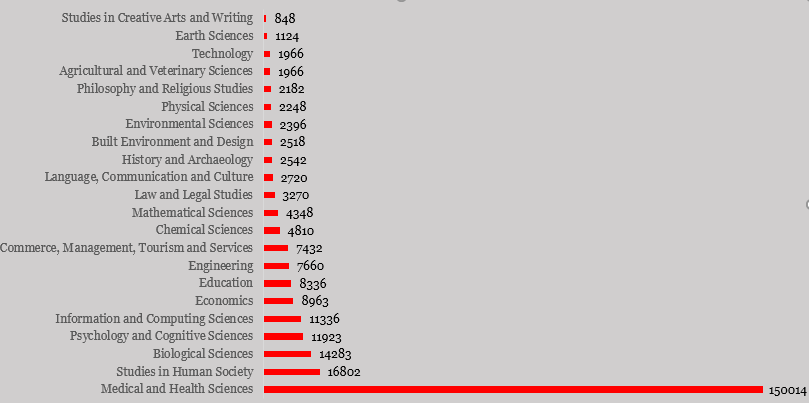
In Africa, Nigeria led other countries with 158 organisations. South Africa followed with 113 organisations. Analysis also reveals that Kenya, Ethiopia, Ghana and Algeria had a significant number of establishments, where researchers have produced publications. Examination of the data using fields of research reveals that medical and health sciences, studies in human society, biological sciences and psychology and cognitive sciences dominated during the period of publications [December, 2019 to February, 2021]. In all these fields, researchers from the Harvard University, University of Oxford, University of Toronto, Johns Hopkins University and University College London led.

Exhibit 1: Publications by Fields of Research

Source: Dimensions COVID-19 Report, 2021; Infoprations Analysis, 2021

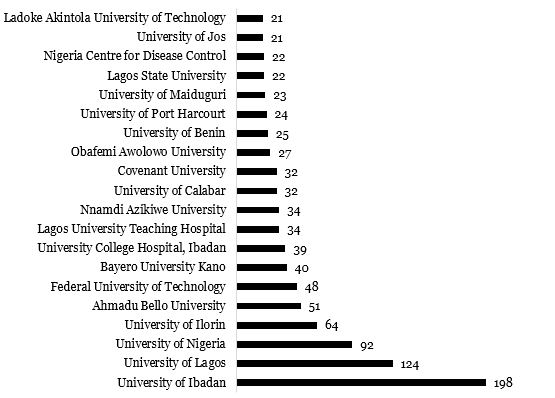
Out of 1,634 publications produced by the Nigerian organisations [in our context, we referred them as institutions], researchers from the University of Ibadan produced 198 publications, excluding those produced by researchers at the University College Hospital (UCH). The 1,634 publications were produced by 158 institutions. More than 25% of these institutions had one publication. Seventy-eight institutions, representing 49.4% were public institutions while 33 [20.9% of 158] were private institutions.

University of Lagos, University of Nigeria, University of Ilorin, Ahmadu Bello University, Federal University of Technology, Akure, Bayero University, University College Hospital, Lago University Teaching Hospital and Nnamdi Azikiwe University followed University of Ibadan in terms of publications. Once again Covenant University leads other private universities with a total 32 publications. The Landmark University and the Redeemer’s University had 14 and 13 publications respectively.

Our analyst notes that four of the South African universities edged out the University of Ibadan, from claiming the top spot in Africa. The University of Cape Town had 459 publications. Stellenbosch University [301], University of KwaZulu-Natal [240] and University of Pretoria [279] followed accordingly. University of Ibadan only leads the University of Johannesburg, which had 168 publications. University of Ibadan also had more publications than Ain Shams University Cairo. Beyond the Africa, analysis also indicates that the University of Ibadan is ahead of the University of Reading, University of Oklahoma and Carleton University Canada.

Exhibit 2: Number of Publications and Institutions

Source: Dimensions COVID-19 Report, 2021; Infoprations Analysis, 2021

Exhibit 3: Top 20 Institutions and Their Number of Publications

Source: Dimensions COVID-19 Report, 2021; Infoprations Analysis, 2021

In the previous analysis, our analyst had noted that stakeholders need to explore academic sources more for better understanding of the containment and mitigation messages. This is imperative on the basis that scholars in medicine and health related fields have been saddled with the responsibilities of conducing evidence-based research on various diseases and health conditions for quality living of all.

Now that a number of publications have emerged from Nigeria, the results of the publications must be pushed further by the concerned stakeholders. Findings need to be translated into concrete solutions. In this regard, our analyst notes that the management of the University of Ibadan needs to consider creation of a strategic team or committee that would explore the findings and create a strategic plan for the management of the disease in the University Community and Nigeria in general. Nigerian government equally needs to provide an enabling environment for academic and independent researchers for more studies on the disease.

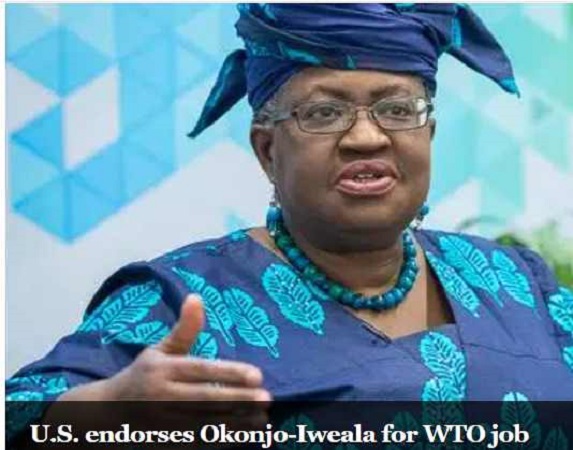
U.S. Endorses Ngozi Okonjo-Iweala for WTO job

0

Congratulations Madam WTO, ahead. The real world (yes, America) has now endorsed. Yes, we can begin the atilogwu, owambe, etc dances in Nigeria. A child of destiny. When that happens, those who said an MIT PhD was not qualified to manage world trade, when a real estate flipper and a fashion diva were qualified to negotiate bilateral deals, can now understand that the world has moved on! Biden wins with Nigeria.

The U.S. said in its statement as follows:

The United States takes note of today’s decision by the Republic of Korea’s Trade Minister Yoo Myung-hee to withdraw her candidacy for Director General of the World Trade Organization (WTO).

The Biden-Harris Administration is pleased to express its strong support for the candidacy of Dr. Ngozi Okonjo-Iweala as the next Director General of the WTO. Dr. Okonjo-Iweala brings a wealth of knowledge in economics and international diplomacy from her 25 years with the World Bank and two terms as Nigerian Finance Minister. She is widely respected for her effective leadership and has proven experience managing a large international organization with a diverse membership.

The Biden-Harris Administration also congratulates Minister Yoo Myung-hee on her strong campaign for this position. She is a trailblazer as the Republic of Korea’s first female trade minister and the first candidate from Korea to advance this far in the Director General selection process. The United States respects her decision to withdraw her candidacy from the Director General race to help facilitate a consensus decision at the WTO.

It is particularly important to underscore that two highly qualified women made it to the final round of consideration for the position of WTO Director General — the first time that any woman has made it to this stage in the history of the institution.

The United States stands ready to engage in the next phase of the WTO process for reaching a consensus decision on the WTO Director General. The Biden-Harris Administration looks forward to working with a new WTO Director General to find paths forward to achieve necessary substantive and procedural reform of the WTO.

Ngozi Okonjo-Iweala’s Response to US’ Objection to Her Appointment As WTO Head