DD
MM
YYYY

PAGES

DD
MM
YYYY

spot_img

PAGES

Home Blog Page 5896

Mobile Internet good enough to banish Lagos’ early morning cold buckets of water

0

Once upon a time, while Lagos was still capital, Nigerians came from far and wide in the nation and set up shop. This hasn’t stopped. Lagos is still the ‘commercial’ capital of the country. In those days though, the business district had pivoted from Ikeja to Marina. The new growth of business hub and premium residential was happening in Victoria Island and Ikoyi, but prices were still affordable to the middle income earner.

Comfortable (not necessarily rich) entrepreneurs and sole traders from the four corners… be they Igbo, Ibibio.. Uhrobo.. Benin.. Esan.. or even Tiv.. Idoma.. Agede… rented business apartments which they operated from for the most time, and went ‘home’ two or three weekends a month.

Things have changed. Business for some has become more challenging.  Accommodation at premium Lagos  business districts has skyrocketed… and parallel.. the advent of internet, improvement in smartphones, and both software and hardware tools for the ‘connected office’ has gradually increased the feasibility of remote working.

The business case is pivoting in favour of working from home supplemented by business trips, while relinquishing a second point of presence in Lagos.

The problem is fit-for-purpose affordable overnight stay in Lagos for the SME business traveller is elusive. Federal Palace, Eko, Radisson or Sheraton are completely beyond reach. Even stays at Southern Sun, Golden Tulip, Blowfish or Ibis are not regularly sustainable.

Instead modest income business travellers have to opt for a ‘local’ hotel or guest house. You pay for what you get (or perhaps, save on what you don’t get!).

If you have to walk through an outside bar to get to reception the first thing that will strike you is the number of individuals in (scruffy) casual wear loitering about not buying anything. If there is a popular football match on, then as a guest, you can forget about getting a good vantage point for the screen. These will usually be taken up by a groups of  ‘area boys’ all sharing one large bottle of water as a token effort at patronage.

Unless a family member of ownership, the employees are probably very poorly paid and have no enthusiasm for improving the service or removing any undesirables. Lifting the pen to sign a new guest seems so much effort, it appears as the pen must weigh several tons.

Hallways will be the hottest part of the building due to lack of A.C. or ceiling fans, and maybe poor ventilation. Bulbs only occupy some of the fittings, because staff have been told not to replace all, or because repeat guests have learned from past experience, if a bulb goes in their room, it’s just less assignment to remove one from the hall rather than embark on an expedition to secure staff assistance. Bulbs are always naked, and never have a shade or cosmetic surround.

Hallways frequently have this pungent odour, like it has just been fumigated (‘fleeted’) or they deliberately pick the most nasally offensive floor cleaner in all Nigeria because for sure, they want you to be in no doubt they clean regularly… because on the balance of everything else, you would be excused for thinking they don’t!

Rooms are basic, and damaged or defaced fittings will be neglected. If the AC works, there is still too many unmanageable openings that allow localized pockets of warm air. Insist on one with a good standing fan if you don’t want to be eaten alive by mosquitoes.

Forget plumbed hot water. If there is a shower head in the bathroom, understand this is for decorative purposes only! The (cold) water pressure in the building is rarely sufficient to drive water to the shower head, particularly at times of peak use. There will always be one or more buckets in the bath tub intended to assist bathing. Sometimes they have enjoyed a former life as a container for chemicals, building materials or dry goods. Those that need to rise and leave early know from experience it is best to fill these buckets the night before, to ensure they leave in the morning fresh

I’m not even going to get started about delays and other dramas linked to ‘NEPA taking light’ and ‘onning the gen’. I could get a whole article out of that topic, just on its own!

Immediately outside a Nigerian ‘local’ Hotel. Building can’t be shown for legal reasons.

Seasoned budget travellers however know all the bargain basement venues in town, and over a period have made notes on which rooms in specific establishments on balance offer the best chance of a good night’s sleep and the promise of leaving the next morning fresh. Over time, staff have warmed to them. So they just phone around in advance and book the best available room.

Finally, we come to the issue of internet access. Many of the budget establishments have a wifi service. Having one, and making any meaningful use of it though, are two very different things. Forget scheduling your time to do work (dependant on the wifi) during your stay. No hope.

The hotel is invariably trying to shoe horn a service intended to support home or small office use, to serve a much larger user group than intended. This is then exasperated by the same ‘area boys’ that block the display screen view at popular times, hogging the bandwidth with their smartphones. They may disperse discretely when an owner shows up, but will be aware of spots off the premises which still offers signal.

Management have an amateur approach to network management, and either don’t change the password regularly, or have it set as an unsecured network, with no password at all.

Don Rancadin, a self proclaimed guru for analysing Internet access for the traveller, and a ‘gadget accumulator’ just says ‘Hotel Wifi Sucks’… ‘even 5-star resorts seem like digital slums’. This was in 2016, and up to now, the best protocol available has been largely the same. This is the 5 star landscape in the US, not Nigeria.

Discussions on ‘Nairland’ berate the quality of internet even in the flagship hotels of Lagos compared to those of a similar standard abroad. Bargain basement options is a load of hurt that brings things to a whole new low for internet service.

If the traveller has any ideas about logging into a remote corporate CRM for instance, better to set the alarm clock for 3:30am when user levels have dropped so the connection can achieve anything meaningful.

While there are various disruptive accommodation options in the marketplace, like ‘RENT SMALL SMALL’ there is still nothing that compares to the very local hotel/guest house on price. These are tough times when travelling sole traders need to be frugal.

https://technext.ng/2019/04/26/meet-rentsmallsmall-lagos-based-startup-making-rent-payments-flexible-lagosians/

While I can’t offer a solution to the comfort maladies for the budget business traveller, there may however, be something new on the horizon that sometime soon shall improve their business connectivity on the move.

Invariably, Mobile Network Operators (MNOs) in Nigeria will begin to roll out 5g and Lagos is probably the prime location of demand, and is likely the be the first, possibly accompanied by Abuja, to get the service.

The Nighthawk M5 5G WiFi 6 Mobile is a new mobile router by Netgear that combines the superior bandwidth and connection quality of the anticipated 5G mobile protocol with the connectivity distribution potential of the new WiFi protocol – WiFi 6E.

The device runs on the Qualcomm® Snapdragon™ X55 5G Modem-RF system which offers a Peak Download Speed of 7.5 Gbps and a Peak Upload Speed of 3 Gbps

Qualcomm® Snapdragon™ X55 chip is manufactured on an ultra small 7nm die process

The bandwidth coupled with  WiFi 6E is capable of supporting up to 32 simultaneously connected devices operating at a similar performance level to what is common for FTTH right now.

‘The 6 GHz spectrum should work similarly to WiFi 6 over 5 GHz but offers additional non-overlapping channels. As the Wi-Fi Alliance puts it, Wi-Fi 6E allows for “14 additional 80 MHz channels and 7 additional 160 MHz channels.” These channels wouldn’t overlap with each other, which will help reduce congestion, particularly in areas where lots of networks are operating.

All the devices communicating on the 6 GHz spectrum would also be Wi-Fi 6 devices. There wouldn’t be any older devices using standards like Wi-Fi 5 (802.11ac). All devices on the 6 GHz channels will be speaking the same language and can use Wi-Fi 6’s new congestion-busting features.’ – How to Geek

With a standard 5G sim card running with ‘best in market’ Nigeria MNO 5g service inside this Netgear router, Nigerias weary budget business traveller can have solid high speed access anywhere he or she goes, independent of what the budget accommodation can provide.

If the router comes locked to a network, the same techies that unlock smartphones can handle that. It’s the same job. Even if the service from the MNO is marketed with the intention to serve in a 5G smartphone, it doesn’t matter. The 5G sim card can’t tell the difference between a smartphone and a 5G router device.

This is not intended to be a plug for Netgear but simply an indicator of things to come for Nigerias weary budget business traveller. Comparable products are in the market by other manufacturers and more will come.

Human productivity increases over time, even by modest increments, have the capacity to improve income.

It will not be all plain sailing. Initially at least, the weary traveller may come to enjoy the full potential of the device while in Lagos, but 5G may take longer to roll out to his or her regional home.

But perhaps eventually, it will enable them when in Lagos, to move past paying for accommodation which will inflict cold buckets of water on them in the depths of dark early mornings.

Referenced content/acknowledgements :

https://www.howtogeek.com/519823/wi-fi-6e-what-is-it-and-how-is-it-different-from-wi-fi-6/

https://www.xda-developers.com/qualcomm-snapdragon-x55-5g-modem-2019-android-smartphones/s been announced ahead of MWC

https://www.netgear.com/home/mobile-wifi/hotspots/mr5200/

https://www.theverge.com/2020/4/23/21231623/6ghz-wifi-6e-explained-speed-availability-fcc-approval
The Business Case For Building Mobile Apps in Nigeria

0

I’ll start with this – do you really need a mobile application for your business? And do you know why you need one?

If you run a product development and application development agency, I expect you to roll your eyes after seeing those two questions and face this article with a bias perspective (that’s if you haven’t already left this piece to go read something else). I don’t really blame you, if I ran a multibillion dollar energy firm built solely on petroleum, and my son tells me that one day Elon Musk will completely disrupt the transportation industry (which was responsible for 45% of U.S. demand for petroleum in 2019), by making electric cars ubiquitous, I don’t think I’d be very happy myself. I have a relative who doesn’t believe the next energy transition is electric, he believes it is gas. He works with a leading indigenous oil and gas company here in Nigeria. For the sanity and safety of his job, he has to believe that.

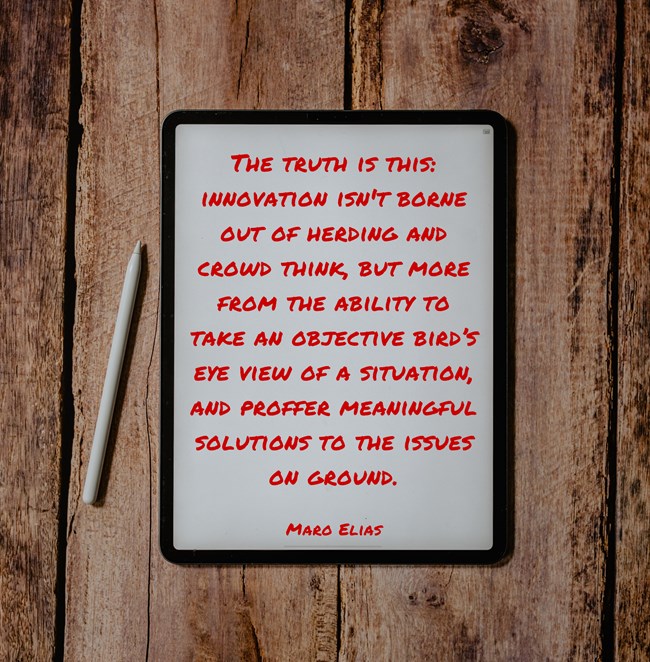
The truth is this; innovation isn’t borne out of herding and crowd think, but more from the ability to take an objective bird’s eye view of a situation, and proffer meaningful solutions to the issues on ground.

Habituation occurs when we get so used to a thing or a process that we begin to see it as normal – regardless of how friction filled the process may be. Lagos traffic is horrible in your first month, by the twenty fourth month, you’ve gotten so used to it that you may even begin to define driving for hours in soul drenching traffic as a sign of diligence.

The purpose of this piece is to step back a little, and have a clearer view of what is really going on.

The Mobile App Industry

The mobile application industry is booming globally. Google through its Google Playstore generated a little over US$38 billion in revenue in 2020, second only to the Apple App Store which brought in around US$72.3 billion in revenue during the same period.

According to Statista, the Google Playstore recorded more than 102 billion app downloads in 2020, while the App Store recorded 39 billion app downloads in the same time period. Americans approximately have an average of 80+ apps installed on their smartphone devices.

In Nigeria, the picture may not be too different. The democratization of technology has resulted in among many other things; the proliferation of mobile applications.

Almost every serious business either has a mobile application, or is seriously working on developing one.

The reasoning behind this is really simple; it is easier to buy spaghetti from the shop opposite your compound (mobile app), than to walk to the front of your street (website) to do the same.

As much as the gradual ubiquity of mobile applications is commendable, a clear picture of its true value proposition (and shortcomings) is key to helping leaders and firms build and design more meaningful offerings.

Why Do You Really Need a Mobile App?

The ideal answer to this question is because everyone has one. A lot of African businesses play “follow the leader”, or “catch and copy”. Due to an over reliance on concepts like competitive intelligence and the likes, we now have two kinds of businesses in African tech – Moses (the firms who set the pace), and the Israelites (the firms who throttle along).

In business you ideally want to be one of the Moses firms (they usually have better market caps, and revenue numbers), but it takes more than wishing, hoping and hiring McKinsey to do so, It takes a deliberate approach to building innovative products and services – services that reduce user frictions and make life simpler for your users. It takes a focused approach that has a clear plan that objectively recognizes what is best for their business and what is not, it takes being distinct and rejecting crowd think.

Why Build an App

Proximity

The first major and key reason for building a mobile application is proximity. Like I mentioned earlier, I’d rather buy from the shop in front of my house, than walk a longer distance to make the same purchase.

Distance is a product layer that Ecommerce disintermediates [sic] by bringing a purchase directly to your door step as against you having to go out to get it yourself.

A Mobile app creates the same perception of proximity – instead of the two (or possibly more) level interaction of opening your mobile web browser and inserting a website link into a dialog box, with one click you can immediately appear in the mobile application interface of the app you want to utilize.

Your innovation approach as a digital technology business is to consistently find ways to reduce (and keep reducing) the interaction layers between your product and its users. In the past we drew patterns and wrote passwords to unlock our smartphone’s (horrible user experience), today with Touch ID and Face ID, unlocking a smartphone is simpler (and faster) than A,B,C. Literally.

However, mobile apps still have their challenges. Downloading a Mobile application you intend to use regularly is a feature you admire, being ‘Forced’ to download an app you know you will really use only once is a bug you loathe.

In other words, how frequently a user intends to use your product will determine whether they consider being ‘forced’ to download the mobile application as a bad user experience or not. Ideally speaking, the average tech savvy person will spend a disproportionate amount of time just scrolling through Facebook or Instagram without a clear mission other than recreation.

When you decide to use an app that frequently, being forced to download it doesn’t feel that bad, but a solution you need, but not on a recurrent basis may not be that meaningful to you as a mobile application.

However, a good number of users may not bother; they may opt to downloading your app once, using it for the purpose intended, and leave it lying dormant in their app menu for months. In a case like this, you have an app, Google may even tell you you have 5,000+ downloads, but as far as the usefulness of that application is concerned, its value proposition is somewhere close to zero.

It’s true that some users may use it occasionally, and a small portion may do so frequently, but considering the amount of money, time and engineering talent you spent developing that mobile app plus the accompanying CAC (Customer Acquisition Costs) and your projected user LTV (Life Time Value) is that really the kind of engagement you consider a meaningful return on investment? I think not.

Data

The second major reason you should build a mobile app is because of data.

In the twenty first century, the most powerful business is not the one that has the largest machinery and biggest production plants; it’s the one that has access to the most meaningful data.

Any business running without meaningful data is a blind business.

Data helps businesses mimic omnipresence, and create the perception of God. In other words, data helps businesses gain a clearer picture of the space they operate in, empowering them to build more meaningful and valuable products/services.

As much as customer surveys are important (and they are), nothing is as valuable as having real time data on how customers interact with your solution informing your product design. People say a lot of stuff, but when the rubber hits the road (or as my pastor says – “.when jungle mature”) people tend to do something entirely different from what they say they’ll do.

Some months back, I read the postmortem of an edtech startup outside the bay area that was building a solution to help streamline communication between educational institutions, teachers, parents and students. As much as the founder had solicited customer feedback before building his solution, they ended up failing because they didn’t perform enough product testing (the part where you get real hands on data on how a user will interact with your product), and they fell prey to the ” Anchoring Effect”. Apparently the vast majority of people they surveyed said one thing, but went ahead to do something else.

A mobile app with meaningful and active in app interactions is one of the easiest ways to gain access to valuable consumer data. Nike’s SNKRS app is a very clear illustration of this example. Nike SNKRS app is designed for zealot Nike fans, the kind of fans that can literally wait in queues to buy limited edition sneakers (something I cannot imagine myself doing).

Nike uses micro data from in app interactions to inform new product developments and lineups, giving it a supposedly upper hand against its competition. Nike has a market share more than 3x its closest competitor Under Armour, and is worth more than 15x its market cap. Nike is clearly the Dangote Cement of Sneakers.

Interactions

Unless you’re building all those funny mobile apps that monetize primarily through in app ads (like my Bible app which I find pretty annoying), you want to find a way to increase in app interactions within your mobile app. The value a mobile app brings to the table may be negligible if it has to rely on users having a one-time need to launch it, especially if it isn’t a fintech solution.

Ideally, you want a solution where users launch your app and spend a good amount of time within the app interacting with your solution (not complaining about how some button doesn’t work or the app froze, or cursing the engineers that built it).

In practice, I doubt if all apps can do this, but those that can will definitely be able to extract more value than those than can’t (a fully Google advertising dependent business model is a lousy business).

One approach to this could be building a community. Communities are built around similar goals and aspirations. My model for building a community is very simple: find a meaningful pain point that a good number of people share, make a very big deal out of it, position yourself as the sympathetic guy that cares, and push your solution (community) as a way to solve that problem. This isn’t too different from what LinkedIn influencers like Hyacinth and the likes do – they make job searching look like it’s the biggest problem in the world (even though it is to an extent), position themselves as the sympathetic party, and position their content as a kind of solution to that problem. They create content people want to read – like how they hired a guy who had no experience, or gave someone unlimited time off because they care about their employees, disregarding the adverse effect this may have on their business. In other words, these guys don’t make content, they sell hope – and a lot of people need hope.

Community building is a key strategy to increase in app interactions.

Why you shouldn’t Build a Mobile App.

If your solution will benefit from unrestrained access of any kind (people who have smartphones and people who do not), then building a mobile app may not be a very potent game changer.

Remita by Systemspecs is a very good example of this. Remita is responsible for routing and processing all transactions in the Federal Governments TSA initiative. If you need to make any kind of payment to a government affiliated parastatal, you will in one way or the other need Remita. All the people who use Remita are definitely not tech savvy, and may likely not own a smartphone. If Remita created a value proposition around how making those payments directly from its mobile app would be a better and simpler solution for smartphone users, that would be great (and if successful, a powerful user acquisition strategy), but I don’t know if they do, or have been successful at it.

Although I don’t have any data to validate this, I want to believe that most Remita transactions occur on a computer, more specifically on a computer, in a stuffed Cyber Café/Business Centre, with one small standing fan. Remita is a largely disintemediated and platform agnostic solution, so having a Mobile App (not necessarily a bad idea), may not necessarily be a game changer.

Conclusion

Identifying and understanding the main interaction and experience points of your business is key to finding out what kind of solution can create meaningful value for your users.

Building a Mobile app isn’t necessarily a bad idea, but it may not always be the most strategic thing to do, especially if you’re getting it just because everyone has one.


Inspired by the Holy Spirit


P.S: if you run a startup that needs product development and design services, idea validation, or any other innovative product and strategic approach to taking your market, you can say hi to my team at Charisol Tech, we’ll definitely have something for you.

How To Use Tekedia Hub – hub.tekedia.com

0

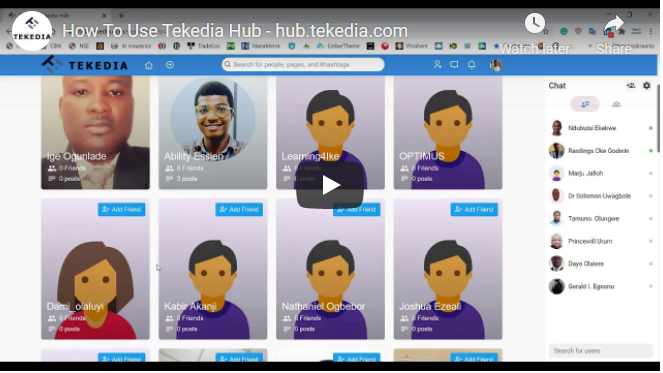
Our “Facebook for Innovators” is live hub.tekedia.com. It enables our members to co-share and co-learn more effectively.  You can download the Android app here (coming).

The goal is simple: connect innovators and growth makers , and open the door for them to make great things happen.  The video below explains “How To Use Tekedia Hub”. Join us.

Uber and Lyft Report Losses With Increased Revenue in Q4

0

Uber’s Q4 2020 report filed on Wednesday showed the company made $3.2 billion in revenue, down 16% year-on-year to put its loss at $6.8 billion. However, the loss is good news. The ridesharing company recorded $0.54 per a share loss, beating Wall Street’s expectations of $0.55, after a troubling 2020 that plummeted its revenue.

The California-based company was severely hit by COVID-19 pandemic which crippled economic activities with movement-restricting safety measures. Compared to the $8.5 billion loss in 2019, it saw a significant revenue growth amidst the strains.

Uber’s Q3 report showed it lost $968 million, including $236 million in stock-based compensation expenses. But the figures indicate slight revenue growth compared to the nearly $1.1 billion loss in the same period last year.

Uber focused on food delivery to minimize the impact of the pandemic on its business. UberEats thrived, beating the ride-hailing division in revenue generation for the third straight quarter as online food orders increased during the lockdowns. The food delivery revenue increased 224% to $1.4 billion in the fourth quarter compared to the same period in 2019, while ride revenue was $1.5 billion, down 52% from a year earlier.

The company made an attempt to acquire GrubHub last year as it sought to expand its food delivery services and increase revenue. As the GrubHub deal failed, Uber acquired Postmates for approximately $2.65 billion in an all-stock transaction. Early in the month, Uber announced they have reached an agreement to acquire Drizly, leading on-demand alcohol marketplace in the United States, for approximately $1.1 billion in stock and cash deal expected to close in the first half of the year.

It also worked to cut costs: shutting down service in China where it’s becoming expensive to operate, cutting staff and selling off its driverless and flying car startups. Uber CEO Dara Khosrowshahi said the company will henceforth focus on “profitable growth”, which means cutting costs as low as possible and focusing on the division that brings in more revenue.

Uber cut about 25% of its workforce in the first half of last year as the pandemic’s grip tightened.

Winning the prop.22 against the state of California, to classify its drivers as independent contractors, lent credence to Uber’s quest to cut cost. Experts said the win will help the company to cut labor costs by as much 30%, as it shields the company from being governed by California’s labor laws that ensure minimum wage, health plan and other entitlements for workers.

Uber recorded 144.3 million trips, 24% decline year-on-year, a record that its betterment in 2021 depends mainly on vaccine roll out. Lyft, Uber’s US competitor is also counting on the vaccine distribution to scale up in the second quarter.

Lyft, which also suffered a heavy decline due to the pandemic, is hoping for a rebound when people return to pre-pandemic normality. The company said it has set ahead-of-target cost cuts that will help it achieve a profit on an adjusted basis of earnings before interest, taxes, depreciation and amortization.

“Based on the improvements we’ve made, there is a chance we can achieve profitability in Q3. Obviously, pulling in profitability would require a strong summer rebound,” Lyft Chief Financial Officer Brian Roberts said.

The company said it shaved off more costs than originally anticipated; including head-count reductions and lower costs for software hosting services, payment processing and insurance, and it spurred the lower-than-expected loss it incurred in the last quarter of 2020.

The company’s Q4 report shows nearly $570 million revenue, a 44% drop year-on-year but 14% growth compared to Q3 revenue. Just like Uber’s, the result beat analysts projection, which in this case, was put at $562 million. There was an adjusted EBITDA loss of $150 million in the fourth quarter, lower than the $185 million loss predicted by analysts.

Lyft’s ride volume dipped 52% in December and 51% in January compared to the previous year. The company said it is expecting to see a lower volume in the first quarter of the year compared to the last quarter of 2020.

While Uber is focusing on Eats and alcohol delivery, Lyft said its plan is to cut an additional $35 million in costs in the first quarter of 2021.

John Zimmer, the company’s president told Reuters: “As riders increase … those lower costs will also help drive higher contribution margins.”

The company said its number of active riders in the fourth quarter decreased by more than 45% on a yearly basis to 12,552, but revenue per active rider rose by $1 to $45.40 – a record number.

Lyft said they will focus on moving people not goods for now, although the company announced late last year it’s working on a white-label or non-Lyft-branded platform to allow deliveries between different businesses for groceries, food and packages.

Unlike Uber that is focusing fully on delivery, Zimmer told Reuters that the Lyft delivery platform is still early in the process and that the business would just be additive, with the company hoping to announce partners at the middle of this year.

The PayPal New Vision and Implications for Central Bank of Nigeria

1

PayPal has a big plan: become the central bank of digital currencies just as commercial banks are to physical fiat currencies. The company boss, Dan Schulman, laid out this vision during the company’s investor day.  Simply, PayPal could become a vehicle  to help nations manage and distribute digital money. That seems scary because we have American Google search, American Facebook social, and now loading American PayPal quasi central bank. Call it absolute dominance of the digital age (outside China) if that becomes a reality.

“You think about how many [digital wallets] we’re going to have in the next two, three or five years, and we’re a perfect complement to central banks and governments to distribute those digitized forms of currency,” Schulman said.

Schulman also revealed that PayPal is looking into smart contracts and tokenizations of other non-crypto assets.

“This is a once in a multi-decade opportunity where the fundamental rails of the system are going to be redefined and we have a chance to help shape that,” Schulman said.

Meanwhile, integration of crypto has brought growth to PayPal: “PayPal customers that use its crypto services have a 12% increase in weekly transactions on the platform. This is in part because more than 40% of the U.S. PayPal customers who use crypto return to complete more than two additional transactions, the company said”. 

With all these redesigns, it is looking increasingly strange on Nigeria’s playbook to ban Bitcoin and cryptocurrency. Which world do we want to exist in right there in Nigeria? CBN needs to reverse this decision before our young people become mere spectators in the future of commerce.

Yes, allow them to take risks – and rise or fail, and learn from the process, while doing your job to mute any paralysis, making sure mistakes do not become an economic avalanche and shock. This outright ban of crypto will hurt Nigeria’s competitiveness in future commerce. Period.