Good People, join me to thank David Onaolapo who is sponsoring 30 people on full scholarships to Tekedia Mini-MBA. For this one, we are focusing on only those who lost their jobs during the last 12 months and are looking at getting back to work. Our hope is that our program will deepen their capabilities and prepare them for new opportunities.
If in this group, click and send an email to our team; we will not be using the NGOs which usually do the vetting since there is no time: program begins 12 noon WAT on Monday. Be honest and let us help only those who need it.
As that happens, we still have funds to support people working in orphanages, special needs homes and teachers in rural areas. We have offered full scholarships with the restriction that each entity can send a maximum of two employees.
Last year, we offered hundreds of scholarships through the kindness of many global citizens and our own internal funds. And we have established one thing: Nigerians and Africans are very generous.
Once again, thanks David and all the donors who continue to pay money into our accounts. This is a community service and I want to thank our global Faculty for making this mission possible.
Nigeria needs to begin a regime of deep intellectual conversation. Until we do that we cannot advance as a nation. No one is challenging the central bank’s power to protect our financial system by banning bitcoin and cryptos. But in the course of its work, the citizens will prefer a more nuanced and intellectually engaging playbook. You build through ecosystems. Read this comment here.
The emperor has spoken! No reasons, no explanations, just absolute compliance! That was how the Boko Haram founder was killed, and the country is yet to emerge from that strategic blunder.
We do not know how to engage in intellectual debates, we do not know how to experiment; all we do with reckless abandon is issuing orders and reining insults on whoever disagrees.
The dearth of leadership qualities is dizzying and alarming, and the outcome has been a dysfunctional system all round.
You flog a child, you refuse to tell him the reason for the lashing, and still warn him not to cry! This is how Nigeria handles her citizens.
Until we learn how to communicate and debate intelligently, we will keep botching everything here.
Our shortcomings and inadequacies are too many, yet we have zero desire or ambition to improve.
Nigeria, we hail thee!
(Francis Oguaju on Tekedia Comment section)
As a student in Johns Hopkins University, the National Science Foundation, one of the highest bodies driving the United States science and technology policies, invited me to join a committee. I was a foreign student and America wanted that insight. I sat on a committee with eminent professors and technology luminaries for four years; I learned from them, and they got some insights from me!
By the time I was done, an electrical engineering student became a policy expert. I wrote a book – Nanotechnology and Microelectronics: Global Diffusion, Economics & Policy. That book is on display in my department in the university, and it later received the IGI Global Book of the Year award.
The book award
That is America. But in my native country – would the government even care to talk to its CEOs and scholars consultatively before big policy changes (forget the “common students”). We must learn that playbook because that is our missing link on how to build, nurture and advance modern ecosystems in commerce. The fiat style will not advance Nigeria.
The argument around the marginalisation of African research on the global podium has been a longstanding and controversial matter over the years.
The above statement is to the extent that unilateral action has been taken by some universities on the continent requiring that publications in international journals alone cannot be deemed the golden ticket to promotion application by academics.
So while it may be good to have a global footprint by publishing in global or international journals of repute – notably ticking the metrics of abstracting and indexing bodies such as Scimago, Scopus, ABDC and CABS, to mention just a few, publishing in “local” journals have now been thrown into the equation. So what and where are these so-called local journals? Who are the custodians of these local journals?
I have discussed the issue and complexity of scholarly publishing on the continent for about a decade now, and nothing seems to have changed, at least not at the envisaged pace. In my article on textbook publishing, this issue was raised. However, the challenge has taken on a new turn in recent years.
Whither African University Publishing?
Indeed, while I was piecing this article together, I decided to do a quick search of the internet, and guess what I found? An article that was published as far back as 2017, “The African university press – A gloomy picture.” Although there were quite a lot of issues raised by in the article, one that stands out for the purpose of this post reads thus:
The African University Press study did not individually profile any Nigerian university presses. I remain particularly interested in university presses in West Africa, and Nigeria in particular, as I was involved with setting up the University of Ife Press (now Obafemi Awolowo University Press) in the early 1970s, and did consultancy work in the late 1980s to review the operations and publications management of Ibadan University Press.
Moreover, a number of Nigerian university presses were founder members of the African Books Collective, or ABC, which I helped to establish along with African colleagues in 1989. At that time, it could be said that those presses were quite active, with diverse lists, and producing some high quality scholarly titles.
Let’s picture this. If African Universities want their faculty members to patronise local journals, then the question that readily comes to mind, for potential contributors, is rightly why? To what extent does my article or research make a global impact? How does it raise my visibility on the global stage? Who recognises the work and on what basis? These are legitimate questions that every University in Africa needs to have readymade answers to. Do you have a reputable, institutional journal? What measures of quality have been put in place to ensure that articles are at the right/ competitive level? Who are the members of your editorial board? How is the packaging of the journal? What is the reach of the journal? Who should be interested in reading the journal and why?
My Experience and Closing Points
I have been privileged to serve as a lead for a resuscitated University Journal i.e., the Unizik Journal of Business, which is published by the Nnamdi Azikiwe University. Although this should have been done much sooner, it is nonetheless a case of “better late than never.” In this third volume of the journal, under my leadership, the contributions touch upon salient issues that border on the African discourse – notably the United Nations Sustainable Development Goals touching upon aspects of Education (SDG 4), Healthcare and well being (SDG 3), Youth Development & Entrepreneurship (SDG 8), as well as Agricultural development to tackle SDGs 1 and 2 (poverty and zero hunger) respectively.
Sometimes, the best solution is “Do Nothing”. For Madam WTO (future), the WTO leadership executed flawlessly. As I wrote here, when she came first in the last voting sequence against her remaining competitor, it was evident she was there. Of course, the world does not usually stick to its own rules. But instead of scoring own-goals, WTO waited – and that wait brought the results. Over time, Mrs Iweala’s competitor, who came second felt the question – how can you operate since you came second even if they anoint you? – and time magically took care of the rest. Samuel Nwite made this point brilliantly here.
In the Igbo Nation, the elders will say “ndo na-ala uwa azi” [sorry soothes all pains]. Time, also, fixes many things. In anything, we need to learn to be patient. Had WTO not frozen its calendar, bad things would have happened: they would have annoyed China & its world, and US & its own world (the world has 3 countries: US, China and others on this matter).
With President Biden endorsing NOI, magically, the US and China are now in sync. Then, the “others” can do the paperwork as usual. We congratulate Madam NOI and wish her a solid service.
In my village, we have Oriendu Market, I am looking forward to how her policies will affect our market! Ovim (Abia state) welcomes good trade policies! Lol
Innovations usually come with some form of excessive hype, fads, and hyperbole.
For Nigeria’s regulatory authorities, separating the “wheat from the chaff” in digital innovations remains a challenge. This challenge has shaped the regulatory approach on cryptocurrencies in Nigeria in pursuit of financial and monetary stability. The focus of this article is to review the state of play on cryptocurrencies in Nigeria’s regulatory landscape and make recommendations on best approaches.
Nigeria’s Central Bank of Nigeria (CBN) Position on Cryptocurrencies
On 5 February 2021, a circular purportedly released by the CBN directed banks and other financial institutions that dealing in or facilitating payments for cryptocurrency payments is prohibited. In the circular, the CBN requires regulated financial institutions to identify persons and/or entities transacting in cryptocurrency or operating cryptocurrency exchanges within their systems and close such accounts immediately.
The circular effectively extends and expands the CBN’s previous directive of 12 January 2017 where the CBN similarly cautioned Deposit Money Banks (DMBs), Non Bank Financial Institutions (NBFIs), Other Financial Institutions (OFIs), and members of the public on the risks associated with cryptocurrencies transactions.
Conflicting Policies: the CBN’s and the Securities & Exchange Commission’s (SEC) Regulatory Dissonance
Regarding the treatment of cryptocurrencies in Nigeria, it appears that there is a lack of coordination between the CBN and the SEC. While the CBN views cryptocurrencies as a threat due to the susceptibility of cryptocurrencies to fraud, the SEC recently considered cryptocurrencies such as bitcoin for example as digital assets, specifically commodities or securities. In its statement released 14 September 2020, the SEC defined crypto assets “as digital representation of value that can be digitally traded and functions as: (1) a medium of exchange; and/or (2) a unit of account; and/or (3) a store of value — but does not have legal tender status in any jurisdiction.“
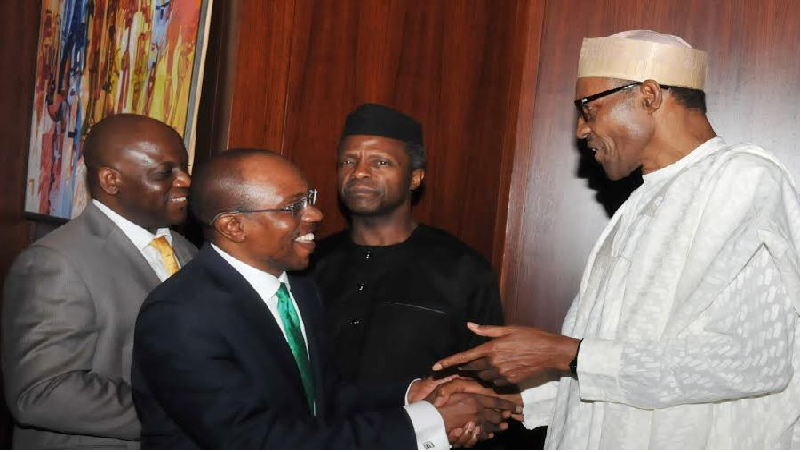
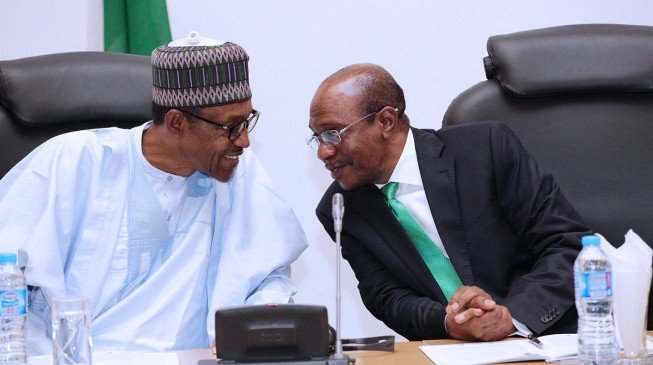
President and CBN boss
The SEC also stated its intention to regulate “any person, (individual or corporate) whose activities involve any aspect of Blockchain-related and virtual digital asset services”. According to the SEC statement, such persons would be mandated to be “registered by the Commission and as such, will be subject to the regulatory guidelines.” Though it is understandable that CBN’s regulatory jurisdiction is different from that of SEC, one would have expected that the CBN would at least acknowledge the SEC statement and then state its own approach to the monetary and currency dimensions of cryptocurrencies. CBN’s outright ban of banking services to an entire crypto industry—only second to the United States—does not demonstrate that the CBN is on the same page with the SEC. Interestingly, both the CBN and the SEC are key stakeholders—at least according to the draft National Blockchain Adoption Strategy—a policy document introduced by the National Information Technology Development Agency (NITDA) in November 2020.
Can the CBN really ban persons transacting in or operating cryptocurrency exchanges from access to banking services? What stakeholders are saying.
Whether the CBN, by virtue of its statutory powers, has the power to order DMBs, NBFIs, and OFIs to deny banking services to a set of persons, entities, or an entire industry where such persons or entities have not been declared illegal or criminal under any law or by any court of competent jurisdiction in Nigeria. Senator Ihenyen does not think so. According to him, “[CBN] can only regulate how banking services could be offered to these persons or entities, applying KYC/AML regulations. Total ban, unlike its January 2017 letter, appears to be rather arbitrary and lazy—an approach that I consider inconsistent with the CBN’s typically well-considered approach to issues.”
Regulation vs Strangulation: The way Forward
There is no doubt that regulation is vital. But as the SiBAN President, Senator Ihenyen, puts it, “…. the question is why should there be regulation? What kind of regulation? When should regulation come? How should regulation be? Where should it apply? [and] Who should it apply to?”
When it comes to disruptive innovations such as crypto technology for example a number of these questions remain largely unanswered by regulators. And when innovators—ever inspired to innovate and disrupt—ask questions or question why what is what and that is that, some of these “regulators remind you that they hold the knife and the yam.” This is a self-defeating approach to regulation. Consequently, opportunities are lost.
Recommendations on best approaches to adopt
In making recommendations, I recall the enriching engagement I had with some members of SiBAN on its virtual platform about the importance of what was described as “developmental regulation”, in contrast to restrictive regulation.
First, regulators must invest in blockchain & cryptocurrency education. This has become very necessary in an increasingly decentralized age. Chris Ani, founder of Digital Abundance Academy (DABA), observes that “the biggest tool of regulation is education not some sort of hammer.” When there is consumer and investment education, enforcements increasingly become lean and less tedious. “A new approach, informed by the desire to learn, unlearn, and relearn should be adopted by policymakers and regulators”, says Senator Ihenyen.
Second, there must be regulatory clarity. How the SEC, for instance, intends to regulate “any person … whose activities involve any aspect of Blockchain-related and virtual digital asset services”, as contained in its recent statement on digital assets remains a puzzle to be solved. I submit that the statement is vague and believe that when the eventual regulation eventually drops, this would be clearer.
Third, regulators must shun restrictive policies that may end up inhibiting the growth of an emerging or nascent industry. It must approach the industry like a farmer, not a rat killer. Pest control (such as consumer protection and investment safety) should not and cannot be enough reason to kill the crops (innovation). It is a failure of regulation. Regulation has moved past that.
Lastly, self-regulation should be encouraged in nascent industries, such as the blockchain & crypto industry. Referring to his remarks on self-regulation at the Off Charts Global Conference organized by Binance recently, Senator Ihenyen noted that self-regulation is an important first step to regulation that regulators, especially in developing countries with relatively lean public purses, must learn to integrate into their regulatory frameworks. Through self-regulation, industry players may adopt industry code of conduct, standards, and practices that ensure consumer protection and investor safety in the industry. It is not also out of place for regulators to support these self-regulatory bodies, ensuring that they are helping to grow and sanitize the nascent industry pending full regulation. This also avoids outright bans or zero regulation, what I consider two of the most risky and uncertain state a regulator should put any industry in.
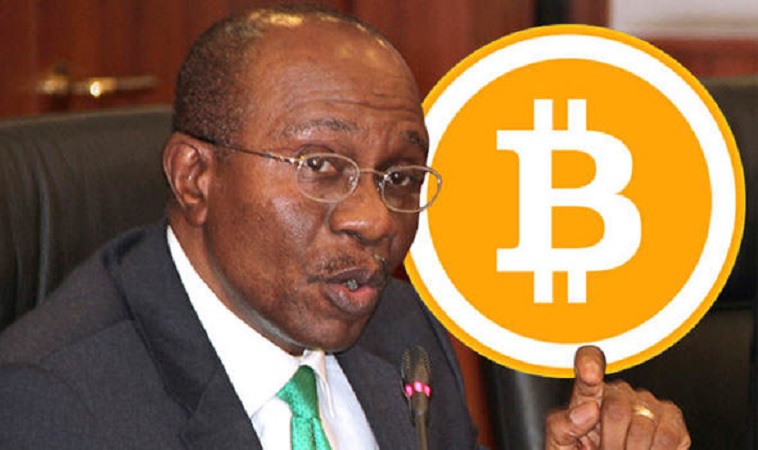
Nigeria has banned crypto from its banking systems
Conclusion
Essentially, technology cannot be regulated, but the rights and liabilities of the users can. Blockchain or cryptocurrency cannot be stopped. Regulators must avoid fighting and resisting innovation. Also, they must avoid discriminating against such innovations or innovators. Rather, regulators should focus on the actors and their acts in the application of these innovative technologies. Regulators should consult widely with industry stakeholders and imbibe and adopt developmental regulation. NITDA does this very well, focusing on stimulating, supporting, and guiding the adoption of a thing rather than introducing premature restrictions that often result in stunted growth early on. If regulators do these, they would engender innovations and open more windows of opportunity for the people.