DD
MM
YYYY

PAGES

DD
MM
YYYY

spot_img

PAGES

Home Blog Page 5909

Awarded and Proposed Infrastructure for 3 Years Completion in Osun State

0

During the times of Ogbeni Rauf Aregbesola as the Governor of the state, infrastructural development was prioritised for rapid socioeconomic development in all the political zones. In 2018, Governor Gboyega Isiaka Oyetola, after serving under Ogbeni Rauf Aregbesola as the Chief of Staff, vowed to continue the infrastructural drive of his former leader. With this promise, our analyst notes that Governor Oyetola is expected to walk his talk.

This informs analysis of the awarded and proposed projects for completion within 3 years. “The project prioritization exercise threw up a wish list of 524 projects,” the State Government said in its Infrastructure Plan for 2019 to 2021. A document from the State Bureau of Public Procurement shows that a number of projects, especially the construction of fire service stations in some towns and cities, were awarded between March and November 2018.

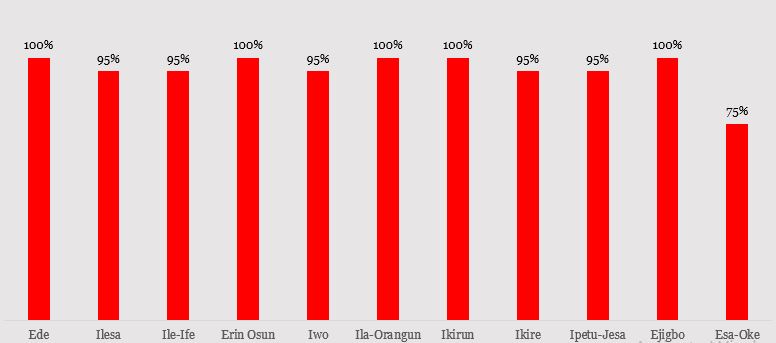
From the two documents, our analyst mined and analysed 162 projects awarded and proposed between 2018 and 2019. Majority of the fire service stations are expected to be completed in 2021. Some have been completed while some are at between 75% and 95% completion rate.

Road constitutes more than half of awarded and proposed infrastructure

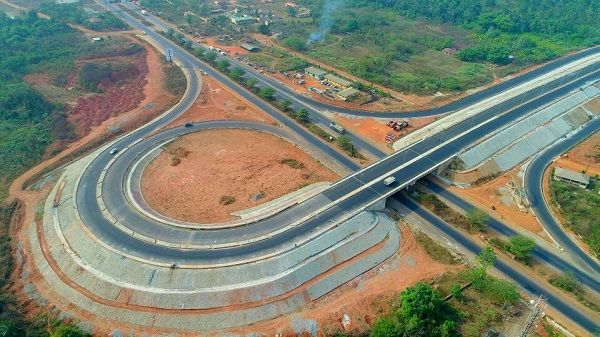
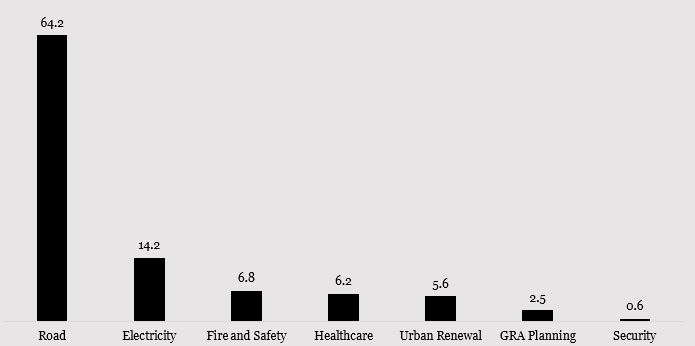
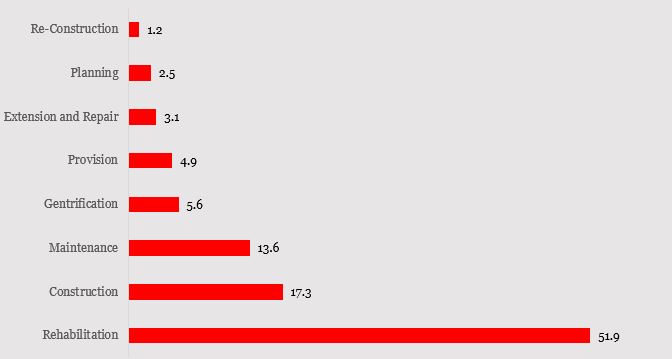
Examination of the infrastructure classifications and core solutions indicates strong alignment. With this, our analyst notes that it could be concluded that the assessment carried out by the state government reflects in what it has awarded and proposed to do within the period. Out of 162 projects [tangible infrastructure] found by our analyst 104 were road projects. More than 73% of these projects are rehabilitations. Fire and safety projects are 11. All the fire and safety projects are proposed as construction. One security project proposed would be done within rehabilitation solution category.

Out of the 23 electricity projects, 30.7% would be done within provision category, purchasing facilities and installation. Of the same electricity projects, 21.7% would be done through rehabilitation and, extension and repair. Our analyst also discovered that the state government would be mapping some areas as Government Reservation Areas in select towns and cities. The current government also intends to continue urban renewal projects of the last administration. According to one of the documents used by our analyst, urban renewal projects are at gentrification stage. Gentrification is a process of changing the character of a neighborhood through the influx of more affluent residents and businesses.

Our check indicates that Governor Oyetola presented N152.7 billion budget, tagged: ‘Budget of Hope’ in 2019, was lower than the N179.2billion budgeted for 2018. To fulfill his promise of continuing with the previous administration, infrastructure development got a big chunk of allocation.

In 2020, a national newspaper reported that monarchs in Ede Federal Constituency commended the State Governor, for spreading infrastructural development across the state. The Ogiyan of Ejigbo Oba Omowonuola Oyesosin and the Timi of Ede, Oba Munirudeen Lawal gave the commendation when Governor Oyetola was inaugurating the rehabilitated 20km Ejigbo-Ara-Ojo-Ede road; 2.1km Ede township roads; and flagged off 3.8km Ejigbo township roads. Oba Omowonuola described the governor’s infrastructural interventions as non-discriminatory.

“I have never seen a Governor like you. You have done well for us. You have fixed one of the roads giving us a headache. This road had become a death trap before your intervention. During the raining season, some portions of the road looked like fish ponds,” he said.

Also, Timi of Ede, Oba Munirudeen Adesola Lawal, thanked Oyetola for all he has been doing in the State and especially for strengthening the fortune of the town. Timi said: “The entirety of Ede has sent me to thank you for this great favour that we have received from you. We wish you peace in your government, strength and good health to govern us on in continuum because we desire to see more good works

Exhibit 1: Infrastructure Classification [percent]
Source: Osun State Projects Awarded, 2018; Osun State Infrastructure Plan, 2019; Infoprations Analysis, 2021

Exhibit 2: Core Solutions on the Infrastructure [percent]
Source: Osun State Projects Awarded, 2018; Osun State Infrastructure Plan, 2019; Infoprations Analysis, 2021

Revisiting Fire Incident Management Strategy

Meanwhile, the state government needs to revisit its strategy on fire incident management.  Several reports have indicated that the state is one of the states in the western region where fire incidents occurred most between 2019 and 2020. During this period, Osogbo, Ile-Ife, Ilesa, Modakeke and Ede had more fire incidents than other towns and cities, according to a number of newspapers’ reports. Before this period, in 2018, valuables worth N1.61bn were consumed by fires with 13 lives lost. The losses were N1.54bn and three deaths in 2019.

Gas-related activity, electrical energy and textile-related material have largely been adduced as causes of fire incidents in Osogbo. The newly procured state-of-the-art firefighting trucks donated by the Federal Government should be deployed to the critical areas. Constant training, retraining and upskilling of personnel of the fire service agency should be pursued vigorously by leveraging the location of the Federal Fire Service Training School for the South West Zone, which was relocated from Lagos state to the state in 2019.

With the award of the new fire service stations, the state government is ready to end incessant fire incidents. However, the number of fire fighters needs to be increased. Competent hands need to be trained and added to the existing workforce in the agency.

Exhibit 3: Location of Proposed Fire Service Station and Completion Status
Source: Osun State Bureau of Public Procurement Agency, 2018-2019; Infoprations Analysis, 2021

Develop Your Investing Strategy At Tekedia Mini-MBA

0

A few years ago, I was in Awka as a guest of Nnamdi Azikiwe University. During that period, I met His Imperial Majesty, Ezeuzu of Awka, and we discussed many important things about tradition and the Igbo Nation. After meeting the Vice Chancellor and the acada people, I got into Onitsha to connect with my base – OMATA traders.

I asked them what the problem was – why men who built wealth, but a few years post retirement, suddenly became penniless. They said they usually do not know when the money is running out or what to do when the money is coming in. I spoke with experts and developed a program for them.

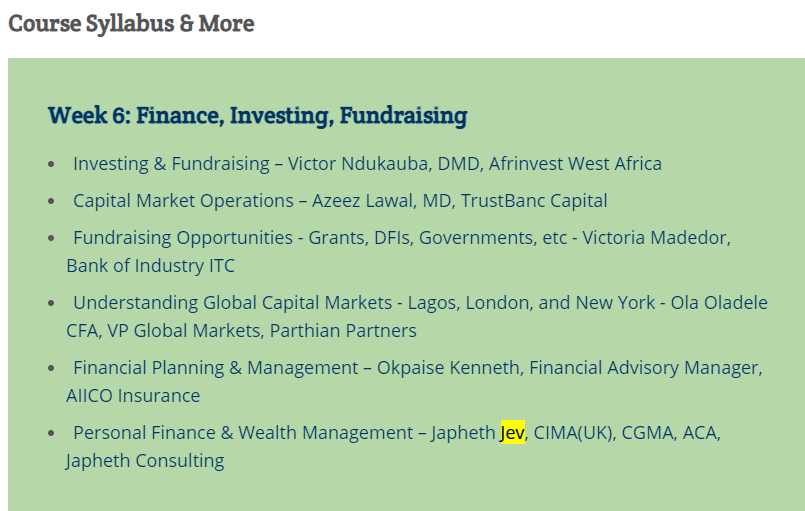
That program later became a course in Tekedia Mini-MBA called “Personal Finance & Wealth Management “ by Japheth Jev, ACMA, CGMA, ACA,. As one of the traders testified in our last program,  confidence has returned to many. Also, as part of the  settlement process in the Igbo Apprenticeship System, boys are encouraged to include financial planning.

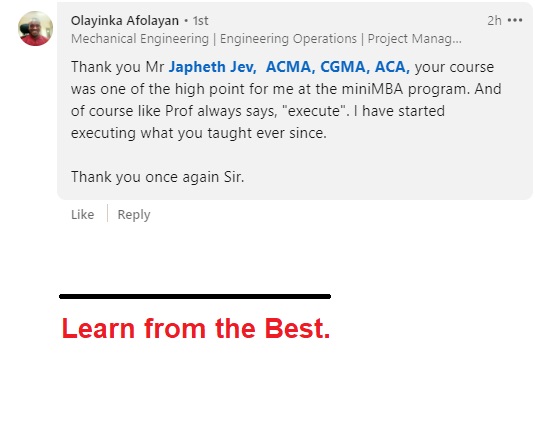
Ladies and Gentlemen,  as Olayinka Afolayan noted,  Tekedia Mini-MBA offers value.  I invite you to register. We have a course on Week 6 titled “Personal Finance & Wealth Management”.

If you take it and EXECUTE it, you will save the future. See our syllabus here

$672m Four-year Contract: Lionel Messi Deserves Every Penny He Earns in Barcelona

0
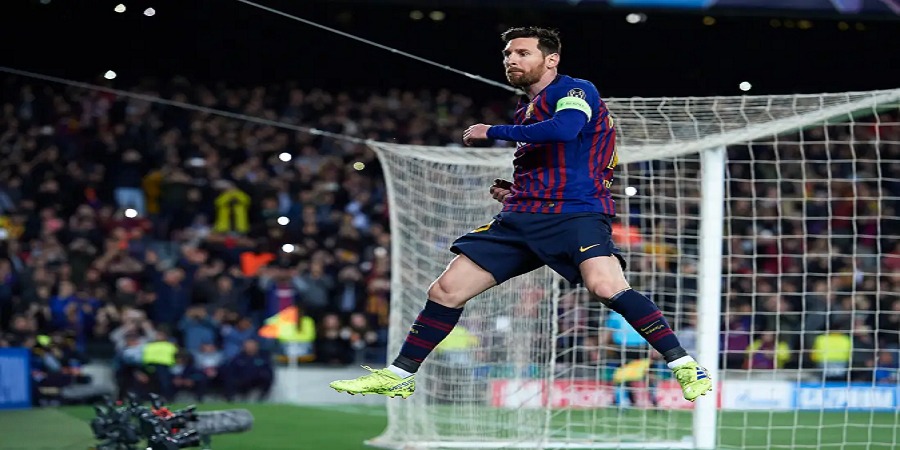
Stars like Messi are the attraction

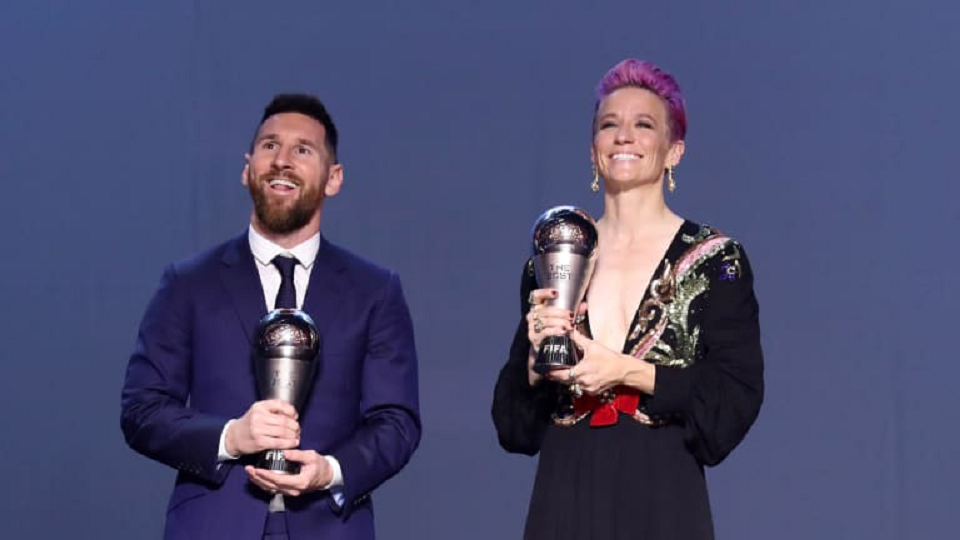
On the eve of Sunday, after the details of Lionel Messi’s contract with FC Barcelona was published by Spanish news outlet El Mundo, it generated mixed reactions, with many saying that the Argentine has ruined Barcelona financially and others that he deserves what he’s got.

The contract details put Messi’s earnings from 2017 at $672 million, making him the highest paid athlete in sports history.

The financial turbulence that the Spanish club is currently going through lent credence to the uproar. COVID-19 pandemic ushered in a new era in the world of football that left every club in a briskly financial status as ticket sales is no longer part of football business. Barcelona, depleted of players, needs money to reinforce the team that has been struggling both in European and domestic competitions. The situation appears to have justified the outcry.

No other player in the world has come close to amassing such wealth in such a short period. Messi’s contract which was signed in November 2017 runs till June 30 this year, saw him earning about $167 million a season. The contract includes bonuses, media rights, a renewal fee of $139 million for accepting the contract and a $94 million loyalty bonus.

It was huge, but the question many are not asking is: does Messi deserve the pay?

Apart from his genius in the field of play that has single handedly placed Barcelona in top flight football, with crazy individual records such as 650 club goals, 260 assists in 755 matches, Messi has contributed more financially to the Catalan side than many know.

Marc Menchen, the director and creator of 2playbook and Ivan Cabeza, an economist and the founding partner of Laudem Partners, spoke to Spanish sports news outlet Marca, on the economic impact of Messi on Barcelona, and it’s revealing.

Cabeza categorized Messi’s impact on the club into three: economic, sporting and emotional, while Menchen asserted that the left-footed wonder boy made between 130 to 200 million euros for Barcelona annually before the pandemic.

“There are things that we cannot quantify exactly but that show us the importance of Messi,” Cabeza explained.

“For example, 36 percent of the trophies won by Barcelona have been won with him. Most commercial or sponsorship contracts have a clause that is determined according to this player. And on an emotional level, the Barcelona-Messi brand is known all over the world; there are tourists who come to the city to see the player, followers on social media…”

The economist believes Messi generates more money for Barcelona than he takes, and therefore deserves what he received in the leaked contract.

“Annually he must generate between 130 million [euros], minimum, and 200 million, maximum.

“Therefore, if you take the proportional part of his salary, bonuses and everything for a season, it doesn’t exceed the amount he receives,” he said.

Menchen noted that apart from the direct revenue, Messi is also generating indirect money that impacts Barcelona’s finances positively, but it is difficult to quantify.

For instance, the club will not receive the same amount if Messi plays in a friendly game or if he doesn’t travel. There is however, a penalty clause if the Argentine astro doesn’t travel for a supposed game or sponsorship events because his presence is largely what people want.

Apart from sponsored games and events, Messi generates money for Barcelona through shirt sales. An estimated eight out of nine shirts sold in the club have Messi’s name on the back, and they account for around 20 million euros yearly.

There is also revenue from ticket sales. Before the pandemic, interest in Barcelona’s match is hugely at Camp Nou. About five to 10 percent of tourists who come to Barcelona are largely interested in watching their home games, mainly because of Messi.

Menchen also pointed out his social media impact. The name “Messi” in the content guarantees maximum traffic.

“The videos of Messi celebrating a goal or anything else ensure great media visibility, whether he plays well or not. It is a difference, for example, with Real Madrid,” he said, adding that he compensated what was paid with what the club generated.

Messi’s impact on Barcelona’s sponsorship deals is also notable. His stay at Barcelona has been largely responsible for the lucrative partnerships, such as with Rakuten and Beko. Even in the face of the pandemic that has drastically plummeted many clubs sponsorship earnings, Barcelona has remained on top. Rakuten renewed for one more season although with a substantial reduction in the emoluments, and Beko is expected to do the same.

Barcelona was declared the richest club in the world, according to Deloitte’s latest Football Money League, despite the club’s revenue falling by 125 million euros to 715.1 million in the 2019-20 season, beating Spanish rivals Real Madrid, largely due to Messi’s impact.

Granted, the club has suffered financial woes, but it has been attributed to mismanagement by the board.

“The problem has been the mistakes in economic management made in recent years, the millions spent on signings and some renewals,” Victor Font, Barcelona presidential candidate said.

However, Barcelona has responded to the leak by saying it will take legal action against El Mundo, as it is against ethics to make a player’s contract public.

Uber’s Drizly Acquisition Signals It’s Shifting Focus from Ride-hailing

0

Uber Technologies, Inc. and Drizly announced that they have reached an agreement for Uber to acquire Drizly for approximately $1.1 billion in stock and cash deal expected to close in the first half of the year. The deal augments other big moves made by the ride-hailing company in the food and drink market.

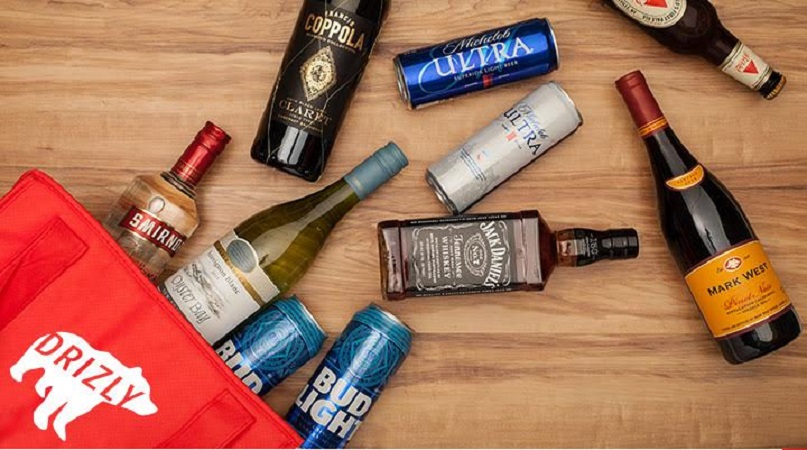
Drizly is the leading on-demand alcohol marketplace in the United States, available and designed to be fully compliant with local regulations in more than 1,400 cities across a majority of US states. Drizly works with thousands of local merchants to provide consumers with an incredible selection of beer, wine, and spirits with competitive, transparent pricing.

Last year, Uber was close to acquiring GrubHub, in an attempt to widen its share in the food market. COVID-19 ushered in an unprecedented crisis, restricting businesses and nearly totally collapsing the ride-hailing aspect of Uber’s business, forcing the California-based company to reevaluate its business play.

Now the company seems to be shifting focus to food and drinks delivery, widening its market base through acquisition and partnership with vendor companies.

Last year, Uber sold off its autonomous vehicle and flying taxi divisions, signaling the company’s diminishing interest in taxis and focus on more profitable business. Uber also purchased Postmates last year for $2.5 billion as part of its push to focus more on food and delivery.

The company has also recently started making moves into on-demand grocery delivery, beginning in Latin America and Canada. Last year, as the pandemic took a toll on its ride-hailing business, Uber introduced prescription delivery to its Uber Health service, an attempt geared toward keeping its business afloat.

These moves become necessary due to its model of business and how vulnerable it has become to events of recent times.

Apart from the worries emanating from COVID-19 strains, Uber has had governments to contend with. Last year, the company narrowly escaped a ban in California, its largest market, using prop. 22, a gig worker ballot it used on Nov. 3 2020 to overcome California State’s move to shut its operation down for classifying drivers as independent contractors against the state’s law.

With these events, Uber’s acquisition of Drizly signals a shift from what the company has been known for – ride-hailing, and points to a new direction that will not only eliminate scrutiny from the authorities, but also defy growth obstacles, such as presented by human to human interaction restrictions induced by the pandemic.

The statement from the company said it will collaborate with Drizly in many ways for growth, using technology to up the ante.

After the completion of the deal, Drizly will become a wholly owned subsidiary of Uber. Drizly’s marketplace will eventually be integrated with the UberEats app, while it is run as a standalone company.

While Drizly plans to run as a standalone, the companies are teaming up to use their expertise in their respective fields to foster growth.

Drizly plans to innovate and expand independently in its fast-growing and competitive sector, while also gaining access to the advanced mobile marketplace technologies of the world’s largest food delivery and ridesharing platform.

Merchants on Drizly will be able to benefit from Uber’s best-in-class routing technology and significant consumer base. Delivery drivers will have even more ways to earn. And Uber’s rewards and subscription programs will be able to deliver even greater value to consumers with new benefits and perks on Drizly, the company said.

“Wherever you want to go and whatever you need to get, our goal at Uber is to make people’s lives a little bit easier. That’s why we’ve been branching into new categories like groceries, prescriptions and, now, alcohol. Cory and his amazing team have built Drizly into an incredible success story, profitably growing gross bookings more than 300 percent year-over-year. By bringing Drizly into the Uber family, we can accelerate that trajectory by exposing Drizly to the Uber audience and expanding its geographic presence into our global footprint in the years ahead,” said Uber CEO Dara Khosrowshahi.

Uber currently anticipates that more than 90 percent of the consideration to be paid to the Drizly stockholders in the transaction will consist of shares of Uber common stock, with the balance to be paid in cash.

With this branching into new categories like groceries, prescriptions and, now, alcohol, Uber is gradually creating an exit from ridesharing, a pandemic-proof play that will protect the company from the kinds of losses it incurred last year.

The Magic of Google’s $56.9 Billion Q4 2020 Revenue

1
CEO of Google

This is simply a great performance: Google’s parent company, Alphabet, made a huge statement for the digital economy, hitting $56.9 billion revenue for its 2020 fourth quarter. Advertising drove it with YouTube and Google Search the blood and spinal cord of the Google central nervous system of generating alpha.

Of course, what is also missing there is that Google devalued many ad clicks for publishers. If you were paid $1 for 1,000 views on Dec 31 2019, by Jan 1 2020, Google required you hit 2,000 views. That power and capacity to change the “ad currency” is the reason why Google could hit these numbers. 

I am nearly confident that Google did not serve more adverts on absolute volume. Rather, it cut the hands of its partners, especially publishers because of its superior positioning in the market as the super aggregator.

Yet, it is all free market – and Google should be celebrated for putting itself in this position to win.

Google rode a surge in online holiday spending to record revenue in the fourth quarter, even though it disclosed for the first time continued losses in its closely watched cloud division.

The internet titan’s earnings, released Tuesday afternoon, reflected a continuing recovery in global ad spending that took a hit in early 2020 when people paused travel plans and other purchases in response to the coronavirus pandemic.

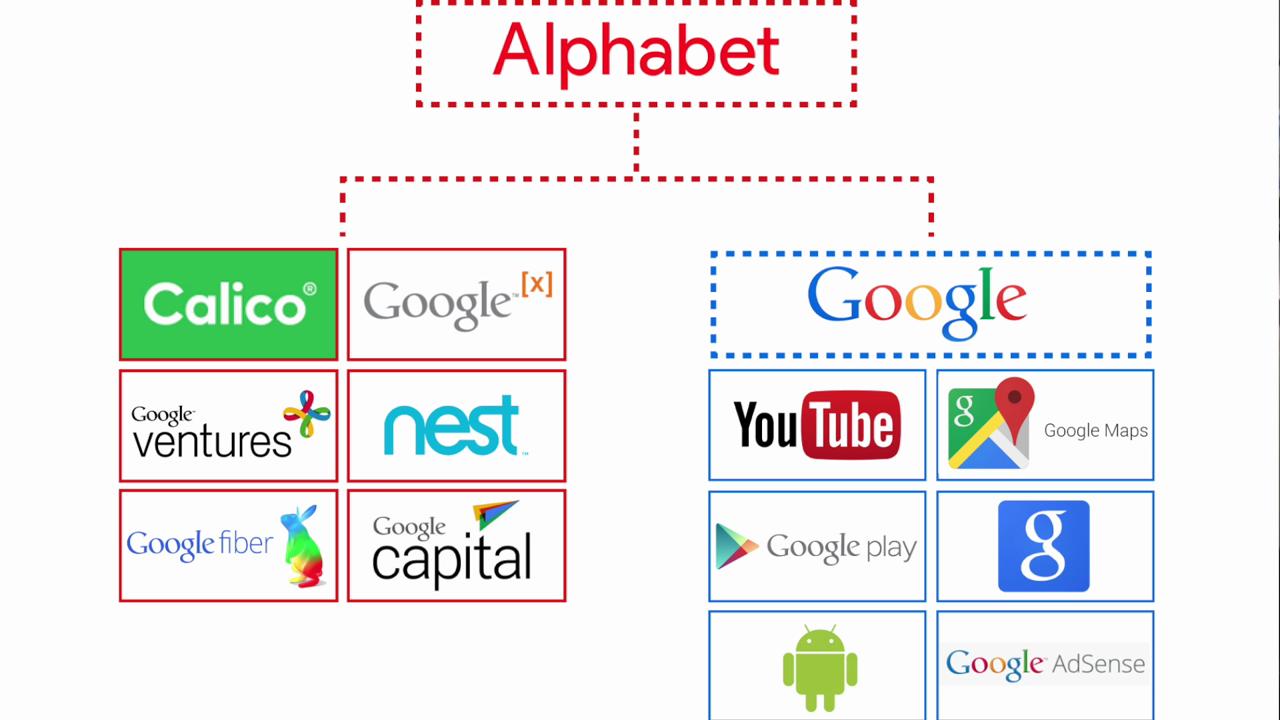
Google parent Alphabet Inc. posted a record $56.9 billion revenue, up from $43.2 billion a year ago. The company’s advertising units pulled in $46.2 billion, up nearly 22% from a year earlier. Analysts had forecast $52.7 billion in revenue, including $42.3 billion from advertising, according to FactSet.

Alphabet’s profit also rose, to $15.7 billion, from $9.3 billion a year ago. Analysts had expected $11.9 billion.

Ruth Porat, Google’s financial chief, said the company’s search and YouTube units drove its performance in the quarter. “It was a great end to a challenging year,” she said.