DD
MM
YYYY

PAGES

DD
MM
YYYY

spot_img

PAGES

Home Blog Page 5914

SpaceX Is Building the Next-Generation Satellite Internet

0

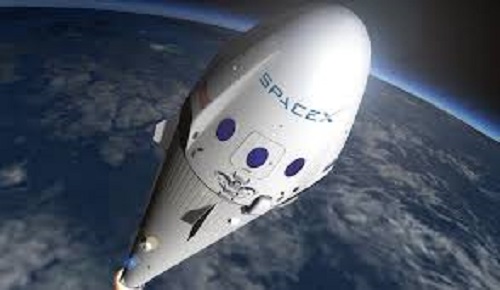
Elon Musk’s quest for a global fast internet is taking a new step. SpaceX is readying to begin production of the next-generation of its Starlink internet satellites, to add to more than its 1,000 existing first-generation satellites in orbit, CNBC reported.

An opening for a lead software engineer for Starlink hardware testing, to “define and lead [the] test software roadmap for Starlink v1 and v2.0 production” was posted on the company’s career’s page on Friday.

Musk’s rocket internet has seen an upsurge and relative success recently. In early January, SpaceX Falcon 9 rocket sent 60 more of its Starlink satellite into orbit, putting its satellite constellation at 180 satellites, and making SpaceX the company with the highest number of internet satellites in orbit.

Apart from the satellite deployment, SpaceX also has successfully landed for the 48th time, the first stage of its rocket, enabling it to be reused for a future launch.

The efforts are paying off. Late last year, SpaceX presented the Federal Communications Communication (FCC) Starlink internet performance tests, revealing download speed of about 102Mbps to 103Mbps, with upload speeds of 40.5Mbps to nearly 42Mbps, with a latency of 18 milliseconds to 19 milliseconds.

SpaceX plans to shoot more 4,425 satellites into orbit by 2024, after it has successfully launched 11, 943 satellites since it was approved by FCC in 2018. The company said in August it’s building 120 satellites per month, a production quota the company told the Commission they’re increasing launches to meet.

The v0.9 and v1.0 Starlink is the latest of its project with 1,023 deployed satellites. The new generation v1.5 and v2.0 satellites are targeted at building interconnected internet networks with thousands of satellites, to deliver high-speed internet to consumers anywhere on the planet.

“Once these satellites reach their target position, we will be able to roll out a fairly wide public beta in the northern US and hopefully southern Canada. Other countries to follow as soon as we receive regulatory approval,” Musk said in a tweet in November.

SpaceX is creating a new technology named “space lasers” by Musk, an intersatellite link which would allow the satellites to create data connections to each other – rather than individually connect to points on the ground.

Intersatellite links will also help improve the Starlink system by reducing the number of ground-based stations needed to operate globally, as well as decrease the network’s latency and increase its speed, the CNBC report said.

With selected countries that include the UK, SpaceX began a public beta program of Starlink in October. The service package is priced at $99 a month, in addition to $499 upfront cost to order the Starlink kit. The kit includes a user terminal and Wi-Fi router to connect to the satellites.

However, there have been some challenges. A public outcry went out from astronomers in April 2020 that the numerous spacecraft were appearing as bright streaks across images taken by telescopes. To fix the complaint, SpaceX started adding “sun visors” to its Starlink satellites in June.

In addition to this, SpaceX is on a collision course with Amazon’s project Kuiper, a similar satellite internet initiative of the e-commerce founder Jeff Bezos.

SpaceX

Musk had on Tuesday, reiterated his appeal to the FCC to allow SpaceX to move some of its Starlink satellites to lower altitude than originally planned, arguing that “it does not serve the public to hamstring Starlink today for an Amazon satellite system that is at best several years away from operation.”

Amazon’s project Kuiper plans to launch 3,236 internet satellites into low Earth orbit in a striking competition with Starlink.

Musk believes the project is far from being operational since Amazon is yet to begin producing or launching satellites, and thus, SpaceX should be allowed to alter the original altitude plan for faster internet service.

In a response to Musk’s claim, Amazon told CNBC that the Kuiper system was designed to avoid interference with Starlink, and Musk’s proposal will not only smother competition, it will create a dangerous environment for collision in space.

The facts are simple. We designed the Kuiper System to avoid interference with Starlink, and now SpaceX wants to change the design of its system. Those changes not only create a more dangerous environment for collision in space, but they also increase radio interference for customers. Despite what SpaceX posts on Twitter, it is SpaceX’s proposed changes that would hamstring competition among satellite systems. It is clearly in SpaceX’s interest to smother competition in the cradle if they can, but it is certainly not in the public’s interest,” an Amazon spokesperson said.

The faceoff between the two richest men in the world has resulted in a horde of lobbyists from both Amazon and SpaceX going to the FCC, each trying to convince the regulator to do their bidding.

In December, Amazon spoke to the Commission’ chairman Ajit Pai, urging the regulator to limit SpaceX’s satellites to a minimum altitude of 580 kilometers until the FCC “fully evaluates the detailed record on the significant interference concerns” that Starlink’s modification will cause.
The FUGAZ Outperforms!

1

I am certainly biased having worked as a banker in Lagos [Wake up at 5 am, be at work at 6.30am to get systems up before others start coming. Leave work at 10pm. But get paid really well]. Yes, I do think that the most productive professionals in Nigeria are in the banking sector. And they are the most innovative to get out of troubles, fast. After them, you put telecoms who are also showing resilience. Yes, you can argue that the carpenter is working harder, but here, I have used two words – “productive” and “innovative”!

Yes, no matter what the economy has thrown to the banking sector, it has found a way to make money and avoid troubles. But in 2020, I was worried when Covid-19 switched off the nation via lockdowns. I wrote here that we could see an 8% Non-Performing Loans (NPL) ratio in the banking sector. Honestly, I was concerned about a potential avalanche of bad loans.

The number is out: they kept things low at 6.01% [the Central Bank of Nigeria prudential maximum threshold is 5.0%]. That is an achievement because in this business, you look at things in parts of a unit percentage as 0.1% of billions of naira is a huge amount of money.

“The Monetary Policy Committee (MPC), however, noted the marginal increase in the Non-Performing Loans (NPLs) ratio which rose to 6.01% at end-December 2020 from 5.88%at end-November 2020 and above the prudential maximum threshold of 5.0%. While noting that this development is not unexpected under the prevailing circumstances, it urged the Bank to strengthen its macroprudential framework to bring NPLs below the prescribed benchmark,” Central Bank of Nigeria MPC

For the FUGAZ (FBNH, UBA, GT Bank, Access Bank and Zenith Bank) – well done. Sure, there are other banks but those ones are marginal in the real scheme of things.

Update: Yet, looking at things technically, the 6% would have tracked my 8% if not for the regulatory forbearance from CBN: “Nigeria’s NPL ratio of 6% could have been worse than it currently is were it not for the regulatory forbearance granted by the central bank due to the Covid-19 pandemic” notes Nairametrics.

  • Banks were allowed to restructure most of their loans deferring principal repayments for borrowers who faced cash flow challenges due to covid-19.
  • Without the forbearance, the non-performance ratios of the banks could have been worse than the 6%.


(image, Nairametrics, resized for our size)

Making Sure Media Is Used Properly for Nation Building

0

It is assumed that the basic function of the mass media is to disseminate information to enlighten people on things happening around them. Through this enlightenment, mass media can transmit people’s culture and norms to the audience. Mass media is also used for entertainment, and so can be used for relaxation purposes. However, one function of mass media that is unknown to many and can be detrimental if manipulated by the wrong party is its persuasive function.

Mass media is one of the agents of socialization because it is effective in teaching and forming the characters of society members. Socialization is a process, whereby people learn to live in a given society. Through socialization, an individual is taught societal values, beliefs, taboos, accepted behaviors, and norms. It influences people by telling them what to do and what to believe in.

The easiest and fastest way to achieve this is through the mediums of mass media – television, newspaper, magazine, internet, radio, and so on – which reach a large number of the targeted audience within a short while. Hence, mass media does not just enlighten, entertain or transmit culture, it is also meant to influence the behaviors, beliefs, thoughts, and actions of others. This is why it is dangerous when used for negative intentions.

The increase in the rate of social vices has been attributed to peer pressure. Of course, with the arrival of social media, peers from different parts of the world can connect through social media platforms. Today, the world is gradually becoming a small community because people can virtually connect and constantly stay in contact irrespective of their geographical locations. They can organize, through social media, to carry out actions considered illegal by their society. For instance, recently, sex parties were organized in Nigeria through social media platforms. Some of these parties were intercepted by law enforcers but many managed to beat the police. What is more, videos of these parties were uploaded to the internet and made to go viral. This attitude can ginger others to organise their party and maybe they will get away with it. Today, parents do not only have to worry about the friends their children keep physically but also the ones they keep virtually.

Another negative effect of mass media is the radicalization of individuals. When the media constantly reports a problem or threat, it can create an effect that will radicalize the audience later. An example includes overzealous reports on political events, which are unfavorable to the people. By doing this, the media works on the audience psyche and, gradually, prepares them for radicalization. Furthermore, analyzing a movement to portray its benefits could also radicalize people. This is why mass media has indirectly been used to cause public unrest, mob actions, insurgency, assassinations, banditry, and thefts.

Mass media can also affect people’s mental health. It has been reported that mass media, especially social media, is one of the factors that cause anxiety and depression. Research has shown that people, who often visit social media, feel lonely and depressed despite having many virtual “friends”. Virtual friends are said to prevent people from making real-life ones and, since it is only through real-life contacts that humans can relieve stress, having more virtual friends than real-life ones creates loneliness.

Even though mass media has negative effects on individuals, it is still an indispensable tool for human and societal development. However, in the hands of the wrong persons, it becomes the tool for destruction. The major problem here is that it is almost impossible to prevent its use by the wrong persons. Nevertheless, understanding its power will help you to filter what you are exposed to. Hence, so long as you steer clear of any piece of information that will radicalize you or make you commit an offense, you will benefit fully from the mass media.

A New Article Coming At Harvard Business Review On Monday

0

This is the link at Harvard Business Review.

At 9 am ET (United States) on Monday, I will have an article in the Harvard Business Review titled “Is Your Startup Doing Everything It Can to Capture Value?” Please if you can, check it out. Another one – a big one – is also coming. That one is on Igbo Apprenticeship System. The Japanese have Kaizen, there is Confucius of China, Africa has the Apprenticeship System which runs on the ubuntu philosophy.

The study, institutionalization and application of the Apprenticeship System is something I am passionate about. That name “Nwaoha” [child to the community] should mean something in modern Nigeria and we should not allow any child to be left behind, irrespective of background.

FilmoRealty’s Vamp Facilities Intelligence as a Potent Tool in Immersive Facilities Management Practice

0

Our analyst had earlier noted that players and professionals in the Nigerian Facilities Management industry need to embrace the immersive facilities management practice as the pandemic continues. This practice is also encouraged after the pandemic. Practicing IFM, according to our analyst, would enable players and users to co-create and share value without problems and avert the spread of COVID-19.

Leveraging earlier piece on the development of innovative tools by the FilmoRealty, a player in the industry, in this piece our analyst notes that the company’s Vamp Facilities Intelligence should be considered by the players and professionals in addition to the numerous technologies such as Unity 3D and Photon Unity Networking available for IFM practice, virtual reality remains the most appropriated. Vamp Facilities Intelligence has ability to curate, mine and aggregate real time data from client-side to the provider-side. In this video, Lukman Edu, the Chief Executive Officer of the company explains effectiveness of the technology.

http://https://vimeo.com/400541543