DD
MM
YYYY

PAGES

DD
MM
YYYY

spot_img

PAGES

Home Blog Page 5923

Future Gets Bleaker for Oil, and Brighter for Cleaner energy

0

As the world increasingly turns away from fossil fuel, the search for cleaner energy is widening in scope and thus leaves the conventional energy industry with a dire future to reckon with. The evolution of electric cars that is gradually becoming a global race kicked off a movement that supports the campaign of environmentalists pushing to implement the Paris climate Accord.

Every day, reports of companies joining the trend of electric vehicle (EV) production hit the news. Also, off-grid electricity generating companies are creating emerging markets globally, all with the goal of eliminating greenhouse-gas emissions.

The goal has given birth to “climate tech”, a broad set of sectors which tackle the challenge of decarbonizing the global economy, with the aim of reaching net zero emissions before 2050. PwC noted in its State of Climate Tech 2020 report that the scope is getting broader.

“It now encompasses low-to-negative carbon approaches to cut key sectoral sources of emissions across energy, built environment, mobility, heavy industry, and food and land use; plus cross-cutting areas, such as carbon capture and storage, or enabling better carbon management,” the report said.
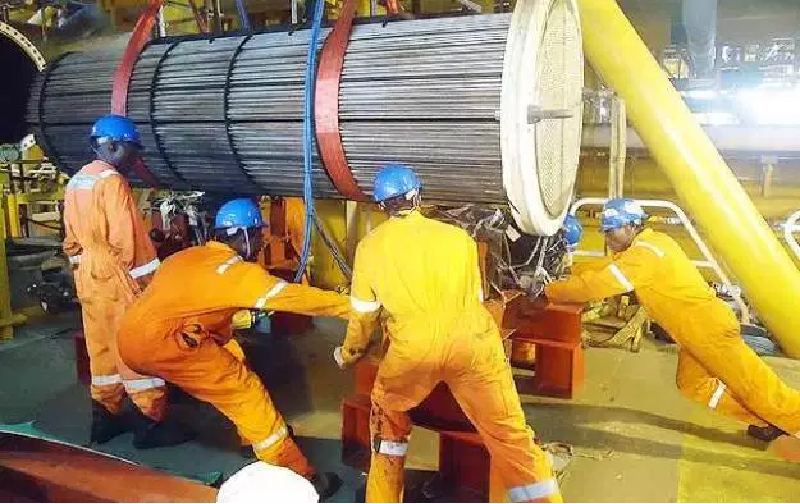
Oil workers

Each success they score marks a significant shift from the old energy system to cleaner energy, and it is good news to the cleaner energy industry as much as it is bad news for the oil industry.

Tesla, a leader in the EV market saw its shares surge after Democrats, who are pro cleaner energy, won the Georgia senatorial election which gives them the majority to control the US Congress.

As the US rejoins the Paris Accord following Joe Biden’s presidential election win, there has been an upsurge in environmental friendly energy emotionalism. Biden backed up his executive order that returned the US to the climate agreement with an order that stops companies from drilling oil and gas on federal lands, halts construction of the Keystone XL pipeline, and directs agencies to review and reverse more than 100 Trump actions on the environment.

Recently, the electric vehicle and solar energy industries have witnessed a surge in investment interest, while the oil industry, immobilized by the outbreak of COVID-19 which crippled travel and industrial activities, saw a decline that reduce global emissions to about 34 billion tonnes a year. Encouraged by this development, investors who are concerned about environment are now pumping money into clean energy startups and companies, with the goal of widening the progress.

Breakthrough Energy Ventures (BEV), the clean-tech fund backed by billionaires including Bill Gates, Jeff Bezos and Michael Bloomberg, raised $1 billion to help start-ups capable of cutting global emissions. BEV had earlier raised $1 billion that it used to back 45 emerging companies. Now the venture capital fund intends to support between 40 and 50 new energy businesses.

BEV used its first $1 billion to support companies working on complex technologies such as clean cobalt and lithium mining, electric aviation, hydropower turbines and emissions-free steel.

The result of these investments has underscored partly, the push behind the interest of investors in cleaner energy. For instance, QuantumScape, maker of next-generation lithium-ion batteries, listed on the New York Stock Exchange in September has leaped in growth. Although its batteries won’t be available before 2025, its market capitalization is currently close to $20 billion, up from $3 billion.
But it is just one among many new energy startups that have emerged from the intimidating shadow of traditional energy to challenge the status quo, and now are disrupting the energy industry.

PwC’s report noted that investment in cleaner energy has soared over the past two years. It said that capital money flowing into start-ups that can help cut emissions hit $16 billion in 2019, up from $400 million in 2013.

While these gains cut across all cleaner energy sectors, electric vehicles and solar energy stand out. The electric vehicle market is projected to hit $802.81 billion by 2027, while solar energy is expected to reach $223.3 billion in 2026.

International Energy Agency (IEA)’s 2020 report indicates that the increase in emerging markets for solar electricity has made it 20-50% cheaper than it estimated in its 2019 outlook. The report said the cost capital for solar is much lower at 2.6-5.0% in Europe and the US, 4,4-5.5% in China and 8.8-10.0% in India.

As many countries join the trend and make policies that enable infrastructure that will foster solar growth, the cost is seen to be winding down below that of grid electricity. The IEA said that the new utility-scale solar projects now cost $30-60/MWh in Europe and the US and just $20-40/MWh in China and India, where revenue support mechanisms such as guaranteed prices are in place. The report projected electricity generation from non-hydro renewables in 2040, reaching 12,872 terawatt hours (TWh), up from 2,873TWh last year.

There is an ongoing race between North America, Asia and Europe to lead the EV market.

The AMR said Asia-pacific and Europe had a combined 78% share in 2019, with the former accounting for 52.3% share. North America and Asia are expected to see improved Compound Annual Growth Rates (CAGRs) of 27.5% and 25.3% respectively. The cumulative of these segments was 40.1% in 2019, and it is expected to reach 51.0% in 2027.

Although there is threatening progress in the cleaner energy industry, the gap between the old and new energies is still wide, and it will take years before it could be bridged. But the time left isn’t for the oil industry to bounce back; it’s more like giving the companies therein the opportunity to switch to cleaner energy.

As the oil industry foresees a bleak future through the evolution, many of its companies are beginning to create exit routes.

Shell is exploring ways to reduce spending on oil and gas production by 30% to 40% for its upstream sector, its largest division. For the downstream sector, the company is cutting 45,000 service stations, the biggest in the world, from its network. This means limiting its oil production to a few key places that include Nigeria, Gulf of Mexico and the North Sea.

British Petroleum (BP), Chevron and Eni had already taken similar steps, cutting jobs and shutting down operations to build new low-carbon businesses in the next decade in preparation for the era of cleaner energy.

Saudi Aramco is also focusing on pumping cleaner fuel. Analysts and sources said the company is working on cutting greenhouse gas emissions to have a better chance to compete as environmental concerns push governments to tighten carbon regulations.

With pro-cleaner energy lawmakers and president in control of the Congress and White House, the United States only needs a legislative backing to seal the fate of the oil industry.


Challenges of Weak Students in Nigeria

0

No child is a dullard. This is one aspect of learning many people fail to acknowledge. That a student encounters challenges with learning does not mean he cannot learn under the right condition. These students are branded as weak because they do not pick up as fast as their peers. However, if they are placed in the right environment, they will excel like their peers, who are branded as “brilliant” or “intelligent”. The problem these students face in countries such as Nigeria is that the environment is unfavourable for them.

Researchers have discovered that children learn things differently. Some of them prefer learning new things by seeing and observing them (visual learners). Some prefer learning by listening (auditory learners) while others learn easily by practicing (kinaesthetic learners). In Nigeria, the first two types of learners are favoured by the education system. They are the types that are seen as brilliant and intelligent. Unfortunately, the third type of learners is left to fend for themselves because the system has little or no provision for them. Or rather, the provisions for them only exist in books.

Challenges of Kinaesthetic Learners in Nigeria

As stated above, the problems encountered by students that prefer learning through touching and moving things are caused by the neglect of the system. These children have been abandoned to face their problems by themselves. Those lucky enough to have wealthy educated parents are sent to schools that have facilities, which accommodate their learning preferences. Nevertheless, many of them are dumped in schools, where they float through without achieving much academically.

Well, the following are the challenges faced by learners that fall under this category:

Stigma: These learners have already been called weak, challenged, underachievers, and other derogatory names. In Nigeria, people are quick to call them “olodo” and “iti” as if it was their fault they couldn’t meet up to expectations. These learners begin, at a very young age, to see themselves as unintelligent without understanding why they were not like others. Some may become aggressive while others shy away from the public. They struggle and make efforts to follow class lessons just to show they are not abnormal but they end up at the bottom of the class grading. This discourages them and causes them to hate school. This can explain why we have school dropouts, especially among males.

Unsuitable Curriculum: Nigerian school curriculum favours visual and auditory learners more than it does kinaesthetic learners. The curriculum comprises fewer academic activities that require practical when compared to those that entail seeing pictures and listening to teachers. Of course, since things taught in schools are supposed to be materials within the society, students are expected to see them around their environments. Nevertheless, there are many abstract topics as a result of the unavailability of the concepts within the community or the students’ reach. Since kinaesthetic learners can only understand what their teachers taught and be able to store them in their memories by seeing, touching, and using objects, they will find it difficult to learn if teachers fail to provide those objects for practical use.

Unsuitable Teaching Methods: To be honest, it is uneasy for teachers with a class of about twenty or more students to use different teaching methods for a lesson to meet the diversity of their students. Teachers with kinaesthetic students face challenges because they need to keep them engaged and still meet the academic needs of other students. Kinaesthetic learners are usually restless and find it difficult to sit still throughout a lesson. Their interest spans are so short that if the teacher fails to hold their attention, they disrupt the class. This means the teacher has to devise means of keeping students like this busy while lessons go on. However, many teachers are not willing to do so. They continue with the teaching methods that favour the visual and auditory learners and punish kinaesthetic learners for “making noise”, “leaving the class often”, “pinching his neighbour”, “tearing books”, “failing simple question”, and other reasons that show the students want to “do something”. This can explain why students that are branded “stubborn”, “reckless”, “noisy”, “boisterous”, “destructive”, and so on are said to be intelligent yet they perform poorly academically.

Exam Anxiety: It might seem as if kinaesthetic learners are unafraid of anything. Their boisterous nature gives them the aura of the brave. But what people don’t know is that they are afraid of examinations. Unknown to many, these learners fear the grades they will make by the end of their exams. They believe they are not intelligent and so can never pass well. If they can have their ways, exams will be abolished. Note that these children are not afraid of the tasks in the tests; they fear they don’t know how to go about those tasks. They have either forgotten what they were taught or did not even know when they were taught. So, when they stare at their question papers and cannot come up with good answers, they supply the examiner with whatever their minds tell them and run out of the class. Of course, the Nigerian system of examination, even for primary school pupils, favours only visual and auditory learners.

There are so many kinaesthetic learners in Nigeria but they have been forced to study like the visual and the auditory learners. These children are suffering. They are passing through a lot of trauma, especially because they are regarded as failures. These children are the future innovators and inventors Nigeria has but our schools are frustrating them. All these children need are schools that will create rooms for them to bring out their skills. Special schools can be established for students with this learning preference so they can become the next Elon Musk and Mark Zuckerberg.

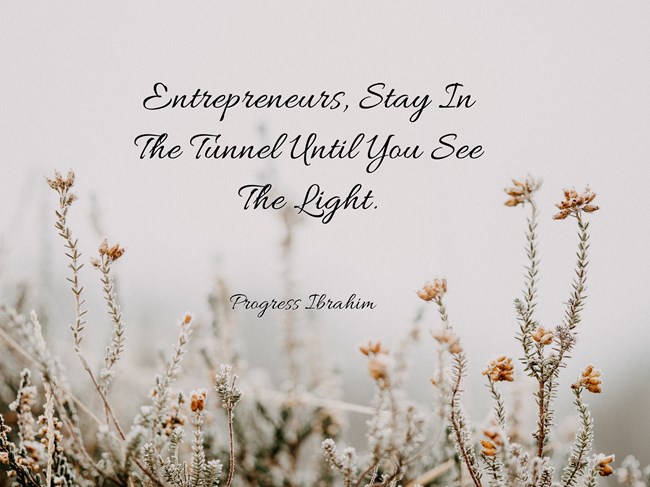
Entrepreneurs, Stay In the Tunnel To See The Light.

0

How to stay in the tunnel until you see the light.

That is the story of every truly successful man.

Do you know that is one of the most important mindsets to have if you want to be at the top in anything?

You must start doing this from today, because you will know how to do it in this short article.

I explained this to entrepreneurs about how businesses are built during a recent event.

In life and business, we must understand that there are two stages that are very important…

The first  stage leads to the second, and without the first the second is not possible…

In mathematics, they are called necessary and sufficient conditions.

That was how I explained how entrepreneurs should see business in the event I attended lately.

You see, the first stage is the tunnel…and the second stage is the light…

  • The Tunnel Stage (Necessary Condition Stage)
  • The Light Stage (Sufficient Condition Stage)

The tunnel is a time when you need to be patient because it seems as though you may never succeed.

So, what you need at this stage is patience, but patience is not enough…

You need to remain focused on the goal and continue to work towards it.

The light stage is when you start seeing elements of success in whatever you are doing…

At this stage, people start saying that your success is overnight…

But, they never saw the overtime tunnel that you went through…

But, you need the tunnel to get to the light; else you may never see the light…

This week I see you drawing closer to the light.

Growth And Scaling B2C Startups In Africa

2

Microsoft is my definition of what a great business should look like; well diversified product portfolio (Azure, Windows, Office Suite, Xbox etc.), organically grown (had to IPO due to regulatory hurdles), operating system strategy (Windows OS and Office 365), and primarily B2B business.

My reasoning when it comes to business is usually very simple; I’m more drawn to selling a US$3,000 product to 2,000 businesses and making US$6,000,000 as against selling a $6 product to a million people to generate the same amount.

Although B2B is my personal favorite, when it comes to big markets and big businesses, B2C businesses take the central stage. Seven out of the 10 largest businesses by market capitalization today operate primarily in the B2C market segment. B2C makes a lot of sense here considering that having a large number of people to push a product to doesn’t just create an opportunity to sell and make huge amounts based on economies of scale, but an opportunity to up sell and cross sell additional products and offerings.

Some of the largest businesses in Africa; Naspers, Vodafone, Safaricom, Dangote group and the likes are largely B2C businesses. My personal ideology might still be valid, but building B2C businesses has consistently proven to be one of the easiest ways to build large and successful enterprises.

In Nigeria, some of our largest businesses operate primarily in the B2C market segment, and unlike technology businesses, most successful businesses in this segment tend to offer products that are deemed to be essential.

Competition dynamics in the Nigerian B2C market space also looks very different. Competition is usually based on product quality (Golden Penny Pasta vs Dangote Pasta), supply chain efficiency (Dangote Cement vs others), first mover advantage (Indomie Noodles vs others), or democratization (Transsion Holdings vs others).

Building a B2C business, especially in a continent with a user base as large as Africa just feels like the right thing to do if you’re trying to build a massive enterprise in Africa.

B2C Technology Businesses

As much as building a B2C business in Africa may be the smart way to go, building a pure B2C technology business in Africa is hard.

Some of the leading technology businesses in Africa (Flutterwave, Paystack, Andela, CcHub, Lifebank) operate primarily in the B2B market segment. Jumia, one of the largest B2C technology firms operating in Africa has gone sober (after raising US$823 million in venture capital) and is desperately chasing a seemingly elusive lady called profit. OPay’s pure B2C businesses (ORide, OTrike, OFood, even O-my God) all failed to scale in ways the founders would have liked.

There are two major problems with building successful B2C technology businesses in Africa;

one is weak consumer spending power; in a continent where one in three people (around 422 million people) live below the global poverty line of $1.90 a day (not necessarily a true test or margin of poverty), people tend to lean more towards products and services that are considered essential due to very little discretionary income (my piece on market sizes and classes explains this further). Digital products are in most cases not seen as very essential.

To design against this, a good number of businesses have chosen to temporarily lower the prices of their services in a bid to draw more users to their platforms. This strategy may work in the short term, but is extremely unsustainable in the long term. Strategies like this drive CAC (Customer Acquisition Costs) through the roof, and make it extremely difficult for businesses to achieve profitability later on. In its bid to become profitable, Jumia has had to shed off a lot of calories (money invested in CAC), and this can be clearly seen in dropping GMV (Gross merchandising Volume) numbers in recent quarters.

Jason Njoku, the Cofounder and CEO of African streaming video on demand platform IROKOTv recently announced that they were halting their growth efforts in Africa, and choosing to focus more on their North American market segment which could essentially increase their ARPU (Average Revenue Per User) from $6.3 to somewhere between $25 – $30 per annum, effectively reducing their monthly burn rate from US$300,000 to somewhere below US$50,000 – a staggering 600% decrease. It is extremely difficult to continually create value for a market you cannot sustainably extract value from (Note: all things being equal, I personally expect Netflix to acquire IROKOTv sometime in the future ).

I recently came across a postmortem article on TechPoint written by the founder of a music distribution platform called CakeTunes.

Key takeaway: of the 100 beats at $100 he sold, he wasn’t able to sell a single beat to a Nigerian. The closest he got to Africa was Cape town, the majority of his buyers were foreigners.

The second major reason African B2C technology businesses struggle is customer apathy;

As much as people may find value in your product, their inability to afford it (and other factors) may push them to find other seemingly elusive ways to use your product without paying for it.

How many Nigerian graphic designers have ever paid the $20.99 a month fee they’re supposed to pay to use Adobe Photoshop? How many music producers paid the $199 lifetime fee to use FL studio? And you reading this – is the Windows 10 or 8 or whatever OS you use original or you owe the vote of thanks to a couple of Computer Village boys selling cracked versions of the software for less than N1,000?.

The first Bolt ride I took in 2020 cost me N2,000 as against the N700 or so I would have paid based on the first time discounts I got. My concern isn’t that I paid more for the service, my concern is that that N2,000 did not find its way into Bolt’s pocket, but into the driver’s pocket. I was desperate, in Ikeja at Lagos rush hour, and carrying too much load to enter public transport with. Considering the fact that the three other drivers I contacted refused to ply my route due to overarching traffic, the disintermediation of Bolt was the most reasonable thing to do at that point.

My brother recently told me of a cracked Netflix version (which has been clamped down on) that allowed users to use Netflix unlimited for free. He said the guy cracking it was charging N500 to do so – cynical application of intelligence, and one of the major reasons B2C technology businesses in Africa struggle to scale.

Business Model Redesign

We apparently can’t stop building B2C technology businesses (how will I keep trading stocks if there’s no Bamboo), so my solution is a business model redesign. The business model of primarily and directly charging users for your services may not necessarily be the way forward, in the long run, we may need to employ a business model redesign.

My solution is a B2B double play.

B2B Double Plays

I’ve been writing a lot about double plays, especially data double plays for the past couple of weeks.

In essence, a B2B double play allows a business to profit off another resource the business is generating to help it spur its bottom line.

Facebook ads are a prime example of a B2B double play; Facebook provides B2C services for users, allowing them to connect with people around the world. Consequently, it owns a huge platform, and access to a lot of user data, this allows Facebook to design its own B2B double play – selling ads to advertisers on its platform.

Robinhood, the commission free trading platform, is another prime example of a B2B double play. Robinhood’s business model is built around offering users commission free trading on its platform (which was definitely not the norm in the industry when it started off), if Robinhood doesn’t charge commissions (an effective customer acquisition strategy), then how does it make money? Among a host of other mediums is through what it calls rebates – selling its trades to market makers.

Robinhood reportedly made around US$180 million in Q2 2020 alone selling trades to market makers.

Robinhood’s model is built around volume. Tesla’s stock rose by 780% in 2020 alone, fuelled by a variety of factors of which a couple of millennials with spare change, a Robinhood mobile app, and very little knowledge of how the stock markets work weren’t an exception. There are even reports of Robinhood selling trading data to Hedge funds to allow them to have a better understanding of the market (my piece on data double plays and creating the perception of God explains this factor deeper).

The Music Industry Paradox

The Nigerian music industry is a clear example of how a B2B double play works.

The majority (if not all) of Nigerian musicians do not make any serious money selling songs. As much as platforms like Boomplay, AudioMack and even Apple Music are trying to solve this problem, the incentive and tendency to disintermediate [sic] still remains high.

The majority of people would rather get the free versions of a song than outrightly pay for it, regardless of how much they value the artiste.

So how does a Nigerian artist buy a US$1.5 million property in Banana Island, and another a Lamborghini Urus? B2B double plays.

When an artist creates a song that goes viral or becomes a hit, album sales may not necessarily bring in the money, what happens is that the value (fan loyalty and Influencer value) of the artist that sang the song goes up. He starts getting called to perform at shows. The show organizers recognize his value (fan loyalty level), and assume that his/her presence at their event will subsequently attract his/her fans.

They’re usually right. The idea is that these fans who already have your song (that they refused to pay for) on their mobile devices will still pay depending on the nature of the event to watch you perform a song they already know, and have downloaded on their mobile phone.

Subsequently, top brands looking for ways to connect with your fans will pay you a premium (endorsement deals), to have you use and wear their merchandise to promote their product.

As much as I do not support his music, and I find his lyrics and musical candor abhorring, Naira Marley is a very good example of an artiste that understands this business model and has taken advantage of it through his Marlian movement.

In the Nigerian music industry, the song itself is the B2C strategy, but show performances and endorsement deals are the B2B double plays. In other words, the song is not the product, the artist is.

Designing your own B2B Double Play

Building your own B2B double play starts with recognizing your places of value.

Every business has or creates some kind of value (excluding the core product) that can be repackaged and sold as another product.

Recently, I was looking through my old notes when I came across an exercise book from Vistaline a popular printing company in Nigeria that had a university in Ghana advertised at the back. As much as that advertisement isn’t enough reason for anyone to send their ward to that school, that advertisement built awareness, and awareness is one of the differences between a commodity product and a real product, some unknown Chinese smartphone and a Tecno device, and a product that sells primarily because of it is cheaply priced and one that scales and takes advantage of its brand.

Exercise note books are an ubiquitous consumer product that people purchase regularly. Apparently the executives at Vistaline figured that instead of putting a multiplying table at the back of their notebooks, they could design a B2B double play by selling that space for advertisement to businesses looking to build product awareness and make some good money doing so. A win-win situation for everyone.

If you want to effectively build a B2B double play, you must be able to find and recognize areas where your business can create value regardless of its core product, and double down on how those areas can be repackaged to build new products.

Conclusion

Properly scaling a B2C technology business in Africa has continued to remain a hard nut to crack, however strategies like B2B double plays that allow businesses find other areas of value within their business that they can capitalize on to birth new products out of, may just be the key to changing the narrative around B2C technology startups in Africa.


Inspired by the Holy Spirit


P.S1: to talk more about strategy and double plays, or for consultation services, you can send an email to Maroelias97@gmail.com

Human Resources Management At Tekedia Institute

0

I understand the challenge: the business is growing but you do not have a template to deepen the human resources component. And the resources to bring in a  seasoned HR professional to drive it is not there yet. We have a solution for you: Human Resources Management. The course, developed by one of the industry best, will provide a roadmap.

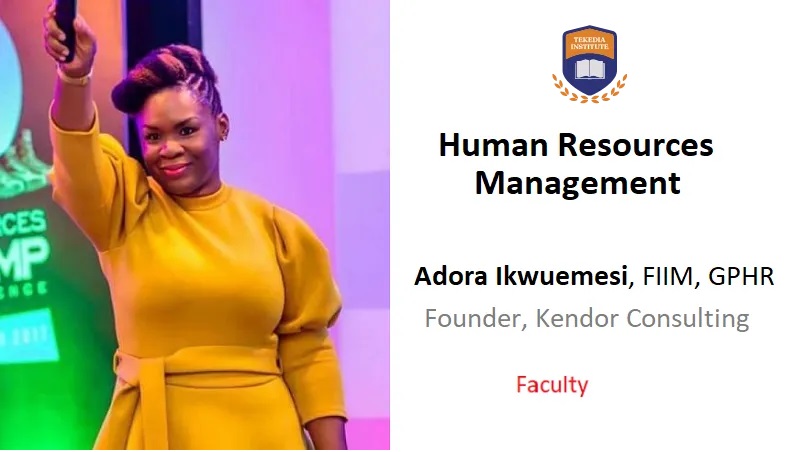
Adora Ikwuemesi holds a Master’s degree in Management Information Systems from Cranfield University (UK), a Bachelor’s degree in Economics from the University of Reading (UK) and a Diploma in Psychology from Middlesex University, also in the UK. She is a certified Project Manager and an accredited Global Professional in Human Resources (GPHR). 

She is the founder of Kendor Consulting, a Human Resources Management consulting firm that develops HR Professionals that stand out, and make a positive difference, and enhance the lives of the people and organisations they serve.

Her course at Tekedia Institute has been used by CEOs, Founders and even HR managers to get their companies going.  I invite you to learn from the best and advance the mission of your firm.