DD
MM
YYYY

PAGES

DD
MM
YYYY

spot_img

PAGES

Home Blog Page 5927

Grant Fundraising Course At Tekedia Institute

0

She knows where all the grant funds are located! And she is helping to help our members deepen capabilities on that nexus. When we reached out to her, we explained that the Venture Capital and Private people asked us to speak with her. In short the CEO of TrustBanc Capital Azeez Lawal educated me on where the alternative funds are. Yes, Tekedia members need that knowledge.

A graduate of University of Benin, Victoria Madedor works with Bank of Industry Investment & Trust Company, and will provide a roadmap on fundraising from DFIs (development finance internationals), Governments, Grants, etc. People, there are many initiatives within the government which many are not aware. I want our members to be on top of all.

Learn from the practicing experts – register today.

Tekedia Mini-MBA Edition 4

Uganda’s Internet Shutdown: The Economic Sabotage Beyond the Political Interest

0

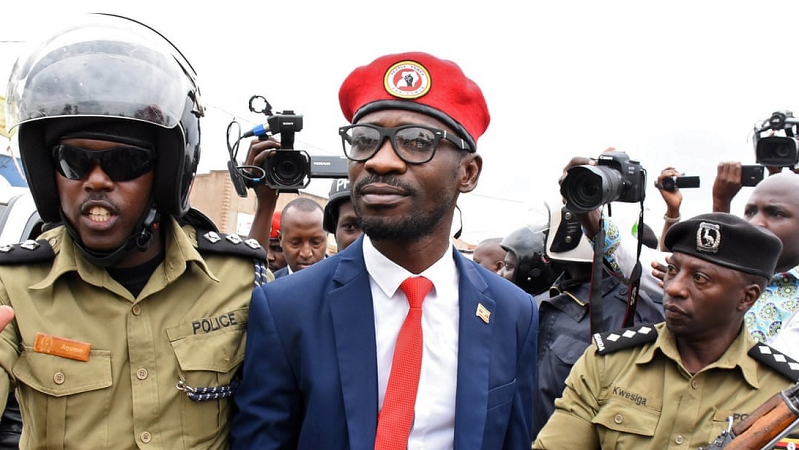
On January 13, two days before Uganda’s presidential election, Uganda Communications Commission sent a letter to all telecom providers in the country, ordering them to shut down all internet access points.

“In exercise of its functions under sections 5(1) and 56 of the Uganda Communications Act of 2013, Uganda Communications Commissions hereby directs you to implement a temporary suspension of the operation of all your Internet Gateways and associated access points. This suspension should take effect at 7pm this day of 13th January 2021 and continue until otherwise directed,” the notice signed by the Commission executive director, Irene Kaggwa sewankambo said.

What followed this notice was a total shutdown of the internet in the East African country, and the resultant consequence goes beyond the people’s inability to share the presidential election events online. Over the next four days, businesses depending on the internet were forced to halt operation as internet service providers who have no choice complied with the order.

In an evident ploy by the government to control information going out of the country during the election, Ugandan authorities gave no consideration to the would-be impact of the order even on the polls. The incumbent, President Yoweri Museveni, who was seeking a sixth term in office, was determined to hold on to power at all costs.

The 76-year old who has ruled Uganda for 34 years was facing ten other contestants led by popular singer, Bobi Wine, 38, who has gained global attention due to his bravery against Museveni’s brutal regime.

As the voting commenced, many polling stations were forced to use manual voting and checks after the biometric machines failed to register ballots because of the internet shutdown. But that’s just part of many of the bitter experiences many Ugandans have come in terms with due to lack of access to the internet.

World Bank data shows that three-quarters of Ugandans are under the age of 30 and have never known another president apart from Museveni. This generation of people started to embrace the internet in the late 2000’s, using it to develop new ideas and spur economic growth.

Ugandan leader

Uganda boasts of entrepreneurship and an ecosystem comprising some of the youngest in the African continent. With a median age of 17, about 77% of the country’s population is under the age of 25, and the tech-savvy generation Z has pushed their tech ecosystem to the notice of international investors.

As of august 2020, Uganda had a total of 190 disclosed startup funding rounds, with a value of $55 million.

COVID-19 outbreak reinforced the commitment of most of the startups and companies to develop digitally. E-commerce platforms like Bringo Fresh, The Online Butchery, payments’ Xente, were among those who became popular online during the coronavirus-induced lockdown in Uganda.

While the companies were relishing their newly found digital fame that has kept them in business, the government decision to shut down the internet has come as a shock that could undermine their future prospects.

Though it isn’t the first time the government is shutting down the internet. In 2016, as the election neared, the government ordered that social media platforms in Uganda be closed until the election was over. It was a pattern many entrepreneurs were expecting the government to follow this time. Unfortunately, it’s a total shutdown of the internet, and the businesses have a high price to pay for it.

“This put our businesses in bad shape, and if the internet isn’t turned on soon, some businesses will be in a really bad situation,” Rapa Thomson Ricky, the co-founder and director of taxi-haling company Safe Boda said.

Ricky said Safe Boda generates over a million mobile transactions with its network of 22,000 drivers in the Kampala metropolitan Area, using the internet. And it has stayed in business through commission derived from each ride. That’s how the startup keeps its business afloat even in the face of the pandemic.

“We are small companies, just waiting for when the Internet returns and we can’t be sure when that will be. Even if we are making Ush50 off transaction, the cumulative effect of this gets big over the number of days we are not running and our riders are not able to earn,” he added.

E-commerce store Jumia, is among those badly hit by the internet shutdown. The chief executive officer Ronnie Kawamara said hundreds of orders including food deliveries as well as parcels of non-food items were either left in transit or not sent due to the arbitrary internet shutdown.

Other businesses including telcos and hotels said the order was shocking and unexpected, as they were only expecting social media channels to be shut down like in the past.

Internet rights groups said the government’s shutdown of the internet in 2016 cost Ugandan economy $2 million, and it set a trajectory that birthed the Jan. 13 order.

Uganda has 17.5 million internet users, who by the order, the government restricted from accessing services. E-commerce, digital platforms and e-payment systems were also shut out of business.

The order has been rescinded, but it sets economic-sabotaging precedent that may dampen the interest of investors in the untapped Ugandan tech-ecosystem.

Daystar Power, Nigerian-based Solar Energy Startup, Raises $38m in Series B Funding

0

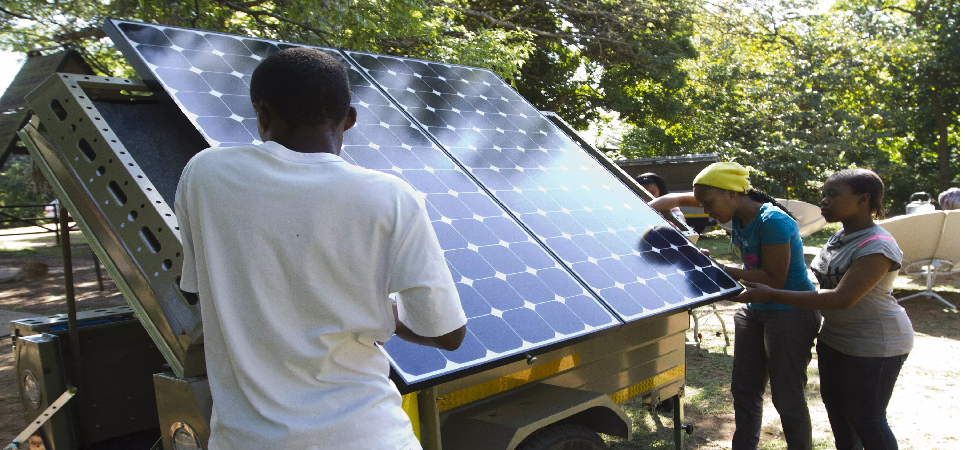
Daystar Power, a leading provider of hybrid solar power solutions to businesses in West Africa, has announced a Series B investment of $38 million.

The round was led by the Investment Fund for Developing Countries (IFU), the Danish development finance institution (DFI). IFU is joined by new investors STOA, a French impact infrastructure fund, Proparco, the French DFI, backed by a guarantee from the European Union under the African Renewable Energy Scale-Up facility (ARE Scale-Up) and Morgan Stanley Investment Management. Taking into account the previous round by Verod Capital and Persistent Energy, Daystar Power has received equity investments totaling $48 million.

“Sunray Ventures founded Daystar Power to address one of West Africa’s most significant barriers to economic development — access to reliable and affordable power. We are happy that this transaction will provide Daystar Power with the required financing to continue to lead in off-grid solar for commercial and industrial customers in West Africa,” said Christian Wessels, Co-Founder of Daystar Power and Sunray Ventures.

Founded in 2017, by the African venture builder Sunray Ventures, Daystar has 23 MW of installed power capacity and has offset approximately 5,000 MT of CO2 to date.

With the fundraise, Daystar Power will grow its operations in its key markets of Nigeria and Ghana, while deepening its presence in other regional countries such as Côte d’Ivoire, Senegal and Togo.

The startup is on track to expand its installed capacity to over 100 megawatts, meeting demand from its clients in the financial services, manufacturing, agricultural and natural resources sectors. Daystar Power will continue to enhance its digital offerings and expand its local teams.

“By offering our commercial and industrial clients cheaper, reliable and cleaner power, we have seen a more than 50-fold increase in power-as-a-service revenue over the last two years,” said Jasper Graf von Hardenberg, CEO and Co-founder of Daystar Power. “African businesses are realizing that solar power — stand-alone or in tandem with a second power source — is a superior energy alternative to the often-unreliable grid or too expensive, polluting diesel generators.”

Daystar Power’s solutions “Solar-as-a-Service” (100% solar power) and “Power-as-a-Service” (hybrid power solutions with battery storage) provide clean and reliable power while significantly reducing clients’ overall power costs.

“We believe that Daystar Power has the right elements — the client base, technology, engineering expertise, and executive leadership — to scale off-grid solar across West Africa. Not only is Daystar Power at the forefront of a growing market, it is helping to accelerate the adoption of renewable energy in some of Africa’s fastest growing cities,” said Thomas Hougaard, Vice President Sub-Saharan Africa, IFU.

The solar company’s clients pay a flat monthly fee or a variable tariff (per kilowatt hour) for premium power services, which include a power audit and assessment of energy needs, a bespoke proposal, installation, and full operation & maintenance. The renewable energy innovation excites investors.

“STOA is excited to start this journey alongside Daystar which is perfectly positioned to provide reliable, environmentally friendly and cheap electricity to businesses across West Africa. This investment reflects a core part of our mission – we aim to invest more than 50% of our capital in Africa and in renewable energies,” said Charles-Henri Malecot, CEO, STOA.

Clients do not incur any capital expenditure and do not pay up-front costs. By outsourcing the management of their power systems, Daystar Power clients are able to focus more on running their core businesses.

Proparco, one of the investors of Daystar said the cleaner energy innovation will help reduce greenhouse gas emissions.

“Proparco is delighted to support the growth of Daystar Power (DSP) which represents our third commitment under the ARESUF facility backed by the European Union. In line with Proparco’s objectives of improving energy access and reducing greenhouse gas emissions, this funding will enable DSP to expand reliable power supply at competitive cost to West Africa’s C&I sector,” Damien Braud, Head of Private Equity Africa & Middle East division, Proparco.

Daystar Power counts the region’s leading industrial and commercial companies among its client base and is active in Nigeria, Ghana, Togo and Senegal with a representative office in Cote d’Ivoire.

“Morgan Stanley Investment Management’s Climate Impact Solutions fund seeks to generate compelling returns with a focus on helping to solve critical climate issues. Our aim in partnering with the team at Daystar Power is to help deploy clean energy at commercial scale – creating a positive, long-lasting environmental, health and financial impact in West Africa,” said Vikram Raju, Head of Climate Impact, Morgan Stanley Investment Management AIP Private Markets.

Daystar Power counts the region’s leading industrial and commercial companies among its client base and is active in Nigeria, Ghana, Togo and Senegal with a representative office in Cote d’Ivoire. Founded in 2017, by the African venture builder Sunray Ventures, Daystar has 23 MW of installed power capacity and has offset approximately 5,000 MT of CO2 to date.

African solar energy startups have continued to attract funding from around the world as they push to solve the continent’s poor electricity supply challenge, thereby minimize the impact of greenhouse gas emission.

Commendations, Encomiums as Tiamiyu Launches book on Moral Licensing Syndrome

0

It was all commendations, encomiums and camaraderie at the book launch of Ismail Tiamiyu, the Team Lead of Research and Development at FarmKonnect, Nigeria. The book launch  held virtually on Zoom was attended by experts, business leaders and colleagues of the author.

In his opening remarks, the Chairman of the Occasion, Prof. Ndubuisi Ekekwe, commended the author for choosing to document the focus of the book for generations to come. While painting  a clearer picture of the focus of the book, Moral Licensing Syndrome, the Harvard Business Review writer said it is a common phenomenon among those he called rainmakers, that is people who bring in the money for companies, organizations as a result feel entitled. He praised the author for confronting the problem headlong by writing on it.

The Chief Launcher, Mr Azeez Oluwole Saheed who is CEO and Founder of FarmKonnect, Nigeria, also applauded the author for his efforts on the book at this age when so many young people are wasting away time on social media. He acknowledged Ismail Tiamiyu as a hardworking young man who enjoys knowledge sharing. He particularly praised his learning ability which made him to capture two workplace experiences as illustrations in the book.

While narrating the circumstances behind the book publishing, Ismail Tiamiyu asserted that he was motivated to write the book because of his exposure both at FarmKonnect, Nigeria and the clarity he got during his mini MBA training at the Tekedia Institute. He said he was intrigued by the concept of Moral Licensing Syndrome and made moves to understand it in order to proffer solutions. According to the author, his aim was to assist employers, administrators and human resource managers deal with the syndrome in the workplace.

The reviewer, Lara Yeku, who is the Head of Human Resources, Flour Mills Nigeria PLC gave kudos to the author for turning his observations and experiences into learning opportunities for the world. A certified author herself, Yeku endorsed the book for its relevance to the HR profession as the discipline involves people management towards organizational achievements. She also said that one of the problems that may likely happen in the workplace is Moral Licensing Syndrome. Thus, she appreciated Ismail for his efforts at tackling one of the major workplace issues.

Other co-launchers who made significant contributions to the launching included Engr. Ismail Abiodun Hamzat, Team Lead Deepwell Operation, Shell; Mr. Sheriff Popoola, HR Executive, 9Mobile Nigeria; Mr. Mobolaji Bamidele, a John Maxwell Certified Coach and Public Speaker. The event was also graced from across the world with people joining the event from the US, Kenya and Nigeria.

Messi Sent Off As Barcelona Lost Spanish Super Cup to Bilbao

0

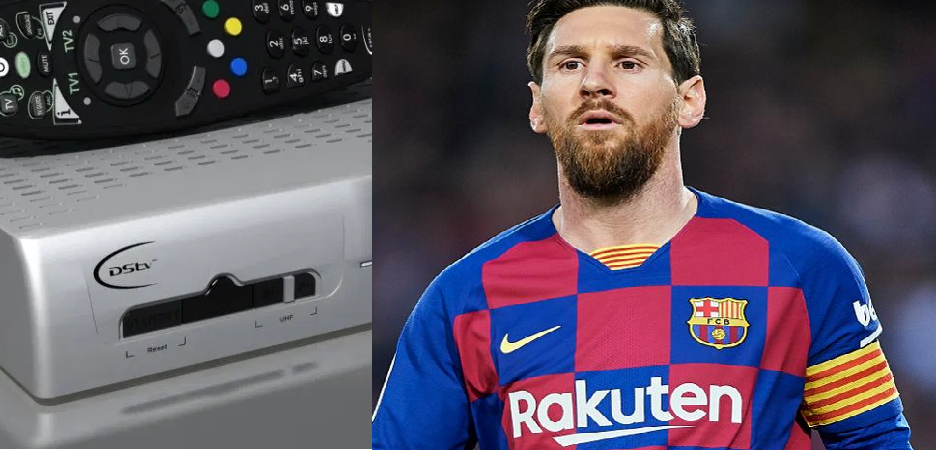
Barcelona’s ordeal took a new turn Sunday night when the club’s captain, Lionel Messi was sent off in the final Super Cup match against Athletic Bilbao.

The Argentine astro was caught in an aggressive encounter near the winners’ box, and was sent off after the referee reviewed the incident through VAR. It thus marks the first time Messi is seeing a red card in his football career in Barcelona.

Messi who returned from injury to join Barcelona’s starting lineup led the team to a 2-2 goal line that took the game into extra time.

Frenchman Antoine Griezmann took advantage of a rebound from Messi to score the first goal for Barcelona. Bilbao responded two minutes later as Oscar De Marcos met Inaki Williams’ cross to put the game level at half time.

Raul Garcia’s header was disallowed for offside by VAR as the second half, which Bilbao dominated with many chances, began. Griezmann was close to sealing the victory for Barcelona with his second goal of the night before Bilbao’s substitute Villalibre volleyed home a 90-minute stunner, sending the game into additional 30 minutes.

Three minutes into extra time, Williams curled the winner into Barcelona’s net from the edge of the box. Barcelona’s effort to thwart the lead was marred by Messi’s red card. The game ended in a 2-3 win to Bilbao.

“What a goal it was!” Bilbao coach Marcelino said about 93rd minute winner. “It was a great piece of skill and you couldn’t produce a better finish.”

“In general I don’t think Barca deserved to take the lead, especially in the first half, anyway. The lads were so focused on this game and I’m so proud of them. They make your job easy and enjoyable,” he added.

Marcelino was only appointed Bilbao’s coach this month following the dismissal of Gaizka Garitino, and his win marks his second success in finals against Barcelona, after previous winning in the 2019 Copa del Rey final with Valencia. However, he acknowledged that it’s going to be difficult to keep the form that got him the cup.

“It’s going to be impossible to keep up that record. I don’t know many semi-finals I had to play before actually reaching a final, I think it was eight, but now I have won in two finals,” he said.

It’s Andy Koeman’s first test final as Barcelona’s coach. The Dutch man who inherited a depleted Barcelona team riddled with crisis has been under pressure to steer the Catalan giants to winning ways. The season has so far proved disappointing as Barca currently occupies third place on the La Liga table.

Messi who had last year asked to leave the club had said his future will be determined by the situation in the club. The six-time Ballon Do’r winner got into a fight with the Barcelona’s management over poor performance of the club, and it led to the resignation of the entire board including past president, Josep Bartomeu.

Messi’s unlikely red card on Sunday night reveals his frustration with the team, as his happiness is apparently waning in his childhood club.

The club is working to elect a new president as soon as possible in hope that it will appease Messi and make him stay. With the former president, Joan Laporta, who won the primary, polling over 10,000 votes, poised to return as new Barcelona president, the club’s fans are hopeful that the world’s best player will stay.