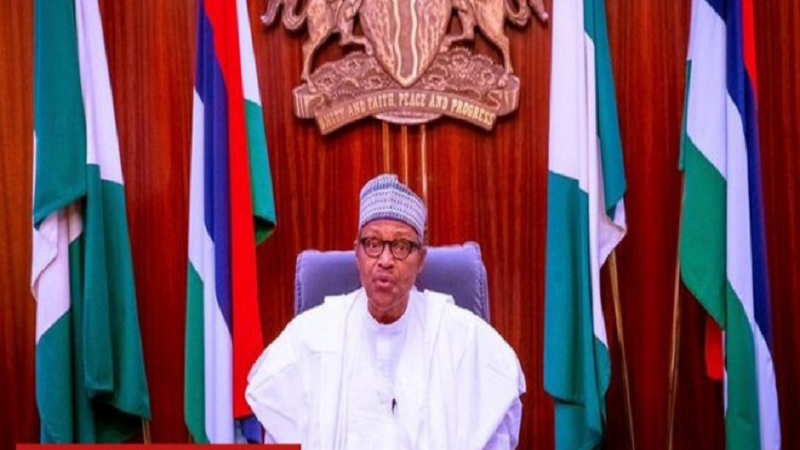
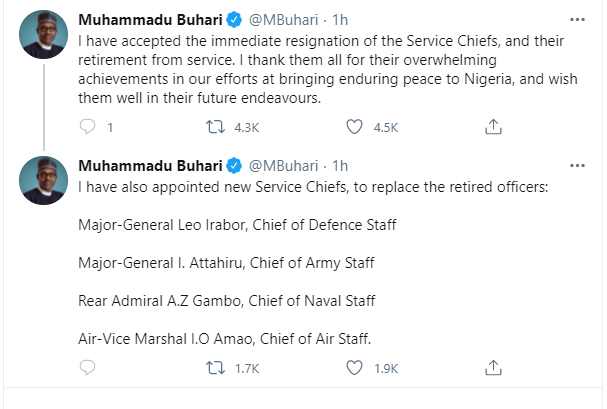
Finally! President Buhari has changed the Service Chiefs led by Chief of Defence Staff, Gabriel Olonisakin. Leo Irabor was named the new Chief of Defence Staff; I. Attahiru, Chief of Army Staff; A.Z. Gambo, Chief of Naval Staff; and I.O. Amao, Chief of Air Force. Gentlemen, congrats and bring peace to the land.
I have accepted the immediate resignation of the Service Chiefs, and their retirement from service. I thank them all for their overwhelming achievements in our efforts at bringing enduring peace to Nigeria, and wish them well in their future endeavours.
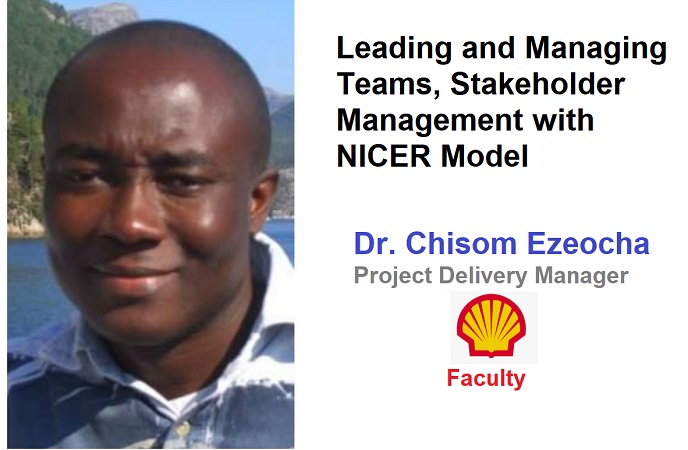
He was my undergraduate classmate in Federal University of Technology, Owerri (FUTO) and a room mate at a time. He has managed global technical teams in Africa and around the world. He served as the Head of Offshore Field Engineering for 6 years in Brunei Shell Petroleum. That is the zenith of leading teams where any dislocation on missions would cost your employer billions of dollars.
Dr Chisom Ezeocha will teach Leading and Managing Teams in Tekedia Mini-MBA. He developed a methodology which he has used to lead global teams, and he is sharing those constructs in Tekedia Institute.
I invite you to join him in Tekedia Mini-MBA which begins Feb 8. You missed being his classmate (lol), and I can tell you that you will learn a lot from an amazing man, who was managing people in college before he went global, managing people and complex engineering projects.
Growing the Nigerian facilities management industry depends on a number of factors. Apart from having a supportive business environment driven by good government’s policies and programmes, constant innovation is key to the rapid growth of the industry. This can be in forms of radical and incremental innovation typologies. In the last few years of researching and analysing the industry, our analyst has learnt that a significant number of brands are innovating in the context of new processes creation and deployment towards sustainable value delivery. They have also developed new products or solutions towards total elimination of frictions being experienced by the users of FM solutions across the private and public sectors.
In spite of this movement, more works are needed if the players truly want to capture the needed value from their solutions and exploring new opportunities in Nigeria. This piece is a part of the ongoing solution innovation research in the industry. Our analysis shows wide disparity between lower-level employees’ and upper-level employees’ commitment towards innovation despite the presence of the needed organisational factors such as effective communication of ideas and thoughts, reward and recognition system, collaboration and supportive climate for new idea generation and management.
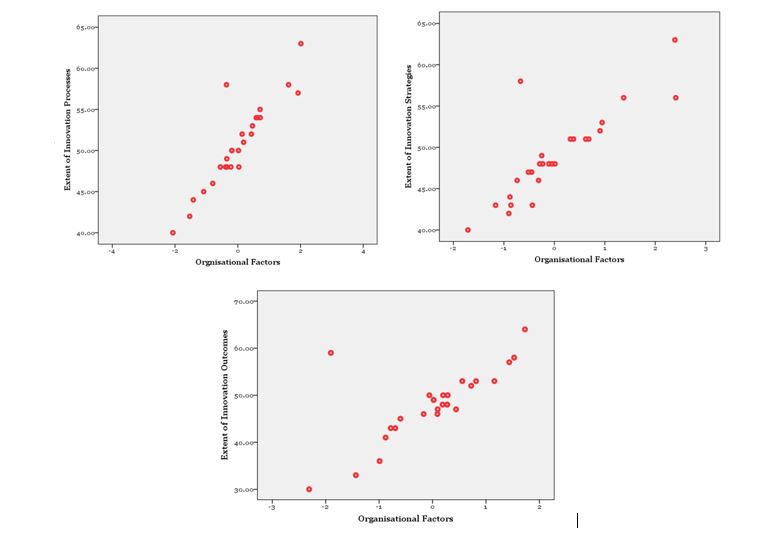
From a three-month study of some employees in the industry, our analysis reveals that employees have a better understanding of what innovation entails. They have adequate knowledge of how relationship analysis with clients matters in the context of creating unique solutions. From the minimum to the maximum prediction topologies, our analysis establishes surprising insights. When the factors [earlier listed] were analysed along with the extent to which innovation processes permeate in the employees’ organisations, we found 59.76% and 47.62% as the maximum and minimum predictions respectively. The identified factors could only be explained from innovation strategies by 61.0% [maximum prediction] and 44.9% [minimum prediction]. It was 69.75% [maximum prediction] and 41.11% [minimum prediction] when the factors were analysed along with the innovation outcomes such as working closely with clients in exploring and developing new concepts.
Exhibit 1: Organisational Factors Driven Innovation and Outcomes Framework
Source: Infoprations Analysis, 2021
Emerging Issues and Needs
These results indicate that players need to embrace disruptive business and innovation models. These are essential towards a proper understanding of what the users need and perfect exploration of market dynamics and systems. Modification of current organisational capabilities is desirable. When it is clear that the modification would make little contribution to expected outcomes, creating or sourcing new capabilities should be the next option.
These propositions are in line with the outcomes of our analysis. For instance, it emerged that employees at the top management level and owners of the two companies need to share innovation vision and commitment with the employees at the business and functional levels. This is imperative considering the fact that a number of employees might have ideas that could be transformed into sustainable solutions. When ideas are suggested to the top management executives and turned down, there is a possibility of killing in-built innovative thinking in the employees who proposed the ideas. This can also have adverse effects on other employees. For instance, they might not be willing to share ideas in the future.
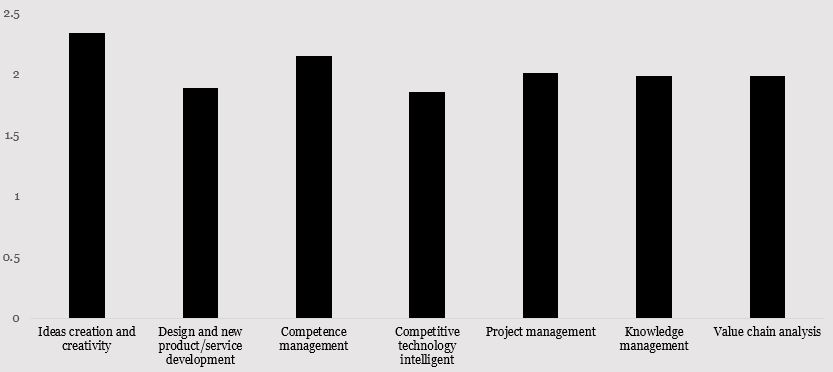
Continuous transformation of processes and innovation framework is highly imperative. This is necessitated with the low severity of innovation transformation components [see Exhibit 2]. Top level managers and owners need to ensure constant skilling, reskilling and upskilling of employees towards effective innovation. Employees should always be ready to embrace change, especially those needed for effective process optimization and sustainable value co-creation and delivery to the targeted clients.
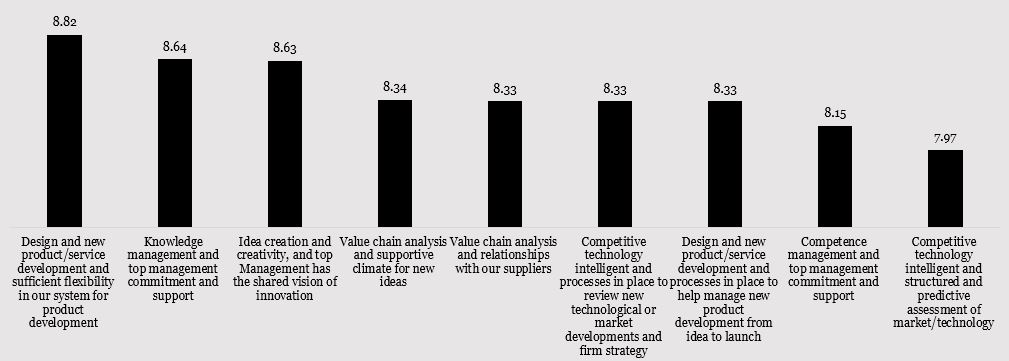
For the veracity of our propositions, we used Alpha Mead Facilities, one of the key players in the industry as the basis of understanding the key constructs in the propositions. Other players could follow the path of the company in the areas of design and new product/service development, knowledge management, idea creation and creativity climate. In our analysis, these areas consistently have above 8 points out of the expected 10 points when they were analysed along with sufficient flexibility in system for product development, top management commitment and support towards innovation, idea creation and creativity, top management shared vision of innovation and supportive climate for new ideas respectively [see Exhibit 3].
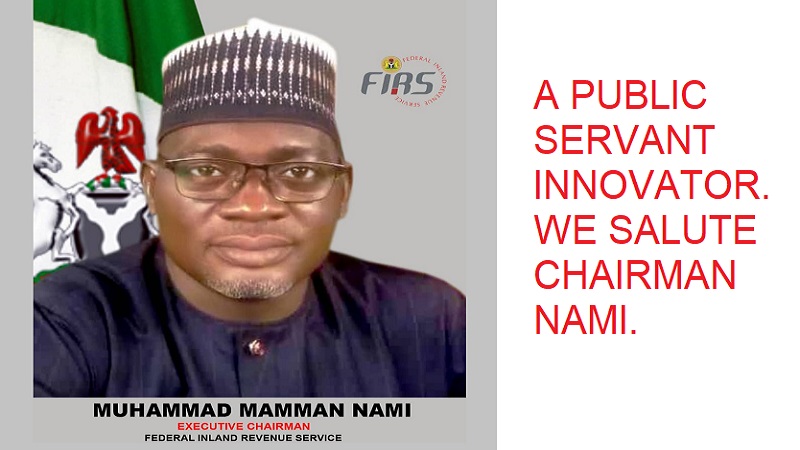
Muhammad Mamman Nami is the current Executive Chairman of Nigeria’s Federal Inland Revenue Service (FIRS), the agency responsible for assessing, collecting and accounting for tax and other revenues accruing to the Federal Government of Nigeria. And he is serving Nigeria very well. I mean Chairman Nami has brought new ideas into the Service. We need to commend him. While we stay here and rant when public holders disappoint, innovators like Nami deserve commendation. He hit 98% of their target in 2020 despite the pandemic and that means, he was able to close many loopholes. If not the fact that they waived federal taxes for companies with revenue below say N25 million or so, they could have exceeded that target. This man is a really bright spot and I want us to appreciate him in our nation.
Nairametrics reported that the FIRS announced that it generated N4,952,243,711,728.37 as tax revenue in the 2020 fiscal year. This is about 98% of the tax target of N5.076 trillion that was set for the FIRS by the Federal Government.
The FIRS also announced the creation of 35 new Tax Audit Units to combat illicit financial flow across the country.
Add the big one: he is using more FIRS workers over consultants which means the government is keeping the money collected. Of course, we do hope the revenue is put into great use. This explains that public servants can execute if the right leader is there. This tweet by President Buhari tells you that Nigeria can indeed work if we get innovators in the system.
“We must use technology to plug all revenue loopholes. To this end, I have directed all government agencies and business enterprises to grant FIRS access to their systems for seamless connection. FIRS must fully deploy automation, in line with international best practices.” Simply, FIRS wants to monitor the government agencies and if it does that many good things will happen.”
This is well commendable.
We must use technology to plug all revenue loopholes. To this end, I have directed all government agencies and business enterprises to grant @firsNigeria access to their systems for seamless connection. FIRS must fully deploy automation, in line with international best practices.
University Graduation Cap with Scroll Icon Student Education Symbol Isolated Realistic Design Vector Illustration
In the last few weeks, Nigerian scholars in Nigeria and those in developed countries have been debating on which group produces quality knowledge in terms of research and teaching. Professor Toyin Falola appears to be the first actor from those in the developed countries, such as the United Kingdom and the United States of America, who ignited the ‘great conversation’ recently. With two different pieces, while was alive, Professor Pius Adesanmi stressed the need for seeking new research and teaching practices by the young and established African scholars in order to be at par with those in the developed world.
After three days of analysing the ongoing conversation on who produces quality knowledge? African scholars in Africa or African scholars in developed world. Our analyst concluded that one group is not really better than the group despite the avalanche of evidences in terms of quality infrastructure, people, strong commitment and shared vision of quick completion of postgraduate studies by supervisors with their students that differentiate the groups.
This is premised on the fact that evidences have shown that outcomes -graduates, research outputs and contribution to the economic growth are mixed. In some countries that constitute the developed world, we have seen how the quality people, infrastructure and supportive framework from the government and the private sector produce moderate outcomes. We have also seen how these inputs led to high outcomes in some countries in the developing world. Likewise, high outcomes in developed world than in the developing one.
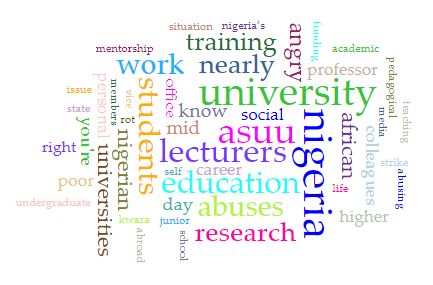
Some years ago, Professor Pius Adesanmi wrote on the Academic Staff Union of Universities’ incessant strike, highlighting its impacts on the concerned stakeholders and the country’s higher education growth in particular. The article titled ASUU: A Personal Voyage Around a Strike identified the Union, lecturers, the Nigerian government and universities as actors. In another piece titled Nugget for the Emerging African Scholar, he pointed out what emerging African scholars need to do to be at par with others in the world. He emphasised the place of globalization and internationalization of knowledge through seminar and research collaboration. In his pieces received fewer negative reactions from the scholars in Africa then. Some of the issues, needs and insights in the articles were seen as what could be addressed through collective efforts [by the African scholars in Africa and African scholars in the developed world].
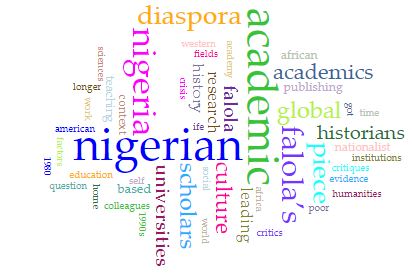
However, Professor Toyin Falola’s piece adds a new angle to the discourse. Since the historian and one of Nigerian prominent professors in diaspora released his piece to the public, there are have been arguments, counterarguments and alternative arguments from the African scholars in Africa, especially in Nigeria. Our checks reveal that both the established and young scholars have expressed their views. Examination of the views indicates that there are two school of thoughts [addressing the issues and addressing personality school of thoughts].
Each of these schools of thoughts have actors and followers. According to our analysis, in some situations, actors played the role of followers not only being the actors. Actors and followers in the addressing the issues school of thoughts believe that identified problems need to be addressed without necessarily attacking individuals and authorities at home. Actors and followers in the addressing personality school of thoughts are of the view that individuals, authorities and governments should be blamed for the poor knowledge production.
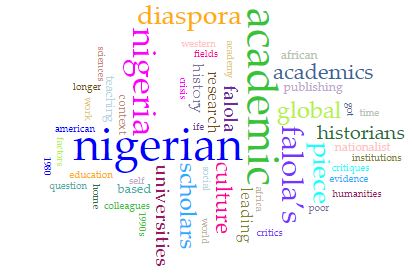
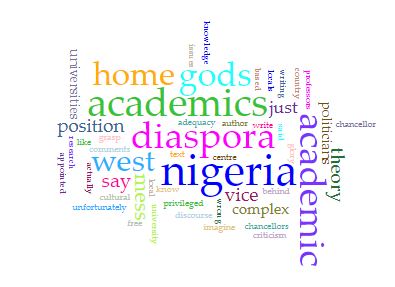
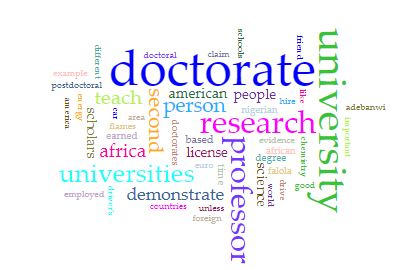
Our analysis covers the response of Professor Moses Ochonu [Professor of African History at Vanderbilt University in Nashville, Tennessee, USA] based on Professor Toyin Falola’s piece. Professor Ochonu focused on academic, diaspora, Professor Falola, Nigeria and Nigerian. Following Professor Ochonu’s path, Mohammed Dahiru Aminu, assistant Professor of Petroleum Chemistry at the American University of Nigeria, Yola, titled his piece Of Toyin Falola, African Scholars and the Western Academy. He focused on quality of doctorate, research, universities. Bode Ojoniyi, who lives in Osogbo, the Osun State Capital, is another person who replies Professor Falola with the title When the Nigerian Diaspora Academics Write Back to the ‘Locals’…He focused on academic, academics, diaspora, gods [referring to some individuals and authorities making knowledge production difficulty in Nigeria] and Nigeria.
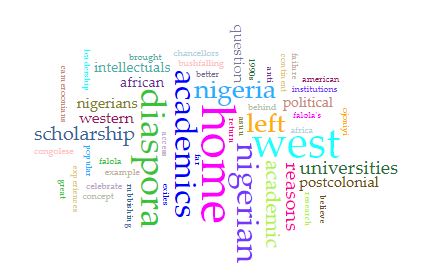
Dr Olisa Godson Muojama is one of the people who replied Professor Ochonu. His piece is titled Professor Ochonu’s Vituperation on ASUU strike. He is a Senior Lecturer in the Department of History, University of Ibadan, Ibadan, Nigeria He focused on ASUU, government, Professor Ochonu, universities. Okechukwu Nwafor, a Professor of Art History at Nnamdi Azikiwe University, Awka, has also responded to Professor Falola’s piece. He focused on academics, diaspora, home, Nigerian and West.
Exhibit 1: Dominant Words in Adesanmi’s Write-Up (a)
Source: Pius Adesanmi, Infoprations Analysis, 2021
Exhibit 2: Dominant Words in Adesanmi’s Write-Up (b)