Today, the most aggressive banking institution when it comes to growth in Africa is Access Bank Plc Nigeria, the continent’s biggest bank by customer base. The bank is acquiring anything on its path as it scales its mission across the continent. Yet, despite the high octane activities, the bank has not returned superb values to investors. Using Nigeria as a case study, FCMB returned 80%, Zenith bank (33%) and UBA (21%); Access lost 16% of its value in 2020.
In the Nigerian Stock Exchange, Access Bank is worth N325 billion; GTB remains the leader at N974 billion. UBA is priced at 297 billion. So, two things are happening here:
(1) the largest bank in Africa by customer base (Access Bank) has not translated the huge customer volume into a great valuation,
(2) the largest Nigerian bank on geographical footprint (UBA) is yet to unlock great value on that playbook.
So, what can we learn from these cases on how Nigerian investors think?
Personally, I do believe that investors want to see profitability above everything in Nigeria. Your absolute revenue while great does not provide confidence to most investors; they want to see that you are making money because if you are profitable, you will live long as a business.
Another thing is cost: the most valued banks in the nation – GTBank, Zenith Bank – have superior cost-to-income ratios; those give investors confidence that management is well ahead on cost containment. Zenith Bank has a market cap of N832 billion in Lagos.
There is a big lesson here: few technology companies in Nigerian Stock Exchange (NSE) have done well. If you look carefully, most of those firms do not have superior profit margins. Profits provide the basis for dividends and with the share values muted for over a decade, most investors have been capturing marginal values via dividends. This is why I think modern startups may struggle in NSE as most investors expect a very low gestation period to profitability, and when companies do not deliver that, they are punished by pushing their stocks down.
The gestation period to profitability in a typical Nigerian startup is long. That long gestation is also the reason why many startups or small businesses collapse few years of founding. Typically, one way to deal with this is to raise capital, ramp up market entry to grow fast enough to attain profitability. But in our extreme volatile economy, if the timing is off by months, the company can collapse. You just run out of cash.
Access Bank has size now via customer base, Zenith Bank has profitability and GTBank has its cutting-edge technology with profitability. FCMB looks promising with the versatility in its product offering. UBA gives you the continental spread. But if you check everything, Nigerian investors are really interested in cost efficiency and profitability. If you can deliver both at the same time, your numbers will rise.
Tekedia Institute is excited to welcome Innovative Data Solutions Ltd to Tekedia Mini-MBA. IDS is an innovative marketing research and business consulting firm driven by innovative minded professionals who are poised to provide innovative solutions to clients in African markets. The Founder is businessman and philanthropist Jayden Robinson.
IDS helps companies to build brands and design the future through superior insights on market systems. From all of us at Tekedia Institute, we look into that promise of co-learning with this amazing marketing and business consulting firm.
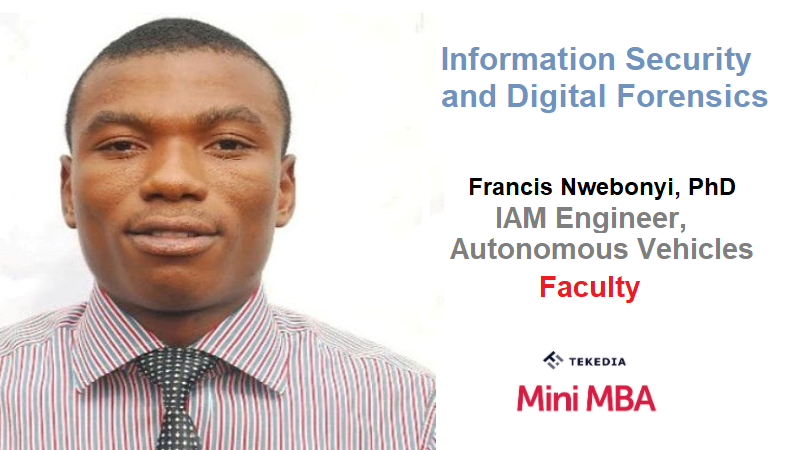
He is an IAM Engineer (Identity and Access Management Engineer) and holds a PhD in Computer Science with focus on Network and Information Security from Universidade do Porto. He had earned an MSc in Computer Security and Forensics from the University of Bedfordshire. He is part of our Cybersecurity and Digital Forensics Faculty.
Dr Francis Nwebonyi works in one of the finest emergent companies in Europe where they write the next generation software systems for the BMW Group’s future driving machines. Part of his job is to secure the integrity of autonomous vehicles.
In his course, besides the videos, he did what PhDs do: he has a written material on information security and digital forensics, structured for business managers and operators who want to have a management-level understanding of the domain. If the world of business is moving online, digital security is no more just an IT person’s job: managers have roles to play.
This course is designed for managers and business operators, not necessarily for techies. Our program is a business school, not an IT school. So, everyone is invited.
Our early bird deadline for Tekedia Mini-MBA (Feb 8-May 3) arrives (check here). I invite everyone who wants to understand the physics of business processes to register. Yes, we co-learn on innovation, business growth and operations, across all industrial sectors and market systems, making innovators and growth champions better. Tekedia Mini-MBA is a great force on business education.
Tekedia Institute offers an innovation management 12-week program, optimized for business execution and growth, with digital operational overlay. It runs 100% online. The theme is Innovation, Growth & Digital Execution – Techniques for Building Category-King Companies. All contents are self-paced, recorded and archived which means participants do not have to be at any scheduled time to consume contents.
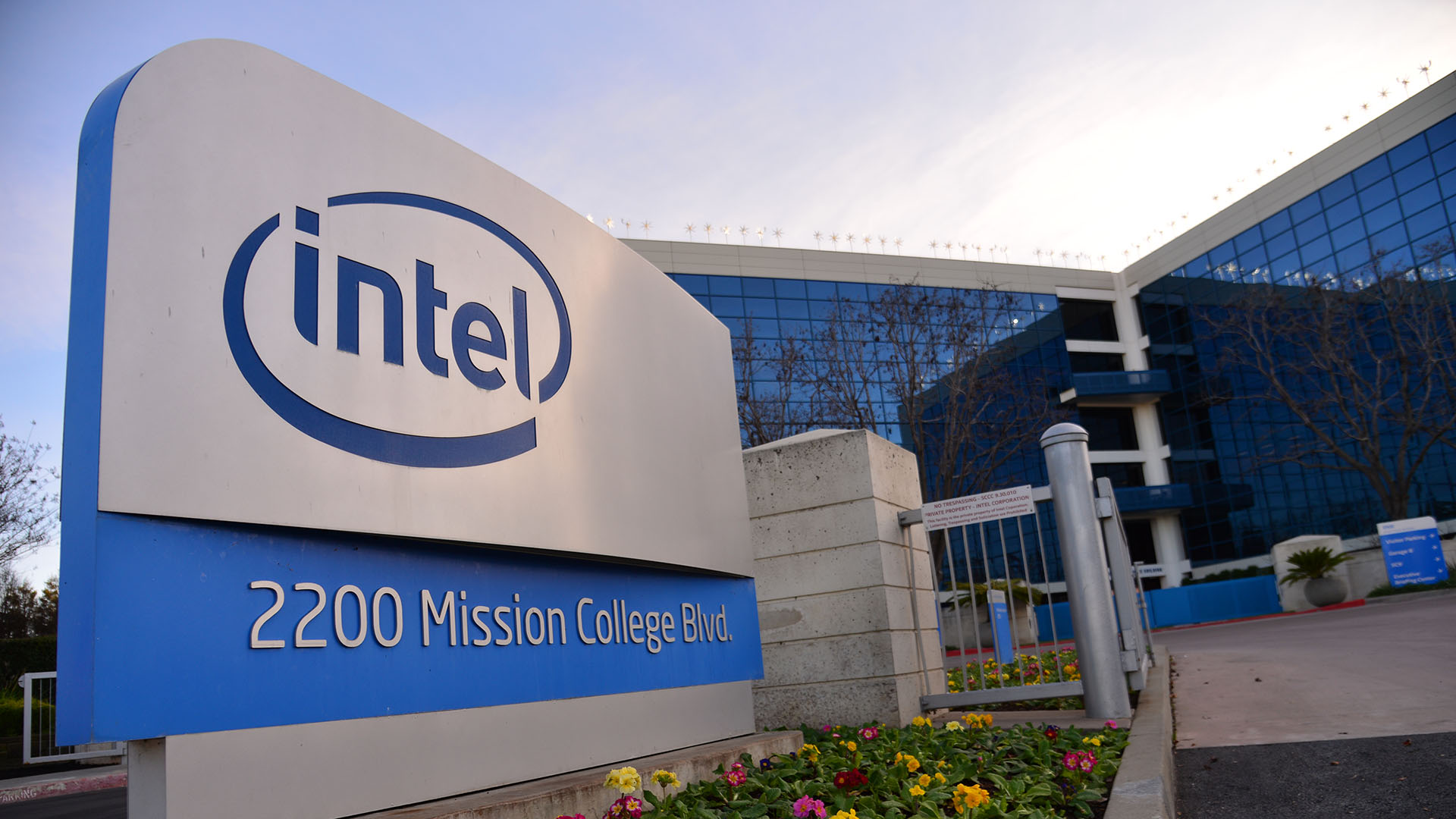
The Robert Noyce Building in Santa Clara, California, is the world headquarters for Intel Corporation. This photo is from Jan. 23, 2019. (Credit: Walden Kirsch/Intel Corporation)
Intel Corp was legendary for decades as it pursued its strategy of designing microchips and manufacturing them in-house. For decades, that integration served well and Intel became the category-king, winning over competitors like AMD. But Intel faces a double whammy: losing the edge on design to Nvidia (and Qualcomm, AMD, etc) on GPU and mobile chipsets; and lagging on manufacturing capabilities to TSMC and Samsung.
But in a recent update, from the incoming new Intel boss, Intel noted that it would continue its old strategy: design chips and make them in-house even though in some cases, it could outsource the manufacturing. Nvidia makes the best chips for graphical processing units. Qualcomm is the industry leader in advanced mobile chipsets. AMD has also picked itself together and now makes extremely great chips.
Intel’s incoming CEO Pat Gelsinger said the company will largely continue to make its future products internally and work to regain its lead in chip manufacturing, even as it uses outside factories “for certain technologies and products.” Intel had for months been considering whether to keep its longheld strategy of both designing and making chips, or outsource to rivals. The company also released its fourth-quarter results a few minutes ahead of schedule on Thursday, saying a hacker stole financially sensitive information from its website.
This is tragic for the United States but not totally unexpected. By the time I graduated with my PhD in Electrical Engineering from Stanford in 2012, it was clear to me that the United States was losing its edge on this area. It’s one of the reasons I decided to reorient my career towards software engineering. There seems to be bipartisan agreement in DC that restoring American semiconductor manufacturing leadership is important for the future of the country. It’s the private sector that needs to understand this and come up with ways to make it happen. “Mr. Gelsinger on Thursday said Intel would have other chip companies make more of its products, even if the bulk of its new chips in the coming few years would be made in house. The shift marks a break from Intel’s traditional reliance on its own factories to make its most-advanced chips—effectively an acknowledgment that it has fallen behind chip-making rivals.”
The only promising sector where Intel remains dominant has been server chips. But unfortunately, that may not matter as most companies like Amazon, Google and Facebook do not need advanced server chips to run their data centers: they parallel common chips and still get the expected results. So, just like that, the differentiation Intel has in a high growing sector, in the cloud mobile era, looks muted.
So, what should Intel do? I think Intel needs to be broken into two companies. Yes, HP did it – and it is time for Intel to follow. Intel design unit has a hangover from the manufacturing business since it will not like to advance faster than the manufacturing capabilities. That makes it hard for the design unit to compete with the likes of Nvidia who do not manufacture their chips but rely on TSMC to make them.
Pat, new Intel boss
TSMC has gotten better on the strength that it has volume since everyone is a customer, from Amazon to AMD to Facebook and indeed everyone not using Intel, Samsung and GlobalFoundries. Due to that financial warchest, TSMC has leapfrogged Intel on manufacturing. Samsung, relying on the “one oasis” and “double play”, remains dominant in the most advanced chip manufacturing domain, making it the preferred customer to Apple.
So, what has happened here is that Intel is not attracting the best customers because some of those customers are Intel direct competitors. Unlike TSMC which manufactures only, Intel competes on design with many firms. So, separating the companies will allow the design unit to fly and also allow the manufacturing business to bring in new clients. The current hangover between the two businesses is making it hard for Intel to thrive. That it worked in the past when TSMC did not exist does not mean that it can work now.
(Intel’s focus on speed – the Moore’s law – has distracted it. Today, great processors do not just deliver speed, they offer better power management for mobile systems besides making it easier to run AI processes. Nvidia has done a great job there and with ARM going to Nvidia, that edge is expected to continue.)
Intel has been disintermediated by TSMC with its legendary manufacturing moat dismantled by the global contract chip manufacturer. The implication is that the castle which Intel has protected for decades is largely vulnerable now. Nvidia does not build big foundries but focuses on R&D designs while its manufacturing partners make the chips. It is a leader in modern chips for datacenters, gaming, AI and more. If ARM goes to Nvidia, it will pick a huge part of the mobile sector, and if that happens, Intel will bleed for years
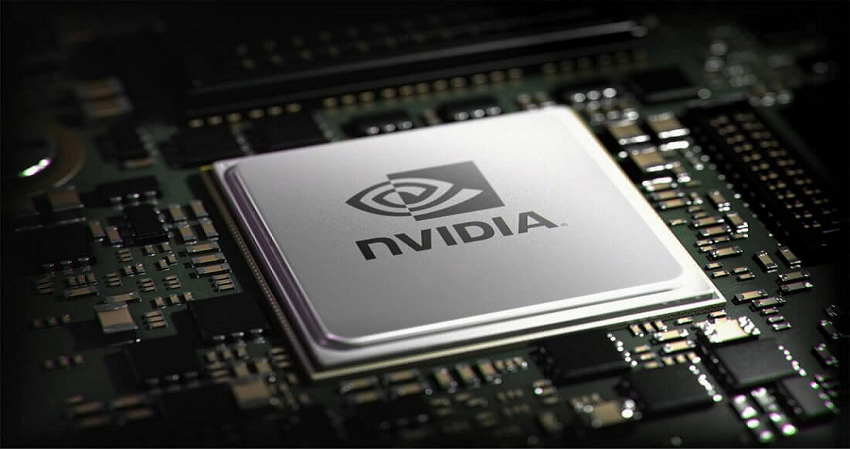
Nvidia chip
TSMC has broken the veil in chip business just like cloud companies have removed the moats of starting digital technology startups. The implication is that more design houses will emerge since manufacturing has been taken care of by TSMC. So, Intel design unit will see more competitors and certainly needs to stay more focused, unbundled from the manufacturing business. On the Intel manufacturing unit, with TSMC there, its future will remain challenged as not many companies will now do business with it since supporting it means making Intel design stronger. On that ground, breaking Intel into two – design and manufacturing – would have been the best outcome. It may not happen immediately but it will happen very soon.
It is an irony: the most important company for American tech is in Taiwan! And it is bringing down Intel, after IBM (the foundry) and will rewire everything.
On Wall Street, two stocks that have been left out of tech’s rally reported earnings that were more about promises than results. Intel said its fourth quarter sales got a boost from the COVID home PC boom, while more lucrative sales to cloud providers and corporate servers dropped. New CEO Pat Gelsinger says he’s getting excited about chips to come. Intel shares, up just 3% over the past year, are down 5% in pre-market trading on Friday. Similarly, IBM reported revenue fell 6% while CEO Arvind Krishna offered visions of a brighter tomorrow. IBM shares, down 5% over the past year, dropped another 8% in pre-market trading. (Fortune newsletter)