DD
MM
YYYY

PAGES

DD
MM
YYYY

spot_img

PAGES

Home Blog Page 5955

Twitter Shares Fell 7% As the Heat of Trump’s Ban Rages Around the World

0

Twitter shares fell 7% following its decision to permanently ban outgoing US president Donald Trump on Friday. The ban, which has attracted divided uproar globally since it came into effect, is stoking another social media regulatory debate which has brought its bearing on Twitter stocks.

The social media app announced the decision to ban Trump in a blog post on Friday, saying his tweets breach its policies as they are liable to incite further violence.

“After close review of recent Tweets from the @realDonaldTrump account and the context around them – we have permanently suspended the account due to the risk of further incitement of violence,” the blog post said.

Twitter had earlier restricted Trump’s account for 12 hours after the US capitol was invaded on January 6 by his supporters aiming to halt the certification of President-elect Joe Biden’s Electoral College votes.

Trump had made a video condemning the insurrection but turned around as soon the restriction on his account was lifted to tweet in support of the rioters.

“The 75,000,000 great American Patriots who voted for me, AMERICA FIRST, and MAKE AMERICA GREAT AGAIN, will have a Giant Voice long into the future. They will not be disrespected or treated unfairly in any way, shape or form!!!”

Shortly after, he tweeted again: “To all of those who have asked, I will not be going to the inauguration on January 20th.”

Twitter said it assessed the ‘language’ in these tweets against its Glorification of Violence policy, after reading them in the context of broader events in the country and the ways in which the president’s statements can be mobilized by different audiences, including to incite violence, as well as in the context of the pattern of behavior from his account in recent weeks. The assessment led to the determination that Trump’s further tweets could “encourage and inspire” people to “replicate the criminal acts” that took place at the US Capitol on January 6.

Facebook was the first to announce indefinite suspension of Trump’s account, until at least, after the January 20th inauguration.

The social media platforms have faced a moment of watershed arising from conflicting pressures on one hand to restrict misinformation and hate speech, and on the other, defend free speech. Caught across a divided throng leaning on each side of reason, the big tech companies appear to have decided not spare anyone, in the moral fight to tame hate speech.

Apple, Amazon and Google have removed Parler, a pro-GOP communication platform from their services, forcing it to go offline.

Twitter was Trump’s megaphone for heralding conspiracy theories, amplifying attacks on his rivals and provoking other nations during his four-year rule, due to his fight with mainstream media. Now the ban has taken his voice away in his final days in office.

Miraband analyst Neil Campling said the ban shows Twitter is making editorial decisions, and opens the door to more regulation of social media under the next administration.

“In the U.S., it’s about how are these companies being regulated, are they regulated, should they be regulated?” Campling said by phone, adding that “Trump is the most popular character on the platform.”

German Chancellor Angela Merkel called the decision “problematic” and said via his spokesman Steffen Seibert that operators of social media platforms bear great responsibility for political communication not being poisoned by hatred, by lies and incitement to violence.

Twitter CEO

EU Commissioner Thierry Breton said by blocking Trump’s accounts, social media companies had finally recognized their responsibility, duty and means to prevent the spread of illegal viral content.

Following the ban, Trump had used the official account of President of United States @POTUS, which has about 33 million followers to voice his concern about Twitter once again.

“As I have been saying for a long time, Twitter has gone further and further in banning free speech, and tonight, Twitter employees have coordinated with the Democrats and the Radical Left in removing my account from their platform, to silence me,” he said, adding that he will do something about it.

Trump had last year moved to ban Twitter for affixing notice on one of his claims about COVID-19, and has been calling on the Congress to repeal section 230 that will help hold social media platforms more accountable.

Twitter has maintained that it suspended Trump’s account not to silence dissent but to prevent him from instigating further violence that will undermine American democracy and result in further harm. Until now, the Capitol has never been attacked since the invasion of the British on August 24, 1814.

Why the Rich Keep Getting Richer – IMF

0

For years, the ‘richer getting richer’ mantra has reechoed the widening gap between the rich and poor, and the inequality that the concept has been birthing.

Over the years, education, business and economic policies designed to bridge the economic inequality gap have failed, fueling the concern about why the rich keep getting richer and the poor poorer.

The International Monetary Fund (IMF) delved into the mechanism of wealth and analyzed the concept of riches to provide an answer to the puzzling question.

Wealth begets wealth. This simple concept of privilege has added to growing discontent with inequality that has escalated under the shadow of the COVID-19 pandemic.

A paper co-authored this year by economists from the IMF and other institutions confirms that wealthier people are more likely to earn higher returns on their investments. It also shows that the children of wealthy people, while likely to inherit that wealth, aren’t necessarily going to make the same high returns on investments.

Detailed data on wealth are extremely rare, but 12-years of tax records (2004-2015) from Norway have opened a new window into wealth accumulation for individuals and their offspring. The Nordic country has a wealth tax that requires assets to be reported by employers, banks and other third parties in order to reduce errors from self-reporting. The data, which are made public under certain conditions, also make it possible to match parents with their children.

The data show that an individual in the 75th percentile of wealth distribution who invested $1 in 2004 would have yielded $1.50 by the end of 2015—a return of 50 percent. A person in the top 0.1 percent would have yielded $2.40 on the same invested dollar—a return of 140 percent.

Another significant finding: High returns both bring individuals to the top of the wealth scale and prevent them from leaving it. Controlling for age, parental background and earnings, moving from the 10th percentile to 90th percentile of wealth distribution increases the probability of making it to the top 1 percent by 1.2 percentage points compared to an average probability of 0.89 percent.

Why do rich people earn high returns? Conventional wisdom suggests that richer individuals put more of their assets toward high risk investments, which can result in higher returns. But our research finds that wealthy people often earn a higher return even on more conservative investments. Richer individuals enjoy pure “returns to scale” to their wealth.

Specifically, for given portfolio allocation, individuals who are wealthier are more likely to get higher risk-adjusted returns, possibly because they have access to exclusive investment opportunities or better wealth managers. Financial sophistication, financial information, and entrepreneurial talent are also important. These characteristics make the returns to wealth persistent over time. This research is the first to quantify this mechanism and show that it is likely to matter empirically.

Do high returns persist across generations? The answer is a qualified yes. Wealth has a high degree of intergenerational correlation, but there are important differences in how returns to wealth accrue across generations.

The children of the richest are likely to be very rich, but unlikely to get as high returns from this wealth as their parents did. This suggests that while money is perfectly inheritable, exceptional talent is not.

Fintechnolization: The One Oasis of Digital Platforms

0
Ndubuisi Ekekwe Kampala Fintech award
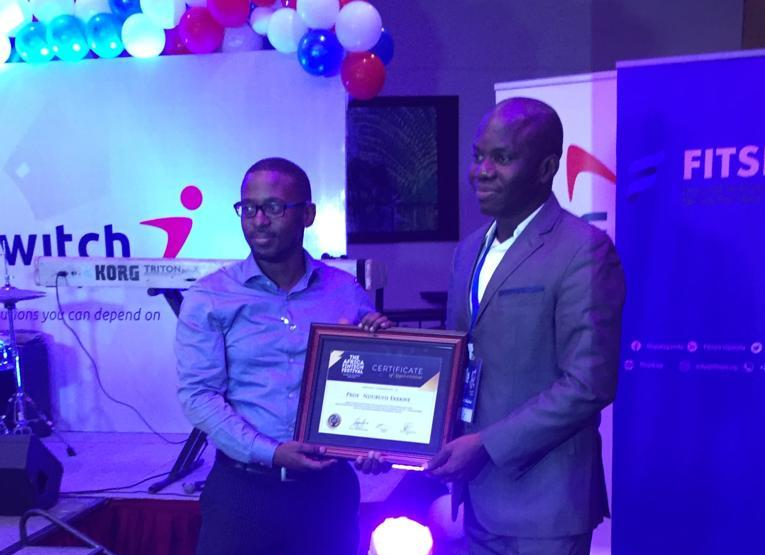
Ndubuisi Ekekwe receiving award in Kampala . Uganda

I just accepted to deliver a speech in Silicon Valley on “Fintechnolization: The One Oasis of Digital Platforms”. A venture capital firm here read my postulation that the steady state of all digital platforms is fintechnolization. In other words, most digital platforms will offer a type of financial services (read fintech) since fintech delivers a relatively higher value, compared with other sectors, and with demand already within the platforms, executing the playbooks may not be hard. It would be a great talk as I connect the framework to the One Oasis Strategy. 

I made a big fintech speech (not on the same topic) in Kampala Uganda where I was  honoured by the tech community therein. That was in Oct 2019, and it seems like an eternity when you look at what covid-19 has done to accelerate the redesign of digitizing financial services.

No worries Members, I am updating my courseware and adding many things including fintechnolization in Tekedia Mini-MBA. So, while this talk is not going to be public, in  our class, we will attain a steady state knowledge equilibrium within the nexus. We just have to wait for Feb 8 to come.

Register for Tekedia Mini-MBA, And Schedule for Ndubuisi Ekekwe

0

Click to register for Tekedia Mini-MBA (Feb 8 – May 3, 2021): online, self-paced, $140 (or N50,000 naira). Full curriculum here – and early bird ends soon.

For companies sending a minimum required staff, my availability is now open for scheduling in your event, meeting, board meeting, etc. Get in touch with Admin to block the date.

I had a great one with a Lagos firm this morning, sharing and answering questions with the team. 2021 is the year of accelerated growth; let’s make it amazing. Join us at Tekedia Institute.

Tekedia Mini-MBA Edition 4

Nigerian Agritech Sector in the Midst of Customer Sentiments and Systemic Half-Truth

0
Source: Google Review, 2021; Infoprations Analysis, 2020

Between 2016 and 2019, there were significant changes in the agriculture industry. From the players at the upstream to those at the downstream, investors and consumers witnessed massive improvement in returns and food sufficiency in some parts of the country. However, the emergence of COVID-19 in the early 2020 impacted and still affecting the industry. The industry contribution to the Gross Domestic Product between Q1 and Q4 during the year was not encouraging despite various interventions from the government.

Agritech, one of the sectors in the industry, was not spared from the negative impacts of the pandemic. Before the pandemic, the sector was the favourite of investors, especially the middle-income earners who want extra income. The critical trust they have in the sector before the pandemic was largely due to the innovative ways of farming activities driven by new technologies being used by the players and promise of sustainable return on investment.

The pandemic struck and operational activities were disrupted. The outcome was the inability to pay the investors as scheduled. A significant number of the players experienced this, which further increased customers and members of the public’s fear about the credibility of the players. This and other issues ravaging the sector contributed to the position of a writer who noted that the Nigerian agritech/fintech startups have a big customer education problem.

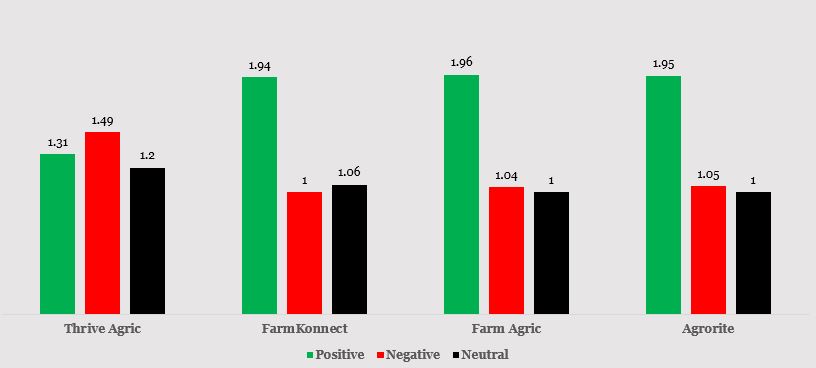
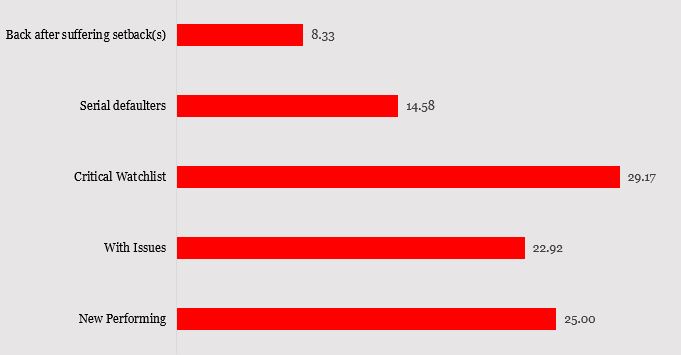
Some of the issues raised by the writer were examined and analysed by our analyst using recent customer reviews of some of the players. Customer feelings about Thrive Agric, FarmKonnect, Farm Agric and Agrorite are mined and analysed. Our analyst also examines an online forum’s rating of the players. Analysis of 48 players reveals that 29.17% are on the critical watchlist, while 22.92% are having serious issues as at January 7, 2021 [see Exhibit 2]. According to the forum, players on the critical watchlist are those found as suspected scammers. Those found for not paying their investors as promised are tagged as serial defaulters. The forum states that Goldvest, Foxygreen, Kenfarms & Agrovet, Shopagric, Farmnow, Farm4me, Farmkonnect, Abadini, Green fold, Farmtrove, DivaRice and Eatrich are the new performing farms [still under observation for now].

In our analysis, it emerged that customer attitudinal dispositions in terms of being positive, negative and neutral towards processes, solutions and employees are impacting the players. For instance, one of the results establishes 76.5% higher risk of negative disposition on the smart farming and digital finance solutions.

Exhibit 1: Sentiment Dominance by Brand

Source: Google Review, 2021; Infoprations Analysis, 2020

Note: 2 is expected score of sentiment dominance

Exhibit 2: Number of Performing Agritech Companies and Those with Problems

Source: Nairaland, 2021; Infoprations Analysis, 2021

The Complaints and Insurance Companies

When the pandemic started and operational activities were disrupted, expectation among the investors and business analysts was that the companies should be able to pay their investors having insured investors’ funds [as stated in their marketing communication materials] with insurance companies. However, an insurance professional bemoaned the fact that various Agritech platforms use insurance protection claim to lure investors. A national newspaper also described the insurance statement of the companies as half-truths. There is no doubt these two positions and the negative reviews in the public domain would continue to have damaging impacts on the players’ equity and profitability.

What Should Be Done?

There is a need for the integration of customer reviews into the management of investors’ complaints. This is necessary as our analysis shows that employees in charge of managing customer reviews on an online forum [Google Review] are not using the right response strategies. Our expectation is that when this is considered in addition to internal processes and people that need reengineering customers would have increased satisfaction with direct returns to the players.