DD
MM
YYYY

PAGES

DD
MM
YYYY

spot_img

PAGES

Home Blog Page 597

Bitcoin Slips as Recovery Stalls, Bears Eye $100K Support Level

0

Bitcoin slipped early Thursday as the recent crypto market recovery lost momentum, despite renewed optimism that the Federal Reserve may soon begin cutting interest rates.

On Wednesday night, Bitcoin briefly touched $112,529, its highest point of the week. According to analysts, this correction shifted the market from a “euphoric phase” to a net distribution phase, cooling the overly bullish sentiment that had built up earlier in August.

The world’s largest cryptocurrency later declined, trading around $109,295 in early Thursday trading, down 0.4% over the past 24 hours. Despite the recent pullback, BTC remains up more than 2% in September, as it attempts to rebound from a late-August selloff that dragged prices from record highs above $124,000 to near $108,000.

Data from Glassnode revealed that Bitcoin’s surge to record highs in mid-August briefly pushed 100% of BTC supply into profit, signaling peak market euphoria.

However, by August 19, demand began showing signs of weakness, with BTC slipping back below this key profitability band. Currently, 90% of Bitcoin supply is still in profit, positioned within the $104,100 to $114,300 range, which historically acts as a “consolidation corridor” following euphoric market peaks.

Trade Nation analyst David Morrison noted the unusual trading behavior earlier in the week. He said,

It was interesting to see the crypto market rally sharply alongside gold and the U.S. dollar, even as equities experienced their biggest pullback since early August. This suggests crypto benefited from safe-haven flows as investors reduced exposure to stocks during Tuesday’s risk-off session.”

Resistance Levels Holding Firm

Bitcoin’s relief rally has repeatedly stalled at the $112,000 level this week, a clear sign that bears are aggressively defending this price zone.

The $111,700–$115,500 range is emerging as a major supply and resistance zone, aligning with both the 50-day and 100-day simple moving averages (SMA).

Bulls need to flip this region into strong support to confirm the end of the current correction.

Failure to do so risks further downside, potentially pushing BTC toward the critical $100,000 level.

Bulls vs. Bears: The $100K Showdown

Many market analysts are now focused on the $100,000 price level, which could determine Bitcoin’s short-term trajectory.

Some traders believe a retest of $100K support is inevitable as part of the ongoing correction. One trader even warned that the bull market could end if Bitcoin fails to hold above this mark, potentially signaling the start of a new bear market as early as October.

Key Technical Indicators

BTC is currently attempting to break above a downward-sloping trendline that has capped price action since the mid-August correction began.

At the same time, analysts are also tracking Tether’s market dominance (USDT.D). Historically, Bitcoin price and Tether dominance move inversely. USDT.D is now testing its own downward trendline.

A breakout in Tether’s dominance could indicate increased market caution and potential BTC weakness.

Outlook

Bitcoin faces a pivotal moment as bulls and bears battle for control. A successful breakout above $115,500 could reignite bullish momentum and signal a potential end to the correction phase. Failure to defend $100,000 support could confirm bearish control, opening the door to a deeper correction.

As September progresses, the crypto market will closely watch macroeconomic signals, especially the Federal Reserve’s rate decisions as they remain a key driver of investor sentiment and risk appetite.
Chinese Tech Giants Still Chase Nvidia Chips Despite Beijing’s Warnings Amid U.S.–China Tech War

0

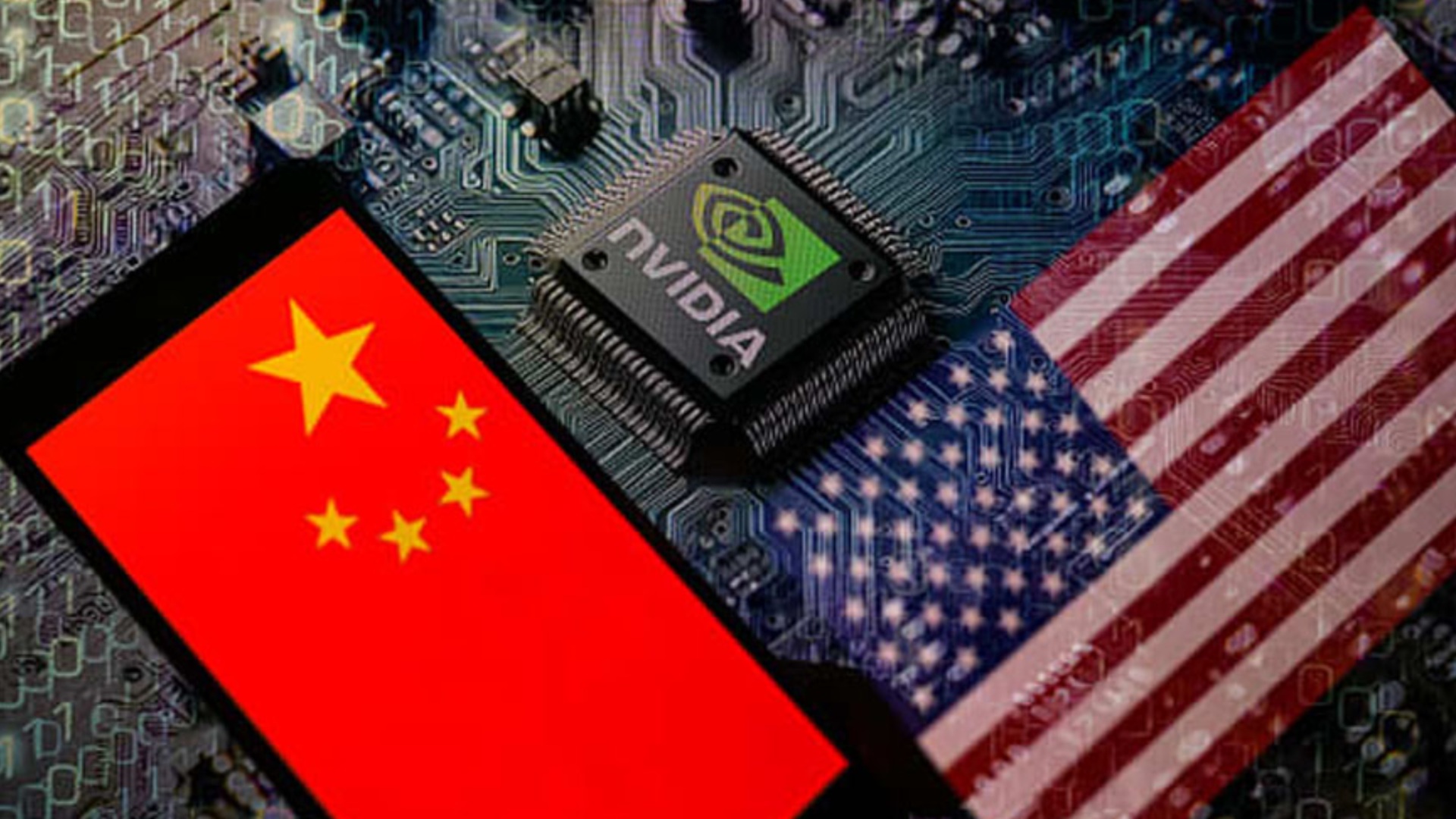
Chinese technology giants, including Alibaba and ByteDance, are pressing ahead with their pursuit of Nvidia’s artificial intelligence chips, despite clear signals from regulators in Beijing discouraging such purchases, four people familiar with procurement discussions told Reuters.

The companies are particularly keen on securing Nvidia’s H20 model, which the U.S. firm in July regained permission to sell in China. Tech executives want reassurance that their orders are being processed while watching closely for developments around Nvidia’s next product, the tentatively named B30A, based on the company’s powerful Blackwell architecture, two of the sources said.

If approved for export by Washington, the B30A is expected to cost roughly double the H20’s price tag of $10,000 to $12,000, but Chinese buyers see the deal as worthwhile given that it promises to be up to six times more powerful, according to two sources.

Both the H20 and B30A are downgraded versions of Nvidia’s global models, designed specifically to comply with U.S. export restrictions aimed at keeping China from accessing the world’s most advanced AI chips.

The Geopolitical Flashpoint

China’s access to cutting-edge AI chips has become one of the central flashpoints in the U.S.–China battle for tech supremacy. Nvidia, which generated about 13% of its revenue from China in the past fiscal year, has lobbied against overly harsh restrictions. Executives argue that if Chinese firms are entirely cut off, they may shift permanently to domestic competitors such as Huawei or Cambricon, threatening Nvidia’s long-term foothold.

That argument has resonated in Washington, where officials have scaled back from their most restrictive proposals. Still, U.S. President Donald Trump has extracted concessions, including a deal for the U.S. government to take 15% of H20 revenue.

Beijing, meanwhile, is playing a delicate balancing act. Authorities have summoned companies like Tencent and ByteDance to question their Nvidia chip purchases, expressing concerns over information security risks. But regulators have stopped short of issuing an outright ban, reflecting the continued dependence of Chinese AI leaders on U.S. technology.

Supply and Performance Gaps

Domestic supply from Huawei and Cambricon remains limited, and three engineers at Chinese tech firms confirmed Nvidia’s chips still outperform local rivals.

Nvidia has stockpiled an estimated 600,000 to 700,000 H20 units, according to sources, and has instructed TSMC to produce more. The company is even planning to send B30A samples to Chinese clients for testing as early as September.

CEO Jensen Huang has tried to reassure buyers, telling customers and suppliers that demand for the H20 remains strong and urging them not to worry about availability. He estimates that the Chinese market could represent $50 billion in potential business for Nvidia if the company can keep offering competitive products.

Still, the uncertainty has weighed on Nvidia’s stock. In late August, the company issued a tepid quarterly sales forecast that excluded possible revenue from China, rattling investors. Shares have since lost 6% despite Nvidia holding the crown as the world’s most valuable company.

Backstory: A Long Tradition of U.S. Export Controls

The current standoff over AI chips is not an isolated episode—it is the latest chapter in a long-running American strategy of using export restrictions as a lever of power in the semiconductor industry.

For decades, Washington has treated microchips as both a commercial asset and a strategic weapon. In the 1980s, it imposed curbs on Japan’s semiconductor rise, fearing Tokyo’s growing dominance would undermine U.S. industry. More recently, the focus shifted to China. Beginning with restrictions on sales to Huawei in 2019, the U.S. has steadily tightened rules to block Beijing from accessing advanced chips used in smartphones, 5G networks, and increasingly, artificial intelligence.

The most aggressive curbs came in October 2022, when Washington banned U.S. firms from exporting certain advanced semiconductors and chip-making equipment to China. That policy effectively forced Nvidia to redesign its high-performance GPUs—first the A100, then the H100—into downgraded versions like the A800 and now the H20, specifically tailored to avoid triggering export limits.

What makes the current dispute unique is its scale: artificial intelligence is seen as the next general-purpose technology, akin to the internet or electricity. That makes the chips powering AI not just commercial goods, but strategic assets in a global race for technological leadership.

Atlassian to Acquire AI Browser Startup The Browser Co. for $610m, Eyeing Enterprise Workflow Integration

0

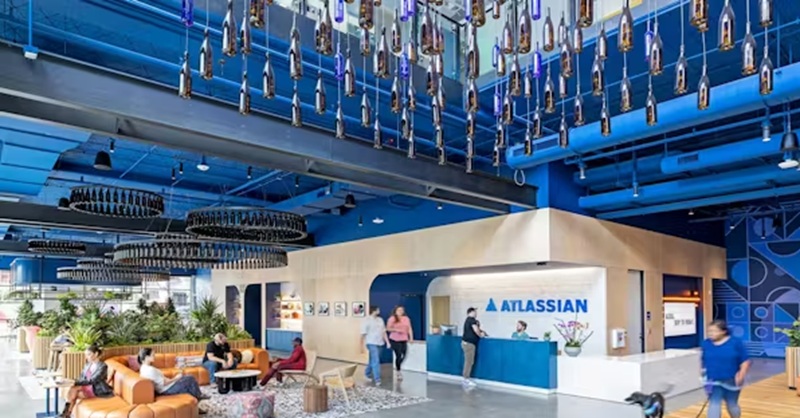
Atlassian has agreed to acquire The Browser Co., the New York-based startup behind the Arc and Dia browsers, in a $610 million all-cash deal that will close in the company’s fiscal second quarter, ending in December.

The purchase brings one of the most talked-about browser startups of the past five years under the umbrella of Atlassian, best known for its Jira project management software and Confluence collaboration platform. Founded in 2019, The Browser Co. has attempted to challenge incumbents such as Google’s Chrome and Apple’s Safari by rethinking the browser as a productivity hub rather than a mere tool for navigating the web.

Its flagship Arc browser, introduced in 2022, offered collaborative and organizational features including a built-in whiteboard and shared tab groups. Earlier this year, the startup rolled out Dia in beta, a lighter browser that integrates an AI assistant capable of analyzing multiple tabs at once.

Atlassian co-founder and CEO Mike Cannon-Brookes said browsers today are poorly designed for the realities of modern work.

“Whatever it is that you’re actually doing in your browser is not particularly well served by a browser that was built in the name to browse,” he said. “It’s not built to work, it’s not built to act, it’s not built to do.”

Cannon-Brookes said Arc had helped him personally better manage his workload, especially its ability to organize and automatically archive old tabs. Still, he acknowledged that The Browser Co. struggled to convert its innovations into mainstream adoption.

“Our metrics were more like a highly specialized professional tool (like a video editor) than a mass-market consumer product, which we aspired to be closer to,” The Browser Co. CEO Josh Miller explained in a newsletter update.

The company eventually halted new feature development for Arc, sparking speculation about whether it might release the browser under an open-source license.

Growing Investor Interest in Browsers

The deal comes amid heightened investor fascination with AI-driven browsers. Perplexity, the fast-growing AI search company, made headlines by offering Google $34.5 billion for Chrome — a bid widely seen as symbolic but indicative of the renewed strategic importance of browsers. The Information reported that Perplexity also held talks with The Browser Co. in December, while OpenAI was rumored to be circling the startup as well.

But asked if Atlassian had considered Chrome, Cannon-Brookes dismissed the notion.

“I’m not even sure if there is a bidding competition for Chrome,” he said. “I didn’t see Google putting up an auction just yet. Look, I think we focus on actually getting acquisitions done and actually making those products a part of a coherent whole and delivering value for our customers. I’m not sure that stunt PR acquisition offers are really our thing, but we’ll leave that for them to do.”

The Browser Co. was valued at $550 million last year, with investors including Atlassian Ventures, Salesforce Ventures, Figma co-founder Dylan Field, and LinkedIn co-founder Reid Hoffman.

A Strategic Bet in Line With Atlassian’s M&A Playbook

At $610 million, this is not Atlassian’s largest acquisition — it paid $975 million for collaboration platform Trello in 2017 and $425 million for OpsGenie in 2018 — but it sits firmly in the company’s pattern of buying tools that expand its reach into adjacent productivity markets. Unlike Trello, which already had a large user base, The Browser Co. is being acquired more for its product vision and AI capabilities than its scale.

Analysts say the deal underlines Atlassian’s willingness to spend aggressively on assets that can deepen its product ecosystem. With annual revenues topping $4 billion, Atlassian can absorb acquisitions in the $500 million to $1 billion range without overextending, though investors will be watching to see if the company can turn The Browser Co.’s early innovations into meaningful enterprise adoption.

The financial risk is relatively modest compared to the potential upside: if Dia and Arc’s AI features can be successfully integrated into Atlassian’s suite, the acquisition could elevate the browser from a commodity tool into a new entry point for enterprise productivity.

However, the deal, for Atlassian, is not just about owning another piece of software, but about redefining the browser itself as an enterprise tool. Jira and Confluence already live inside web environments, and a browser optimized for collaboration could become the central nervous system of Atlassian’s ecosystem.

“It’s really about taking Arc’s SaaS application experience and power user features, and Dia’s AI and elegance and speed and sort of svelte nature, and Atlassian’s enterprise know-how, and working out how to put all that together into Dia, or into the AI part of the browser,” Cannon-Brookes said.

The acquisition is likened to what happened in the early days of cloud computing, when startups like Heroku and GitHub pioneered developer platforms before being snapped up by Salesforce and Microsoft. The Browser Co. was similarly experimenting with what browsers could become in an AI-driven world. Atlassian’s acquisition suggests that consolidation in this space is already beginning.

However, the challenge now is execution. Some analysts believe that if Atlassian can integrate Arc’s creative design, Dia’s conversational AI, and its own enterprise muscle, it could redefine the browser for the next era of work.

Palantir Cofounder Joe Lonsdale Slams $8.9bn Government Investment in Intel as “Cronyism”

0

Joe Lonsdale, cofounder of Palantir and founding partner of Austin-based venture capital firm 8VC, on Thursday voiced deep unease over the federal government’s $8.9 billion investment in Intel, calling the move an unusual and potentially troubling precedent.

Appearing on CNBC’s Squawk Box, Lonsdale said he was “uncomfortable” with Washington’s decision to inject billions directly into one of the country’s biggest chipmakers.

“It’s very weird, of course, for the government to be taking a stake in something,” Lonsdale said. “It’s also a little bit weird for the government to be giving $9 billion to a company, too.”

Lonsdale described the deal as “cronyism in some form.” Cronyism, the softer cousin of nepotism, generally refers to the practice of bestowing jobs, contracts, or benefits on allies or well-connected firms.

The Unusual Nature of the Deal

The funding package draws from the US CHIPS and Science Act, the $52 billion law signed in 2022 to boost domestic chipmaking and reduce reliance on foreign supply chains. According to Intel, the government’s equity stake will be funded by:

  • $5.7 billion in grants already awarded under CHIPS but not yet disbursed, and
  • $3.2 billion awarded through the Secure Enclave program, which aims to expand secure US semiconductor manufacturing.

What makes the Intel deal so striking is that it is not happening during a financial crisis or national emergency. Historically, government equity stakes in private firms have been rare and tied to economic distress — for example, the 2008 financial crisis, when Washington took temporary ownership in banks and automakers.

This investment, however, comes at a time when Intel is under pressure to catch up with Taiwan Semiconductor Manufacturing Company (TSMC) and Samsung in advanced chip production — but not on the verge of collapse. That raises questions about whether the move could become a template for broader industrial policy.

A Shift Toward Sovereign Wealth-Style Intervention?

Kevin Hassett, Director of the National Economic Council, defended the move last month, telling CNBC that more such investments could follow. He likened the Intel stake to a sovereign wealth fund, which many countries use to invest directly in industries and companies and redistribute profits to citizens.

“There’ll be more transactions, if not in this industry, in other industries,” Hassett said.

If true, the Intel deal may mark the start of a new US government approach to industrial investment, blurring the lines between subsidies, bailouts, and equity stakes.

While critical of what he sees as favoritism, Lonsdale acknowledged one exception: national security. He said he would be more comfortable if the investment could be directly tied to safeguarding America’s technological independence.

“If that’s the case, there’s no reason for the government not to take things,” he said.

For Intel, the deal is a windfall. The $8.9 billion injection strengthens its balance sheet as it attempts one of the most ambitious factory buildouts in its history, including multibillion-dollar fabs in Arizona and Ohio. The investment also signals that the US government views Intel as a national champion in the semiconductor race.

For investors, however, the move raises two competing narratives. On one hand, government backing could lower downside risk, effectively making Intel “too strategic to fail.” On the other hand, it raises concerns about political entanglement, precedent-setting intervention, and whether Washington will now favor certain firms over others in private markets.

However, the Intel deal is seen as emblematic of a new era of techno-nationalism, where semiconductors are treated not just as commercial products but as geopolitical assets. With US-China tensions mounting and supply chain disruptions still fresh in memory, Washington appears willing to experiment with direct ownership to ensure chip security.

But Lonsdale’s warning suggests that Silicon Valley’s investor class may remain wary of what they see as creeping industrial favoritism. If equity stakes become the norm rather than the exception, critics argue, it could tilt competition and blur the boundary between free markets and state-managed capitalism.

BlockDAG: The Top Crypto Presale Surpassing Rivals With $396M Raised & 100x Potential

0

Investing in cryptocurrency can often feel crowded with countless platforms offering niche solutions, from meme coins to remittances to isolated scaling ideas. Yet many lack the complete balance of adoption, infrastructure, and growth. BlockDAG (BDAG) has changed this narrative, establishing itself as the top crypto presale of 2025 with over $396 million raised and 25.5 billion coins sold. Unlike typical presales, BlockDAG enters the market already equipped with technology, users, and momentum, making it both a strong growth candidate and a near-term ROI opportunity.

BlockDAG: Why It’s the top crypto presale

BlockDAG is more than another blockchain. It is a Layer 1 network built on hybrid Proof-of-Work and Directed Acyclic Graph (DAG) architecture, ensuring both Bitcoin-level security and Solana-level scalability. With capacity for up to 10 blocks per second, BDAG combines high throughput with decentralization.

Adoption levels are remarkable. BlockDAG’s X1 mobile miner app has attracted more than 2.5 million global users, letting anyone with a smartphone mine BDAG. Industrial adoption is also clear, with 19,500 ASIC miners sold and over 200,000 holders joining before mainnet.

Developers are equally engaged, with more than 4,500 already building 300+ dApps, supported by EVM compatibility and low-code contract tools. This ensures BDAG enters the market as a ready ecosystem with miners, builders, and users all in place.

At Batch 30, BDAG is priced at $0.0013 after the BDAG Deployment Event adjustment, compared to $0.001 in Batch 1. This price realignment was designed to reward early participants while marking a major project milestone. Even at this level, with a confirmed listing price of $0.05 this year, upside potential remains significant, with analysts suggesting BlockDAG could climb to $1 in its first year, delivering up to a 100x return.

Why BlockDAG Outpaces Other Presales

Remittix: Strong in Remittances but Limited in Reach

Remittix is working to reshape the $1.5 trillion remittance market by reducing fees on global transfers. While valuable, its scope remains narrow. BlockDAG, by contrast, supports everything from DeFi to NFTs to enterprise dApps, giving it far wider appeal.

Bitcoin Hyper: Targeting Bitcoin Alone

Bitcoin Hyper focuses on Bitcoin scalability, offering faster settlement and lower fees. While appealing to Bitcoin enthusiasts, its impact stops there. BlockDAG not only addresses scalability but also delivers a complete ecosystem of wallets, apps, miners, and developer tools, giving it far greater expansion potential.

TOKEN6900: Meme Popularity Without Depth

TOKEN6900 thrives on meme-driven culture and has raised millions, but its strength lies mainly in speculation and hype. BlockDAG offers something more stable, a secure, audited architecture with proven adoption, giving it credibility beyond meme-driven growth.

Maxi Doge: Branding With Higher Risk

Maxi Doge uses bold branding and humor to attract traders, but its roadmap remains speculative. In contrast, BlockDAG is already halfway to its $600M presale goal and has built strong infrastructure for long-term sustainability, making it a more reliable choice.

Why BlockDAG Is the top crypto presale of 2025

Among the presales in 2025, BlockDAG clearly stands apart. It combines adoption, technology, and scalability, while others remain either hype-driven or narrowly focused. BlockDAG’s achievements include:

  • $396M+ raised through presale funding
  • 7B+ coins sold
  • 3M+ users on the X1 miner app
  • 200K+ holders pre-mainnet
  • 19,500 ASIC miners sold
  • 4,500 developers building 300+ dApps

With sponsorships from Inter Milan and U.S. sports teams, BlockDAG has already established global visibility. Its hybrid architecture positions it as one of the few upcoming Layer 1 projects capable of competing with established giants, and still priced under $1.

The Best Choice for 100x Growth

While Remittix, Bitcoin Hyper, TOKEN6900, and Maxi Doge bring specific strengths, none match BlockDAG’s combination of technology, user adoption, and scale. By merging Bitcoin’s security with Solana’s speed and enabling global mining access through its X1 app, BlockDAG is far more than a presale; it is a functioning ecosystem preparing for long-term growth.

For those seeking the top crypto presale of 2025, BDAG is already proving itself. With its presale price now at $0.0013 and analysts projecting $1, the opportunity is closing fast. A 100x return may not remain speculation much longer. BlockDAG could turn it into reality.