DD
MM
YYYY

PAGES

DD
MM
YYYY

spot_img

PAGES

Home Blog Page 598

U.S. Tariffs Are Significantly Impacting Global Trade and Markets

0

The appeal of President Donald Trump’s tariffs, following a federal appeals court ruling on August 29, 2025, that deemed most of his “reciprocal” and fentanyl-related tariffs illegal, has introduced significant uncertainty into global markets.

US tariffs are significantly impacting global trade, causing uncertainty and volatility in the market. The current effective US tariff rate stands at 15.8%, with expectations to approach 18-20% due to sectoral tariffs imposed later this year. This increase in tariffs affects not only bilateral trade but also global supply chains, leading to higher costs and slower growth.

Key Effects of US Tariffs

Companies are carrying excess inventory, hedging against losses, and reconfiguring supply chains, which raises costs and discourages investment. Trade policy uncertainty weighs on the global economy, potentially leading to financial instability and erosion of trust among trading partners.

Firms are front-loading shipments before tariff deadlines, often switching to faster and more costly forms of transport, like air shipments, which jumped nearly 10% in the first quarter of 2025 compared to the same period in 2024. The new average effective tariff rate is estimated to be 13.5%, which may lead to a negative income effect but won’t significantly alter GDP growth forecasts.

A trade agreement with the US could support Japanese stocks and the yen, potentially lifting corporate earnings by 3 percentage points or GDP by 0.3 percentage points. A 15% tariff on most EU goods entering the US, except for certain products like aircraft and semiconductor equipment.

Countries with multiple markets can redirect shipments when one closes, cushioning losses. Trade agreements provide rules and dispute settlement mechanisms, reducing shocks and encouraging long-term investment. Advance notice of policy changes, clear data-driven trade measures, and stronger trade agreements can help restore stability and strengthen resilience.

The tariffs, imposed under the International Emergency Economic Powers Act (IEEPA), include a 10% baseline on nearly all U.S. imports, 25% on Canada and Mexico, and 10% on China, with some countries facing rates up to 50%. Despite the court ruling, the tariffs remain in effect pending a potential Supreme Court review, with a deadline for appeal set for mid-October 2025. This legal uncertainty has spooked markets, contributing to volatility and cautious investor sentiment.

The initial tariff announcements in April 2025 triggered a sharp sell-off, with the S&P 500 dropping nearly 5% on April 3, its worst day since June 2020, and the Nasdaq falling 5.97%. Asian markets, like Japan’s Nikkei 225 and South Korea’s Kospi, also declined by 2% and 1%, respectively, in early trading.

By August 2025, markets showed some resilience, with European and Asian shares mostly higher on August 7, as investors began analyzing the tariffs’ impacts after months of uncertainty. However, U.S. stocks closed mixed, with the Dow down 0.51% and the S&P 500 slightly lower, reflecting ongoing concerns.

The tariffs initially boosted the U.S. dollar and safe-haven assets like the yen, but agreements to delay tariffs on Mexico and Canada reversed some currency moves. Long-term risks include a potential weakening of the dollar if confidence in U.S. economic policy wanes.

Economists warn that tariffs will likely increase U.S. consumer prices, with Yale’s Budget Lab estimating an average cost of $2,400 per household in 2025, particularly impacting clothing (up 38-40%). The Penn Wharton Budget Model projects a 6-8% GDP reduction and 5-7% wage drop long-term.

The IMF and OECD downgraded 2025 global growth forecasts to 3.0% and below 2%, respectively, citing tariffs as a drag on economic activity. Retaliatory tariffs, like China’s 34% levy on U.S. imports, could escalate trade wars, further slowing growth.

Export-dependent nations like India face severe losses, with potential $37 billion export cuts due to 50% tariffs. Japan’s auto sector and Ireland’s pharmaceutical exports are also vulnerable, though some countries secured lower rates through trade deals.

Posts on X reflect mixed sentiment, with some praising tariffs for reducing U.S. deficits by $4 trillion over 10 years, while others highlight job losses in countries like India. Analysts note that the ongoing legal battle and Trump’s threat to “unwind” trade deals with the EU, Japan, and South Korea if the Supreme Court rules against him add to global uncertainty.

The appeal’s outcome, potentially decided by the Supreme Court, will be critical. If upheld, the ruling could force tariff refunds and disrupt trade deals, further unsettling markets. If overturned, tariffs could persist, intensifying trade wars and inflationary pressures. For now, businesses and investors face a turbulent landscape, with many countries seeking to diversify markets to mitigate reliance on the U.S.


Looking for the Best Crypto Presales to Join Now? These Projects Are Attracting the Smart Money!

0

Crypto presales are heating up in 2025, and this cycle’s winners are already taking shape. With Bitcoin breaking past $124,000, institutions are finally treating digital assets as long-term plays. That’s triggered a massive wave of interest in the best presale crypto opportunities, where early entries could mean exponential returns.

Amid all the noise, four names have carved out serious attention: BlockDAG (BDAG), Cold Wallet (CWT), Remittix (RTX), and Bitcoin Hyper (HYPER). Each serves a unique purpose, from core infrastructure to real-world payments, but what they all share is momentum, community buzz, and growing numbers. These aren’t just promises. They’re projects turning ideas into traction before launch.

1. BlockDAG: The $396M Giant With 2,900% Gains!

BlockDAG (BDAG) is dominating the best presale crypto scene with real numbers and real momentum. It’s already pulled in $396 million, sold 25.9 billion coins, and sits at $0.0013 until October 1. As the BlockDAG Deployment Event approaches, the presale price has been finalized at $0.0013, marking the end of tier-based bonuses and the start of equal access for all.

What’s fueling the hype? For starters, BlockDAG’s X1 mobile miner app has hit 3 million users, while over 200,000 holders and 19,500+ ASIC miners have joined the network. Its hybrid DAG–Proof-of-Work architecture enables up to 10 blocks per second, blending scalability and decentralization in one system.

The project’s developer base is just as strong, 4,500+ devs are already building more than 300 dApps, gearing up for mainnet. Add global sports partnerships like Inter Milan and U.S. teams into the mix, and the exposure is huge. With a confirmed $0.05 launch price, many see BDAG as a top candidate to hit $1+, and with this kind of momentum, it’s easy to see why.

2. Cold Wallet: Where Gas Fees Turn into Free Crypto

Cold Wallet (CWT) is proving that people want more than promises; they want utility now. Backed by over 2 million users and $6.8 million raised, the wallet rewards users instead of draining them. Every gas fee paid, every token swap, and every ramp transaction earns cashback in CWT tokens, flipping the traditional model.

Currently priced at $0.00998 in Stage 17, the project has set its sights on a $0.3517 listing, translating to 3,632% potential returns for early buyers. But this isn’t just hype. Cold Wallet recently acquired Plus Wallet in a $270M deal, instantly adding a massive user base to its ecosystem.

With a unique cashback engine, real traction, and a focus on sustainable token flows, Cold Wallet is emerging as one of the best presale crypto projects of the year, especially for those looking beyond empty narratives.

3. Remittix: Transfer Money in Seconds, Not Days

The global remittance market sees over $1.5 trillion move annually, and Remittix (RTX) wants to streamline every bit of it. With a presale price under $0.10, RTX has already raised millions and positioned itself as a low-cost, instant alternative to transfer giants like Western Union.

Its system is straightforward: transfer money across borders in seconds, and at a fraction of the cost. Users can also stake RTX for passive income, creating a dual-use case that’s both practical and rewarding. While short-term targets sit around $0.20, long-term projections suggest it could push past $1.50 if adoption scales.

While it may not have the layered ecosystem of BlockDAG or the cashback appeal of Cold Wallet, Remittix has one massive advantage: a clear use case in a trillion-dollar industry. That alone earns it a spot among the best presale crypto contenders of 2025.

4. Bitcoin Hyper: The Layer 2 That Fixes Bitcoin

Bitcoin Hyper (HYPER) wants to speed up Bitcoin, and it’s doing that by layering in modern tech. As a layer-2 solution built for Bitcoin, it uses the Solana Virtual Machine (SVM) for faster throughput, while ZK proofs ensure privacy and finality before transactions settle on Bitcoin’s main chain. With $11.2 million raised so far, the project is gaining steam. HYPER supports staking (up to 98% APY), community governance, and even dApp development.

As Bitcoin continues to dominate headlines, tools like Hyper could become crucial, giving it the chance to ride Bitcoin’s momentum while offering higher upside due to its small cap. If Bitcoin needs a faster engine, HYPER wants to be the turbocharger. That’s a bold play, and one that makes it a serious name in the best presale crypto arena.

The Bottom Line

In a sea of promises and whitepapers, most presales fall short. But BlockDAG, Cold Wallet, Remittix, and Bitcoin Hyper are proving they’ve got more than just hype; they’ve got progress, purpose, and growing numbers to back it up.

BlockDAG is already a force, racking up $396M, 25.9B coins sold, and nearly 3 million miners on its app. Cold Wallet is turning wallet fees into income streams through cashback rewards.

Remittix is gunning for a slice of the $1.5T remittance market with fast and low-cost transfers. And Bitcoin Hyper is optimizing BTC’s future through high-speed scaling solutions. For anyone eyeing the best presale crypto in 2025, these four aren’t just early-stage bets; they’re front-runners with real potential to stick around well beyond launch.

Bitcoin Treasury Companies Stocks Underperform Relative to Bitcoin

0

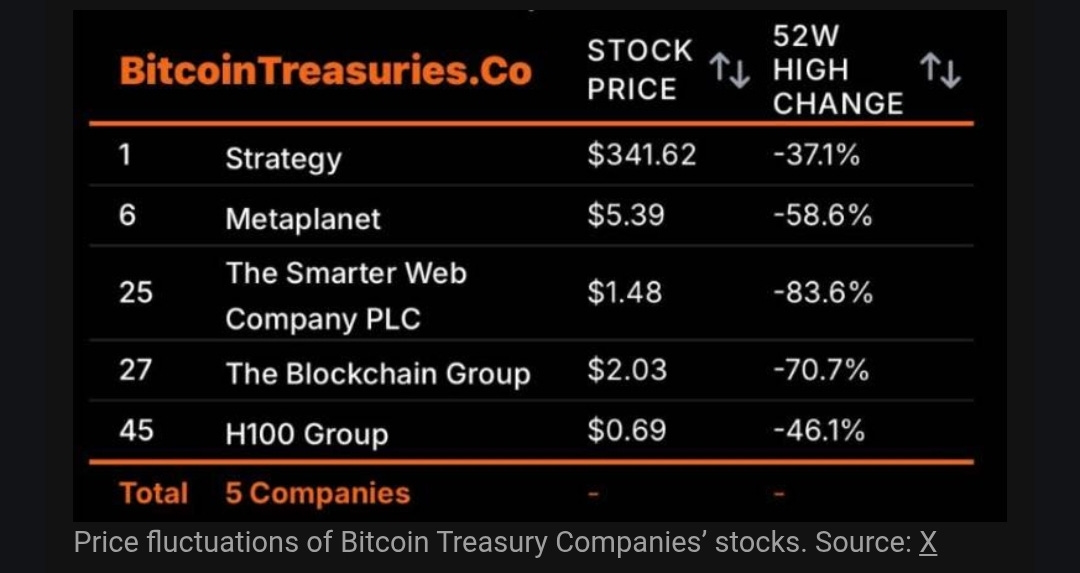
Some Bitcoin treasury companies, like Strategy (formerly MicroStrategy), have seen their stock prices underperform relative to Bitcoin’s price, which hit all-time highs above $120,000 in 2025.

For instance, Strategy’s share price has not kept pace with Bitcoin’s rally, partly due to share dilution from issuing new equity to fund Bitcoin purchases. This has led to a reduced net asset value (NAV) premium, with investors paying less of a premium compared to earlier years when Strategy was a first-mover.

Market Concerns and Risks: Analysts have raised concerns about the sustainability of the Bitcoin treasury model, particularly for newer entrants. A July 2025 report from Cointelegraph warned that only a few companies with strong leadership and disciplined strategies are likely to survive a potential Bitcoin bear market.

The report outlined a “death spiral” scenario where a drop in Bitcoin’s price could erode share prices close to NAV, triggering financial distress. Additionally, a Financial Times article from August 2025 cautioned that a crypto winter could lead to painful consequences for investors, especially for companies relying on debt to fund Bitcoin purchases.

Critics, including a former Wall Street regulator, have suggested that debt-fueled treasury strategies could precipitate a broader crypto crash. Some companies have faced challenges due to Bitcoin’s price volatility.

A CryptoBreaking report from August 29, 2025, noted that several major corporations, including those in tech and finance, encountered setbacks as Bitcoin’s value fluctuated, impacting their treasury holdings.

While specific company names weren’t always detailed, the report highlighted the complexities and risks of holding large Bitcoin reserves. For example, Strategy’s stock was down 16% in August 2025, and CEA Industries, a Canadian vape company, saw a 28% drop after a brief surge.

Counterpoints and Growth: Despite these concerns, the sector isn’t uniformly in decline. Corporate Bitcoin adoption has surged, with 152 publicly traded companies holding over 950,000 BTC worth $110 billion as of August 2025. Strategy remains the largest holder, with over 630,000 BTC, and its market cap hit new highs in July 2025, reflecting Bitcoin’s price rise.

New entrants like Trump Media & Technology Group, which raised $2.5 billion for a Bitcoin treasury, and Treasury B.V., backed by the Winklevoss brothers, indicate ongoing investor enthusiasm. Posts on X also reflect bullish sentiment, with claims that “eventually all companies will be Bitcoin treasury companies”.

Systemic Risks: Critics warn of systemic risks if Bitcoin’s price crashes, as companies with significant debt or over-leveraged positions could become forced sellers, exacerbating market downturns. This concern is amplified by the rapid rise of new treasury companies, with 51 debuting in the first half of 2025 alone.

However, some analysts note that equity-based financing (common among these firms) may limit broader market fallout compared to debt-heavy strategies. While some Bitcoin treasury companies are experiencing stock price declines and facing volatility-related challenges, the sector as a whole isn’t crashing.

The trend of corporate Bitcoin adoption continues to grow, driven by regulatory clarity and macroeconomic factors, but risks like price volatility, debt financing, and dilution are real. Investors should approach these companies cautiously, as their performance is closely tied to Bitcoin’s price and their ability to manage financial engineering effectively.

As XRP Battles Resistance and Hedera Stalls, BlockDAG’s Near $400M Presale Proves the Clear Winner

0

Crypto markets are once again offering a split-screen view. On one side, Hedera (HBAR) is consolidating after weeks of pressure, trying to claw back from recent declines. On the other hand, XRP is flashing technical buy signals and renewed whale interest, fueling speculation about another push higher. These stories reflect the constant balance between optimism and caution across the digital asset market.

Yet, while traders debate short-term ranges, BlockDAG is charting its own path. With $400 million almost raised in presale funding and 25.7 billion BDAG sold, BlockDAG is combining presale traction with adoption metrics that few projects achieve pre-launch. Add 3 million users mining daily on its X1 App and nearly 20,000 rigs sold, and it’s clear BlockDAG is playing a very different game, one rooted in momentum, visibility, and execution.

Hedera: Range-Bound but Showing Flickers of Strength

Hedera (HBAR) has been consolidating in a narrow trading range after losing more than 11% in recent weeks. The token is holding support near $0.230 while facing resistance around $0.247, creating a tight corridor for price action. For traders, this band signals indecision, waiting for a clearer direction before committing further capital.

Technical signals show bearish pressure beginning to ease. The RSI has recovered slightly to 41.86 after dipping below 40, and the MACD has turned positive, with the histogram showing its first green bars in weeks. If these signs hold, momentum could drive HBAR toward $0.322 and potentially $0.420, though resistance levels remain stiff.

In derivatives markets, open interest has slipped 1.71% to $396.8 million, easing some of the speculative heat. Funding rates remain slightly positive, hinting at cautious optimism. For now, Hedera’s outlook depends on whether it can break above $0.247. Until then, its story remains one of patience and watchful waiting.

XRP: Buy Signals Backed by Whale Activity

XRP is finding new momentum after its recent dip to $2.85. The TD Sequential indicator, a tool often used to track reversals, has flashed a buy signal. Analyst Ali Martinez noted its accuracy earlier this month when it signaled XRP’s local top before a 15% correction. Now, the same tool points to a rebound in progress.

Adding weight to this setup, whales have stepped in. Roughly 100 million XRP, valued at $300 million, was moved off Bitstamp in four transactions of 25 million each, transferred into private wallets. This activity suggests large holders are positioning for a potential breakout, even though net flows remain slightly negative overall.

From a structural perspective, XRP is forming a pennant pattern. A breakout above it could trigger a run beyond $4. Additional catalysts, like potential ETF approvals or Ripple’s continued pursuit of a U.S. bank charter, could accelerate momentum. For now, XRP trades near $2.90, with volume down 15% as traders wait for a stronger conviction move.

BlockDAG: Building Momentum With Nearly $400M Raised and Growing Adoption

While Hedera searches for a breakout and XRP leans on whale activity, BlockDAG is rewriting the presale playbook with execution that leaves little to speculation.

The project has now nearly raised $400 million in presale funding, selling 25.7 billion BDAG coins at a flat $0.0013. Early buyers from Batch 1 at $0.001 have already secured gains, while new participants still stand to benefit from strong upside potential as BDAG approaches launch.

Adoption is already global. The X1 App has attracted 3 million users mining daily with simple tap-based engagement, while hardware miner sales have added $7.8 million in revenue, with 19,594 rigs distributed.

Developer activity further underlines its depth. More than 4,500 contributors are building over 300 decentralized applications on the platform, spanning DeFi, gaming, and utility tools. With its hybrid DAG + Proof-of-Work framework capable of 10,000 transactions per second and full EVM compatibility, BlockDAG provides both speed and developer familiarity.

Liquidity is already secured, with confirmed listings on 20 exchanges including MEXC, LBank, BitMart, Coinstore, and XT.com. This guarantees immediate tradability at launch, eliminating one of the most common risks presale buyers face.

Why BlockDAG Commands the Spotlight

Hedera’s steady consolidation shows resilience, and XRP’s whale-driven signals highlight potential for short-term gains. But both are at the mercy of technical patterns and external catalysts. BlockDAG, by contrast, is creating its own momentum through fundraising success, adoption milestones, and global visibility.

Its combination of nearly $400 million raised, 3 million app miners, nearly 20,000 hardware units sold, and 4,500 developers already active makes it one of the most complete presale stories in years.

Hedera’s narrow trading range reflects uncertainty, and XRP’s buy signals hinge on whale accumulation and regulatory catalysts. Both highlight the volatility that defines crypto markets.

BlockDAG, however, is setting itself apart. With $400 million almost raised, a flat presale price of $0.0013, and millions already engaged through apps and miners, it has demonstrated real traction ahead of its official debut.

Presale: https://purchase.blockdag.network

Website: https://blockdag.network

Telegram: https://t.me/blockDAGnetworkOfficial

Discord: https://discord.gg/Q7BxghMVyu

Gemini IPO Targets A $2.22 Billion Valuation and Up To $317M In Funds

0
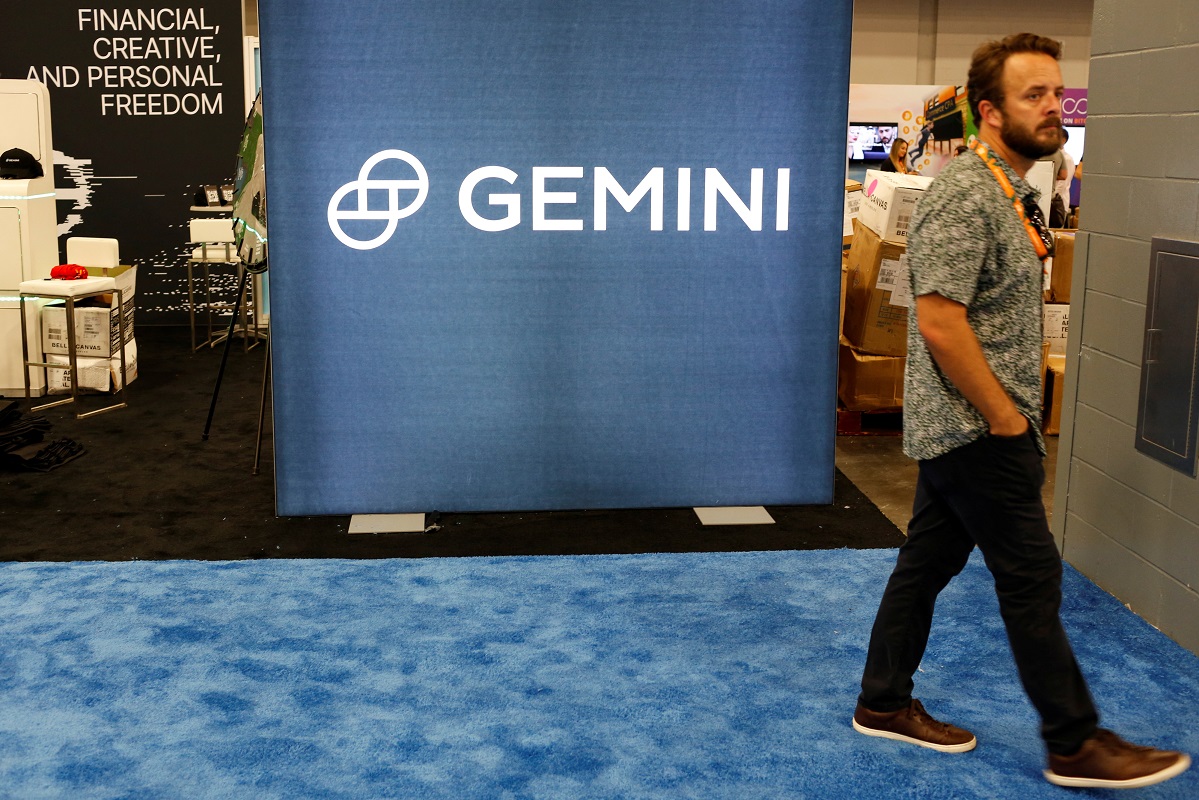
A man walks past the logo of Gemini Trust, a digital currency exchange and custodian, during the Bitcoin Conference 2022 in Miami Beach, Florida, U.S. April 6, 2022. REUTERS/Marco Bello/Files

Gemini, the cryptocurrency exchange founded by the Winklevoss twins, has filed for a U.S. IPO to raise up to $317 million, targeting a valuation of $2.22 billion.

The company plans to sell 16.67 million shares of Class A common stock at $17–$19 each, listing on the Nasdaq under the ticker “GEMI.” The IPO is led by Goldman Sachs and Citigroup, with additional bookrunners including Morgan Stanley and Cantor. Proceeds will support operations, debt repayment, and expansion of stablecoin and crypto services.

Despite $18 billion in assets and offerings like trading, staking, and an XRP rewards credit card, Gemini reported a $282.5 million net loss on $68.6 million revenue in H1 2025. If successful, Gemini will be the third major U.S. crypto exchange to go public, following Coinbase (2021) and Bullish (2025), amid a favorable regulatory environment and strong investor interest in crypto IPOs.

Gemini’s IPO signals the cryptocurrency sector’s maturation, moving from speculative niche to a regulated, institutional-grade asset class. The involvement of Wall Street giants like Goldman Sachs, Citigroup, and Morgan Stanley as underwriters underscores growing confidence from traditional finance, a stark contrast to the skepticism crypto faced a decade ago.

Regulatory tailwinds, such as the U.S. GENIUS Act for stablecoins and a crypto-friendly Trump administration, bolster Gemini’s timing. This mirrors how Meta capitalized on the social media boom and growing internet adoption in 2012 to establish itself as a tech titan.

However, Gemini’s $282.5 million net loss on $68.6 million revenue in H1 2025 raises concerns about financial sustainability, unlike Meta’s pre-IPO profitability ($1 billion net income on $3.7 billion revenue in 2011). This highlights the crypto sector’s volatility and Gemini’s reliance on market optimism rather than proven profitability.

Bridging Traditional Finance and Crypto

Gemini positions itself as a bridge between traditional finance and blockchain, offering custody for $18 billion in assets, staking, and a stablecoin (Gemini Dollar). Its EU MiCA license and partnerships with firms like Samsung and Ripple reflect a strategy to integrate with global financial systems, much like Meta’s push to connect billions through social networking.

Unlike Meta, which built a consumer-facing platform, Gemini targets institutional clients (10,000+), leveraging compliance and security to differentiate itself from competitors like Coinbase and Binance. This institutional focus parallels Meta’s pivot to enterprise solutions (e.g., Workplace) post-IPO but is narrower in scope.

Gemini faces intense competition from Coinbase (S&P 500 member) and Binance, which could erode its market share. Its $2.22 billion valuation is modest compared to Coinbase’s $85 billion at IPO, suggesting a mid-tier player with growth potential but also vulnerability.

The crypto market’s volatility, exemplified by historical “red September” price declines, poses risks to investor confidence, unlike the relatively stable social media landscape Meta navigated. Past controversies, like the Gemini Earn program’s SEC lawsuit (dropped in 2025) and a $1.1 billion settlement with Genesis, could dent investor trust, similar to privacy scandals that challenged Meta post-IPO.

Gemini plans to use IPO funds for operations, debt repayment, and expansion of services like stablecoins and tokenized assets. This mirrors Meta’s use of IPO proceeds to scale infrastructure and acquire companies (e.g., Instagram in 2012). However, Gemini’s smaller raise limits its ability to pursue transformative acquisitions.

Gemini’s IPO is often framed as a parallel to Meta’s, with both companies aiming to redefine their industries—social networking for Meta, cryptocurrency for Gemini. However, the comparison requires nuance: Like Mark Zuckerberg, the Winklevoss twins are high-profile figures leveraging their fame (from their Facebook lawsuit) to drive Gemini’s narrative as a trusted, regulated crypto platform.

Their early Bitcoin investments, earning them the “Bitcoin twins” moniker, echo Zuckerberg’s foresight in betting on social media’s ubiquity. Meta’s IPO capitalized on a proven business model (advertising) and a massive user base (900 million in 2012).

Gemini, conversely, operates in a nascent, volatile market with 523,000 monthly users, banking on future crypto adoption rather than current dominance. Meta’s 2012 IPO rode the wave of social media’s cultural and economic rise, becoming a household name.

Gemini’s IPO aligns with crypto’s integration into mainstream finance, evidenced by Bitcoin ETF approvals and Coinbase’s S&P 500 inclusion. Yet, crypto remains less pervasive than social media was in 2012, limiting Gemini’s cultural footprint.

Gemini’s “security-first” ethos and regulatory compliance (e.g., NYDFS charter, MiCA license) aim to build trust, much like Meta’s early focus on user experience. However, Gemini’s financial losses and regulatory scrutiny contrast with Meta’s pre-IPO stability.

Meta’s $104 billion valuation dwarfed Gemini’s $2.22 billion, reflecting the former’s broader market reach and revenue potential. Meta’s post-IPO growth (acquiring Instagram, WhatsApp) set a precedent for tech giants, while Gemini’s ambitions are constrained by its mid-sized scale and crypto’s regulatory uncertainties.

Gemini’s focus on institutional custody and tokenized assets positions it as a crypto infrastructure play, akin to Meta’s role as a social media backbone. Yet, its reliance on transaction fees (65.5% of revenue) mirrors Meta’s ad-driven model but lacks the same scalability.

Gemini’s IPO is a strategic move to cement crypto’s place in mainstream finance, leveraging regulatory clarity and institutional interest. It shares Meta’s ambition to redefine an industry but faces greater financial and market risks.