“Though relatively new in the core business world, this is the best business book I have read after reading some international ones. Thanks, Prof Ndubuisi Ekekwe for this book and all your faculty for this platform. I have taken numerous courses on coursera and the like, but this platform is down to our business climate. Kudos” Okwy Davis, a Tekedia Institute member testimonial. (source)
At Tekedia, we approach business education from your angle. From Kenya, Singapore, India, and indeed 30 countries, we are approaching business management and leadership development from a new angle, and our members and their companies are being positively impacted. We nurture innovators!
In this Tekedia Live, Azeez Lawal, the Managing Director of TrustBanc Capital, and Ibraheem Babalola, a venture builder & operator and CEO of CLANE Company, discuss capital markets and startup funding. As we welcome Tekedia Mini-MBA new class, in Feb 2021, we are creating a more streamlined system which will help members discover conversational contents in close to 200 videos in our archives.
Those videos cover any topic in modern commerce and industry, from industry veterans, practicing in five continents. We will be sharing some of these videos during the holidays in case you have free time to listen.
But the full archives will be here – https://school.tekedia.com/ . These are not our courses but webinars during live sessions in our programs.
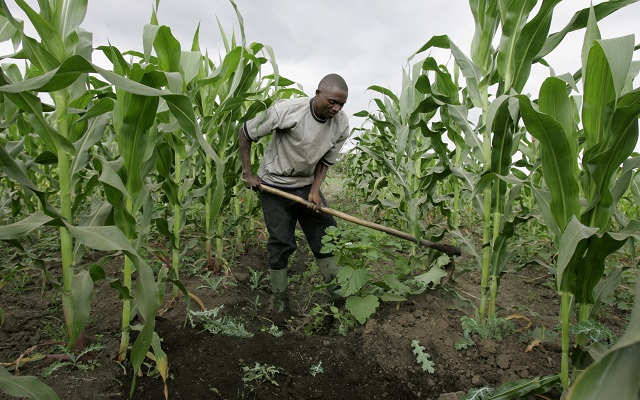
A farmer prepares water channels in his maize field in Ngiresi near the Tanzanian town of Arusha on Tuesday, July 17, 2007. Millions of farmers around the world will be affected by a growing movement to change one of the biggest forces shaping the complex global food market: subsidies. Many experts agree farmers need help to grow food year in and year out, but Western farmers may get too much and African farmers too little. (AP Photo/Karel Prinsloo)
In any country, agriculture is the father of all industries. From developed to developing countries, other industries and sectors including markets within the duo cannot survive without receiving inputs in forms of finished or semi-finished products from the agriculture industry. In spite of the significant place of agriculture in human and organisational survival, in developing countries such as Nigeria the industry is suffering due to a number of factors.
Poor spending on agriculture and citizens’ interest in the industry remain low despite the availability of arable lands for production and possible jobs. Between 2001 and 2005, less than 2% of total federal expenditure was allotted to agriculture. From 2006 to 2020, the spending on the industry by the federal and state governments is not quite different. The poor spending has raised many issues among the public analysts and investors who believe that agriculture requires more attention if truly the governments want to achieve economy diversification agenda, from oil dominated to multi-economy.
Since agriculture provides what people eat and industries use, Nigeria has continued to have a low human development index occasioned by the poor attention to the industry. Over the years, our checks reveal that the Nigerian government at state and federal levels have had varied policies towards the industry development. The outcomes remain mixed. It is not clear whether the country is making significant progress or not.
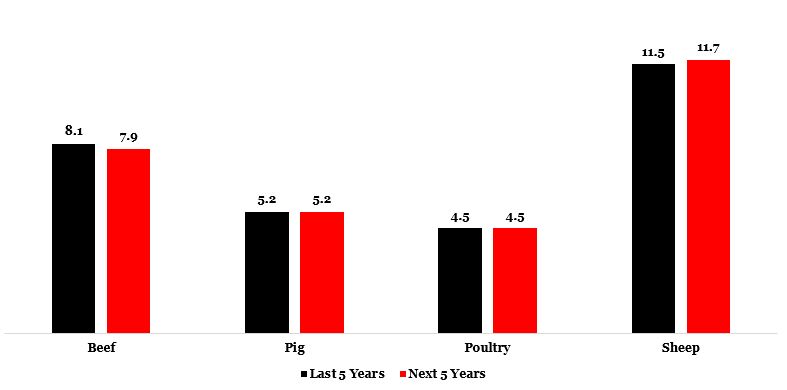
In the last five years (2016-2020), analysis shows that the level of consuming meat product of beef, pig, poultry and sheep had positive and negative connections. The more Nigerians [including industrial use] consumed beef meat the more they devoured pig meat. According to our analysis, one unit of beef meat consumption increased consumption of pig meat by 45%, while it reduced consumption of poultry and sheep by 88.3% and 90.4% respectively. In our analysis, we only found positive linkage between poultry and sheep consumption in the last 5 years. One unit of consuming poultry meat in metric tons led to more than 99% of consuming sheep meat. On average, over 1.6 million metric tons of beef, more than 1 million of metric tons of pig meat, over 912,000 metric tons of poultry meat and over 2.3 million metric tons of sheep meat were consumed during the period.
In the next 5 years, our analysis suggests that the consumption of one unit of beef meat would lead to 15.6% increase in consuming pig meat, while it would be a 45.1% increase in devouring poultry meat. However, the level of consuming sheep is expected to be reduced by 96.2%, while the consumption of sheep meat would be increased by the same percent. By 2025, our analysis indicates that pig and poultry meat consumption would connect negatively, signifying that the more people and industries consume pig meat, the less they would consume poultry meat [-70.7%].
The negativity would be less for sheep meat consumption. We found a 38.4% reduction in consuming sheep meat, while it was positive for pig meat consumption. Sheep meat consumption would also have the same outcome. One unit of consuming poultry meat would reduce consumption of sheep meat by 20.3%. On average, over 1.5 million metric tons of beef meat more than 1 million metric tons of pig meat, over 912,000 metric tons of poultry meat and over 2.3 million metric tons of sheep meat would be consumed by 2025.
Exhibit 1: Meat Consumption in Million Metric Tons
Source: FAO Statistics, 2020; US Department of Agriculture 2020; Infoprations Analysis, 2020
What Do We Need?
Looking at our current analysis, insights and those in the public domain, it is clear that federal and state governments should do more to enhance agriculture industry, especially building sustainable security architecture for farmers and distributors. When farmers and distributors are at peace, final consumers would not be starved. When farmers and distributors are protected, inflation driven food prices and unemployment rates would be reduced. These have been discovered by academic and industrial researchers many years ago.
The Central Bank of Nigeria made a very great call a few weeks ago, by mandating banks to pay diaspora remittance in US dollars in Nigeria, discarding an old practice where people whose family members had sent dollars were paid in Naira, using the official exchange rate. I noted that the decision by the apex bank was a great one, as that decision would improve supply of dollars in the nation, with the resulting impact of reducing the pressure on naira against US dollars. But some industry players are not happy with this new policy.
In a report by Nairametrics, the Association of Licensed Mobile Payments Operators (ALMPO) is asking the apex bank to reverse the payment in dollars of these remittance transactions. Largely, they want to continue to receive the US dollars and pay people in Naira, making money on the exchange rate differential. The new CBN policy has forced them to rely entirely on transaction commissions.
“The CBN’s decision to restrict international remittances to USD payouts only is the overarching concern of everyone. It certainly limits the number of Nigerian citizens that can conveniently access funds sent from the diaspora. I sincerely hope that CBN reconsiders its position on this, and re-allow Naira payments in cash or into accounts or wallets,” Jay Alabrabra, Chairman of ALMPO, Mr. Jay Alabrabra.
These payment operators are not fair on this request; they are looking out for themselves and not the citizens. Nothing stops any receiver from asking a bank to pay in Naira, and that payment will likely be at a better exchange rate since the bank will know the person can ask for the dollars, and walk out, and change them in bureau de change. Technically, there is no way this new policy is limiting the “number of Nigerian citizens that can conveniently access funds sent from the diaspora”.
What is happening here is clear: CBNasked banks to close the Naira accounts of these operators, and that simply meant they have been disintermediated in the system. As I noted, if the money was sent in US dollars and would be paid in US dollars, the phase in the chain where they operate in Nigeria has been eliminated. By the appeal, they are asking the government to make them relevant again.
But from my understanding, this is what CBN is doing here: in the past, when you wired USD, Euro or any foreign currency from abroad to Nigeria, you were paid in Naira, determined by the CBN official exchange rate. The IMTOs maintained a special purpose naira account to work on that reconciliation between the USD, etc they had received, say in the US and UK. and the naira they have settled in Nigeria.
But under the new CBN policy, where the USD or Euro is paid in the same currency in Nigeria to the recipient, there is practically no need for IMTOs to run a naira account. In other words, they have been disintermediated in the system locally. What happens is this: it is now between CBN and IMTOs offshore offices, and CBN and local banks since one currency is involved. The IMTOs local naira accounts are now redundant and of no value. (They can of course run the usual current and saving accounts).
The apex bank should not listen to them: they can pivot to other sectors in the economy, and not just depend on the arbitration on exchange rate to make a living in Nigeria. Indeed, there are some sectors which Nigeria must be bold to phase out if we expect the economy to be transformed.
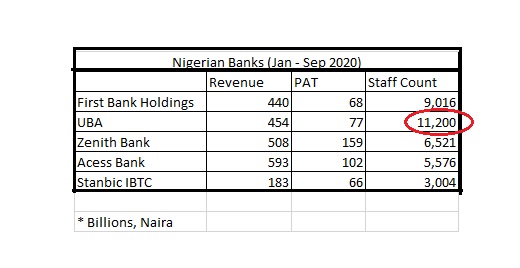
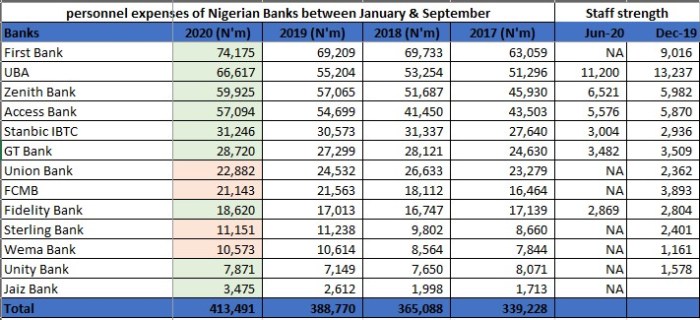
On staff count, UBA seems to be using many more workers in its business. First Bank Holdings includes both the bank and other subsidiaries. And yet, even with that, UBA has more staff than First Bank Holdings. Though not included in the table, GTBank employs about 3,500 people with a revenue number that tracks Zenith Banks and profit of N142 billion within the 9 month under examination. Indeed, UBA has to improve its productivity as the numbers seem extremely out of phase with peers.
GTBank remains the most capitalized bank in Nigeria at N965 billion, followed by Zenith Bank at N769 billion.
Source: Nairametric, Bank Annual Reports
Meanwhile, the fintech startups are coming after these profits. OPay plans to hit a transaction volume of $2 billion by the end of 2021. That would make it one of the most important financial institutions in Africa. OPay, according to the company, currently processes about 80% of transfers among mobile money operators in Nigeria and 20% of non-merchant point of sales transactions. If that trajectory continues, OPay could be at the center of Nigeria’s consumer sector.
OPay, a Nigerian fintech startup founded by Opera, plans to expand its payments service operations to North Africa early next year after Covid-19 restrictions led to a spike in transactions on its platform.
The volume of monthly settlements on the OPay platform grew almost fourfold to $1.4 billion in November from $363 million in January, as people sought alternative payments services during coronavirus-induced lockdowns, the company’s managing director, Iniabasi Akpan, said in an interview from Lagos.
[…]
We plan to reach transactions value of about $2 billion by the end of this year. The company will leverage its network of 300,000 offline agents to deepen the adoption of its payments service. The company is now planning an entry into the north African market after its success in Africa’s most populous country. The process has begun and we will see how the first quarter turns out.”