DD
MM
YYYY

PAGES

DD
MM
YYYY

spot_img

PAGES

Home Blog Page 5983

U.S. SEC’s Charge Against Blockchain Company, Ripples, Stokes Crypto Debate

0

Ripple has been caught in the web of the U.S. Securities and Exchange Commission (SEC), in a controversial debate over the former’s right to make security offerings. On Tuesday, SEC charged Ripple, the blockchain payments associated with the cryptocurrency XRP, with conducting a $1.3 billion unregistered securities offering.

Two executives of Ripple were also charged by the Commission for benefiting from the offering.

The development thus exposed further loopholes in cryptocurrency regulation that has become a global fight to finish.

In a statement issued by Ripple lawyers, the world’s third cryptocurrency said that XRP is a currency and thus does not need to be registered as an investment contract.

“The SEC is completely wrong on the facts and law we are confident we will ultimately prevail before a neutral fact-finder. XRP, the third largest virtual currency with billions of dollars in trading every day, is a currency like the SEC has deemed Bitcoin and Ether, and is not an investment contract,” Andrew Ceresney, Debevoise & Plimpton said. “This case bears no resemblance to the initial coin offering cases the SEC has previously brought and stretches the Howey standard beyond recognition.”

In June, the SEC ruled that Bitcoin and Ether are not securities and will not be regulated as such. The surprising thing that has drawn a lingering debate is the exemption of Ripple from the mid-year ruling of the regulator.
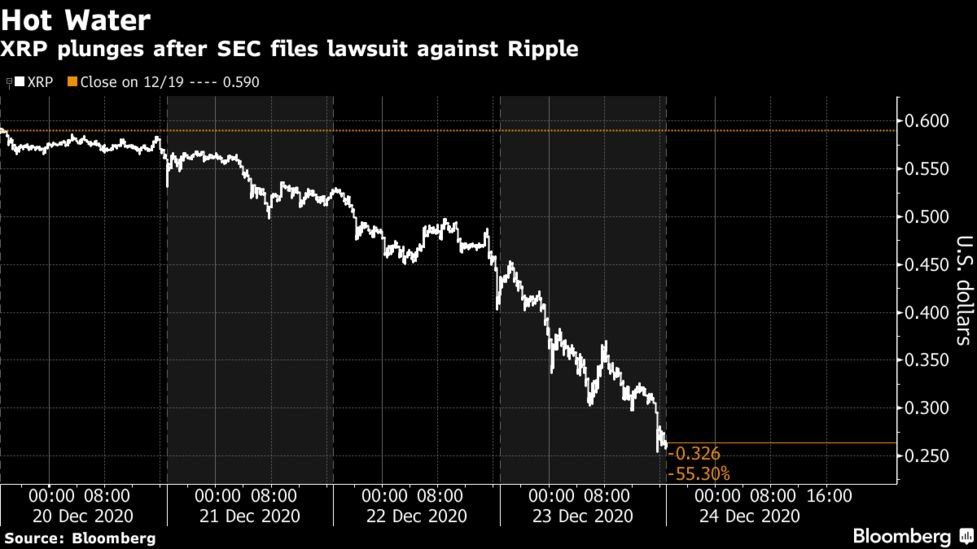
The argument went beyond the decision of SEC back in June to the ruling by the US Financial Crimes Enforcement Network (FinCEN), in 2015. The five year old ruling is believed to supersede the Commission’s stand on XRP lately.

“FinCEN already signed an agreement with Ripple Inc. allowing them to continue their XRP sales. If XRP is an unlicensed security then FinCEN now has to explain why they signed an agreement allowing the sale of said unlicensed securities. Never going to happen, XRP isn’t a security,” Richard Holland tweeted in support of Ripple.

Bitcoinist, a cryptocurrency analyst blog noted a major factor in the controversy. In 2015, civil enforcement by FinCEN, Ripple Labs was accused of violating the Bank Secrecy Act (BSA) by acting as a money services business (MSB) and selling XRP without registering with FinCEN. It also failed to implement and maintain an adequate anti-money laundering (AML) program.

The issue resulted in criminal charges against Ripple, which was resolved with $450,000 settlement. The fine means that XRP was permitted to trade.

The settlement was believed to have set a precedent for the digital currency industry. Ripple Lab was asked to make enhancements to the Ripple Protocol to monitor future transactions. Then U.S. Attorney Melinda Haag, said she hoped the settlement set an “industry standard” in the digital currency space.

Holland and others believe that the settlement serves as an agreement that XRP is a currency.

“These are the agreed facts of the settlement where FinCEN agrees with prejudice that XRP is a currency and therefore not a security. This debate is over,” he tweeted.

The debate is not only questioning the supposed precedent set by finCEN ruling, it also set U.S. regulatory institutions into conflict.

“This complaint is wrong as a matter of law. Other major branches of the U.S. government, including the Justice Department and the Treasury Department’s FinCEN, have already determined that XRP is a currency. Transactions in XRP thus fall outside the scope of the federal securities laws. This is not the first time SEC has tried to go beyond its statutory authority. The courts have corrected it before and will do so again,” Ripple’s lawyers said in a statement.

Some Ripplers believe that SEC is making this move based on their illogical claim that XRP is somehow the functional equivalent of a share of stock.

Nevertheless, the conflict is as a result of lack of regulatory clarity for the U.S. crypto market, and the way forward is likely going to be determined by court. However, whatever decision the court makes may set the ball rolling for a holistic regulatory rule for the United States’ crypto industry.

Nigeria’s Big Risk And Why The Banks Underperform on SMEs & Startups Lending

3
Central Bank Governor, Nigeria

Here are comments on this LinkedIn feed and I will explain my point below.

Comment: Just one simple question for me. Why is there no value for these banks in the NSE? Even with announcements such as these. Do Nigerian banks create value or they hide the value they create. Truly baffling.

My Response: I do not think the problem is with the banks. The issue is that Nigeria is a relatively poor country. Banks cannot create value where there is no value. Your national budget is about $35 billion for 200 million; South Africa spends more than $123 billion for 60 million people. That delta on budget makes its markets better because that is money pumped into the economy.

Another member’s comment: Prof Ndubuisi Ekekwe, for the first time I disagree with your view, which numerous of goods and services we import from developed countries, Nigeria Banks can be a string board that can triple Nigeria GDP if only they are innovative and willing to support more SMEs, to reduce the country poverty index. We have seen a lot of deficits in Nigeria trades with many countries: how can banks partners with private companies to turn things around. We can multiple this to housing/mortgage, transport, industry target towards exportable goods.

Now my main response:

Comment:Nigeria Banks can be a string board that can triple Nigeria GDP if only they are innovative and willing to support more SMEs,”

See it this way: the Central Bank of Nigeria (CBN) lends at close to 11% to banks and NDIC, the deposit insurance regulator, asks banks to insure (put another 2%). If you add banking operations costs and need to make small money, no bank can lend below 17% annually in Nigeria. 

But some nations lend to their banks at 0.25%: “In December 2020, the Federal Reserve maintained its target for the federal funds rate at a range of 0% to 0.25%.” This cheap money makes it possible for U.S. banks to give cheap loans to their SMEs. Yes, you can get a business loan at 6% or even lower.

But in Nigeria, starting at 11% made it impossible for banks to match that.  Because they have to move above 17%, it creates a vicious circle which makes things harder. See it this way – at that 17%, most SMEs cannot return whatever banks have given them, setting the banks up for losses. Simply, there are few businesses in Nigeria where you can make profits when your cost of capital is 17% before taxes to repay your loans.

Without scaring people, most banks have paid hard penalties for being generous on lending. Yes, many collapsed due to failed loans. So, what do  banks do in Nigeria? They trim lending because the rates are tough for most SMEs to handle, and the fault is not necessarily coming from the banks.

Sure, banks can do more. But the big issue is not addressed and that is where I bring Nigeria’s relative poverty. Give the banks money at 1%, and you will see they will lend at 6%, and most SMEs can handle that percentage.

Of course, CBN has hit them hard to lend from their deposits. Yes, that makes sense until you realize that deposits are not “free” money. In other words, they still have to protect that deposit so that when the owner comes, he/she gets the money back. For most, they prefer the CBN to fine them say N100 million instead of taking risk on that N2 billion because losing N100 million is a better outcome than N2 billion. That is why even as CBN keeps debiting them for not meeting the lending deposit ratio, most do not care since statistically, the fine from CBN is well below what they will lose if they follow the ordinance as stipulated by the apex bank.

See the CBN fine as cost of business! If they hit you N5 per say N1 million, you can find another cost on your non-loan customers or increase the cost on the few you are lending to! Simply, all the debits would be recovered from the customers, indirectly.

Yet, before we begin to criticize CBN, it has to manage inflation and because of that, it cannot lend to banks at 1% which you can get in the U.S. as Nigeria’s economy is not structurally similar to the U.S. That paradox is the risk element in Nigeria. The rates we need to unlock entrepreneurial capitalism cannot easily happen without taking inflation to a level that would destroy the economy.

Software Disintermediates IPO Bankers via Direct Listing

0
Ndubuisi Ekekwe with Bill Gates

The US Securities and Exchange Commission has approved the New York Stock Exchange’s plan to allow primary direct listings, and that is a big call to close 2020. With this, companies and startups will have the opportunities to raise money on the New York Stock Exchange without paying big underwriting fees to banks. In other words, there is a new framework for initial public offerings in the United States.

The Securities and Exchange Commission announced Tuesday that it had approved an NYSE Group Inc. plan for so-called primary direct listings. The change marks a major departure from traditional IPOs, in which companies rely on investment banks to guide their share sales and stock is allocated to institutional investors the night before it starts trading. Instead, companies will now be able to sell shares directly on the exchange to raise capital — something that’s not been previously been allowed.

Direct-listing IPOs have been limited to date, as they’ve mostly been used by businesses that wanted to create liquidity events for early investors or management to cash out by selling stock, as opposed to issuing new shares that attract billions in fresh money. In September, workplace management software maker Asana Inc. and Palantir Technologies Inc., the data-mining company founded by billionaire Peter Thiel, used direct listings to go public.

Bill Gates famously said many years ago, “banking is necessary, but banks are not”, and we are just appreciating another dimension of the excellence of his mind. Simply, few understood the meaning of that statement when he said it in 1994!

Today, the fintechs are after the bank fees, and now the SEC has taken the golden parachute out of the reach of investment banking. This is a double whammy in the modern banking trade.

But if you look critically, this is not a hard call for the SEC: technology has reduced information asymmetry, making it possible for demand and supply to attain equilibrium faster at reduced cost models. Uber used codes and mobile internet to make it possible for a stranger to pick a stranger, and both happily get to a destination. Those codes deepened trust in the system.

Airbnb did the same when software “ate” our fears, making it possible to invite strangers to your house for largely nothing. (Your grandmother would’ve been unhappy that you are hosting that stranger). If you checked, Airbnb brought trust, making it possible for strangers to attain trust equilibrium by removing the old frictions which existed and why your grandmother told you, “never visit and stay in the house of a stranger”.

For Wall Street, the new SEC call on direct listing follows the same trajectory: if we know so much about companies, even when they are private, we do not need banking high priests to guide us to buy their shares. Yes, let those firms sell the shares directly to us because we already know what they have got. North and south, software is “eating” the investment and securities banking opportunities. And this redesign will get to other sectors.

But before I go, should we expect direct listing in the Nigerian Stock Exchange at scale?

Academic Staff Union of Universities (ASUU) Reaches Agreement with Nigerian Government

2

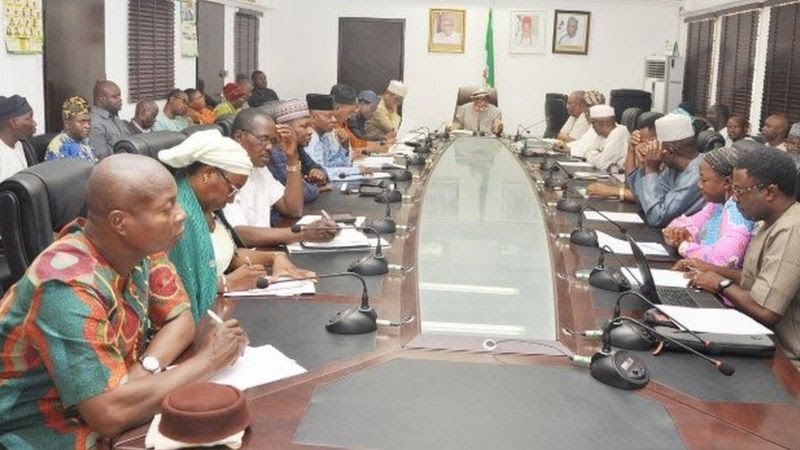
Do not mind the grammar, but it seems like the Academic Staff Union of Universities (ASUU) has reached an agreement with the Nigerian government to suspend the 10-month strike which has crippled the university system.

Academic Staff Union of Universities – and Nigeria [Federal Government] has finally agree on major issues that will lead to termination of its 10 month old strike. The agreement was reached on the early hours on Wednesday morning after eight hour close door meeting of negotiations between both parties. ASUU expresses joy on how the Federal Government handled the negotiation process and that they will be having their own executive meeting to conclude and gets back to the Government within 24hrs”

We hope this one does it and re-opens the schools.

https://twitter.com/ASUUNGR/status/1341657920774270982

Tekedia Community – Thank You

0

Good People, this is to thank everyone here for an amazing platform of co-creation and co-learning right here. I do not know where to start, but from the deepest of my heart, I want to THANK YOU all. You inspire me to write, and you give me the opportunity to learn.

I tried Twitter but quickly realized that I was not learning there; so, I left it at scale. I did the same on Facebook but I was not learning. Sure, there were comments and sharing, but I was not being challenged. They did not give me the biggest reward for writing, which is the ability to know how little you know!

But here on LinkedIn, people educate and make me better. I want to thank everyone. I know that 2020 was tough. But count it from the Scripture Union kid: 2021 will be better. Yes, there is abundance in the future.

I want to wish everyone Happy Christmas, Happy Holidays, Happy everything – with a great New Year ahead.