DD
MM
YYYY

PAGES

DD
MM
YYYY

spot_img

PAGES

Home Blog Page 5983

Rise Higher To The Mountaintop

0

It takes a man/woman who has reached the topmost mountain to know the deepest valleys. My wish for you in this 2021 is that as you rise higher, the mountains will become taller and the valleys will become mountains. Thou will not trip and fail; you will keep rising, leaving the solid bounds of any valley, for the mountaintop of success. Stay humble, and make men and women lift you higher.

African Universities Would Be More Relevant With Emphasis On Creativity, Entrepreneurship – Prof Oluwatosin Ijabadeniyi

0

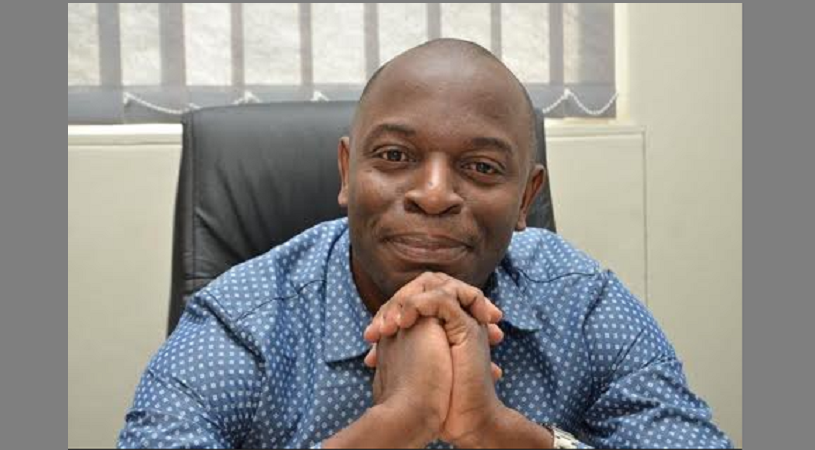
Oluwatosin Ijabadeniyi is a Nigerian professor at Durban University of Technology, South Africa. He has a PhD in Food Science and has taught in the university in Nigeria and South Africa in the last 17 years. In a chat with Rasheed Adebiyi, he shared his views on how to make African universities solve the myriads of problems confronting the continent and some other issues. Here are the excerpts.

Tekedia: Could you tell us about yourself?

Oluwatosin Ijabadeniyi: Oluwatosin Ijabadeniyi is a Professor at the Department of Biotechnology and Food Technology, Durban University of Technology, South Africa. Oluwatosin holds a doctoral degree in Food Science from University of Pretoria, South Africa. He had his M.Tech (Food Microbiology) and B.Tech (Food and Industrial Microbiology) from Federal University of Technology, Akure, where he lectured from 2001 to 2011. Since 2001, he has conducted research and lectured internationally in the area of food quality and safety. His first science book (edited) titled “Food Science and Technology, Trends and Future Prospects” was published in December 2020. He has also published several scientific publications and four inspirational books. He is also an alumnus of UC Davis Institute for Innovation and Entrepreneurship, University of California, Davis USA. Oluwatosin who is the founder of Operation Transform International and Food Safety Africa was appointed Visiting Professor (April to June, 2019) at the Department of Food Science, University of Manitoba, Canada. Oluwatosin has passion for empowering people about innovation, investment and all round excellence. He currently lives with his family in Durban, South Africa.

Tekedia: You have had a wide experience teaching in African universities especially in Nigeria and South Africa. How do you think the tertiary education in Africa could be rejigged to make it solve the myriads of problems confronting the continent?

Oluwatosin Ijabadeniyi: The curriculum in African universities should place emphasis on innovation i.e., creativity + entrepreneurship. Our universities shouldn’t be ‘degree factory’ but places where critical thinkers and thought leaders are made. This can only happen when students are taught how to think and not what to think. Universities should prepare their students to be able to take up in-demand jobs of the future and out-compete Artificial Intelligence. It is also important to emphasize to students that greatness is not how much money you have rather it is serving others.

Tekedia: What does it feel like teaching and living in South Africa?

Oluwatosin Ijabadeniyi: I am happy to be teaching and living in South Africa. South Africa has given me opportunity to reach my potential and to contribute to the development of Africa’s future leaders.

Tekedia:  You have a YouTube Channel where you engage in knowledge sharing and interviews. What is the motivation behind the programme?

Oluwatosin Ijabadeniyi: The main purpose of my YouTube channel (which includes interviewing guests) is to share wonderful and amazing pieces of information Information that will encourage people to exceed expectations and never give up in each area of their life be it, spiritual, family, physical, intellectual, social, financial and career. I also use it to showcase Africans making a difference in their communities while at the same time disseminating knowledge.

Tekedia: What exactly are the things you miss about Nigeria?

Oluwatosin Ijabadeniyi: I miss my extended family back home, though we communicate often. Nigeria is rich and blessed with many delicacies which I miss so much. Thankfully, we get a few local food items here but not everything I would love to eat. Generally speaking, I miss being at home and enjoying the camaraderie because there is nowhere like home.

Tekedia: Thank you for your time

Oluwatosin Ijabadeniyi: You are welcome

Are You Paying Attention To Observe The Burning Bush In That Company?

1

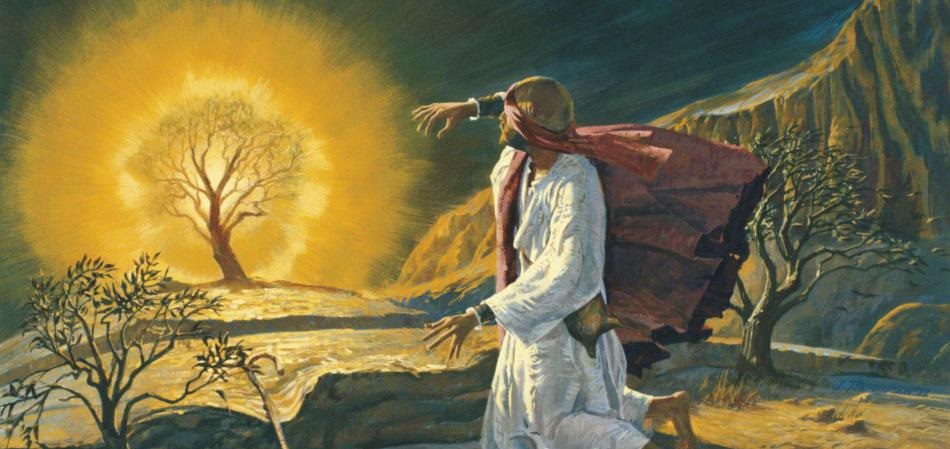
He was on Horeb, and saw a burning bush: the bush was on fire but it did not burn up. So he thought, “I will go over and see this strange sight—why the bush does not burn up.”

First, his attention was needed for a very important message. He needed to be consumed by something uncommon. Secondly, his bravery was tested: he went over instead of running away when he saw the burning bush.

Then, his God called him “Moses! Moses!” and revealed a mission.

In companies, only undistracted and attentive people are typically called to execute higher missions. These are people who can unlock new market opportunities and extract values from shifts in customer preferences. Companies typically put the selected ones through tests with uncommon KPIs and targets to see how they respond. 

Some workers give up while others take the challenges. Usually, in the middle of that challenge, glory comes [Moses was chosen to lead his people]. In business, the role could be a CEO, Executive Director, etc!

What is the burning bush before you in that company? Without awareness and observation, you may not even know the company is asking for your attention to be called to LEAD.

China Announces New Rules to Counter U.S. Trade Policies

0

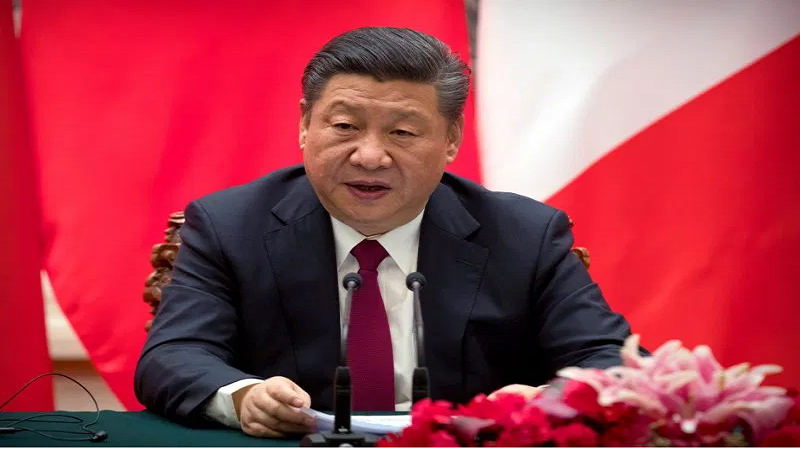
Amidst the continuous efforts by Washington to kick prominent Chinese companies operating in the United States out, over fears that they are harvesting data for the Chinese Military, Beijing has drawn up reciprocity laws to counter the moves and protect Chinese companies.

China’s Ministry of Commerce on Saturday published new rules for countering “unjustified” laws and restrictions imposed by foreign countries on Chinese companies and citizens.

The rule which were published on the Ministry’s website established a “working mechanism” to assess the legal implications of such incidents, enabling the Chinese government to determine if it would enact retaliatory law.

The rule says a Chinese person or organization that is restricted by foreign legislation from “engaging in normal economic, trade and related activity with a third State or citizens,” may report it to the commerce department within 30 days.

The Ministry of Commerce will then assess a case for its potential violation of international law, impact on China’s sovereignty and national security, and impact on Chinese citizens.

“When a citizen or other organization suffers significant losses from non-compliance with foreign legislation, relevant government departments may provide necessary support,” the notice says, adding that the Chinese government might also enact “necessary counter-measures” in response.

Last year, Chinese companies faced heavy backlash from other countries following the US sentiment. China’s telecom giant Huawei, which was leading the global 5G roll out suffered a huge setback after it was banned by the US, the UK and several other countries in Europe and North America.

To cap Huawei’s woes, Washington extended the ban to microchips, restricting semiconductor companies with access to US technology from supplying the telecom vendor with chips. The decision is thus threatening to cripple Huawei as lack of chips limit its smartphone production.

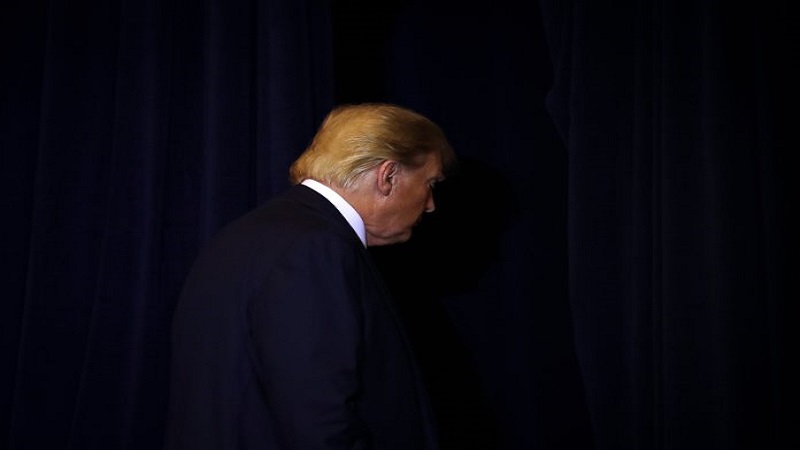
The lingering trade conflict between the world’s leading economies also affected app-based businesses of Chinese origin. TikTok and Wechat got caught on the web last year when President Donald Trump signed an executive order giving the short-video app 90-day ultimatum to sell to a US company or get banned.

It took the court’s ruling to restrain the order and keep the duo in business in the United States, but Trump’s administration said it would appeal the ruling.

The recent move by Washington to delist China’s telecom companies, China Mobile, China Unicorn and China Telecom from the New York Stock Exchange appears to have spurred Beijing to enact the impromptu law.

In November, Trump issued an order to bar 31 companies that Washington believed to be owned and controlled by the Chinese military.

The November order prohibits American companies and individuals from owning shares – outright or through investment funds – in companies the administration says help the advancement of the People’s Liberation Army.

The US Commerce Department added a list of Chinese companies to a trade blacklist in December, over allegations that Beijing is using them to harness civilian technologies for military purposes.

The list includes large state-run aerospace and construction companies, as well as technology and communication companies such as Inspur Group, Huawei and China Telecommunications Corp.

Moreover, the Trump administration is also considering adding tech giants Alibaba and Tencent to the blacklist already containing other Chinese companies. The news caused the companies’ shares to slump 4% on Thursday.

China’s commerce ministry has condemned US actions, saying it violates market rules and it will take action to protect its firms.

“This kind of abuse of national security and state power to suppress Chinese firms does not comply with market rules and violates market magic,” the ministry said in a statement.

“It not only harms the legal rights of Chinese companies but also damages the interests of investors in other countries, including the United States,” it added.

The new rule appears to be the action Beijing promised to take to “protect its firms,” the same step it took to prevent the United States from singlehandedly determining the future of TikTok.

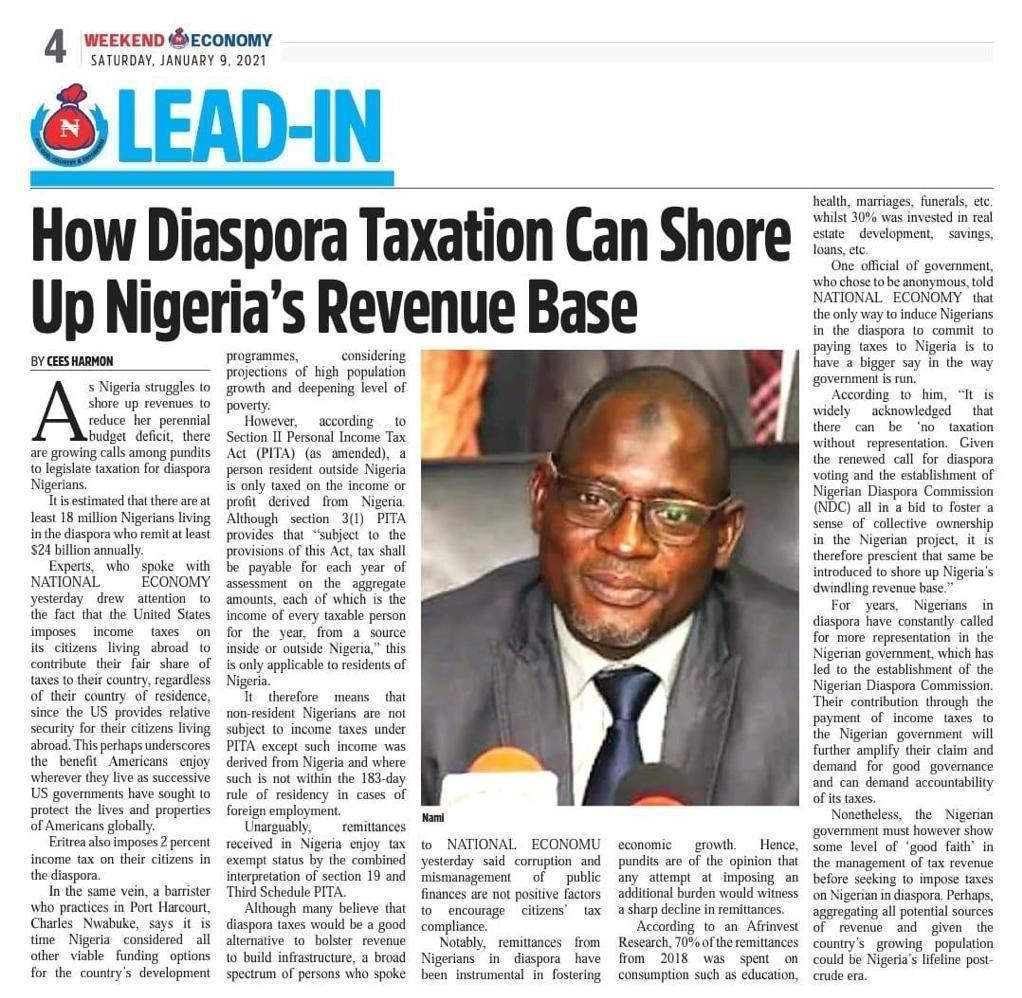
Taxing Nigerians In Diaspora To Improve Nigeria’s Revenue Base

6

The innovators are back – and Nigeria has the finest in the world when it comes to finding how to collect money from its citizens and companies: stamp duty on electronic transfer, multiple levies, etc. Yes, when it comes to taxes, fines, levies, etc, Nigeria is innovating just fine. What we have struggled with is how to boost the economy with growth policies. 

Now, the latest conversation is to tax Nigerians in diasporas. I must confess that it is not a bad idea provided the money would not be managed by politicians. I prefer we channel the tax money to venture funds, private equity funds or investing ecosystems to build a new economic architecture of Nigeria. Of course, if you do it that way, it is no more a tax since politicians will not be deciding how the funds are used! 

Nonetheless, if they have a tax treaty where other governments would recognize the Nigerian diaspora tax, to avoid double taxation, it is a slam dunk. Simply, instead of sending $1,000 to the American government as tax, you can send $100 to Nigeria and keep $900 in the US. The payer cannot and should not pay more than $1,000 to avoid double taxation. If you do not make it that way, it would be challenging to expect the diasporas to respond.

Yet, I expect Nigeria to have a remittance tax since taxing diasporas via the typical tax legal ordinance has no chance. Government can simply have a regulation: if you send $1,000 from the US to Nigeria, the Central Bank of Nigeria will keep 3% of that money as a remittance tax. 

Yes, once we are done with pension funds, then dividends & dormant account balances, and finish selling some campuses (other assets like power, etc are already gone), there would be nothing left. The only remaining option then would be remittance taxation. So, Nigeria will tax remittance but via a different protocol within this decade unless something changes in our economic system.

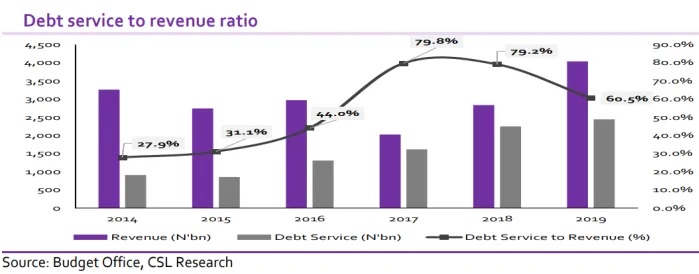
Simply, we cannot use 60% of our revenue to service debts and expect to have a future as a nation.

In 2014, the ratio was about 28%; then it rose close to 80% during the recession and now we are at 60%. When 2020 data comes out, it may be close to 90% considering that revenue was severely affected during the lockdown.

debt service ratio
Nigeria data