DD
MM
YYYY

PAGES

DD
MM
YYYY

spot_img

PAGES

Home Blog Page 6

El Salvador Buys Gold Amid Market Dip, Holds Steady on Bitcoin

0

El Salvador is making a bold counter-cyclical move, stepping into the gold market during a price dip while maintaining its unwavering stance on Bitcoin.

The Latin American country is reported to have purchased 9,298 troy ounces of Gold worth $50 million during a sharp price drop after the asset hit a record high near $5,600 per ounce.

Between September 2025 and January 2026, El Salvador has acquired a total of 23,297 troy ounces of gold. This is the second operation of this type carried out by the country’s Central Bank since 1990, with reserves rising to 67,403 ounces, valued at about $360 million.

El Salvador’s recent purchase of Gold signals a diversified reserve approach as global economic uncertainty continues to reshape how nations think about store-of-value assets. It also aligns with international trends in which central banks hold 20% of reserves in gold for stability, as peer-reviewed IMF data show gold’s role in hedging inflation and currency risks relative to fiat alternatives.

The Latin American country has pursued one of the world’s most unconventional sovereign reserve strategies since adopting Bitcoin as legal tender in 2021. The government currently holds roughly 7,547 BTC (valued at approximately $635 million at current levels), making it one of the largest nation-state Bitcoin holders.

Adding physical gold provides classic diversification and inflation-hedge characteristics that central banks worldwide have relied on for decades. Gold’s role as a non-correlated store of value becomes especially attractive during periods of fiat currency volatility, geopolitical tension, or uncertainty around digital-asset regulation.

By contrast, Bitcoin offers scarcity (21 million cap), portability, divisibility, and, in El Salvador’s view, asymmetric upside potential as global adoption grows. Holding both asset positions positions the country to benefit from strength in either traditional safe-haven or next-generation digital-reserve narratives.

Gold has reportedly outperformed Bitcoin over the past five years for the first time. As of January 30, 2026, Bitcoin sat at $84,500 after dropping over 30% from its $125,000 peak, while Gold held steady near $5,200 per ounce. From 2021 levels, Bitcoin was at $34,300, and Gold traded at $1,850, the latter has delivered 181% return compared to BTC’s 146%, underscoring Gold as a safe haven amid global liquidity and risks.

The rally accelerated as the US dollar slid toward four-year lows, pushing investors out of fiat currencies and into hard assets. When confidence in the paper fades, gold tends to become the default parking spot.

Amid Gold’s surging price and Bitcoin decline, American investor and Gold advocate Peter Schiff has predicted a U.S dollar collapse and crisis worse than 2008, with central banks dumping dollars for Gold, explaining the rush into precious metals.  Gold hit a record $5,400 on January 27, 2026, up over 100% since late 2024, driven by Trump’s tariff threats, geopolitical risks, and low U.S. interest rates weakening the dollar.

Central banks bought 297 tons of gold through November 2025, led by emerging markets like Poland, with 2026 forecasts indicating sustained demand for diversification amid global uncertainty.

Schiff further notes that those who currently own Bitcoin would have been better off buying Gold.

He wrote on X,

“Bitcoin is now worth just 15.5 ounces of gold, down 57% from its 2021 high and just 10% above its 2017 high. Despite all the hype and support from Wall Street and the Trump administration, most people who now own Bitcoin would have been better off buying gold or silver instead.”

Looking ahead

While El Salvador’s $50 million Gold purchase is modest compared to the balance sheets of major central banks, the symbolic and strategic value for a small nation is significant. The country continues to experiment with a hybrid hard-asset reserve model that few other countries are replicating at the sovereign level.

Whether this dual-track approach (gold for stability, Bitcoin for growth) proves prescient remains an open question. However, as global confidence in fiat currencies continues to face pressure, El Salvador’s willingness to buy both gold and Bitcoin during market dips positions it as a unique case study in sovereign-level financial experimentation.

Trump Sues IRS and Treasury for $10bn Over Tax Return Leak, Escalating Long-Running Battle With Federal Agencies and Media

0

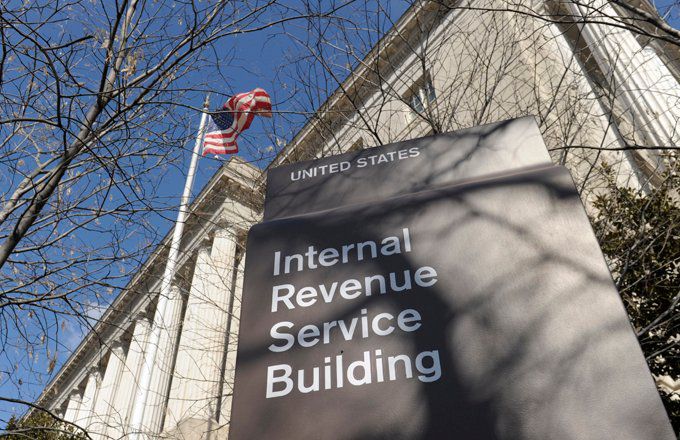
U.S. President Donald Trump on Thursday filed a $10 billion lawsuit against the Internal Revenue Service and the Treasury Department, accusing the agencies of failing to safeguard his confidential tax records, which were leaked to the media in 2019 and 2020.

The complaint, filed in federal court in Miami, names the IRS and Treasury as defendants and alleges that the agencies failed to take what it described as “mandatory precautions” to prevent the disclosure of highly sensitive tax information by a former IRS contractor, Charles Littlejohn. Trump filed the suit alongside his adult sons, Donald Trump Jr. and Eric Trump, as well as the Trump Organization.

According to the filing, Littlejohn unlawfully accessed and leaked the tax returns to media outlets, including the New York Times and ProPublica, publications the plaintiffs characterized as “leftist media outlets.”

The lawsuit claims the disclosures caused “significant and irreparable harm” to their reputations and financial interests, arguing that the damage went beyond embarrassment and extended into their business operations and public standing. The plaintiffs said they may seek punitive damages, contending that the leaks were either willful or the result of gross negligence by government agencies tasked with protecting taxpayer data.

The case places Trump in a rare legal posture of suing agencies within the Executive Branch, which he now leads following his return to the White House after winning a second term in 2024. While the IRS operates under the Treasury Department, neither agency immediately responded to requests for comment after business hours. Treasury Secretary Scott Bessent, who is also serving as acting IRS commissioner, is not named as a defendant.

The lawsuit revisits one of the most consequential tax data breaches in modern U.S. history. Prosecutors charged Littlejohn in September 2023 with leaking the tax records of Trump and thousands of other wealthy Americans, saying he acted out of a political motive. Court records show that Littlejohn pleaded guilty the following month to disclosing income tax return information without authorization. In January 2024, he was sentenced to five years in prison.

Trump’s complaint details the scope of the media coverage stemming from the leaks, stating that the New York Times published at least eight articles based on the disclosures, while ProPublica published more than 50. The plaintiffs argue that the reporting portrayed them in a false light, unfairly tarnished their business reputations, and negatively affected Trump’s public image at a critical political moment. The filing contends that the cumulative impact of the coverage amounted to lasting reputational and financial damage.

The lawsuit also fits into a broader pattern of aggressive legal action by Trump against media organizations and institutions since his return to office. In recent months, he has filed several high-profile lawsuits seeking multibillion-dollar damages over news coverage he says was defamatory or politically motivated. These include a $15 billion suit against the New York Times and book publisher Penguin Random House over reporting and a book Trump says was designed to undermine his 2024 election prospects. He is also seeking $10 billion from the Wall Street Journal over an article referencing a birthday greeting linked to disgraced financier Jeffrey Epstein, and another $10 billion from the BBC over its editing of a speech delivered before the January 6, 2021, storming of the U.S. Capitol.

All of these cases, including the latest lawsuit against the IRS and Treasury, were filed or assisted by Alejandro Brito, a Florida-based attorney who has emerged as a central figure in Trump’s legal strategy.

Beyond the specific claims over the tax leaks, the lawsuit points to a larger tension between Trump and federal institutions that predated his second term and has continued into his current presidency. By targeting the IRS and Treasury, Trump is not only seeking damages for past disclosures but also signaling a broader challenge to how federal agencies handle sensitive information, particularly when it involves high-profile political figures.

The case is likely to draw close scrutiny, given its implications for government accountability, taxpayer privacy, and the legal boundaries of suing federal agencies from within the Executive Branch itself.

What Makes ZKP Different? A Deep Look at the Presale Auction, Proof Pods, and Data Layer

0

Zero Knowledge Proof, known as ZKP, is being developed as a full blockchain ecosystem rather than a simple digital coin. Its structure combines a fair presale auction, physical hardware involvement, and a privacy-driven data marketplace within one connected system. Instead of depending only on price speculation, ZKP links coin distribution, real computation, and data use in a clear and organized way.

By applying zero-knowledge cryptography to confirm work without revealing private details, the network supports secure AI processing and protected data sharing from the start. This practical focus on usable blockchain infrastructure is why ZKP is increasingly described as the next big crypto by observers following privacy-first and utility-focused projects.

How the ZKP Presale Auction Works

The presale auction serves as the main method for distributing $ZKP coins during the early launch stage. It follows a fair access design that removes private deals, insider advantages, and hidden token allocations. Every participant takes part under the same conditions.

Key features of the ZKP presale auction include:

  • Daily auction windows: A fresh 24-hour window opens each day at 3:00 AM UTC. Every day operates independently.
  • Proportional distribution: The amount of $ZKP received is based on the share of funds contributed relative to the total collected that day. Example: contributing 10% of the daily total results in receiving 10% of that day’s $ZKP supply.
  • Daily supply and burn: Up to 190 million $ZKP coins are released each day. Any coins not bought within that period are permanently burned, lowering overall supply.
  • Referral incentives: Participants earn a 20% bonus from referred contributions, while new users joining through referrals receive a 10% bonus.

This setup promotes early involvement while keeping the process open and easy to understand. Because pricing responds to daily demand and unused coins are burned, interest often increases as the presale auction moves forward. This transparent structure is one reason ZKP is often mentioned when discussing the next big crypto in the privacy-centered blockchain sector.

Proof Pods and How the Network Operates

In addition to the presale auction, ZKP introduces Proof Pods, which are physical hardware units that help operate and secure the network. These devices act as validators and computation providers for zero-knowledge proofs and AI-related tasks. Proof Pods form the foundation of the ZKP ecosystem:

  • Purpose: They produce cryptographic proofs for data checks and AI computation, supporting both Proof of Intelligence and Proof of Space.
  • Plug-and-play design: After connecting to Wi-Fi, the device begins working automatically without manual setup.
  • Earning mechanism: Users earn $ZKP coins as rewards for verified compute and storage contributions.
  • Upgrade system:
    • Pods begin at Level 1
    • They can be upgraded up to Level 300
    • Each upgrade costs $100 and raises earning potential through software improvements
  • Physical ownership: Unlike cloud-based staking or locked tokens, Proof Pods are owned directly and ship globally, usually within five days.

This approach connects real computation and storage to network security, helping ZKP move beyond systems based only on speculation. The combination of hardware involvement and cryptographic proof strengthens confidence among those assessing the next big crypto with real infrastructure already in place.

Getting Started With ZKP Participation

All activity within the ZKP ecosystem takes place through a single dashboard available at buy.zkp.com, making the process straightforward and user friendly. There are two primary ways for users to get involved.

Purchase $ZKP Through the Presale Auction

  • Connect a Web3 wallet such as MetaMask, Coinbase Wallet, or Trust Wallet.
  • Choose the option labeled “Buy ZKP” and contribute using one of the 24 supported payment methods, including ETH, BNB, USDT, BTC, SOL, and DOGE.
  • Once the 24-hour presale auction period ends, the assigned $ZKP coins are automatically added to the user dashboard.

Purchase Proof Pods

  • Select the “Buy Proof Pod” option from the same dashboard.
  • Provide shipping information and complete the order at the base cost of $249.
  • After delivery, enter the activation code displayed on the Pod’s screen to connect it to the account and start earning rewards.

This dual access approach allows users to participate through digital contributions or physical hardware, appealing to a broad audience interested in the next big crypto with real-world functionality.

Inside the ZKP Data Marketplace

The Data Marketplace serves as a key utility layer within the ZKP ecosystem. It is built to support the sharing of sensitive data without exposing the underlying information. Core features of the marketplace include:

  • Privacy-protected exchange: Zero-knowledge proofs confirm data quality and accuracy without revealing the data itself.
  • AI-driven structure: Developers gain access to verified datasets for training privacy-first artificial intelligence models.
  • Data ownership: Data providers keep full control of their datasets while earning value from their use.
  • $ZKP utility:
    • Used to buy access to datasets
    • Rewards data providers
    • Pays for decentralized computing through Proof Pods
  • On-chain tracking: Every transaction and compute task is recorded on-chain, creating a clear and transparent audit history.

By linking privacy, artificial intelligence, and decentralized computing, the marketplace generates real demand for the $ZKP coin. This focus on practical use strengthens the case for ZKP as the next big crypto within the growing AI and data-driven economy.

Final Overview

ZKP combines several elements that are often separate in blockchain projects. The crypto presale auction offers a clear and fair way to join early, Proof Pods connect real hardware to network security and reward generation, and the Data Marketplace drives ongoing demand for the $ZKP coin through active use.

Each component supports the others, creating an ecosystem designed for long-term function rather than short-term hype. As decentralized AI, secure data exchange, and privacy-focused computation become more important, ZKP stands out as a network built to meet these demands at scale, reinforcing its standing as the next big crypto in privacy-centered blockchain infrastructure.

Explore Zero Knowledge Proof:

Website: https://zkp.com/

Buy: https://buy.zkp.com

Telegram: https://t.me/ZKPofficial

X: https://x.com/ZKPofficial

Anthropic Expands Cowork With Plug-Ins, Deepening Its Push to Make Claude an Enterprise AI Operating Layer

0

Anthropic is accelerating its push into the enterprise software market by expanding Cowork, its newly launched agentic AI product, with plug-ins designed to automate specialized tasks across business functions.

The move signals the company’s ambition to turn Claude into a configurable operating layer for corporate work rather than just a conversational assistant.

Earlier this month, Anthropic introduced Cowork as a research-preview product aimed at extending the capabilities of Claude Code beyond software developers to non-technical users. The latest update adds plug-ins, which allow companies to create narrowly focused, task-specific AI agents tailored to how work is actually done inside organizations.

The plug-ins are designed to automate repeatable, domain-specific workflows across departments such as marketing, legal, sales, finance, customer support, and data analysis. In practice, that could mean drafting marketing copy that adheres to internal brand guidelines, scanning contracts for risk exposure, preparing customer responses that align with company policy, or pulling insights from internal dashboards and CRM systems.

Anthropic describes plug-ins as a way for enterprises to explicitly define how Claude should behave inside their organization — specifying preferred workflows, approved data sources, internal tools to integrate with, and guardrails for critical processes. The intent is to move beyond generic AI outputs toward consistent, policy-aware execution that mirrors how teams already operate.

Matt Piccolella, a member of Anthropic’s product team, said the company expects enterprise users to build bespoke plug-ins for their own use cases rather than rely solely on prebuilt templates. While Anthropic open-sourced 11 of its own internal plug-ins to demonstrate what’s possible, Piccolella emphasized that custom plug-ins are meant to be easy to create, edit, and share, even for users without deep technical backgrounds.

The expansion of plug-ins into Cowork builds on functionality that has existed inside Claude Code, Anthropic’s AI coding assistant, for some time. The strategic shift is not about inventing new tooling, but about democratizing access to agentic automation. By embedding plug-ins into a more user-friendly, interface-driven environment, Anthropic is attempting to bring the same automation benefits to employees who do not write code but still manage complex, repetitive workflows.

“Really, what we’re doing with this launch is just bringing them to Cowork and giving them that kind of user-friendly, UI-centric flavor that will allow the maximum number of people to use them,” Piccolella said.

Internally, Anthropic has already seen traction in departments such as sales and data analysis. Piccolella said sales teams, in particular, have benefited from plug-ins that connect employees more directly to customer feedback, internal notes, and performance data, helping sales-adjacent staff operate with better context and less friction. That mirrors a broader enterprise trend in which AI tools are increasingly expected to unify fragmented data sources rather than simply generate text.

Anthropic says the more plug-ins an organization uses, the more Claude learns about that company’s workflows, enabling better optimization over time. That approach positions Cowork not just as a productivity tool, but as a system that incrementally absorbs institutional knowledge — a concept that appeals to large enterprises but also raises questions around governance, access control, and data management.

For now, plug-ins are stored locally on a user’s machine, limiting their scalability across large teams. Anthropic has acknowledged this constraint and says organization-wide sharing tools are in development, a step that will be critical for enterprises seeking standardized processes, auditability, and consistent outputs across departments.

Cowork remains in research preview, and Anthropic has not disclosed a timeline for a broader commercial launch. In the interim, plug-ins will be available to all paying Claude customers, allowing the company to observe real-world usage patterns and refine the product before a wider rollout.

The move comes as competition intensifies among AI developers to capture enterprise spending. As large language models converge in raw performance, differentiation is increasingly shifting toward tooling, workflow integration, and ease of deployment. Rather than positioning Claude purely as a chatbot or coding assistant, Anthropic is framing it as a flexible system of AI agents that can be molded to an organization’s specific needs.

That strategy also aligns with Anthropic’s broader positioning around control and safety. By encouraging companies to explicitly define how AI should act within their workflows — rather than leaving behavior implicit — plug-ins offer a way to operationalize guardrails while still delivering automation at scale.

Cowork and its new plug-in framework now mark a clear evolution in Anthropic’s enterprise strategy. The company is no longer just selling access to a powerful model; it is building the scaffolding for AI to become embedded in day-to-day business operations.

Trump Names Kevin Warsh as Next Fed Chair, Raising Stakes for U.S. Rate Policy and Central Bank Independence

0

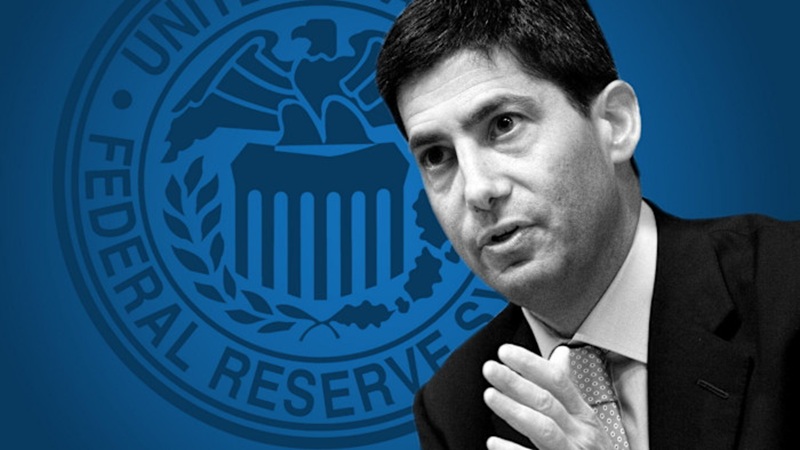
President Donald Trump has nominated Kevin Warsh to succeed Jerome Powell as chair of the Federal Reserve, a move that signals a possible shift in U.S. monetary policy as the administration presses for lower interest rates to support growth and ease borrowing costs.

The decision is already reshaping expectations around U.S. monetary policy, even before the Senate weighs in. The pick comes at a delicate moment for the economy, with inflation easing from its peak but borrowing costs still high, financial markets jittery over growth prospects, and political pressure mounting on the central bank to deliver rate cuts.

Trump framed the nomination as a vote of confidence in Warsh’s judgment and leadership, writing on Truth Social that he had “no doubt” Warsh would be among the greatest Fed chairs in history. The endorsement reflects more than personal admiration. It underscores the president’s broader economic agenda, which has increasingly focused on pushing interest rates lower to stimulate investment, support asset prices, and ease the financial strain on households and businesses.

If confirmed, Warsh will replace Jerome Powell in May, marking the first leadership change at the Fed during Trump’s second term. That transition alone carries weight. Powell’s tenure has been defined by extraordinary events, from the pandemic-era collapse and recovery to the sharpest inflation surge in four decades and the aggressive rate-hiking cycle that followed. Warsh would inherit a Fed that has largely completed its fight against inflation but remains cautious about declaring victory too early.

Warsh is not an unknown quantity. He served as a Fed governor from 2006 to 2011, a period that included the global financial crisis, giving him firsthand experience with market stress and emergency policy responses. Since leaving the Fed, he has built a career in finance and policy circles, maintaining close ties to Wall Street while positioning himself as a critic of what he sees as central bank overreach and credibility gaps.

That record complicates the assumption that Warsh will simply rubber-stamp rapid rate cuts. While he has recently criticized the Fed for being too slow to ease policy, he was widely viewed as hawkish during his earlier tenure, particularly on inflation and the risks of prolonged monetary accommodation. Brett House of Columbia Business School noted that, based on past statements and actions, Warsh was the most hawkish of the final candidates considered for the role. That history suggests his support for lower rates may be conditional rather than unconditional.

Trump’s economic message has been consistent: high interest rates, in his view, are choking off growth and leaving the United States at a disadvantage compared with economies where borrowing is cheaper. The Fed’s decision this week to hold rates steady after a two-day policy meeting only reinforced that tension. For consumers facing elevated credit card balances and for businesses weighing investment decisions, the lack of near-term relief has become a political as well as an economic issue.

Market reaction to Warsh’s nomination has reflected that backdrop. Investors appear to be interpreting the move less as a radical break and more as a signal that the White House expects the Fed to pivot more decisively toward easing later in the year. David Bahnsen of The Bahnsen Group captured that sentiment, saying that any plausible Fed chair pick at this stage would likely oversee rate cuts in the short term. In that sense, Warsh’s nomination may formalize expectations already embedded in markets rather than overturn them.

The deeper question is how Warsh would balance near-term growth concerns against longer-term inflation risks.

Mark Higgins of Index Fund Advisors warned that history offers little comfort when political pressure pushes central banks to prioritize short-term gains. He pointed to the 1970s, when then-President Richard Nixon leaned on Fed Chair Arthur Burns to keep rates low ahead of the 1972 election. The immediate boost was followed by years of entrenched inflation, culminating in a peak near 15% in 1980 and forcing the Fed, under new leadership, to impose punishing rate hikes in the early 1980s to restore price stability.

That episode remains central to debates about Fed independence. While the president nominates Fed governors and the chair, the institution’s credibility rests on its ability to resist short-term political demands in favor of long-term economic stability. Warsh’s critics will likely scrutinize whether his views align too closely with Trump’s rate agenda, while supporters will argue that his experience equips him to navigate those pressures without repeating past mistakes.

The stakes extend beyond interest rates. The Fed’s benchmark influences not only consumer borrowing but also asset valuations, capital flows, and the federal government’s own financing costs. With the U.S. carrying a large and growing debt burden, lower rates would ease pressure on the Treasury, a reality not lost on policymakers. At the same time, cutting too aggressively could reignite inflation or inflate asset bubbles, risks that Warsh has previously highlighted in other contexts.

As the nomination heads to the Senate, confirmation hearings are likely to focus on these tensions. Lawmakers will probe Warsh’s views on inflation, financial stability, regulatory policy, and, crucially, the independence of the central bank. His answers will shape perceptions of whether his leadership would mark continuity with Powell’s cautious approach or a more explicit alignment with the White House’s economic priorities.

While a leadership change at the Fed raises the prospect of a policy pivot, history suggests that the consequences of getting that balance wrong can be severe. Warsh’s challenge, if confirmed, will be to manage the transition from a restrictive policy stance without undermining the hard-won progress against inflation.