DD
MM
YYYY

PAGES

DD
MM
YYYY

spot_img

PAGES

Home Blog Page 6

SpaceX Shares Rebound After Announcing First Earnings Date As Investors Brace for Major Insider Share Unlock

0

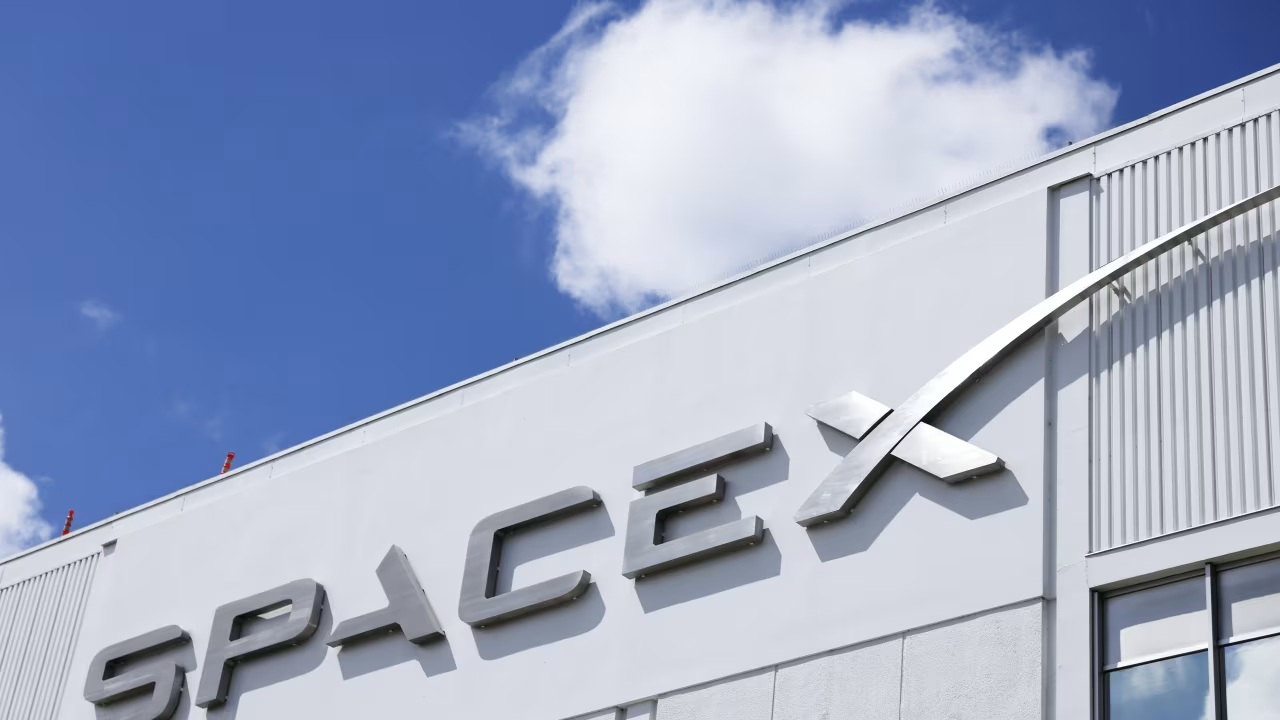
SpaceX shares rose 3% on Tuesday, ending a seven-session losing streak after Elon Musk’s aerospace and defense company announced the date of its inaugural quarterly earnings report, an event that also marks the beginning of a closely watched insider share lock-up expiration.

The stock had been under heavy selling pressure in recent weeks following its blockbuster initial public offering, with investors increasingly concerned about the substantial volume of shares scheduled to become eligible for sale in the months ahead.

SpaceX said its first earnings report as a publicly traded company will be released on Aug. 4, providing investors with their first detailed look at the company’s financial performance since completing one of the largest IPOs in U.S. market history.

The earnings announcement carries added significance because it activates the company’s staggered lock-up schedule, allowing early investors, executives and employees to begin selling portions of their holdings much earlier than the conventional 180-day lock-up period typically imposed after initial public offerings.

Rather than adopting the traditional approach, SpaceX structured a phased lock-up mechanism designed to reduce the risk of a sudden flood of insider selling that could destabilize the stock.

Under the company’s prospectus, eligible insiders will be permitted to sell 20% of their locked-up shares, representing up to 911.5 million shares, beginning on Aug. 6, the second full trading day following the earnings release. An additional 10% of restricted shares could also become eligible for sale if SpaceX stock closes at least 30% above its IPO price during five of the ten trading sessions preceding the earnings announcement.

The staggered structure is intended to improve market liquidity while reducing the likelihood of the sharp price swings that often accompany large post-IPO share releases.

Despite Tuesday’s rebound, SpaceX shares remain well below the record levels reached shortly after listing. As of Monday’s close, the stock had fallen nearly 50% from its intraday peak of $225.64 recorded on June 16, and was down approximately 43% from its record closing high of $211.39 on the same day.

The decline underpins growing investor caution over the company’s valuation, upcoming insider share sales and broader weakness across high-growth technology and artificial intelligence stocks. Short sellers have also sharply increased their positions in recent weeks, betting that additional selling pressure from insider unlocks could weigh on the stock.

Musk’s Wealth Retreats from Trillion-Dollar Milestone

The decline in SpaceX shares has significantly reduced Elon Musk’s personal fortune. According to the Forbes Real-Time Billionaires Index, Musk’s net worth stood at approximately $786 billion on Monday, down from more than $1 trillion reached on June 12, when enthusiasm surrounding SpaceX’s public listing pushed his wealth to an unprecedented level.

Although he remains the world’s wealthiest individual, much of Musk’s fortune continues to fluctuate alongside the performance of his publicly traded companies.

Beyond its satellite and launch businesses, investors continue to focus on the commercial potential of Starship, the fully reusable heavy-lift rocket that Musk has repeatedly described as the “holy grail” of space transportation. Starship is expected to become the backbone of SpaceX’s long-term ambitions, including deep-space cargo missions, commercial space tourism and eventually crewed missions to Mars.

The program also underpins NASA’s Artemis lunar missions and could become an important revenue driver if large-scale commercial deployment proceeds successfully.

Investors are also paying increasing attention to SpaceX’s expansion into artificial intelligence infrastructure. Earlier this year, the company completed the acquisition of Musk’s AI startup xAI, now operating as SpaceXAI, giving the aerospace company ownership of large-scale AI data centers and supporting power infrastructure in the Greater Memphis area.

The acquisition has significantly diversified SpaceX’s business beyond rockets and satellite communications. Several leading AI developers, including Google, Anthropic and Reflection, have signed agreements to lease excess computing capacity from SpaceXAI’s facilities.

The company is also reportedly in discussions with the U.S. Department of Defense regarding the provision of AI computing infrastructure, potentially opening another high-value government revenue stream alongside its existing launch and satellite contracts.

The move places SpaceX in direct competition with hyperscale cloud providers and specialized AI infrastructure companies seeking to capitalize on surging demand for graphics processing units (GPUs) and AI data center capacity.

Tesla Earnings and Cross-Company Collaboration In Focus

Attention will now shift to Musk’s other publicly traded company, Tesla, which is scheduled to report quarterly earnings after the close of trading on Wednesday. Ahead of the earnings release, institutional investors submitted questions through the Say Technologies platform seeking greater clarity on Tesla’s relationship with SpaceX.

One topic attracting particular interest is the planned Terafab semiconductor manufacturing facility in Grimes County, Texas. According to previously reported plans, Tesla is expected to lead research and development activities for the project, while SpaceX would oversee manufacturing operations, reflecting growing operational links between Musk’s businesses.

The expanding collaboration between Tesla and SpaceX has renewed long-standing speculation among Musk supporters that his companies could eventually become more closely integrated.

Some investors have advocated for a future merger or broader consolidation of Musk’s businesses, arguing that combining engineering resources, manufacturing capabilities and AI infrastructure could create significant strategic advantages.

SpaceX President and Chief Operating Officer Gwynne Shotwell has previously acknowledged that closer integration between Musk’s companies could simplify management and improve coordination across his growing business empire.

For now, however, investors are primarily focused on SpaceX’s first earnings report, which will offer critical insight into the company’s revenue growth, profitability, launch business, Starlink performance, AI infrastructure expansion and capital expenditure plans as it enters its next phase as a publicly traded company.

Google Announces Frozen Chip to Power Next-Generation AI Models

0

Google’s announcement of its new Frozen chip marks another significant milestone in the intensifying race to dominate artificial intelligence infrastructure.

As AI models become increasingly sophisticated and computationally demanding, technology giants are investing billions of dollars into custom silicon designed specifically for training and running advanced AI systems.

Google’s latest move highlights how the future of artificial intelligence will be shaped not only by software innovations but also by breakthroughs in hardware.

The newly unveiled Frozen chip is expected to play a central role in powering Google’s next generation of AI models, including its Gemini ecosystem and other advanced machine-learning applications.

Unlike traditional processors, AI-specific chips are optimized to handle massive parallel computations, enabling faster model training, lower latency, and improved energy efficiency. This specialized architecture is becoming increasingly necessary as the scale of modern AI models continues to expand exponentially.

The name Frozen symbolizes stability, efficiency, and optimized performance under immense computational pressure. Industry analysts believe the chip has been engineered to address one of the biggest challenges facing AI development today: the enormous cost of computing power.

Training frontier AI models now requires vast data centers containing tens of thousands of high-performance processors, consuming tremendous amounts of electricity and capital.

Google has long been a pioneer in AI hardware. The company previously introduced its Tensor Processing Units (TPUs), which have become a critical component of its cloud infrastructure and AI services.

The Frozen chip appears to build upon this legacy, incorporating more advanced capabilities aimed at improving performance for large language models, multimodal systems, and agentic AI applications.

The timing of the announcement is particularly important. Competition in the AI hardware sector has reached unprecedented levels, with companies such as NVIDIA, Microsoft, Amazon, Meta, and various semiconductor startups investing aggressively in proprietary chips.

NVIDIA currently dominates the market through its GPUs, which power much of today’s AI ecosystem. However, large technology firms are increasingly seeking alternatives that can reduce dependency on external suppliers and provide greater control over costs and performance.

By developing its own advanced processors, Google gains several strategic advantages. First, it can optimize hardware specifically for its internal AI architectures, creating tighter integration between software and computing infrastructure.

Second, custom chips could significantly lower operational expenses by delivering higher efficiency per watt of energy consumed. Finally, proprietary hardware strengthens Google’s position in the cloud market, allowing it to offer more competitive AI services to enterprises and developers.

The Frozen chip also underscores a broader industry trend: AI is becoming an infrastructure race. Success in artificial intelligence is no longer determined solely by the quality of algorithms or the amount of data available.

Increasingly, leadership depends on access to computing resources, semiconductor innovation, and energy infrastructure.

This development could have substantial implications for the broader technology ecosystem. As Google deploys the Frozen chip across its cloud and AI platforms, businesses may gain access to more powerful and affordable AI tools.

Enhanced computing efficiency could accelerate breakthroughs in scientific research, healthcare, robotics, autonomous systems, and enterprise automation. The announcement reflects the growing importance of sovereign AI capabilities among major technology firms and governments.

Control over advanced semiconductors is becoming a strategic asset, influencing economic competitiveness and national security considerations worldwide.

Google’s Frozen chip represents more than just another hardware product.

It is a clear indication that the next phase of the artificial intelligence revolution will be defined by the convergence of software intelligence and specialized computing infrastructure. As the battle for AI supremacy intensifies, innovations in custom silicon may prove to be one of the decisive factors determining which companies lead the future of intelligent technologies.

Rise of AI-Powered Investing as Robinhood Embraces Autonomous Agents

0

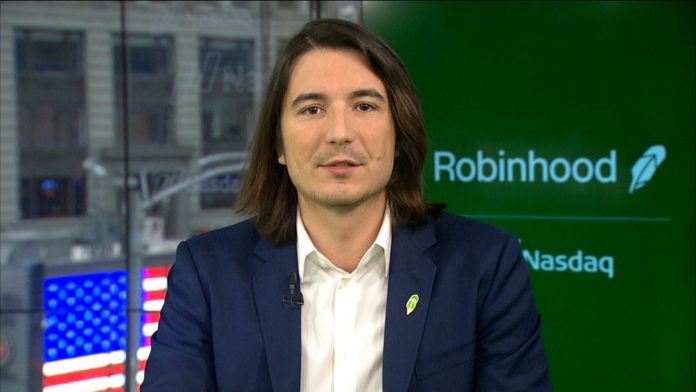
Robinhood has taken another major step toward the future of finance by opening access to AI agent accounts, a move that could fundamentally reshape how individuals and institutions interact with financial markets.

The development signals a new era in which autonomous artificial intelligence systems may participate directly in investment activities, portfolio management, and trading decisions. Investing has relied on human judgment, financial advisors, and increasingly sophisticated algorithmic trading systems.

The emergence of advanced AI agents capable of reasoning, analyzing vast amounts of data, and executing complex tasks has created demand for a new financial infrastructure. Robinhood’s decision to enable AI agent accounts positions the company at the forefront of this transformation.

AI agents differ significantly from traditional trading bots.

While conventional algorithms operate under predefined rules and strategies, modern AI agents are designed to learn, adapt, and make context-based decisions. They can monitor market movements in real time, assess macroeconomic developments, interpret news events, and potentially adjust investment strategies with minimal human intervention.

The opening of AI agent accounts could introduce unprecedented efficiency into financial markets. Retail investors may soon deploy personalized AI assistants capable of managing portfolios according to specific risk preferences and investment goals.

Instead of manually researching stocks, cryptocurrencies, or exchange-traded funds, users could delegate these responsibilities to AI systems that continuously analyze opportunities across global markets.

This development also aligns with broader trends in the financial technology sector. Artificial intelligence has rapidly become a central pillar of innovation, influencing everything from customer support and fraud detection to quantitative trading and asset management.

Major financial institutions are already investing billions of dollars into AI infrastructure, recognizing its potential to increase productivity and improve decision-making.

For Robinhood, embracing AI agent accounts could strengthen its position in an increasingly competitive brokerage landscape. The company has consistently sought to democratize finance by lowering barriers to entry for retail investors.

By enabling AI-powered financial participation, Robinhood is extending this mission into the next technological frontier. The introduction of AI agents into brokerage platforms also raises important questions regarding regulation, accountability, and market stability.

Autonomous agents capable of executing financial transactions may introduce new forms of systemic risk if not properly monitored. Regulators will likely examine how these AI systems make decisions, whether they can be manipulated, and who bears responsibility when errors occur.

Security and compliance concerns are equally significant. AI agents may require access to sensitive financial data and account permissions, creating new cybersecurity challenges. Ensuring that autonomous systems operate within legal and ethical boundaries will be essential for maintaining investor trust and preventing misuse.

AI agents can process information and execute trades at speeds far beyond human capability. As more investors adopt such technologies, financial markets could become increasingly automated, potentially leading to greater efficiency but also heightened volatility during periods of stress or unexpected events.

The broader significance of Robinhood’s initiative extends beyond trading alone. AI agents could eventually serve as comprehensive financial companions, helping users manage savings, retirement planning, tax optimization, and even decentralized finance activities. This convergence of artificial intelligence and financial services may redefine personal finance in the coming decade.

Robinhood’s decision to open access to AI agent accounts represents more than a product update; it marks a pivotal moment in the evolution of digital finance. As artificial intelligence becomes more autonomous and capable, the boundaries between human decision-making and machine-driven financial management will continue to blur.

The success of this initiative may determine how quickly AI agents become mainstream participants in global financial markets and could usher in a new era where intelligent systems play a central role in shaping investment strategies and economic activity worldwide.

Polymarket Refers 100 Suspicious Wallets to Law Enforcement Amid Growing Scrutiny of Prediction Markets

0

Blockchain-based prediction market platform Polymarket has reportedly referred around 100 suspicious wallets to law enforcement agencies, marking one of the largest internal compliance actions taken by a decentralized betting platform.

The move highlights the increasing pressure on crypto-native platforms to combat market manipulation, illicit activities, and potential abuse of decentralized financial systems.

Polymarket has emerged as one of the most influential prediction market platforms in recent years, allowing users to place bets on real-world events ranging from elections and geopolitical developments to sports and economic outcomes.

By leveraging blockchain technology and stablecoin settlements, the platform has attracted millions of dollars in trading volume and has become a key source of crowd sentiment for traders, investors, and policymakers alike.

However, with rapid growth has come increased regulatory attention. Prediction markets, particularly those operating on blockchain infrastructure, face concerns surrounding money laundering, market manipulation, insider trading, and the use of anonymous wallets to distort market outcomes.

The referral of 100 wallets to law enforcement suggests that Polymarket is actively attempting to address these risks and strengthen its compliance framework. According to reports, the suspicious wallets were flagged due to unusual transaction patterns and behaviors that potentially violated platform rules or broader financial regulations.

Such activities may include coordinated trading schemes, attempts to manipulate odds, the use of multiple wallets to circumvent restrictions, or transactions linked to sanctioned entities and illicit sources of funds. This development reflects a broader trend across the cryptocurrency industry.

Regulators around the world are increasingly demanding that crypto platforms implement stronger Know Your Customer (KYC) procedures and Anti-Money Laundering (AML) controls. While decentralized platforms have traditionally emphasized privacy and permissionless participation, authorities are making it clear that digital asset platforms cannot operate outside existing financial laws.

For Polymarket, cooperating with law enforcement could serve multiple strategic purposes. First, it demonstrates a willingness to maintain market integrity and protect legitimate users from manipulation. Second, it may help the company navigate regulatory challenges and improve its standing with policymakers.

Finally, stronger compliance measures could encourage greater institutional participation in prediction markets, a sector that many believe has significant growth potential.

The timing of this action is particularly notable.

Prediction markets have gained renewed attention in 2026 as geopolitical tensions, elections, economic uncertainty, and major technological developments have driven increased demand for real-time forecasting tools. Platforms such as Polymarket have increasingly been viewed not only as betting venues but also as alternative information markets capable of aggregating collective intelligence.

Yet, the growing influence of these markets also raises important questions. If large players or coordinated groups can manipulate market prices through suspicious wallet activity, prediction markets could lose credibility as indicators of public expectations. Identifying and removing bad actors is becoming essential for the long-term sustainability of the sector.

The referral of suspicious wallets also signals a maturing cryptocurrency industry. Earlier generations of crypto platforms often resisted cooperation with authorities, but many modern companies now recognize that regulatory engagement may be necessary for broader adoption. By proactively reporting suspicious activity, Polymarket is positioning itself as a more compliant and institution-friendly platform.

The decision to refer approximately 100 wallets to law enforcement underscores the delicate balance between decentralization and regulatory accountability. As blockchain-based prediction markets continue to expand, maintaining transparency, preventing abuse, and ensuring fair participation will be critical.

The actions taken by Polymarket may serve as a precedent for other decentralized platforms seeking to build trust while operating within an increasingly regulated digital financial environment.

Tesla Expands Robotaxi Service To Orlando And Tampa Ahead Of Earnings As Investors Seek Evidence Of Autonomous Driving Progress

0

Tesla announced the expansion of its Robotaxi service to Orlando and Tampa on Wednesday, widening the geographic footprint of its autonomous ride-hailing network just hours before Chief Executive Elon Musk is expected to update investors on the company’s self-driving plan during its second-quarter earnings call.

The electric vehicle maker disclosed the expansion in a post on X, publishing maps showing the operational service areas in both Florida cities. Tesla did not reveal how many vehicles would initially operate in either market, when riders would be able to begin requesting trips, or whether the service would launch with supervised or fully driverless vehicles.

The timing of the announcement is notable, coming immediately before what is likely to be one of the most closely watched earnings calls in Tesla’s recent history. With electric vehicle sales facing increasing competitive pressure and margins under strain, investors have focused more on Robotaxi as the company’s primary long-term growth driver. Demonstrating geographic expansion allows Tesla to reinforce its narrative that commercial deployment of autonomous transportation is accelerating.

The announcement also follows months of heightened scrutiny over whether Tesla’s Robotaxi rollout is keeping pace with Musk’s ambitious projections.

Tesla’s current Robotaxi deployment remains substantially smaller than the vision Musk outlined last year.

In 2024, Musk said Robotaxi would be available to roughly half of the U.S. population by the end of 2025. He later predicted that Tesla would operate more than 500 autonomous vehicles in the Austin area alone before the end of the year.

Available data suggest the rollout remains far below those expectations.

Independent tracking data indicate Tesla’s Robotaxi fleet has fluctuated considerably over recent months. In May, trackers estimated the company had approximately 29 unsupervised Robotaxis in Austin, alongside six in Houston and five in Dallas. Current estimates suggest those numbers have since declined to around 17 unsupervised vehicles in Austin, four in Dallas, and none in Houston, highlighting the inconsistency of Tesla’s deployment strategy.

Unlike conventional fleet expansions, Tesla has not explained why the number of active Robotaxis has periodically increased and then contracted across different markets.

Tesla Trails Waymo in Commercial Deployment

The rollout also reveals the widening gap between Tesla and Alphabet-owned Waymo, which remains the clear leader in commercial autonomous ride-hailing. Waymo is estimated to operate more than 3,500 fully driverless vehicles across more than 10 U.S. metropolitan areas, providing hundreds of thousands of paid trips each week.

Tesla, by comparison, continues to expand cautiously while experimenting with different operating models.

Like Waymo, Tesla typically begins operations in new cities with a safety driver behind the wheel. In some cases, however, Tesla later moved the safety operator into the front passenger seat, where they retain access to an emergency stop or “kill switch” should intervention become necessary. The company has not established a consistent framework for transitioning between supervised and unsupervised operations, making it difficult for investors to assess the maturity of its autonomous driving system.

The expansion into Florida comes as Tesla continues to face operational questions about the readiness of its Robotaxi platform. Users and observers have reported that limited fleet sizes have resulted in lengthy passenger wait times in existing markets.

There have also been reports of vehicles arriving at incorrect pickup or drop-off locations, while some supposedly unsupervised Robotaxis have relied on remote human operators to assist with difficult driving situations.

Earlier this month, an unsupervised Tesla Robotaxi reportedly collided with a tree stump while being remotely operated, raising fresh questions about the system’s ability to safely handle edge-case scenarios without human intervention.

The incident adds to ongoing regulatory and public scrutiny surrounding Tesla’s Full Self-Driving technology, which differs fundamentally from Waymo’s approach. Tesla relies primarily on cameras and artificial intelligence, while Waymo combines cameras with lidar, radar, and high-definition mapping to create multiple layers of environmental sensing.

Robotaxi Central to Tesla’s Valuation

Despite the limited scale of the rollout, Robotaxi has become important to Tesla’s investment case. With growth in electric vehicle deliveries slowing and competition intensifying globally, many analysts believe Tesla’s premium valuation increasingly depends on its ability to commercialize autonomous transportation and AI-powered mobility services.

Musk has repeatedly said that autonomous ride-hailing could transform Tesla from an automobile manufacturer into an artificial intelligence and robotics company, generating substantially higher margins through software-driven transportation services. He has projected that Robotaxi operations will become profitable by 2027, although analysts remain divided over whether Tesla can achieve fully autonomous operation at commercial scale within that timeframe.

Wednesday’s expansion into Orlando and Tampa provides Tesla with another milestone to showcase ahead of earnings. However, investors are expected to focus less on the number of cities served and more on metrics such as fleet size, utilization rates, safety performance, regulatory approvals and the pace at which Tesla can transition from small pilot programs to a commercially viable autonomous ride-hailing network.

Those details are likely to feature prominently when Musk discusses Robotaxi during Tesla’s earnings conference call later in the day.