

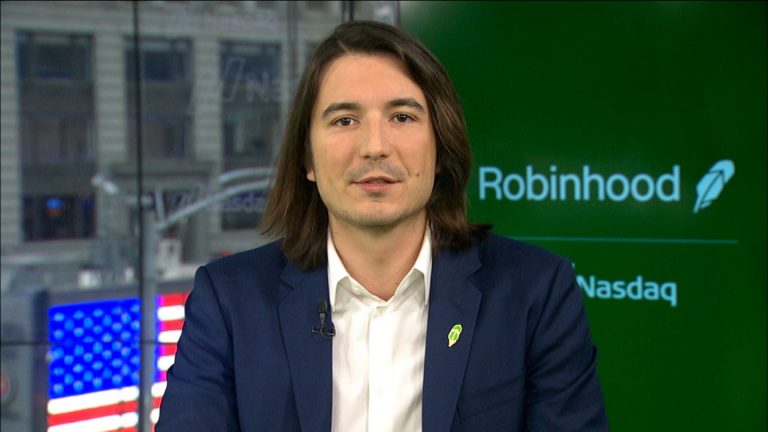
Robinhood has taken another major step toward the future of finance by opening access to AI agent accounts, a move that could fundamentally reshape how individuals and institutions interact with financial markets.
The development signals a new era in which autonomous artificial intelligence systems may participate directly in investment activities, portfolio management, and trading decisions. Investing has relied on human judgment, financial advisors, and increasingly sophisticated algorithmic trading systems.
The emergence of advanced AI agents capable of reasoning, analyzing vast amounts of data, and executing complex tasks has created demand for a new financial infrastructure. Robinhood’s decision to enable AI agent accounts positions the company at the forefront of this transformation.
AI agents differ significantly from traditional trading bots.
Register for the next Tekedia Mini-MBA.
Register for Tekedia AI in Business Masterclass.
Join Tekedia Capital Syndicate and co-invest in great global startups.
While conventional algorithms operate under predefined rules and strategies, modern AI agents are designed to learn, adapt, and make context-based decisions. They can monitor market movements in real time, assess macroeconomic developments, interpret news events, and potentially adjust investment strategies with minimal human intervention.
The opening of AI agent accounts could introduce unprecedented efficiency into financial markets. Retail investors may soon deploy personalized AI assistants capable of managing portfolios according to specific risk preferences and investment goals.
Instead of manually researching stocks, cryptocurrencies, or exchange-traded funds, users could delegate these responsibilities to AI systems that continuously analyze opportunities across global markets.
This development also aligns with broader trends in the financial technology sector. Artificial intelligence has rapidly become a central pillar of innovation, influencing everything from customer support and fraud detection to quantitative trading and asset management.

Major financial institutions are already investing billions of dollars into AI infrastructure, recognizing its potential to increase productivity and improve decision-making.
For Robinhood, embracing AI agent accounts could strengthen its position in an increasingly competitive brokerage landscape. The company has consistently sought to democratize finance by lowering barriers to entry for retail investors.
By enabling AI-powered financial participation, Robinhood is extending this mission into the next technological frontier. The introduction of AI agents into brokerage platforms also raises important questions regarding regulation, accountability, and market stability.

Autonomous agents capable of executing financial transactions may introduce new forms of systemic risk if not properly monitored. Regulators will likely examine how these AI systems make decisions, whether they can be manipulated, and who bears responsibility when errors occur.
Security and compliance concerns are equally significant. AI agents may require access to sensitive financial data and account permissions, creating new cybersecurity challenges. Ensuring that autonomous systems operate within legal and ethical boundaries will be essential for maintaining investor trust and preventing misuse.
AI agents can process information and execute trades at speeds far beyond human capability. As more investors adopt such technologies, financial markets could become increasingly automated, potentially leading to greater efficiency but also heightened volatility during periods of stress or unexpected events.
The broader significance of Robinhood’s initiative extends beyond trading alone. AI agents could eventually serve as comprehensive financial companions, helping users manage savings, retirement planning, tax optimization, and even decentralized finance activities. This convergence of artificial intelligence and financial services may redefine personal finance in the coming decade.
Robinhood’s decision to open access to AI agent accounts represents more than a product update; it marks a pivotal moment in the evolution of digital finance. As artificial intelligence becomes more autonomous and capable, the boundaries between human decision-making and machine-driven financial management will continue to blur.
The success of this initiative may determine how quickly AI agents become mainstream participants in global financial markets and could usher in a new era where intelligent systems play a central role in shaping investment strategies and economic activity worldwide.