DD
MM
YYYY

PAGES

DD
MM
YYYY

spot_img

PAGES

Home Blog Page 6

Global Markets Hold Steady as Middle East Shipping Attacks Lift Oil, Investors Await U.S. Inflation Data

0

Global equity markets were broadly steady on Wednesday while oil prices extended their advance as renewed attacks on shipping in the Middle East weakened hopes of a quick end to the U.S.-Iran war and heightened concerns over the inflationary consequences of prolonged disruption to energy supplies.

The latest attacks came as tensions around the strategically vital Strait of Hormuz intensified. The United States and Yemen’s Iran-aligned Houthi group reported separate attacks involving shipping, while Iran and Washington have escalated their rhetoric in recent days.

Iran’s top security official, Mohsen Rezaei, said on Tuesday that the Strait of Hormuz would remain closed unless the United States accepted Iran’s conditions for ending the conflict. The comments bolstered concerns that any resolution to the war may not immediately restore shipping through one of the world’s most important energy corridors.

President Donald Trump has repeatedly said a deal to end the conflict could be imminent, but the latest developments suggest the path to de-escalation remains uncertain. A prolonged disruption would keep pressure on oil markets and could complicate efforts by central banks to bring inflation back toward target levels.

U.S. crude futures rose 0.8% to $83.89 a barrel, while Brent crude gained 0.7% to $89.49. Both benchmarks were on course for a sixth consecutive daily increase after settling more than $1 higher on Tuesday at their highest levels since July 31.

Oil prices have risen sharply since the start of the week, with both benchmarks gaining about 5% on Monday alone. The rally has begun to feed back into broader market expectations because sustained energy inflation could constrain central banks’ ability to cut interest rates.

“Our base case for a long time has been a gradual but messy de-escalation,” said Dorian Carrell, head of multi-asset income at Schroders.

“We don’t expect traffic through the Strait of Hormuz to go to its full capacity. We think that puts a floor on the oil price and maintains an energy-driven inflationary driver in markets in the near- to medium-term.”

The Strait of Hormuz is particularly important because a prolonged reduction in shipping through the waterway can affect crude and other energy supplies well beyond the immediate conflict zone. Higher transportation, insurance and energy costs can also feed into prices for manufactured goods and consumer services, increasing the risk that an oil shock becomes a broader inflation problem.

That dynamic has put Wednesday’s U.S. consumer price index report at the center of investor attention.

U.S. CPI data due later in the day is expected to show consumer prices rising 0.1% in July after falling 0.4% in June, according to a Reuters poll. Annual inflation is expected to slow to 3.4% from 3.5%.

The July data will not fully capture the latest increase in oil prices, meaning investors will have to assess the inflation report alongside developments in energy markets. Still, the figures could influence expectations for the Federal Reserve’s next policy decision.

Money markets were pricing roughly an even chance of an interest-rate increase at the Fed’s September meeting. That would represent a significant shift in expectations because higher energy prices could make policymakers more cautious about easing monetary policy if inflation remains elevated.

Schroders’ Carrell said a relatively soft CPI reading could support a pause in the near term.

“The CPI projection is expected to come in reasonably soft today, which would tee up a hold before the midterms, all else being equal,” he said.

Fed Bank of Boston President Susan Collins has said she would support a September rate increase if inflation remains high, according to the Financial Times.

The combination of energy prices, monetary policy and geopolitical risk is therefore creating a delicate backdrop for equities. Investors are trying to determine whether the latest oil rally represents a temporary geopolitical shock or the beginning of a more persistent supply disruption that could weigh on economic growth.

So far, equity markets have shown considerable resilience.

In early European trading, the pan-European STOXX 600 was little changed, while Germany’s DAX, France’s CAC 40 and Britain’s FTSE 100 hovered around flat.

Asian stocks performed better, rising 0.7% overall. South Korea’s Kospi jumped 3.7%, while Japanese and Taiwanese shares gained almost 1% as semiconductor stocks rallied.

U.S. stock futures also pointed to a firmer open, with S&P 500 futures up 0.1% and Nasdaq 100 futures gaining 0.4%.

The Nasdaq futures advance was supported in part by renewed enthusiasm for artificial intelligence infrastructure after CoreWeave reported quarterly revenue above Wall Street expectations. The results offered investors another indication that demand for computing infrastructure remains strong even as concerns over the scale and sustainability of AI investment have increased.

The divergence between resilient technology stocks and rising energy prices is important for markets. Strong AI investment has been supporting corporate earnings and capital spending, while higher oil prices threaten to raise costs for consumers and businesses. The balance between those forces could determine whether the current equity rally can withstand a more difficult macroeconomic environment.

Currency markets were comparatively subdued.

The dollar index rose less than 0.1% to 99.86, while the euro and sterling were little changed. The Japanese yen weakened to 159.35 per dollar, remaining significantly weaker than its level of 155.20 reached last week following suspected intervention by Japanese authorities.

Japan’s bond market is showing clearer signs of pressure from changing monetary-policy expectations. The five-year Japanese government bond yield climbed to a record 2.12%, while the two-year yield reached 1.645%, its highest level in 31 years.

Markets were pricing an almost 60% probability of a quarter-point interest-rate increase by the Bank of Japan at its September meeting. A faster-than-expected tightening cycle could provide further support for the yen over time, although the currency remains vulnerable to near-term moves in U.S. interest rates and energy costs.

Gold also benefited from the uncertain geopolitical and monetary backdrop. Spot gold rose 1% to $4,409 an ounce, while silver gained 2% to $66.04.

The market’s immediate focus, however, remains divided between two competing forces: the possibility that the Middle East conflict continues to restrict energy flows, and the possibility that U.S. inflation data remains sufficiently contained to prevent an immediate shift toward tighter monetary policy.


Norway’s $2.3tn Wealth Fund Posts Record $185bn Profit as Asian Tech Stocks Surge

0

Norway’s sovereign wealth fund posted a record first-half profit of more than $184 billion as a sharp rebound in global equities, led by Asian technology stocks, propelled its portfolio higher and helped offset losses suffered earlier in the year.

Norges Bank Investment Management, which manages the fund, said Wednesday that its return for the first six months of the year was 9.4%, generating a profit of more than 1.75 trillion Norwegian kroner, equivalent to about $184.9 billion.

The fund was valued at about $2.34 trillion at the end of the period, making it one of the world’s largest pools of capital. Established in the 1990s to invest Norway’s oil and gas revenues for future generations, it now owns stakes in more than 7,000 companies across more than 50 countries and holds roughly 1.5% of all publicly listed companies globally.

“The result is driven by good returns in the equity market, particularly from Asian technology stocks,” Nicolai Tangen, chief executive of Norges Bank Investment Management, said in a statement.

The scale of the gain underscores the growing influence of technology stocks on global investment returns. Equities account for more than two-thirds of the fund’s portfolio, with the remainder invested across fixed income, real estate and renewable energy infrastructure.

About 40% of the portfolio is invested in U.S. equities. Nvidia, Apple and Microsoft are among its largest holdings, giving the fund substantial exposure to the companies driving the global artificial intelligence investment boom.

The fund’s equity portfolio returned 12.95% in the first half, despite a sharp reversal during the opening quarter. Equity investments fell 2.6% in the first quarter as investors reacted to concerns about high valuations in AI-related stocks and uncertainty surrounding the U.S.-Iran conflict.

That was followed by a 15.98% surge in the second quarter, turning the first-half performance sharply positive.

Tangen offered a succinct explanation for the strongest performers in the portfolio during the period.

“Chips, chips, chips, chips,” he said at a news conference while pointing to a chart showing the fund’s best-performing holdings.

The list included Samsung, SK Hynix, TSMC, ASML, Intel and Nvidia, highlighting how heavily the fund’s returns were tied to the global semiconductor cycle and the continued expansion of AI-related investment.

SpaceX Stake Adds Exposure to Musk’s Private Empire

The first-half report also revealed that NBIM had accumulated a 0.05% stake in SpaceX valued at just over $1.2 billion, giving the Norwegian fund exposure to one of the world’s most closely watched privately held technology companies.

The SpaceX position is relatively small compared with the fund’s largest investments. Its 1.3% stake in Nvidia was valued at about $61.8 billion, while its 1.2% holding in Apple was worth roughly $52.7 billion as of June 30.

The SpaceX investment nevertheless gives NBIM exposure to both of Elon Musk’s most prominent companies. The fund also owns about 1% of Tesla, a stake valued at around $15.7 billion at the end of the first half.

The relationship between Musk and Norway’s wealth fund has been strained by disagreements over his compensation at Tesla.

In 2025, NBIM voted against Musk’s $1 trillion Tesla compensation package. Musk subsequently declined an invitation from Tangen to a private dinner and an NBIM conference in Oslo, according to messages disclosed under Norway’s freedom-of-information law.

“When I ask you for a favor, which I very rarely do, and you decline, then you should not ask me for one until you’ve done something above nothing to make amends,” Musk reportedly wrote to Tangen. “Friends are as friends do.”

NBIM later opposed Musk’s proposed trillion-dollar compensation package at Tesla’s annual shareholder meeting in 2025.

“While we appreciate the significant value created under Mr. Musk’s visionary role, we are concerned about the total size of the award, dilution, and lack of mitigation of key person risk, consistent with our views on executive compensation,” the fund said at the time.

The fund said it would continue to engage with Tesla on executive compensation and other governance issues.

Asked Wednesday about the evolution of NBIM’s SpaceX position, Deputy CEO Trond Grande declined to discuss individual holdings.

“We were roughly index rate in the first half, and that’s been the case over the summer as well,” Grande said.

SpaceX has experienced significant volatility since its June market debut. The company’s shares initially surged before losing substantial value by the end of July as the post-IPO rally reversed. The stock closed above its IPO price again on Monday.

Tangen played down the significance of movements in any individual holding given the breadth of the fund’s portfolio.

“We own 7,000 companies, some go up, some go down, every day. And not only every day, many times a day,” he said.

The Fund Not An Endless Source Of Wealth

The strong first-half performance also comes with a warning from Tangen about the risks associated with Norway’s enormous financial reserves.

Speaking at Norway’s Arendalsuka political conference on Tuesday, Tangen described the sovereign wealth fund as a “piggy bank for the whole of Norway,” while warning that its value can fluctuate sharply.

Norway’s wealth fund is designed to convert revenues from the country’s finite oil and gas resources into a diversified pool of financial assets. Its enormous size has made investment returns increasingly important to the country’s public finances, but the fund remains exposed to global equity markets and geopolitical shocks.

“We must be prepared for the value to go up and down,” Tangen said.

He went further in warning that even a fund of Norway’s size cannot be assumed to provide permanent financial security.

“Can the fund disappear? The answer to that question is ‘yes’ — and the worst part is that in the world we live in today, it is fairly likely,” he said.

“There is no country in history that has managed to hold on to a large financial fortune over time. Fortunes are always lost in the end.”

The warning highlights the tension at the heart of Norway’s wealth model. The fund’s enormous scale gives the country a financial buffer that few other nations possess, but its returns remain dependent on the performance of global markets.

The first half of 2026 demonstrated both sides of that equation. A difficult first quarter was followed by a powerful technology-led recovery, producing one of the largest six-month gains in the fund’s history.

The concentration of those gains in semiconductor and AI-related companies also illustrates the changing composition of global markets. As artificial intelligence drives demand for advanced chips, data centers and computing infrastructure, companies across the semiconductor supply chain have become important contributors to investment returns.

However, the record profit is ultimately a market gain rather than a permanent increase in Norway’s national wealth. The same global exposure that generated nearly $185 billion in profit in the first half can produce substantial losses when technology valuations, interest rates, geopolitical tensions, or broader equity markets move in the opposite direction.

CPI Holds to Expectations as Rate-Hike Bets Fade and Trump Floats Capital-Gains Tax Cuts

0

Financial markets entered Wednesday’s U.S. inflation report under pressure, with equities and cryptocurrencies pulling back as investors positioned for the latest consumer-price data.

The July Consumer Price Index had become a major focus for traders because inflation remains above the Federal Reserve’s 2% target, while uncertainty over the central bank’s next policy move has kept risk assets sensitive to economic data.

The CPI report ultimately came in broadly in line with expectations, reducing some of the immediate concern that inflation could accelerate and force the Federal Reserve toward another interest-rate increase.

Before the release, economists had expected headline CPI to rise 0.1% month over month and 3.4% annually, while core CPI was projected to increase 0.2% from June and remain at 2.5% year over year.

The result provided some relief to financial markets because an inflation reading significantly above expectations could have strengthened the case for tighter monetary policy. Instead, the data gave investors fewer reasons to expect an aggressive response from the Federal Reserve.

Market expectations for a September rate hike subsequently declined, shifting attention toward whether policymakers may ultimately maintain or ease financial conditions rather than tighten them.

For equities, the CPI outcome is particularly important because interest rates influence corporate borrowing costs, valuations and the discount rate applied to future earnings. Growth and technology stocks are especially sensitive to changes in expectations for monetary policy.

A reduction in rate-hike expectations can therefore improve the backdrop for risk assets, even when inflation itself remains elevated. Cryptocurrency markets face a similar dynamic.

Bitcoin and other digital assets have increasingly traded alongside broader macroeconomic conditions, making inflation data, Treasury yields and Federal Reserve expectations important drivers of short-term sentiment.

The pre-CPI pullback reflected investors reducing exposure ahead of a potentially market-moving release. With the report failing to deliver a major upside inflation surprise, the pressure on risk assets from monetary-policy expectations could ease.

However, the inflation picture is not entirely benign. Headline inflation remains well above the Fed’s 2% objective, while persistent costs in areas such as housing and other services continue to complicate the path toward price stability.

Analysts have warned that future inflation could be affected by energy prices and geopolitical developments. At the same time, a separate policy story is emerging from Washington. President Donald Trump is discussing potential reductions in capital-gains taxes, including the possibility of indexing capital gains to inflation.

Former National Economic Council director Larry Kudlow has said Trump was interested in the idea, as well as a larger exemption related to certain home sales.

Indexing capital gains to inflation would seek to distinguish between genuine investment profits and gains that simply reflect the declining purchasing power of money. Supporters argue that taxing inflationary gains can discourage long-term investment and distort capital allocation.

For investors, the combination of softer monetary-policy expectations and possible tax relief could become an important market narrative. Lower expectations for rate hikes can support asset valuations, while lower capital-gains taxation could improve incentives for investment and potentially increase demand for equities and other appreciating assets.

Markets remain vulnerable to future inflation surprises, Federal Reserve communication, fiscal-policy uncertainty and geopolitical risks. The CPI report has removed one immediate source of uncertainty, but investors will continue watching the broader inflation trend rather than relying on a single monthly reading.

The message from markets is relatively clear: inflation has not delivered the shock traders feared, September rate-hike expectations have weakened, and Trump’s capital-gains tax proposals are adding another potentially supportive policy catalyst for investors.

The next challenge will be determining whether these developments represent the beginning of a more durable improvement in risk sentiment or simply a temporary pause in a highly sensitive market.

Litecoin & Polygon Are Stuck in the Past: Why BlockDAG Could Be the Next 1000x Crypto!

0

A few tokens do not crash quickly, but rather bleed down over time. Litecoin and Polygon show this trend clearly in today’s crypto market. Both projects feature real technology, real histories, and strong user bases. Litecoin stands as one of the oldest digital payment assets, while Polygon serves as a key scaling solution for Ethereum.

However, both assets have spent years sinking lower, seeing small price bounces that fail to last. This leaves long-term investors down further during every new cycle. Their networks still operate well, but market values continue to decline, widening the gap between utility and price.

This steady decline pushes many buyers toward newer assets with fresh chart setups. When coins with clear utility cannot stop falling, buying dips feels like taking high risk, so early-stage entries become much more attractive. The BlockDAG (BDAG) presale now comes up frequently in these market discussions. Crypto fans highlight it as one of the best presales to buy now, mainly because it carries no historical selling pressure.

Litecoin Faces Continuous Price Pressure

Litecoin remains a widely recognized payment network, built in 2011 to offer faster and cheaper payments than Bitcoin. It features a hard limit of 84 million tokens alongside a committed community of miners and merchants. Recent network features like MimbleWimble improved privacy and transaction mixing, while several company balance sheets have added LTC in recent years.

Yet, these developments have not stopped the long price slide. LTC trades around $45, down nearly 89% from its top of $420, stuck in a tight range under $46 that analysts view as weak for late 2026. Price projections suggest it may fall further toward the high $30s instead of mounting a real rally. For traders who bought in past years hoping Litecoin would match Bitcoin, the asset has delivered a long lesson in steady loss.

Why The Polygon Token Value Continues Falling

Polygon shows a similar and steeper fall. The native token, now named POL following the switch from MATIC, hit $2.92 in December 2021 as users rushed to scale Ethereum cheaply. The team has continued building core systems, releasing upgrades that boost speed and network stability. Polygon also secured real payment tools, such as merchant stablecoin solutions with major consumer brands.

Even so, token value collapsed and stayed low. POL trades near $0.075, down roughly 97% from its peak. Analysts highlight a big gap between active network usage and low market valuation. Polygon proves that launching good tech and getting actual adoption cannot save a token price once it bleeds across cycles, as usage grows while price sits near multi-year lows.

BlockDAG (BDAG) Enters Without the Baggage

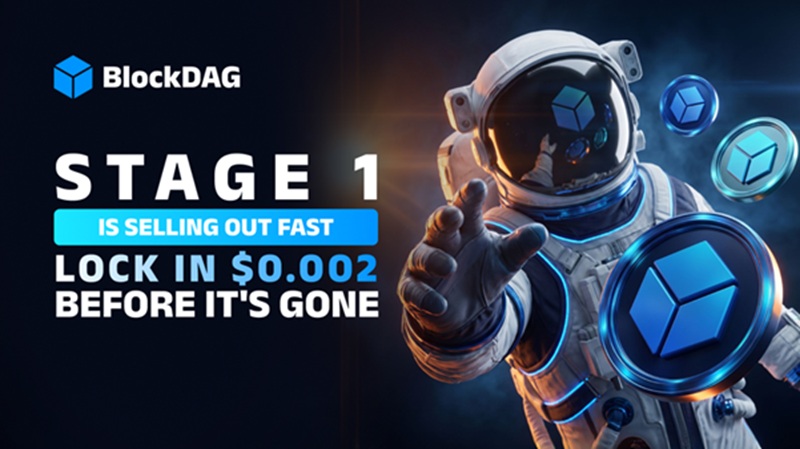
The BlockDAG (BDAG) presale offers an opportunity that Litecoin and Polygon can no longer provide: a fresh start free from years of overhead selling. Stage 1 begins at $0.002, starting a 25-stage presale path toward a $0.05 target and a planned $0.10 launch reference value. At Stage 1 prices, a $1,000 allocation gets 500,000 BDAG, which equals $50,000 if the coin reaches $0.10, showing a 50x gain on the entry amount.

What sets BDAG apart from falling assets is that its potential rests on live systems, not just future plans. The BlockDAG network is up and running today, handling real activity. BlockDAG Casino functions as a live consumer app where users play and transfer funds, driving actual utility instead of simple price guesses. Mining equipment is currently shipping to buyers globally, bringing real operators online and growing network security every day.

The product range continues to grow from there. The BlockDAGX trading platform will arrive soon to provide order books, liquidity, and price discovery upon launch. Meanwhile, a Super App is in development to combine wallet storage, mining, trading, swaps, payments, and rewards into one place.

Most early presales do not offer this depth. Furthermore, $100 million in launch liquidity, raised from presale funds and company capital, is set aside to support deep order books from day one, giving BDAG a strong base for 1000x gains that older tokens lacked initially.

Why BDAG Is the Name to Watch

Litecoin and Polygon reveal that established assets with active tech can still drop for years, running their chains while token prices fall cycle after cycle. The BlockDAG (BDAG) presale presents a different path: a $0.002 Stage 1 price, a structured 25-stage path to $0.10, and a clear 50x return on $1,000 at target, supported by an operational ecosystem rather than a declining chart. For market watchers moving away from old tokens toward better setups, BDAG naturally stands out among the best cryptos to buy right now.

Explore BlockDAG Now:

Presale: https://purchase.blockdag.network

Website: https://blockdag.network

Telegram: https://t.me/blockDAGnetworkOfficial

Discord: https://discord.gg/Q7BxghMVyu

Microbetting Narrows Into Single Moments

0
Person viewing betting data on a computer screen in a modern office at night.

Microbetting is moving live wagering away from broad match predictions and toward one clearly defined event at a time. For esports viewers, markets around pages such as https://1xbet.ie/en/esports/real/valorant show how naturally the format fits fast rounds, sudden momentum shifts and decisions made while the broadcast is still unfolding. The trend is not simply about more betting options. It changes the way a match is watched, priced and understood in real time.

A smaller bet with a faster pulse

Traditional live betting asks users to follow the whole contest: final score, match winner, handicap or total points. Microbetting compresses that frame. The question becomes narrower: who wins the next round, whether the next point lands, which team takes the next corner, or how a single possession ends.

That shift makes the experience feel closer to the screen, because the market follows the next visible action. It also creates a sharper need for control. A sensible approach is to decide a budget before play begins, avoid chasing losses and treat every wager as entertainment rather than a shortcut to profit. When markets refresh quickly, stepping back can be as important as selecting.

Why one-event markets are gaining ground

Operators are interested in microbetting because it keeps live coverage active between major moments. Fans no longer need to wait for halftime, map end or full-time settlement. Each short sequence can carry its own market, especially in sports and esports built around repeatable actions.

For users, the format changes live betting in practical ways:

  • decisions sit closer to the action;
  • markets can settle within seconds or minutes;
  • odds may move after one small mistake;
  • short pauses help prevent impulsive selections;
  • every bet needs a clear limit before play continues.

The appeal is obvious, but so is the challenge. If the screen becomes too crowded, the product can feel chaotic. Clear wording, stable bet slips and visible responsible-gaming tools will decide whether microbetting feels useful or overwhelming.

Esports makes the model easier to understand

Esports has become one of the clearest homes for single-event betting because the structure is already broken into small, readable moments. In Valorant, one pistol round can change the economy. One clutch can shift confidence. One defensive hold can reshape a map.

That rhythm makes microbetting less like an add-on and more like a reflection of how fans already watch. They track team tempo, utility use, map control and player form long before the final result appears. For users who move from live markets to registration offers, promo details should be checked with the same attention as odds and bet limits. During registration on the 1xBet site, players can enter promo code 1x_3831408 for a chance to increase the maximum bonus on their first deposit. The bonus amount and wagering conditions depend on the country of registration, so before making the first deposit, users should review the bonus rules, limits and requirements on the official site.

Microbetting feature Why it matters
Single-event focus The bet follows one immediate action
Rapid settlement Results can arrive very quickly
Data-led pricing Odds react to score, timing and momentum
Mobile-first design Short markets suit second-screen viewing
Control tools Limits and pauses support safer play

Trust becomes the real test

Microbetting will likely keep expanding because it matches modern viewing habits: fast screens, live data and constant interaction. Yet the format cannot rely on speed alone. Users need time to understand selections, operators need clean market rules, and the experience must not push people toward rushed decisions.

The future of microbetting is therefore not just smaller bets. It is better timing, clearer information and healthier pacing. Single-event markets can make live sport and esports more interactive, but their long-term value will depend on whether excitement stays balanced with control. That balance is now the format’s most important test for every live product.