DD
MM
YYYY

PAGES

DD
MM
YYYY

spot_img

PAGES

Home Blog Page 6

Anthropic Unveils Project Glasswing for Defense of Critical Infrastructure

0

Anthropic has announced Project Glasswing, a new industry initiative to secure critical software using its unreleased frontier model, Claude Mythos Preview. The project addresses the dual-use risks of advanced AI in cybersecurity.

It’s a collaborative effort involving major tech and security organizations to use Claude Mythos Preview defensively. The goal is to proactively find and patch vulnerabilities in foundational software; operating systems, browsers, open-source projects, etc. before malicious actors can exploit them.

Launch partners include: Amazon Web Services, Apple, Broadcom, Cisco, CrowdStrike, Google, JPMorgan Chase, Linux Foundation, Microsoft, NVIDIA, Palo Alto Networks and Anthropic itself. Anthropic is also extending access to roughly 40 additional organizations responsible for critical software infrastructure.

The company is committing up to $100 million in usage credits for the model and $4 million in direct donations to open-source security efforts including via the Linux Foundation. Claude Mythos Preview is Anthropic’s most capable model yet for coding and agentic tasks. It demonstrates a major leap in software security capabilities.

It can find and exploit vulnerabilities better than all but the most skilled human experts. In testing, it reportedly identified thousands of high-severity zero-day vulnerabilities across every major OS, web browser, and other critical software. One notable example: It surfaced a long-standing bug in OpenBSD; a security-focused OS that had persisted for ~27 years.

Anthropic describes this as a stark fact: Frontier AI models have reached the point where they can surpass top humans at vulnerability research. Because of the offensive potential, the model is not being released publicly—it’s initially limited to trusted partners in Project Glasswing for defensive use only.

Pricing for participants is set at $25/$125 per million input and output tokens via major cloud platforms. This follows a recent accidental leak of information about Mythos, which highlighted its step change in capabilities and raised cybersecurity concerns. By giving defenders early access, the initiative aims to close vulnerability gaps faster than attackers can weaponize similar AI capabilities.

Anthropic plans to share learnings broadly so the entire ecosystem benefits. It highlights the evolving AI-cybersecurity arms race. Stronger AI coding agents could automate bug hunting at unprecedented scale, but the same tools could enable more sophisticated attacks if they proliferate unchecked. Project Glasswing is framed as an urgent response to prepare for this new era.

Anthropic is choosing controlled access over open release for this model, echoing past decisions like OpenAI’s early GPT-2 handling. Reactions note that this could reshape cybersecurity practices, with some experts calling it unsettling because it signals AI is now powerful enough in offensive cyber tasks to warrant restricted access. Cybersecurity stocks reportedly rose following the news.

Project Glasswing is positioned as a starting point, not a complete solution—Anthropic emphasizes that industry, open source, researchers, and governments all need to collaborate. This is a notable development in how frontier labs are handling powerful, dual-use capabilities—prioritizing defense for critical infrastructure while limiting broader exposure.

The AI arms race refers to the intense global competition—primarily between the United States and China, but also among leading tech companies—to develop, deploy, and dominate advanced artificial intelligence technologies. This rivalry spans frontier models, infrastructure like chips, data centers, energy, military applications, economic productivity, and dual-use capabilities like cybersecurity.

The US leads in cutting-edge frontier model capabilities like models from OpenAI, Anthropic, and Google, with a reported edge of several months over Chinese counterparts. China, however, excels in rapid industrial deployment, manufacturing integration, and scaling AI across sectors like logistics, robotics, and consumer applications.

Beijing invests heavily in AI as national infrastructure, while the US emphasizes scaling compute and pursuing AGI-like breakthroughs. Export controls on advanced chips remain a flashpoint, though recent policy shifts have sparked debate. Tech giants like NVIDIA, Microsoft, Google, Meta, Amazon, Anthropic, etc. pour hundreds of billions into AI infrastructure, models, and applications.

NNPCL’s First Cawthorne Crude Cargo Sails to Europe as Domestic Refining Push Faces Feedstock Squeeze

0

Nigeria’s state oil company has notched another milestone in its drive to revive upstream fortunes. The Nigerian National Petroleum Company Limited (NNPCL) on April 5 loaded and dispatched its maiden cargo of the new light, sweet Cawthorne blend, some 950,000 barrels, from the recently commissioned Cawthorne Floating Storage and Offloading (FSO) vessel off Bonny, Rivers State.

According to Reuters, the shipment, bound for the Netherlands aboard the MT Eburones, comes from Oil Mining Lease 18 and signals the commercial launch of yet another export-grade crude following the recent debuts of Nembe and Utapate blends.

The move is part of a deliberate strategy to expand Nigeria’s portfolio of marketable crudes, improve evacuation infrastructure, and claw back lost production after years of underinvestment, theft, and pipeline sabotage. The Cawthorne FSO itself is the first major new crude terminal in Nigeria in nearly five decades, offering a more secure outlet for eastern Niger Delta output.

NNPCL Chief Executive Bashir Bayo Ojulari framed the development as integral to long-term ambitions.

“The successful export of the Cawthorne crude grade is not an isolated achievement; it is part of a broader, deliberate strategy to grow production, deepen market relevance, and strengthen Nigeria’s position as a reliable global energy supplier,” he said.

Yet the export push arrives at a moment when Nigeria’s chronic supply constraints are testing the balance between international commitments and domestic needs. The country pumped roughly 1.4 million barrels per day in March—still far below its OPEC quota and a pale shadow of the 3 million bpd target set for 2030. Oil remains the lifeblood of foreign exchange earnings, but analysts increasingly argue that NNPCL should tilt more barrels toward local refining to cushion the economy from global price spikes.

The reason is straightforward: Africa’s largest refinery, the 650,000 bpd Dangote facility, is still starved of consistent domestic feedstock. In March, NNPCL doubled its crude deliveries to the plant, sending 10 cargoes instead of the previous monthly average of around five.

The improvement was welcome, especially after Middle East disruptions from the Iran conflict drove up international prices and squeezed fuel availability. But Chairman of Dangote Group, Aliko Dangote, made clear the gap remains wide. He added that the refinery is seeking increased access to domestically priced crude under local currency arrangements as part of efforts to moderate fuel costs and enhance long-term energy and food security across the continent.

The refinery requires roughly 19 cargoes a month to run at optimal levels; anything less forces it to import the balance from the United States and other African producers at premium prices.

A significant portion of Nigeria’s current output is already locked into forward export obligations and term contracts, leaving NNPCL with limited flexibility to redirect barrels domestically even as production inches higher.

The result is a structural tension: exports generate hard currency and keep international buyers happy, while local refining capacity sits partially idle, exposing the country to volatile import costs and forgone opportunities to cut the fuel-subsidy bill.

Energy analysts note that the Cawthorne grade, light and low in Sulphur, would be an ideal feedstock for Dangote, much like the other new blends. Yet the priority for now remains servicing established export streams. The government’s longer-term hope is that sustained production growth, better security in the Niger Delta, and fresh investment will eventually ease the crunch, allowing both export diversification and robust local supply.

Crypto Futures Saw Nearly $600M in Total Liquidations Over the Past 24 hours

0

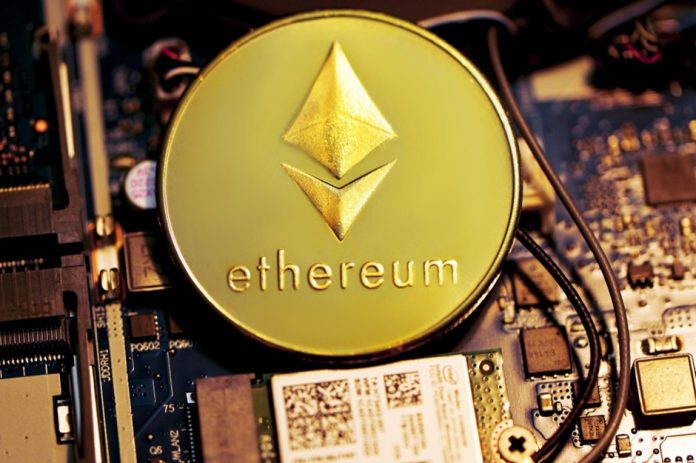
Crypto futures saw nearly $600 million in total liquidations over the past 24 hours, with bearish short positions accounting for over $420 million of that wipeout.

A surprise geopolitical de-escalation—specifically, President Donald Trump’s announcement of a two-week US-Iran ceasefire—caught many leveraged traders off guard. Markets had been pricing in heightened tensions and potential conflict escalation, leading to a buildup of short bets especially on Bitcoin, Ether, and altcoins. When the risk-off narrative flipped to relief, prices pumped hard, triggering a classic short squeeze.

Bitcoin spiked toward the $72,000–$73,000 range nearing or briefly testing recent highs around $70k+ in the broader context of recent volatility. Ethereum and other majors followed with strong gains. The squeeze amplified the upside as forced covering of shorts added buying pressure in thin liquidity conditions. This kind of event highlights how leveraged derivatives markets (perps and futures) can create cascading moves—shorts get margin-called, exchanges auto-close positions by buying back the asset, which pushes prices even higher and liquidates more shorts in a feedback loop.

Total liquidations (longs + shorts) hovered around $600M, showing the market was heavily skewed bearish heading into the news. Similar short-heavy wipes have happened recently amid ceasefire hopes or macro shifts, but this one stands out for the speed and scale tied to geopolitics.

Crypto remains highly sensitive to external catalysts like this, on top of its usual volatility from leverage, whale moves, and sentiment swings. Short squeezes can fuel sharp rallies, but they often lead to quick profit-taking or reversals once the forced buying exhausts. Watch for follow-through volume, funding rates turning positive, and whether this de-escalation holds.

Classic crypto: hope, fear, leverage, and liquidations all in one headline. If you’re trading this, size carefully—$420M is a reminder that the house or the squeeze always wins on over-leveraged bets eventually. The $420M+ short liquidations; part of nearly $600M total across crypto futures in the past 24 hours had several notable impacts on the market.

The surprise US-Iran two-week ceasefire announcement flipped sentiment from risk-off to relief. This caught heavily positioned shorts off guard, forcing them to buy back assets to cover. Bitcoin surged as much as ~5%, briefly hitting $72,738 before settling around $71,000–$72,000. Ethereum and major altcoins followed with strong gains (ETH up ~7% in some reports to around $2,200+).

The squeeze created a feedback loop: forced buying pushed prices higher, liquidating more shorts and amplifying the upside in relatively thin liquidity. Over 114,000 traders were affected in the broader 24-hour window. Shorts dominated the pain ~$429M, highlighting how crowded bearish bets had built up amid prior tensions. This deleveraging reduced overall open interest in some pairs but injected fresh buying pressure.


The move boosted broader market confidence temporarily. Equities and other risk assets also reacted positively, while oil prices eased; dropping below key levels as escalation fears subsided. Crypto sentiment warmed in the short term, with some traders noting animal spirits returning after a period of caution. Many analysts pointed out that such squeezes are often technical rather than fundamentally driven.

Without sustained fresh demand or positive follow-through, gains can fade quickly, leading to choppy trading or reversals. Funding rates and open interest data suggested the market was still digesting the move. Events like this underscore crypto’s sensitivity to geopolitical catalysts and high leverage in derivatives markets. Short squeezes can create rapid upside volatility, attracting new capital but also reminding participants of liquidation risks.

Exchanges saw heightened activity, with cascading effects on margin calls and auto-deleveraging. IMF-related commentary around the same period highlighted how tokenization and automated systems; smart contracts triggering liquidations could make future stress events unfold even faster across traditional finance and crypto.

While not directly tied, it echoes how leverage + external shocks can propagate quickly. Many short sellers faced significant losses, with some positions wiped out entirely. On the flip side, long holders and those positioned for volatility benefited. It served as a reminder for risk management—over-leveraged bets in thin markets often get punished during sudden narrative shifts.

The liquidations fueled a classic short-squeeze pump that lifted prices and sentiment short-term, but sustainability depends on whether the ceasefire holds and if real buying steps in. Crypto remains prone to these violent moves due to its derivatives-heavy nature. Watch levels around $72K–$76K resistance for BTC; a clean break higher could extend the rally, while rejection might see profit-taking.


Ceasefire Sparks Global Relief Rally as Oil Plunges, but Markets Brace for Fragile Two-Week Window

0

Global markets rallied sharply on Wednesday after the United States and Iran agreed to a two-week ceasefire, easing immediate fears of a prolonged disruption to oil flows through the Strait of Hormuz and triggering a broad risk-on move across equities, bonds, and currencies.

Futures tied to major U.S. indexes surged in early trading, reflecting a rapid shift in investor sentiment after weeks of volatility driven by the conflict. At 04:05 a.m. ET, Dow E-minis rose 1,045 points, or 2.23%, while S&P 500 E-minis climbed 2.44% and Nasdaq 100 futures jumped 3.16%. The move was echoed globally, with equity markets across Asia and Europe gaining between 4% and 5% as investors moved back into risk assets.

The relief rally was most visible in the oil market, which had been the central transmission channel of geopolitical risk. Crude prices fell sharply as traders began pricing in the potential resumption of energy flows through the Strait of Hormuz, a narrow but critical shipping route that typically handles about one-fifth of global oil trade. Brent crude dropped to around $94.49 per barrel, while U.S. West Texas Intermediate fell to roughly $96.20, marking declines of between 13% and 16% in early trading.

The agreement itself came just hours before a deadline set by Donald Trump, marking a sudden de-escalation after weeks of increasingly hostile rhetoric. Trump had previously warned of wiping out “a whole civilization” if Iran did not reopen the strait. Under the terms of the ceasefire, Washington will halt strikes on Iranian infrastructure, while Tehran has agreed to allow the safe passage of ships through the waterway “via coordination with Iran’s Armed Forces,” according to Foreign Minister Abbas Araghchi.

The immediate market reaction underscores how tightly asset prices had become linked to oil supply risks. Energy stocks, which had rallied during the conflict, reversed course in premarket trading. Shares of Exxon Mobil fell 6.2%, Chevron dropped 5.4%, and Occidental Petroleum lost 7.8%, tracking the sharp decline in crude prices.

At the same time, sectors that had been under pressure from elevated fuel costs staged a strong rebound. Airline stocks surged, with American Airlines rising 7.3% and Delta Air Lines up 6.8%, while cruise operators Carnival Corporation and Norwegian Cruise Line gained 9.4% and 8.1% respectively.

The move extended into volatility markets, where the CBOE Volatility Index fell by more than five points to 20.77, its lowest level in over two weeks, signaling a rapid unwinding of hedges built up during the conflict.

In fixed income, U.S. Treasurys rallied as easing inflation expectations and reduced geopolitical risk drove yields lower. The benchmark 10-year yield fell more than 10 basis points to 4.2399%, while the 2-year yield dropped to 3.7193% and the 30-year yield declined to 4.8482%. The move reflects a renewed bid for bonds as investors reassess the likelihood of sustained energy-driven inflation.

Currency markets also reacted swiftly. The dollar, which had benefited from safe-haven demand during the conflict, weakened about 1% against the Japanese yen, signaling a reversal of defensive positioning.

Yet beneath the market euphoria lies a more cautious undertone. Analysts warn that the rally rests on a fragile foundation, with the ceasefire offering only a temporary pause rather than a definitive resolution.

“The rally will need to be backed up by tangible progress in negotiations to hold. The underlying question of whether Iran will permanently reopen the Strait of Hormuz and whether a lasting deal can be reached is still very much unresolved,” said Josh Gilbert, market analyst at eToro.

He added a note of caution that underscores the binary nature of the current setup: “If the two weeks pass without a deal, expect a sharp and unforgiving reversal of this relief rally.”

That assessment captures the central risk now facing markets.

The past five weeks have shown how quickly geopolitical shocks can transmit into oil prices, inflation expectations, and monetary policy outlooks. Before the ceasefire, traders had already scaled back expectations for Federal Reserve easing, with persistent energy inflation complicating the central bank’s path.

The latest moves suggest a partial unwind of those concerns, but not a full reset. Short-term Treasury yields declined, and interest-rate futures now price in a 56% probability of a 25-basis-point rate cut by the end of 2026. That remains a more cautious outlook compared with pre-war expectations, when markets had been betting on at least two rate cuts this year.

The next phase will depend heavily on incoming data and policy signals. Investors are set to scrutinize remarks from Federal Reserve officials, including Mary Daly and Christopher Waller, as well as minutes from the central bank’s March meeting. Inflation data due later in the week will also be critical in determining whether the recent oil shock has left a lasting imprint on price pressures.

However, markets are currently trading in relief. But the underlying dynamics suggest this is less a resolution than a repricing pause. The trajectory of oil, the durability of the ceasefire, and the Federal Reserve’s response will determine whether Wednesday’s rally evolves into a sustained recovery or proves to be another short-lived rebound.

Chip Stocks Roar Across Asia as U.S.-Iran Ceasefire Eases Supply Chain Fears and Revives AI Trade

0

Asian technology and semiconductor stocks surged on Wednesday in one of the strongest relief rallies seen in weeks, as a conditional two-week ceasefire between the United States and Iran temporarily eased fears over energy flows, industrial gas shortages, and a deeper supply chain shock to the global chip industry.

The ceasefire, which includes a temporary reopening of the Strait of Hormuz, triggered a broad risk-on rally across Asia, with semiconductor names leading gains as investors rushed back into one of the market’s most geopolitically sensitive sectors.

Taiwan Semiconductor Manufacturing Company, the world’s largest contract chipmaker, which rose 4.84%, led the rally. China’s leading foundry, Semiconductor Manufacturing International Corporation, jumped more than 10%, while Japan’s Tokyo Electron climbed 9.6%.

The gains extended across the semiconductor value chain. Advantest Corporation surged more than 13%, Renesas Electronics Corporation rose 12%, and Fujikura Ltd. added nearly 11.6%.

In South Korea, the move was even more dramatic. SK Hynix surged more than 15%, while Samsung Electronics advanced over 9%, supported not only by ceasefire optimism but also by the company’s forecast of an eightfold jump in first-quarter profit, driven by strong AI-related demand for high-bandwidth memory chips used in data centers and servers.

This rally is significant for reasons that go well beyond a single geopolitical headline.

For the past several weeks, the semiconductor sector has been under mounting pressure as the Iran conflict raised the prospect of a dual supply shock: higher energy costs and a severe helium shortage.

That second point is particularly important. Helium is not a peripheral input in semiconductor manufacturing. It is indispensable in cooling, heat transfer, leak detection, and photolithography, where it is used in vacuum environments to help produce the microscopic circuitry etched onto advanced chips.

The recent attacks on industrial facilities in Qatar, which account for roughly 30% to 38% of global helium supply, have raised serious concerns that chipmakers could soon face operational disruptions if inventories are depleted.

This had become a major overhang on the sector. Unlike many industrial materials, helium has few viable substitutes for advanced semiconductor fabrication. That means prolonged disruption would not simply raise costs; it could materially slow production schedules for foundries, memory chipmakers, and AI infrastructure suppliers.

The temporary reopening of Hormuz, therefore, matters on multiple fronts. First, it restores confidence that energy shipments can resume, easing fears of another sharp rise in oil and LNG costs. Second, it reduces immediate concern around the flow of industrial gases and other chipmaking inputs moving through Gulf-linked shipping lanes.

Third, it supports margin expectations.

Semiconductor fabrication is highly energy-intensive. Any decline in crude prices directly improves the cost outlook for manufacturers operating large fabs across Taiwan, South Korea, and Japan.

Oil prices fell sharply on the ceasefire news, reinforcing the relief trade across chip stocks. What makes the rally especially notable is that it comes at a time when the AI boom remains structurally strong.

Demand for memory chips, GPUs, advanced packaging, and foundry capacity has already been running at elevated levels due to hyperscaler spending on data centers and AI servers. The ceasefire effectively removes, at least temporarily, one of the biggest downside risks to that growth narrative.

In market terms, this is a re-rating of geopolitical risk premium. Investors had been discounting semiconductor names for the possibility of prolonged supply-chain disruption.

With the immediate worst-case scenario off the table, capital is flowing back into high-beta technology and AI-linked names.

Still, this should be viewed as a relief rally rather than a full resolution. The ceasefire is explicitly temporary, lasting only two weeks, and market confidence will depend heavily on whether the truce evolves into a more durable diplomatic settlement.

Any renewed disruption to the Strait of Hormuz or further damage to Qatari industrial infrastructure could quickly reverse sentiment.

For now, however, Wednesday’s rally underscores that the semiconductor industry remains acutely exposed not just to demand cycles, but to geopolitical flashpoints that affect energy and critical industrial inputs.

The surge in Asian chip stocks is therefore seen as a sharp market repricing of how quickly war risk can reshape the economics of the global AI supply chain.