DD
MM
YYYY

PAGES

DD
MM
YYYY

spot_img

PAGES

Home Blog Page 6

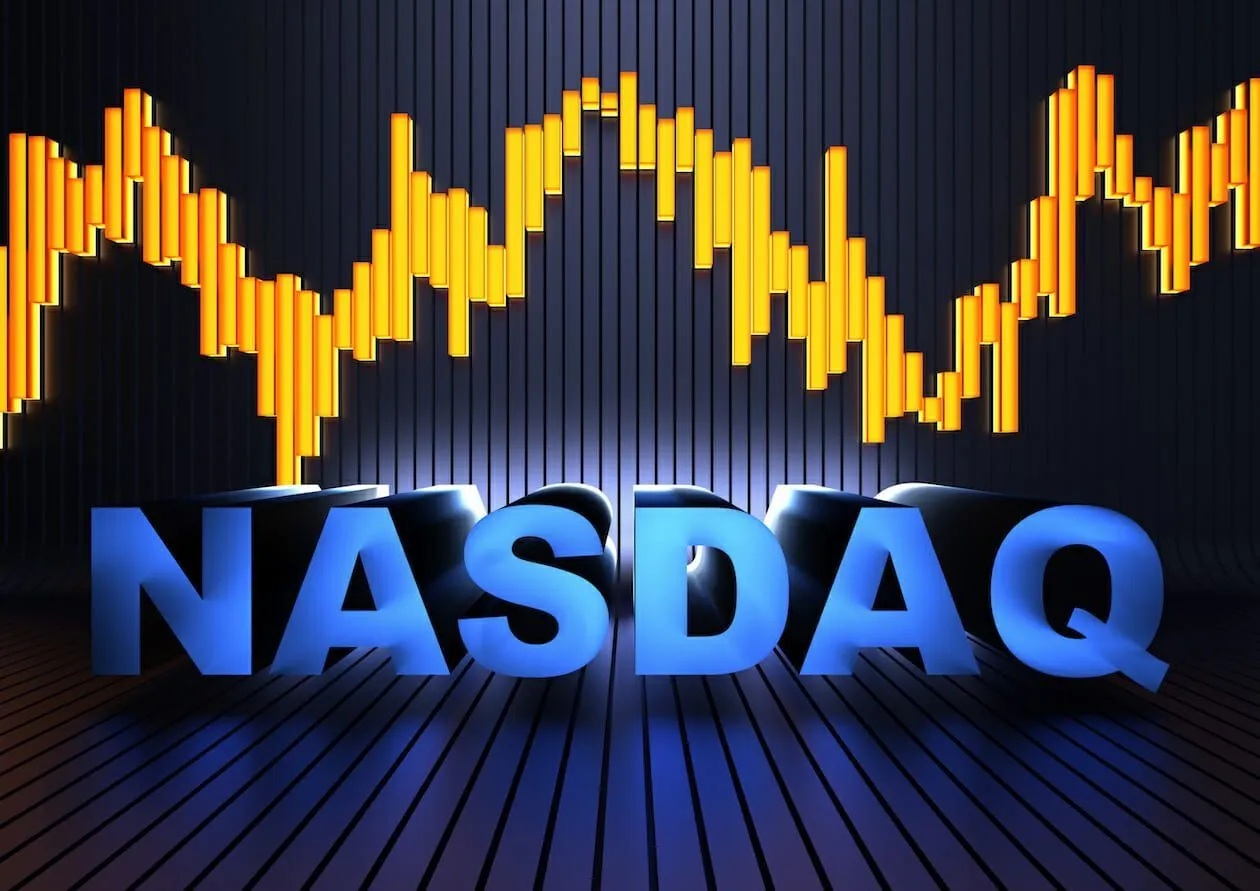
Nasdaq Hits Record as AI Stocks Rally, Oil Falls and Treasury Yields Ease

0

US stocks rebounded sharply on Monday, with the Nasdaq Composite closing at a record high as investors returned to AI and semiconductor shares, while falling oil prices and lower Treasury yields eased two of the biggest pressures on equities.

The Nasdaq rose 2.26% to 27,122.09, its first record-high close since June 2. The S&P 500 gained 1.49% to 7,764.70, ending about 0.4% below its August 13 record, while the Dow Jones Industrial Average advanced 0.71% to 52,048.83.

The rally was led by semiconductor stocks. Intel surged 12.2%, Arm Holdings jumped 17%, and the PHLX Semiconductor Index gained 4.3%. Advanced Micro Devices climbed about 10%, pushing the chipmaker’s market value above $1 trillion for the first time.

The move suggests investors are again focusing on the earnings and spending cycle surrounding artificial intelligence after a sharp technology selloff the previous week triggered by warnings from executives and researchers about the risks of increasingly powerful AI systems.

AI-related companies have become a major source of earnings growth for the broader market, making semiconductor demand a particularly important indicator for investors trying to determine whether the AI investment cycle still has room to run.

Meta also joined the rally, with its shares jumping 11.4% after Wells Fargo raised its price target following the launch of the company’s Muse AI assistant.

The broader market received an additional boost from falling energy prices and Treasury yields. The benchmark 10-year Treasury yield moved back below 5%, while Brent crude futures fell below $100 a barrel for the first time in more than a week before settling at $100.34.

The decline in oil prices was linked to speculation that diplomatic efforts surrounding the Middle East conflict could make progress during the United Nations General Assembly in New York this week. US President Donald Trump said he would be open to meeting Iranian President Masoud Pezeshkian, who is expected to attend the gathering.

The shift in oil and bond markets mattered because both had recently been acting as significant constraints on equities. Higher crude prices raise concerns about inflation, while higher Treasury yields increase the discount rate applied to future corporate earnings and can make bonds more attractive relative to stocks.

“We’ve been kind of programmed to follow the price of oil and the yield on the US 10-year, and if you look at those two things today, they’ve shifted from being headwinds to tailwinds for this market, at least in the near term,” said Art Hogan, chief market strategist at B. Riley Wealth.

The improvement in those two markets, however, does not eliminate the Federal Reserve’s inflation problem. The central bank raised its benchmark interest rate last week for the first time in three years, and traders now see roughly a 50% probability of another increase next month, according to CME’s FedWatch tool.

That leaves the market sensitive to economic data and comments from policymakers. At least 10 Federal Reserve officials are scheduled to speak this week, giving investors additional clues about whether the central bank intends to continue tightening monetary policy.

Valuations also remain an important consideration. The S&P 500 was trading at just under 19 times expected earnings on Friday, according to LSEG data, its lowest forward valuation since 2023. At the same time, much of the improvement in earnings expectations has been concentrated among AI-related technology companies.

That creates a tension in the current rally. Lower valuations can provide support for equities, but the market’s earnings outlook is increasingly dependent on whether the AI investment boom continues to generate revenue and profits at a pace that justifies the enormous spending on chips, data centers and computing infrastructure.

Monday’s semiconductor rally suggests investors remain willing to finance that thesis. AMD’s move above a $1 trillion market capitalization was particularly significant because it signals how strongly investors are valuing companies positioned to benefit from continued AI infrastructure spending.

Other themes also contributed to the market’s risk-on tone. Bitcoin rose more than 6% to a seven-month high, lifting shares of Coinbase and Strategy. US-listed companies with exposure to Greenland also surged after progress in diplomatic discussions between Washington and Copenhagen. Greenland Mines tripled, while Greenland Energy more than doubled.

Investors are also watching the expected US-China summit later this week. Discussions could include an extension of the two countries’ trade truce, the Middle East conflict and AI regulation. A report said Washington had proposed extending the truce for six months, while Beijing was seeking a longer extension.

The gains were not universal. Paramount Skydance fell nearly 3% after Reuters reported that the company had reached a settlement with California and 11 other states that had sued to block its proposed $110 billion acquisition of Warner Bros. Discovery.

Eight of the 11 S&P 500 sector indexes finished higher. Communication services led the advance with a 4.16% gain, followed by information technology, which rose 2.4%.

Market breadth was more mixed than the headline indexes suggested. Advancing stocks outnumbered declining stocks in the S&P 500 by only 1.4 to one. The S&P 500 recorded seven new highs and 29 new lows, while the Nasdaq posted 64 new highs against 127 new lows.

Trading volume was relatively strong, with 16.5 billion shares changing hands on US exchanges, above the 20-session average of 16.2 billion.

Monday’s rally thus amounted to more than a simple rebound in technology stocks. Investors simultaneously received relief from lower oil prices and Treasury yields, while semiconductor gains reinforced the view that AI spending remains a powerful source of corporate earnings growth.

The key question for markets is how long those conditions will last. With the Fed still focused on inflation and AI valuations increasingly dependent on continued infrastructure spending, the latest record for the Nasdaq has strengthened the market’s momentum without removing the forces that could challenge it.
$750 Million Hedge Fund Manager Reveals 4 Key Signals Shaping the Energy Market

0

Energy markets are entering a period in which seemingly separate forces are beginning to collide.

Oil prices, interest rates, geopolitical risks and changing patterns of global demand are creating an environment where investors can no longer rely on a single indicator to understand where energy markets are heading.

For a hedge fund manager overseeing roughly $750 million, the challenge is not simply predicting whether oil rises or falls, but identifying which forces are becoming powerful enough to change the market’s underlying structure.

The first signal is oil supply. Crude markets remain highly sensitive to decisions by major producers, particularly OPEC+ and large non-OPEC suppliers. Any unexpected production disruption can quickly tighten inventories and push prices higher.

Conversely, a surge in production can expose weaker demand and pressure prices. For investors, the important question is therefore not merely how much oil is being produced, but whether supply is growing faster or slower than consumption.

The second factor is global demand. Energy markets depend on how much fuel the world’s economies consume. China remains particularly important because of its enormous industrial base and role in global commodity demand, while the United States remains a major consumer and producer.

Europe presents a different picture, with high energy costs, industrial restructuring and efforts to reduce dependence on fossil fuels influencing consumption patterns.

This makes economic growth an important variable. A stronger global economy can support transportation, manufacturing and electricity demand, while a slowdown can rapidly change the balance.

The energy market can therefore act as a real-time referendum on the health of the global economy. The third signal is geopolitical risk. Oil is not traded in a vacuum. Conflicts and political tensions can threaten production facilities, shipping routes and critical infrastructure.

The Middle East remains particularly significant because of its position in global oil production and maritime trade. Any disruption around strategic shipping corridors can introduce a risk premium into crude prices even before physical supplies are actually lost.

For investors, however, geopolitical risk is notoriously difficult to price. Markets can initially react sharply to a crisis and then reverse when traders determine that the physical impact on supply is limited. The distinction between political headlines and actual barrels removed from the market is therefore crucial.

The fourth factor is the changing structure of energy investment. Capital is increasingly divided between traditional oil and gas projects and newer areas such as renewables, batteries, nuclear power and electricity infrastructure.

The transition is creating an unusual market dynamic: fossil fuels remain essential to the global economy, while investment is simultaneously being directed toward technologies intended to reduce their long-term importance.

That transition could create periods of tightness if conventional energy investment declines faster than alternative capacity can replace it. At the same time, rapid growth in renewable generation and electrification could eventually reduce demand for certain fossil fuels.

The larger lesson is that energy markets are being shaped by several competing clocks. Supply responds to investment decisions made years earlier. Demand can change with the economic cycle. Geopolitical events can alter expectations overnight.

Meanwhile, the energy transition is reshaping capital allocation over decades. For a hedge fund manager, watching these four forces together may matter more than following any single oil-price forecast.

The next major move in energy markets could emerge not from one dramatic event, but from the moment when supply, demand, geopolitics and investment begin moving in the same direction.

China’s Offshore Trust Tax Crackdown Puts Hong Kong Stocks on Alert as Deadline Nears

0

China’s new push to collect individual income tax on assets held through offshore trusts is creating a potential source of near-term volatility for some Hong Kong-listed Chinese companies, as wealthy shareholders face an approaching deadline to settle unpaid tax liabilities.

Bank of America Securities expects the tax campaign to have its greatest impact at the individual-stock level rather than becoming a broad driver of the Hong Kong market. The immediate concern is that shareholders who need to raise cash to meet tax obligations could be forced to sell stakes in listed companies, creating sudden supply pressure in shares with concentrated ownership.

Chinese authorities announced in July that individuals would be required to pay income tax on assets placed in offshore trusts and on income generated by those assets. Unpaid liabilities must be settled within 90 days, putting the October 22 deadline increasingly into focus.

“The deadline for this offshore tax is October 22, so that gives us roughly a month to see the actual impact,” Winni Wu, China equity strategist at BofA Securities, told Reuters at a media briefing in Hong Kong.

The policy affects an ownership structure that has been widely used by wealthy Chinese entrepreneurs and shareholders of companies listed in Hong Kong and the United States. Offshore trusts can be used to hold shares and other assets, creating structures that can span multiple jurisdictions.

The tax collection campaign is now forcing some of those shareholders to reassess the structures they have used to hold wealth and investments.

The potential market impact became more visible this month when a major shareholder of Chinese hotpot chain Haidilao unexpectedly sold 259 million shares for HK$2.75 billion ($350.59 million). Haidilao shares have fallen about 17% since the sale, increasing speculation among investors about whether tax obligations are prompting some major shareholders to liquidate holdings.

The transaction does not establish that the Haidilao shareholder sold specifically to pay the offshore trust tax. But its timing has heightened investor sensitivity to the possibility that other wealthy shareholders could also need to sell listed shares to raise cash before the October deadline.

For companies with large blocks of shares controlled through offshore structures, that creates a potentially important overhang.

Private Companies Face Greater Scrutiny

BofA expects offshore-listed private companies to face greater scrutiny than state-owned enterprises under the new tax regime.

“Offshore-listing private companies might be under more scrutiny, while state-owned companies are likely less impacted,” Wu said.

The ownership structures of privately controlled companies can be more concentrated, with founders and their families often holding substantial stakes. A tax bill running into hundreds of millions of yuan could therefore create a powerful incentive to monetize part of those holdings.

State-owned companies have a different ownership structure and are less exposed to the same type of individual shareholder liquidity pressure. The policy also creates a complicated question around how authorities will determine and collect the tax from offshore structures.

Wu said there could be room for shareholders to negotiate with local tax authorities because some potential liabilities could be substantial.

“Some of the tax liability can be quite high, and it’s unrealistic to expect people have that amount of cash to immediately pay the tax,” she said.

That could mean the eventual market impact depends not only on the size of the tax liabilities but also on how aggressively they are enforced and whether taxpayers are given flexibility over payment arrangements.

The immediate risk is therefore concentrated rather than systemic.

A major shareholder selling a large position can materially affect an individual stock, particularly where daily trading volumes are relatively low or where investors interpret the transaction as a sign that additional selling could follow. The risk is more pronounced for companies whose founders or controlling shareholders have significant portions of their wealth tied up in listed shares.

For the broader Hong Kong market, however, BofA does not expect the offshore trust tax campaign to become the dominant market driver.

“The offshore trust tax collection could result in event risks on single stocks, but is unlikely to be a dominant driver for the Hong Kong market,” Wu said.

The policy does not necessarily represent a broad change in the fundamental earnings outlook for Chinese companies. Its immediate market effect is more likely to come through ownership and liquidity. In practice, the tax campaign could create temporary selling pressure even where the underlying businesses remain unchanged.

The bigger issue is what happens after the October 22 deadline.

China’s move signals greater scrutiny of offshore wealth structures at a time when authorities have been seeking to strengthen tax compliance and bring offshore-held assets more firmly within the domestic tax framework. Wealthy individuals who previously relied on offshore trusts may now face higher compliance costs and potentially greater pressure to restructure their holdings.

But that could gradually change how Chinese entrepreneurs hold stakes in publicly traded companies.

For Hong Kong-listed companies, the most important variable over the coming weeks may likely not be corporate earnings but shareholder behavior.

If major shareholders need to raise substantial amounts of cash before the deadline, block sales could create sharp movements in individual stocks. If tax authorities instead allow negotiations or payment arrangements, the immediate selling pressure could be smaller.

The Haidilao transaction has provided an early warning of what that pressure could look like, but one transaction is not enough to establish a broader market trend.

Investors will therefore be watching filings, block trades and announcements from major shareholders closely as October 22 approaches. The major concern is whether Haidilao represents an isolated case or the beginning of a broader wave of disposals by wealthy Chinese shareholders seeking liquidity for offshore tax obligations.

Global Stocks Rally as AI Optimism Returns and Middle East Oil Supply Risks Ease

0

Global stocks extended their rally on Tuesday as renewed enthusiasm for artificial intelligence combined with signs of improving oil supply from the Middle East to ease some of the pressure that has weighed on markets in recent weeks.

The MSCI global equity benchmark gained as investors responded to a sharp rebound in technology shares and indications that disruptions to energy flows could begin to ease. Oil prices fell as much as 3% to a two-week low before recovering modestly to around $97.60 a barrel.

The decline in crude prices followed two developments that raised hopes of improved supply. A senior Iranian official told Reuters that Tehran could reopen the Strait of Hormuz within seven days if the United States eased military pressure and lifted its blockade on Iranian ports.

Separately, three sources briefed on the matter said Saudi Arabia had restarted operations at its East-West Pipeline and could resume exports from the Red Sea port of Yanbu later Tuesday.

The developments matter because the Strait of Hormuz is a critical energy chokepoint. Any credible reduction in the risk of prolonged disruption can quickly change the market’s assessment of oil supply, inflation and interest rates.

The improvement in oil markets provided support for bonds as well. The benchmark U.S. 10-year Treasury yield fell three basis points to 4.93%, moving further below the 5% level that has become an important focus for investors.

Technology stocks provided the other major source of support for global equities.

The recent surge in enthusiasm around AI was reinforced by the strong market response to Meta Platforms’ Muse AI assistant, which was launched two weeks ago. Meta shares jumped more than 11% on Monday, their biggest one-day gain since April 2024, helping revive demand for companies exposed to the AI investment cycle.

AMD reached a $1 trillion market value, while Intel and Arm Holdings gained 12.2% and 17%, respectively.

European semiconductor stocks continued to benefit from the renewed optimism. The STOXX 600 rose 0.5% on Tuesday after gaining 1% in the previous session.

“This suggests that demand for costly AI tools is robust and worth the hundreds of billions of capex spent by the hyperscalers,” said Kathleen Brooks, research director at XTB.

“If there is widespread adoption of Muse, it could add to demand for other AI tools, which could lift the AI sector, after a rough few months.”

The rally comes after a period in which investors had begun questioning whether the enormous capital expenditure by major technology companies would generate sufficient returns. Warnings from leading AI executives about the risks associated with powerful models had also added to uncertainty around the sector.

The market response to Muse has shifted some attention back toward the commercial side of AI. The key question for investors is whether new AI products can generate enough adoption and revenue to justify the hundreds of billions of dollars being committed to data centers, chips and computing infrastructure.

That makes the performance of consumer-facing AI products important for the broader technology trade. Strong adoption could support demand throughout the infrastructure chain, while weak monetization would leave companies facing the challenge of maintaining enormous capital spending without comparable revenue growth.

Investors are also looking ahead to a meeting between U.S. President Donald Trump and Chinese President Xi Jinping later this week. Xi is due to arrive in Washington on Wednesday, his first visit to the U.S. capital in more than a decade.

Markets are watching whether the two leaders can extend their existing trade truce and establish a more stable framework for relations between the world’s two largest economies. Any discussion of cooperation on artificial intelligence could also be significant for technology investors, although the outcome remains uncertain.

“For markets, the big question is what’s going to happen when the current one-year trade truce expires in November, and whilst the general tone remains positive, there still isn’t an agreement yet,” Deutsche Bank strategist Jim Reid said.

The outlook for monetary policy remains a constraint on the rally.

Although falling oil prices reduced some immediate inflation pressure, investors continue to price in further interest-rate increases from major central banks. That limits how far bond yields can fall and keeps borrowing costs elevated for companies and households.

The Federal Reserve raised interest rates last week and signaled that its campaign against inflation was not finished, leaving open the possibility of further tightening. The Bank of Japan also raised rates last week to a 31-year high, although two dissenting votes and the absence of stronger forward guidance disappointed investors looking for a more aggressive tightening path.

The yen remained vulnerable as a result, with the dollar down 0.15% against the Japanese currency at 157.14 after earlier reaching a three-week high. Japan’s authorities remain under pressure to contain the yen’s decline, with markets watching for signs of intervention.

“FX intervention remains a blunt tool to prop up currencies, and without a forceful monetary policy response it will be difficult for Japanese authorities to rein in the selloff in the yen,” said Matthew Ryan, head of market strategy at Ebury.

The market’s reaction on Tuesday therefore rests on two separate but connected developments. Lower oil prices reduce the immediate threat of another inflation shock, while renewed enthusiasm for AI is restoring demand for technology stocks.

Analysts believe the chance of that combination supporting a sustained global rally will depend on developments in energy supply, the path of interest rates, and whether the latest wave of AI spending produces evidence of strong commercial adoption.

AI’s New Fault Line: Safety, Power and the U.S.-China “Red Phone”

0

Artificial intelligence is entering a phase in which the central question is no longer simply how powerful models can become, but who controls the systems capable of shaping that power.

Three recent developments capture the tension: Washington is considering an AI-era equivalent of a “red phone” with China, a senior Trump technology adviser has told companies worried about unsafe models to “just stop,” and Nvidia CEO Jensen Huang has questioned the motivations of technology leaders warning about an AI doomsday.

The idea of an AI “red phone” reflects a fundamental change in how governments view artificial intelligence.

During the Cold War, direct communication between Washington and Moscow was designed to reduce the risk that a misunderstanding could escalate into catastrophe. Today, advanced AI introduces a different but increasingly consequential form of strategic competition.

The United States and China are racing to develop frontier models, computing infrastructure, chips and autonomous systems. A direct communication channel could provide a mechanism for governments to discuss incidents, establish guardrails or prevent an AI-related crisis from becoming a geopolitical confrontation.

Yet communication does not eliminate competition. Both countries have strong economic and national-security incentives to maintain leadership in AI. The United States has sought to preserve its advantage in advanced semiconductors and computing, while China continues to invest heavily in domestic AI capabilities.

The challenge is therefore finding areas where cooperation can coexist with strategic rivalry. Inside the technology industry, the debate is becoming equally intense. Trump technology adviser David Sacks has offered a blunt response to AI companies concerned that their own systems could become dangerous: stop building them.

The statement cuts through a familiar contradiction in the sector. Companies frequently acknowledge that increasingly capable AI could create serious risks, while simultaneously competing to release more capable products as quickly as possible.

That contradiction has produced a growing argument over responsibility. If a company genuinely believes that a model is unsafe, critics ask why development should continue.

Supporters of rapid innovation counter that safety can be improved through deployment, testing and competition rather than by abandoning technological progress.

The disagreement is about whether caution or continued experimentation provides the better route to controlling increasingly powerful systems. Jensen Huang, Nvidia’s chief executive, has challenged another part of the debate: the warnings coming from AI executives themselves.

Huang has suggested that some technology leaders may have “ulterior reasons” for emphasizing catastrophic AI scenarios. His argument points toward an important economic reality. AI safety is not discussed in a vacuum.

Companies have commercial interests, investors have expectations, governments have strategic objectives, and restrictions on advanced AI could affect which firms gain or lose market share.

That does not make warnings about AI risks automatically invalid. Nor does commercial interest automatically prove that such warnings are sincere. The more useful question is what evidence supports particular safety claims and what safeguards can be independently tested.

The emerging AI landscape therefore has two competing instincts: accelerate and contain. Washington’s interest in an AI “red phone” suggests that governments recognize the possibility of consequences extending beyond individual companies.

The safety debate inside Silicon Valley shows that even developers disagree about how quickly the technology should advance. AI may require both innovation and restraint. But deciding where that boundary lies will increasingly involve governments, corporations, researchers and the public.

The defining contest of the AI era may not simply be who builds the most powerful model. It may be who can build powerful systems while maintaining enough trust, transparency and international communication to prevent technological competition from becoming a source of instability.