

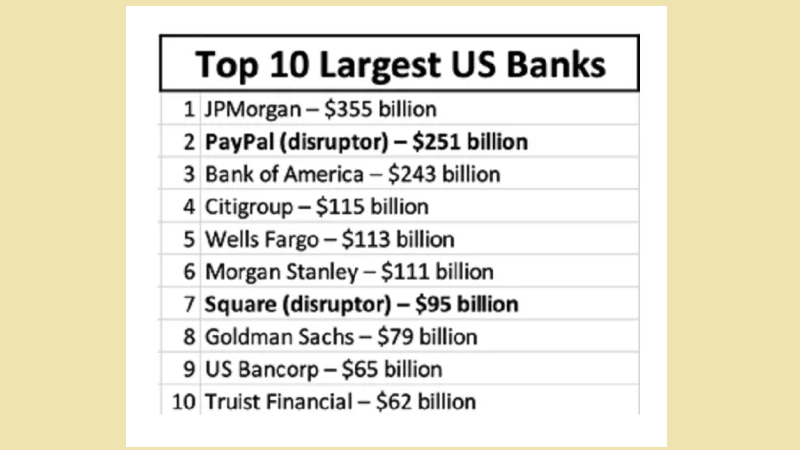
The world has changed: Square is a better business than Goldman Sachs, investors think! And investors believe on Paypal over Bank of America. It is the same way IBM remains a $111 billion business when Microsoft is well above $1.6 trillion. In The 2021 Outlook, I did explain that where you operate in the smiling curve is more important than even how good you execute. Marginal cost works for Paypal unlike Goldman Sachs. Square plays at the edges unlike US Bancorp. Watch that video if you have not.
The Kenya’s Decentralized Renewable Energy Paradox And The Trap In Nigeria
One of the biggest challenges which has bedeviled General Electric, for years now, was the acquisition of Alstom’s power and grid business. I called that move a very bad one considering that GE Capital was also evolving at the same time. Large scale grid electricity was passing through a redesign and any company betting on its sustained viability was clearly out-of-phase with reality. Indeed, across all metrics, electricity supply will become increasingly decentralized in communities and industrial regions. Yes, grid power will lose to pockets of small energy suppliers.
That is what is happening in Kenya. Kenya Power, the national electricity company, is not happy as the national grid is losing some of its best customers to decentralized electricity providers. Yes, customers have moved on and the government cannot sell its products: “Dampened demand growth is further compounded with the increased threats of grid defection by the industrial category as decentralized renewable energy options are becoming more available and cheaper”.
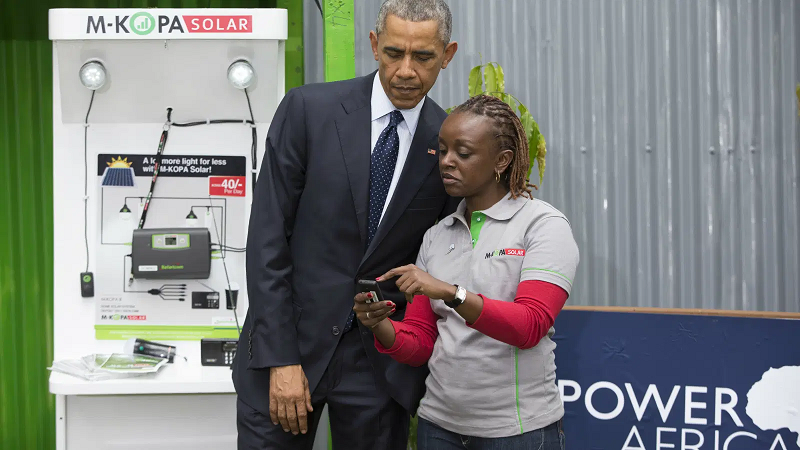
But M-Kopa, which was just four years old at the time, has grown rapidly in that time, reflecting the broader progress in the sector as renewable energy solutions are increasingly adopted as viable workarounds to plug the wide gaps in electrification in Kenya and across the continent. Yet, a half decade later, there are fears that looming regulation in the East African country is signaling a possible shift in the government’s outlook on the sector.
Those fears come in light of the latest annual report by Kenya Power, the national electricity company, which showed local demand growth for electricity lagged below the projected level of 5%. Even more crucial is the reason presented as a suspected cause of stunted demand. “Dampened demand growth is further compounded with the increased threats of grid defection by the industrial category as decentralized renewable energy options are becoming more available and cheaper,” the report stated.
It is what it is: the national grid will get to a state where it cannot find people to buy its products, in most parts of Africa, since the customers are not waiting for them to fix their problems. Companies like Unilever and Dangote Group generate their own power, and those are lost good customers to the national grid. What happens here is unfortunate: we expect the national grid to invest but the reality is that some of their best potential customers have found alternatives, leaving them to service largely not-very-profitable customers. Yes, they serve communities which are not likely to pay them, even as the industrial and commercial customers have moved on. I have made this point here as the biggest challenge in the electricity sector in places like Nigeria. Call it the Nigerian trap.
Besides, it is very clear in Nigeria that the best electricity customers are already out of the national grid. So, who do you expect (grid) electricity investors to finance production for? Simply, electricity is a special product in a developing nation like Nigeria. That is why a distribution company (DISCO) will choose to provide services to 2,000 homes even though one factory nearby can absorb all the energy and pay higher premium on top. Technically, you cannot serve your “best” customer [someone who is ready to pay highest fee] based on pure monetary revenue due to regulation which also gives you quasi exclusivity in the region. It is far logistically easier for DISCOs to send all the power generated in Lagos to top 30 firms in Lagos instead of working to serve hundreds of thousands of households. But they cannot because electricity is not an ordinary product!
The Revolt of Nigeria’s Electricity DISCOs on Smart Meter Disintermediation
Anthony Oluwafemi Olaseni Joshua Rules With TKO of Kubrat Pulev

One of his generation’s finest boxers, Anthony Joshua, rose to the mountaintop as he technically knocked out Bulgaria’s Kubrat Pulev on Saturday. I think Tyson Fury would be next though Oleksandr Usyk is a possible stop. Did you see how excited Floyd Mayweather was when AJ ran over to him, after the knockout? AJ is to earn about £10million for that fight.
Then you would wonder the value of those free fights at CMS Bus Stop , between bus drivers and conductors, which you continue to enjoy free. Can you put a ring around them? If you do, that is it!
Highlights below…
The Elon Musk Message On Innovation; Innovation Can Be Learned [Video]

“There should be more focus on the product or service itself, less time on board meetings, less time on financials…A company has no value in itself. It only has value to the degree that is an effective allocator of resources to create business services that are of a greater value than the costs of the inputs,” Elon Musk, Tesla CEO said.
This thing they call “profit,” Musk added, “should just mean over time that the value of the output is worth more than the inputs..When I go spend time on the factory floor or really using the cars or thinking about the rockets…that’s where things have gone better,” Musk said at the WSJ summit.
Elon Musk is the generation’s finest innovator and the second richest person in the world as market caps of Tesla, and privately held SpaceX, have grown over the last few months.
His message is simple: the only force which can overcome the frictions in the lives of people or processes of firms is a product or service! If you combine factors of production to get good products/services, you capture revenue from demand (i.e. the customers). And if that combination is done very well, such that what the demand is paying for is more than what you had spent in combining those factors of production, you can pick a “profit” in the process.
LinkedIn brought three core points out of the interviews.
Can innovation be learned? Absolutely, says Tesla and SpaceX founder Elon Musk. In an interview with The Wall Street Journal, he reveals three questions budding innovators should answer in order to make your product a winner:
- Have you tried it? If it doesn’t work for you, then you can’t expect it to shine for others.
- How can you make it better? Examine negative feedback from colleagues, customers and trusted mentors to improve as best you can.
- Are you spending too much time in conference rooms? Theory is great, but investigating the actual product and its production process can yield better insights.
Watch his video.
Handling the Moral Licensing Syndrome in an Organization: A Peep into Ismail Tiamiyu’s New Guide Book

For anyone that is not directly in the business of human resources management, encountering Ismail Tiamiyu’s treatise on the subject of moral licensing might sound very strange. Of course, as it is difficult to judge how delicious a pot of soup is until the content is tasted, so it will be for anyone looking at the book from a distance. However, a closer look at the book would reveal what the subject matter is all about.
The book concentrates on a subject matter that is very important in the workplace. Moral Licensing Syndrome, according to the author, is a moral dilemma faced by an employee when their past successes or track records push them to disregard rules or cheat the system.
So, if by now your curiosity is tickled to want to have an understanding of the whole subject, then the book to order is Ismail Tiamiyu’s Moral Licensing: How your Category-best Employees can Endanger your System. So, what is it with the book? How can this book be useful to both interested and general readers? What are the major take-aways from the book? The answers to these questions are the focus of subsequent paragraphs.
With the book, Tiamiyu has made an effort to simplify a subject matter that could be complex to understand especially to lay readers and difficult to deal with by the concerned professionals. He does this in the book by harnessing storytelling resources backed up with some insights to illustrate the concept. In addition, the book is well arranged such that it is easy to follow. From the first chapter to the last chapter, it is easier to map the meaning, definition, problems and solutions to the issue of moral licensing.
The prologue is a story that illustrates the dilemma a board of directors could find itself with the best salesperson of the company having character issues. Then, the first chapter introduces concepts while the second chapter focuses on definition and manifestation of MLS in people. The third chapter examines the conditions that reinforce MLS in employees while the fourth chapter looks at the negative effects as well as control of MLS. The last chapter is a recap of the entire information in the book. So, it is a real guide book that is well-arranged and well written in a simple language that is easy to comprehend.
Tiamiyu, who holds a first degree in Sociology, is a Research and Development expert. He makes his background reflect in the book with his copious citations of scholarly work. This does not make the book too difficult to understand as he breaks it down. When asked what his motivation for writing the book was, he said wanted to resolve frictions usually generated by Moral Licensing Syndrome in the workplace.
He also asserted that his offering is his own contribution to generating a growth-driven process for administrators and managers towards resolving the Moral Licensing Syndrome in organizations. Thus, the book is recommended for employers, managers, human resource professionals, employees and anyone who is interested in people’s management.