
DD
MM
YYYY

PAGES

DD
MM
YYYY

spot_img

PAGES

Home Blog Page 6018

Western Union Buys 15% Stake in Saudi Telecom’s Digital Payment Unit

0
An IMTO

Western Union, a leader in cross-border, cross-currency money movement, has acquired a 15% stake in the digital payment unit of Saudi Arabia’s STC Group for $200 million, Reuters reported.

The move follows the trend of digital payment that is threatening the leading position of the world’s largest transfer firm in the money transfer services.

Western Union hopes the 5 billion riyals ($1.3 billion) will pave the way for its long-term expansion plans, according to Saudi Arabia’s largest telecoms operator.

Mohammed bin Khalid Abdullah Al Faisal, STC Group chairman said the investment reflected the company’s position as a “digital enabler”. He said the deal created the first “Saudi unicorn and the first fintech unicorn in the Middle East”.

Western Union has been caught up in the rising wave of fintech, and Saudi Arabia’s push to reduce dependence on cash opened the way for the cash transfer company to expand further its space in the digital payment world.

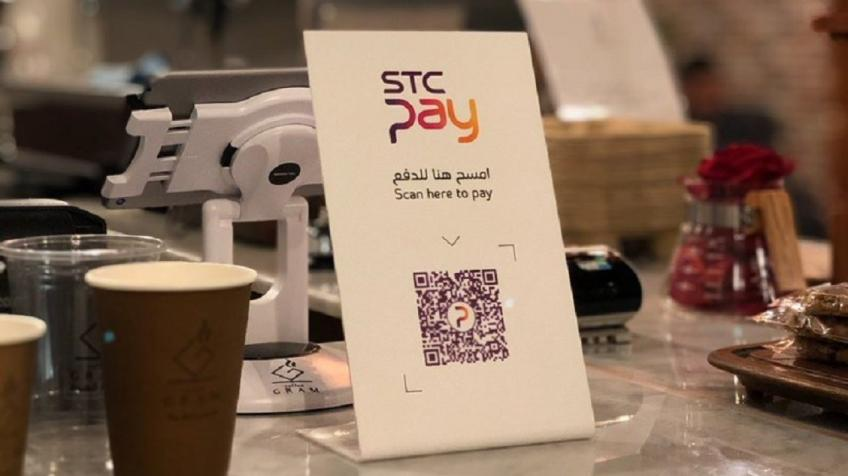
STC said its stc pay unit is the first licensed fintech company by the Saudi Arabian Monetary Authority, the Saudi central bank, and has more than 4.5 million users.

STC Pay is a financial company that launched a digital wallet mobile application in 2018. The e-platform provides digital and financial services to individuals and companies, and facilitates financial transactions and payments.

The evolution of fintech is threatening the dominion of money transfer companies like Western Union and Moneygram, forcing them to embrace alternate payment systems. Western Union is therefore looking to grab more space in the digital transfer industry, and a move to the oil rich Saudi Arabia sets the path rolling.

The company has been widening its partnership with web and mobile wallets platforms as an alternative to dwindling banks transfer model.
In March, Western Union teamed up with Thunes, a cross-border payments network for emerging markets, to send funds directly into mobile wallets around the world.

It’s part of Western Union’s push to grab more market share through financial inclusion on a global scale.

“We are continuously expanding and enhancing our account payout portfolio, providing customers with multiple payout options including bank accounts, cards or mobile wallets,” said Sobia Rahman, Global Head of Account Payout Network for Western Union. “Our goal is to make digital money transfer services more accessible, with a specific focus on enabling mobile transactions.”

While there has been a proliferation of fintech platforms, it lacks a global unified payment system that will enable financial transactions across continents. It is a friction that the Western Union is trying to solve with its global network, and counting on to maintain its lead in the market.

The money transfer company is operational in over 75 countries, and has a global network of four billion accounts and wallets across 100 countries, in addition to a vast agent retail network in 200 countries and territories, according to its website.

Western Union’s digital payment services, so far capture all the top 20 of the world’s primary remittance sending countries ranked by the World Bank. The company’s global account and wallet payout network covers the world’s major remittance receiving countries.

With its dominance, the company is focusing on partnership with existing and emerging fintech companies to expand its financial services. Part of its goal is to reach those who lack access to traditional financial services, by connecting them to alternative payment solutions, such as mobile wallets.
Nigeria Is In Recession, What Can We Do Now?

1
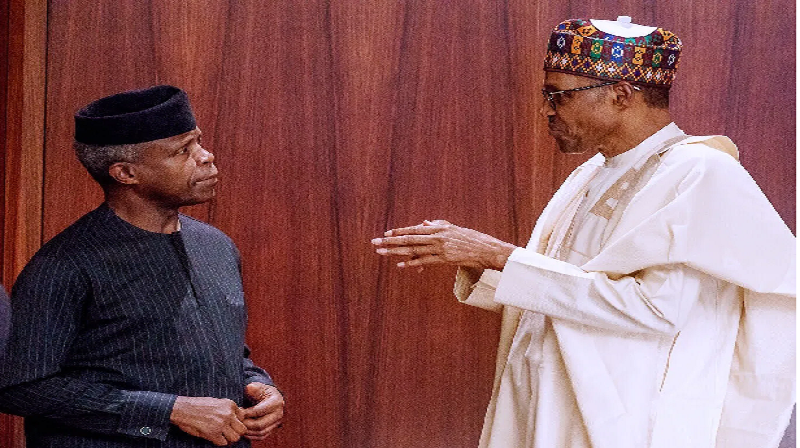
Nigerian president and vice president

Nigeria is now in recession, a period of general decline in economic activity resulting in a business cycle contraction. In other words, since our population rate continues to rise when our economic output has seasonally dropped, it means, on average, everyone is getting poorer. No one can honestly blame the government for this particular recession; it is an asymmetric attack from the coronavirus pandemic, and Nigeria fell just like many other countries.

During recession, a government has some tools which can be classified into monetary and fiscal tools. These tools affect interest rates, foreign currency exchange, and many other factors. By reducing interest rates, borrowing money by companies becomes cheaper, and if other things are largely equal, they can invest more. 

And if they do invest, it means they can hire more people, and pay them wages. With more money in the pockets of people, consumption can rise, and with higher consumption, and associated further economic activities, you can create a virtuoso circle that will make it possible for the economy to get out of recession. That is done while making sure that inflation does not become the order of the day.

Higher liquidity is very critical here. That liquidity is to get people and companies to spend. In the U.S., they even send everyone free money to jumpstart the economy via spending. Of course, Nigeria does not have that liberty. 

Government can just print money and start spending it. If that happens, it could kickstart the economy. It could also decide to lower tax so that companies will keep their money and possibly spend it.  That spending can lead to more investments, triggering a circle where more economic activities could be kickstarted. Of course lowering tax may have its challenges when you want to remove it. Also, printing money for massive expansion of the budget and running deficits could lead to inflation.

This is my question: what options do you think Nigeria has now?

(Personally, my call is to inject liquidity in productive endeavors, not spending money on the typical non leverageable things like expanding bureaucracy. An example of productive things would be making cheaper funds available to businesses and building critical infrastructures.)

LinkedIn Comment on Feed

While growing up, I read a lot of agendas from different levels of our government; 10 point agenda, 3 point agenda, 16 point Agenda etc. Today I have just 5 point Agenda:

1. Nigeria should organise a national Hackathons, business incubation programs, select 50-100 business from it and fund them. Preference should be given to logistics and agric businesses as they have capacity to employ many. This should be done qauterly, it will put us in the sight of foreign investors.

2. Infuse Capacity in existing businesses by retraining the workforce, so many will find groundbreaking solutions by themselves. Preference should be given to the creative and entertainment industry. Many people make a living by hosting podcast, being social media influencers, writing, acting, etc. Our youths are already inclined that way, let’s add structure to it.

3. Privatise government agencies by selling it to citizens in form of shares and franchises. I will buy a NIPOST Franchise. All these will cause repatriation of funds from Nigerians abroad and give them an opportunity to put their money where their mouth is.

4. Put money in the hands of people by structuring financial packages in partnership with telcos instead of banks. Telcos know our money habits more than our banks.

5. Reduce the cost of governance. Merge ministries and send sleeping lawmakers home.

What Is The Best Option To Receive That Intra-African Payment In Lagos?

1

I came into Nigeria from the United States, and needed to travel to Libreville, Gabon, for a meeting. When they sent the ticket from Libreville, I was to fly into France, and then back into Africa (Gabon). While in France, I was to spend 6 hours. When I finally got to Gabon, I asked the host, “How can we fix this problem?”

The response was revealing: we do not have a lot of traffic to run an international airline, and it would not be a good business to do so. But if we all see this continent as a union of nations, smaller countries like Gabon would be supported by leveraging on other big ones. That brought me to the importance of Ethiopian Airlines which seems to have the magic wand of making money doing aviation this in Africa. Simply, you can just outsource everything to Ethiopian Airlines  instead of Air France, and over time, connecting to Gabon from West Africa could technically be easier.

But while you are thinking of aviation, I take you to sending and receiving money within Africa. If you live in Nigeria, run a business and want people in Burundi, Tanzania and Gambia to pay you directly, into your bank, crypto wallet or fintech wallet, what are your options? Which bank or fintech solution can help?

I am not conceding that sending from Kenya, Ghana and South Africa to Nigeria is easier, but let us leave those tier-1 countries out, and focus on these largely smaller nations which could be huge sources of opportunities, if we can find ways to connect them to Nigeria.

Tekedia Institute, On A Journey To Raise Innovators

0

Tekedia Institute, on a journey, to “restore the dignity” of mankind, by nurturing innovators for markets and governments, seeding leverageable factors that will bring the ascension of nations. I am a Tekedia Institute Faculty – and I invite you to co-learn and co-create the future with me.

BEGIN here – https://school.tekedia.com/

The Need to Establish More Organisations for Tackling Human Trafficking

0

They are everywhere – city, village, internet, school, market, streets, even our homes. Nowhere is safe and nobody is free. They lie low, monitoring everyone’s movement; waiting for the right time, the opportunity to spring into action. They lure; they deceive; they abduct; they use people’s challenges as weapons and never rest until their target becomes their prey. That is who they are: the traffickers.

Human trafficking is illegal or deceptive recruitment and relocation of individuals of various ages, genders, races, and classes. It knows no one. It does not decide which class to prey on and which to avoid. It goes for the white and the black, the male and the female, the young and the aged, the educated and the uneducated, and the rich and the poor. Yes, human trafficking is a global problem; it is not peculiar to Africa or to Nigeria as many of us were made to believe. And unlike the stories we’ve heard, it does not only target the poor, the female gender and the young. No one is safe from human traffickers.

Nevertheless, traffickers do not strike unless they see opportunities. In developing countries like Nigeria, they use the poor economic status of the country to lure their kills. In the rural areas, where there is poor infrastructural development, people are deceived with the story that they will be taken to places, where they will have access to better education, good jobs, healthcare, good quality water, and even electricity. Many are lured with stories of people making millions within weeks in the cities and that alone draws them off their villages and farming occupation to “cities”, where they won’t have to “suffer” again.

What about the ones in the cities? Why are they victims too?

Everybody wants to “run” out of the country. The watchword is, “if you see a way to leave this country, please take it”. Well, there are so many “easy ways” out of the country and the easiest of them all is through traffickers. But how do these people capture those in the city, considering many people in urban areas are educated? Your guess is as good as mine. But I can bet you traffickers are equally good at brainwashing. They step in gradually until their victims believe solely on what they (the traffickers) fed them. At this stage, it becomes difficult to change the minds of the hoodwinked. Worse is, it is hard to determine whether they were falling into the nets of traffickers or just some Good Samaritans. It becomes hard to draw the person out of trouble because you don’t know if you were “messing up his destiny”. It is hard to tell which is which until it hits the person. And by then, it becomes too late.

Many of us know what victims of traffickers encounter. The commonest predicaments they face are sexual exploitation and cheap labour. We have also heard of those sold into slavery and child marriage. You must have heard about the ones, whose organs were harvested and the “suppliers” of babies for illegal adoption homes, aka baby factories. There are those sent into prostitution (even child prostitutes exist), drug couriers, combatants (even child soldiers), and so on. The one of domestic servitude is common; I don’t even want to go into it.

Some lucky victims are rescued, while many still wallow in bondage. Worst is, it is hard to apprehend these traffickers because of how shady they are. Hence, the only way to fight them is by blocking their access to their preys.

In Nigeria, I only know of NAPTIP (National Agency for the Prohibition of Trafficking in Persons) as the agency that fights human trafficking. I also know of Nigerians in Diaspora Commission (NIDCOM) because of Abike Dabiri-Erewa’s untiring efforts towards rescuing Nigerians trapped in Diaspora. Apart from these two, I don’t know if there is any other agency or organisation that comes to the aid of Nigerians in such circumstances. If there are others, they are very silent; and that is not how it is supposed to be.

Like I asserted earlier, traffickers crawl in on their preys. Most of the times, people are recruited by those that are close to them (friends and family) or those they met through social media (or any other place). But one thing is certain: once a target is sighted, there is constant follow up. Like we say in Nigeria, they follow the person bumper to bumper to make sure he doesn’t change his mind. It only takes the person’s analytical abilities or the efforts of people around him to not fall victim.

But then, when you realise that your person, (or even you) is about to be recruited by a trafficker, what will you do?

This is where experts should come in. There is a need for more organisations with experts on tracking and apprehending traffickers to be established in Nigeria. There is great need for every household to have lists of organisations they can call in cases of suspicion of trafficking. But many of us don’t even know who to call. NAPTIP is a government agency; it is likely overwhelmed. More nongovernmental organisations are needed.

Now that the news of recession (and bad governance) is making it seem like the world is coming to an end for all Nigerians, the traffickers are getting ready for their field day (if they have started already). People need to be at alert to stop them before it is too late.