DD
MM
YYYY

PAGES

DD
MM
YYYY

spot_img

PAGES

Home Blog Page 6033

Reasons It Is Becoming More Difficult To Make Ends Meet in Nigeria

0

A Twitter user with the profile, @tundeleye, wrote:

For most of us in our 30s and 40s, our parents held more assets and were taking care of a lot more people (larger nuclear families plus extended family members) on one hustle. Today, we’re on multiple hustles, hold fewer assets and still struggle to take care of smaller families.

Somehow this tweet threw me back to the “good old days”, when we were less afraid of anything. It’s not as if things were so wonderful then, but it wasn’t as scary as it is now. Then we could go to neighbours’ houses to play and eat without fear; except for the flogging that awaited us at home for eating in people’s houses to show that we “don’t eat at home”. But now, neighbours won’t even offer children food because they don’t want their parents to say they “poisoned their stars” or “transferred their stars” or even “initiated them into marine kingdom”. That’s how bad we have gone today; thanks to the people brainwashing us.

Anyway, like the Twitter writer observed, things seem to be getting harder and harder these days. I don’t know about you but I know that even though things are difficult today, it was not easy then. That our parents took care of multiple people does not mean they were so rich; it could mean they were willing to sacrifice their comforts and dreams to make that of their children and relatives come to pass. Apart from that, some lifestyles we have today do not exist in those days. For instance, then we ate more natural food and we didn’t take food to school. But today, we go for processed foods (some of which are expensive and unnecessary), eat multiple times a day (and even take food to school) and buy all our foods from the market (before, everyone had a farm).

But let’s compare our parent’s expenditure style and that of the present day young parents. I know I was too young to understand if things were too difficult for them or not (you actually understand how it is when you start sponsoring people’s expenditure), but I can tell some things I do today as a parent that my parents forwent.

  • Education

I am a product of public schools – from primary to university. I went to school when there were only public schools and a few missionary schools for grooming priests and the religious. Then, it was easy for our parents to pay the school fees of multiple people – including that of extended family members – because the money was almost nothing. From what I learnt, education was at its cheapest during our time; my mother used to recount how her widowed mother had to struggle to pay her school fees and that of her siblings but it wasn’t like that in our time. We were that lucky. But now, we know what is going on. Even the members of extended family want you to send their children to private schools. Paying school fees today is denying a lot of us good night rest. So, let’s not blame the economy yet; it’s possible we are just entering another phase of development.
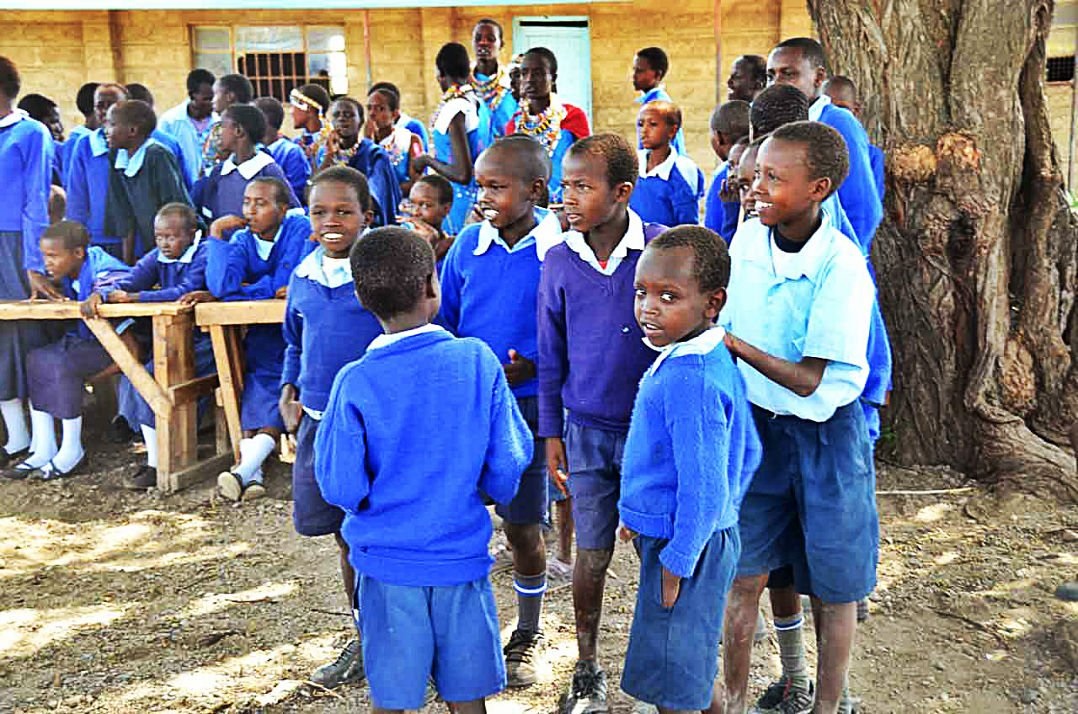
In case you want to accuse the government of killing the public school system, you need to understand that the public schools of those days that had good facilities were the ones owned by missionaries before they were taken over by the government. Today, those schools have been returned to their owners and the ones built by communities and some political office holders are the eyesores we’re seeing today.

  • Agriculture

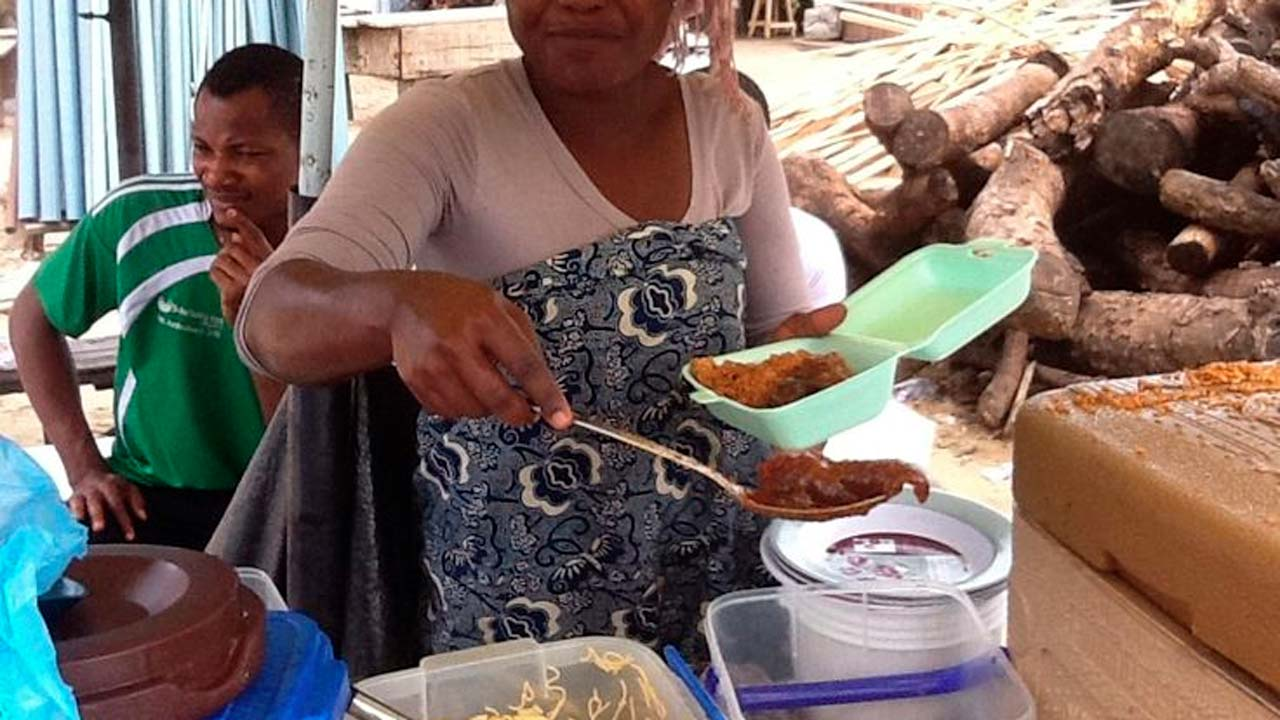
As I mentioned earlier, in my days, we ate more natural healthy foods, most of which were produced from our farms. Then, it was expected of every man to own a farm (at least in Igbo land). Even when you stay in the city and can’t manage your farm, you sublet it to someone that will cultivate it and then share the produce at a certain ratio with you. Then, staple foods like garri were rarely bought in the market. But today, many people, me inclusive, don’t want to do anything with farms again; we buy ALL our foods from the market. Even the farmlands have been turned into residential houses or factories. Some of us have even sold off the lands our parents left for us to farm so we can use the proceeds to buy garri in the market. What an irony. So, as we calculate how much our parents spent, let’s remember they produced most of their foods. In fact, then, the higher the number of dependents in the family, the more the number of free farm workers.

Spices in markets
  • Desire for Ostentatious Goods and Luxurious Lifestyle

Our cost of living may actually be increasing because we desire to live in luxury and possess items that display wealth. Today, many of us own phones, which was luxury in those days. But that is not the issue; the problem right now is that the more expensive a phone is, the more we long to have it. Then, our parents buy jewellery as assets but we buy them today to show off. We want to put on the most expensive clothing, drive exotic cars, live in the most expensive parts of the city, go for holidays in Dubai, buy pizza and shawarma everyday (lol) and still live like our parents did. Not going to happen. We paved our own path; we have to pass through it.

The summary is, it wasn’t that easy for our parents to provide for us either. Yes, some changes have been made in the system, especially in the education sector, but that is the only path we didn’t create by ourselves. Any other challenges we are facing today is from our own volition. But then, we shouldn’t see them as struggle, but rather as a stage we have to pass to the next level.

Apple Slashes Controversial Apple Store Commission for Small Developers

0

Apple announced on Wednesday it’s cutting the commission it takes on App Store in-app purchases, from 30% to 15% from January 1.

The move came following a series of controversies surrounding Apple Store’s policies. There have been criticisms over the tech giant’s 30% commission on in-app purchases, pushing Facebook and other app developers like Epic Games to take Apple to court over its Store policies.

Apple’s price reduction will apply to developers that made up to $1 million in revenue over the past year.

“We’re launching this program to help small business owners write the next chapter of creativity and prosperity on the App Store, and to build the kind of quality apps our customers love,” Apple’s CEO Tim Cook said in a press statement.

“The App Store has been an engine of economic growth like none other, creating millions of new jobs and a pathway to entrepreneurship accessible to anyone with a great idea. Our new program carries that progress forward – helping developers fund their small businesses, take risks on new ideas, expand their teams, and continue to make apps that enrich people’s lives.”

Apple said the comprehensive details of the program will be released in early December. But if a participating developer surpasses the $1 million threshold, the standard commission rate will apply for the remainder of the year. If a developer’s business falls below the $1 million threshold in a future calendar year, they can requalify for the 15 percent commission the year after.

The changes however, do not affect apps selling goods and services and making over $1 million yearly in proceeds.

Apple has 1.8 million apps in the Apple Store and has been under fire for what many described as oppressive practices.

iPhone 11

In August, Facebook had teamed up with Microsoft and others to criticize Apple’s game policies, as it has affected many other game apps launched on the Apple store. Apple kicked video game Fortnite out of its store, following Epic’s, the game’s creator added a feature that allows players to buy virtual currency using their own credit cards, which denies Apple the opportunity to take its 30% cut.

Facebook’s CEO Mark Zuckerberg said Apple is making monopolistic and anti-competitive rules, and it’s becoming harmful to customers.

“Apple has this unique stranglehold as a gatekeeper on what gets on phones. Zuckerberg told more than its 50,000 employees during a Q&A session. He added that California-based company’s app store “Cupertino blocks innovation, blocks competition and allows Apple to charge monopoly rents.”

The anti-competition and monopolistic allegations against Apple attracted antitrust scrutiny in Europe.

In September, developers formed a group called the Coalition for App Fairness in a bid to force Apple to change some of its policies and remove the 30% charge.

Apple has bowed to pressure and bent the rules. While the Wednesday’s announcement may seem like a financial hit for Apple since the new policy will affect 98% of companies that pay a commission to the world’s most valuable company, the New York Times reported, citing data from Sensor Tower, that the combined revenue of the companies totaled only 5% of the revenue generated by App Store last year.

The App Store, which was launched in 2008, has become the safest and most vibrant app marketplace, entertaining half a billion visits by people weekly.


The Ghana’s Playbook On Foreign Vehicles for West African Market

0

Ghana seems to have cooked a really nice playbook on how to become the hub for foreign car assembly for the West African market. Recall my initial opposition to AfCFTA, the African trade agreement, until the “rule of origin”  clause was strengthened.  Yes, under AfCFTA, nothing stops Nissan or other foreign brands to operate in Ghana and target Nigerian customers since running factories in Nigeria is harder. 

The Manufacturers Association of Nigeria (MAN) has suggested to President Buhari not to sign the agreement establishing the African Continental Free Trade Area (AfCFTA).  The major concern is that with Nigeria’s largely subpar infrastructural capacities [mainly electricity], most Nigerian factories could relocate to other African countries to produce items they sell in Nigeria. The implication would be massive manufacturing unemployment in the land.  Also, the risk of dumping goods in Nigeria is also high.

[…]

Nigeria should SIGN but must make sure the “rule of origin” clause is strong. We cannot afford goods produced outside Africa to be repackaged in a treaty member state and then shipped to Nigeria at a low tariff that is exclusive to member states.

Nigeria’s poor infrastructure makes it a slam dunk for these firms to make Ghana home. It was on a similar concern that India did not join other countries in the recently signed Regional Comprehensive Economic Partnership (RCEP). Nigeria needs to watch carefully as John MC Keown notes in this piece.

Whether AfCFTA actually becomes a reality on ground remains to be seen. The West African Regional Economic Community ECOWAS is just a little bit bigger than the European Union. It has countries of much closer proximity than the expanse of all Africa, with many of the peoples having tribal or cultural commonality with each other, and direct dealings going back centuries.

While ECOWAS has a common market in theory, non-compliance and summary suspensions have happened from time to time at official level between individual countries in response to tensions over unrelated matters. These actions have never incurred economic penalties for nations in violation levied by ECOWAS as a collective afterwards.

This is not a simple matter – the National Assembly needs to look into this matter.

Does Kenya Have A Safaricom Problem?

0

Kenya’s Safaricom is exceedingly dominant.  It holds at least 60% of the voice & messaging market. It also rules the data market with at least 60% of the market share. It’s one oasis, mobile money product, MPESA, controls 99% of the local money market. My questions are these: does Kenya have a problem in Safaricom? And should this company be broken into two, as the Kenyan Senate is pushing for?

Kenya is simply a Safaricom nation.

Some years ago, the CA sought the services of Analysys Mason to determine if the carrier business needed some form of adjustments to level the playing field for everybody. The British consultancy firm revealed its findings and recommendations, such as the separation of M-PESA from Safaricom.

‘The two businesses would be required to operate in separate offices, with separate staff below board level, separate branding, separate accounting and separate business operations and support system, customer support systems and management information systems,’ read a report from the firm.

While the recommendations were never really implemented, the discussion appears to have come up again following a Senators meet that maintains Safaricom is a dominant player.

Comment on LinkedIn Feed

Comment #1: Is the company experiencing governance issues as presently constituted? What kind of splitting, down the middle, or creating another entity and migrating assets? Or they just want to break the monopoly of Safaricom? A lot of things you have to share with us, prof.

My Response: I think it is the monopoly at play here. 99% is absolute market dominance!

Comment #2: This is an interesting topic here in Kenya, and many feel with its dominance, it needs to be split and let MPesa scale out and expand beyond Kenya.

My Response: I agree also. MPESA alone would be a fintech. Today, MPESA is mobile money which is not a phrase many care about in the Western World. Breaking MPESA from Safaricom will make Safaricom suffer locally but it would open MPESA to an unbounded global future.

Comment #3: Safaricom doesnt need to be split. It would be a blow to innovation ingenuity hardwork and business savvy. Safaricom started of as a minion but has grown its way up.

The market cap of Safaricom is so low that if MPESA is a separate company, it would be worth all of the current number. While Senate of Kenya is concerned on monopoly, I think a separate MPESA would serve Kenya and Africa better. Think of PayPal under ebay and the new separate PayPal. The current one has outperformed and eclipsed the total worth of old eBay before the split.

Ghana – The New Backdoor Into Nigeria For Foreign Vehicle Manufacturers

2

As The African Continental Free Trade Area (AfCFTA) edges closer, Ghana is offering 10-year tax breaks to the automotive manufacturing industry.

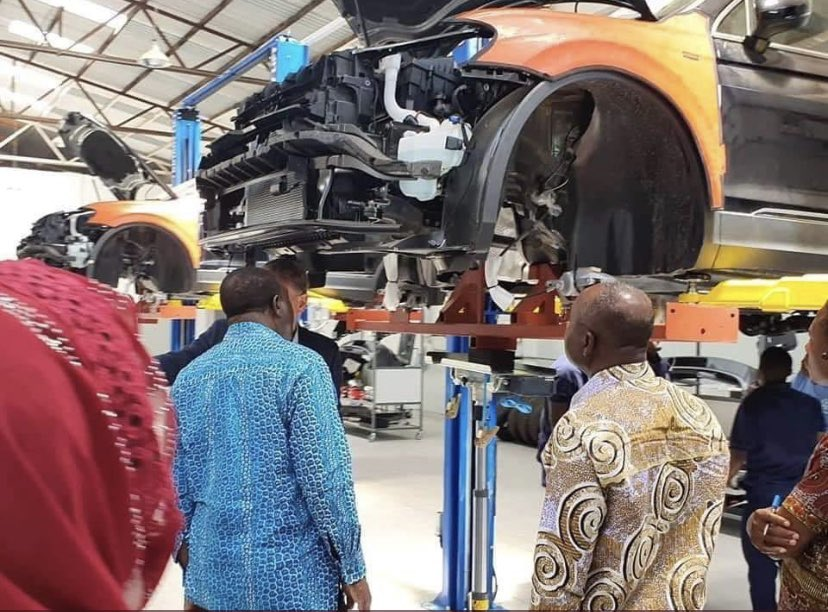
With the imminent abolishment of trade barriers under the African Continental Free Trade Area (AfCFTA), Ghana is poised to overtake Nigeria by becoming a gateway to the rest of West Africa, and a market leader in new car sales. The government of Ghana is also offering 10-year tax breaks to the automotive manufacturing industry in a bid to make Ghana the regional hub for car assembly and boost car sales in the local and regional markets.

And a lot of international car makers are considering Ghana government’s invitation very seriously. Toyota, for instance, is aiming to collect 30% of the corporation’s total annual revenue, currently at $60 billion from Africa in coming 20 years. Industry experts forecast that Africa will account for one-third of the world’s population by 2050, up from 17% now.

Whether AfCFTA actually becomes a reality on ground remains to be seen. The West African Regional Economic Community ECOWAS is just a little bit bigger than the European Union. It has countries of much closer proximity than the expanse of all Africa, with many of the peoples having tribal or cultural commonality with each other, and direct dealings going back centuries.

While ECOWAS has a common market in theory, non-compliance and summary suspensions have happened from time to time at official level between individual countries in response to tensions over unrelated matters. These actions have never incurred economic penalties for nations in violation levied by ECOWAS as a collective afterwards.

Informally, there has always been some form of levy or tariff action happening on ground at entry points, for example, Nigeria’s land borders. The status of ECOWAS as an FTZ has always been fairly fluid since conception. With AfCFTA expected to include 55 countries, then by comparison, the instinct would be to consider it an insurmountable task to make work.

However, there does seem to be some optimism in Ghana that AfCFTA  WILL become a reality.

German Manufacturer Volkswagen, who also own Audi, Seat, Bentley, Bugatti, Lamborghini, Skoda, Porsche,  SCANIA and MAN, came to assemble in Ghana in April this year.

The models intended to be produced in Ghana are ICE versions of the Tiguan and Tremont SUVs ,the Passat, Polo, and the Amarok pickup.

Since Ghana has an extremely mature second hand automotive import industry, its domestic market is not enough to make such an enterprise viable, so they need AfCFTA to convert.

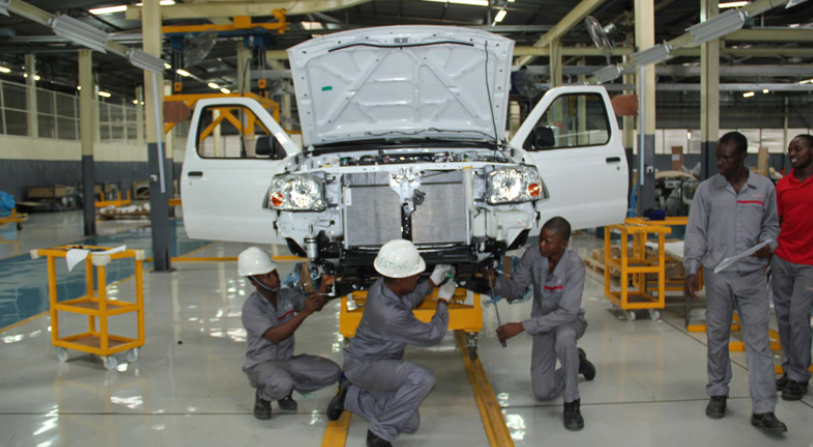
The latest to announce commencement of manufacturing in Ghana has been Nissan, today.

They intend to initially focus on the new model Navara, but should Nigerians be concerned about the future of the Nissan plant in the country?

Both Volkswagen and Nissan have different manufacturing/assembly activities positioned across disparate parts of Africa as a whole, so it’s clear activities in Ghana are intended to serve the regional market.

Should AfCFTA  become a working reality, it may be that FRN will need to come up with some stimulation packages in order to support indigenous companies such as INNOSON MOTORS.