DD
MM
YYYY

PAGES

DD
MM
YYYY

spot_img

PAGES

Home Blog Page 6033

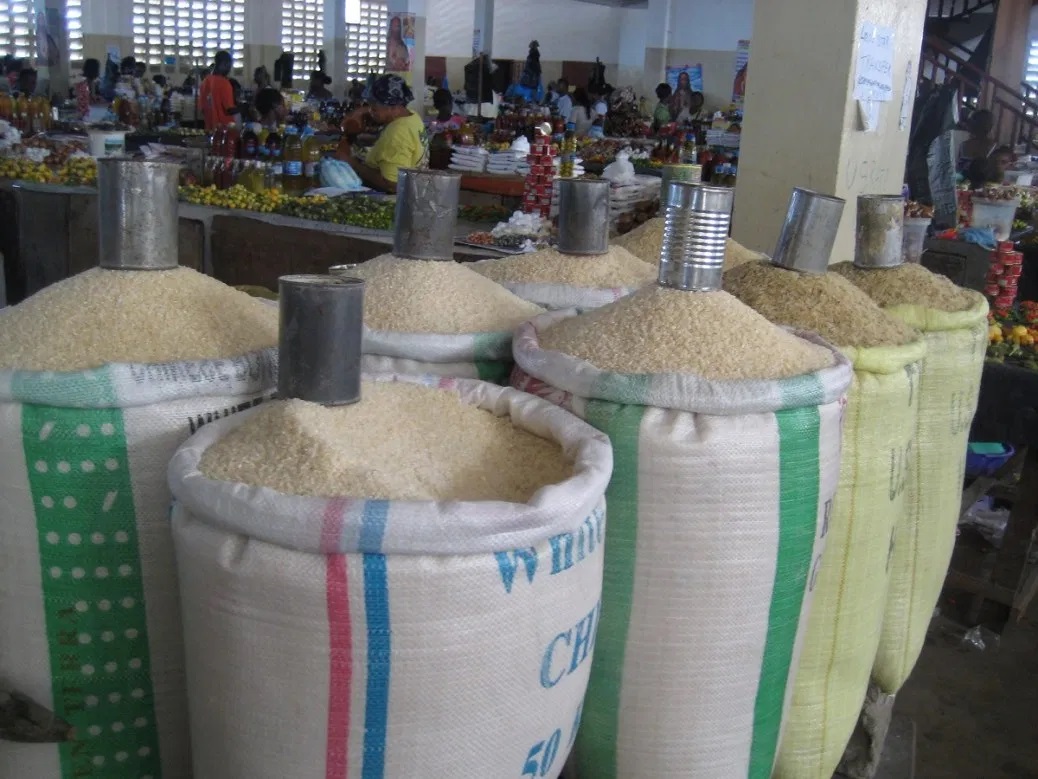
Nigeria Needs To Reconsider Its Food Import Restrictions on Forex

1

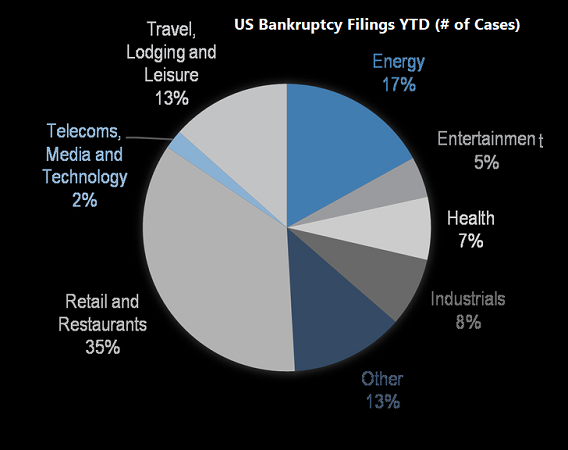
This plot shows the bankruptcy filings YTD (Year To Date) in the United States by number of cases (i.e. not on monetary value). Retail and hospitality sectors are having a really bad year. Energy is also not feeling fine.  Technology looks really good at just 2%.

 If we have a similar pie chart in Nigeria (how you wish the National Bureau of Statistics can publish it this year instead of Q4 2021), the plot will track the retail and hospitality sectors. However, you will see “agriculture” with a significant percentage, as the lockdown happened at the peak of the subsistence planting season. I do think the current high food prices in Nigeria can be attributed to the massive distortion caused by the lockdown. 

This is the reason I am calling the  government and the central bank to open the ports, and support importers with forex (strictly for food) to import food since, technically, we did not plant enough to generate the necessary supply to handle the huge demand in the nation. Without that import, prices of food items will continue to rise since demand has well outstripped by supply.

Without addressing the supply via short-window food imports, prices will continue to go high as farmers cannot magically produce and grow the crops overnight. A 60-day import window, starting immediately, will go a long way to normalize food prices before the peak of the Christmas season.

Bitcoin Soars Above $18, 000 As Investors Rally Around the Digital Gold

0

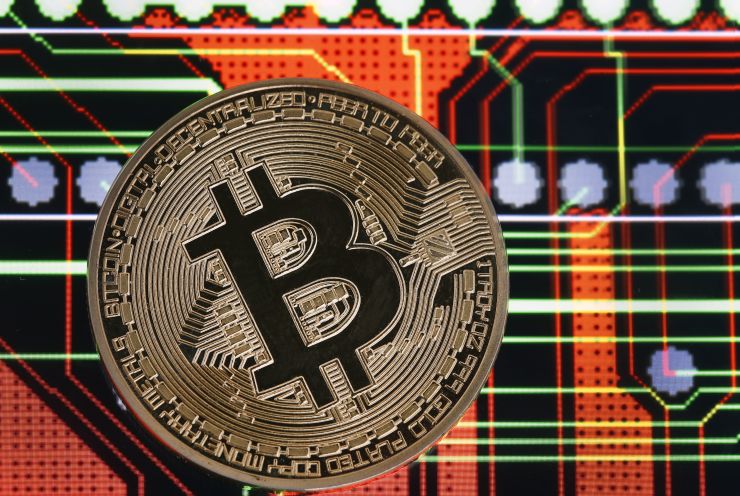
Bitcoin is cruising on its best speed in almost three years to a high record that beats expectations. After months of disappointing performances, the digital gold is finally living up to the name.

For the first time since December 2017, the cryptocurrency has hit over $18,000, and it’s poised to experience further surge.

Citibank executive, Tom Fitzpatrick said bitcoin will trade at $318,000 by the end of 2021. Though as he admitted, the prediction seems improbable, but there is a new wave of investor interest to drive the surge.

Fizpatrick said the surge will be the weakest rally for the digital asset when compared to other assets such as gold. In his argument, bitcoin is all about the “unthinkable rallies followed by painful corrections,” which means, it will likely see huge price swings before finally settling at the predicted price.

The momentous rise has been attributed to key two reasons. Long time trader Peter Brandt explained: First, during previous bull cycles, BTC saw up to nine corrections. But in the ongoing rally, BTC has seen merely two 10% corrections. Second, bitcoin has consistently recovered from areas where corrections were expected, such as on Nov. 16 when it hit $14,774 on Binance.

Since the bitcoin halving in May, the digital coin has been relentlessly trying to prove its worth to investors looking for a safe haven from the pandemic’s economic storm.

Demand for its perceived quality as an inflation hedge and expectations of mainstream acceptance have become other factors aside corrections, driving its rally.
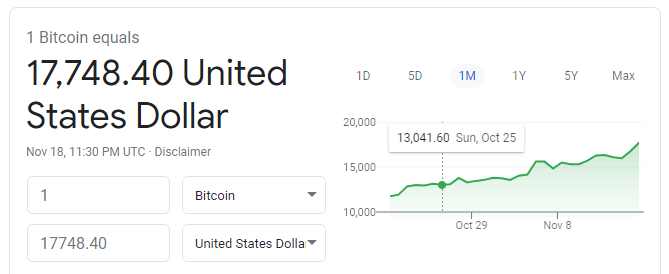
The coin continues to trend higher

Bitcoin has soared 160% this year, and has surged 17% in the last three days alone.

Investors expect the cryptocurrency to reach its all-time high, the $20,000 2017 peak in December.

“It is not out of the question for the crypto to hit its all-time high of $20,000 this side of Christmas,” said Simon Peters, analyst at investment platform eToro. “The crypto industry has consolidated, matured and is seeing real traction with institutional investors. Investors are using bitcoin as an inflationary hedge to combat the prospect of continued government stimulus.”

One of bitcoin’s new enthusiasts, the CEO of Twitter and Square who invested $50 million in the in the digital currency last month has made $34 million in paper profits as the coin surges unprecedentedly.

Dorsey used Square to purchase 4,709 bitcoins, for an average price of $10,618 in a single day, amounting to $50 million, a move he’s made to get Square exposed more to the crypto coin.

Other millionaire investors had lined up behind the popular coin as the US elections presented uncertainties, amidst the surge in COVID-19 cases and wait for possible vaccines.

The number of people touting bitcoin as the new gold is increasing. MicroStrategy CEO Michael Saylor, whose software company recently purchased $425 million worth in bitcoin told CoinDesk that macroeconomy is in chaos and bitcoin has taken the lead over gold as a safe haven commodity.

“Hoarding gold is an antiquated approach to storing value, bitcoin is a million times better,” he said.

Saylor said gold miners are working hard to destroy the commodity by hoarding it, hoping to create artificial scarcity that will push the price up, because that poses a bigger problem for the gold industry.

He said there is little basis to trust in fiat also; citing one analyst’s prediction that Federal Reserve action will keep equities moving upward regardless of the recent election’s outcome, Saylor said the “most aggressive monetary expansion” is probably ahead, and warned that he sees fiat currency crumbling.

“Investors will therefore likely continue treating blue-chip juggernauts from Apple to Amazon as new kind of safe haven. They’re desperately grasping at straws. All those assets are reliant on the fiat currency I see as crumbling away,” he said.

However, many investors are still skeptical about bitcoin, not all agree the recent surge is sustainable. Those who had bad experiences in the past are wary that a repeat of the post 2017 decline may happen.

Billionaire investor Ray Dalio listed 3 reasons why he isn’t moved by the surge, and will likely never throw a dime into bitcoin. The Bridgewater Associates founder said in tweets on Tuesday that bitcoin is too volatile for merchants, although he admitted he might be missing something.

Outreach – Data Transport Infrastructure in Nigeria Article.

0

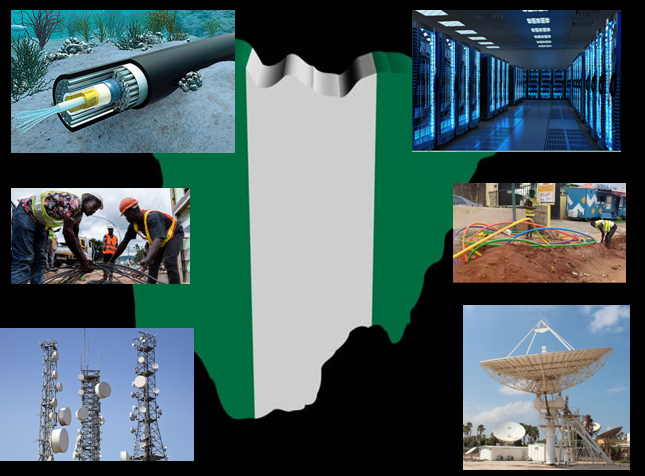
I am putting the finishing touches to a piece for Tekedia Institute on the history and current footprint of Telecoms and Data Transport Infrastructure in Nigeria.

The focus of the piece is mostly about physical infrastructure ownership rather than the evolution of service offerings. This is probably the fairest baseline to operate from as service portfolio is vulnerable to hype and embellishment driven by individual company’s PR, promotion and commercial objectives.

Infrastructure is a sort of ‘lowest common denominator’ from which all things in the industry become possible.

I am reaching out to hear from any infrastructure owners, be it towers, submarine cable, metro networks (fibre or microwave) intercity/federal fibre backbone, data-centre, submarine cable etc. I am also interested in hearing from satellite service owner/operators which have a satellite footprint serving Nigeria (not satellite capacity resellers).

While I am authoring from a very well informed position, there is still plenty scope for infrastructure ownership gaps in my knowledge. There is also a chance that regional players with no presence in Lagos may get overlooked altogether. This is why I am reaching out so that members of the community can come forward and have an input into how their infrastructure is reflected in the final publication. It would be regrettable to have entries whose architecture is underrepresented due to lack of engagement from its owners.

This is also an opportunity to protect against this happening.

Properly authorized representatives can contact me by:

  1. Sending me a message on this platform (send an invitation if not already connected; please customize it so I don’t miss it).
  2. Send me an email to linkedin31120@9jafy.com (this email account will auto-delete on 30/11/20)

Thank you in advance for your contribution.

2020: UI Don Remains Nigeria’s Most Influential Researcher in the World

0
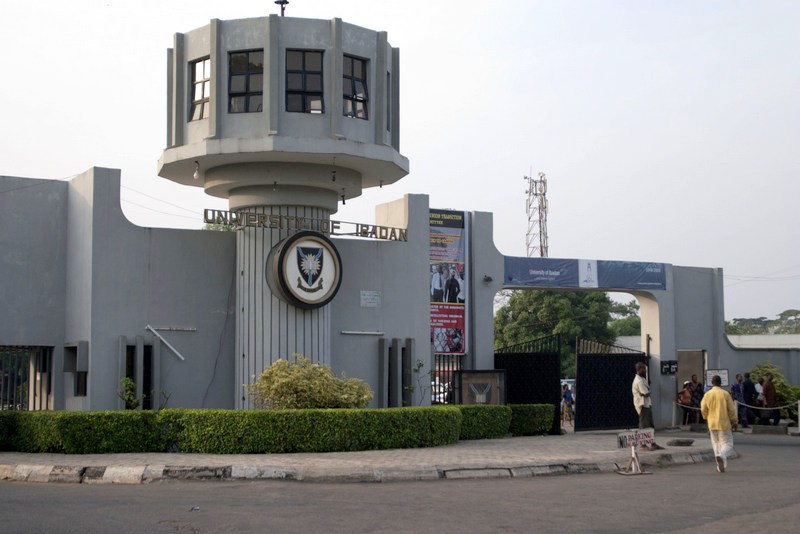
University of Ibadan, a federal university
Professor Oye Gureje

For the second time in two years, Professor Oye Gureje of the University of Ibadan has been named Nigeria’s highly cited researcher in the world. Professor Gureje attained the same status in 2019.

According to the new report from the Clarivate, Professor Gureje is among 6,389 researchers considered in 2020 Highly Cited Researchers list. He is in 5,955th position. In 2019, Professor Gureje was in 5,807th out of 6,216 researchers considered during the year.

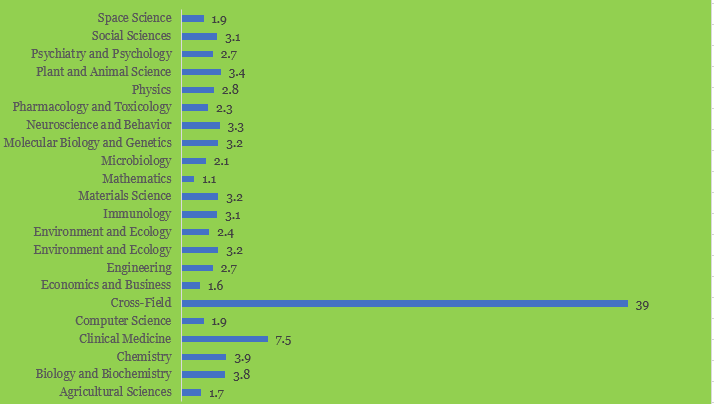
Examination of this year’s list indicates that researchers with more than one field of specialisation [cross-field] are 2,493 followed by clinical medicine researchers [482].   How do you become a highly cited researcher? Our analyst had earlier provided answers in his piece on how to be a global collaborative scholar with key lessons from Professor Gureje’s ability to concentrate his resources where they are needed most and using social capital.

Exhibit 1: Percent of Researchers by Specialisation

Source: Web of Science Group, 2020; Infoprations Analysis, 2020

Nigeria Plots Additional 2.5% VAT To Boost VAT to 10% – Tribune

2
Finance Minister, Nigeria

It is what it is: Nigeria is planning to introduce an additional 2.5% in VAT, to bring the total to 10%, Tribune reports. The government is looking for money but since there is really nothing productive happening at scale, except financial engineering, the only way is to tax those transactions. Personally, I expect our VAT to hit 18% by 2027 unless there is a foundational redesign of the architecture of Nigeria’s economy.  

Today, we are orthogonal and out of phase to what we should be doing. You cannot be scaling human population faster than economic opportunity, and expect normalcy in any economic equilibrium.

Federal Government on Tuesday disclosed that it has spent N7.09 trillion as at the end of the third quarter of 2020 fiscal year, just as it unveiled plans to introduce additional 2.5% Value Added Tax (VAT) rate in 2021 fiscal year as part of efforts aimed at increasing revenue generation.

Minister of Finance, Budget and National Planning, Dr Zainab Ahmed disclosed this while presenting the overview of the 2020 fiscal outcomes and budget implementation/2021 budget defence to the House Committee on Finance, chaired by Hon. James Faleke.

According to documents presented to the Committee, as at the end of Q3 2020, Federal Government’s revenue available for budget funding (excluding GOEs) was N2.83 trillion, 70% of target. Federal Government share of oil revenues was N1.203 trillion (representing 158% performance, over and above the prorated sum in the revised 2020 budget) while non-oil tax revenues totalled N927.47 billion (76% of revised target).

Yet, VAT increase may not be the most fearful. The biggest fear remains and I hope it never happens: a potential Central Bank of Nigeria mandate that all monies in dorm accounts be converted into naira. From all angles, if the government cannot find money to fund bureaucracy, do not think anything is off limits.

These guys have mismanaged Nigeria since 1999 – and that is unfortunate. Who runs a company like Nigeria? You keep creating new boards, institutions, etc when you are complaining that you have no money? When will Nigeria get the right size of suits from our tailors?

My position remains: drastically reduce the cost of government; we may not even need the House of Representatives. Collapse federal universities so that each geopolitical region will have 3 with other current universities as campuses tied to any of the three. Close those agencies like NIGCOMSAT, NARSDA, NACETEM, etc because they will never deliver anything of value. Invest massively in primary and secondary education, and remove subsidies in university education. Etc, Etc.

Update: after Tribune ran the piece, the government posted this tweet. Of course, everything is first denied before it becomes the new normal. So, the tweet changes nothing.