DD
MM
YYYY

PAGES

DD
MM
YYYY

spot_img

PAGES

Home Blog Page 6035

Capital Market Operations & Startup Funding At Tekedia Live Today

0

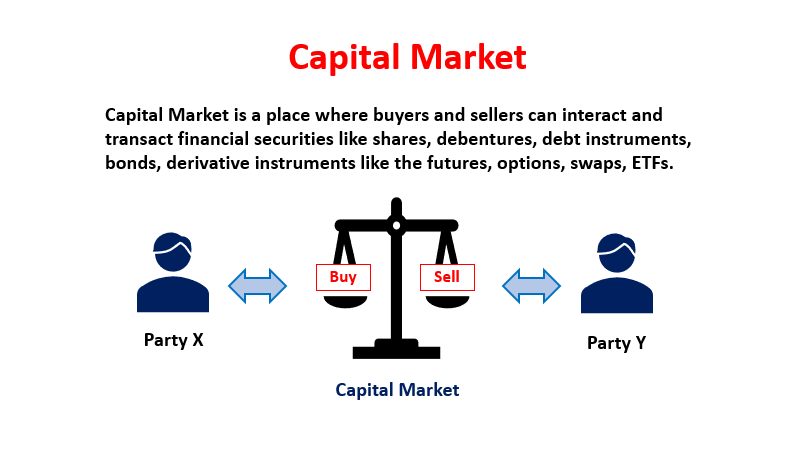
Today at Tekedia Mini-MBA Live, two industry veterans and Faculty at Tekedia Institute will take us on an academic excursion on capital markets and fundraising for startups. Azeez Lawal, CEO of Trustbanc Capital and Ibraheem Babalola, CEO of Clane will lead the session.  Zoom link in the Board.

Saturday (Nov 21)| 7pm-8pm WAT | Capital Market Operations & Startup Funding | Azeez Lawal, Trustbanc Capital & Ibraheem Babalola, Clane

To join the next edition of Tekedia Mini-MBA, register here.


A New Book – Personal Finance and Wealth Management – Is Coming

0

It was a highly well received course. And it is coming out as a book. Tekedia Faculty, Japheth Jev, ACMA, CGMA, ACA, is finalizing a new book, titled Personal Finance and Wealth Management. This book is an expanded version of a course he developed for Tekedia Institute’s Mini-MBA.

In our second edition, we reached out to Aba and Onitsha traders through our grassroots networks: we focused on impacting knowledge and skills on personal finance and wealth management. Many responded and enrolled. And then asked for the course written material in the form of a book. Books look better on the table than printed materials especially in stores! We are responding to that market need.

Once everything is done, the book would be available in stores in Nigeria, and other places where books are sold. It joins “Seizing our Singularity Future”, another Tekedia Mini-MBA course ,which is becoming a book, to be co-published by Tekedia Institute and TAFFDs USA.

Join our Institute – we’re home of innovators http://school.tekedia.com/


The Bank Account from Google

4

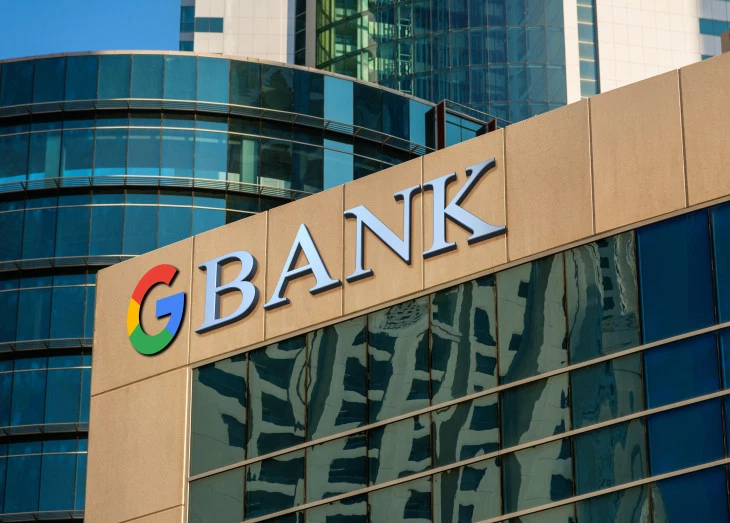
It is raining competition for some challenger fintechs as Google goes closer into quasi banking operations. Yes, while Google will not be the bank (it has to partner with banks), it will take out the shine which has made some digital banks preferable to the traditional banks. So, if an old century bank gets the blessing of Google, and people can access its services via Google, the acceleration of some digital banks may be muted. 

Yes, Citi can send Google to go and battle the digital competitors while it stays at the back handling the regulatory paperworks. This is a new order with a massive new basis of competition. As I noted in this Harvard Business Review piece, Google and Facebook are out for dominance and you need to compete through the flanks. Never, I repeat, go frontally in this battle. CNBC summarizes this new Google playbook.

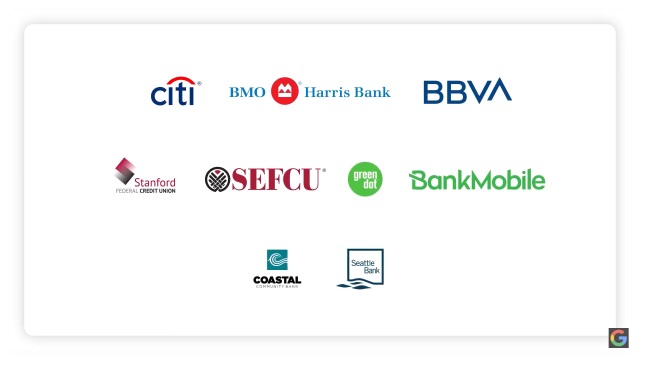
  • Google will let users open a bank account through its Google Pay app, in a partnership with Citi and Stanford Federal Credit Union beginning next year.
  • The tech giant is relaunching the payments app to allow people to pay friends, similar to PayPal’s popular Venmo and Square’s Cash App.
  • “It’s going to have a broad appeal, but especially among the younger population, Gen Z, that are more tech-driven and mobile-focused,” said Anand Selva, CEO of U.S. consumer banking at Citi.

“Along with our bank partners, we were looking to make banking more relevant for the mobile-first generation,” Caesar Sengupta, general manager of payments at Google, told CNBC in a video interview. “It will help our partners make banking more approachable to that generation, and not only make it more relevant, but make it more fun.”

As you can see here, Citi is already having fun: Paypal, Venmo, etc, we have help now! Hahaha.

Incoming CEO of Citibank Jane Fraser also appeared on Google’s virtual event, saying the Citi Plex account is “a new way to bank.” Today’s customer is of a new generation that wants a “fresh, relevant and better relationship with their money,” Fraser said. “We want to empower them with an account that provides smart very smart financial services built from the ground up with financial wellness and mobile functionality at the very core of the design.”

You’ll create an account from your phone, and “within minutes your whole bank is on your phone,” Fraser said. There are no monthly fees or minimum balance requirements, and the app offers “AI-powered insights to help users save more and set their saving goals.” You’ll get a digital Mastercard debit card instantly and a physical contactless card upon request.

GTB Posts N167.4bn Profit Before Tax in Q3 Report

0

Guaranty Trust Bank plc has released its unaudited financial results for the period ended September 30, 2020 to the Nigerian and London Stock Exchanges.

The 3rd Quarter result shows improved performance across key financial metrics, reaffirming the Bank’s capability to navigate the current economic challenges occasioned by impact of COVID 19 on World economies. The performance reflects its position as one of the leading and best managed financial institutions in Africa.

The Group reported Profit before tax of N167.4billion, representing a decrease of 1.9% over N170.7billion recorded in the corresponding period of September 2019 and an improvement on the 5.2% dip posted in H1-2020 relative to H1-2019.

Loan and Deposit book however grew by 4.5% and 25.1% from N1.502trillion and N2.640trillion recorded as at December 2019 to N1.569trillion and N3.303trillion in September 2020 respectively.

Guaranty Trust Bank’s Balance sheet remained well structured, diversified and resilient with Total assets and Shareholders’ Funds closing at N4.574trillion and N755.5billion respectively. Full Impact Capital Adequacy Ratio (CAR) remained very strong, closing at 23.9%, while Asset quality was sustained as NPL ratio and Cost of Risk (COR) closed at 6.5% and 0.6% in September 2020 from 6.5% and 0.3% in December 2019 respectively.

Commenting on the financial results, the Managing Director/CEO of Guaranty Trust Bank plc, Mr. Segun Agbaje, said; “Our 3rd Quarter result is a reflection of how we have appropriately positioned our balance sheet to cope with current economic realities and the challenging business environment.

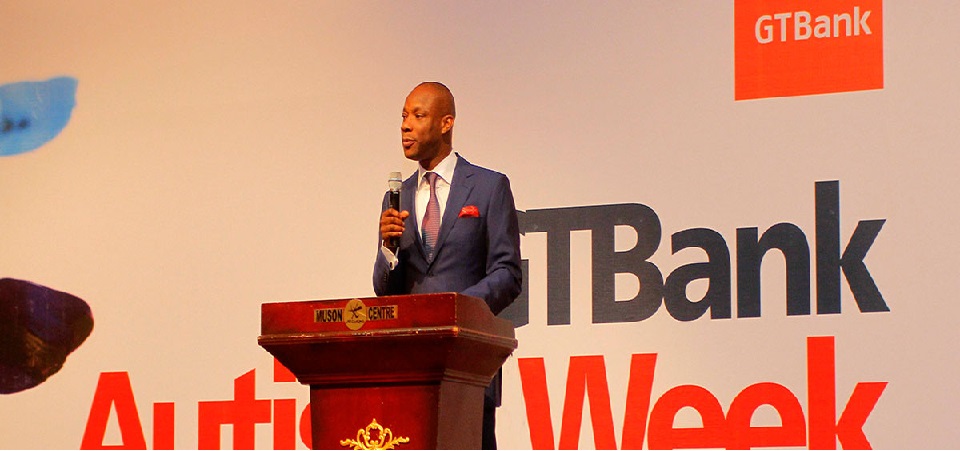
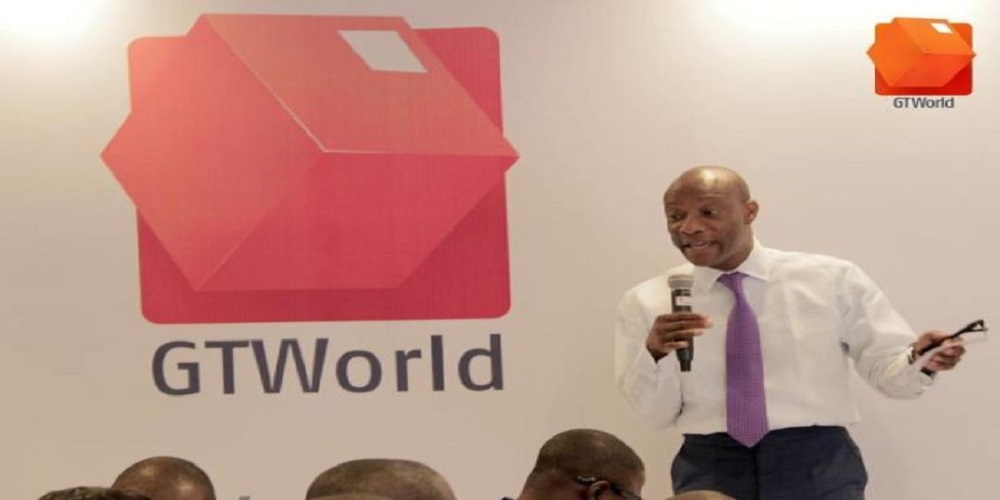
The CEO of GTBank

“It is also testament to the enduring loyalty of our customers, the hard work and dedication of our staff and the unwavering support we continue to enjoy from all our stakeholders in our drive to deliver best-in-class financial services and superior and sustainable returns.”

He further stated that; “As an organization, we will continue to build on our commitment to enriching lives by leveraging our digital-first customer-centric strategy to improve customer experience and maintain a high standard in service delivery, and going beyond banking to create and drive innovative financial solutions that add value to our customers in all aspects of their lives.”

Overall, Guaranty Trust Bank plc continues to be best in the Nigerian banking industry in terms of all financial ratios i.e. Post-Tax Return on Equity (ROAE) of 26.3%, Post-Tax Return on Assets (ROAA) of 4.6%, and Cost to Income ratio of 40.2%.

Renowned for its forward-thinking approach to financial services and customer engagement, GTBank was recently ranked Africa’s Most Admired Finance Brand in the 10th-anniversary rankings of Brand Africa 100: Africa’s Best Brands, the pre-eminent survey and ranking of the Top 100 admired brands in Africa.

GTB was also awarded the Best Bank in Nigeria by Euromoney Magazine for a record-extending tenth time and the Euromoney Excellence in Leadership Africa Award for its swift reaction in responding to the Covid-19 crisis and for addressing the impact of the pandemic on its customers and communities.

The Bank has been proactive in innovation and diversification, investing in a range of industries, from insurance to asset management, until 2010, when the Central Bank of Nigeria (CBN) stopped banks from running non-banking subsidiaries. Early in the year, GTB announced its intention to restructure as a holding company to enable it to delve into fintech.


GTBank Continues The Magic of Value Creation – PBT of N167 billion by Q3 2020

1

Guaranty Trust Bank Plc (GTBank) has returned the unaudited numbers for Q3 2020: they look really good. Profit before tax is N167.4 billion. Yes, GTBank made  more than the 2020 budget of Abia state in 9 months as profit; in 2020, Abia State has planned to spend N137. 419 billion but of course the actual expenditure would be off by billions due to revenue issues. Update: the state revised the budget to N102 billion. 

What is the point? GTBank made as profit everything Abia state would spend in a year and will still have more than N65 billion to spare, before taxes! Interestingly, Abia state is not even one of the least yoyo states; it has Aba which has a fair solid economic activity. Go down the state table, and you will be shocked: the power is in the hands of these Lagos bankers, well ahead of the Excellencys. Practically, by the time you remove debt servicing and public sector emoluments, the governor of Abia state may not have more than N10 billion to spend! Simply, until we understand the power of markets in Nigeria, many things will not align. 

A Nigeria that supports markets and companies will advance the wellbeing of the citizens because markets will remain the key path to liberate many economically.  Great private companies have typically preceded the strengthening of public institutions. Why? Governments use the taxes and fees on companies to build public institutions! In other words, you cannot expect good roads, great schools, etc if there are no companies with capacities to pay taxes to make such possible. Nigeria Will Have GREAT Private Companies Before Good Public Institutions.

For GTbank, Covid-19 paralysis impacted one metric: cost to income ratio. That gold standard in banking dropped for GTBank; from 36.9% in Q3 2019 to 40.2% Q3 2020. Even at that, that ratio is enviable for a business operating in the hardest terrain of markets.

Congrats GTBank Team; now, the stock has to respond as the paradox has been extensive.

Nigeria Will Have GREAT Private Companies Before Good Public Institutions

The full press below… 

Lagos Nigeria – November 19, 2020 – Guaranty Trust Bank Plc (“GTBank”), (Bloomberg: GUARANTY:NL/Reuters: GUARANT.LG), provider of diversified financial services, announces its unaudited Financial Results for the period ended 30 September 2020 and declares a PBT of N167.4bn.

Commenting on the financial results, the Managing Director/CEO of Guaranty Trust Bank plc, Mr. Segun Agbaje, said; “Our 3rd Quarter result is a reflection of how we have appropriately positioned our balance sheet to cope with current economic realities and the challenging business environment. It is also testament to the enduring loyalty of our customers, the hard work and dedication of our staff and the unwavering support we continue to enjoy from all our stakeholders in our drive to deliver best-in-class financial services and superior and sustainable returns.” 

He further stated that; “As an organization, we will continue to build on our commitment to enriching lives by leveraging our digital-first customer-centric strategy to improve customer experience and maintain a high standard in service delivery, and going beyond banking to create and drive innovative financial solutions that add value to our customers in all aspects of their lives.” 

Financial Highlights 

·      Sustained Earnings

–  Profit before tax of N167.4bn; representing a decrease of 1.9% over N170.7bn recorded in 30 September 2019 and an improvement on the 5.2% dip posted in H1-2020 relative to H1-2019.

–  Profit after tax decreased by 3.2% to N142.3bn from N147.0bn of 30 September 2019.

–  Earnings per share of 502kobo compared to 519kobo per share of 30 September 2019.


·      Improved Revenue

–  Interest Income of N228.2bn (30 September 2019: N224.2bn) up 1.8% as a result of 2.0% growth in interest income on loans and advances and 7.3% increase in interest income on fixed income securities.


–  Non-Interest Income of N101.7bn (30 September 2019: N101.8bn) down 0.1% largely as a result of 22.7% dip in fee and commission income, partly offset by N3.8bn increase in net trading income at Parent level and 3.5% growth in Other Income line.


–  Net interest margin remained strong at 9.5% (30 September 2019: 9.4%).


·      Balance Sheet

–  Total assets of N4.574trn (31 December 2019: N3.759trn) up 21.7%

–  Net loans and advances of N1.569trn (31 December 2019: N1.502trn) up 4.5%.

–  Deposits from customers of N3.191trn (31 December 2019: N2.533trn) up 26.0%.

–  Restricted deposits and other assets which comprise largely of restricted deposits with central banks increased by 102.8% to N1.171trn in September 2020 from N577.4bn in December 2019.  


·      Credit Quality

–  Non-performing loans to total loans at 6.5% (31 December 2019: 6.5%).

–  Coverage for Lifetime Credit Impaired Loans at 123.3% (31 December 2019: 126.6%)

–  Cost of Risk at 0.6% (31 December 2019: 0.3%).


·      Continued focus on efficiency

–  Cost to income of 40.2% (30 September 2019: 36.9%). Increase influenced by rise in inflation rate.


·      Subsidiaries

–  Contribution to PBT from subsidiaries increased to 16.3% from 15.1% in September 2019.


September 2020 Financial Analysis and Ratios 

Key Financials (N’ billion)

Q3-2020

Q3-2019

?%

Interest Income

228.2

224.2

1.8%

Net Interest Income

189.7

172.9

9.7%

Operating Income

279.8

270.3

3.5%

Operating expenses

112.4

99.6

12.9%

Profit before tax

167.4

170.7

-1.9%

Profit After Tax

142.3

147.0

-3.2%

Earnings per share (in Naira)

5.0

5.2

-3.3%

Q3-2020

FY-2019

?%

Total Assets

4,573.7

3,758.9

21.7%

Net Loans

1,569.1

1,502.1

4.5%

Customer Deposits

3,191.2

2,532.5

26.0%


Key Ratios

Q3-2020

Q3-2019

ROAE(post-tax)

26.3%

32.3%

ROAA(post-tax)

4.6%

5.8%

ROAE (pre-tax)

30.9%

37.5%

ROAA (pre-tax)

5.4%

6.7%

Net interest margin

9.5%

9.4%

Cost-to-income ratio

40.2%

36.9%

Q3-2020

FY-2019

Net Loans to deposits

47.5%

56.9%

Liquidity ratio

38.8%

49.3%

Capital adequacy ratio

23.9%

22.5%

NPL/Total Loans

6.5%

6.5%

Cost of risk

0.6%

0.3%

Coverage (with Reg. Risk Reserves)

123.3%

126.6%


19 November 2020