DD
MM
YYYY

PAGES

DD
MM
YYYY

spot_img

PAGES

Home Blog Page 6036

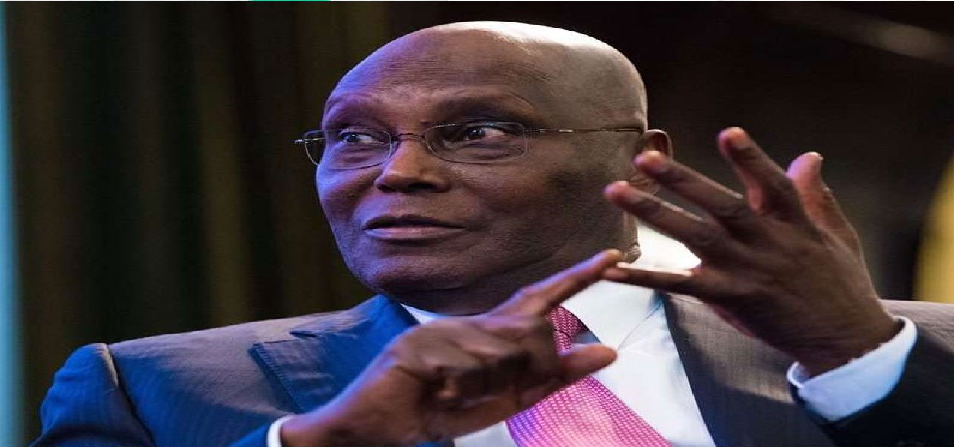
We Must Exit This Recession With Precision – Atiku Abubakar

0

It is with a very heavy heart that I received the confirmation that for the second time in five years, Nigeria has entered into another recession. Heaviness of heart, because this could have been avoided had this administration taken heed to patriotic counsel given by myself and other well meaning Nigerians on cutting the cost of governance, saving for a rainy day, and avoiding profligate borrowing.

Yes, the COVID19 pandemic has exacerbated an already bad situation, however, we could have avoided this fate by a disciplined and prudent management of our economy.

Be that as it may, it serves no one’s purposes to quarrel after the fact. We must focus on solutions. Nigeria needs critical leadership to guide her back to the path of economic sustainability.

We cannot afford hand wringing and navel-gazing. We must act now, by taking necessary, and perhaps painful actions.

For a start, the proposed 2021 budget presented to the National Assembly on Tuesday, October 8, 2020, is no longer tenable. Nigeria neither has the resources, or the need to implement such a luxury heavy budget. The nation is broke, but not broken. However, if we continue to spend lavishly, even when we do not earn commensurately, we would go from being a broke nation, to being a broken nation.

As a matter of importance and urgency, every non essential line item in the proposed 2021 budget must be expunged. For the avoidance of doubt, this ought to include estacodes, non emergency travel, feeding, welfare packages, overseas training, new vehicle purchases, office upgrades, non salary allowances, etc.

Until our economic prospects improve, Nigeria ought to exclusively focus on making budgetary proposals for essential items, which include reasonable wages and salaries, infrastructural projects, and social services (citizenry’s health, and other human development investments).

Additionally, we have to stimulate the economy, by investing in human development, and increasing the purchasing power of the most vulnerable of our population. Only a well developed populace can generate enough economic activity for the nation to exit this recession.
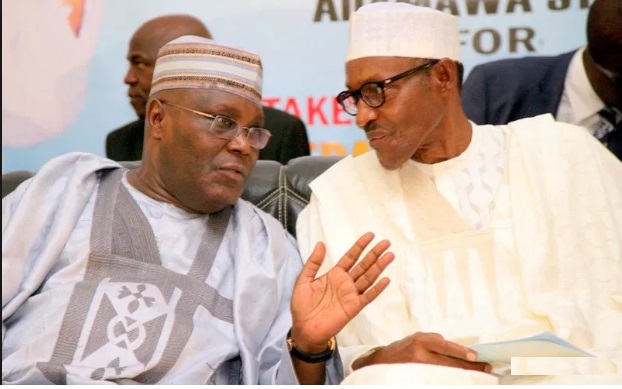
We must invest in those most likely to be impacted by the effects of the recession, the poorest of the poor. As well as stimulating the economy, this also ensures that they do not slip further into extreme poverty.

For example, a stimulus package, in the form of monthly cash transfers of ?5000 to be made to every bank account holder, verified by a Bank Verification Number, whose combined total deposit in the year 2019 was lower than the annual minimum wage.

Now, how will this be funded? By more profligate borrowing? No. I propose a luxury tax on goods and services that are exclusively accessible only to the super-wealthy. A tax on the ultra wealthy to protect the extremely poor.

A practical approach to this is to place a 15% tax on all Business and First Class tickets sold to and from Nigeria, on all luxury car imports and sales, on all private jets imports and service charges, on all jewellery imports and sales, on all designer products imported, produced or sold in Nigeria, and on all other luxury goods either manufactured, or imported into Nigeria, with the exception of goods made for export. The proceeds of this tax should be exclusively dedicated to a Poverty Eradication Fund, which must be managed in the same manner as the Tertiary Education Trust Fund, or the Ecological Fund.

I further propose that a 1% poverty alleviation tax should be legislated by the National Assembly on the profits of every International Oil Company operating in Nigeria, and international airlines doing business in Nigeria, which should also go towards the proposed Poverty Eradication Fund.

It is inhumane for us as a nation to increase the cost of goods and services that affect the poor, while keeping the cost of luxuries fairly stable. We must flip this, and flip it immediately.

And above all, Nigeria must stop borrowing for anything other than essential needs. Again, for the avoidance of doubt, borrowing to pay salaries, or to engage in White Elephant projects, is not an essential need. This is particularly important as we need cash at hand, because the world and our economic and development partners are also focused on helping their home economies overcome effects of COVID19. We must be our own saviours.

The more we borrow, the more we will need cash to make interest and principal payments, and the less cash we will have to make necessary investments in our economy and our people. If we keep borrowing, we stand the risk of defaulting, and that will make recession a child’s play, because we will lose some of our sovereignty.

I urge the administration of President Muhammadu Buhari to swallow its pride, and accept its limitations, so that they can open their minds to ideas, without caring who the messenger is. For as Deng Xiaoping said “It doesn’t matter whether the cat is black or white, so long as it catches mice.
The Biggest Problem in Nigeria – The Gyration of Naira is Now A National Security Threat

5

Nigeria has one major decision to make – how to keep the NAIRA stable. That is the unified growth strategy for that nation as nothing else matters. If we cannot keep the Naira stable, we have no economy. I am not writing as an economist (I am not one); I am writing as a business owner, employer of labour, and a proud Nigerian. In all the conversations I have about market systems in Nigeria, the one issue which typically comes up is this: “what would happen to the Naira?” 

That layer distorts everything, pushing demand and supply models of fixing market frictions, by finding and unlocking opportunities in the market, into something no one has any firm control over. The gyration of the Naira is a national security and economic threat in Nigeria.

Nigeria will not have any sustained growing economy until we can fix the Naira. Doing that requires making hard decisions which no one has shown the character to do. It is very offensive to the Nigerian people that we have accepted that the Naira MUST be losing its value seasonally since the 1980s. This is a nation of smart men and women, but we have failed the most important symbol and asset of our economy. The struggle of Naira is a national calamity and a disgrace to our generation. There is no reason we should put Naira in this position.

In the United States, the Federal Reserve, their version of the Central Bank of Nigeria, has two main core roles: keep the U.S. dollars stable (by reducing inflation) and maximize employment through interest rates. Magically, the Federal Reserve uses all the tools in its power to make sure the value of the US dollars is predictable, and stable, and based on that, markets can function. Yes, players can enter into contracts with the market makers, mainstreet merchants and rainmakers having good night sleeps.

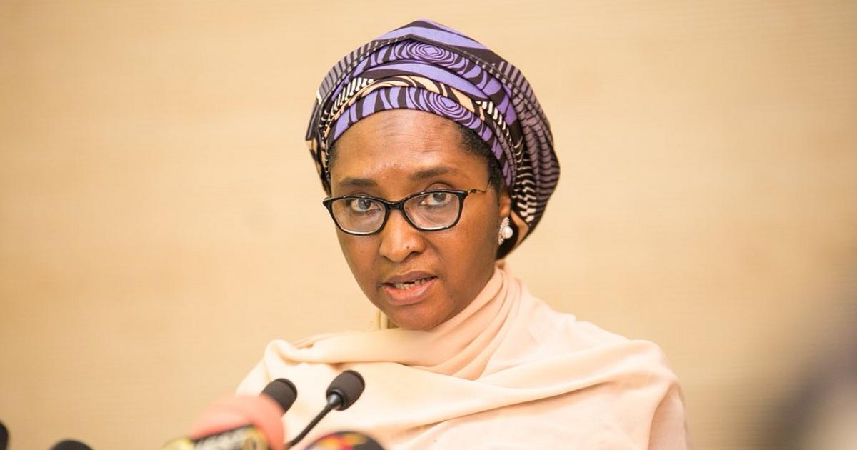
Finance Minister, Nigeria

As they do that, they also ensure they use interest rates to boost employment by adjusting the cost of capital. When the interest rate is high, the cost of capital goes high and that affects borrowing which can affect investment and then employment. It plays that game, mixing high and low rates to ensure the economy is not too hot or cold.

For Nigeria, we are not even working to fix employment. That means, we need to fix and stabilize the Naira. Interestingly, if we do that, magically, the employment rates will improve in the nation. I know more than 50 people who will invest in Nigeria if you guarantee them that Naira will hold stable for five years. I am invested in more than 15 Nigerian companies and startups (excluding listed public companies). I do them to support the nation but my case is easy as I am a Nigerian; I would be fine with tons of Naira with no need to repatriate the proceeds back to the US. But for foreign investors, they do not have that privilege, and that means a stable Naira is a necessity on their investment thesis. We need to offer that stable Naira.

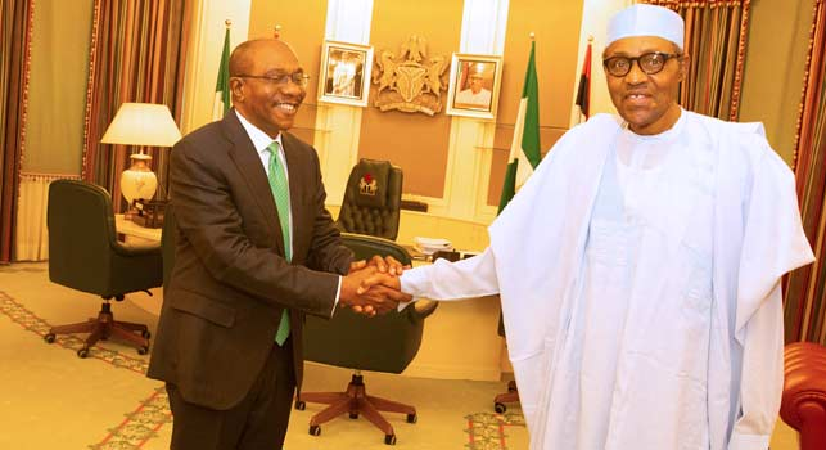
I call on the President, Vice President, Finance Minister and the Central Bank Governor to sit down and get orthogonal thinkers and find a solution to this national security threat. We have great minds in Lagos, and it is time we try new things. We are wasting a generation with the state of the economy which we can link to the inability to stabilize the naira. Everything depends on Naira!


Comment on LinkedIn Feed

Comment: Ndubuisi, I understand your point. However, I disagree strongly with that position. The Nigerian economy doesn’t depend on the Naira as much as Naira depends on the Nigerian economy.

What’s happening to Naira is a secondary problem emanating from a failing economy. Fix the economy and Naira will fall in line. While Naira is the currency of the Nigerian economy, it is the economy that however drives the currency. Not Vice versa, which is what you stated.

Once there’s a more robust, productive and competitive Nigerian economy, there’s going to be a rising demand for exports and hence the currency. But the continuing failure to address the fundamental and primary economic policy issues in Nigeria will reverberate in a ceaseless worthless and depreciating Naira.

My Response: There is really nothing you disagreed with technically. You look at the issue from the Left while I might have looked from the Right. A “robust, productive and competitive Nigerian economy” will NEVER happen until you can stabilize Naira, and Naira cannot be stabilized until you have a “robust, productive and competitive Nigerian economy”. We are saying the same. When I write, I like to use a known element which everyone can relate with: we see Naira and touch it unlike the economy

Comment: here is. You’re focusing on a secondary problem – the currency that depends on the primary issue – the economy. Nigeria’s fiscal policies are rudderless. As such, their monetary policies alone cannot move any economic and currency needles. Currency or monetary policies are effective when the economy is almost functionally and fundamentally stable. And Nigeria** is far from there.

But to cut you some slack, stable economies use a combination of fiscal and monetary policies to stabilize both their economies and currencies. But to propose a fix on the currency without having to first build a stable economy will just be wishful thinking. **corrected from Niger.

My Response: “But to propose a fix on the currency without having to first build a stable economy will just be wishful thinking.” If you remove the double Naira exchange window, investments will arrive Nigeria in tons from tomorrow. That is policy and which can help the economy. My point remains that it is far easier to have a policy that boxes the Naira than one that boxes the economy. It is nearly impossible to “build a stable economy” when investors cannot invest due to a failing currency.

I will pick my luck, work on removing double exchange, and then move up to fix the economy. Your proposal of fixing the economy even in a double exchange regime is your call: I do not think it can come first because it has never worked anywhere on earth.

“You’re focusing on a secondary problem – the currency that depends on the primary issue – the economy. ” In US, China, and Europe, that is true. In Nigeria, the economy depends on the Naira. Check the data: FDI fails when Naira has the highest variance. Nigeria has the highest per capital income of $2563.90 in 2014 when currency was stable for years. When they moved it from N197 to N310, the economy went. Currency rules here and economy follows.

Leadership Paradoxes in a Time of Disruption in an Educational Company

1

Why your employees won’t be with you in a time of disruption? Change is one of the management elements needed in corporate and personal life settings for desired goals and objectives realisation. In spite of this, experience has shown that people do resist change. The resistance becomes obvious when the change makers or agents are perceived by the followers or change implementers as working for their own benefits.

In our consulting activities with businesses and individuals in education sector, we have realised that making strategic leadership happens is always a herculean task when unexpected forces struck and disrupt processes and procedures for value creation and capturing. The disruption is huge on businesses that primarily use physical platforms for creating and delivering value to different categories of learners and corporate establishments. Appropriation of ‘best practice’ for aggregating and deploying staff to the existing roles and responsibilities are tough, indicating challenges in using strategic resources for value creation and capturing.

At the early stage of the disruption and as it bites harder, it was difficult to integrate existing processes with the emerging processes [evolved as emergent strategies] towards value creation and delivery. It was also obvious that reordering existing organisational structure to align with the emerging needs of the stakeholders remains problematic. Instead of face-to-face communication being used before the disruption, staff at the corporate and business levels have to adopt a number of other approaches that made understanding of messages difficult.

The leadership of our case was forced to sack some staff when the e-learning or online teaching approach was employed. Salaries and other remunerations of the remaining employees were reduced to cater for the shortfalls in the participant enrolment for courses. Roles and responsibilities of the remaining staff were also increased. Some staff were assigned to more than three tasks in a day. This led to stressing of the personnel and led to some health challenges. In the course of making a new leadership approach happens, the management and employees at the corporate level made some leadership paradoxes.

Emerged Leadership Paradoxes in Our Case Study

The mission of our case [studied company] is to promote a culture of continuous learning among professionals and students who have interest in project management and related fields. Specially, the company was established with the strategic intent of solving unskilled work force problem and providing affordable training for individuals willing to broaden their scope.

When the heat of the disruption was high, the management was unable to implement its mission effectively. From the regular learners to non-regular learners, the case company did not properly inform them of changes in learning processes and new fees. With this it is glaring that the company could not work based on its mission that says “providing affordable training for individuals willing to broaden their scope.”

Giving much information at a time or within few seconds while creating and handling new processes for teaching and learning also made employees perplexed. At a point some employees created unofficial groups, discussing some issues such as technologies that should be used or not and needs that were supposed to be addressed by their leaders.

In our experience, when it was clear that the members of the unofficial groups cannot cope with the new changes being introduced, the concept of “Us versus Them” emerged and its practicability was ensured with the low strategies for managing emotional intelligence of the employees. For instance, when they lacked the required technological knowledge of co-creating new processes and the management failed to train them using a number of strategies such as Quality Circle, they felt being sidelined and perceived as opportunity for the management to lay them off.

From our experience, we discovered the leadership of the company employed trait, situational and transformational leadership approaches. This is quite understandable considering the old tradition of using the approaches in during crises. Experiences of the 2016 economic recession and global financial meltdown of 2008 are still fresh in the memory of many business leaders.

Therefore, the approaches would be rightly considered by any C-Executive. The CEO demonstrated that he understands how to determine leadership issues driven by unexpected situations and proffer appropriate solutions. The failure to bridge the digital knowledge gap among the employees was the main negative impact of the adopted leadership approaches.

Mitigating Paradoxes in Making a New Leadership Happens Amidst Disruption

An integrated leadership approach, which entails appropriation of transformational-transactional and normalisation process remain the alternatives to the elimination of challenges experienced by the company. This approach has a high tendency of delivering more outcomes than what the current approaches delivered to the organisation. The employed approaches have over the years been described as being in crisis. Therefore, they ought not have been considered as the best by the organisation.

Having transformation and transaction mindsets is a sure way of carrying every member of the organisation along and also help the participants in having less cost structure while receiving lectures through the digital platform. The approach would have also assisted the participants in paying less for the courses. Employing transformation-transactional approach, including normalisation process would have added a number of qualities, which are quite different from those associated with the leadership approaches used by the management of the company.


Congratulations Paschal Osita Onah

0

He attended Tekedia Institute Mini-MBA and used that knowledge to develop a new operational model in the company he works in United Area Emirates (read Dubai). It was so good that his company celebrated him. They shared it on Tekedia Mini-MBA WhatsApp Group, and I want to congratulate our member. Do more, fix market frictions and advance the wealth of nations. Congratulations Paschal Osita Onah. 

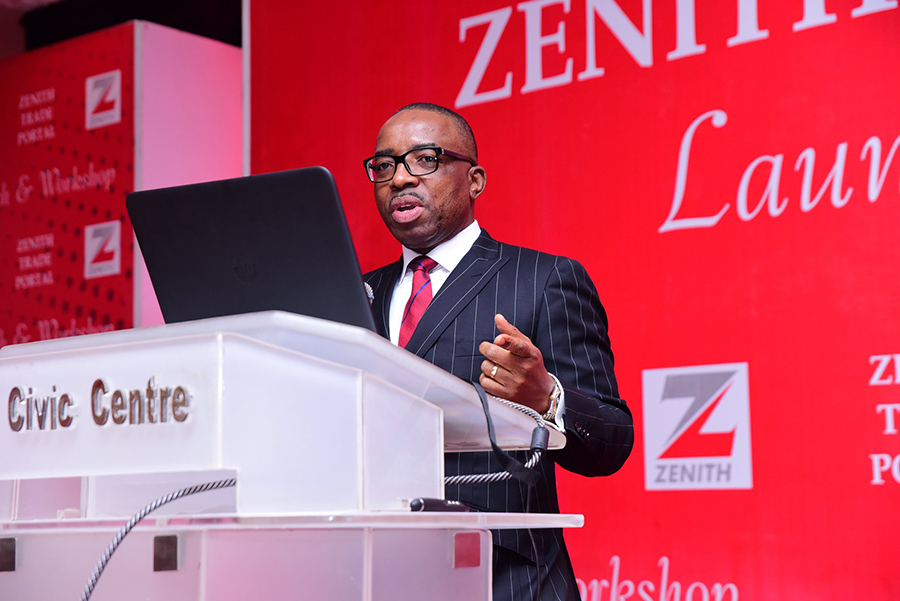
Zenith Bank Is The Zenith of Alpha – PBT of N177 Billion in 9M 2020

2

Zenith Bank Plc has recorded a Profit Before Tax of N177.3 billion for 9 months ended September 30, 2020. GTBank put N167 billion during the same period. These are indeed the two best wholly indigenous banking institutions in Nigeria at the moment. They continue to put on really great shows. Yes, their abilities to capture value could be considered legendary when you look at the abysmal state of the Nigerian economy. The National Bureau of Statistics just recorded that the nation has entered recession. Well done Zenith Bank, understanding how to capture value is the most important skill in business.

The Q3 report released by the Nigerian Bureau of Statistics (NBS) showed that Nigeria’s economy has slid into recession for the second time in four years.

“Nigeria’s gross domestic product (GDP) recorded a growth rate of -3.62% (year-on-year) in real terms in the third quarter of 2020. Cumulatively, the economy has contracted by -2.48%,” the NBS said in the report.

It noted further that while the report represents an improvement of 2.48% points over the -6.10% growth rate recorded in the preceding quarter (Q2 2020), it also indicates that two consecutive quarters of negative growth have been recorded in 2020, and growth in Q3 was slower by 5.90% points when compared to the third quarter of 2019 which recorded a real growth rate of 2.28% year on year.

More highlights of the NBS data:

  • The contraction in the oil sector represents 7.26% points lower than the growth recorded in the previous quarter (Q2 2020, -6.63%) while the non-oil sector contracted by 2.51% in the review quarter.
  • The sector contributed 8.73% to total real GDP in Q3 2020, down from 9.77% and 8.93% respectively recorded in the corresponding period of 2019 and the preceding quarter, Q2 2020.
  • The average daily oil production recorded in the third quarter of 2020 stood at 1.67 million barrels per day (mbpd), or 0.37mbpd lower than the average production recorded in the same quarter of 2019 and 0.14mbpd lower than the production volume recorded in the second quarter of 2020.
  • On the other hand, The non-oil sector grew by –2.51% in real terms during the reference quarter, which is –4.36% points lower than the rate recorded in Q3 2019 but 3.54% points higher than in the second quarter of 2020.
  • In real terms, the non-oil sector contributed 91.27% to the nation’s GDP in the third quarter of 2020, higher than its share in the third quarter of 2019 (90.23%) and the second quarter of 2020 (91.07%).

Looking at Zenith Bank’s 9M 2020 results, the company actually saw positives across key metrics.

  • Gross earnings increased to N508.97 billion, +3.6% Y-o-Y.
  • Profit Before Tax grew to N177.3 billion, +0.6% Y-o-Y.
  • Net interest income increased to N225.18 billion, +4.91% Y-o-Y.
  • Impairment charges grew to N25.11 billion, +37.5% Y-o-Y.
  • Personnel expenses increased to N59.93 billion, +5% Y-o-Y.
  • Loans and advances to customers grew to N2.7 trillion, Up by +32.7% Y-o-Y.
  • Total assets increased to N7.97 trillion, +33.4% Y-o-Y.
  • Customers deposit grew to N5.2 trillion, +32.2% Y-o-Y.
  • Earnings Per Share boosted to N5.07k, +5.6% Y-o-Y.

Meanwhile, Nairametrics reports that banks are not lending, and the central bank has debited some of them.

Deposit Money Banks (DMBs) have collectively suffered a debit of N226 billion in compliance with the Cash Reserve Requirements (CRR) fixed by the CBN.

According to a reliable source, the debit occurred in the week ended November 20, 2020. This follows a whopping N917.5 billion debit recorded a month ago as reported by Nairametrics. The central bank imposed CRR sequesters on banks that fail to meet its minimum lending targets as a percentage of deposits.