MultiChoicebuys 20% in Betking for $81 million, valuing the company in excess of $400 million. Essentially, MultiChoice does not just want to live on European soccer rights which keep rising on aggregate price, affecting margins in a continent where consumers are discovering alternative ways to be entertained.
So, provided you call it entertainment – watching Ronaldo and Messi or playing and betting their avatars – money can be made. With BetKing, MultiChoice thinks there is an opportunity to ramp up revenue from this exploding sector in Africa, and it could do that without relying on the capacity to ship more money to hold football rights in European capitals.
MultiChoice, Africa’s biggest pay-TV operator, has acquired a 20% stake in BetKing, a pan-African sports betting group.
As part of the deal, MultiChoice has made an upfront investment of $81 million
(R1.3 billion), with the potential for a further payment of $31 million (R500 million) should certain earn-out targets be met between December 2021 and December 2023.
As the group exercises significant influence over BetKing, the business will be equity accounted as an associate from 1 October 2020 by MultiChoice.
Now that MultiChoice has moved into betting, expect major regulations to begin to emerge in this domain. Why? It is easier to attack a visible enemy than these digital startups no one knows where they operate from. I am not sure BetKing may like what would come, in near future, but of course that is a good problem to have when you can cash $81 million.
I voted in 2020 because of one critical issue: I want to ensure that black kids in America would continue to attend top universities in the nation. The Trump administration had mounted ferocious attacks on one of the ways which enable black kids to get into Harvard, Yale, Princeton, etc, by fighting to dismantle affirmative action. Today, I am happy that the Appeals court has sided with Harvard: race could be considered during admission.
When people write that America does not need affirmative action in these top schools, they have been unable to explain why in some schools, most students who needed affirmative action to get in are not ALWAYS the least performing in classes. Yes, Obama needed one but he was never the bottom of his class. This does imply that the “stable state system” is not fair. So that perturbation of considering race becomes necessary since implicit privileged race had played a role in the stable state selection. The Appeal court ruling is correct.
A Boston-based US appeals court has rejected a challenge to Harvard’s affirmative action policy brought by a group representing Asian Americans who claimed the school discriminated against them as it favored Black and Hispanic applicants.
“Harvard has an ongoing obligation to engage in constant deliberation and continued reflection regarding its admissions policies,” Judge Sandra Lynch wrote for the appellate panel. The ruling said that the school’s “limited use of race” in its admissions policy to achieve diversity is consistent with court precedent.
“Harvard has shown that its holistic consideration of race is not impermissibly extensive,” the court said.
Edward Blum, president of Students for Fair Admissions, which began the lawsuit in November 2014, said the decision would be appealed. Blum has long opposed racial policies that have primarily benefited Blacks and Hispanics. He lost a case against the University of Texas at the high court in 2016.
[…] The sweeping decision by the 1st Circuit US Court of Appeals was also a sharp rebuke to the Trump administration whose Justice Department joined the case, siding with Blum’s Students for Fair Admissions group. […]
For its new class of 2024, Harvard said, Asian Americans make up 24.6% of the class; African Americans 13.9%; Latinx 11.8%; and Native Americans and Native Hawaiians, 2.0%. The remaining category, 47.7%, is overwhelmingly White students.
The argument has been: allow written tests to be the exclusive parameters to admit these students. My point remains: when hiring workers in your company, do you just employ the top performing applicants in written tests? Yes, you still look for other means to evaluate the candidates. The same thing is happening when universities look at students’ backgrounds and “race” when making decisions.
A poor latino girl, raised by a single mother, who scored 360 could be a better student than a son of medical doctors who scored 361. If someone extrapolates that the girl could be a better achiever, looking at what she has accomplished, despite her background, should not be seen as discriminating. That blacks and Latinos need this support must be classified as being unfair to the boy who scored 361.
Possibly by 2050, America will overgrow it when men and women will not see any race as being superior, and with that bias chose them over minorities. But today, a fudge factor is needed to balance the equation, and affirmative action is it.
Some of the biggest names in tech came out in support of Harvard’s affirmative action admissions policies in its fight against a federal lawsuit. Apple, Microsoft (LinkedIn’s parent) and Twitter were among those signing a friend-of-the-court brief this spring that sided with the university against the U.S. Justice Department. The companies cited their need for workers who are diverse and thrive in an “inclusive environment,” and for colleges and universities to provide these workers — especially as K-12 schools in the U.S. have become more homogenous. The U.S. Court of Appeals in Boston upheld the ruling Thursday that Harvard has the right to consider race in selecting a student body — setting the case up for a possible Supreme Court review.
We are building business cases for mainly African and Africa-operating businesses and brands as we prepare for Tekedia Mini-MBA in 2021. We have expanded our curriculum with many empirical learning systems to deepen outcomes. I report that MTN business case is in. We see three phases in the growth of his amazing African brand:
– The age of Voice telephony (before and decade of 2000s)
– The age of mobile internet (decade of 2010s)
– The age of application utilities (decade of 2020s)
From MTN, we postulate how the future of the industry would be. As SpaceX Starlink and other satellite players arrive (with expected affordable satellite phones), we see disintermediation threats to the likes of MTN, Airtel and other terrestrial players, but those threats could be mitigated if they play well in the age of application utilities. Yes, selling data will not be enough but playing into that data becomes strategic.
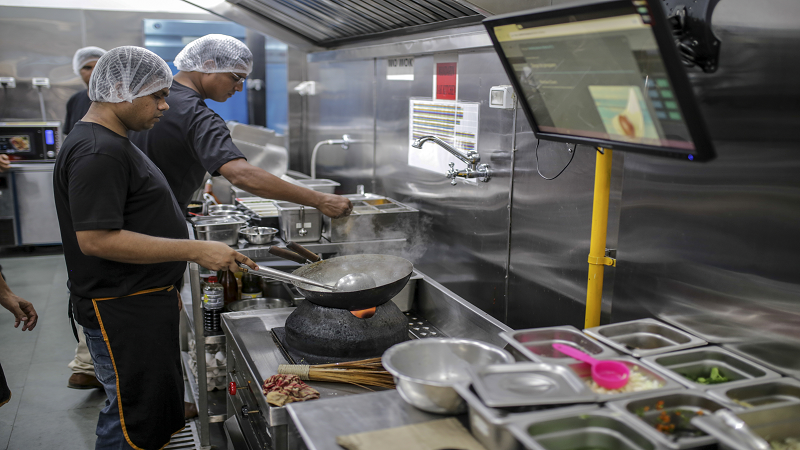
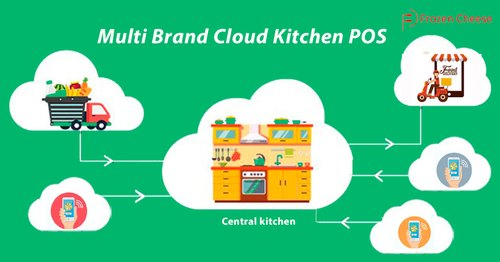
Cloud kitchens, also called ghost kitchens, shared kitchens, or virtual kitchens, are commercial facilities purpose-built to produce food specifically for delivery rather than sit-down service. These commissary kitchens work with delivery-only food brands to serve communities where they operate. Uber Founder and ex-CEO, Travis Kalanick, runs a popular ghost kitchen startup called CloudKitchens. This sub-sector is getting popular in some major cities.
Once a curious addition to the food delivery craze, ghost kitchens have taken new prominence amid the pandemic. A report by Restaurant Dive argues that these kitchens — delivery-only cooking warehouses, essentially — may play a prominent role in the food landscape of the future given the explosion of delivery apps, a movement toward convenience and the effects and after-effects of the virus on the dine-in restaurant space. In a similar vein, Chipotle is opening its first digital-only restaurant in New York state that caters solely to pick-ups and delivery.
Largely, you take a rent in a big city, turn that place into a place to cook food with no customer coming there to eat. Rather, you use delivery apps and bikers to send food to customers as they buy via their apps. One cloud kitchen can serve many delivery brands, making it a platform for sourcing cooked meals.
Cloud kitchens are commercial facilities purpose-built to produce food specifically for delivery. They do not have brick-and-mortar dine-in areas and consist of shared kitchen space with culinary staff preparing meals that are then delivered to customers at home or at work, typically through online delivery companies such as Uber Eats, Postmates, Grubhub, and DoorDash. […]
Cloud kitchens are much cheaper to set up than brick-and-mortar restaurants; there’s no need for them to be in prime locations, no need for cool designs, and no need for seating space. One estimate we heard was that a brick-and-mortar restaurant in New York City costs $1 million to $1.5 million to set up, while a cloud kitchen can get up and running for $100,000.
Today in Nigeria, the food delivery business is still at infancy. Even most of the food delivery apps depend on regular sit-down restaurants. A good cloud kitchen can improve marginal cost, and use scale to reduce cost of meals by 30%, in Lagos, with an improved delivery logistics. Mamaput is for small business owners; cloud kitchen is for entrepreneurs. Nigeria wins with entrepreneurs, not small business owners. Let’s think big here.
One of the main challenges in Nigeria is a stable electricity generation and distribution. This has led to alternative generation and usage by the people and businesses. A recent report indicates that Nigeria is one of the countries in Africa where a total of $120 billion is needed in the next 5 decades to close electricity gap.
Though, Nigeria has 30 power plants with an installed capacity to generate more than 13,000 MW, transmitting and distributing this in the last few years by the electricity transmission and distribution companies remains a herculean task. According to a number of sources, perused by our analyst, the Transmission Company of Nigeria can only transmit 7,000MW, while the distribution companies have the capacity to handle 3,000MW, distributing to the residential and industrial places across the country.
As narratives and alternative narratives continue trailing issues in the Africa’s largest economy, we learnt that the public are not relent in seeking information and knowledge of the reasons to have ability to generate that amount of electricity and still not have electricity for residential and industrial consumption.
In our experience, we found that a significant number of members of the public developed interest in energy generation and distribution between 2015 and 2020. We discovered that the interest in energy generation connected with the 30 power plants’ capacity to generate more than 13,000MW by 27.3%. While this seems good, analysis shows that one percent of interest in the plants’ energy generation capacity reduced interest in energy distribution by 28.8%. This reaffirms the earlier position that people are losing interest in the TCN and DISCOs.
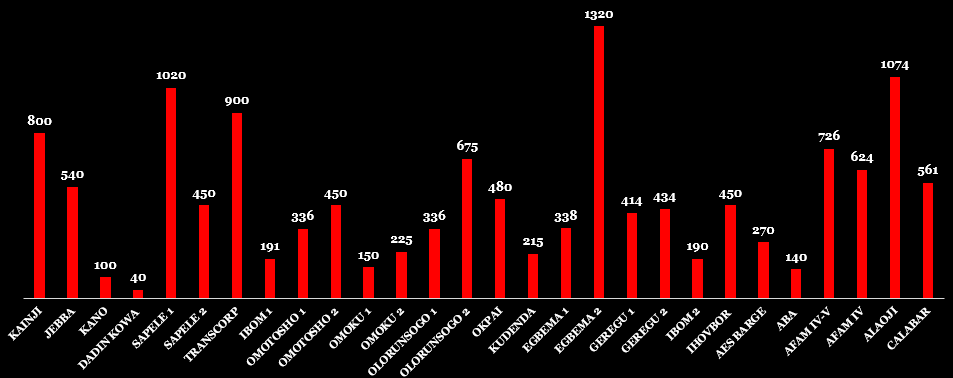
Exhibit 1: Power Plants and Their Generation Capacity
Source: NERC, 2020
Bringing Energy to Life
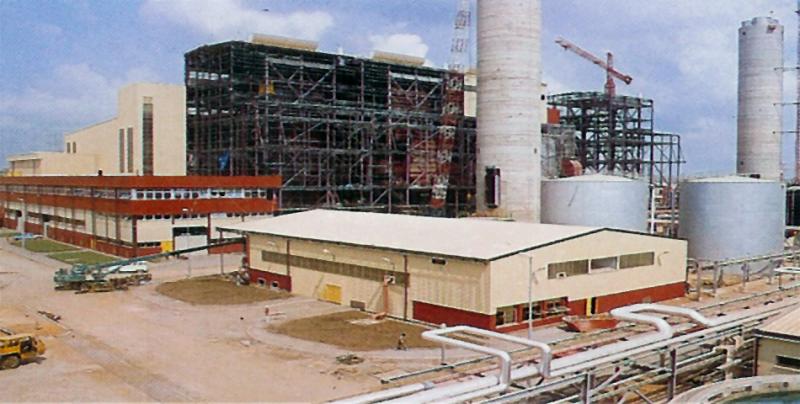
Despite varied macroeconomic and communal challenges facing businesses in Nigeria, especially those with the interest in the power industry, Egbin Power Plant, a subsidiary of Sahara Group, is one of the companies contributing to sustainable energy generation. This plant came into existence more than 30 years ago. It is situated on 600 hectares of land at Ijede, a suburb of Lagos city.
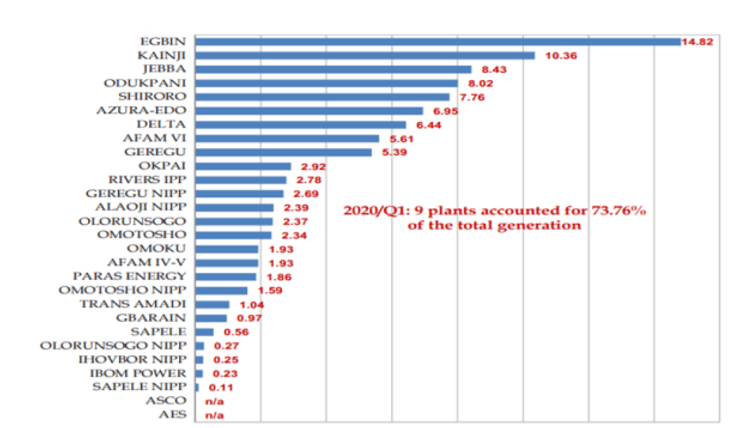
Since 1985, a significant amount of money has been spent on infrastructure and over 350 employees. In 2018, Sahara Energy invests $200m in Egbin Power Plant to generate 1,100MW. During the year, the management of the plant promised generation of 5,000MW in 5 years. It contributes 13% of the total electricity generated to the national grid, making it the heartbeat of Power and the largest provider of electricity to Africa’s largest economy. Indeed, the plant is fulfilling its strategic principle of bringing energy to life in spite of challenges. It believes in “powering prosperity” through top quality power generation, leveraging cutting edge technologies. According to the data released by the Nigerian Electricity Regulatory Commission (NERC) for the Q1 2020, the plant generated 14.82%, the highest.
Exhibit 2: Share (%) of Generation Output by Plants in Q1 2020
Source: NERC, 2020
Bringing Greenery to Life
There is no doubt businesses and individuals need energy to be operational at offices and homes. They also want a better share of the consumption when the generating companies must have done the needful in terms of embracing the right sustainability practices. Egbin Power Plant, at least, has demonstrated that it is ready to bring energy to the life of businesses and people. Our analysis indicates that one percent of public interest in energy generation increases interest in green environment by 19.6%.
One of the employees at the corporate level at the plant recently notes that “a typical passenger vehicle emits about 4.6 metric tonnes of carbon dioxide per year and this is equivalent to an average of 0.0126 metric tonnes of carbon dioxide per day. Every walk-to-work and bike-to-work activity as well as riding on the electric buggies within the facility prevents emission of 3.78 metric tonnes per day of carbon dioxide from about 150 cars within Egbin and 1379.7 metric tons every year.”
Based on the outcome of our analysis and employee’s position, our analyst visited the premises of Egbin Power Plant to observe and document sustainability practices of the management of the Plant within the context of green environment in power plants. This is imperative has different researches established that the Plant and others have capacity of generating CO2 emission, NOx emission, particulate matter, SOx among others, which can harm people and aquatic lives.
From Ikorodu to Ijede, our analyst experienced severe heat. This is connected with air and noise pollution in the area. Our analyst notes that the effects should have been minimal if there are trees planted along the roadsides. As he moved towards the Power Plant he was panicked and thought about how the life would be at the Plant location.
Getting to the main entrance of the Plant at about 5pm on Wednesday, 11 November 2019, he participated in the routine security check up and visitors’ documentation. A few minutes after documentation and entering the main premises, his premonition about the severe heat and other possible effects of air and noise pollution changed. Everywhere is green, contributing to the breeze that welcomes him. This experience further reinforced what he had earlier found when public interest in green environments in relation to power plants was analysed along with the interest in Egbin Power Plant and others. Analysis reveals that in 260 weeks, people developed significant interests in green environment and knowing Egbin power plant more than others. For instance, one unit of interest in green environment led to 11.4% interest in the Egbin Power Plant.
From Estate to Powerfields Group of Schools and other strategic structures on the premises, trees of different species are planted. On the both sides of the roads, our analyst also discovered various categories of flowers and other ornamental plants capable of reducing climate change impacts on living and non-living things. In his words, Abdullah Oladipo, the Project Team Lead of Green Facilities, notes that greenery reduces amount of air and noise pollution, increases value and lifespan of facilities on the premises, and improves people’s well-being. “It makes the premises more appealing,” he stressed.
“What I love most about the company was how they took the safety and health of every employee, including the Interns seriously,” one of the previous employees of the Plant said while narrating his experience on an employee review portal in 2020. With the two days experience, our analyst observes that Egbin Power Plant walks its talks in terms of providing a sustainable environment for stakeholders not only bringing energy to life.