As Nigeria ridicules itself with special waivers for Dangote Cement, I invite you to read my book. In it, I tried to provide a Framework on what is happening in Nigeria when it comes to these immoral favoritisms. It is a huge irony that the more you talk about it, the more it happens: Conglomerate Tax.
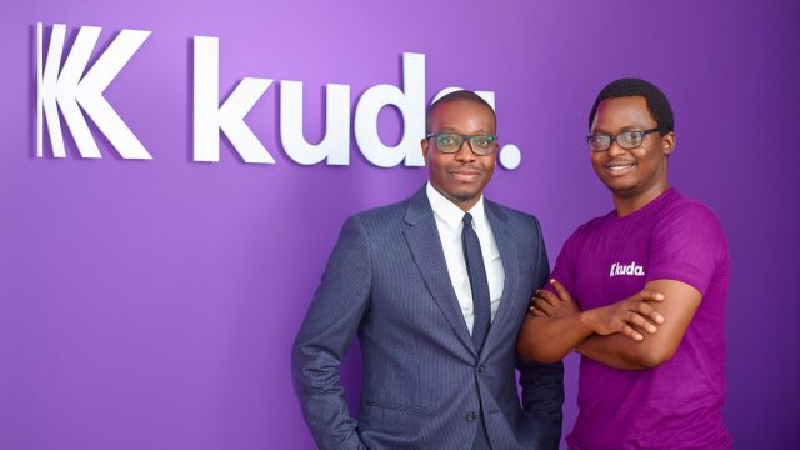
Kuda, a digital challenger bank in Nigeria, has raised $10 million, led by Target Global, with Entrée Capital, SBI Investment (once part of SoftBank, now no longer) and others joining. Kuda was founded in 2018 by Babs Ogundeyi and Musty Mustapha and was formerly known as Kudimoney. Ogundeyi was an ex-PwC auditor and a former special adviser on finance in a state Government while Mustapha was a software engineer at Stanbic IBTC Bank (this bank is mass producing entrepreneurs in Nigeria!). Kuda is “designed for your smartphone, free of ridiculous charges and great at helping you budget, spend smartly and save more.”
Why this constant funding success in the Nigerian fintech sub-sector? Here is the answer as at Feb 2018 – “According to research done by The Fletcher School and Mastercard Center for Inclusive Growth, of the $301 billion of funds flows from consumers to businesses in Nigeria, 98 percent is still based on cash.” Yes, lots of room to redesign cash-based payment in Nigeria
In the latest development, Kuda, a startup out of Nigeria that operates a popular mobile-first challenger bank for consumers and (soon) small businesses, is announcing that it has raised $10 million — the biggest seed round ever to be raised in Africa. The funding comes on the back of strong demand for its services and its ambitions — according CEO Babs Ogundeyi — to become the go-to bank not just for those living on the continent, but for the African diaspora.
“We want to bank every African on the planet, wherever you are in the world,” he said in an interview. It’s starting first in its home market: since launching in September 2019, it has picked up around 300,000 customers — first consumers and now also small businesses — and on average processes over $500 million of transactions each month.
The $10 million is being led by Target Global, the giant VC out of Europe, with Entrée Capital and SBI Investment (once part of SoftBank, now no longer) also participating, along with a number of other notable individual fintech founders and angels.
This is really amazing as early this morning, I woke up to sign a Board agreement for one of our startups which raised money from an American firm. And this afternoon, another is on a call to speak with investors. People, Nigerian startup ecosystem is on a roll. If you have not gotten in, this is the time to get in.
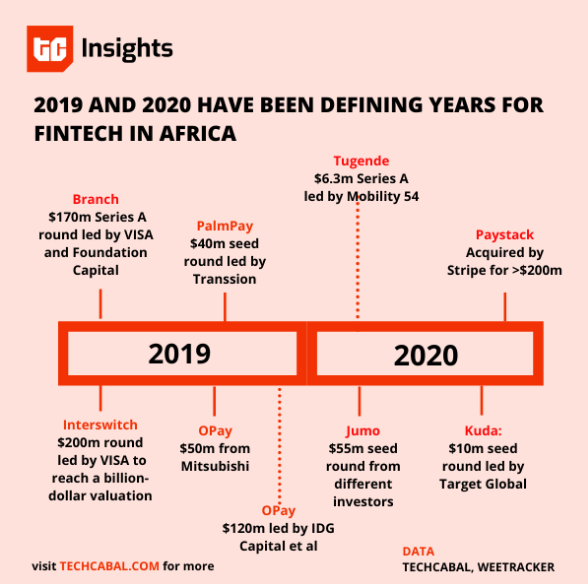
Fintech remains a very bright spot in African startup funding as this data from TC Daily shows.
As Pfizer announced a breakthrough in the fight against COVID-19, with the first effective coronavirus vaccine, which can prevent more than 90% of people from getting infected with the virus, it beckons hope in the midst of a global health crisis that has wreaked havoc on humanity.
With the US and Europe currently in the second wave of the pandemic, the vaccine has become one of the most important things the world needs right now. Although there is still more work to be done, the world can’t wait to have it.
The developers, Pfizer and its German partner BioNTech said the vaccine was tested on 43,500 people in six countries and no safety concern has been raised. That means, the vaccine is very close to being approved and distributed.
The companies said they plan to apply for emergency approval to use the vaccine by the end of the month. But mass roll-outs are unlikely to happen this year and several vaccines are seen as necessary to meet massive global needs.
The developers said they can roll out up to 50 million doses this year, enough to protect 25 million people, and then produce up to 1.3 billion doses in 2021.
Covid-19 rattled the world
Although there are still huge challenges, Pfizer chief executive Albert Bourla said it’s a “great day for science and humanity”, adding that the data milestone comes with “infection rates setting new records, hospitals nearing over-capacity and economies struggling to reopen.”
Peter Horby, professor of emerging infectious diseases at the University of Oxford said the news brings relief.
“This news made me smile from ear to ear. It is a relief to see such positive results on this vaccine and bodes well for COVID-19 vaccines in general,” he said.
The vaccine became a huge news as it takes the steps closer to lifting all restrictions and opening of businesses, particularly in the hospitality sector.
The data shows that two doses three weeks apart are needed. The trials – in the US, Germany, Brazil, Argentina, South Africa and Turkey upheld the 90% protection claim, seven days after the second dose.
Although available data is not final, it has drawn the world closer to containing the spread of the virus.
“We are a significant step closer to providing people around the world with a much-needed breakthrough to help bring an end to this global health crisis,” Bourla said.
The emergency authorization that Pfizer is seeking is for people aged 16 to 85. The procedure requires two months of follow-up safety data to ensure that no side effects surface. It is expected to be available in the third week of November.
But US Health and Human Services Secretary Alex Azar said it would take several weeks for US regulators to receive and process the data before it possible approval. That means, the November expectation may not be feasible.
However, US infectious diseases expert and one of the leaders of the fight against coronavirus, Anthony Fauci told CNN that “the bottom is, as a vaccine it’s more than 90% effective, which is extraordinary.”
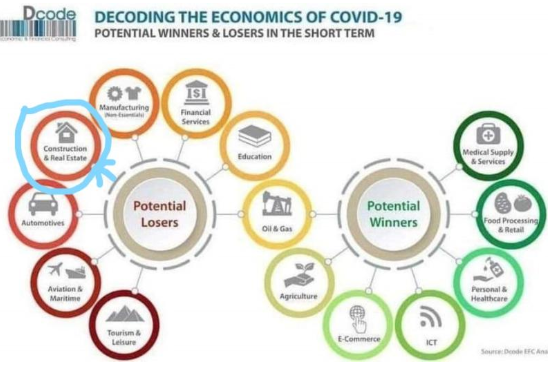
The impact of the vaccine is being felt across markets in the US and Europe. S&P 500 and Dow went up to record highs. JP Morgan and Chase said it expected the S&P 500 index to hit 4,000 points by early 2021. Theme park and film company Walt Disney’s stock went up 12%, AMC Entertainment Holdings surged 51%, but streaming and video conferencing companies such as Netflix and Zoom that thrived during the lockdown plunged.
Covid-19 affected industrial sectors
While the vaccine offers a lot of hope, the question of distribution remains a challenge. The World Health Organization said the result is very positive but warned there is a funding gap of $4.5 billion that could slow access to tests, medicines and vaccines in low and middle-income countries where Africa comes first.
Reuters reported another challenge that could affect developing countries. The Pfizer vaccine must be shipped and stored at an extremely cold temperature. With Africa’s hot weather and poor infrastructure, the continent falls short in the criteria of recipients.
Pfizer and BioNTech have a $1.95 billion contract with the US government to deliver million vaccine doses beginning this year. The companies were quick to refute the attempt of US Vice president, Mike Pence to take credit for the vaccine. The vaccine developers said they did not receive research funding from the Trump administration’s Operation Warp Speed vaccine program.
While the world celebrates, Africa and other developing parts of the world will have to wait for more traditional vaccines in development, such as J&J’s candidates. Russia said after Pfizer’s announcement that its Sputnik is also 90% effective, based on data collated from inoculations of the public, and has promised to share with African countries.
This is simply not how to build a nation: one rule for one man, and another for others. Shame to the Nigerian government. I have watched how some Aba manufacturers went under when Nigeria closed the southern border with Cameroon. I have seen how some Lagos exporters who see Togo as their markets struggled because of the same border closure. But here, Nigeria thinks only Dangote Cement deserves exceptions. Shame to these men who run this nation – they do not inspire!
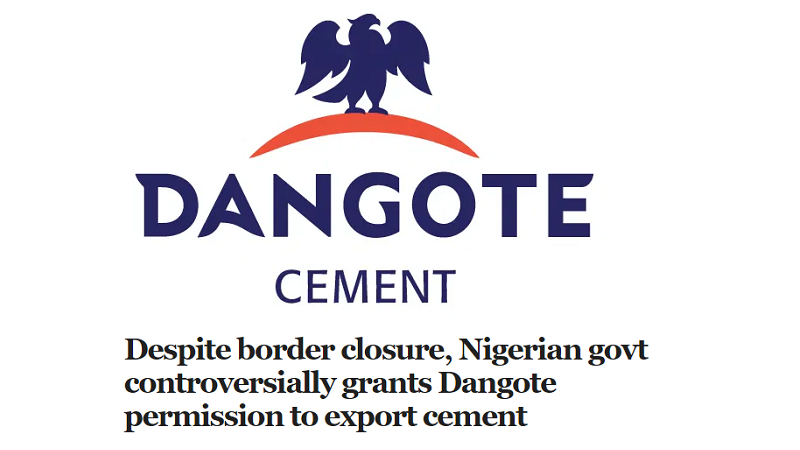
Despite the border closure policy put in place, the Nigerian government has allowed Dangote Cement to resume cement export across its land borders. That exemption is being frowned at among the Nigerian business community with at least one major top Nigerian businessman voicing his concerns publicly.
According to Bloomberg, President Muhammadu Buhari‘s administration gave its authorisation for Africa’s biggest producer to export cement to Niger and Togo in the third quarter for the first time in ten months.
The revelations were made by Michel Puchercos, chief executive officer of Dangote Cement, on an investor call in Lagos, Bloomberg reported on Monday.
The news medium reported Mr Puchercos to have claimed that the development was made possible “through authorisation given by this administration.”
Although the reasons for the concession remains sketchy Monday evening, the new development raises hopes that Africa’s most populous nation may be opening up trade with neighbouring countries after a prolonged blockade.
Mr. President, open the land border. If you have opened it for Dangote Cement, you have to open it for ALL. We do not need authorization for the selected few, we want FULL opening for all. I support this message from the founder of Stanbic IBTC Bank, Atedo Peterside via a tweet:
“Allowing legitimate exporters & importers to move their goods across the border should be a no-brainer. Why refuse everybody else & allow only one company (Dangote)? This is why some of us argue that the Nigerian economy is rigged in favour of a handful of well-connected persons.”
Mr. President, I hope you are reading…this asymmetric manipulation and rigging of our economy is offensive and certainly unproductive. As you gave waivers to Dangote Cement, you put Ibeto Cement, Lafarge and others in a position of weakness. These are legal companies and Nigeria is expected to be open and fair to all. The fact is this: if not that the CEO of Dangote Cement revealed this in an earnings call, Nigerians would not have known of this waiver. You need to make amends because this is not how to run a nation. Period.
Tekedia offers an innovation management 12-week program, optimized for business execution and growth, with digital operational overlay. It runs 100% online. The theme is Innovation, Growth & Digital Execution – Techniques for Building Category-King Companies. All contents are self-paced, recorded and archived which means participants do not have to be at any scheduled time to consume contents.