DD
MM
YYYY

PAGES

DD
MM
YYYY

spot_img

PAGES

Home Blog Page 6063

The Question of Making Two Systems Work for Every Nigerian

0

Like other countries in the world, Nigeria has two systems that are germane to its inclusive growth and development in all ramifications. To attain the desired peaceful environment across the country, criminal justice system devoid of ethnic, religious biases and social discrimination is imperative. For inclusive socioeconomic development, distribution and redistribution of economic resources without tribalism and ethnicity is a must. This has been captured as a social justice system by scholars, social commentators and public affairs analysts over the years needed to ensure equal opportunity in society. When the social justice system is not designed and allow to functional in ways that ensure justice for everyone, criminal justice system becomes handy and governments are expected to deploy more resources to correct the wrongs.

For the 60 years of independence of the country, a number of policies and programmes have been initiated and executed for the two systems. Despite this, it appears, over the years, that the systems remain ineffective. In 2015, Nigerians went to polls and elected the current President Muhammadu Buhari with the hope of having better systems. Several reports, that compared his administration efforts on the criminal justice system, note that the fundamental flaws and defects of the past persist despite promising ‘change’ during electioneering campaigns. It is on this note that our analyst observes that citizens and leaders relationship is complicated and yielding negative results, which require strategic solutions. This piece, therefore, examines some of the issues of the past and looking at the future of the current systems.

Stakeholders in the Two Systems

From the traditional societies to the modern societies, police officers are expected to protect law abiding citizens and their property within the context of arresting and prosecuting the criminals. The arrest and prosecution when they are done according to the extant rules of service or engagement and laws, all stakeholders believed they gained and excepted the gains to continue.

However, when the arrest and prosecution were perceived as deadly and bias, they accused the police authorities. This situation permeates all the continents in the world. From the United States of America, a developed country, to Nigeria, an emerging country, citizens are agitating for the reformation of the law enforcement agencies and their personnel, most importantly the police officers.

The recent #EndSars protest has once again revealed issues in the Nigeria Police Force. From inadequate personnel to poor funding and financial mismanagement to lack of modern training for the available personnel, the Force is finding it difficult to prevent crimes and protect citizens and their property effectively. According to the National Bureau of Statistics, Nigeria has a total of 49, 026 inspectors, 62,681 sergeants, 128,656 corporals and 19,043 constables in 2017. A year before, 125, 790 people committed varied crimes [reported to the Police], while 134,614 involved in various crimes in 2017.

Our analysis reveals that police officers in each of the states and the Federal Capital Territory were not sufficient for the prevention of the reported crimes. This is highly reflected in Lagos, Akwa Ibom and Delta States [see Exhibit 1].

Exhibit 1: Police Officers’ Adequacy versus Combined Crimes by States and FCT in 2017

Source: NBS, 2017; Infoprations Analysis, 2020

Analysis only suggests 0.6% of the sufficiency of the officers in preventing crimes across the country during the year. Extrapolation analysis of 20 years of crime statistics before 2017 [see Exhibit 2] indicates that murder, armed robbery, felonious wounding, manslaughter, bribery and corruption, and burglary, store breaking and house breaking were committed more than others. With this, our analyst expects a significant increase in the number of personnel of the Force in 2017 and beyond.

Exhibit 2: Select Crimes and Murder in 20 Years (1993-2013)

Source: NBS, 2016; Infoprations Analysis, 2020

Available information reveals that during the period, frequent transfer of police officers stalled prosecution of criminal cases. When police officers were involved in violation of fundamental rights of the citizens, several reports also indicate lack of effective prosecution. These among other issues have been linked to the #Endsars protests across the country. Before the protests, some states took steps capable of enhancing criminal justice system. Lagos and Kano states considered the review of the prosecution of criminal cases at lower court and police respectively. The negative outcomes of the #Endsars protests in Lagos State have equally led to the public prosecution of Police Officers for offences related to violation of human rights.

Strategic Issues and Options

As good as these steps in the two states and recent actions of other state governments, less than 12 points of Nigerian legal rights system betterment would remain stumbling block for derivation of full benefits. From 2013 to 2019, on average, Nigeria was on 7 points out of 12 points of being considered as a country with the strongest legal rights system. From another report, between 2017 and 2018, Nigeria was ranked 8th as a country with better civil justice, while Ghana and South Africa were positioned as first and second out of 18 countries in Africa. In 2019, Nigeria dropped to 10th place out of 30 countries. Nigeria only better off in civil justice not criminal justice in 2020.

Exhibit 3: 2020 Nigeria’s Ranking in the Judicial System among Select African Countries (Out of 31 Countries in Africa)

Source: World Justice Project, 2020; Infoprations Analysis, 2020

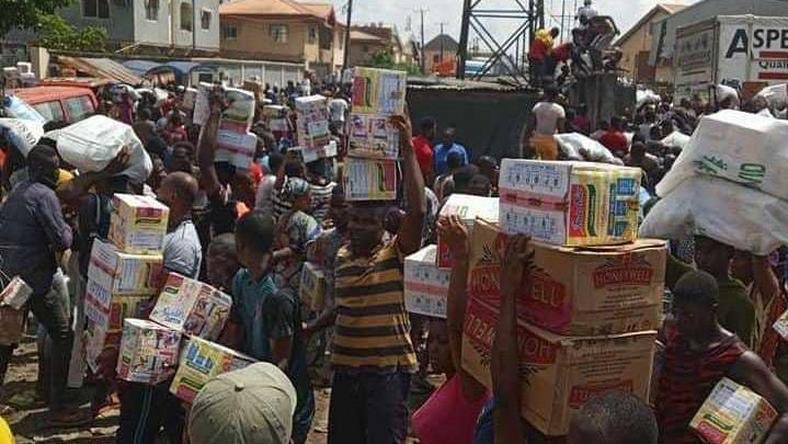
Already, the results of the ineffective criminal justice system and social justice system are being felt. We have seen how thugs and hoodlums took advantage of #Endsars protests to loot public and private property in states such as Oyo, Cross River, Osun, Delta, Kwara, Ekiti, Ogun, Kaduna and Plateau. We have seen the reactions of the citizens regarding perceived hoarding of palliatives meant for them by the state governments.

In our experience, analysis indicates that poor ranking of the country within the select rule of law indicators [see Exhibit 3] used by the World Justice Project greatly linked to the ongoing looting of warehouses for palliative materials and other properties by 64.9%, while 42.1% of the indicators explicated the looting spree across the country.

With these insights, the country needs genuine reforms. This should not be left for the political leaders alone. Civil society organisations, non-governmental organisations, business leaders and individuals also have strategic roles to play. The youths, especially those being used for political thuggery, need to be reoriented. They need to be equipped with knowledge and skills capable of making them not be used for thuggery by politicians.

Exhibit 4: Public Interest in Looting, Hunger and Poverty (10/10/2020-25/10/2020)

Source: Google Trends, 2020; Infoprations Analysis, 2020

All The Caps Can FIT

1

Nigerian young people, you have been UNITED with no infusion of tribe, religion and those things which typically divide Nigeria on your mission for a better Nigeria. Please the new videos are not necessary: the Igbos in Lagos are not the problems. The Yorubas in PHC are not the problems. And even the Hausas in Umuahia are not the problems. Do not allow the politicians to divide you as they usually do, turning this into a tribal or religious thing. You cannot afford that. 

Stay focused as you demand Good Leadership and do not make this about Igbos, Hausas, Yorubas, Tivs, Christians, Moslems, etc. If you do that, the goodwill will go.

I took this picture in Sheraton Hotels in Abuja last year. They have put all the tribal caps on the Nigerian flag. Yes, you can see clearly that all the caps could fit in. Yes, despite the paralysis in Nigeria, under a great leader, Nigeria can turn our diversity into strength, and rise. You are pushing for that leadership to emerge. I urge you to stay focused on that, and do not bring tribalism into it. 

There is no Igbo shop in Lagos. There is no Hausa shop in Umuahia. There is no Yoruba shop in Kano. What you have is a Nigeria shop. It must be that way.

LinkedIn Comment on Feed

The easiest way to destroy a society is simply by denying the people good education, it works wonders. You won’t need to spend money buying weapons and building your military bases, ignorance will do the job for you.

With fantastic ignorance raging, any word you drop, the people would set about destroying themselves; it’s a very old tactics, but its efficacy remains peerless.

You cannot create conjectures and sell to wise and informed people, you will run out of luck; but ignorance is a readymade market for spin doctors and funny creatures, because every nonsense they utter, it surely resonates there.

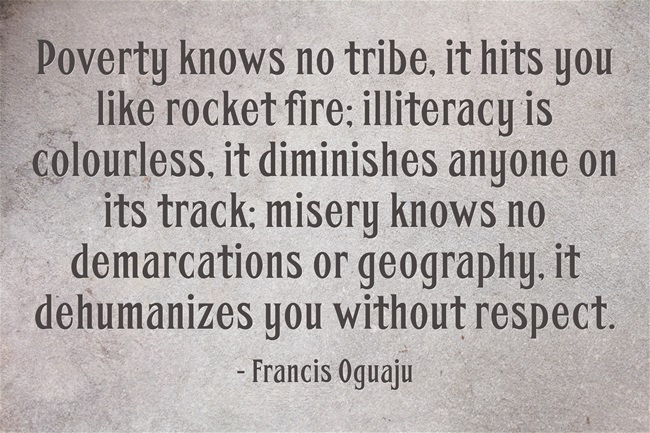
Poverty knows no tribe, it hits you like rocket fire; illiteracy is colourless, it diminishes anyone on its track; misery knows no demarcations or geography, it dehumanizes you without respect. Those whose only aim is to destroy you will never educate you on these things, rather you will be told that you are poor simply because someone else is rich, and that your sufferings have their roots in your neighbours who don’t bear your name or worship where you do.

The only way to defeat falsehood is to unleash truth, same way it takes love to conquer hate; a fool can never be greater than a wise person; fight to be the latter.

Did Lagos State Lie About CACOVID Food Palliatives?

0

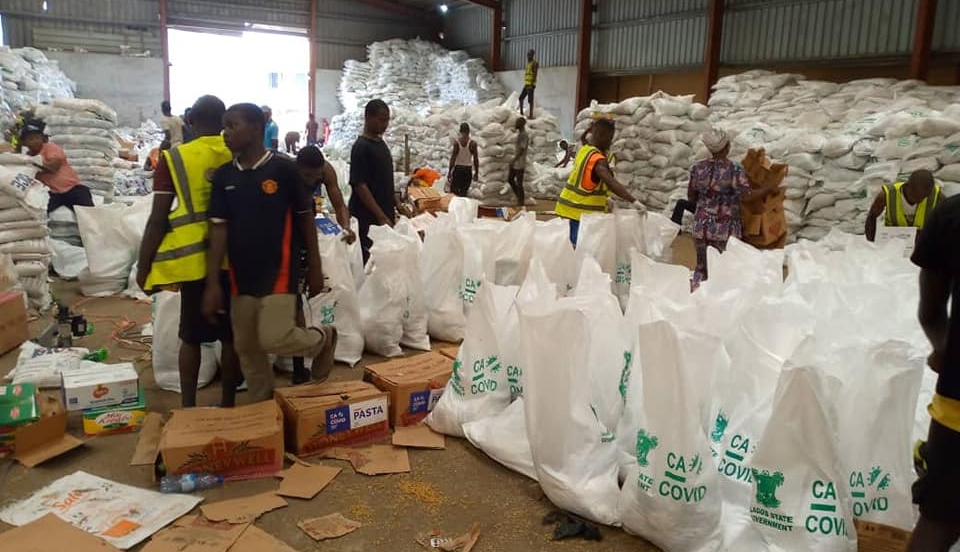
It started at the Oba Palace in Lagos Island, and almost spontaneously, escalated to other parts of the country. The discovery of warehouses filled with CACOVID palliatives has spurred hoodlums into ultimate search for where governments are hiding foods.

Since Wednesday, Nigerians have been seen on tape looting food items from many warehouses across the country. From the south to the north, it has become a looting movement extended to private properties.

In a country where 40 percent of over 200 million of its people live below the poverty line, many believe that hunger is behind the push. It therefore results in the question: Why did politicians hoard palliatives meant to be distributed during the COVID-19 lockdown?

As more videos of uncovered palliative-filled warehouses emerge, the governments and people in position have tried to answer the question.

The Lagos State Government said the palliatives were meant for distribution to the indigent. The statement signed on Thursday by Abisola Olusanya Acting Commissioner, Agriculture Lagos State, said the provision was meant for the South West, and Lagos had repackaged its share of the consignment and was distributing it before the protests halted activities in the State.

“The distribution was on-going but had to be halted due to protests, before the invasion of the warehouse today,” the statement said.

A member of Lagos State House of Assembly, representing Ikorodu Constituency, Sanai Agunbiade aka SOB, whose property was invaded by irate youths who discovered and looted the CACOVID palliatives, said he intended to distribute them on his birthday.

“For my birthday on 25th October 2020, I have sent out, through my Media Team, notice of my intention to give support to 50 widows who have already been nominated by different groups in a programme christened Widows Mite for Widows and also distribute to some vulnerable and indigent individuals across the three local councils of my constituency, some palliative materials donated by the state and federal governments, as well as myself,” he said.

While many others are yet to give reasons why they are hoarding the palliatives, Nigerians believe it’s nothing short of wickedness for those in position of authority to keep the provisions while people were starving during the lockdown.

“The pressure we were all put through this COVID-19 period. We all had to carry so much burden. Many families couldn’t feed and these beasts in human clothing decided to hide palliative for the poor. What the freaking hell!” activist Aisha Yesufu wrote on Twitter, after sharing an SOS message she received from a starving family during the lockdown.

In March, the Nigerian government announced coronavirus lockdown for the country’s key cities – Lagos and Abuja. And as part of measures to keep the people at home, the government announced a plan to distribute food provisions, as many Nigerians, especially in Lagos, live on their daily earnings.

Eventually, the period of the lockdown was extended, and to other cities in the country. And what followed were complaints of starvation, that many were caught defying the restrictions going on their various businesses. “Hunger virus is more dangerous than coronavirus” became a popular mantra as people break the lockdown rules to look for food.

In Lagos, there were attempts by the government to share food items for the people; a number of houses and residents were taken in many of the local government areas. However, what was distributed greatly fell short of the needs.

The Human & Environmental Development Agenda (HEDA) and other anti-corruption organizations that monitored the distribution of the palliatives said what was given to some estates was actually what was meant for an individual.

The CACOVID Donation

In late September, Private sector-led Coalition Against COVID-19 (CACOVID-19) supplied Lagos State with food items worth over N1.4 billion, as part of its plan to feed over 1.7 million households, especially the indigent and elderly, across 774 local governments in the country, to alleviate the effects of the pandemic.

It was up to states to distribute the food palliatives through Local Governments. Olusanya said then that 50,000 food supplies had been repackaged and would be distributed in a couple of days.

“Under the administration of Governor Babajide Sanwo-Olu, we have taken the pains to get bags marked, to print on them the Lagos State logo, the CACOVID logo and to put these items in each pack, such that we have transparency across board,” she said.

The coalition said the food provision would cover 107,564 households in Lagos State. But the distribution was yet to happen before the #EndSARS protest began. Following the crisis that ensued, the warehouses holding the palliatives were discovered and plundered by hoodlums.

While there is outrage that governments in Nigeria are hoarding food in time of starvation, the time frame shows that the food palliatives were received months after the lockdown was lifted. And the State governments appear to be fulfilling the wish of CACOVID, which is streamlined toward the most vulnerable in the states.

Revelations from the Discovery and the Looting of Stored COVID-19 Palliatives

2

The news making waves right now is the discovery of warehouses, where COVID-19 palliatives were stored by the state governments. The first time I saw the video of the Lagos warehouse, I was like, “It is not possible”. I told the person that sent the video to me that there is confusion all over the country and that people are making use of it. I also told her that people’s private businesses are being looted in different parts of the country and that it is possible that the video was from one of them. Well, the response I got for my doubt was more videos.

Ok, I actually saw sacks of food with “Ca-COVID” written on them, but I didn’t believe that the government would sponsor the purchase of food items and then store them to waste. I had always thought that the huge amount of money released for the COVID-19 palliatives were never utilised. Who would have thought that these food items were stored in big warehouses instead of being distributed to the needy? Who would have believed that the government even spent the money when it was certain that the items purchased won’t reach those they were meant for? I mean, why would they bother buying those items in the first place?

Honestly, Nigeria is a stage and many of us are the actors. Some things that happen here do not make sense. If you start analysing why those food items were left to rot instead of sharing them, you will get confused. If you start wondering why the items were bought and abandoned when the officials would have diverted the funds, you will be stuck halfway. If you begin to ask yourself if the officials planned to sell the food items, you might make mistakes. A lot of things don’t add up.

But looking at what I saw in those warehouses, it is now obvious to me that the federal government actually released funds for the relief materials. It is now obvious that the Federal Ministry of Humanitarian Affairs actually sent palliatives to all the states during the pandemic. It is now obvious that our problems do not only come from the federal government but also from states and local governments. This doesn’t mean that I am exonerating the FG in this case because they should have demanded for the description of how the items were shared. When we raised our voices to accuse them as giving “audio palliatives”, they should have asked for the list of the beneficiaries. They should have told us who to hold accountable. They should have shown evidence that they handed over these materials to our governors and that our local government chairmen are the ones that will ensure that we received those materials. But no, they went mute and ignored us. And like other government things, this one too was allowed to spoil.

But, from what I am seeing, almost every state in the federation has reports of looted COVID-19 palliatives. I mean, news keeps coming in about states, where people have discovered the warehouses that held the palliatives and it is showing that many states are guilty. What I don’t understand is if these governors had a meeting to keep those things for a particular reason. Maybe they have other intentions for them. For instance, someone said that flood victims in Anambra State were usually given those palliatives and that the governor shared palliatives to the poor every now and then. Does it mean that they reserved those ones in the warehouse for cases of emergency? Are they foreseeing that the country might face another occasion for palliatives? Like I said, a lot of questions are begging for answers.

But then, for the people bringing themselves too low to the extent of looting, be it from the government or from private individuals and organisations, I hope they understand that taking what wasn’t given to them is stealing. I hope they understand that there are people that need those items more than they do and that they should demand that the needy receive what is due them. I hope they understand that by looting, they are directly doing that which they speak against. I hope they understand that their action just revealed that they would do the same thing the politicians do if they were given the opportunity. I hope they will come to believe me if I say that “We are all guilty of what our society has become.”

The Access Bank’s N50 Billion BOOST

15

Good People, what is happening in Nigeria at the moment is very painful. No one is happy and everyone should put efforts on what could be done to change the trajectory. We are reaching out to the (evolving) youth leaders to see how Tekedia Mini-MBA could offer training, and work with our partners at least on internship placements. Economic hardship is severe and the soul of the nation is dying with the lootings. But we can reverse that trajectory.

So, the news that Access Bank has earmarked N50 billion to support Nigerians through interest-free loans and grants to communities, young people, and SMEs (micro, small and medium-sized businesses) is commendable. Herbert Wigwe continues to lead; he won my person of the year a few years go.

Access Bank has announced N50 billion in support of Nigerians through interest-free loans and grants to support communities, the youths as well as micro, small and medium-sized businesses.

[…]

According to the bank; “Now more than ever, we remain committed to our purpose of impacting lives positively.

” In light of the recent occurrences, we will be supporting Nigerian businesses with N50billion interest-free loans and grants. Watch this space for more information.”

The support by Access Bank is expected to help business owners and entreprenuers alleviate and stimulate economic activities, as well as produce many positive multiplier effects on the economy.

“As a way of supporting SMEs and the working class of the country following the recent damage of properties and livelihoods experienced across the nation, @myaccessbank has rolled out interest free loans of up to N50bn.

I call on other companies to look beyond governments and see what they can do in Nigeria. American companies rattled by the demons of systemic discrimination are rising to do what governments have failed to do at scale. From Chase Bank to Bank of America, most are pushing to invest in minorities communities. Nigeria needs an equivalent because we have just seen: even the rich are running away from their mansions as young people have their lists! We have to empower them to have enduring peace in Nigeria.

We can do it – FIX Nigeria.