President Xi of China dropped some hard words in hiskeynote during a ceremony to commemorate the 70th anniversary of the Chinese People’s Volunteers (CPV) army.
People, update your risk model: a war can break. Yes, while everyone is looking at the economic tension between China and the US, China is worried about the flanking which the U.S. plays via its Asian neighbors.
From every indication, I do think a confrontation is imminent between China and US, not directly but via proxies. The problem is that small countries which allow themselves to be used will bear all the pains while these two elephants will just test their expired bullets and grenades.
Yes, disposing old war machines or expired gunpowder through war may be cheaper than doing what environmental activists have put together on how to handle explosives during normal times. China and the US should chill: we do not need wars. There needs to be a way to live peacefully in this world. I hope many agree with me.
Good People, Jumia’s #1 enemy has turned into a major apostle. Citron Research which published a reallydamning report on Jumia has changed the color of its pens, from red to black. Yes, Jumia is a promise, and investors need to understand that. Below is Citron’s summary from the new report:
EVERYTHING HAS NOW CHANGED.
While we acknowledge that starting an e-commerce business in an emerging market will have its challenges, the rewards can be great for patient investors as we’ve seen with MELI, BABA and SE. Over the past year, the pandemic has accelerated the global shift to e-commerce and JMIA has benefited from:
• Acceleration of e-commerce adoption by Nigerian consumers
• The renewed focus on profitability
• The rapid acceptance of fintech products in Nigeria including JumiaPay
• The ability to use JMIA has a platform for ancillary products
“Investors who ignore Nigeria now have to ask themselves: What do I know that Patrick Collison doesn’t?”
But if you look at the points, Citron is just coming late to the party. In August 2019 when Jumia was working on JumiaPay, I wrote that it was the inflection point. Yes, Jumia has gotten its double play in ecommerce, just as Amazon has AWS, Alibaba has Alipay, and India’s Flipkart has PhonePe. And when it added gaming, I concluded thus: “It is good morning in Jumia”. If you look carefully, Jumia is evolving as a hybrid super-portal and if it can control demand, it would win more territories.
Jumia is the leading pan-African e-commerce platform, present across 11 countries in Africa. Its mission is to improve the quality of everyday life in Africa by leveraging technology to deliver innovative, convenient and affordable online services to consumers, while helping businesses grow as they use Jumia’s platform to better reach and serve consumers.
The Jumia platform consists of a marketplace, which connects sellers with consumers, a logistics service, which enables the shipment and delivery of packages from sellers to consumers, and a payment service, which facilitates transactions among participants active on the Jumia platform in selected markets.
On the marketplace, more than 110,000 sellers offer a broad range of goods and services.
Jumia Logistics facilitates the delivery of goods in a convenient and reliable way, leveraging an extensive network of third-party logistics service providers, seamlessly integrated through the Jumia proprietary technology platform.
JumiaPay offers a safe and easy solution to facilitate online transactions on the Jumia platform, with the intention of integrating additional financial services in the future.
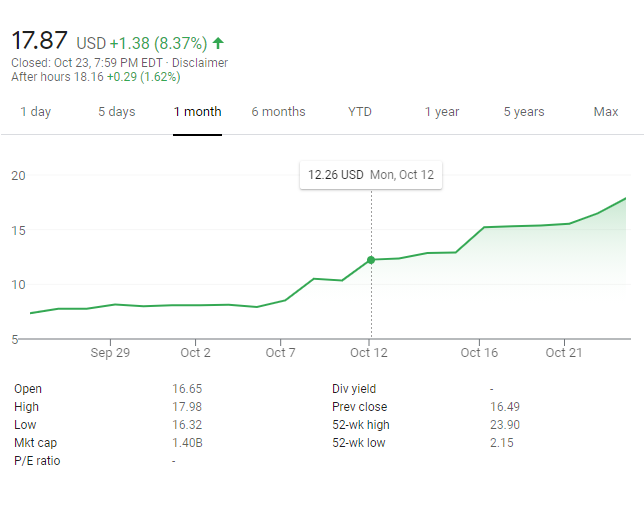
Jumia is now worth, again, more than $1 billion. It sits at $1.4 billion at the moment. But Jumia has a big appointment: Nov 10. That is the day it will release its results for the quarter ended September 30, 2020. If it does well, JMIA can hit $40 but if it does not, blame Isaac Newton for explaining gravity.
This is a new coronation – and Jumia needs to send Paystack zobo, amala and nkwobi [pay on delivery is fine]. Yes, Paystack has put Nigeria on a good side in Wall Street.
“For Nigeria to get the level of China, we must protect every indigenous (home-grown) digital company and eliminate foreign ones. Yes Prof, you read that right. Our government must kill(or ban) Facebook, Instagram, Snap, Twitter, Google, Amazon, LinkedIn, Whatsapp and every other big tech firm and start encouraging home grown companies. I can tell you for a fact, Nigeria has some the best developers / entrepreneurs that pull this off, but we been stifled by big search engines, poor access to Venture capitalist both in the country and abroad and other social media companies that try to suppress our contents. It all sounds cliché but this is just the plain reality.
Take a look at Huawei, Tencent, Alibaba, Didi-chauxing, Weibo etc. to name a few. This companies are protected by government entity in Nigeria. In order words, to become a billionaire in Nigeria, Nigeria government must build a firewall like Rep. of China to prevent Nigeria users from accessing these Tech companies in America, Government should even go as far as putting a sanctions on users trying to access these companies too. Now, they also have to put polices in place that enforces users use our locally used platform. I’m very much aware that you’re an American citizen, but you have Nigeria blood running in your vein and you can see the impact this will bring in the long run.
Heck, why I’m I even going far. Just take a look at Russia digital behemoths like VK(Social media) and Yandex(Search engine), these are application created by Russians entrepreneurs and with Government interest in them. This is especially for Digital products whose services has been unbounded and unconstrained on the internet.
A typical example is Paystack, why should the Nigerian government even allow such acquisition to occur? Paystack, has one the biggest potential to pull a real threat to PayPal & Stripe themselves. Honestly, it’s really sad.
Especially, with recent happening in the country. It simply just shows that our government couldn’t care less about what is happening in the country. I’m going to try to my best to put this proposition to our Government. But the earlier people realize this, the better for us all.
I’m willing to bet you that with such strategies in place Nigeria, Nigeria will print more millionaires and even billionaire within the next 10 years digitally. .” Stanley*.
That was a comment on a piece where I was challenging Nigerians for us to rise, and find a path, just as Chinese have done. Interestingly, in Tekedia Live sessions (check last week videos), many of our members have asked that same question in different ways: “why must Paystack sell?”
My answer has remained: allow adults to make their best decisions, and then analyze based on their decisions. Telling adults how to run their businesses or affairs may not be evidently fair. Sure, we do it all the time, though!
Now, since it has become a big question: what do you think? Should Paystack have sold to Stripe for $200 million?
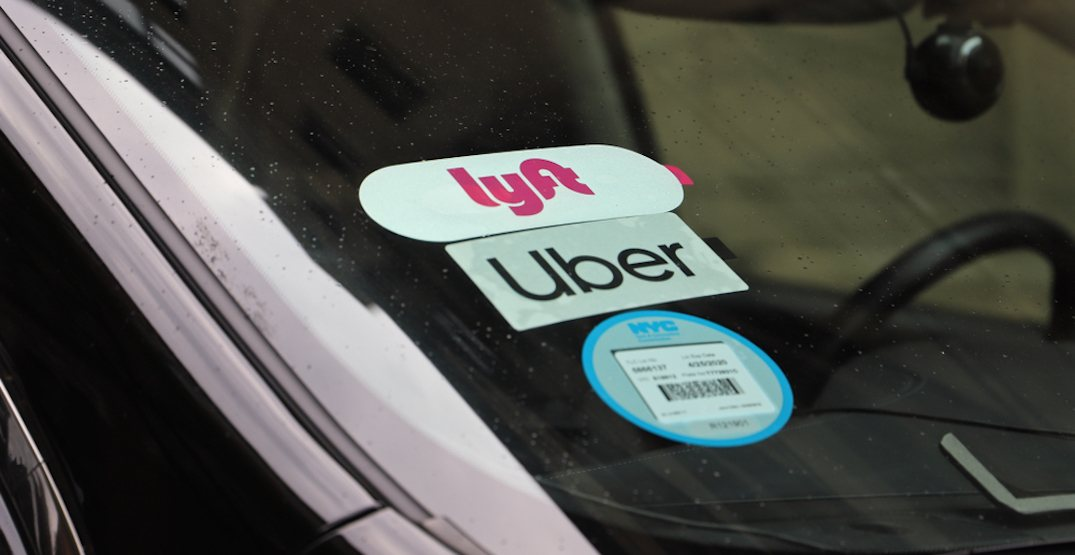
A California appeals court has dashed the hope of Uber and Lyft, upholding the earlier ruling of trial court, that the companies must reclassify their drivers as employees.
Associate Justice Jon Streeter of the Appellate court wrote in his decision Thursday that the injunction restraining Uber and Lyft from classifying their drivers as independent drivers is valid.
“It is broad in scope, no doubt, but so too is the scale of the alleged violations,” Streeter wrote.
The state ofCalifornia had in May sued Uber and Lyft for violating its state law. The state’s new labor law (AB5), enacted in January mandated the ridesharing companies to give their drivers employment status. The law weighed in on a three-part standard to determine the status of an independent contractor. 1 They are free from company’s control; 2 they are doing work that isn’t central to the company’s business; and 3, they have an independent business in that industry.
The state had argued that by classifying their drivers as independent contractors, Uber and Lyft deny them employment benefits such as healthcare and government support in times of crisis.
“Uber and Lyft have used their muscle and clout to resist treating their drivers as workers entitled to those paycheck and benefit protections. It’s time for Uber and Lyft to play by rules,” Attorney General Xavier Becerra said in a statement after the ruling.
The ruling has put Uber and Lyft once again in a difficult situation. The companies may likely appeal the ruling or wait on the proposition 22. The change will not take effect immediately as the companies still have 30 days to comply with California’s law after the appeal’s processes. If the ruling is not challenged, the time starts counting after the appellate court transfers jurisdiction to the trial court.
The companies appear to be counting more on the prop. 22 as the trial and appellate court rulings have given the impression that the Supreme Court will side with state of California.
Uber, Lyft and delivery companies such as DoorDash, Instarcat and Uber-owned Postmates have been pumping millions into prop. 22, a California ballot initiative that may overrule the AB-5 law if the people vote in support of the ridesharing companies.
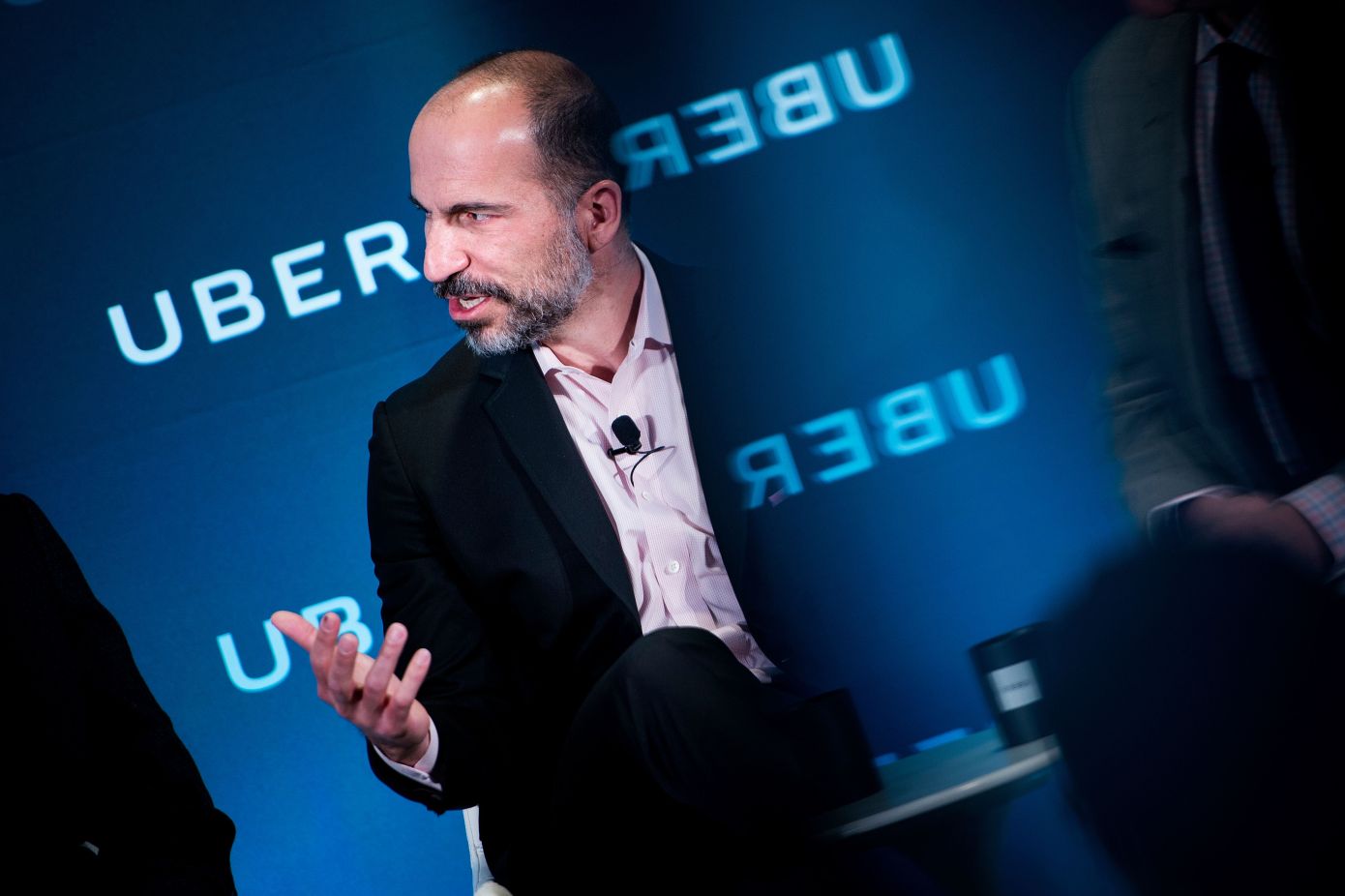
Dara Khosrowshahi, CEO of Uber, speaks during an event at the Uber DC Green-light Hub April 11, 2018 in Washington, DC. / AFP PHOTO / Brendan Smialowski (Photo credit should read BRENDAN SMIALOWSKI/AFP/Getty Images)
So far, the companies have pumped $185 million into the ballot initiative, the most expensive proposition in the history of California. For the companies, it is a survival fight. Putting the ridesharing business off the gig model will mean that the companies will have to pay drivers according to the state’s minimum wage, and apply other rules that will spike running cost.
But if Prop. 22 passes, the ride-hailing companies will continue to treat their drivers as independent contractors, though there would be some concessions on benefits, which involves the minimum wage earnings guarantee based on “engaged time”, the time drivers spent on delivery or conveying a rider, not time spent waiting for gig.
Uber and Lyft have been aggressively campaigning for votes, telling riders that it means expensive rides if they don’t vote in support of prop. 22.
“This ruling makes it more urgent than ever for voters to stand with drivers and yes on prop. 22,” Lyft Spokesperson Julie Wood told CNN Business.
Although the companies said they will accept the state’s law if the prop. 22 fails, they have been appealing to drivers to support the initiative. Uber said in a statement that if the measure is not passed, “rideshare drivers will be prevented from continuing to work as independent contractors, putting hundreds of thousands of Californians out of work and likely shutting down ridesharing throughout much of the state.”
But the drivers seem to have had enough of the pressure from the companies forcing them to stand by the initiative. The drivers on Thursday sued Uber over in-app messages regarding the prop. 22, saying the pressure from the ride-hailing company violates California law protecting their political rights.
The in-app prompts urge drivers to show their support for the ballot measure, including asking them to submit video messages, and links to the Yes on prop. 22 campaign.
David Lowe, the attorney for the drivers said the prompts, in combination with Uber’s threat to leave California or reduce its driver base, leads drivers to believe that they might be punished if they do not follow the company’ line.
This development with drivers places Uber in yet another difficult position, as it minimizes its chances to win at the Nov. 3 election.
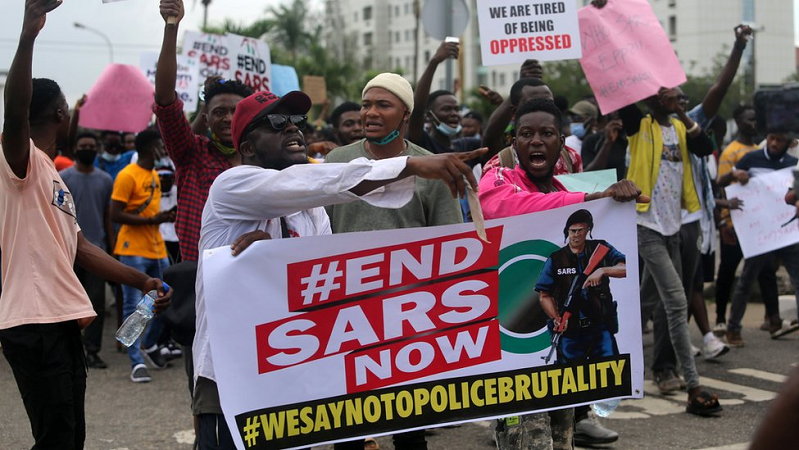
Who doesn’t know what “a luta” means? Even from secondary school days, we always heard that university students were doing “a luta”, which was another word for protest or riot. When we got to our university days, we became accustomed to the mantra, “A luta continua; victoria é certa” (“the struggle continues; victory is certain”) and used it often. This expression was used whenever we faced challenges that have to do with your academics, finance or any other thing.
However, this expression is commonly associated with struggles that have to do with protests. It is associated with making demands, not from oneself, but from others. It is associated with calls for war. Yes, today, “a luta” is synonymous with “war”. This is why it has a lot of limitations.
Without wasting much time, I will table out the reasons “a luta” doesn’t work; why it is not the best option; why dialogue, negotiation and lobbying should be the options considered if people want to table out their grievances and make their demands heard.
a. Trigger
What triggers “a luta” is usually the genesis of its failure. Usually, its trigger starts as complaints concerning an unfavourable condition or unwanted concepts. These complaints gather momentum and graduate into mild suggestions for actions. The suggestions gradually become agitation, but it will only exist within the complaining group. At this stage, the tempo is already building up and if anything that is connected to the unfavourable condition happens, the group will be pushed into the street. The problem here is that the driving force for the protest is anger and not reason. This makes it difficult for the protesters to be logical with their demands and the method of demanding for them. Worst here is that their judgement is so clouded with negative emotions that they do not accept advices that go contrary to their “reasoning” at that point in time. This is why “a luta” usually gets violent and unfruitful.
b. Leadership
It will not become an “a luta” if there is an organised leadership. In “a luta” the protesters are leaderless. Because of how the struggle started, every aggrieved person is a leader. In some cases, members of the protesters that are more famous assume leadership because they have many followers. However, in most cases, these “leaders” have different agenda to push. This will lead to the protesters being sectioned into groups with varying agenda, depending on which “leader” they listen to. At this juncture, there is already a division in the group with different voices and no voice. With time, every protester will have his or her agenda, some of which are completely unrelated to the theme of the protest. This is also why many “a luta” do not achieve their goals because they pursue several confusing items at the same time.
c. Violence-Prone
Of course every “a luta” is triggered by anger. At the initial stage, the anger is not destructive. It only acts as a drive, the energy that pushes the group to move on with the protest. If this anger dissipates, the protest will die naturally. But if the anger is fanned by both internal and external forces, the protest can last as long as ever. The longer a protest lasts, the more agitated the protesters become. They begin to believe that they were not heard and so find ways to make the authority hear them by force. This is when they become more daring and start pushing the authority to the breaking point. And this is when the miscreants amongst them start testing waters. The problem here is that because the tempo is high, there is every possibility that the protesters will join the miscreants in vandalising, looting, lynching, maiming and destroying. If they don’t join the miscreants, they will be pushed into violence when the law enforcers begin to respond to the actions of the miscreants. The result of this is total chaos. This is where people start getting killed and arrested. By the end of the day, their demands may likely not be considered by the right authority.
There is no arguing the fact that protest makes the authority listen and act towards the demands of the protesters. Nobody is saying that. But most times it is not the best option. Of course it might give the aggrieved a sense of fulfilment but it will be short-lived. I have come to learn that the best things are not achieved through the use of force. Dialogue, negotiation and lobbying are there for a reason. Let the aggrieved choose them; they don’t show weakness or suggest corruption.