The Great Recession was exceedingly bad for the world. But the post-recession created a massive redesign for Africa. In this piece, used in Harvard Business School Executive Education, I postulated on a “golden era of entrepreneurship” for the continent. I was correct. As we go through the current paralyses in Nigeria, we need to think, as business people, what the implications could be for tomorrow.
Unlike the Great Recession which was global, helping to shift the “knowledge” factor of production, from Europe and North America to Nigeria, the current mayhem in Nigeria could reverse the trajectory. If our brightest young entrepreneurs lose confidence in Nigeria, and switch, it would be sustained economic darkness. To avoid that, our leaders must LEAD with the fierce urgency of now.
Yes, they must invest to ensure we do not lose the battle of knowledge, and the application of that knowledge as that is the only way to become innovation societies with opportunities for young people.
Yes, they must invest to ensure we do not lose the battle of knowledge, and the application of that knowledge as that is the only way to become innovation societies with opportunities for young people. Unlike inventive societies which are characterized by ideas but little products and services to show for them, innovative societies offer solutions and in the process accelerate human welfare.
The National Executive Council (NEC), in Nigeria, has set up a committee that would address our current paralyses of youth unemployment and national security in the country. According to Premium Times, the “decision was taken on the backdrop of issues triggered by the weeks-long #EndSARS protests where young Nigerians sought an end to police brutality, before it was hijacked by hoodlums who have caused chaos across the country in the past week”.
As I have noted in the past, Nigeria must examine how the Igbo Apprenticeship System could help since the formal model of creating opportunities has stalled in the nation. So, NEC should examine if IAS could help accelerate government’s efforts in the nation on creating youth opportunities. The United Nations’ conclusion that “ the most human security secure geo-political zone is the South-East” in Nigeria cannot be uncorrelated with the impact of IAS.
There is something that has worked in Nigeria. It is the Igbo apprenticeship system. It is the reason why the southeastern Nigeria is considered the region in Nigeria with the highest level of human wellbeing (not necessarily education attainment which is not exclusive) by the United Nations’ “Human Security and Human Development” report.
The report further highlights the existing gap in human security across the geo-political zones of the country; – the most human security secure geo-political zone is the South-East while the North-West and the North-East geopolitical zones are the least human security secured, with residents of the Federal Capital Territory being the worst in most realms of the Human Security Index. The North-East region of the country has been the most affected by the more than 5 yearlong military insurgency. It also remains among the least developed parts of the country.
The Igbo Apprenticeship System is a business philosophy of shared prosperity where participants co-opetitively participate to attain organic economic equilibrium where accumulated market leverageable factors are constantly weighted and calibrated out, via dilution and surrendering of market share, enabling social resilience and formation of livable clusters, engineered by major participants funding their competitors, with success measured on quantifiable support to stakeholders, and not by absolute market dominance.
I call on the NEC committee to adopt and upgrade the IAS because it has relevance today in Nigeria. With a support system in IAS, we can deepen the impacts of government initiatives, and advance the welfare of our citizens.
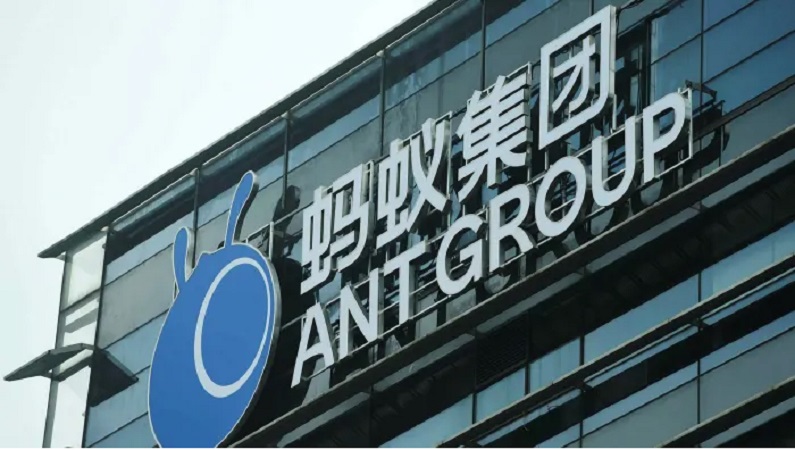
‘Started as Alipay in 2004, Ant Group has transformed from a digital payments company for Alibaba to an aggregator of financial services. Today, the group’s lending, wealth management, and insurance offerings count for 63% of its revenue. In the first half of this year, a further shift in revenue generation saw the credit business surpassing payments for the first time ever. […]
Ant’s prospectus, for its dual listing in Shanghai and Hong Kong, states that “we call ourselves Ant because we believe that small is beautiful, small is powerful”, but if the company can keep this pace up, it will be marching on to a valuation more closely resembling an army of unicorns as opposed to anything reminiscent of its name’ was how Fintech Collective newslettercaptured this eponymous company.
Today, Alibaba’s affiliate fintech company, Ant Group (of Alipay), does generate more payment volume than Visa and Mastercard combined! Ant does $18 trillion while the American giants bring in $16 trillion. Ant was started in 2004 while Visa and Mastercard were respectively started in 1958 and 1966.
When a company of such scale and size goes to the public market, expect records to be broken. And today,we are noting that Ant did break a record. Yes, it has beaten Saudi Aramco, the national oil company of Saudi Arabia, as the world’s largest IPO.
In a record breaking move, Jack Ma’s Ant Group pulled off the biggest share sale in history, with a $34.1 billion Initial Public Offering (IPO), beating Saudi Aramco’s previous record of $29.4 billion.
The Ant Group has been in market news as it prepared to make its market debut. The regulatory filing released Monday showed the Chinese tech giant priced its dual listing on the Hong Kong Stock Exchange and Shanghai’s Star Market at 80 Hong Kong dollars ($10.32) and 68 yuan ($10.13) per share respectively.
The $34.1 billion IPO puts the company’s value at $310 billion. Ant’s decision to file its initial public offering with Shanghai and Hong Kong markets signals a looming boycott of US markets by Chinese firms. The Chinese government has recently been encouraging its companies to avoid US markets, following the economic and political tensions between the two countries that have put Chinese companies under serious scrutiny in America.
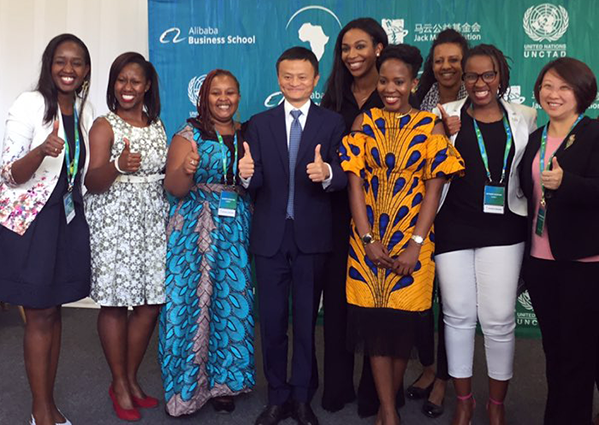
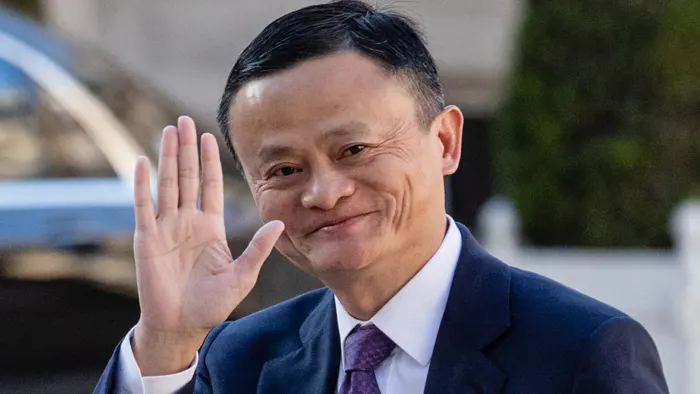
Founder of Alibaba with African entrepreneurs
You will wish you have this “ant” in your portfolio because Ant’s ambition is to go global and challenge Visa and Mastercard in domains where it does not exist at the moment. Team China makes history – the world’s largest IPO, and this came via a private company, unlike Aramco, which is a state owned enterprise.
In a record breaking move, Jack Ma’s Ant Group pulled off the biggest share sale in history, with a $34.1 billion Initial Public Offering (IPO), beating Saudi Aramco’s previous record of $29.4 billion.
The Ant Group has been in market news as it prepared to make its market debut. The regulatory filing released Monday showed the Chinese tech giant priced its dual listing on the Hong Kong Stock Exchange and Shanghai’s Star Market at 80 Hong Kong dollars ($10.32) and 68 yuan ($10.13) per share respectively.
The $34.1 billion IPO puts the company’s value at $310 billion. Ant’s decision to file its initial public offering with Shanghai and Hong Kong markets signals a looming boycott of US markets by Chinese firms. The Chinese government has recently been encouraging its companies to avoid US markets, following the economic and political tensions between the two countries that have put Chinese companies under serious scrutiny in America.
In the US, Trump administration officials have discussed whether to place Ant on the entity list, which prohibits companies from purchasing American products, according to people familiar with the matter. In 2018, when Ant failed in its bid to purchase MoneyGram, the international money transfer company, due to the disapproval of US officials, it sent the wrong signal to investors.
Ever since then, Chinese companies have been encouraged by the government to break away from the US oppression by establishing at home.
But the Ant Group’s IPO also points to a strategy of regional economic development. Beijing is hoping to attract investors with the number and price of shares filed in both Hong Kong and Shanghai. Ant will sell 1.67 billion, or about 11 percent of the company in total, in both markets, and China thinks it’s good enough to bring in the investors that the company has ever wanted.
The IPO will be a big boost for Jack Ma, whose company, Alibaba made a record breaking $25 billion debut in New York Stock Exchange in 2014. Ma is building a tech conglomerate of multi-digital services including credit and debit cards, mutual fund and insurance broker. With a plan to expand its Alipay services to cover all areas of digital payment, including cryptocurrency, Ma has been wooing investors from around the world.
With the deterring concern about US’ attack on Chinese companies out of the way, following the Ant Group’s choice of Shanghai and Hong Kong markets, Ma is hoping that investors will come.
Founder of Alibaba
Alipay has over 730 million monthly users, more than twice the number of Paypal monthly users and the United States population.
Last year, Ant earned $2.7 billion in profit and $18 billion in revenue. The company said it handled $17 trillion in digital payments in Mainland China during the 12 months that ended in June.
This record suggests it doesn’t need the United States consumers to thrive. And as the Chinese government shows more interest in digital currency, the Ant Group is positioning itself to establish its services using the government’s platform.
The Chinese central bank is planning to develop a digital national currency called the “digital yuan”, and is hoping to work with private companies that are already in the digital payment business to make it work.
Xiaomeng Lu, senior geotechnology analyst at Eurasia Group said that Ant is also poised to benefit from the Chinese government’s latest economic development plans.
“Ant is being viewed as this national technology champion – it’s investing in AI, it’s investing in blockchain,” she said, adding that they are priorities for President Xi Jinping.
However, Ant still has competition to deal with in China, as rivals like Tencent are gearing up with big moves in digital payment.
The Ant Group’s shares are due to start trading in Hong Kong on November 5. Lu said the listing will push the market capitalization of the Shanghai Stock Exchange close to that of the Tokyo Stock Exchange.
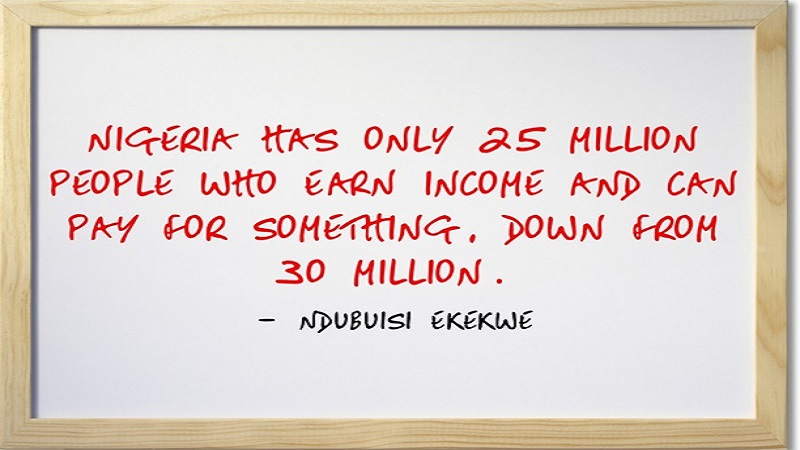
Today, I updated our consumer facing startups that Nigeria now has 25 million people who EARN income and can pay for something. My old model was 30 million. But with Covid-19 and the current paralysis, 5 million have gone from the informal sector and some sectors in corporate Nigeria. Jobs lost in hospitality, private education, etc are huge.
These 25 million people would have to support the 175 million others. Our model does show that indeed, Nigeria has a population in excess of 200 million people. We used INEC data, etc to build our model, using historical election participation rate, to indeed model that Nigeria is above 200 million in population. The INEC register is valid because local politicians who could have challenged it, if it were fraudulent, trust it, and that means at the national level, it is a reliable document. That does not mean the votes count, using it, are reliable. But the register itself is a valid document.
So, as we see the exodus and death of companies, I remind everyone that Nigeria has about 30 million people who earn income and can pay for anything. Any model built outside that 30 million will disappoint. I have explained how I arrived at this 30 million number here. With the pandemic affecting that 30 million number, which carries the other 170 million citizens, you will then understand the challenge we have in the near future.