DD
MM
YYYY

PAGES

DD
MM
YYYY

spot_img

PAGES

Home Blog Page 6091

Growth of Digital Payment By Volume, Global and Nigeria

0

NIBSS ( Nigeria Inter-Bank Settlement System Plc) has good data which helps us to make sense of digital payment growth (not just online). In Nigeria, we have 3 main card types: Verve, Visa and Mastercard. Most times, you need the card to do ATM, online payment, etc. So, most of the payment channels are connected to cards with one of the three logos.

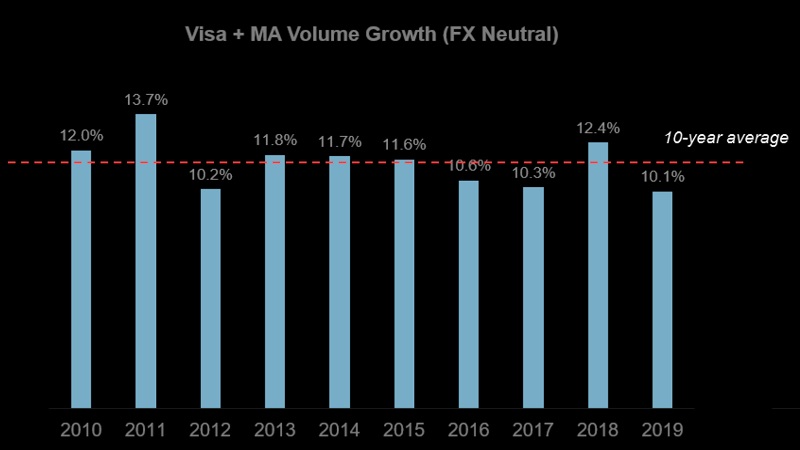
This plot gives you the average in the world (excluding China). Yes, Visa and Mastercard are both growing at an average of 11% yearly. Alipay which is much younger than Visa and Mastercard does far better; Visa was founded in 1958, Mastercard in 1966, and Alipay in 2004. Alipay which mainly serves China processed $18 trillion worth of transactions in 2019; Visa and Mastercard combined for $16 trillion.

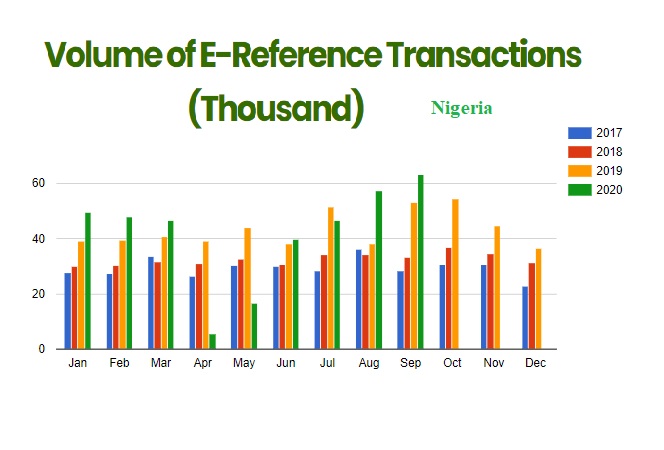
For Nigeria, including Verve, it is very safe to write that digital payment is growing at least 4x the Visa and Mastercard global average, bringing it to at least 40%. This is possible as Nigeria is still at the infancy phase of our payment digitization process.

This represents a 59 per cent increase in the volume of transactions on the three platforms, compared with 117.84 million recorded in 2019.

Further analysis showed that the value of the PoS transactions grew by 70 per cent from N217.46bn in March 2019 to N368.86bn in March this year.

The volume of the PoS deals also increased by 75 per cent to 52.25 million in March compared with 29.82 million transactions recorded in the corresponding period in 2019.

The banking industry data indicated that NIP deals had a 28 per cent improvement in terms of the value of transaction when compared to the same period in 2019, when NIP deals amounted to N8.58tn.

The volume of NIP deals also increased by 54 per cent to 135.3 million in March 2020, compared with 87.94 million transactions recorded in the corresponding month in 2019.

Source 

If you look at the Alipay leapfrogging, Nigeria and Africa could be a better frog. You must digitize your operations because no matter what is happening today, tomorrow belongs to digital!

The Nigerian Customers – Today and the Near Future [Video]

1

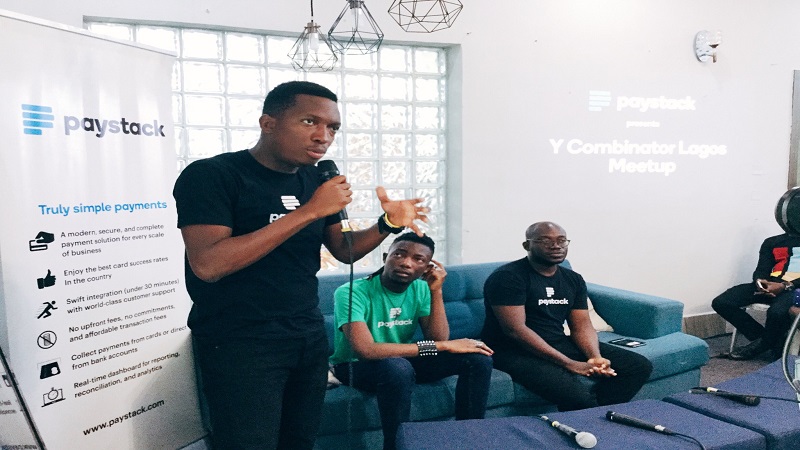
I received many questions from our community after the announcement of the $200 million acquisition of Paystack by Stripe. Many wanted to know if they should fold their physical businesses and focus online. Like I noted, what happened in Paystack is not typical, on how 60,000 customers (most there are extremely small web companies) could translate to a $200 million value. Yet, it is key to note that in all Paystack and Stripe official press releases, they did not mention  any “$200 million”.

The amount was a creation of a tech blog and it could indeed be that Paystack was not acquired near that amount. I am bringing that up to help people to calibrate [you are doing well; keep pushing]. Yes, it is very possible that Paystack was bought for $80 million or $250 million. The fact is this; no outsider knows the amount! (If you have seen any official tag of that amount, share with me.)

That said, digital is a promise but offline remains the huge opportunity of today across most sectors in Nigeria. You need to have a plan for offline even as you plan to win in the digital world of tomorrow. Our governments are still offline. Most of our richer citizens have nothing to do with putting their debit cards online. In short, by Nigerian law, an online job advertisement is not enough to meet the legal standards in government recruitment. That explains why Jobberman, a digital recruiter, has to advertise jobs in the print newspapers!

Refer to this old video I made: continue to deepen capabilities in the opportunity of today even as you shift into the one of tomorrow. That strategy will save you resources in a market of 200 million with only 30 million having capacity to spend.

The Precious 30 Million Nigerians

Tekedia Mini-MBA has “made me more visible in my place of work”

0

Tekedia Institute is serving our world with the best cost-to-value management program out there. We are working harder daily to make sure the next editions are better.  On Nov 15, our new technologies would be ready. Tekedia Mini-MBA focuses on innovation, business growth and execution with digital operational overlay.

A testimonial from our member:

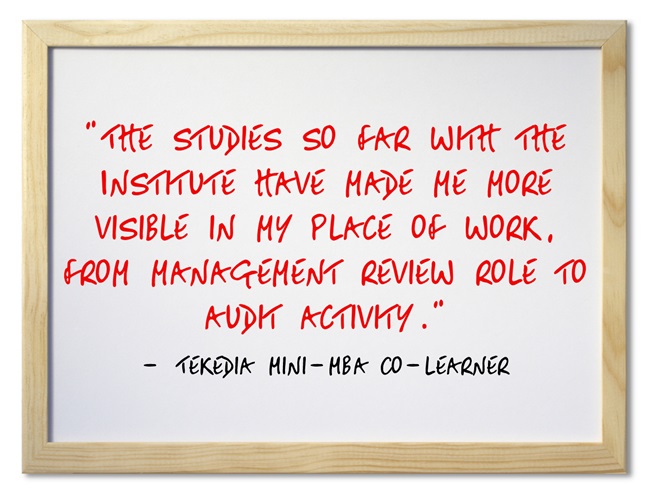
“The studies so far with the Institute have made me more visible in my place of work, from management review role to Audit activity.”

Tekedia offers an innovation management 12-week program, optimized for business execution and growth, with digital operational overlay. It runs 100% online. The theme is Innovation, Growth & Digital Execution – Techniques for Building Category-King Companies. All contents are self-paced, recorded and archived which means participants do not have to be at any scheduled time to consume contents. Registration for the next edition is ongoing.

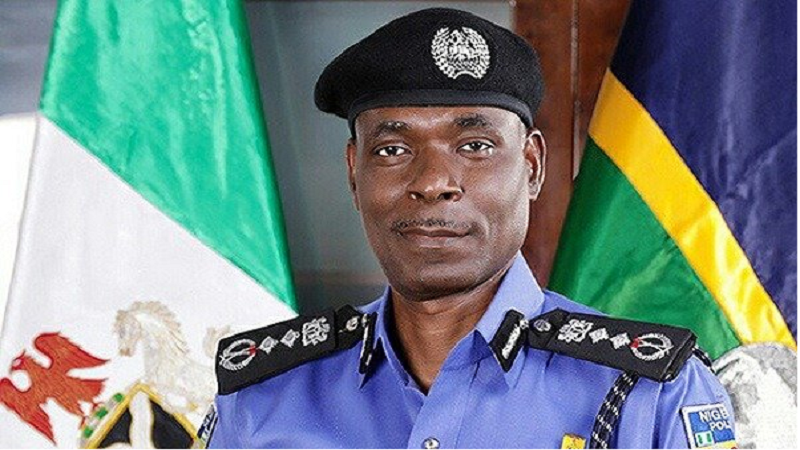
Towards Dignifying the Nigeria Police Force

0
IGP Nigeria

When the evergreen adage, “You don’t throw the baby out with the bathwater”, was donated to us by the wise ones, they knew the challenges faced by mankind. They have been around long enough to understand about the bad eggs messing up the good ones if they were not detected on time. Hence, in everything we do in life, we need to bear that proverb in mind so we don’t make mistakes we will come back to regret.

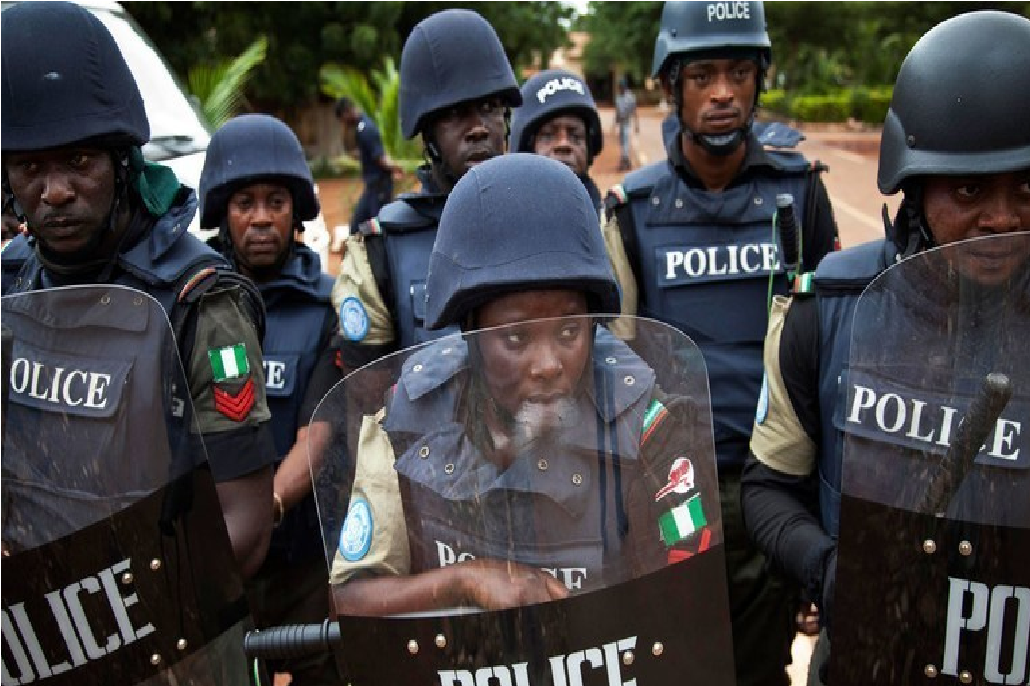
Of course, judging by the title of this article, one could tell its content. A lot of people don’t want to hear anyone talking about police reformation these days; all they care about now is, “sack them”, “end them”, “disband them”, “prosecute them”, “shut them down”, and what have you. Someone even said he preferred being attacked by armed robbers than by men of Nigerian Police Force, especially those from SARS units, because robbers will just collect money and go while police will collect money, laptop, phone, ATM card, money in the bank and so on. But of course, he is a very young man, who obviously has not had his door broken down late at night by arm robbers, who hit men in the house on the head with gun butts and rape the women there. But that is not the issue right now. The major thing now is that Nigerian policemen need to be dignified and professionalised. But the first factor is what this article is all about.

Yesterday, while discussing the Nigerian Police with my sister, I learnt so much from her. She pointed out that the problem with Nigerian policemen is their mindsets – they look down on their profession. Truth is that in Nigeria, every policeman is branded as corrupt. People look down on police officers. People laugh at those that say they want to join the police. People consider that job as a last resort, not because it is risky or that it pays poorly, but because it is considered as unworthy: something made for the lower class.

But of course, our policemen are not helping matters. They stand on the road to collect money from motorists. They demand for money when people come to report issues. They beg for money at every opportunity they get. And they look tattered. Our policemen lack dignity.

There was a time I heard that the uniforms of our police officers will be changed to colours and styles that look more dignifying. I don’t know what happened but most of our men still look like roadside mechanics and village market truck pushers. I am not trying to undermine them, I am only stating what is obvious. Our men don’t look dignified and that is actually affecting them. You don’t see men of the Road Safety, VIO or even Civil Defence looking the way our police officers do.

Believe me, most Nigerians don’t respect our policemen because of their physical appearance. The military men, irrespective of anything, always look smart and trim. I have never seen any soldiers wearing torn, discoloured or faded uniforms. I have never seen any of them with unkempt hairs, protruded tummy, slouched postures, and what have you. Our police officers are everything our military men are not when it comes to physical appearance. And the thing here is that when we look down on these officers and disrespect them, they turn mean and become brutal. Well, that’s my philosophy anyway.

So, here are my suggestions:

  • Better Salary for the Police:

I don’t know how much they are paid but they always look “hungry”. I am not advocating for a better salary so that they will stop collecting bribes, begging for money and harassing motorists, but because I think they deserve to look like they could take care of themselves. At least, when they look “filled”, they can obtain respect from many people. Apart from that, people with good backgrounds will want to join the police force if our police officers look better.

  • Change of Uniform

The black and black police uniform, well, needs to be changed. The weather isn’t good for it. Those men stay under the sun most of the time and so it fades their uniform. Most of the black and black uniforms I see have turned orange, brown, grey and even whitish-black. Furthermore, there is a need to enforce these men to change their torn and old uniforms. They should start looking at the military and the paramilitary personnel and emulate them. They need to remember that people will address them based on how they dressed, and not really by the baton or guns they held.

  • Physical Fitness

I know this is not my business but all those police officers with pot bellies and stoop shoulders need to do something about their physique. They should do their possible best to look like those that can pursue thieves if it comes to that. But then, most of our policemen can’t even lift their arms or cross their legs not to talk of going after thieves.

Please, this article is not meant to castigate or insult our police officers; the things noted here are facts they might not know about. A little overhauling of the system is all that might be needed to make these brave officers love their job and try to maintain the dignity that comes with it. I come in peace.

#EndSARS: Nigeria’s Generation Z, The Force Defying The Anti-protest Norm

0

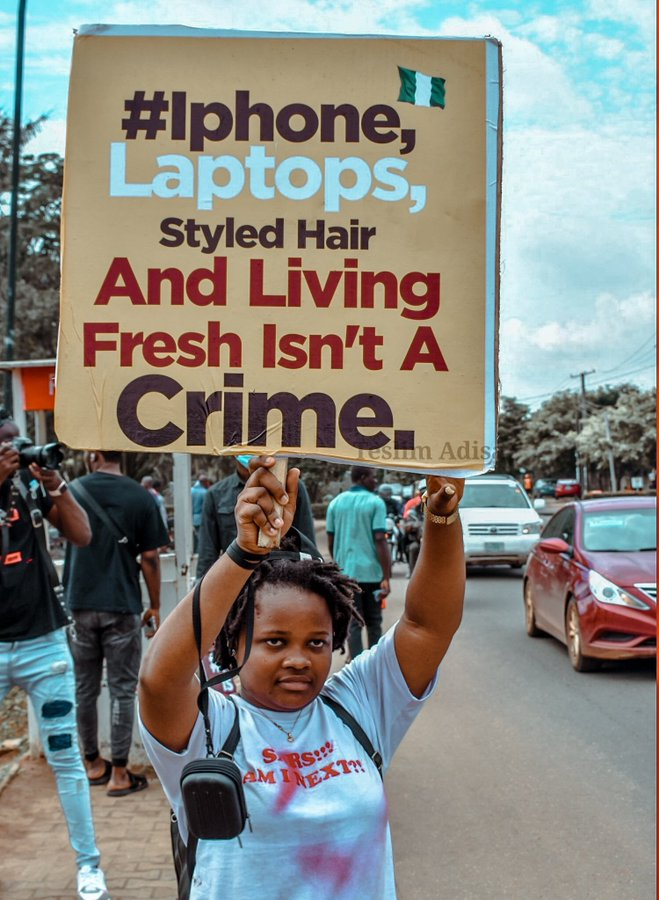
It started like a familiar joke to Nigerian leaders, the #EndSARS campaign which has been an occasional trend since 2017, and was considered an online movement which will never get the government to act, broke the shackles confining it to Twitter, to become a global movement powered in an unprecedented manner by Nigeria’s Generation Z.

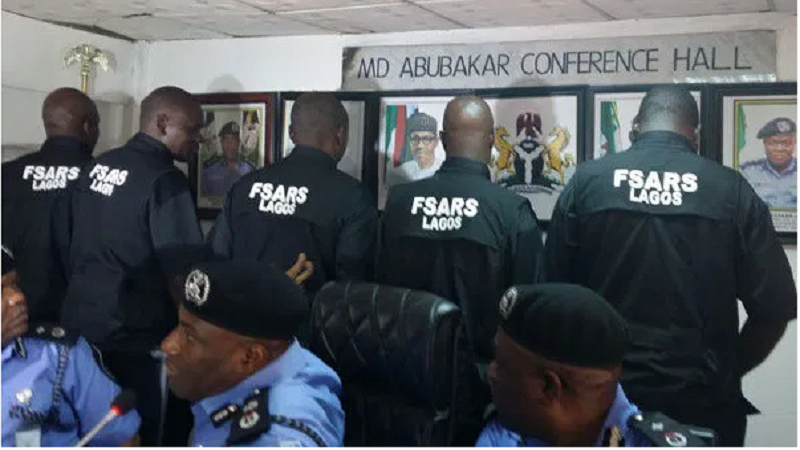
About two weeks ago, when the #EndSARS hashtag showed up once again on the trends table, following a video of the Police in Delta State, South-south Nigeria, shooting a car owner and driving off with his car, the police authorities did what they had always done: Issued assurances that the erring policemen will be brought to book, and that justice will be served.

It was a ritual of the Police Complaint Response Unit (PCRU), created to handle complaints from the public against the misconduct of Nigerian Police officers, to give assurances of discipline whenever there is a major malpractice by the police. The unit has been inundated with complaints daily that it chooses from among the many, the ones that deserve more attention.

The Nigerian public knows this, especially the youth who have been at the receiving end of the menace which, not only the Special Anti-Robbery Squad (SARS), but the entire police institution has become. The Police Complaint Unit wouldn’t solve the problem, the police know it and so does the government. But one thing they didn’t know is that this generation of youths has had enough, and it will be no more business as usual.

Nigerians are generally regarded as docile people, those who lack the temerity to fight for their rights, demand good governance from their elected leaders, or hold people they put in offices accountable. It is a situation believed to have enabled the exploitations by Nigerian political leaders who have devised many tactics to quell any attempt of dissent.
In the last few years, there have been attempts by some Nigerians to change the status quo. Nnamdi Kanu, the leader of the Indigenous People of Biafra (IPOB) led a massive crowd of separatists clamoring for the actualization of the defunct Biafra.

The last time Nigeria had a demonstration of such magnitude was in 2012, when President Goodluck Jonathan attempted to remove fuel subsidy. Though backed by the coalition of opposition political parties, critics believe the demonstrations were more politically motivated than it was a demand for good governance.

But like every other protest attempted by the people for the sake of good governance in Nigeria, the Biafra agitation was met with fierce government’s opposition.

Kanu was arrested and charged with treason and members of the IPOB were killed in scores by Nigerian security forces. Amnesty International reported that over 150 members of the group were killed. And finally, IPOB was proscribed as a terrorist organization, making their activities illegal in Nigeria – and gradually, their protests died down.

In 2019, Omoyele Sowore, a human right activist and presidential candidate under African Action Congress (AAC) in the last presidential election, started a political movement called Revolution Now. He was mobilizing for a nationwide protest when he was arrested by the State Security Service (SSS), and charged with treason for alleged attempt to overthrow the government. So the revolution became a plan waiting to be actualized.

Another group that has attempted to protest against the government in recent time is the Shiites; members of the Islamic Movement of Nigeria (MIN), whose leader, El Zakzaky and his wife have been incarcerated since 2015, for his attempt to hold peaceful protest. The Shiites’ attempt to defy the norm has only got many of their members killed and earned them a place beside IPOB – the Nigerian government proscribed them too.

In 2017, another movement, Our Mumu Don Do, began. It was led by music artist Charly Boy and rights activist Deji Adeyanju. And like others, it was designed to compel the government to make needed changes. In 2019, the movement was caught up in a major bribery scandal that tore it to shreds. Charly Boy was alleged to have collected N100 million from the government to betray the movement he was leading.

It is from this playbook that the government has been attempting to quell the #EndSARS protests, one page at a time. But each time, the youngsters leading the campaign have resisted.

Police, hired thugs, rain, distress etc. all have tested their resolution and succumbed to their unflinching determination.

About 15 youths have been killed since the beginning of the protests, yet they were not deterred. Governments have placed bans on street protests in attempt to stop them, yet take their mattress to the streets for they have no plan of going back home. They pick up the trash after every protest and clean up their surroundings. They shunned the idea of appointing leaders to close the chances of compromise, depending only on their collective strength.

As the world watches the movement and determination of this young generation, support pour in from the flotsam and jetsam. Twitter created a #EndSARS emoji for the campaign after its CEO Jack Dorsey endorsed the movement and urged the world to donate to support it.

As the donations come and go, they document the movement of every penny being spent to support the campaign; forcing the police to release arrested protesters, providing food, transportation, call and data credit, medical supplies etc. for the members of the movement. It is said that as they ask for transparency and accountability from the police and government, they are showing the example.

It is believed that the resilience of the youngsters does not only defy the oppressive norm that has characterized successive governments in Nigeria, it has also set a precedent for generations to come.

“The young have fully now grown and taken over the fight of The Office of The Citizen and I’m so happy for you all!” said Nigeria’s former Minister of Education Oby Ezekwesili.

To many, the defiance signifies a new dawn in Nigeria, marking the first time the Nigerian government is afraid of the people and is apologizing for its actions and inactions.

“Dear Nigerians, I know that many of you are angry, and understandably so. We could’ve moved faster and for this we are sorry… we understand that you want to see action from us and I’m here to tell you that work is ongoing,” said Vice President Prof. Yemi Osinbajo in response to the protestors demand. “I chaired a meeting of 36 state governors and the Minister of the FCT (NEC), where we resolved to set up judicial panels of inquiry so we can see justice served, and fast.”

As the campaign lingers and garners more momentum, the older generation in high places appears to be wondering about the force behind the push. Their orders are no longer being followed and their respect is waning. To add insult to injury, it is all coming from the generation they have described as “lazy Nigerian youths”, the “phone pressing generation” who have chosen to use Google map instead of asking them for direction.

The culminating inadequacies tolerated by baby boomers, generation X and millennials seem to have spilled over with Generation Z, and they are telling the government, the older generation, ‘it is time to clean it up.’ Nigerian musician Peter Okoye (PSquare) summed it up in seven words: “The government messed with the wrong generation.”