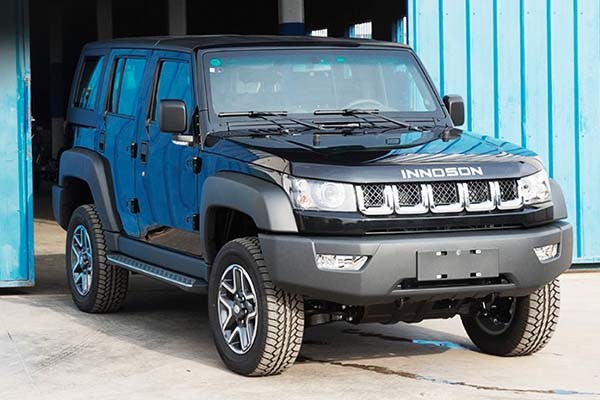
The frivolous and unsubstantiated critique by Nigerians of its emerging corporate stars needs to stop – Case in Point – Innoson Motors.
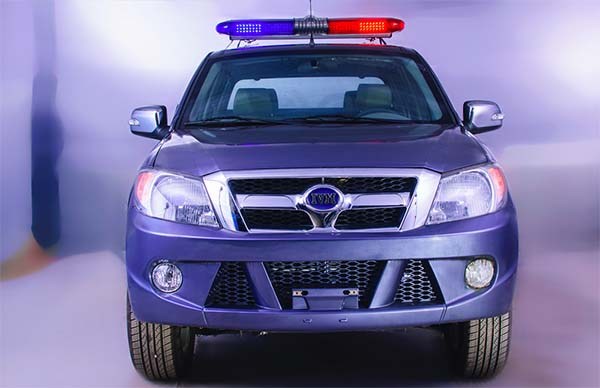
Innoson motors is a ground breaking company that brings indigenous vehicle manufacture to the foremost commercial and industrial country in the whole of Africa – Nigeria.
A significant minority have gone to social media and various business news and discussion boards online making unhelpful remarks.
Some are of the opinion that there is an element of tribal discordance. Certainly, very few of the agitators are Igbo (the tribal region from which Innoson Motors hails) and if we look at criticisms of Dangote, we will see very few (if any) of critics hail from ‘North’.
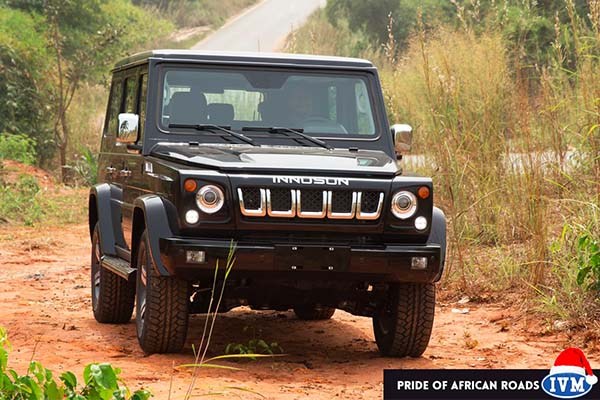
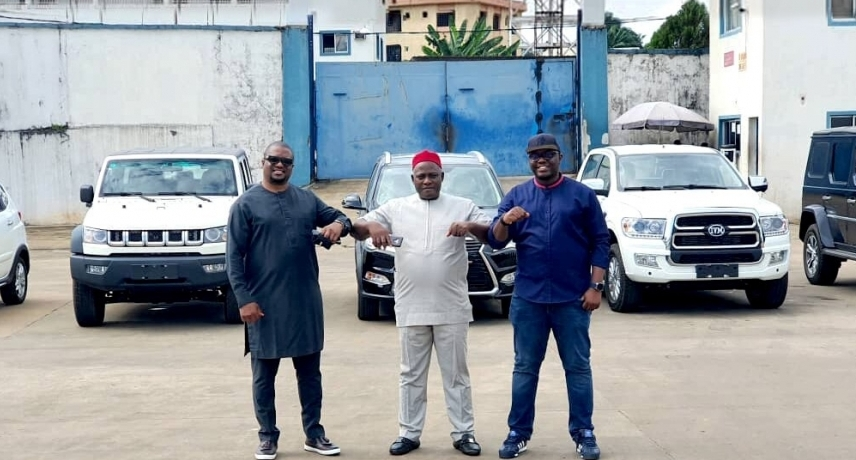
The cornerstone of these remarks finds its roots in a clone like similarity between three vehicles – Mercedes G Wagen (original), (Chinese) BAIC BJ80C and the Innoson IVM G80. The remarks generally suggest Innoson is just ‘pirated’ versions of another product. Is that reasonable? I say NO. And here is why:
COUNTERFEIT GOODS IN A NIGERIAN CONTEXT:
The concept of ‘pirated’ (a Nigerian colloquialism pronounced ‘pie-ray-ted’) came from a time when globally, long before internet, music and video content was distributed on physical media, starting with music and video cassettes, then on to CD’s and DvD’s. Pirate copies (also called ‘bootlegs’ globally) became available in the grey market.
There are two strong focal points of ‘pirated’ goods in Nigeria today. The most famous is probably Aba Market in Abia State, East Nigeria. The most prevalent targeted products tend to be designer wear, shoes, bags, leather goods, and cosmetics. You pay for what you get. Bargain priced goods only make a token effort to imitate. Effects by blending materials, cosmetic weaving or stitching for example become replaced by printing instead, often smudged. The better copies are of extremely high quality, can pass a summary inspection and only fall foul of detailed scrutiny by trained eyes.

The second most prominent area of piracy is imported phones from China – colloquial ‘shinaphone’ ‘shinski’ or ‘chinko’. The brands most often parodied are Samsung and Nokia. I say ‘parody’ because the fakes often tend to make no effort to resemble the appearance of any known model of the respective brands.
These can be frequently found for instance around ‘Computer Village’ in Ikeja, Lagos, and a small annex to the Balogun Market.
‘In Nigeria, “Aba made” or “Made in Aba” has almost become synonyms for fake or substandard products. On the surface, this might not seem like something to be super proud of, but what if there is another way to look at this? Think about it, Japan used to be the “fake” capital of the world, then it moved to China, and these two nations have moved on to become global industrial giants. Hence, is it not safe to say that if Aba is currently standing where the likes of Japan and China used to stand, then Aba can also become the next China or Japan?’ – Oludare Fasure
EVOLUTION OF POST WAR VEHICLE MANUFACTURERS.
At the end of WWII, US invested heavily in two countries in particular – Japan and Germany, and with a tertiary investment in UK. The Germans just used the financing to kickstart what was already a technology heavy heritage. The Japanese however, relied heavily on franchise/contract free design intelligence from major US industries of the time. In automotive, this meant companies like Ford, General Motors, and Chrysler-Dodge. All the big names in Japanese Automotive today derive their development from US.
As Japanese industry became a victim of its own success with rising standards of living and labour costs, companies began to look at neighbouring countries in the Asia Pacific to site manufacturing.
Many companies in those countries rose from inspiration, know-how and business intelligence in automotive, either derived from the presence of such Japanese companies in their country, or also by migrant industry professionals moving to Japan from such countries attracted by career opportunities. This gave rise to the acceleration in automotive achievement in other countries, most notably South Korea (Hyundai, Kia, Ssangyong and Daewoo ), Malaysia (Proton, Perodua and Tan Chong) and Taiwan (Luxgen). Eventually a Chinese Mainland industry took off, which has now surpassed all the ‘Japan Inspired’ nations of the region except South Korea.
In the early days of all of these companies, they either partially or wholly copied models of established European or North American brands. The Mk 1 Hyundai Stellar was built around a Ford Mk IV Cortina. Daewoo were either copies of English Vauxhall /German Opel or entry level US Chevrolet models (at this stage all owned by GM). Indeed when the company experienced financial problems it was eventually purchased by Chevrolet US.
The flip side of this is that well established companies copy just as much as up-and-coming ones do. They just use the ‘acquisition’ route to absorb rights to technologies and designs not native to their own evolution path. A sort of ‘Corporate Colonization’. Though this is not confined to automotive.
By the end of the first half of the 20th Century, Rootes Brothers England swallowed seven indigenous companies, only to go on to sell out to Chrysler US, who later went on to sell to Peugeot and Renault of France. Huge technology transfer happened along the way.
British Leyland formed in 1968 was an amalgamation of 11 companies, later reformed as Austin-Rover, went through being clones of both Honda and BMW, with its MG, Mini, Landrover, and Jaguar being later owned by the likes of Ford and BMW with their engineering reflected. Other models later went on to be cloned in China.
GM (US) bought Vauxhall in England, Opel in Germany and Holden/Statesman in Australia. The Opels and Vauxhalls in Europe for over a decade were rebadges of each other. All three converged on a model called the Commodore/Senator.
When Volkswagen acquired Skoda, the Baleno and Octavia were almost identical. After acquiring Audi and Porche, all three had SUVs on the same wheelbase with only variances in coachworks and engine/drive systems. The project was called the Volkswagen Group PL71 platform, and held Volkswagen Touareg, Audi Q7 and Porche Cayenne.
For expedience, I will stop here, though I think it is clear, Innoson is doing nothing outside of a predictable motor vehicle manufacturers evolution path from inception.
THE ‘LOW TECH’ CRITICISM
We need to look at the prevailing environment and what is needed. What is the friction here that really needs to be fixed?
Taking Nigeria’s main air deterrent, for example, comprises 12 Dassault/Dornier Alpha Jets and 8 Chengdu F-7’s. The Alpha Jet was a joint German/French exercise to develop trainer jets for their respective air forces, while the Chengdu is a Chinese version of a long obsolete former Soviet MiG 21. Making the analogy with small Indian and Chinese motorcycles in Nigeria such as Bajaj, Qlink and Frajend copies of 1970’s Japanese Honda CG125’s, the Chengdu could be considered an ‘okada’ with wings. (no pun to a town in Edo State or a defunct Nigerian Airline intended!). A squadron of either aircraft would have little chance of penetrating the anti-air defences of modern naval destroyers or surface anti-air fixed installations, far less from any hope of challenging any of the top 20 fighters of today. However, when looking at the incidents most likely to call the NAF into conflict, it will probably be to give air support to Federal ground units against dissident opponents or insurgencies by cross-border non-state actors to provide a more instant and higher altitude option to helicopters.
In this respect, both the Alpha and the Chengdu are perfectly adequate. More capable fighter aircraft would bring overkill coupled with unnecessary expense.
At the other end of the spectrum, the Eurofighter Typhoon owes its unequalled agility to the fact that it isn’t actually aerodynamically sound. It needs extraordinary AI technology without which it would just fall out of the sky.
Nigeria does not have a good record of maintenance of infrastructure and other federal assets. Unfortunately government spending often carries a political narrative. It is unfortunate but true that political leaders only get their name in bright lights by bringing headline grabbing new developments rather than maintaining the infrastructure inherited from a collective of predecessors.
The Eurofighter maintenance program makes major bridge and road programs look nominal. Eurofighters whose budget for maintenance is delayed or queried, cannot outclass Alphas and Chengdus that can take to the air.
Despite the negative rhetoric about the IVM G80 ‘looking ugly’ and being ‘low tech’ one twitter response had this to say: ‘There’s an unholy agenda to bring the pedigree of Innoson Motors to disrepute. Try to read up the specifications of Innoson cars instead of jumping on bandwagon. I’d advise y’all promote what you love instead of killing what you hate.’
Just as NAF needs to look at the air application for its fighters, Innoson needed to look at the road application for the vehicles it delivers to its customers.
Looking at the Volkswagen Touareg of a few years back, [I can’t speak German, I think it means poor mans Cayenne], several Lagosians had bought them tukunbo, after a few months, the AI controllers which failed, cost more to bring in from abroad than what they paid for the vehicle.
In Nigeria, vehicles occupy a very high esteem in the view of their owners, somewhere between land and spouse (though in the interests of self-preservation I’m not going to suggest which is placed at #1 and which is #3).
They are expected to last a very long time, despite unforgiving roads neglected from decades of political indifference, and also despite untimely or inadequate vehicle maintenance by their owners.
Nigerian Air Officers might be content to watch a Eurofighter sit in a hangar and collect salary (should the air force buy them). The tukunbo Touareg owner has no choice but to view it dismally as it sits in the compound as an oversized ornament. Tukunbo, once it’s sold is sold.
The Volkswagen Beetle, probably one of the longest produced vehicles in automotive history, survived all the way from 1938 to 2003 due to affordable durability.
The Innoson IVM G80 isn’t looking for the simplicity of the Volkswagen Beetle, but it isn’t looking to have all the bells and whistles of a Lamborghini Urus or a Cadillac Escalade either.
Innocent Chukwuma is simply looking at a harmony on cost, features and comfort, that will survive the most inhospitable roads in the world. A portfolio of vehicles that will go, and go, and then some.
CONCLUSION
Several sources have cited the balance between imported/home manufacture parts as being 70/30%. But if this was even 95/5% is it significant? Not really, and here is why:
From the moment Innoson bound parts land at a Nigerian dock to the moment the vehicle they become leaves a showroom to a new owner, huge numbers of Nigerian jobs are being provided for.
Automotive is an industry that takes a long time to mature and the Nigerian one is in its infancy.
It is now the task of other entrepreneurs to recognise frictions in Innoson business they can fix – by offering home-grown alternatives to imported components; cheaper, faster, to required specification and affording Innoson JIT (Just In Time) procurement options, something difficult to achieve with imports. Innoson can also look to build out on the value chain itself.
None of this can happen quickly.
Nigeria is a very cost sensitive market. Yes you have to ‘cut suit to size your cloth’, but’ fi cloth no dey reach dat side, manage am.’ When Hyundai used the Cortina Mark IV platform for ‘Stellar’, it was aimed at beating the Dagenham plant on price in its own back yard. When Daewoo pushed some legacy Vauxhall/Opel clones into mature markets, it was aimed at targeting those who like to buy a new car every 3-5 years; but in a recession, didn’t have purchasing confidence. It found a launch springboard by offering such people a third way.
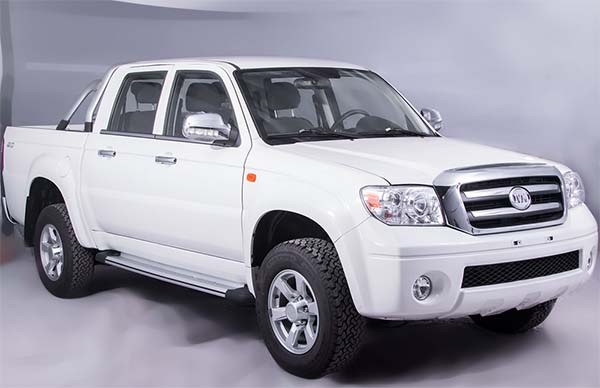
By building vehicles based on proven design, Innoson forgoes the need to do crash tests with dummy passengers at crash test sites. Destroying hundreds of perfectly good vehicles every year in the pursuit of safety R&D is something that only global manufacturers producing at scale such as Toyota or BMW can afford to do.
This is one way in which Innoson is currently saving on cost and passing that on to customers.
Nigeria market has thrived on a perception that for many, something effectively ‘is’ whatever it looks like. When ‘one very local guy like dat dey fuh beer parlour’, watches his favourite English team, let’s say Man. U., he doesn’t really care that his shirt is a 1500 Naira fake. His friends know as well. All he cares is he is in the moment with a red shirt with ‘Manchester United’ written on it, and the ‘Man U’ crest and has enough pocket money for his beers.
Some such guys might never afford a vehicle.. though whether it was due to hard times, or being a broke student, or one of the many of life’s hiccups that Nigeria can throw, many successful Nigerians can find deep down inside themselves, a very small piece of that ‘one very local guy like dat dey fuh beer parlour’, or attending ‘all night vigil’ dressed in ‘okreka’.
This is a part of the Nigerian psyche that will always seek out best value.
So there is a challenge for Innoson to be able to deliver vehicles ‘inspired’ by pre-existing designs, cheaper than the total cost of sourcing and importing new from external markets. Should there be a vulnerability there, then one strategy could be to highlight positive departures from ‘similar’ models manufactured elsewhere. For instance, sticking with the IVM G80 case in point, the choice of Mitsubishi 4G69S4N is a very reliable and proven powerplant. It is more powerful than either of the Nissan and SAAB options in similarly ‘inspired’ models. It’s build quality is perceived better than the Nissan but not as good as the SAAB, though replacement of some SAAB parts are much more expensive and even difficult to source timely. The Mercedes G Wagen had a known design fault at the front end transmission/suspension which could collapse on a fairly modest front collision or an abrupt entry into a hole. I witnessed this happen to one on Akin Adesola V.I. Differentiating the IVM G80 from this design might be useful.
The question is should Innoson celebrate positive differences from similarly ‘inspired’ vehicles or just sidestep discussion? Overtly discussing this as part of a marketing strategy has never been done before by other manufacturers!
What is clear though is that Innoson motors is NOT in the ‘piration’ business. Innoson has never claimed to be any brand other than Innoson.
And when you look at context, and a country with the highest GDP by some margin in all Africa…. where its Air Force with a government allocation it does not have to work for, is putting air people in the sky in ‘flying okadas’… and then you look at the grit, the business savvy and the singular determination of Innocent Chukwuma, then with Innoson motors, you can see something really special is going on.
REFERENCES:
- Counterfeiting – a threat to Nigerian Democracy – Moses Nosike https://www.vanguardngr.com/2017/06/counterfeiting-threat-nigerian-economy-experts/
- Procedures and Strategies for Anti-counterfeiting: Nigeria. https://www.worldtrademarkreview.com/anti-counterfeiting/procedures-and-strategies-anti-counterfeiting-nigeria-0
- MADE IN ABA: IMPORTANT LESSONS TO LEARN FROM JAPAN AND CHINA – Oludare Fasure https://medium.com/@holluthare/made-in-aba-important-lessons-to-learn-from-japan-and-china-9eecd98b82fa
- History of the Chinese BJ80C and its variants: https://en.wikipedia.org/wiki/BAIC_BJ80
- Chinese G Wagen latest skirmish- clone wars. https://www.autoweek.com/news/auto-shows/a1868516/chinese-mercedes-g-wagen-latest-skirmish-clone-wars/
- Daewoo company : https://en.wikipedia.org/wiki/Daewoo
- Hyundai Motor Company: https://en.wikipedia.org/wiki/Hyundai_Motor_Group
- Kia Motors: https://en.wikipedia.org/wiki/Kia_Motors
- Automotive industry in Malaysia: https://en.wikipedia.org/wiki/Automotive_industry_in_Malaysia
- Rootes Group: https://en.wikipedia.org/wiki/Rootes_Group
- British Leyland: https://en.wikipedia.org/wiki/British_Leyland
- Comparision between Volkswagen Touareg, Audi Q7 and Porche Cayenne. https://www.picknbuy24.com/column_351.html
- Why the G Wagen had to change: https://www.roadandtrack.com/new-cars/car-technology/a20152192/why-the-g-wagen-had-to-change/
- Innoson IVM G80 rebadged Chinese made: https://www.nairaland.com/5368387/innoson-ivm-g80-rebadged-chinese-made
- Mixed reactions trail Innosons SUV, its replica design of Chinese vehicle: https://nairametrics.com/2019/10/09/mixed-reactions-trail-innosons-suv-its-replica-design-of-chinese-vehicle/
- Analysis of Eurofighter Typhoon Aerodynamics – Samuel Turner – School of Engineering, Warwick University.
- Dassault/Dornier Alpha Jet: https://en.wikipedia.org/wiki/Dassault/Dornier_Alpha_Jet
- Nigerian Air Force: https://en.wikipedia.org/wiki/Nigerian_Air_Force
- Volkswagen Beetle: https://en.wikipedia.org/wiki/Volkswagen_Beetle
- Chengdu F-7: https://www.airforce-technology.com/projects/j7f7fighteraircraft/